Continuing Guaranty of Payment and Performance of all Obligations and Liabilities Due to Lessor from Lessee under Lease with Mortgage Securing Guaranty
About this form
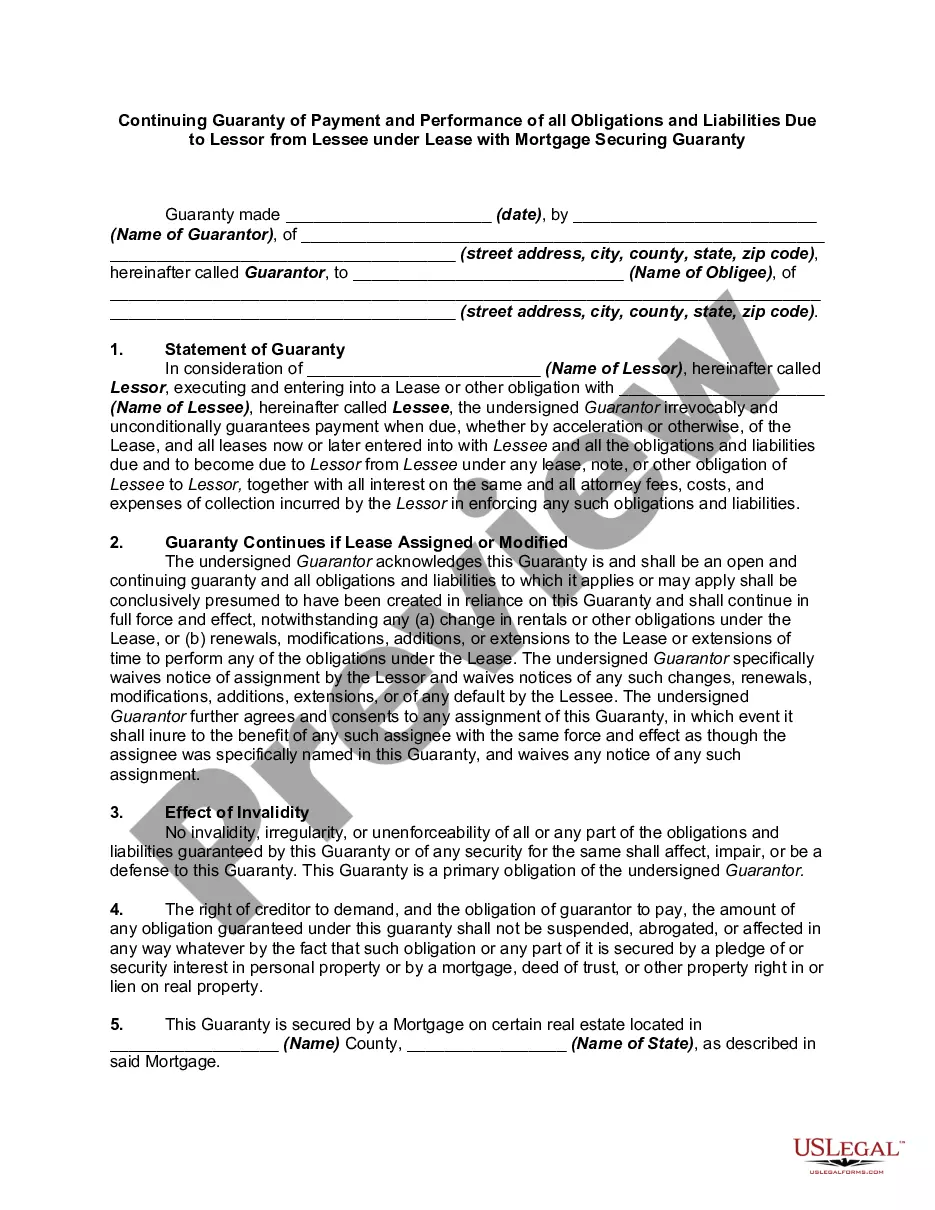
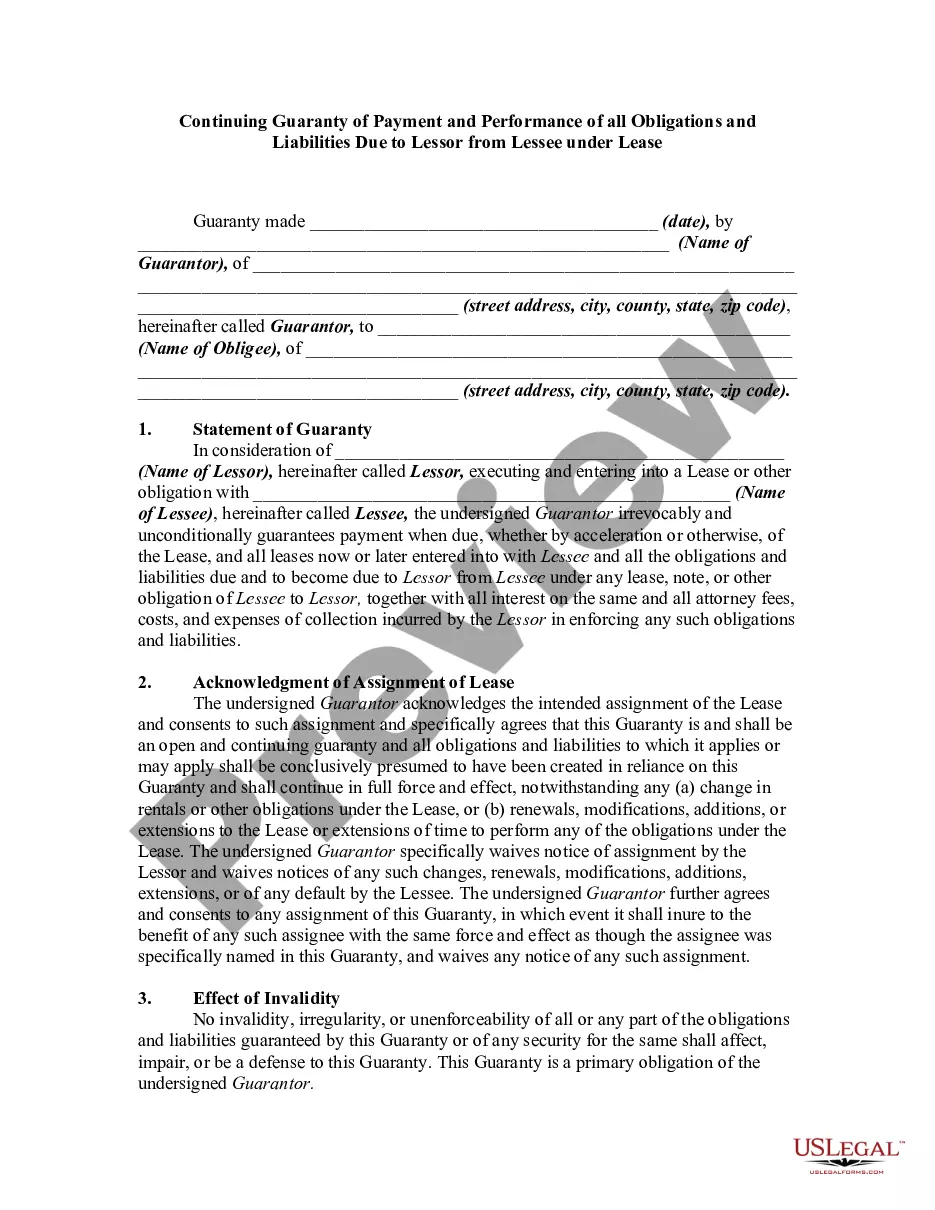
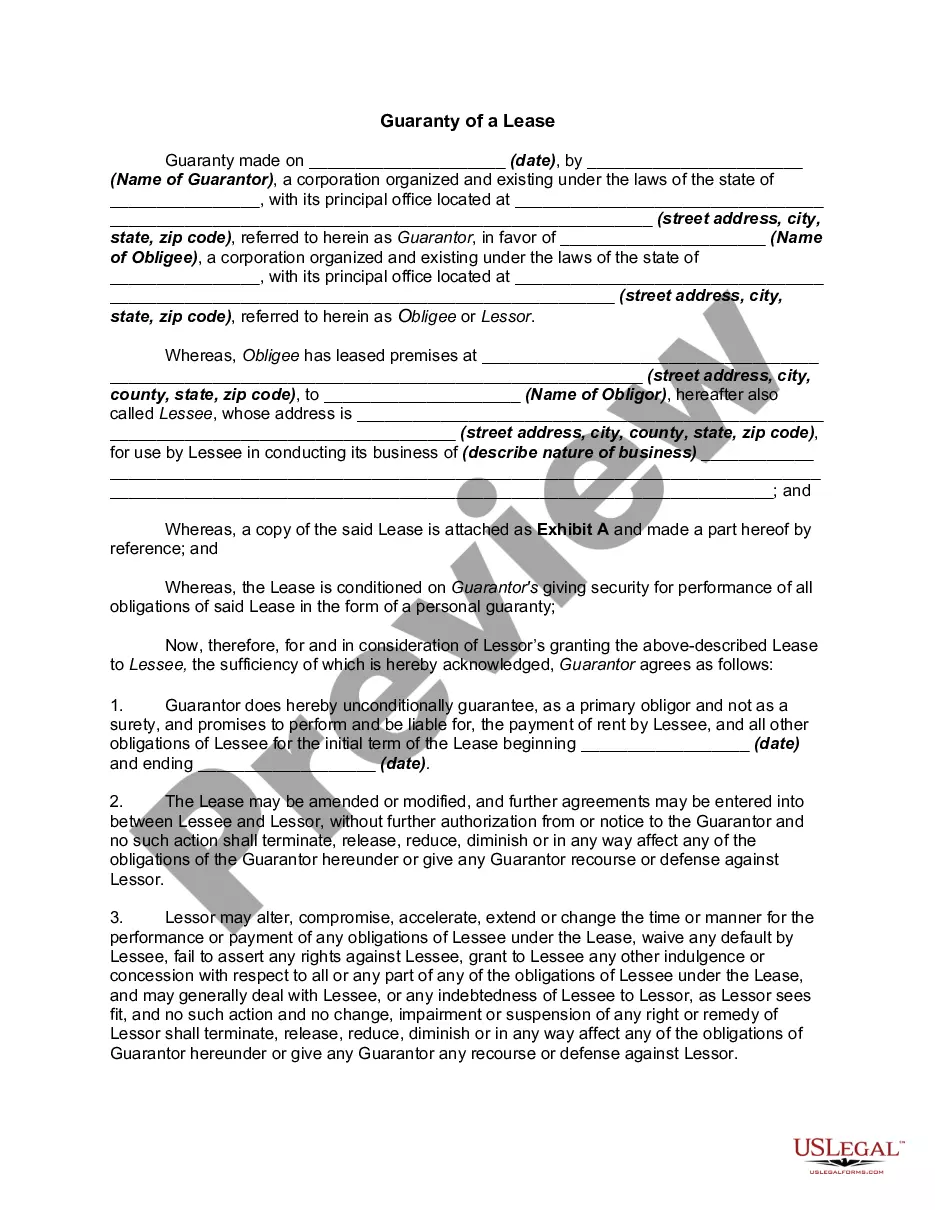
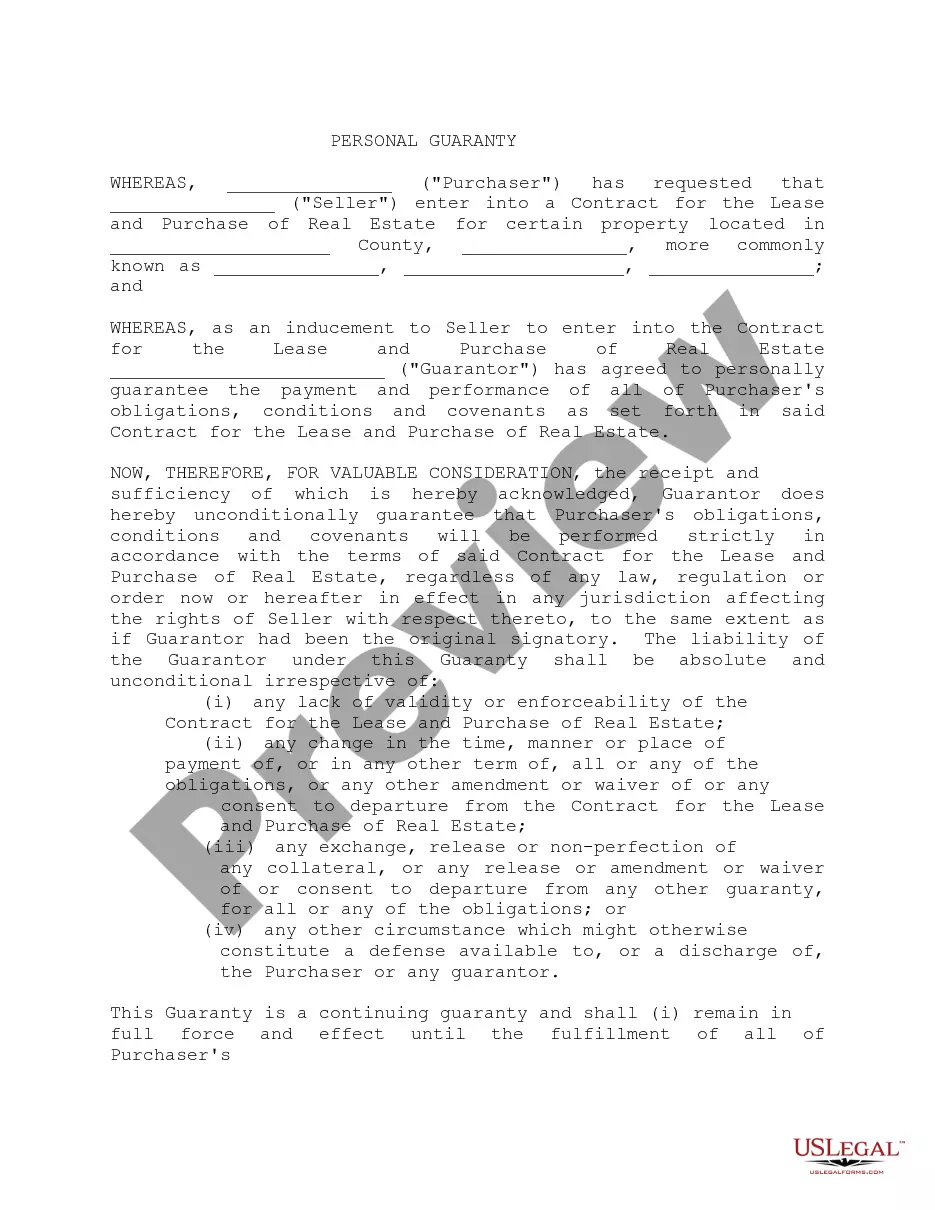
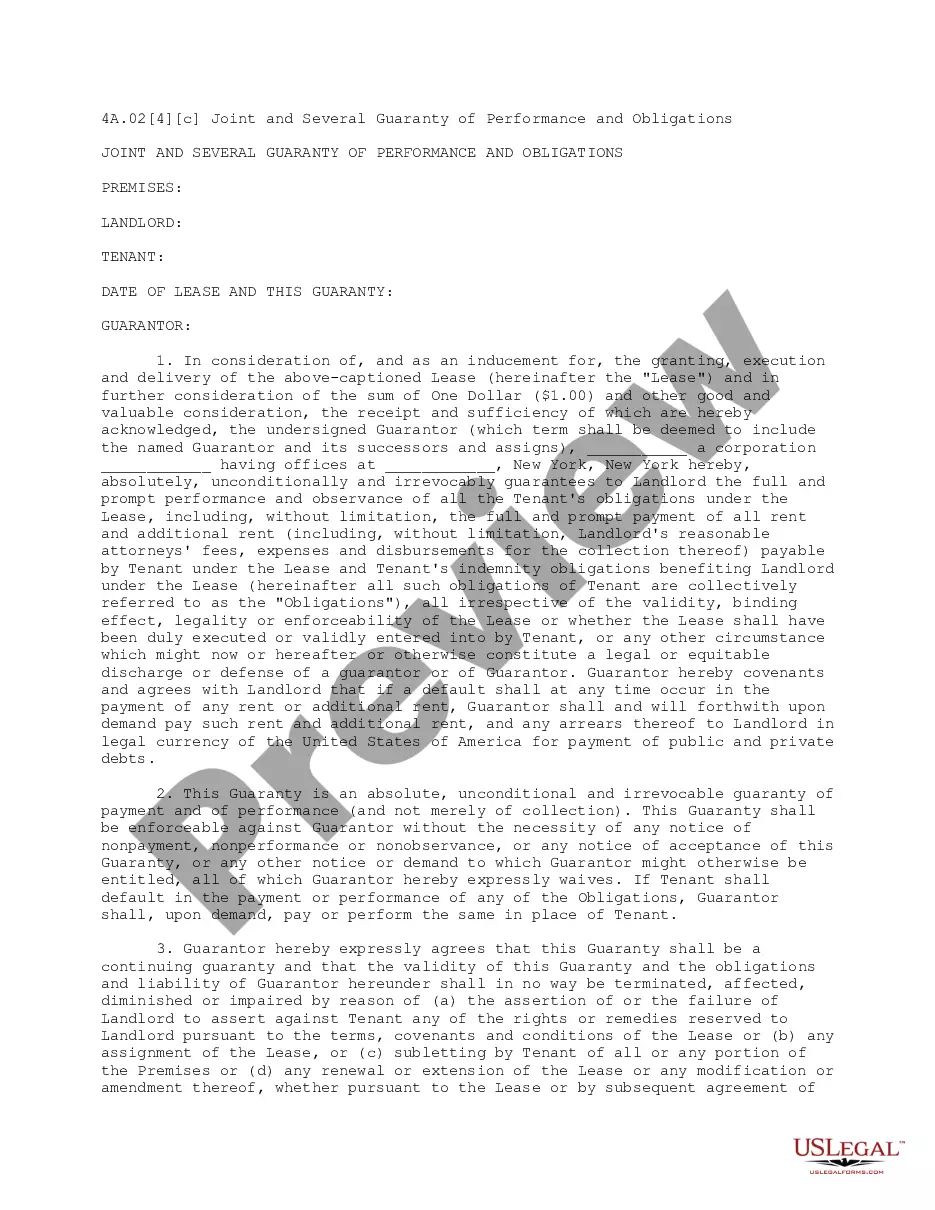
The Continuing Guaranty of Payment and Performance of all Obligations and Liabilities Due to Lessor from Lessee under Lease with Mortgage Securing Guaranty is a legal document in which a guarantor agrees to cover the obligations of a lessee to a lessor. This form specifically outlines the guarantor's commitment to pay any debts incurred by the lessee, ensuring that the lessor is protected in the event of default. Unlike other forms, this guaranty remains in effect even if lease terms change or if the lease is assigned to another party.
Key parts of this document
- Guarantor information, including name and address.
- Details of the obligee, including name and contact information.
- Statement of guaranty outlining responsibilities and obligations.
- Provisions regarding lease assignments and modifications.
- Effects of invalidity on obligations guaranteed.
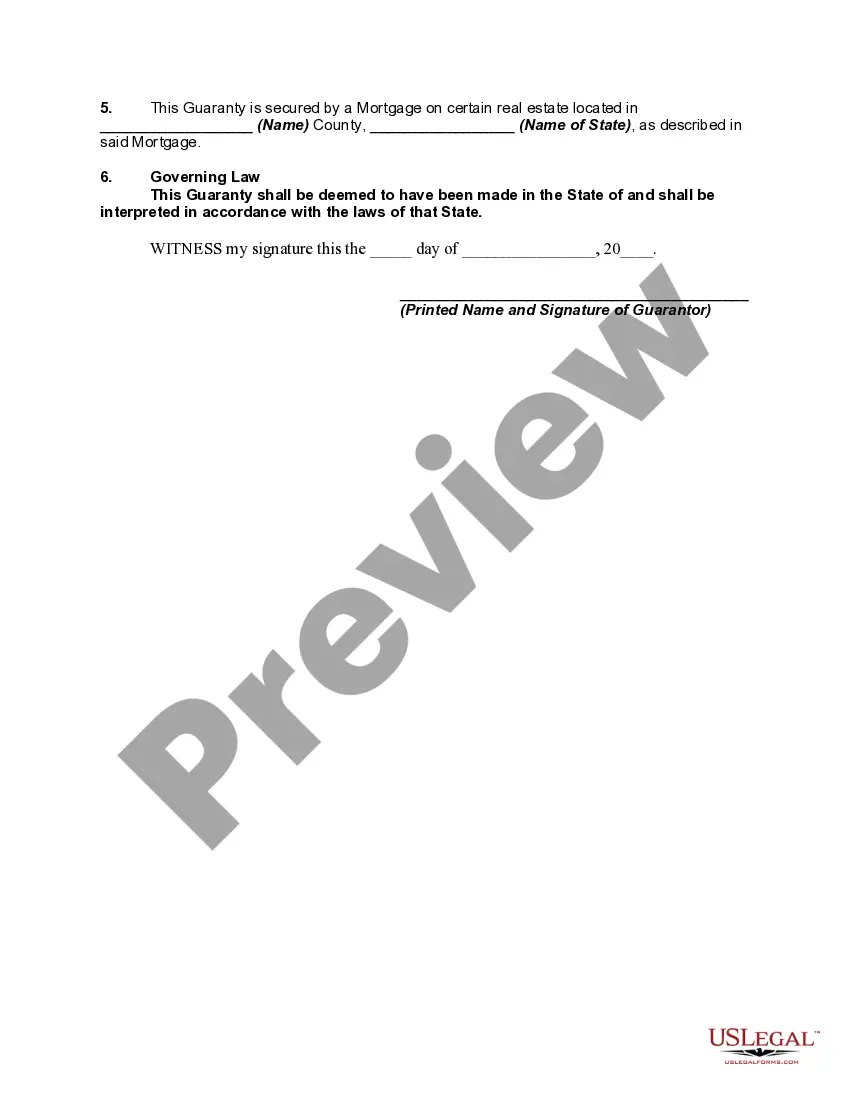
- Governing law to determine legal interpretation.
When this form is needed
This form should be used when a lessee seeks to rent property and the lessor requires a guarantor to ensure that lease payments and obligations will be met. It is typically utilized in commercial leases or situations where the lessor has concerns about the lesseeâs financial stability. By using this form, both parties ensure clear terms regarding liability and payments in the case of default.
Who can use this document
- Property lessors looking for security against potential defaults by lessees.
- Individuals or organizations willing to act as a guarantor for a lessee.
- Lessee parties who need to present a guaranty to facilitate their leasing agreement.
Completing this form step by step
- Identify the date on which the guaranty is made.
- Enter the full name and address of the guarantor.
- Specify the name and address of the obligee (lessor).
- Clearly outline the obligations being guaranteed, including any specific leases.
- Provide the name of the county and state for the governing law.
- Ensure that the guarantor signs and dates the document.
Does this document require notarization?
This form does not typically require notarization unless specified by local law. Always check your jurisdictionâs requirements to ensure compliance.
Get your form ready online
Our built-in tools help you complete, sign, share, and store your documents in one place.
Make edits, fill in missing information, and update formatting in US Legal Forms—just like you would in MS Word.
Download a copy, print it, send it by email, or mail it via USPS—whatever works best for your next step.
Sign and collect signatures with our SignNow integration. Send to multiple recipients, set reminders, and more. Go Premium to unlock E-Sign.
If this form requires notarization, complete it online through a secure video call—no need to meet a notary in person or wait for an appointment.
We protect your documents and personal data by following strict security and privacy standards.

Make edits, fill in missing information, and update formatting in US Legal Forms—just like you would in MS Word.

Download a copy, print it, send it by email, or mail it via USPS—whatever works best for your next step.

Sign and collect signatures with our SignNow integration. Send to multiple recipients, set reminders, and more. Go Premium to unlock E-Sign.

If this form requires notarization, complete it online through a secure video call—no need to meet a notary in person or wait for an appointment.

We protect your documents and personal data by following strict security and privacy standards.
Mistakes to watch out for
- Failing to fill out all required fields completely.
- Not including the specific address of the obligations covered.
- Ignoring local laws that may impact the validity of the guaranty.
- Not having the guarantor sign or date the form.
Benefits of using this form online
- Easy access to legal documents at any time.
- Immediate download and customization to fit specific needs.
- Reliability of professionally drafted templates by licensed attorneys.
Looking for another form?


Form popularity
FAQ
A guarantor is a third party who 'guarantees' a loan, mortgage or rental agreement. This means they agree to repay the total amount owed if the borrower or renter can't pay what they owe. By guaranteeing the agreement, you become responsible for any arrears that occur.
No, if you have signed an agreement and are acting as the guarantor for a guarantor loan, you cannot stop being this until the loan term has ended.
Most landlords and letting agents require tenants to have a Guarantor in order to qualify as a suitable tenant. Some tenants for one reason or another can't arrange a Guarantor.The reality is, a guarantor is a prerequisite for every sensible landlord, and rightly so.
It's very common for a guarantee to last as long as the tenancy lasts. So, if the tenant remains in the property for four years, you will continue to be responsible for any arrears or damages during that entire period. Most tenancies will run for a fixed term and will then continue on a month-by-month basis.
Close the loan/pay off the loan early. Get the borrower/guarantor to pay off the loan early. The lender goes out of business.
A Guarantor's obligations A guarantor may be bound to maintain repayments on a borrower's loan in circumstances where the borrower defaults on repayments. Alternatively they may be called upon to repay the loan in full.
A guaranty of payment is an independent agreement by a person or an entity to pay the loan when it goes into default. Even if the borrower is unable or unwilling to pay back the loan, the Bank can require the guarantor to pay it back.
Guarantors are asked to sign a guarantee agreement this is a legally binding document and once you sign it you become responsible for the loan repayments if the person you are acting as guarantor for cannot pay.
The landlord allows the guarantor to surrender their legal obligations as a guarantor. If the Deed of guarantee contains a termination provision (allowing the guarantor to withdraw on say two months' notice)- the provision can allow the termination during the fixed term.