General Form of a Motion of Plaintiff and Notice to Defendant of Hearing on Motion
Understanding this form
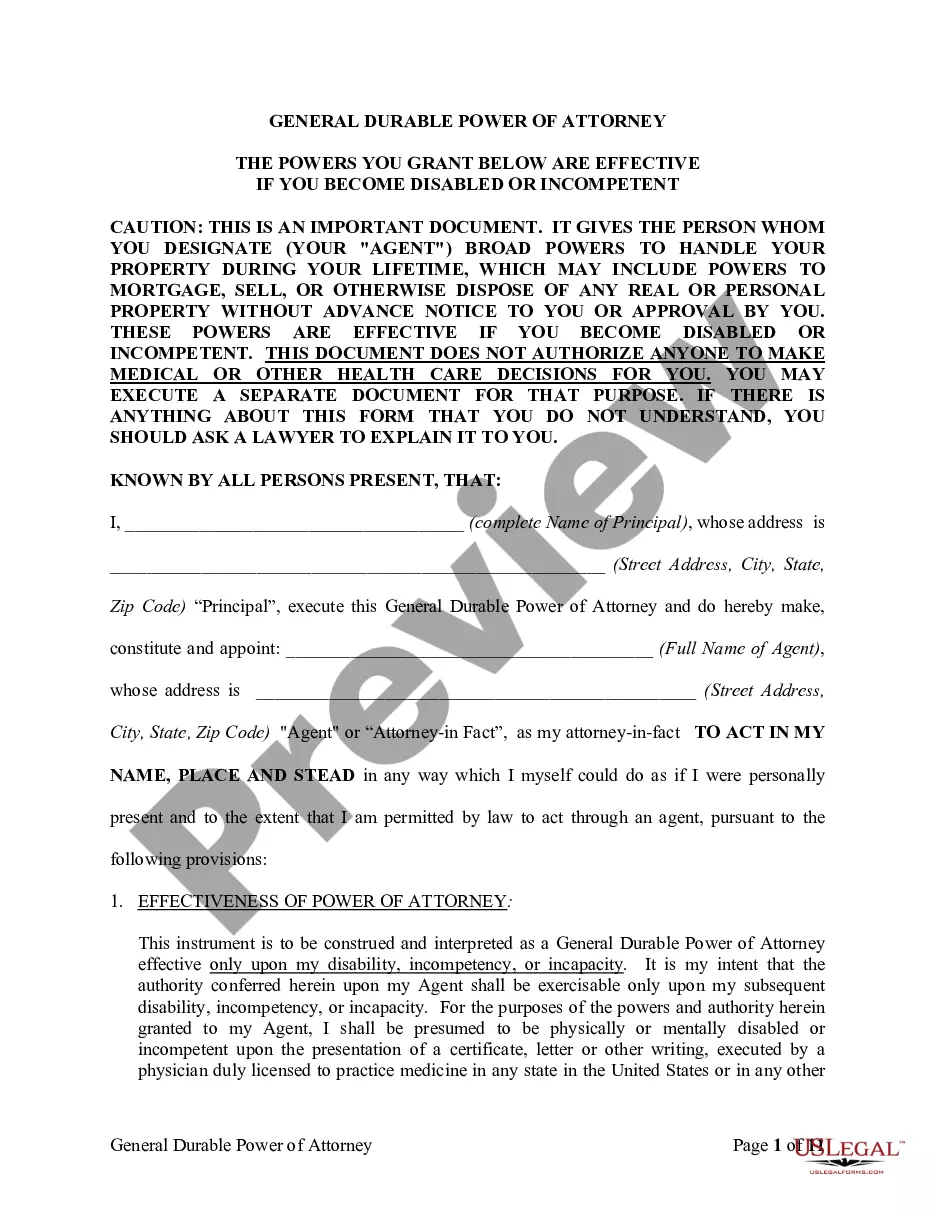
The General Form of a Motion of Plaintiff and Notice to Defendant of Hearing on Motion is a legal document used to request a specific court order. This form serves as an application from the plaintiff to the judge, aiming to rectify procedural issues or obtain relief not available through standard pleadings. Unlike other legal forms, this motion is tailored to compel the court to direct certain actions, making it essential for plaintiffs seeking judicial intervention in their case.
What’s included in this form
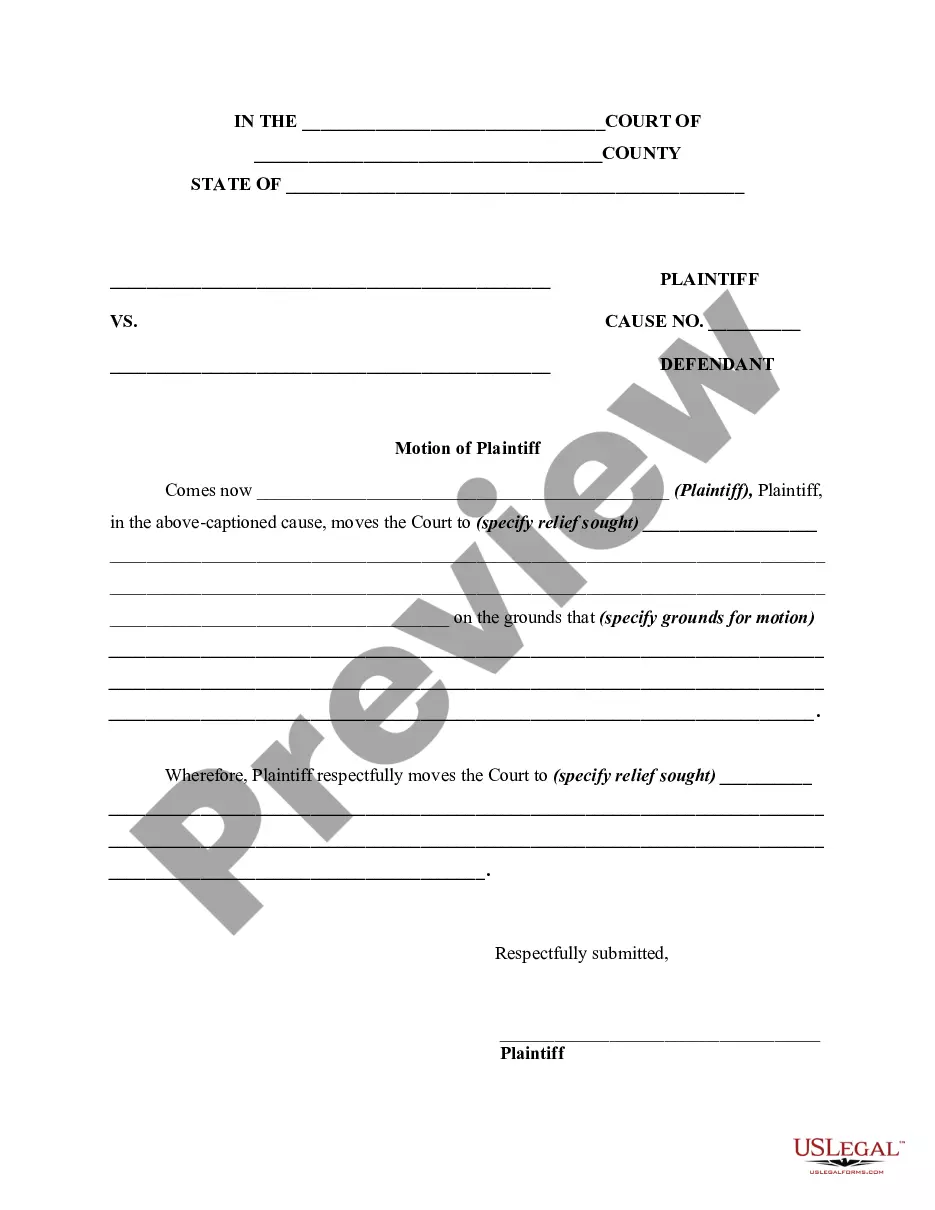
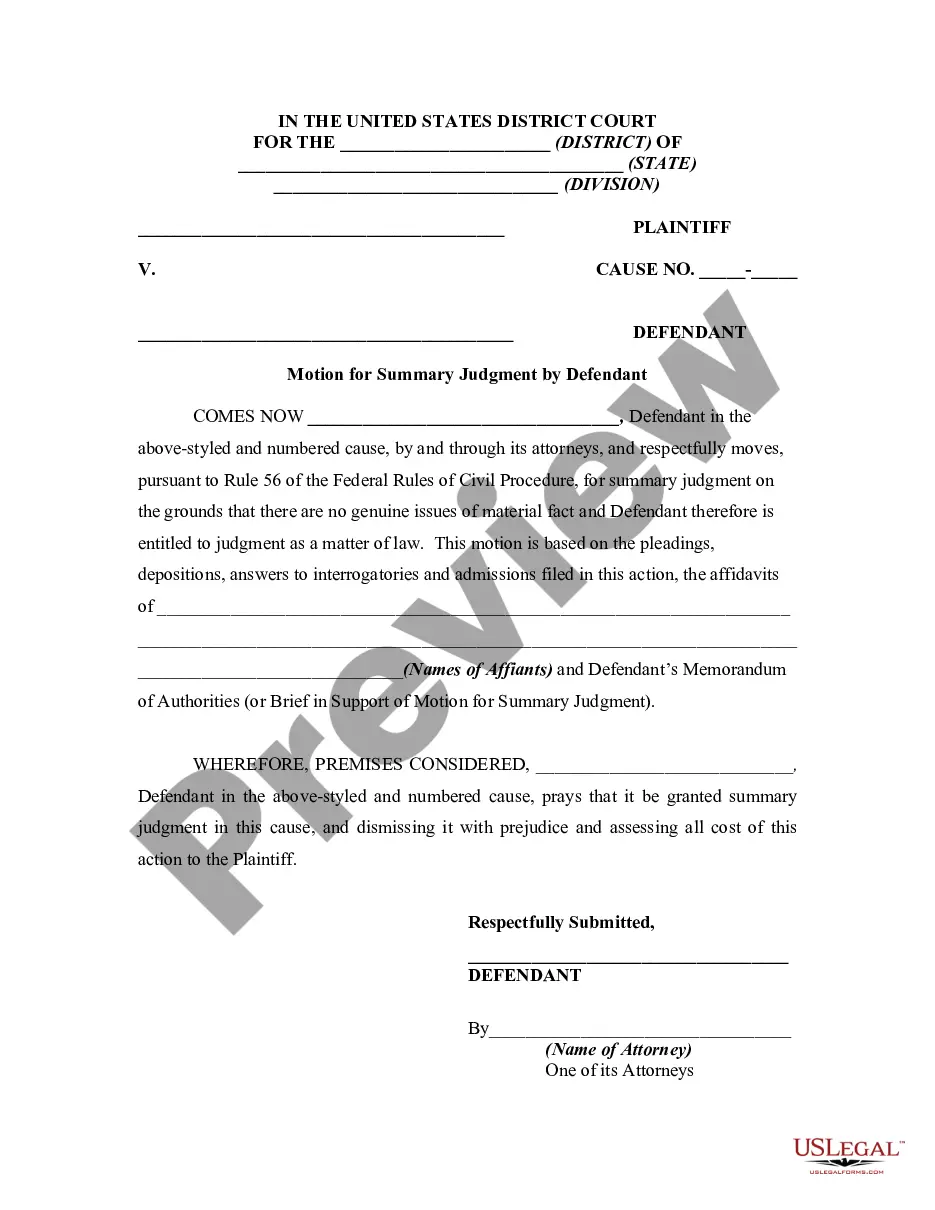
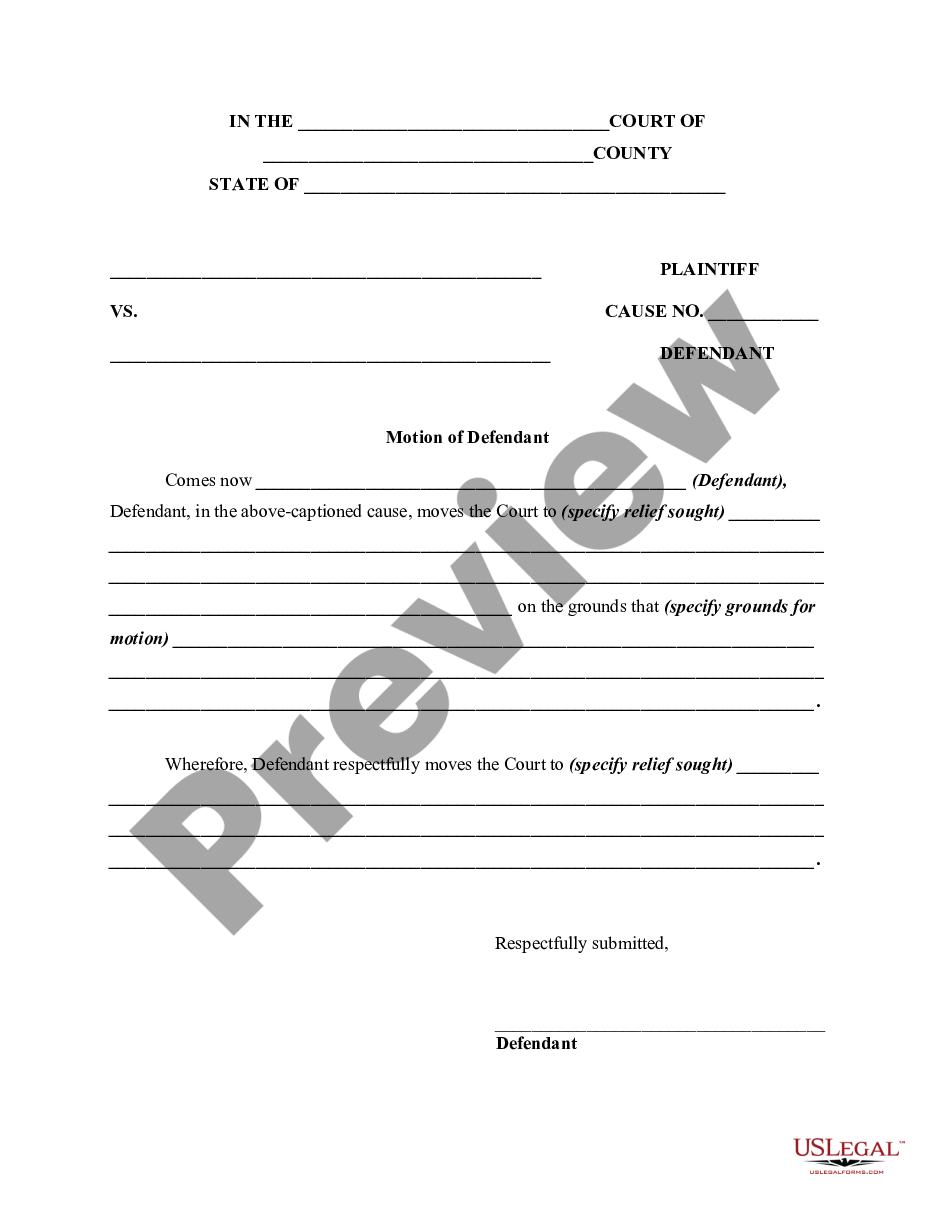
- Case caption including the names of the plaintiff and defendant and cause number.
- A section for the plaintiff to specify the relief sought from the court.
- Grounds for the motion outlining the reasons supporting the request.
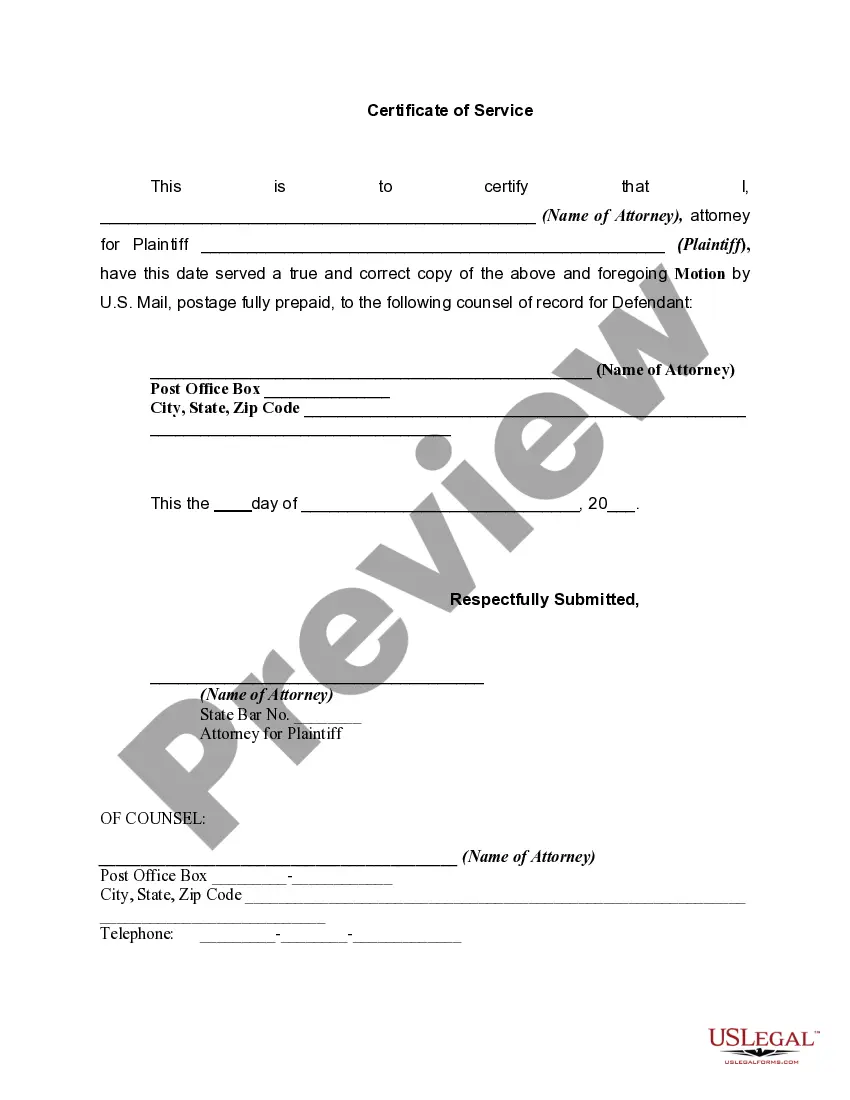
- Certificate of service to confirm that the defendant's attorney has been notified.
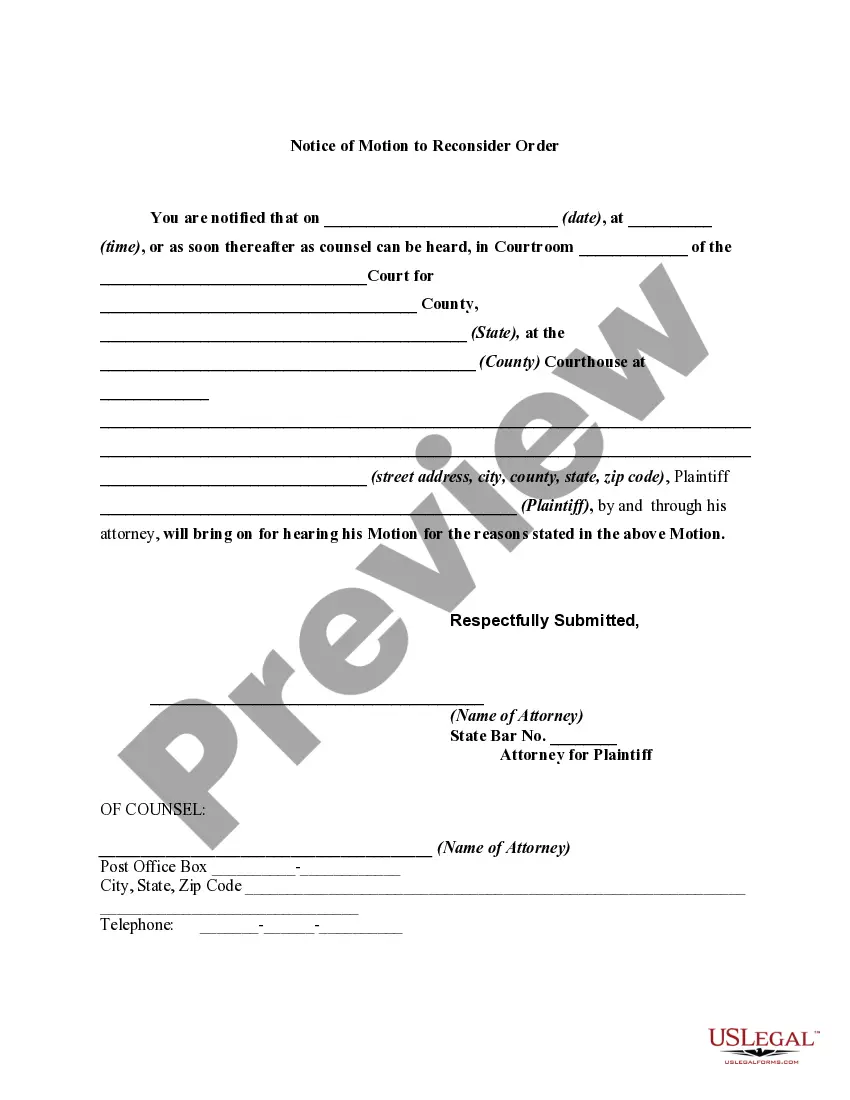
- Notice of motion stating the date, time, and location of the hearing.


Situations where this form applies
This form is commonly used when a plaintiff needs to ask the court for specific relief, such as enforcement of a right or remedy that is not immediately available through other legal filings. It may be appropriate in situations where procedural defects have occurred, necessitating judicial intervention to ensure the progress of a case.
Who this form is for
- Individuals acting as plaintiffs in civil cases.
- Attorneys representing plaintiffs seeking to file a motion in court.
- Any party needing to address procedural issues or seek relief in a court action.
How to complete this form
- Enter the names of the parties involved in the case and the case number at the top of the form.
- Clearly state the relief sought in the designated section.
- Specify the grounds for the motion, detailing the legal basis for your request.
- Complete the certificate of service, listing the attorney and contact information for the defendant.
- Fill out the notice of motion with the hearing date, time, and court details.
Notarization requirements for this form
In most cases, this form does not require notarization. However, some jurisdictions or signing circumstances might. US Legal Forms offers online notarization powered by Notarize, accessible 24/7 for a quick, remote process.
Get your form ready online
Our built-in tools help you complete, sign, share, and store your documents in one place.
Make edits, fill in missing information, and update formatting in US Legal Forms—just like you would in MS Word.
Download a copy, print it, send it by email, or mail it via USPS—whatever works best for your next step.
Sign and collect signatures with our SignNow integration. Send to multiple recipients, set reminders, and more. Go Premium to unlock E-Sign.
If this form requires notarization, complete it online through a secure video call—no need to meet a notary in person or wait for an appointment.
We protect your documents and personal data by following strict security and privacy standards.

Make edits, fill in missing information, and update formatting in US Legal Forms—just like you would in MS Word.

Download a copy, print it, send it by email, or mail it via USPS—whatever works best for your next step.

Sign and collect signatures with our SignNow integration. Send to multiple recipients, set reminders, and more. Go Premium to unlock E-Sign.

If this form requires notarization, complete it online through a secure video call—no need to meet a notary in person or wait for an appointment.

We protect your documents and personal data by following strict security and privacy standards.
Common mistakes
- Failing to provide sufficient grounds for the motion.
- Omitting service details or incorrectly stating the attorney's information.
- Not adhering to local court rules regarding formatting and filing procedures.
- Missing the required signatures from the plaintiff or attorney.
Benefits of completing this form online
- Convenient access to a legally-reviewed template for drafting motions.
- Edit the form easily to fit your specific case details.
- Reliable, attorney-drafted content minimizes the risk of errors in legal filings.
Legal use & context
- This motion serves as an essential step in civil litigation, enabling plaintiffs to request specific court orders.
- It is important to follow local rules and guidelines regarding procedural motions to avoid delays or dismissals.
- Understanding the context ensures the proper use of this motion to effectively communicate with the court.
Quick recap
- The General Form of a Motion is a crucial legal document for plaintiffs seeking specific relief from the court.
- It is important to properly fill out and serve the motion to ensure legal effectiveness.
- Consulting local laws can provide clarity on any specific requirements for your jurisdiction.
Looking for another form?


Form popularity
FAQ
General format - each motion generally consists of a case caption, a title that briefly identifies the relief sought, a series of numbered paragraphs that explains -- in a logical way -- why you are entitled to that relief, a prayer for relief, a signature block, a certification that a copy of the motion was sent to
The motion must include a separate "Notice of Motion" which includes a brief summary of the nature of the motion, the deadline for filing a response, and if there is a hearing, the date, time, and location of the hearing.
In order to bring a substantive proposal before the House, a notice of motion must generally be given. In most cases, notices of motions are required to be submitted in writing and published in the Notice Paper .
The motion must include a separate "Notice of Motion" which includes a brief summary of the nature of the motion, the deadline for filing a response, and if there is a hearing, the date, time, and location of the hearing.
The Notice of Motion usually begins with the caption that includes the court of jurisdiction, the docket number, and below the docket number, "Notice of Motion." It is usual to then write, "Please take Notice that the undersigned will bring a motion for (what you are asking the court for or to do)." Read the Local
Ask the court for a motion date. Identify and fill out your motion forms. Serve and file your motion forms. Confirm that you will attend the motion. Go to your motion hearing. Receive the judge's decision.
Examples Of Motion Our daily activities, like walking, running, closing the door, etc. involve motion.The flow of air in and out of our lungs is also an example of motion. The automobiles that carry passengers from the place of pick up to the destination possess motion.
You write your motion. You file your motion with the court clerk. The court clerk inserts the date and time your motion will be heard by the judge. You serve (mail) your motion to the other side.
File your Motion and the copies with the court clerk's office in the court where your case was heard. File a copy of the proposed order with your Motion. You can file your forms in person or by mailing your Motion and the copies to the court. The clerk will give you a hearing date and time when you file your Motion.