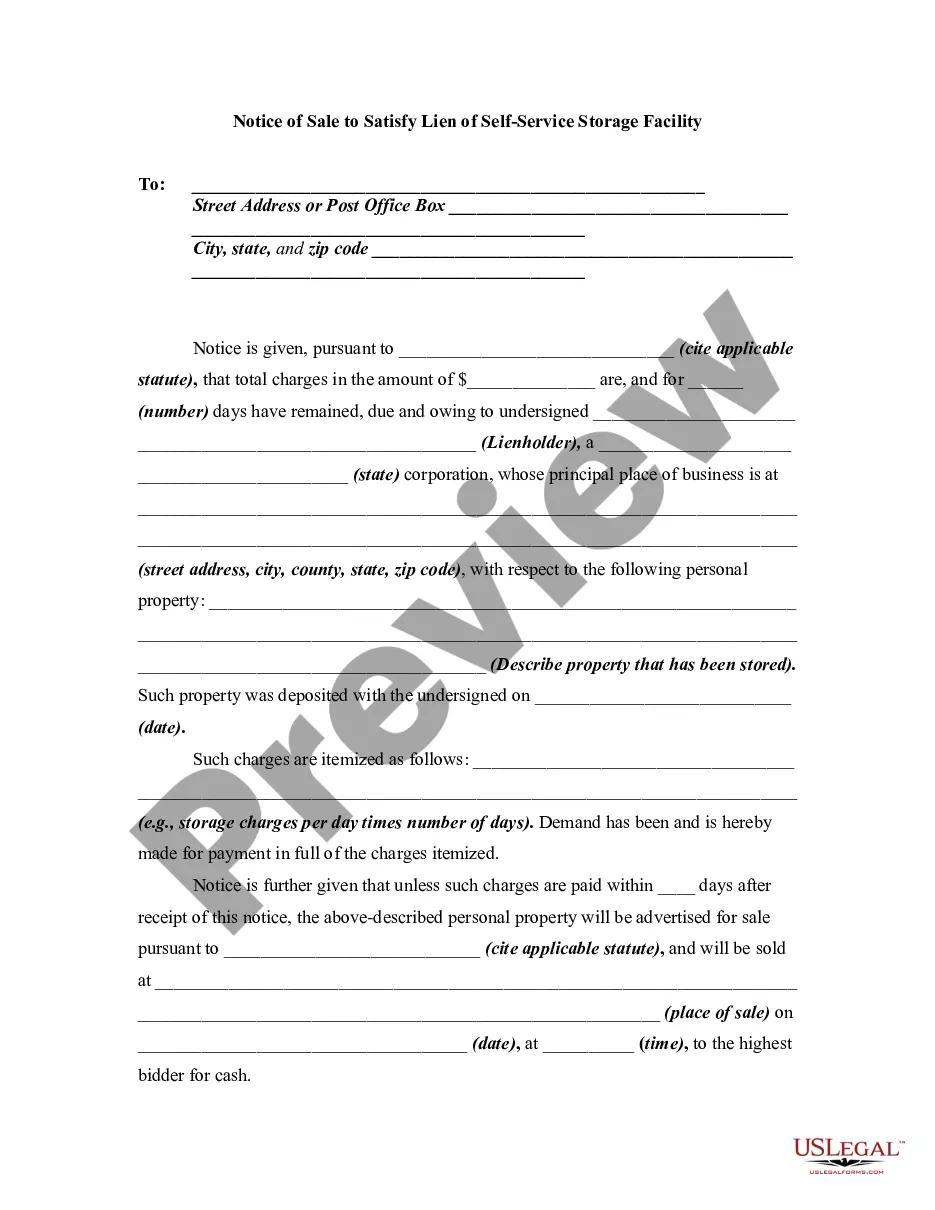
Notice of Sale to Satisfy Lien of Self-Service Storage Facility
What is this form?
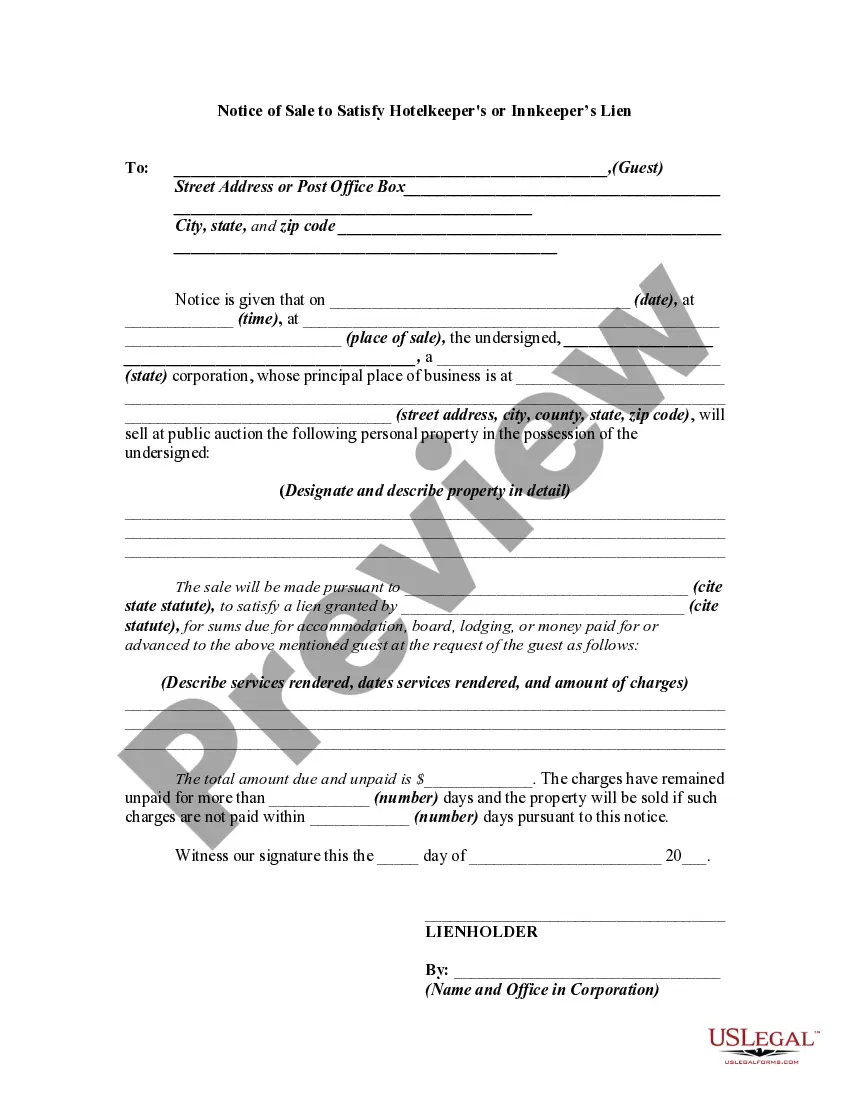
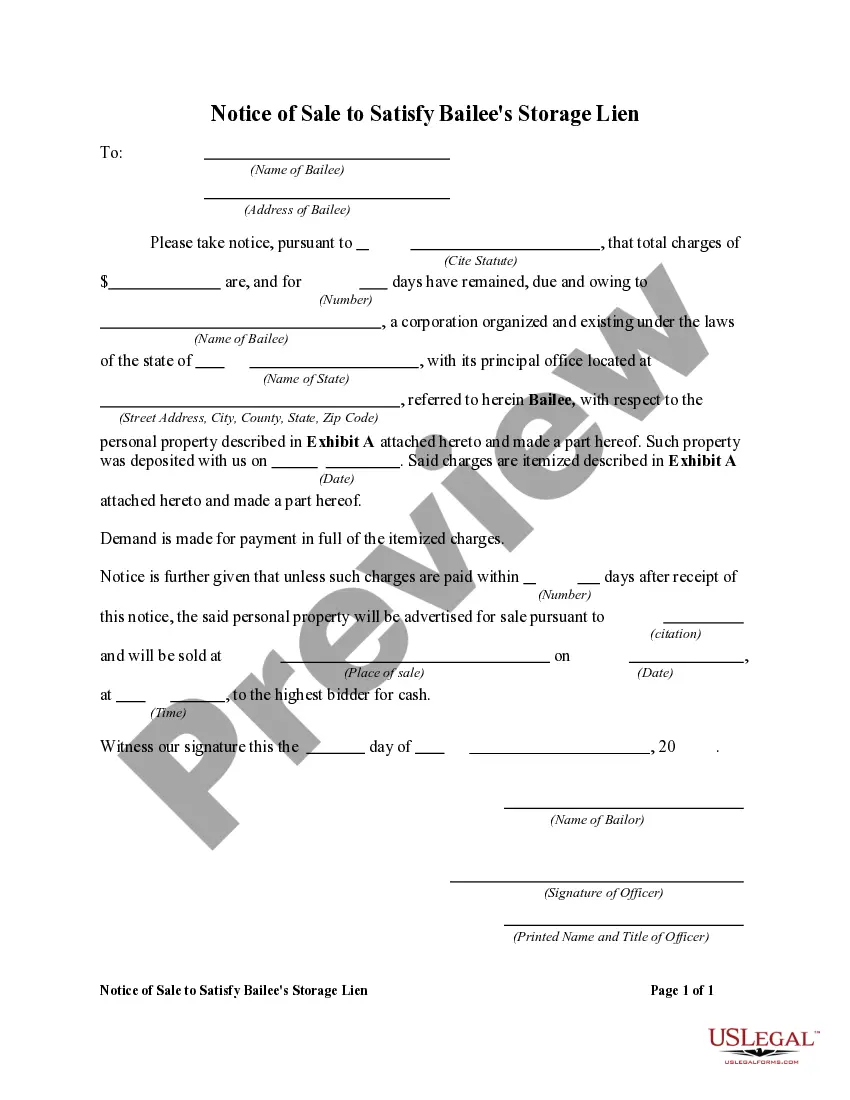
The Notice of Sale to Satisfy Lien of Self-Service Storage Facility is a legal document used by storage facility owners to inform customers of unpaid charges and the potential sale of their stored property. This notice serves to meet statutory requirements before any sale actions are taken. Unlike general notices, this form specifically outlines the situation regarding stored personal property and provides necessary legal citations relevant to the lien and sale process.
Key components of this form
- Recipient's name and address - Identifies the owner of the stored property.
- Amount due - Lists the total charges that are unpaid.
- Description of the property - Details the personal property subject to lien.
- Statutory citation - References the relevant laws applicable to the notice.
- Payment deadline - Specifies the time frame to settle the charges before the sale occurs.
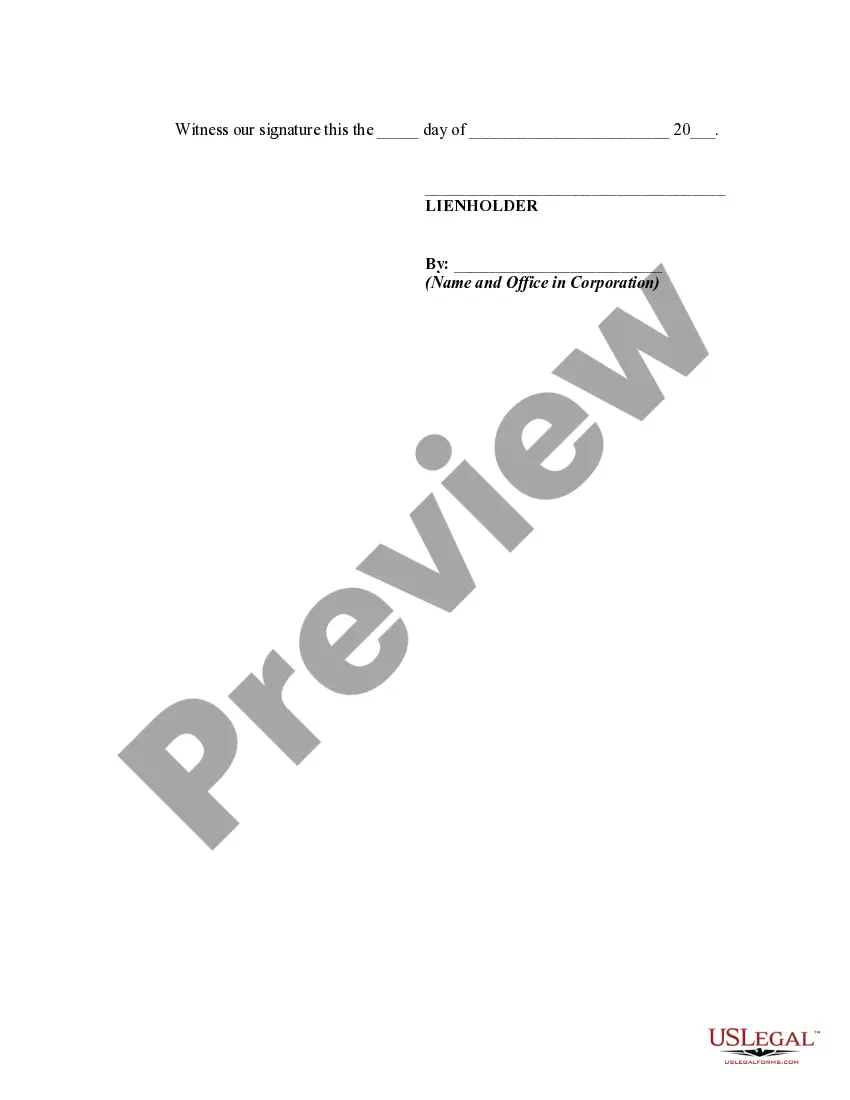
- Signature of the lienholder - Provides legal acknowledgment of the notice.

When to use this document
This form is essential when a self-service storage facility needs to notify a customer about overdue charges that may result in the sale of their stored items. Common situations include failure to pay rent for storage spaces, disputes over final payment amounts, or instances where items have remained unclaimed for an extended period. Using this notice ensures legal compliance and protects the storage facility's rights to recoup unpaid fees.
Intended users of this form
- Storage facility owners or operators looking to recover unpaid storage fees.
- Legal representatives handling issues related to storage liens for clients.
- Individuals managing personal storage units who need to enforce payment contracts.
How to prepare this document
- Identify the recipient by entering their name and address at the top of the form.
- State the total amount due for storage fees and the duration these charges have remained unpaid.
- Provide a detailed description of the property being held under lien.
- Cite the relevant statute that applies to your Notice of Sale.
- Specify the deadline for payment and the details of the sale (date, time, and location) if payment is not received.
- Sign and date the form, including your title as the lienholder for authenticity.
Is notarization required?
This form does not typically require notarization unless specified by local law. It is advisable to check state regulations for any requirements that may necessitate notarization to ensure that your document is legally binding.
Get your form ready online
Our built-in tools help you complete, sign, share, and store your documents in one place.
Make edits, fill in missing information, and update formatting in US Legal Forms—just like you would in MS Word.
Download a copy, print it, send it by email, or mail it via USPS—whatever works best for your next step.
Sign and collect signatures with our SignNow integration. Send to multiple recipients, set reminders, and more. Go Premium to unlock E-Sign.
If this form requires notarization, complete it online through a secure video call—no need to meet a notary in person or wait for an appointment.
We protect your documents and personal data by following strict security and privacy standards.

Make edits, fill in missing information, and update formatting in US Legal Forms—just like you would in MS Word.

Download a copy, print it, send it by email, or mail it via USPS—whatever works best for your next step.

Sign and collect signatures with our SignNow integration. Send to multiple recipients, set reminders, and more. Go Premium to unlock E-Sign.

If this form requires notarization, complete it online through a secure video call—no need to meet a notary in person or wait for an appointment.

We protect your documents and personal data by following strict security and privacy standards.
Mistakes to watch out for
- Failing to include accurate and clear descriptions of the property.
- Not properly citing the applicable statutes for notifying the occupant.
- Missing deadlines for payment could undermine the validity of the notice.
- Omitting signatures or not including sufficient contact information for the lienholder.
Benefits of using this form online
- Immediate access to a professionally drafted document tailored to your needs.
- Easy customization to include specific details regarding the property and fees.
- Reliable adherence to legal requirements and minimized risk of errors.
Looking for another form?







Form popularity
FAQ
The Notice of Sale to Satisfy Lien of Self-Service Storage Facility is a legal notice used by storage facility owners to inform a customer about unpaid charges and the potential sale of stored property. It helps meet statutory requirements before any sale. The form includes the recipient’s name and address, the amount due, a description of the property, a statutory citation, a payment deadline, and the lienholder’s signature.
This form requires the recipient’s name and address, the amount due, a description of the property subject to the lien, a statutory citation, a payment deadline, and the signature of the lienholder. It’s designed to clearly identify the owed charges, the items tied to the lien, the legal authority, and the deadline before any sale may proceed, helping ensure compliance.
This notice should be issued when a storage facility has unpaid charges that may lead to a sale of stored items. It informs the customer of the debt, references the applicable law, and provides a payment deadline. Issuing it helps the facility pursue recovery while complying with statutory requirements before any sale occurs.
The recipient is the person or entity who owns or controls the stored property at issue, identified by name and address on the notice. The lienholder signs to acknowledge receipt and legal intent. The form’s components ensure the notice is properly directed and authenticated before any sale actions.
If the payment deadline passes without full payment, the storage facility may proceed with selling the described personal property to satisfy the lien, as permitted by the form’s guidance and applicable law. This sequence ensures the facility can recoup unpaid fees while following authorized procedures.
This form is sale‑oriented: it informs the customer about a sale to satisfy the lien and includes a defined payment deadline and statutory citation. In contrast, a general storage lien notice may only state the lien and owed charges without indicating an imminent sale or the specific sale terms.