General Form of an Answer by Defendant in a Civil Lawsuit
About this form
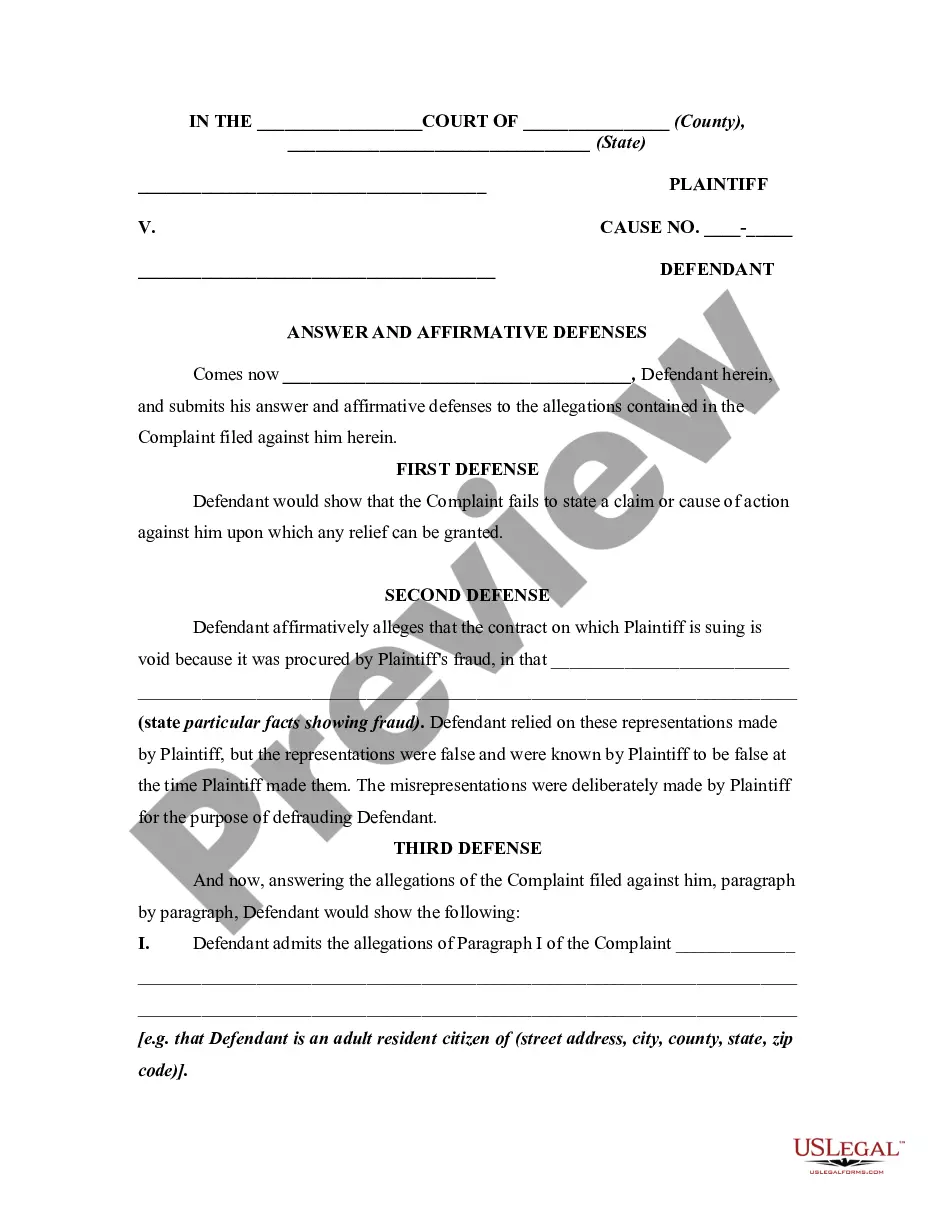
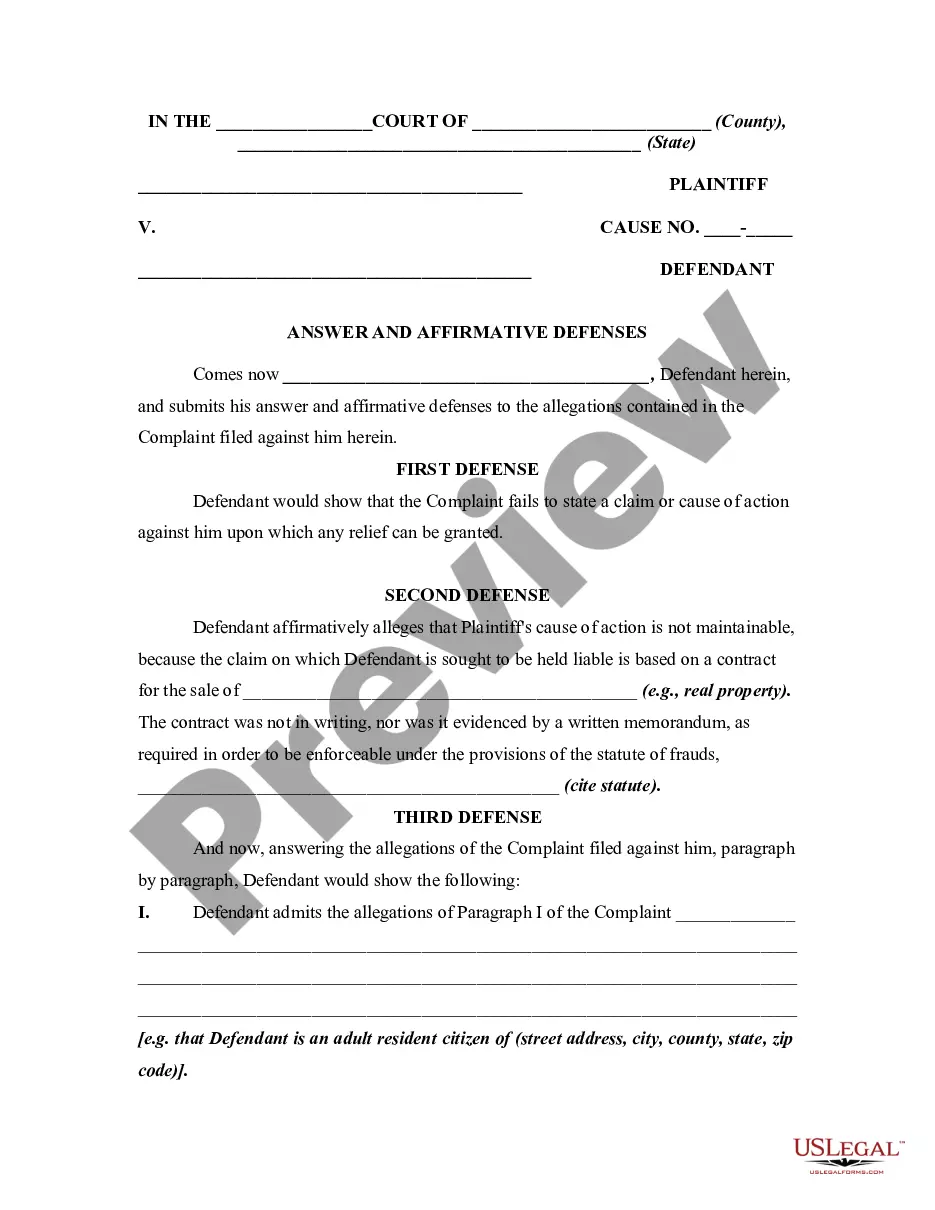
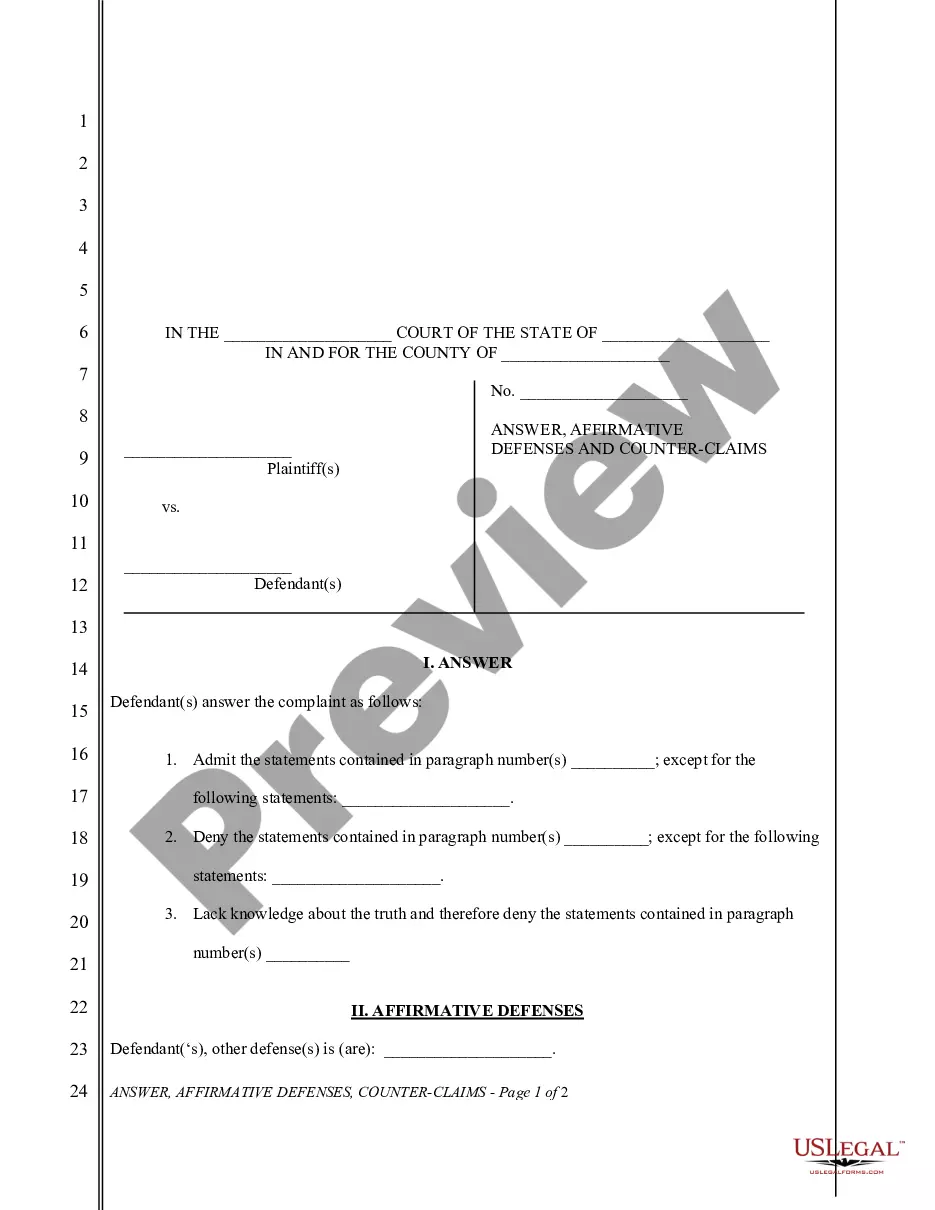
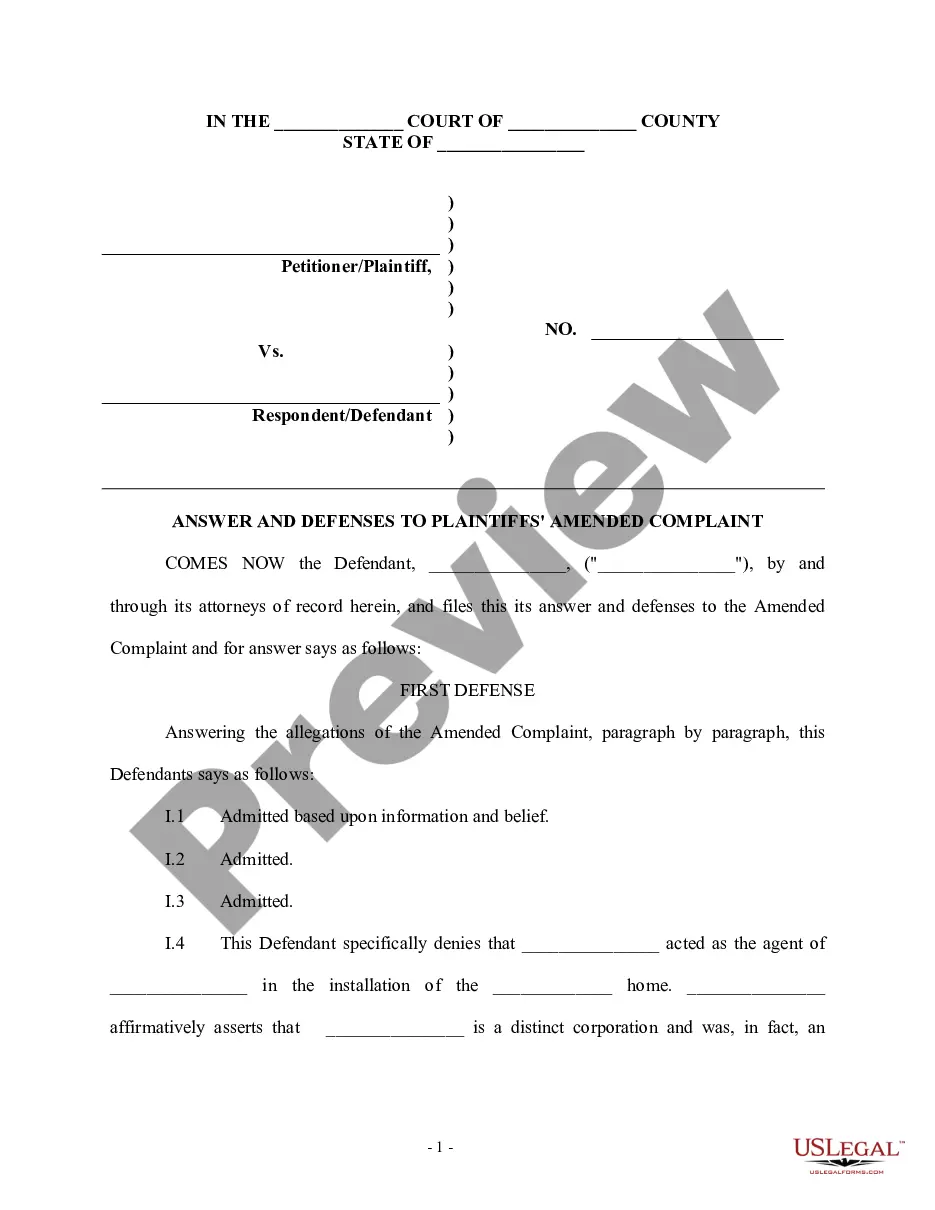
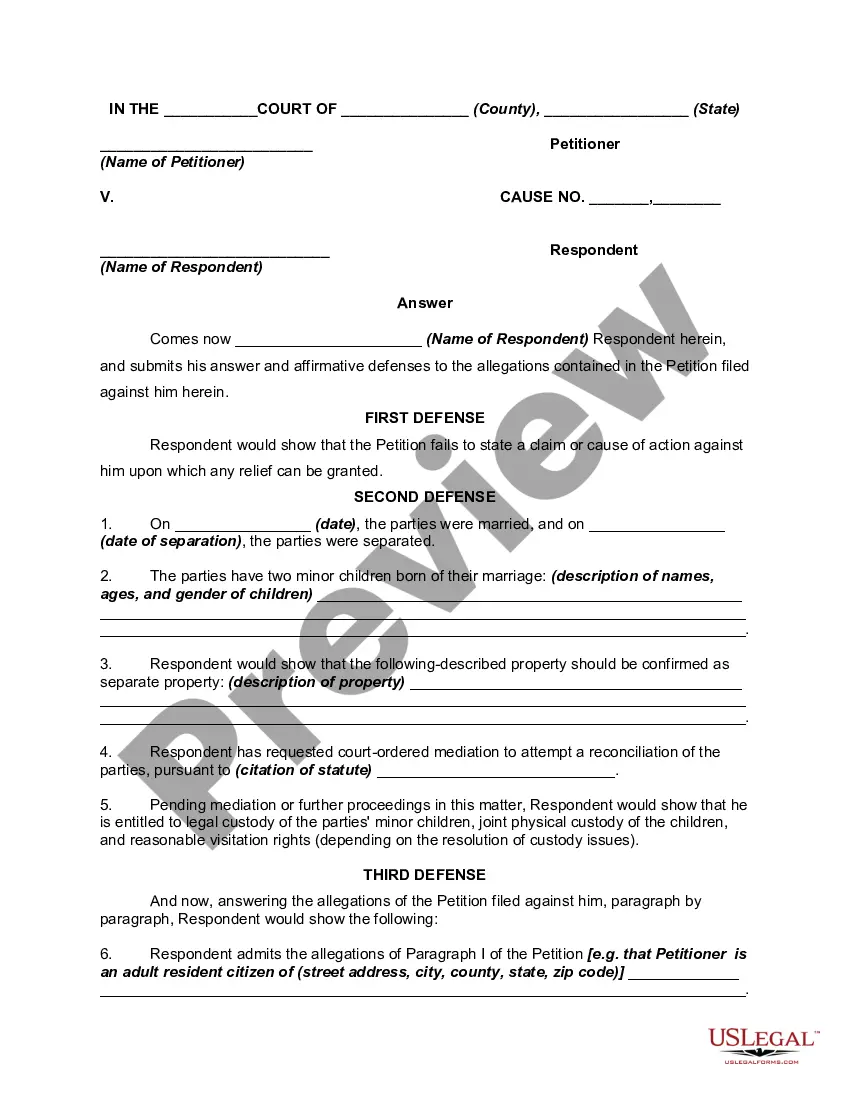
The General Form of an Answer by Defendant in a Civil Lawsuit is a legal document that allows a defendant to respond to the allegations made against them in a civil lawsuit. This form distinguishes itself by not only providing a response to the complaint but also allowing for the introduction of affirmative defenses, which may mitigate or reduce the potential liability of the defendant.
Key components of this form
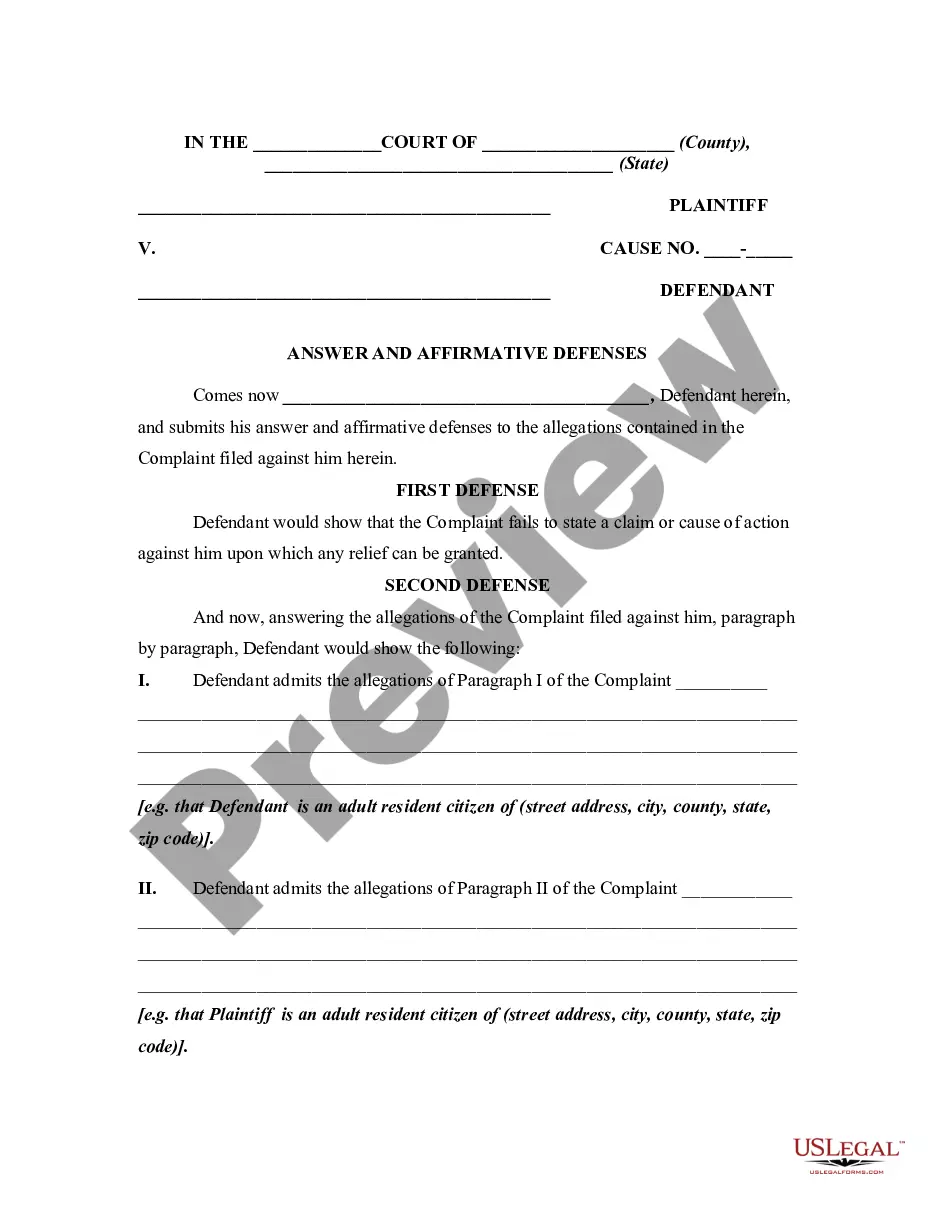
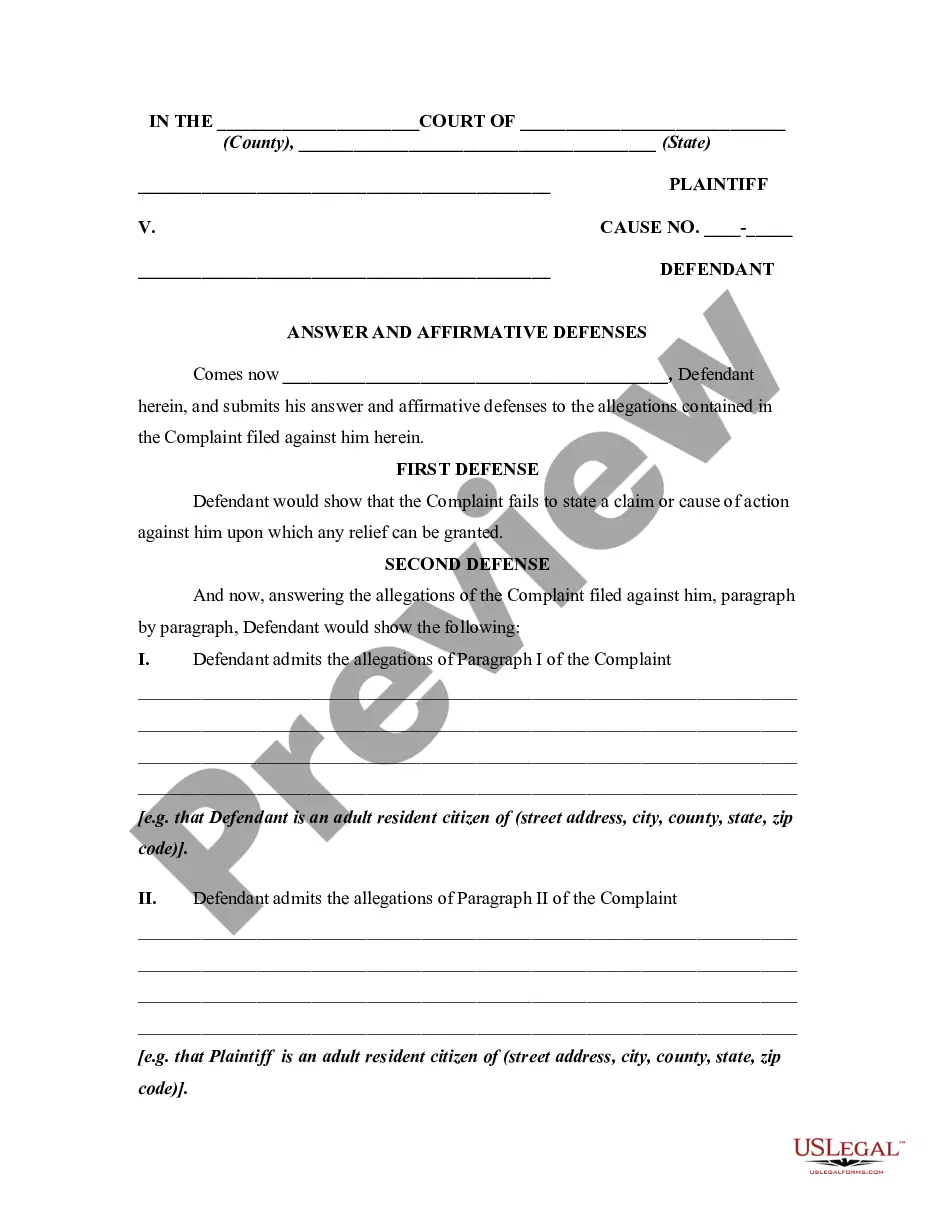
- Title and court information, including names of the plaintiff and defendant.
- An introductory section stating the defendant's submission of their answer.
- A section for presenting affirmative defenses against the claims made in the complaint.
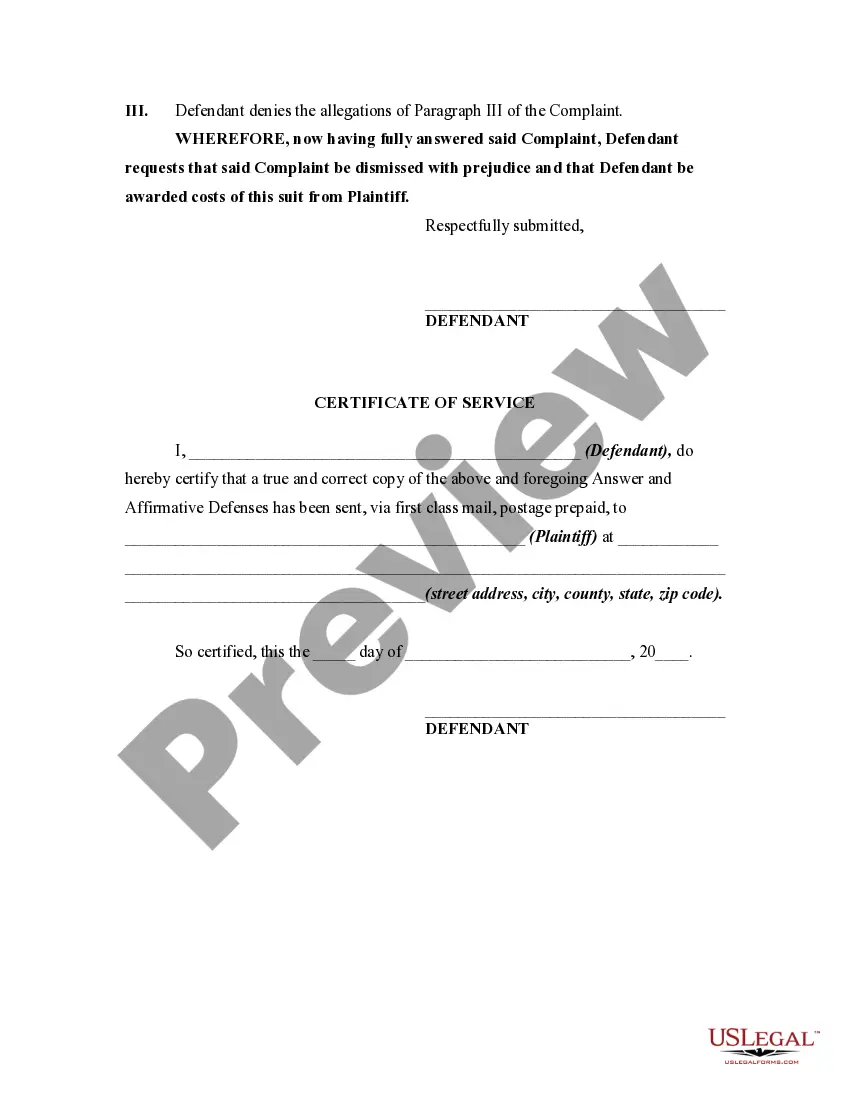
- Numbered paragraphs for addressing each allegation in the complaint, with options to admit or deny them.
- A concluding section requesting the dismissal of the complaint and an award of costs.
- A certificate of service confirming that the answer has been delivered to the plaintiff.
Common use cases
This form should be used when a defendant is formally responding to a civil lawsuit. It is appropriate in cases where the defendant wishes to contest the claims made against them, either by admitting or denying specific allegations. Additionally, this form allows the defendant to present any affirmative defenses that may apply to the case, thereby establishing a legal argument for dismissal of the claims.
Who needs this form
This form is intended for:
- Defendants in a civil lawsuit needing to provide a formal response to a complaint.
- Individuals or businesses facing civil claims in court and requiring legal documentation for their defense.
- Parties who seek to articulate any affirmative defenses as part of their response.
Completing this form step by step
- Identify and fill in the court information, including the name of the court and the county.
- Clearly state the plaintiff's and defendant's names as they appear in the complaint.
- Number the defenses sequentially and provide a detailed response to each allegation outlined in the complaint.
- Conclude the form by clearly stating your request for dismissal of the complaint and any costs associated with the lawsuit.
- Sign and date the document, ensuring that you include the certificate of service for the plaintiff.
Notarization requirements for this form
This form does not typically require notarization to be legally valid. However, some jurisdictions or document types may still require it. US Legal Forms provides secure online notarization powered by Notarize, available 24/7 for added convenience.
Get your form ready online
Our built-in tools help you complete, sign, share, and store your documents in one place.
Make edits, fill in missing information, and update formatting in US Legal Forms—just like you would in MS Word.
Download a copy, print it, send it by email, or mail it via USPS—whatever works best for your next step.
Sign and collect signatures with our SignNow integration. Send to multiple recipients, set reminders, and more. Go Premium to unlock E-Sign.
If this form requires notarization, complete it online through a secure video call—no need to meet a notary in person or wait for an appointment.
We protect your documents and personal data by following strict security and privacy standards.

Make edits, fill in missing information, and update formatting in US Legal Forms—just like you would in MS Word.

Download a copy, print it, send it by email, or mail it via USPS—whatever works best for your next step.

Sign and collect signatures with our SignNow integration. Send to multiple recipients, set reminders, and more. Go Premium to unlock E-Sign.

If this form requires notarization, complete it online through a secure video call—no need to meet a notary in person or wait for an appointment.

We protect your documents and personal data by following strict security and privacy standards.
Typical mistakes to avoid
- Failing to address each allegation separately as required.
- Omitting affirmative defenses that could be critical for the case.
- Not properly signing or dating the document, which can lead to delays.
- Neglecting to serve a copy of the answer to the plaintiff.
Benefits of using this form online
- Convenient access to a legally vetted template that saves time and reduces errors.
- Easily editable to suit specific circumstances or jurisdictional requirements.
- Immediate download allows for quick completion and filing.
Looking for another form?
Form popularity
FAQ
The General Form of an Answer by Defendant in a Civil Lawsuit is the defendant’s formal reply to the plaintiff’s allegations. It answers each claim and allows the defendant to raise affirmative defenses that may reduce liability. The form includes title and court information, an introductory statement, numbered responses, a closing request for dismissal and costs, and a certificate of service.
An answer is the formal written statement by a defendant responding to a civil complaint. In this form, the answer provides admissions or denials for each allegation and includes space to present affirmative defenses, helping to frame why the claims should be contested and guiding subsequent court filings.
To write an answer using this form, start with the title and court information, add an introductory statement, then address each allegation in numbered paragraphs by admitting or denying them. Include any affirmative defenses, then conclude with a request to dismiss the complaint and an award of costs, and finish with a certificate of service.
Common mistakes include failing to admit or deny each allegation, omitting any affirmative defenses, not providing the basis for defenses, including incomplete party or court information, and failing to file or serve the answer correctly. Additionally, neglecting to attach a certificate of service can create delays.
In civil procedure, an answer is the defendant’s formal response to the complaint. This form helps ensure the response admits or denies each allegation, raises affirmative defenses, and requests dismissal and costs. Filing and serving the answer starts the defense in court and sets the procedural timeline.
This General Form is different because it explicitly includes a section for affirmative defenses and a closing request for dismissal and costs. Unlike generic answers, this form guides the defendant to assert defenses beyond simple admissions or denials, making the response more comprehensive and procedurally complete.