Burden of Proof - Physical Evidence Not Produced
What is this form?
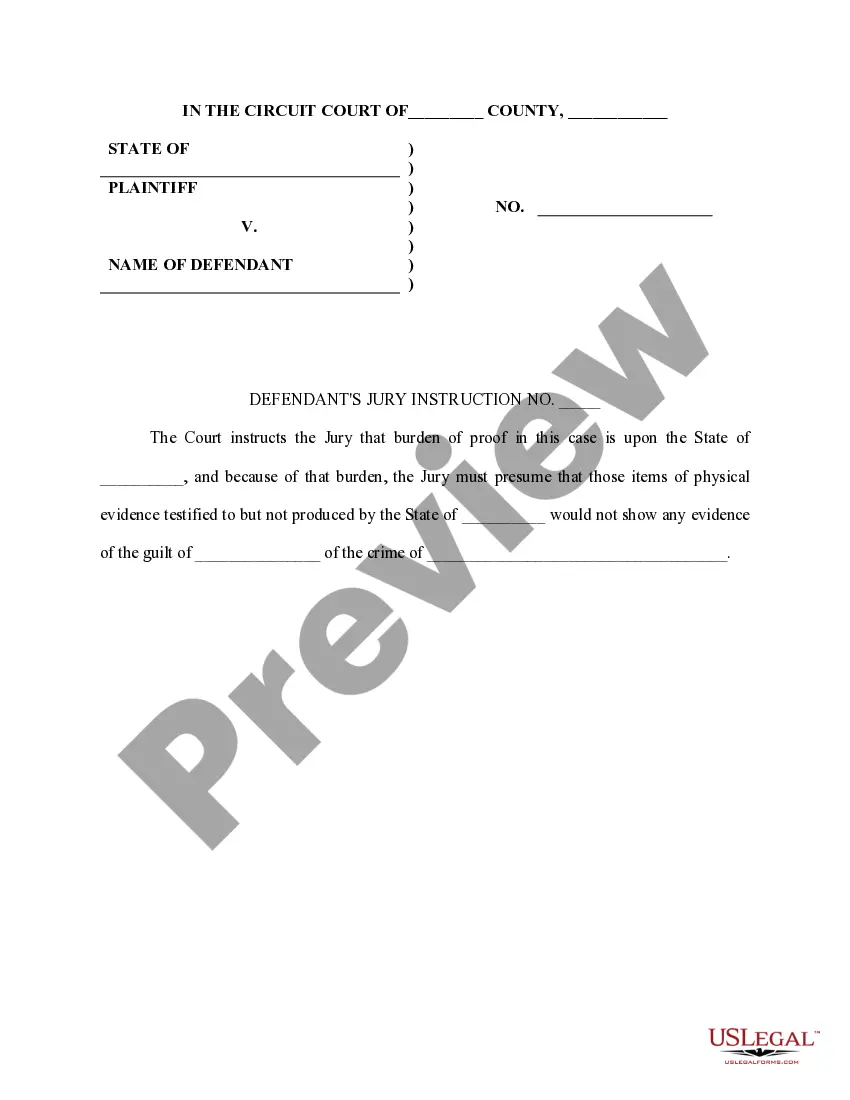
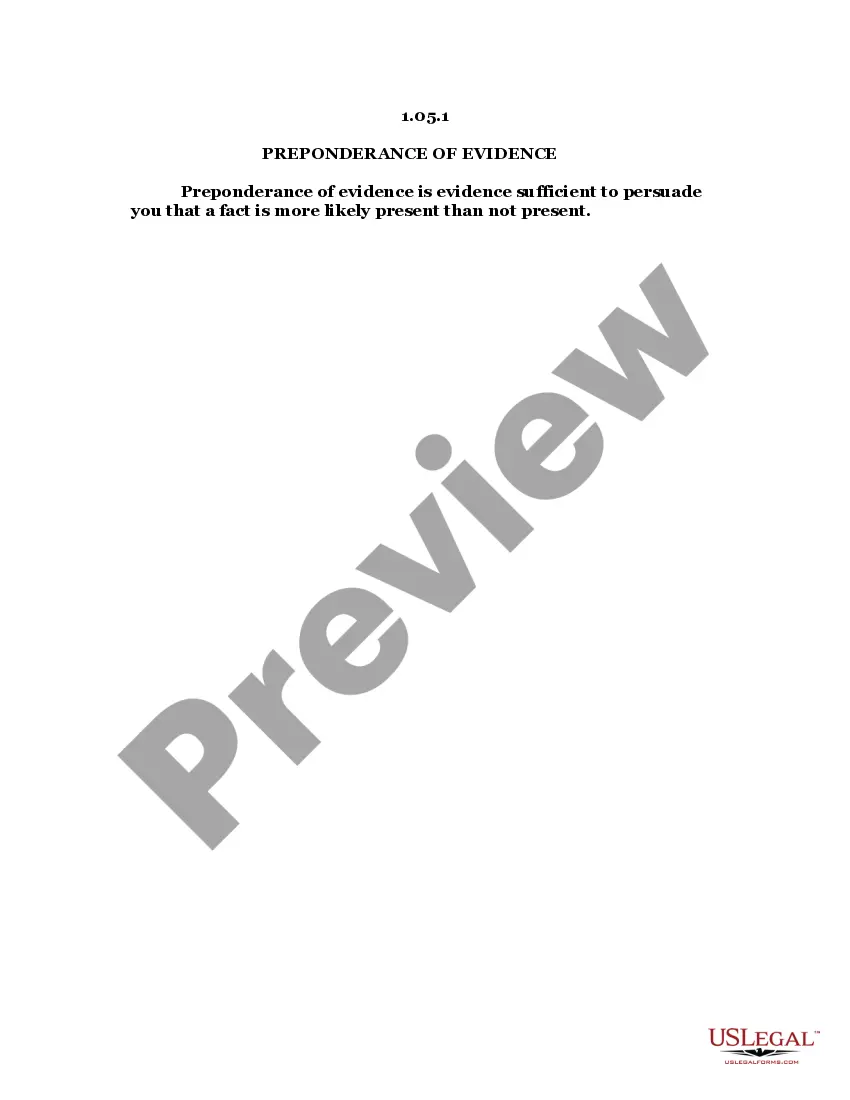
The Burden of Proof - Physical Evidence Not Produced is a legal instruction designed to inform the jury about the responsibility of the state to prove the defendant's guilt. This form provides specific guidance regarding the presumption related to any physical evidence that was not presented in court. It is particularly significant in criminal cases, distinguishing it from other types of legal instructions by focusing on the stateâs obligation to provide evidence against the accused.
Key parts of this document
- Identification of the state responsible for the prosecution.
- Direction to the jury regarding the presumption of evidence not produced.
- Clarification of the burden of proof resting on the state.
- Specific mention of the defendant and the crime charged.
When this form is needed
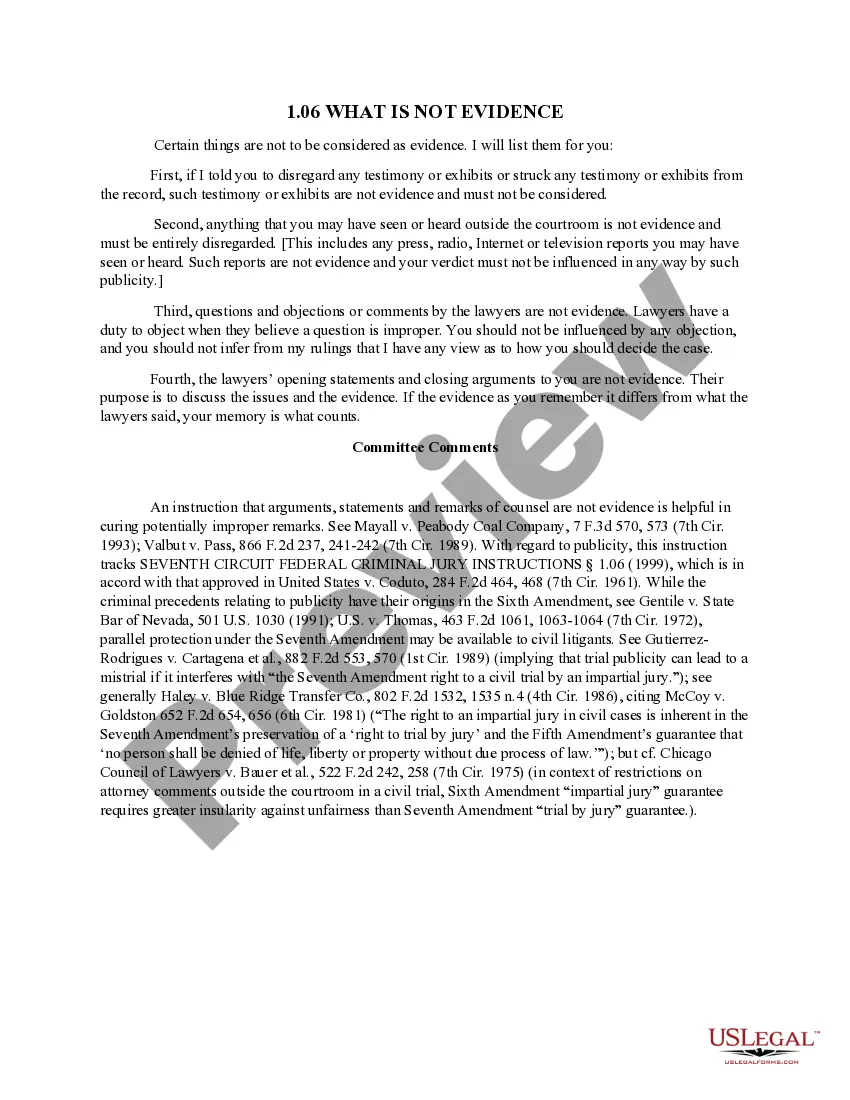
This form is used in criminal trials where the prosecution has failed to present physical evidence. It is essential when the defense argues that the absence of certain evidence raises reasonable doubt about the defendant's guilt. This instruction helps to ensure that the jury understands the implications of evidence not provided by the state, contributing to a fair trial process.
Who can use this document
- Judges presiding over criminal trials.
- Attorneys representing defendants in criminal cases.
- Legal professionals involved in drafting jury instructions.
How to complete this form
- Identify the state prosecuting the case.
- Specify the defendant's name and the charges against them.
- Articulate the physical evidence that is being referred to.
- Provide any additional context necessary for the jury to understand the implications of absent evidence.
Is notarization required?
This form does not typically require notarization unless specified by local law.
Get your form ready online
Our built-in tools help you complete, sign, share, and store your documents in one place.
Make edits, fill in missing information, and update formatting in US Legal Forms—just like you would in MS Word.
Download a copy, print it, send it by email, or mail it via USPS—whatever works best for your next step.
Sign and collect signatures with our SignNow integration. Send to multiple recipients, set reminders, and more. Go Premium to unlock E-Sign.
If this form requires notarization, complete it online through a secure video call—no need to meet a notary in person or wait for an appointment.
We protect your documents and personal data by following strict security and privacy standards.

Make edits, fill in missing information, and update formatting in US Legal Forms—just like you would in MS Word.

Download a copy, print it, send it by email, or mail it via USPS—whatever works best for your next step.

Sign and collect signatures with our SignNow integration. Send to multiple recipients, set reminders, and more. Go Premium to unlock E-Sign.

If this form requires notarization, complete it online through a secure video call—no need to meet a notary in person or wait for an appointment.

We protect your documents and personal data by following strict security and privacy standards.
Common mistakes to avoid
- Failing to accurately identify the state prosecuting the case.
- Omitting the specific charges against the defendant.
- Using vague language that can confuse the jury about the lack of evidence.
Why use this form online
- Convenience of downloading and customizing the form at your convenience.
- Access to templates prepared by licensed attorneys for accuracy.
- Ability to edit the form to suit specific case needs before submission.
Legal use & context
- This form is legally binding as an instruction provided to jurors during a trial.
- It is crucial for maintaining the presumption of innocence in criminal proceedings.
- Understanding this form helps jurors evaluate evidence impartially.
What to keep in mind
- The burden of proof rests with the prosecution in criminal trials.
- Absence of physical evidence can affect the jury's perception of guilt.
- This form ensures proper legal guidance for jury considerations.
Looking for another form?





Form popularity
FAQ
Burden of proof can define the duty placed upon a party to prove or disprove a disputed fact, or it can define which party bears this burden. In criminal cases, the burden of proof is placed on the prosecution, who must demonstrate that the defendant is guilty before a jury may convict him or her.
In a civil lawsuit, the burden of proof rests on the plaintiff or the person filing the suit. The plaintiff should prove that the allegations are true and that the defendant, or the other party, caused damages. When it comes to establishing a civil case, the plaintiff must usually do so by a preponderance of evidence.
In a civil lawsuit, the burden of proof rests on the plaintiff or the person filing the suit. The plaintiff should prove that the allegations are true and that the defendant, or the other party, caused damages. When it comes to establishing a civil case, the plaintiff must usually do so by a preponderance of evidence.
The three primary standards of proof are proof beyond a reasonable doubt, preponderance of the evidence and clear and convincing evidence.
Conclusion. The rule governing the burden of proof is that whoever lays a claim must present evidence or proof. This rule is subject to the principles that the burden of proof rests on the party that either asserts a claim or denies it.
For example, in criminal cases, the burden of proving the defendant's guilt is on the prosecution, and they must establish that fact beyond a reasonable doubt. In civil cases, the plaintiff has the burden of proving his case by a preponderance of the evidence.
In a civil lawsuit, the burden of proof rests on the plaintiff or the person filing the suit. The plaintiff should prove that the allegations are true and that the defendant, or the other party, caused damages. When it comes to establishing a civil case, the plaintiff must usually do so by a preponderance of evidence.
The burden of proof in a criminal case rests on the prosecution, with no requirement that the defendant prove that he is innocent.In a criminal matter, the prosecution must prove, beyond a reasonable doubt, that the defendant did the deed.