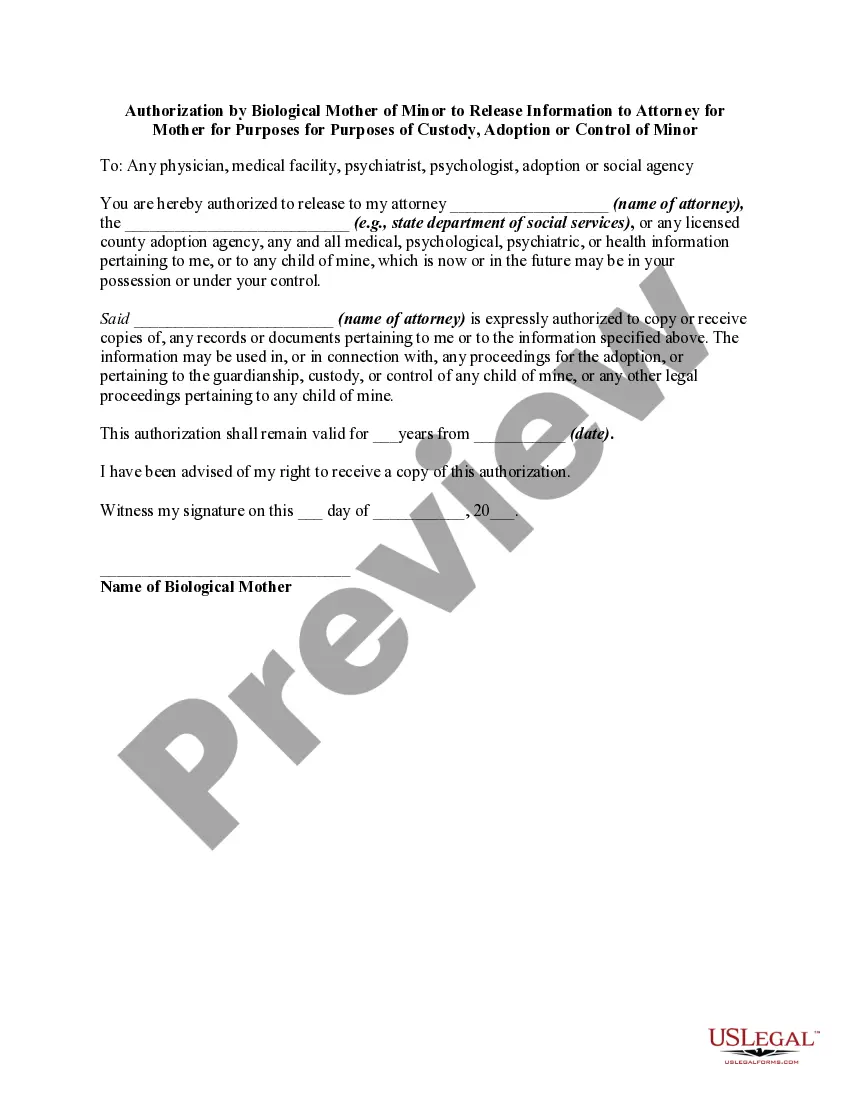
Authorization by Biological Mother of Minor to Release Information to Attorney for Mother for Purposes of Custody, Adoption or Control of Minor
About this form
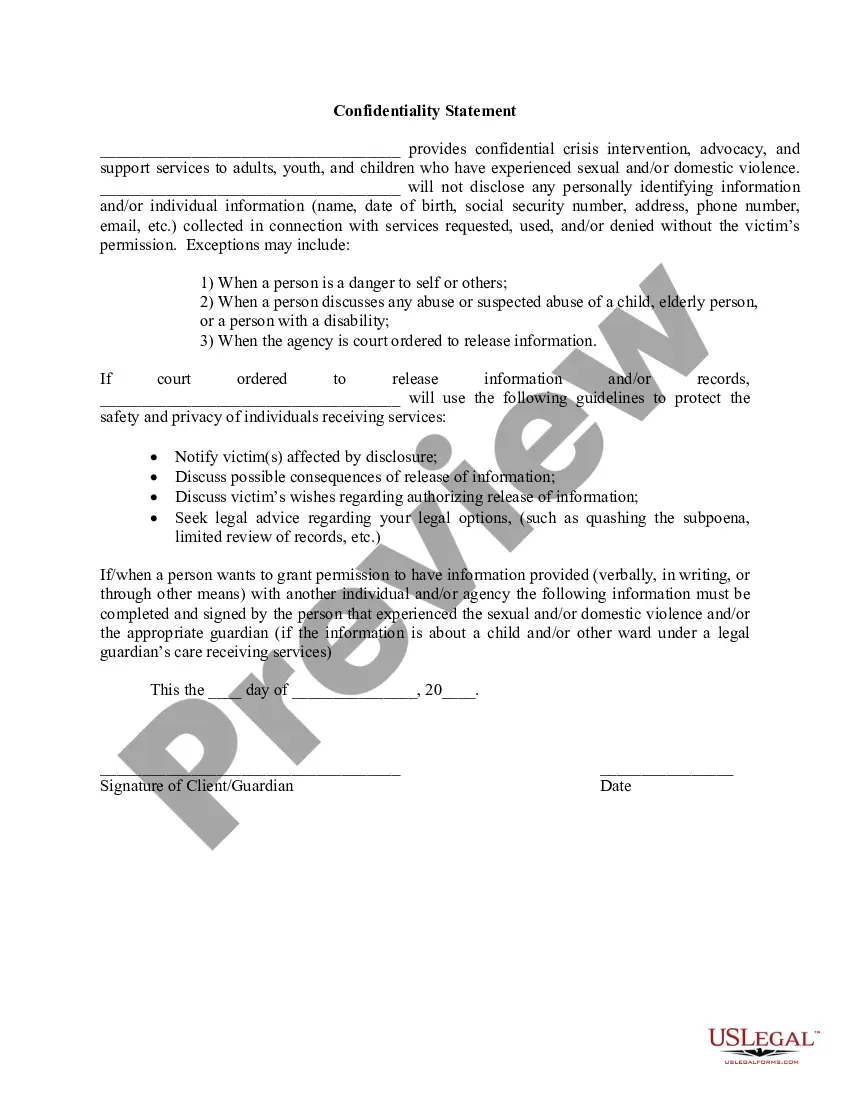
The Authorization by Biological Mother of Minor to Release Information to Attorney for Mother for Purposes of Custody, Adoption or Control of Minor is a legal document that allows a biological mother to authorize the release of medical, psychological, and health information concerning her and her child to her attorney. This form is crucial during the adoption process as it ensures that pertinent information is accessible for legal proceedings relating to custody or adoption of the minor, differentiating it from general medical release forms by focusing on adoption and custody contexts.
Key components of this form
- Authorization statement detailing the physician and facility to release information.
- Space for the name of the attorney receiving the information.
- Specification of the types of records to be released (medical, psychological, etc.).
- Duration of the authorization's validity.
- Signature of the biological mother, including the date of signing.
When to use this document
This form should be used when a biological mother wants to provide her attorney with access to necessary medical and psychological information regarding her and her child as part of the adoption or custody proceedings. Situations can include initiating an adoption, preparing for custody battles, or transferring guardianship rights where professional evaluations and records are needed.
Intended users of this form
- Biological mothers who are undergoing adoption processes.
- Biological mothers seeking to modify custody arrangements.
- Legal representatives of biological mothers involved in custody or adoption cases.
Steps to complete this form
- Identify the attorney who will receive the information and enter their full name.
- Specify the medical professionals or institutions authorized to release the information.
- Clearly indicate the types of records or information to be disclosed.
- Fill in the expiration date of the authorization.
- Sign and date the form to validate the authorization.
Notarization guidance
This form does not typically require notarization unless specified by local law. However, it is recommended to consult with a legal professional to confirm if notarization is necessary in your jurisdiction.
Get your form ready online
Our built-in tools help you complete, sign, share, and store your documents in one place.
Make edits, fill in missing information, and update formatting in US Legal Forms—just like you would in MS Word.
Download a copy, print it, send it by email, or mail it via USPS—whatever works best for your next step.
Sign and collect signatures with our SignNow integration. Send to multiple recipients, set reminders, and more. Go Premium to unlock E-Sign.
If this form requires notarization, complete it online through a secure video call—no need to meet a notary in person or wait for an appointment.
We protect your documents and personal data by following strict security and privacy standards.

Make edits, fill in missing information, and update formatting in US Legal Forms—just like you would in MS Word.

Download a copy, print it, send it by email, or mail it via USPS—whatever works best for your next step.

Sign and collect signatures with our SignNow integration. Send to multiple recipients, set reminders, and more. Go Premium to unlock E-Sign.

If this form requires notarization, complete it online through a secure video call—no need to meet a notary in person or wait for an appointment.

We protect your documents and personal data by following strict security and privacy standards.
Typical mistakes to avoid
- Failing to include the full name of the attorney receiving the information.
- Not specifying all relevant types of records and information.
- Neglecting to date and sign the form, which can render it invalid.
- Overlooking state-specific requirements that may alter the validity of the form.
Benefits of completing this form online
- Convenient access to legal forms from anywhere.
- Ability to edit and customize the form to fit individual needs.
- Reliable templates drafted by licensed attorneys to ensure legality.
Legal use & context
- Authorizing the release of medical information is critical for the adoption process.
- The signed form ensures that all legal agencies involved have the necessary documentation.
- Does not constitute legal advice and should be used in conjunction with legal counsel.
Main things to remember
- The form allows access to vital information needed for adoption and custody cases.
- Properly completing the form is essential for a smooth legal process.
- Check local requirements to ensure the authorization complies with state laws.
Glossary of terms used in this form
- Authorization: Permission granted to release information.
- Custody: The legal right to care for a child.
- Adoption: The legal process by which a person becomes the lawful parent of someone else's child.
Looking for another form?
Form popularity
FAQ
1 attorney answer There is no legal significance to someone being named a Godparent. If you want to name her as the person to be named the child's custodian in the event of your death, you can do that through a will. You need to consult with a local attorney.
Adults and emancipated minors sign their own authorization form as long as they have authority to make health decisions for themselves. HIPAA defers to state law to define who signs an authorization on behalf of an unemancipated minor.
In general, a grandparent seeking full care and custody of a grandchild may file a petition for custody with the court.The child's parents have been deemed unfit to retain custody. The child's parents consent to grandparent custody. The child has lived with a grandparent or grandparents for a year or more.
"Say something like, 'We've been good friends for a while, and you know our child well and know how important she is to us,'" Dr. Collins suggests. Talk about the values that you share and, if he has any children of his own, about how you respect the way he is raising his own kids.
Generally, the only way to remove parental responsibility from someone is to make an application to the Court. Although if someone has been given parental responsibility through a court order, then that responsibility would end once the court order is no longer in force.
Yes, the Privacy Rule generally allows a parent to have access to the medical records about his or her child, as his or her minor child's personal representative when such access is not inconsistent with State or other law.When the minor obtains care at the direction of a court or a person appointed by the court; and.
A legal guardian is a person who has been court appointed to care for another person, and make decisions on their behalf. Essentially, a legal guardian assumes legal responsibility over another person. They have been granted the legal authority to care for their ward's personal and property interests.
To appoint legal guardians for your children, you must name them as your chosen guardians in your Will. Before doing this you will need to approach the people you would like to appoint as guardians to find out whether they are willing and able to take on this responsibility.
Fill out the forms. Adult's Statement - Guardianship of Child (0.01 MB) Claim - Family Law Act (0.1 MB) File your order. Do this at the same court, in the same location, where you've either: already been to court with the other party. started any court action that hasn't gone to court.