Release, Waiver of Liability, and Assumption of all Risks of Personal Bodily Injury and Damage to Property for Use of Recording Studio
What is this form?
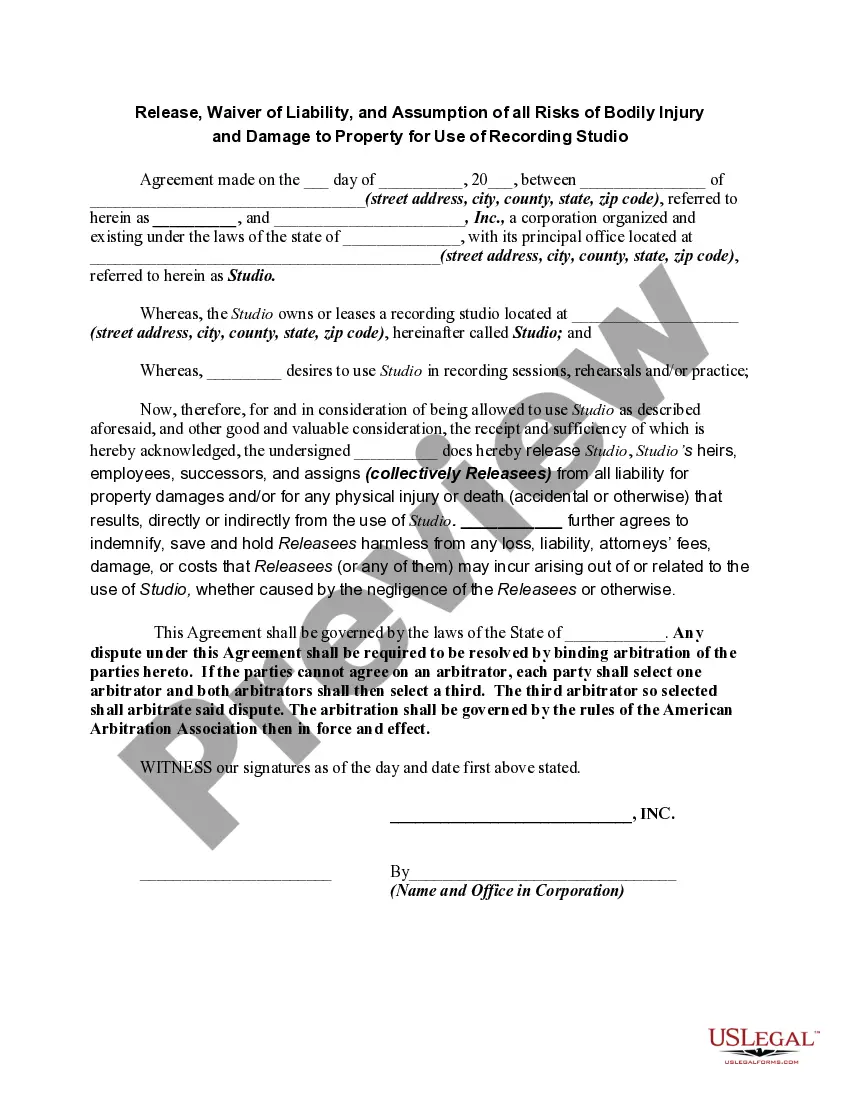
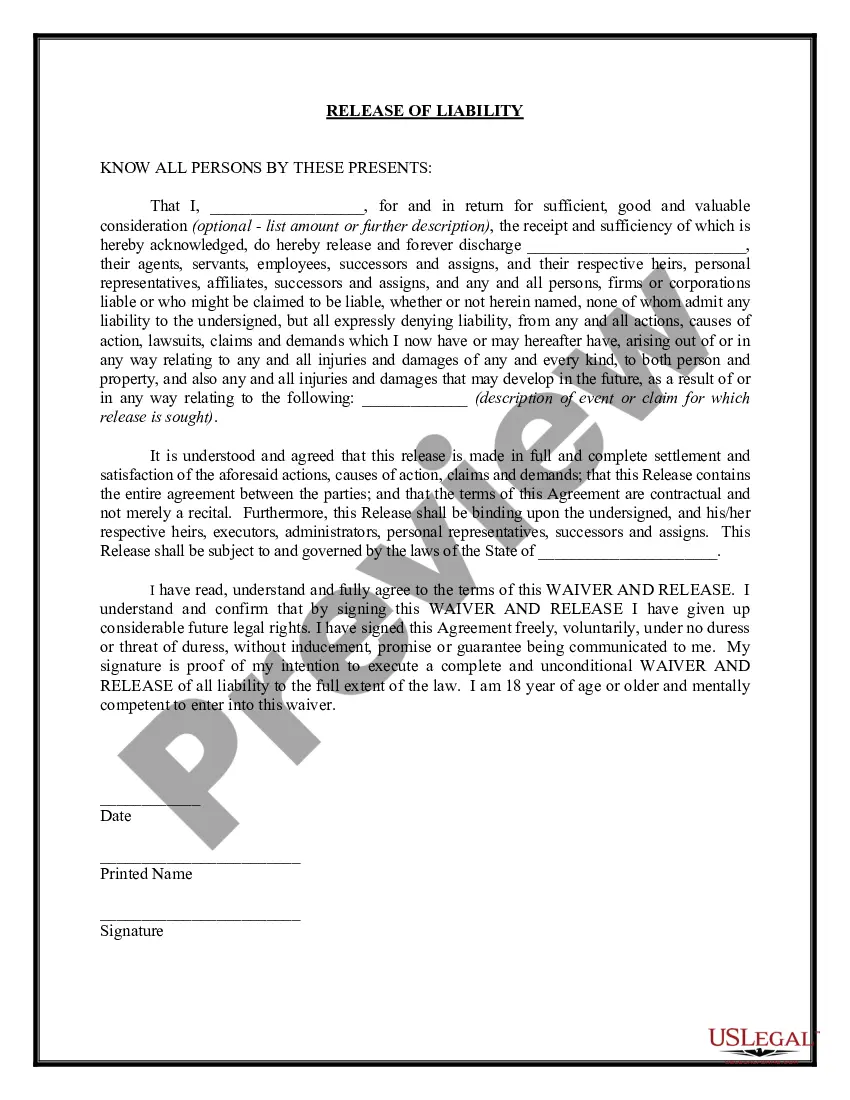
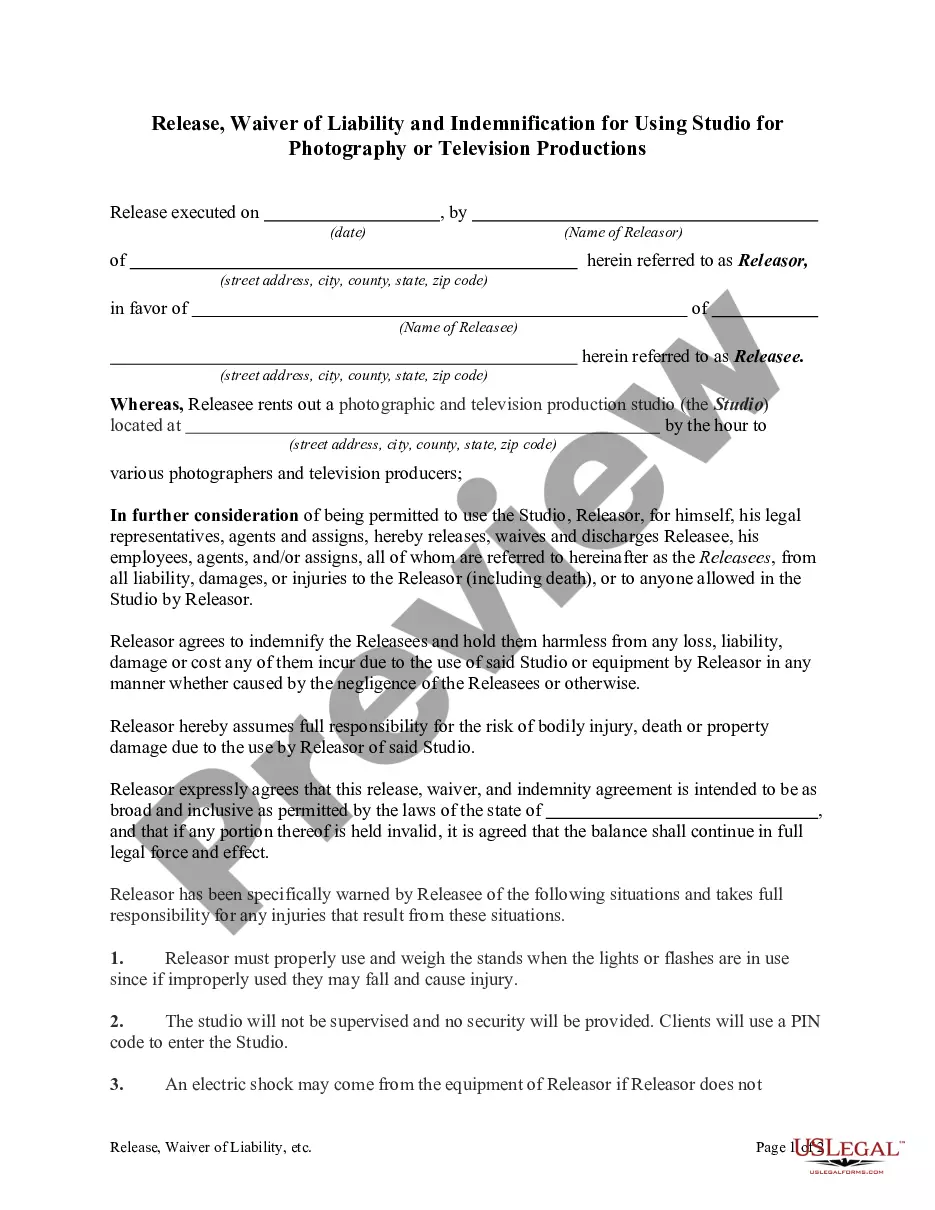
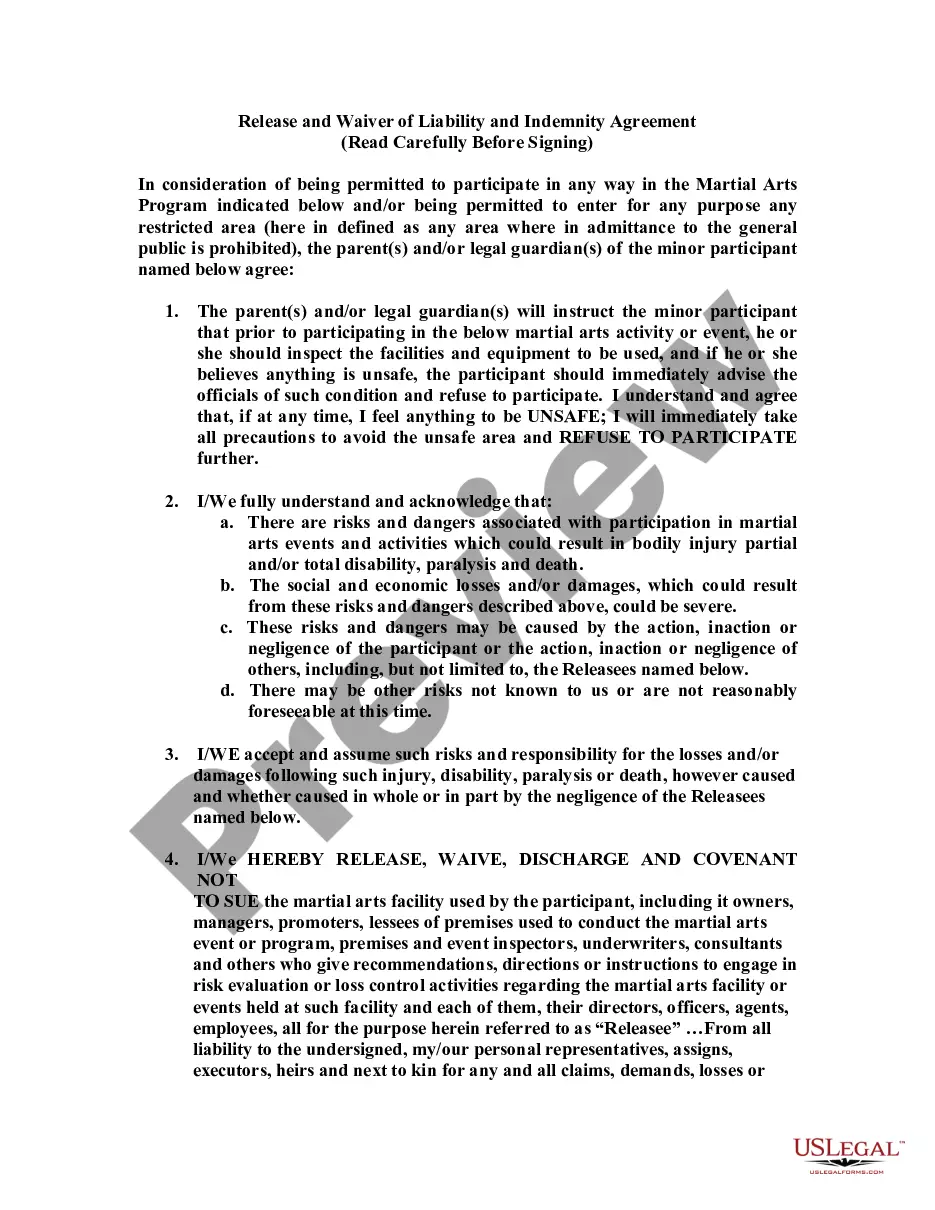
The Release, Waiver of Liability, and Assumption of all Risks of Personal Bodily Injury and Damage to Property for Use of Recording Studio is a legal document designed to protect recording studios from liability when individuals participate in activities on their premises. By signing this form, participants agree to relinquish their right to sue the studio for injuries or damages that may occur during their use of the facility. This form differs from other liability waivers in that it specifically pertains to recording studios and includes clauses for indemnification and arbitration.
Form components explained
- Identification of the parties involved, including the individual and the recording studio.
- Details of the recording studio's location.
- Clear statements releasing the studio from liability for injuries or damages.
- Indemnification clause that protects the studio against claims related to use.
- Governing law provision, specifying the state jurisdiction for any disputes.
- Arbitration agreement outlining the process for resolving disputes.
Common use cases
This form should be used whenever an individual wishes to use a recording studio for recording sessions, rehearsals, or other related activities. It is beneficial in scenarios where there may be potential risks of personal injury or property damage, such as during live recordings, equipment handling, or rehearsals involving physical activities.
Who needs this form
- Musicians and artists planning to use a recording studio.
- Producers and directors overseeing recording sessions.
- Recording studio owners or managers seeking to mitigate liability risks.
- Individuals participating in events or workshops hosted in the studio.
Completing this form step by step
- Identify the parties involved by filling in their names and addresses at the beginning of the form.
- Specify the exact location of the recording studio to be used.
- Fill in the date of the agreement.
- Provide signatures from both the individual and a representative of the studio.
- Complete any necessary information related to the jurisdiction or governing law, as needed.
Notarization requirements for this form
Notarization is not commonly needed for this form. However, certain documents or local rules may make it necessary. Our notarization service, powered by Notarize, allows you to finalize it securely online anytime, day or night.
Get your form ready online
Our built-in tools help you complete, sign, share, and store your documents in one place.
Make edits, fill in missing information, and update formatting in US Legal Forms—just like you would in MS Word.
Download a copy, print it, send it by email, or mail it via USPS—whatever works best for your next step.
Sign and collect signatures with our SignNow integration. Send to multiple recipients, set reminders, and more. Go Premium to unlock E-Sign.
If this form requires notarization, complete it online through a secure video call—no need to meet a notary in person or wait for an appointment.
We protect your documents and personal data by following strict security and privacy standards.

Make edits, fill in missing information, and update formatting in US Legal Forms—just like you would in MS Word.

Download a copy, print it, send it by email, or mail it via USPS—whatever works best for your next step.

Sign and collect signatures with our SignNow integration. Send to multiple recipients, set reminders, and more. Go Premium to unlock E-Sign.

If this form requires notarization, complete it online through a secure video call—no need to meet a notary in person or wait for an appointment.

We protect your documents and personal data by following strict security and privacy standards.
Common mistakes
- Failing to fill in all required fields, such as names and addresses.
- Not providing signatures from both parties, which can invalidate the waiver.
- Using an outdated version of the form without checking for legal updates.
- Failing to understand the implications of the waiver, especially regarding liability.
Advantages of online completion
- Convenience of downloading and completing the form at your own pace.
- Editability allows you to personalize the form for different scenarios or parties.
- Access to reliable and up-to-date legal templates drafted by licensed attorneys.
- Saves time by providing a straightforward format for important legal documents.
Legal use & context
- This form is enforceable in court if properly filled out and signed by both parties.
- The indemnification clause can provide additional protection against unforeseen circumstances.
- Users should consult with a legal professional if they have concerns about liability or other legal implications.
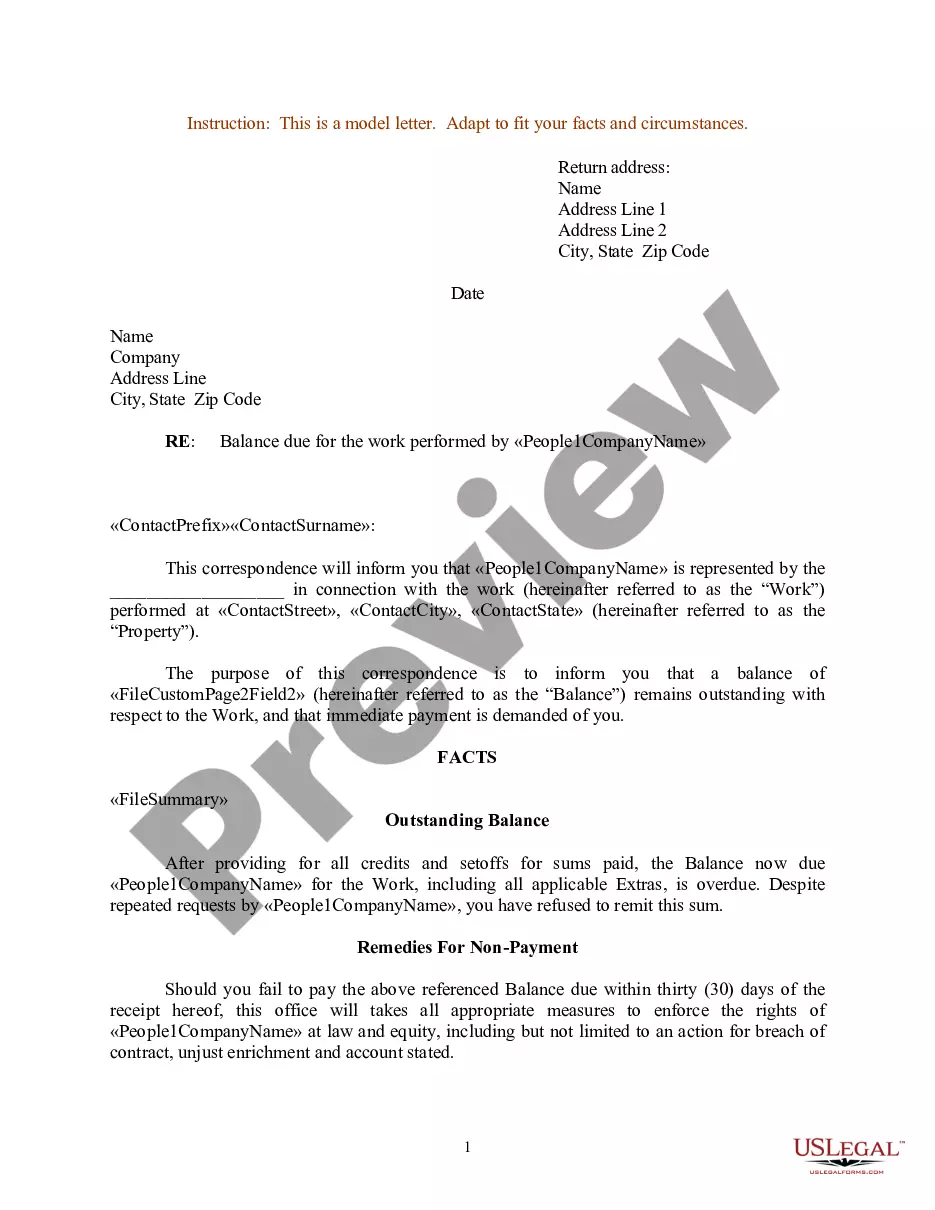
Looking for another form?
Form popularity
FAQ
In many cases, the waiver is not enforceable.If you've been injured due to negligent actions, you can sue even if you signed a waiver. Winning a lawsuit concerning negligence is not uncommon. Many celebrities have sued for negligence even though they signed documents stating they understood the risks.
200bStart the letter off with a clear explanation regarding your request. For instance, explain that you're requesting certain fees or charges to be waived or to be released from a previous engagement. Communicate any supporting or relative dates, names of parties, monetary figures, or venues as facts.
A liability waiver, or release of liability, is a legal document that a company or organization has you sign in order to protect them from being sued in the event that you are injured.
The General Release is a broad release from all possible civil claims resulting from a dispute. Since the Releasing Party is giving up all known and unknown claims against the other party, care should be taken to ensure that the Releasor is fully aware of their rights.
3. How long do I keep signed waivers? The sponsoring unit is required to retain the waiver for six (6) years after the end of the event or activity for which the waiver was signed.
All parties involved in the incident. A statement saying you were involved in the accident that caused the injury. The total amount of the property damage. A statement that releases the defendant from any future claims or damages that are related to the incident.
Get help. Writing a waiver should not be complicated. Use the correct structure. Proper formatting. Include a subject line. Include a caution! Talk about the activity risks. Do not forget an assumption of risk. Hold harmless.
In California, a liability waiver must be clear, unambiguous, and explicit. In other words, waivers cannot be printed in faded ink, in small font, on the back of a paper, or in an otherwise ambiguous form. If the waiver that you sign is not represented clearly, it may not hold up in the event of a lawsuit.