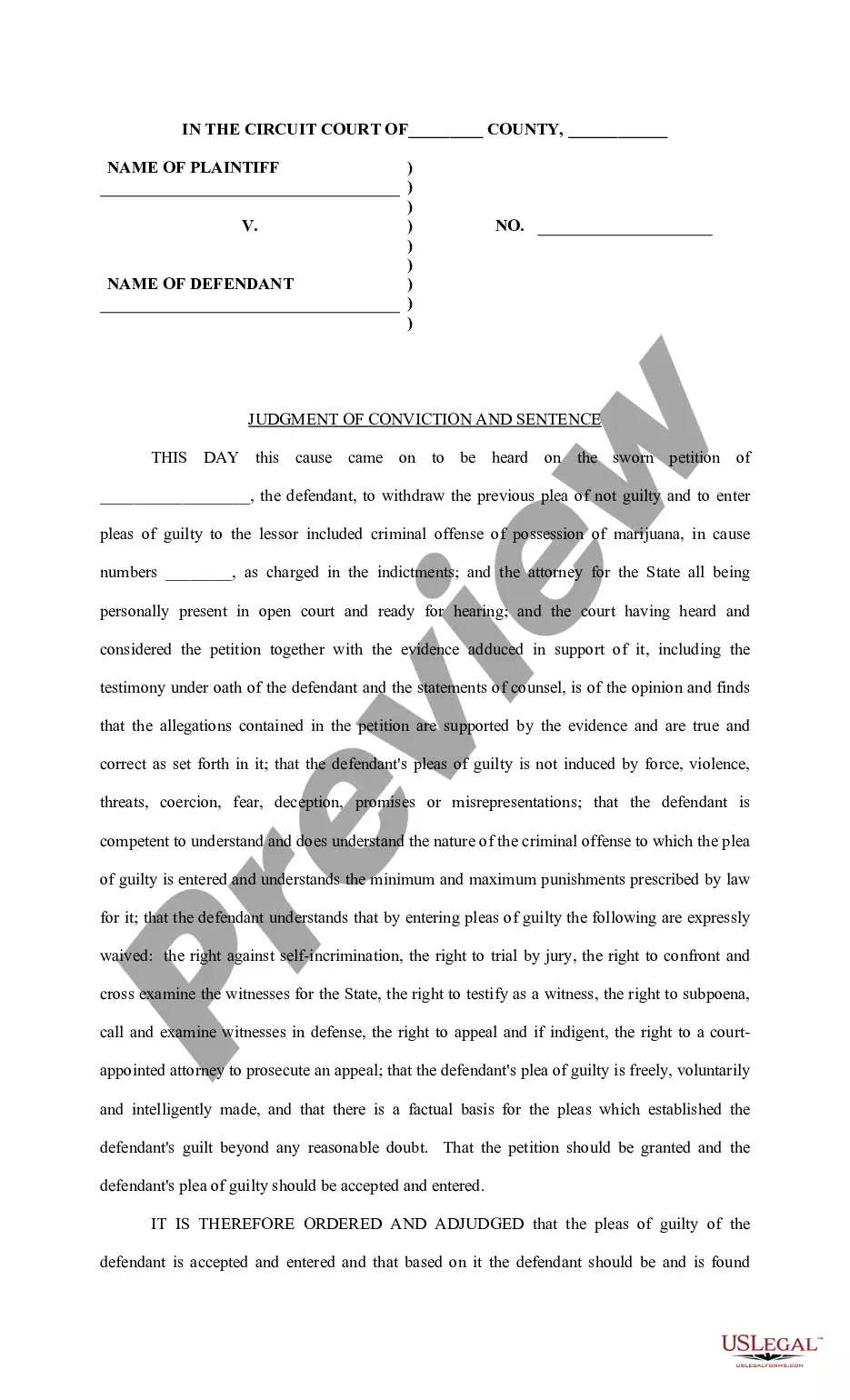
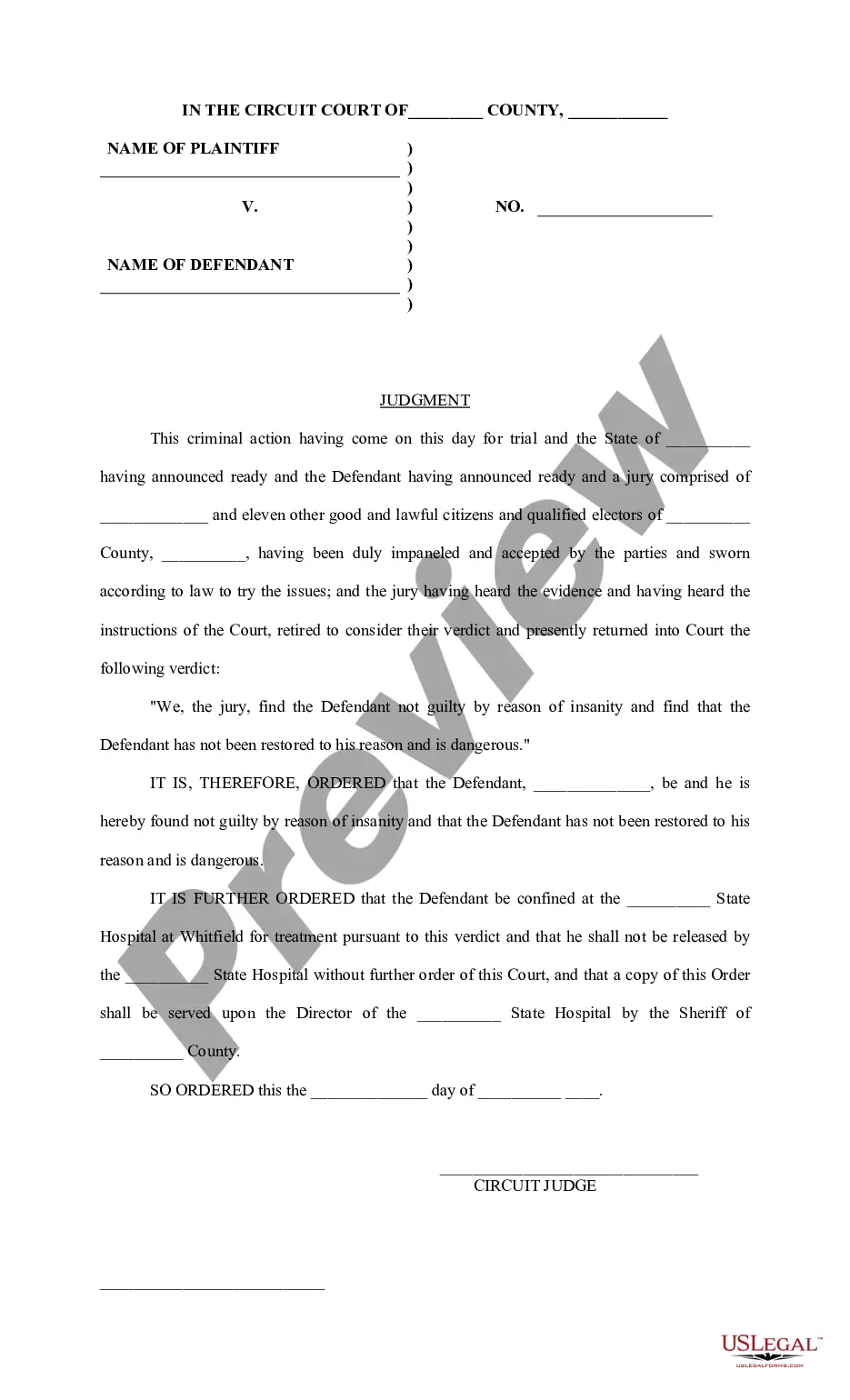
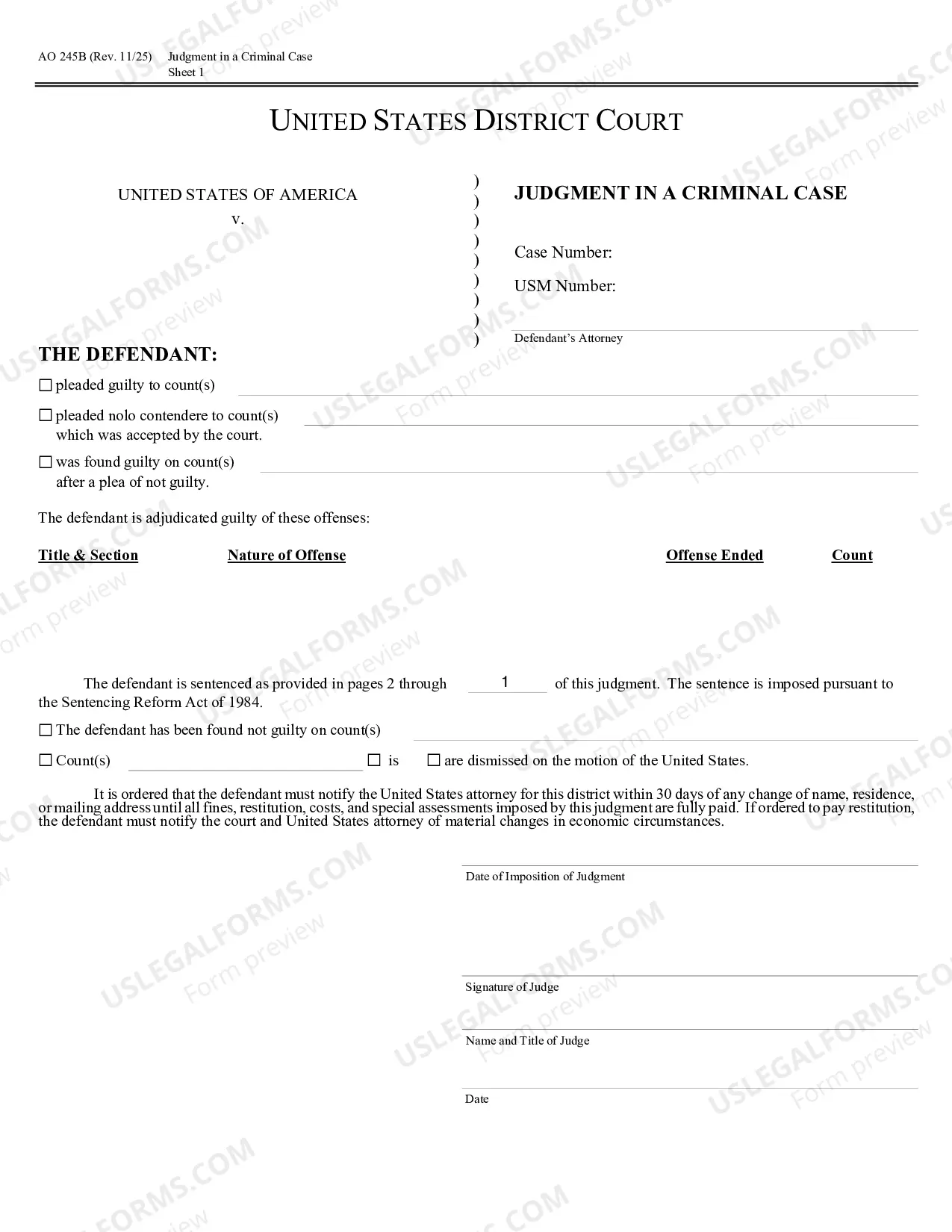
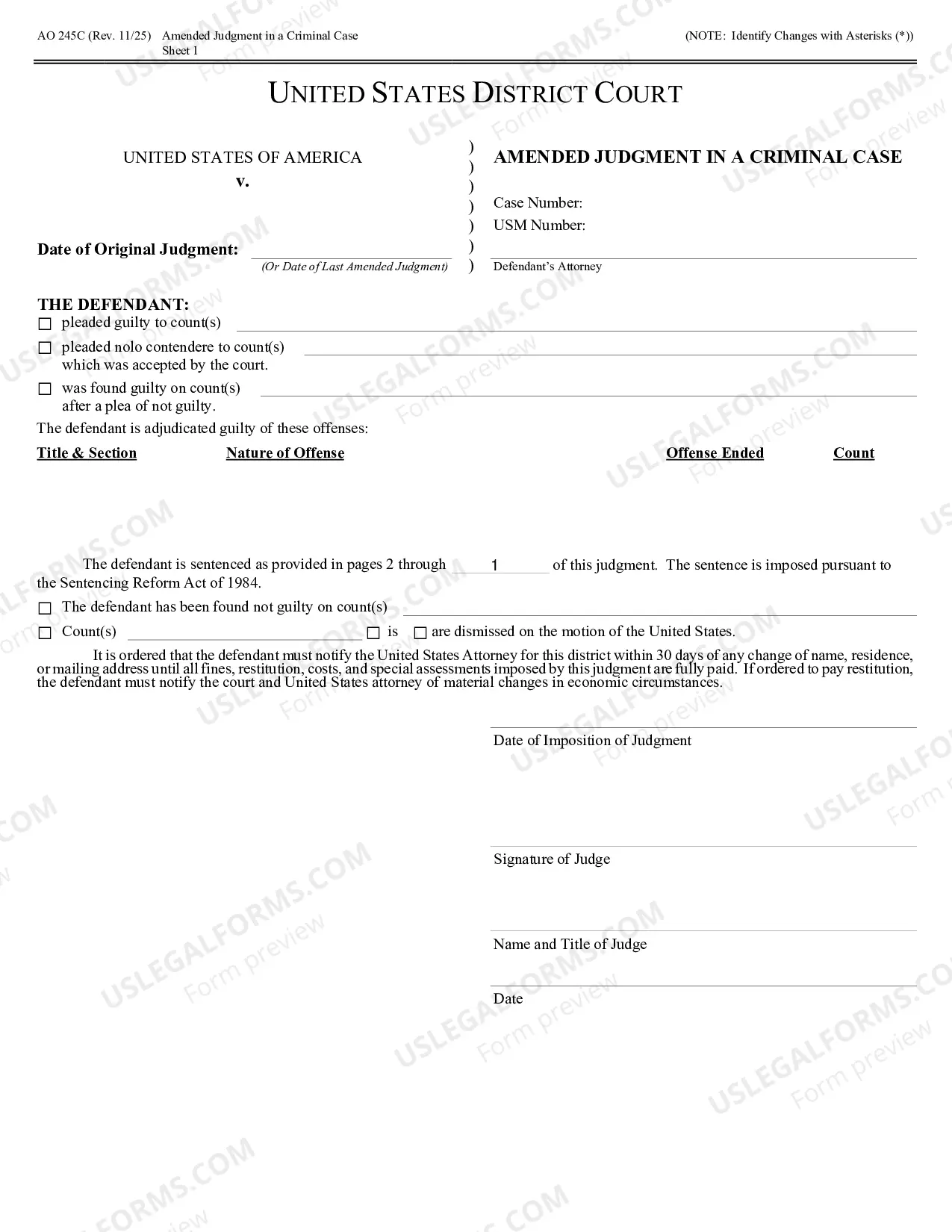
Final Judgment of Conviction and Sentence Instanter
What this document covers
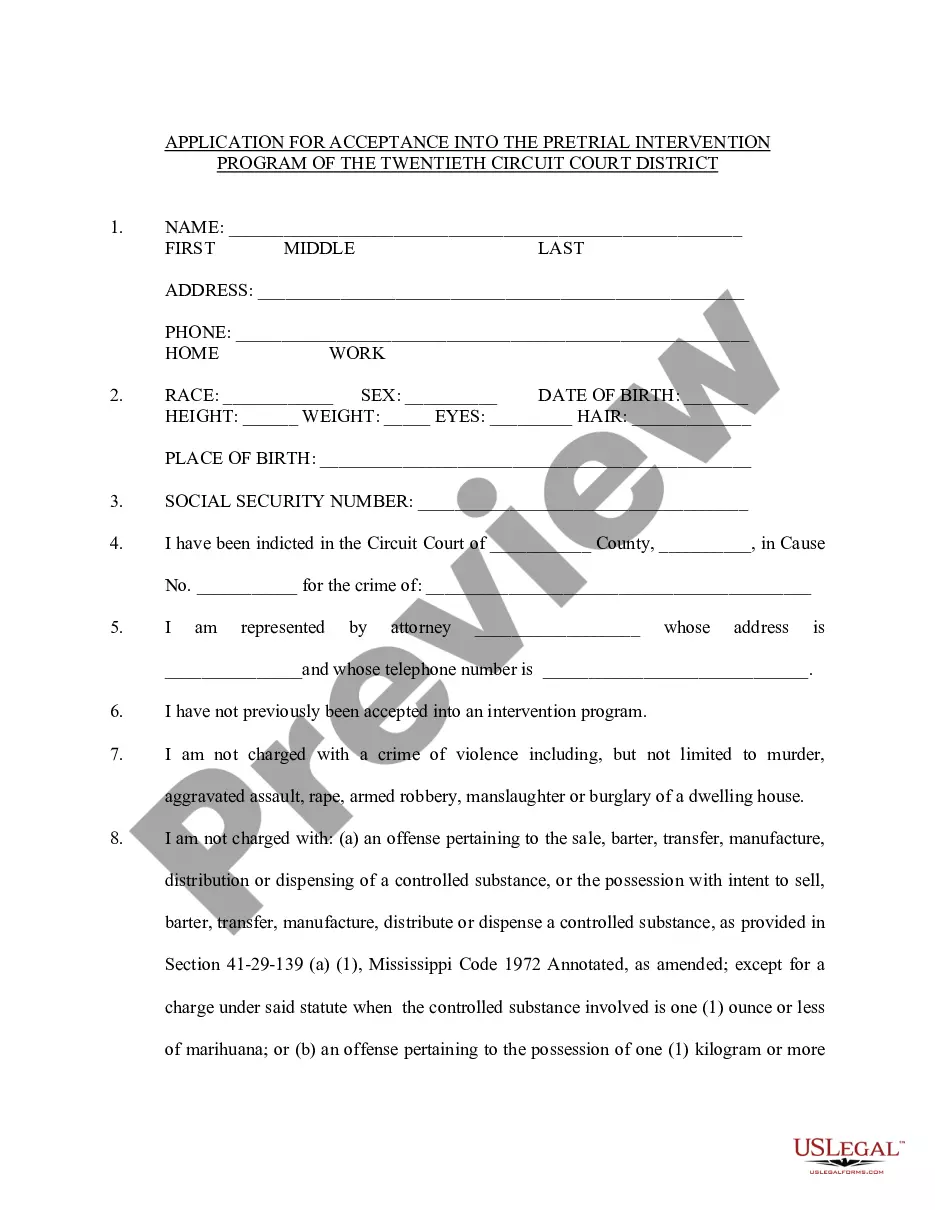
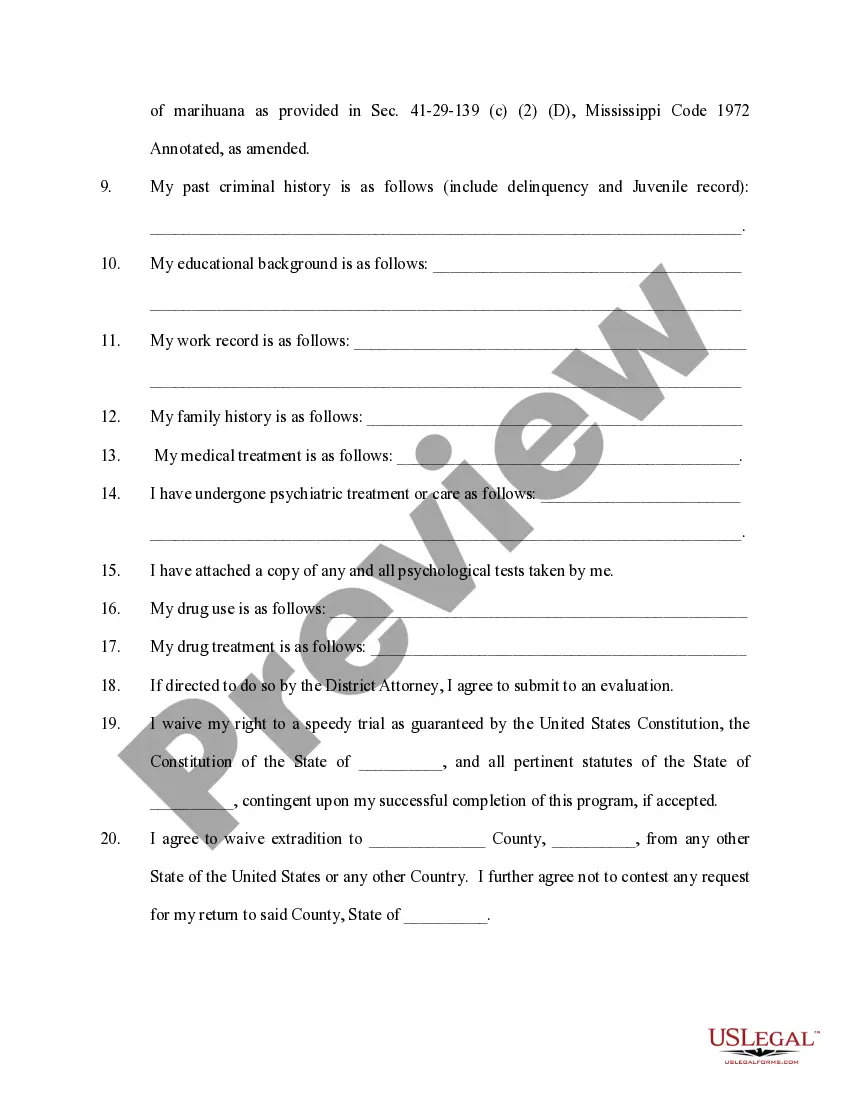
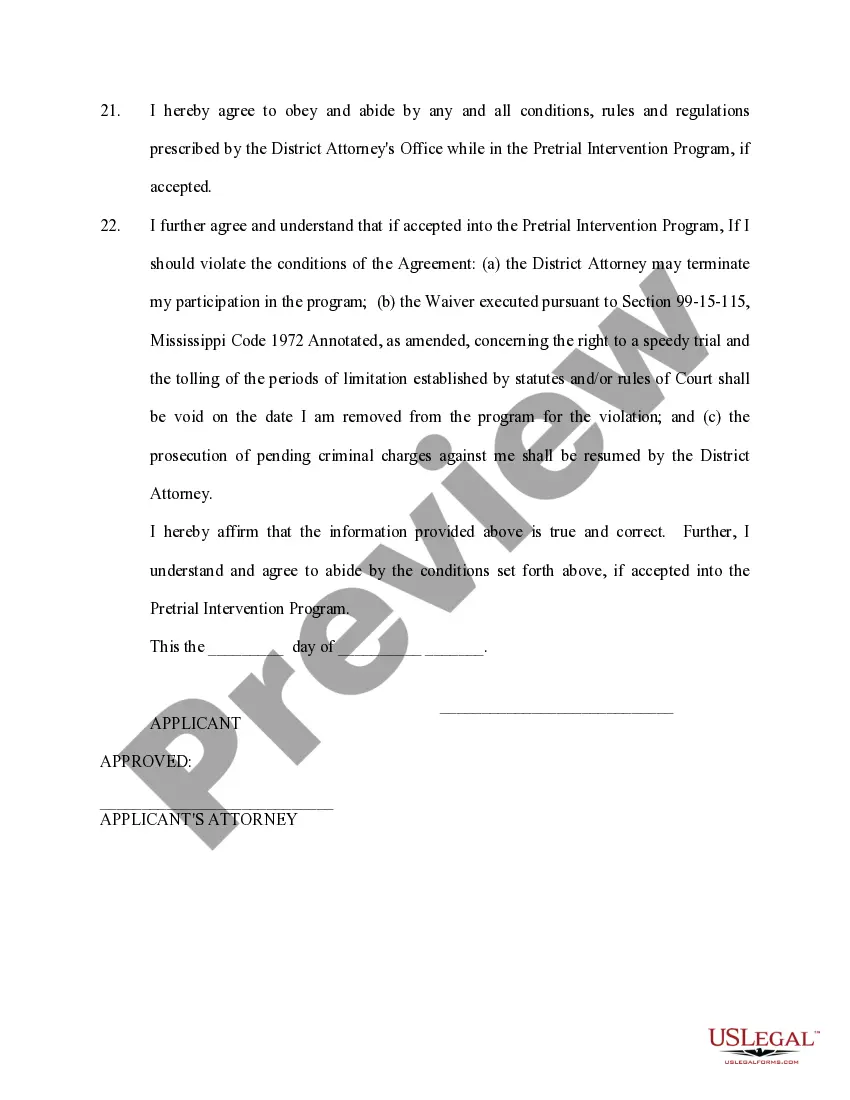
The Final Judgment of Conviction and Sentence Instanter is a legal document specifically designed for use in Mississippi. This form allows an individual to apply for acceptance into a pretrial intervention program, which can help divert them from traditional criminal prosecution. Unlike other legal forms related to criminal convictions, this application focuses on pretrial options that may lead to more favorable outcomes for eligible individuals.
Key parts of this document
- Applicant's personal information including name, address, and contact details.
- Details regarding the indicted crime, including the specific charges and case information.
- Information about prior acceptance into intervention programs and current charges.
- Sections dedicated to personal history, including education, work, family, and medical treatment.
- Commitment to comply with the rules of the pretrial intervention program and waiving rights as needed.
When this form is needed
This form is used when an individual has been indicted for a non-violent crime in Mississippi and is seeking to participate in a pretrial intervention program. Such a program may help offenders avoid a criminal conviction by completing certain requirements, provided they meet eligibility criteria such as not having prior interventions or charges involving violent offenses or significant drug-related incidents.
Intended users of this form
- Individuals indicted for a non-violent crime in Mississippi.
- Those who have not previously participated in an intervention program.
- Applicants whose charges do not involve violent offenses or serious drug charges.
- People seeking to mitigate the impact of a criminal charge through rehabilitation opportunities.
Instructions for completing this form
- Enter your full name, contact information, and personal identification details including age, race, and sex.
- Specify the nature of the charges against you and indicate your legal representation.
- Provide comprehensive details about your personal history, including criminal, educational, and medical backgrounds.
- Review and confirm your understanding of the conditions of the pretrial intervention program.
- Submit the completed application to the appropriate court and retain a copy for your records.
Notarization requirements for this form
This form does not typically require notarization unless specified by local law. It is advisable to check with legal counsel or court requirements to ensure compliance.
Get your form ready online
Our built-in tools help you complete, sign, share, and store your documents in one place.
Make edits, fill in missing information, and update formatting in US Legal Forms—just like you would in MS Word.
Download a copy, print it, send it by email, or mail it via USPS—whatever works best for your next step.
Sign and collect signatures with our SignNow integration. Send to multiple recipients, set reminders, and more. Go Premium to unlock E-Sign.
If this form requires notarization, complete it online through a secure video call—no need to meet a notary in person or wait for an appointment.
We protect your documents and personal data by following strict security and privacy standards.

Make edits, fill in missing information, and update formatting in US Legal Forms—just like you would in MS Word.

Download a copy, print it, send it by email, or mail it via USPS—whatever works best for your next step.

Sign and collect signatures with our SignNow integration. Send to multiple recipients, set reminders, and more. Go Premium to unlock E-Sign.

If this form requires notarization, complete it online through a secure video call—no need to meet a notary in person or wait for an appointment.

We protect your documents and personal data by following strict security and privacy standards.
Typical mistakes to avoid
- Failing to complete all personal information fields accurately.
- Not disclosing prior convictions or participation in intervention programs.
- Overlooking deadlines for submission of the application to the court.
- Inaccurately describing the nature of the current charges.
Why complete this form online
- Immediate access to a professionally drafted legal form tailored for Mississippi laws.
- Convenient online submission options that can save time and effort.
- Editability allows you to customize the form to fit your unique circumstances before filing.
Legal use & context
- The form is designed to facilitate a potential diversion from prosecution through a pretrial intervention program.
- Acceptance into the program can lead to reduced penalties or dismissal of charges upon successful completion.
- It is important to adhere strictly to all specified conditions to maintain eligibility and avoid resuming prosecution.
Summary of main points
- The form is specific to the pretrial intervention program in Mississippi.
- Accurate and complete information is essential to the acceptance process.
- Understanding the conditions and implications of the program is important for applicants.
Looking for another form?


Form popularity
FAQ
The prosecutor won't hesitate to amend the charges if new evidence comes up during the trial. Lastly, can a judge add charges to your criminal case? The answer to that question is no. Each element of the criminal justice system has a role, and the prosecutor files the formal charges against the defendant.
No. The judge can follow the same law but judge the case differently and change a ruling. When you write your motion, though, it is best if you explain clearly why you think the judge should change the ruling.
Federal courts follow the Federal Sentencing Guidelines in imposing sentences.But an appeals court will reverse the sentence only if the judge abused his or her discretion, or imposed a sentence above the maximum set by the statute that defines the crime.
If you've been convicted at trial or you've taken a plea agreement in a felony criminal case then the last hearing that will conclude your case is called a Judgment and Sentencing Hearing.If a defendant goes to trial and is found guilty, either by a jury or a judge in a bench trial, that is the determination of guilt.
Appeals against sentenceAppeals from the Local Court go to the District Court (or the Supreme Court), and appeals from the District or Supreme Court go to the CCA. If there is clear evidence that you are guilty, but you feel the sentence imposed was too severe, then it is a good idea to appeal the sentence.
A judgment in criminal case becomes final after the lapse of the period for perfecting an appeal, or when the sentence has been partially or totally satisfied or served, or the defendant has expressly waived in writing his right to appeal. Sections 1 and 6 of Rule 118 provide: SECTION 1.
Unfortunately, yes, a sentence can be changed or modified so long as the court has jurisdiction over the matter. When a person is on probation the court continues to have jurisdiction.
Criminal defendants generally can't appeal lawful sentences. But a defendant can appeal a sentence if it's illegal, unconstitutional, or unreasonably excessive.In some states, however, if the defendant didn't notify the sentencing judge of an illegal sentence, the appellate court cannot review it.
A judge may in fact modify your sentence if their was a clerical error. Yes. A court generally maintains power to correct an incorrect sentence. This means that if the sentence was brought about by a clerical error, the court can simply amend the abstract of judgment to reflect the correct sentence.