Affidavit as to Marital Status - Single
What is this form?
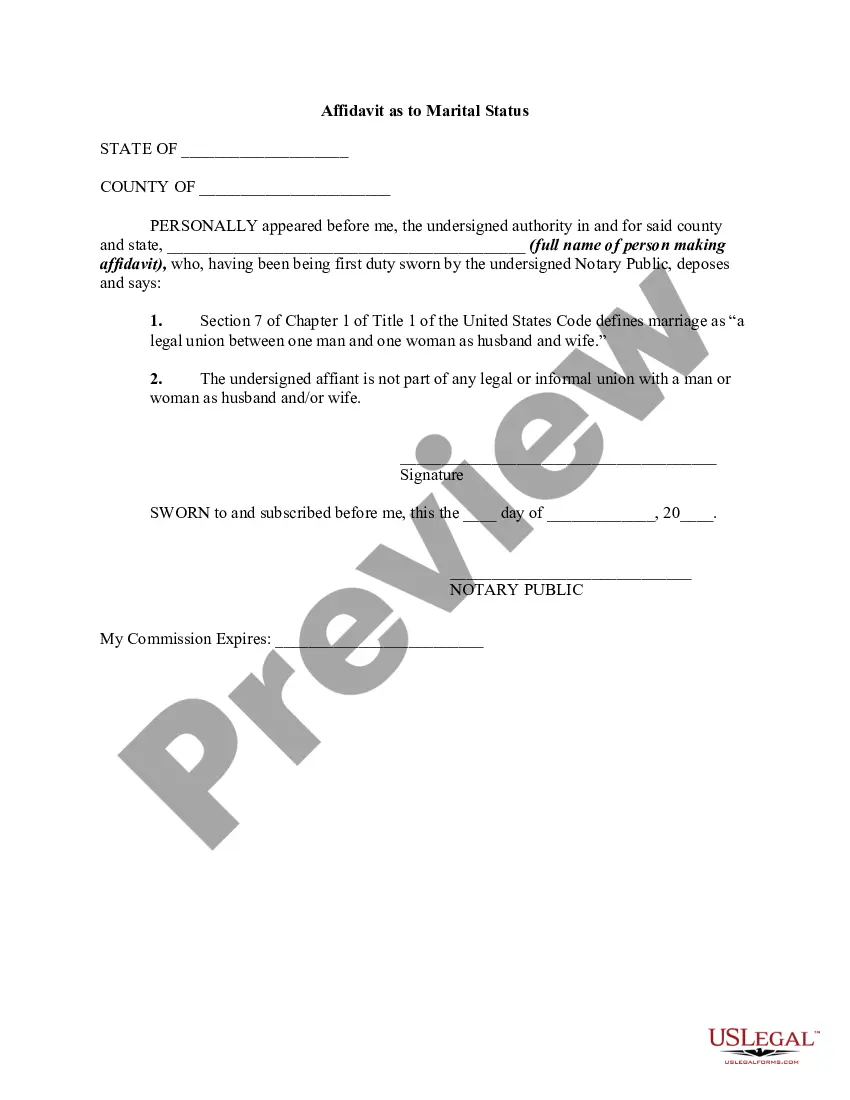
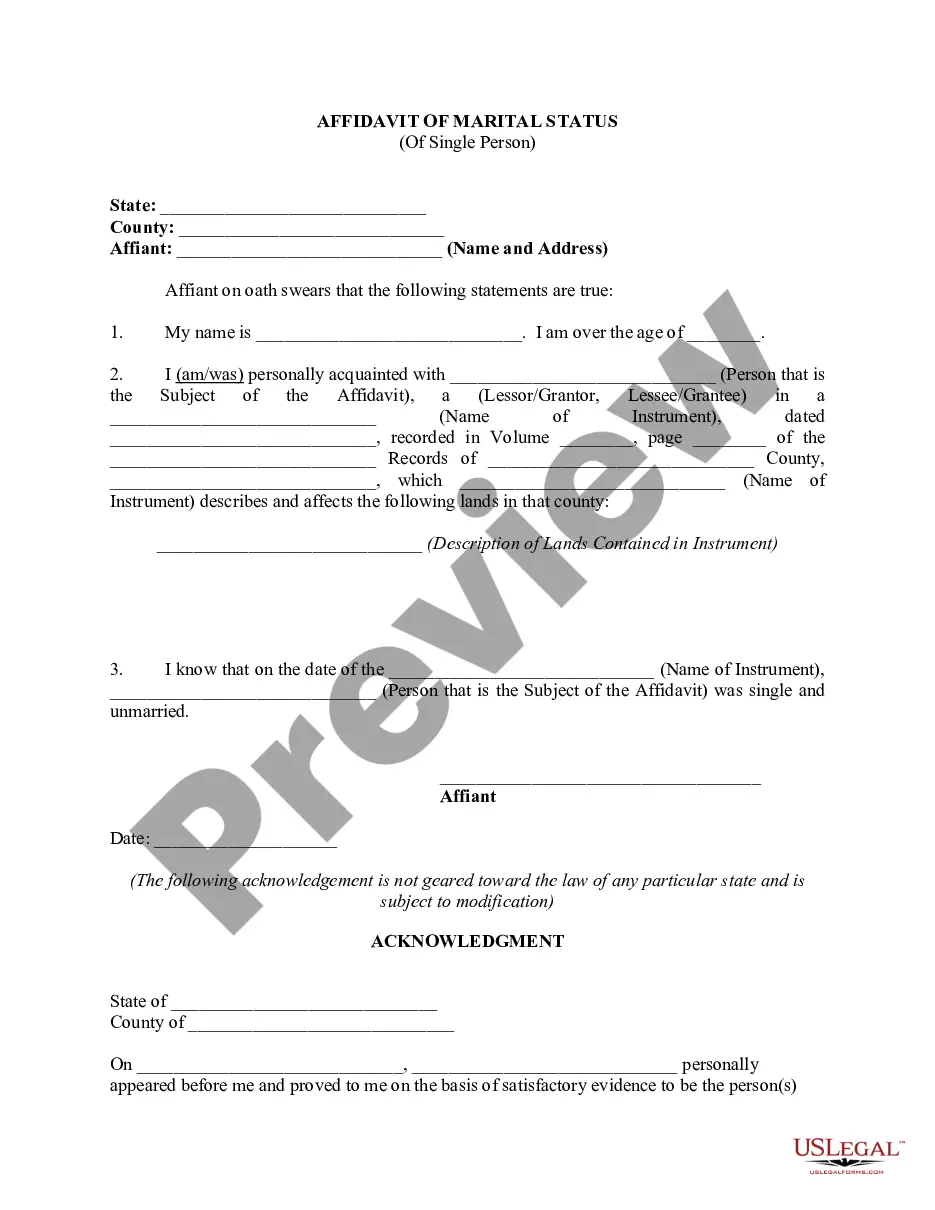
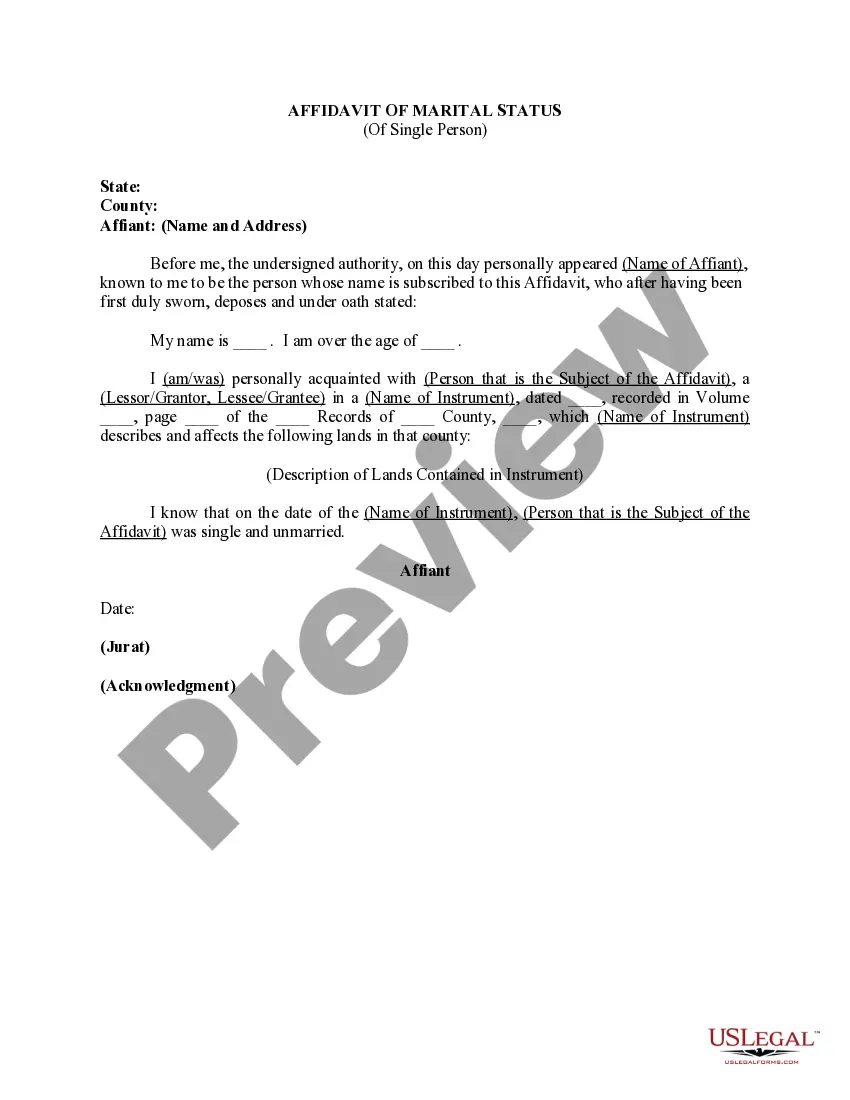
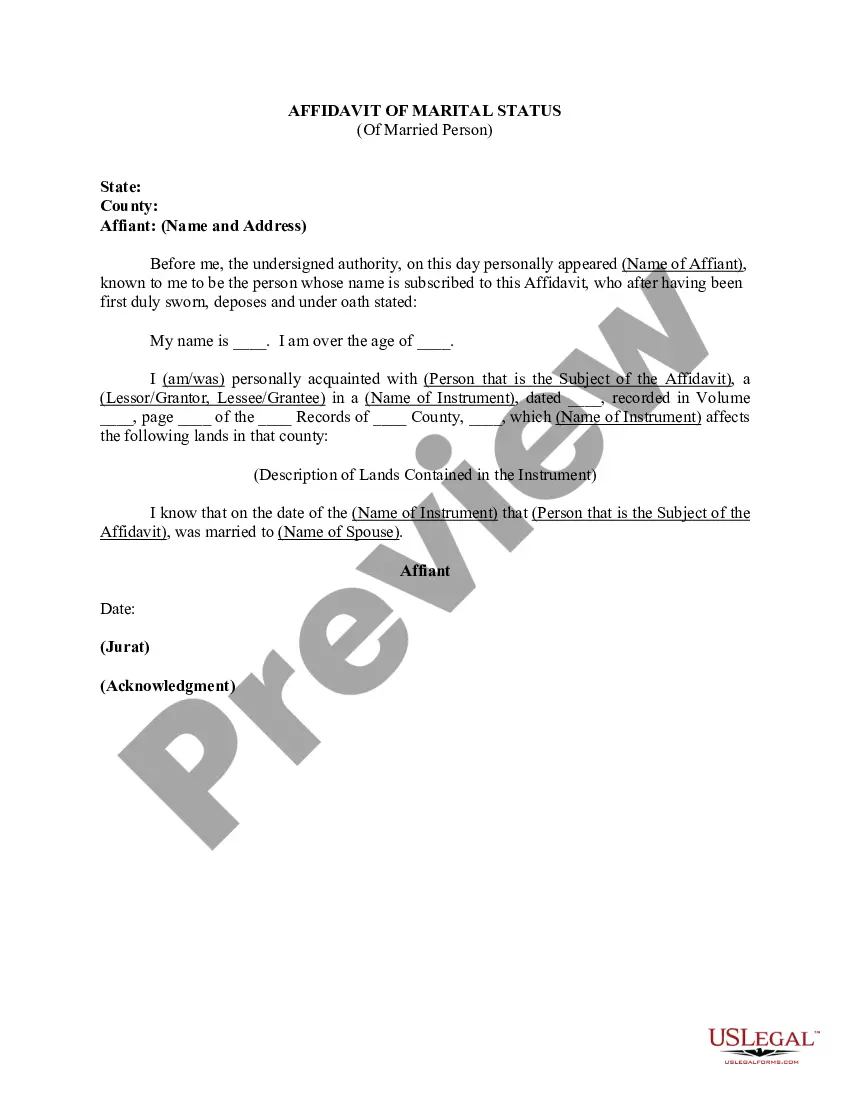
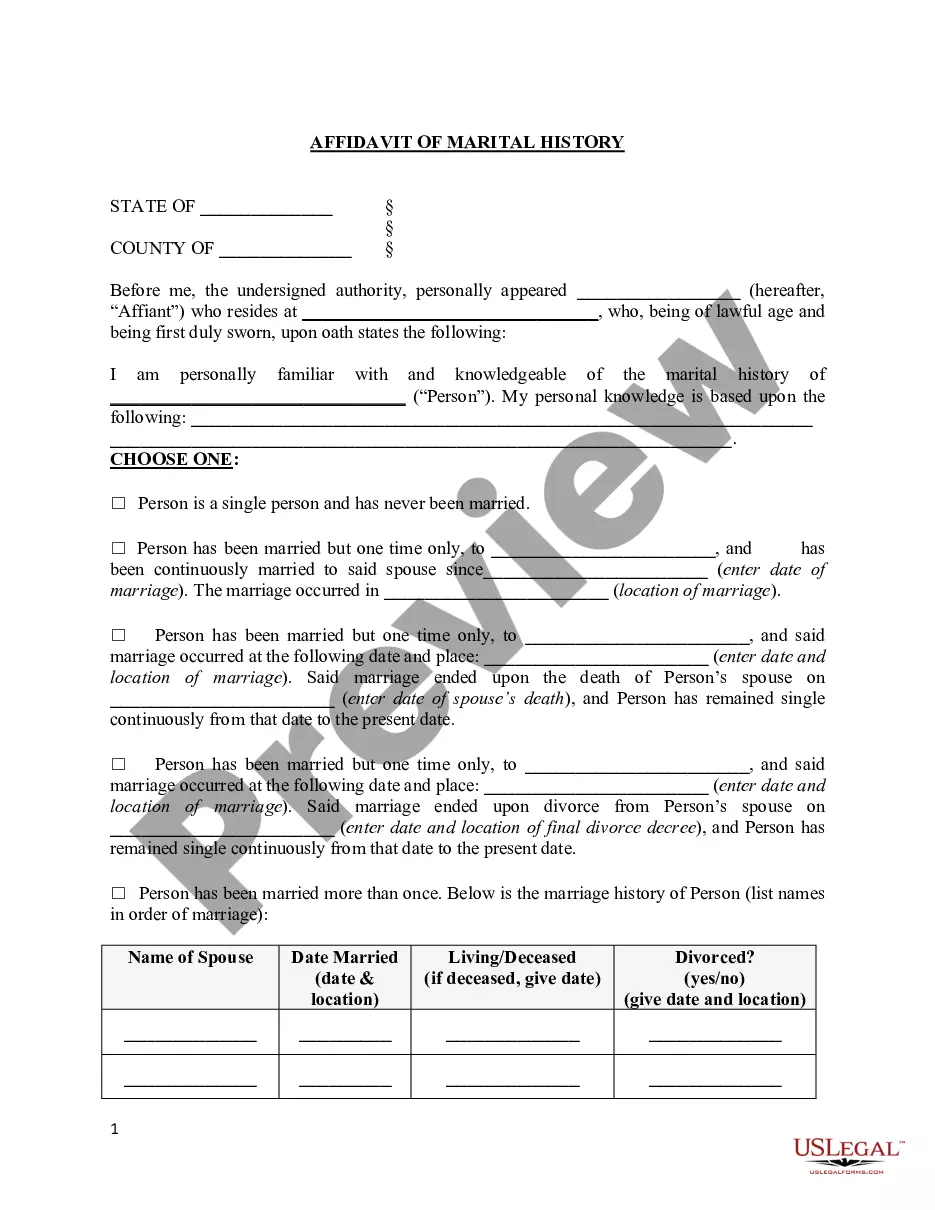
The Affidavit as to Marital Status - Single is a legal document used to declare an individual's marital status. This form serves to confirm that the affiant is not legally married, differentiating it from other marital status affidavits that may require additional details about prior marriages or unions. It is an essential tool when individuals need to assert their single status for legal, financial, or personal matters.
Main sections of this form
- Affiant's full name and personal details.
- A declaration regarding the affiant's marital status.
- Signature of the affiant, affirming the truth of the statements made.
- Notary public's section for verification, including a signature and commission expiration date.

Common use cases
This form is typically used when an individual needs to provide legal proof of their single status. Common scenarios include applying for loans, starting a new job, or when required by a court or administrative agency. It may also be used when entering a relationship where prior marital status needs to be clearly outlined.
Who can use this document
Individuals who need to confirm their single status for any legal purposes should consider using this form. This includes:
- Single individuals seeking to establish their marital status.
- Those who have never been married.
- Individuals who are divorced but wish to assert their current marital status as single.
How to complete this form
- Identify the parties: Fill in your full name and relevant personal details at the beginning of the form.
- Affirm marital status: Clearly state that you are not part of any legal or informal union.
- Sign the affidavit: Ensure you sign the form in the designated area to validate your statements.
- Obtain notarization: Find a notary public to witness your signature and verify the affidavit.
- Complete the notarization: The notary will sign and provide their information, including commission expiration date.
Does this form need to be notarized?
This document requires notarization to meet legal standards. US Legal Forms provides secure online notarization powered by Notarize, allowing you to complete the process through a verified video call, available 24/7.
Get your form ready online
Our built-in tools help you complete, sign, share, and store your documents in one place.
Make edits, fill in missing information, and update formatting in US Legal Forms—just like you would in MS Word.
Download a copy, print it, send it by email, or mail it via USPS—whatever works best for your next step.
Sign and collect signatures with our SignNow integration. Send to multiple recipients, set reminders, and more. Go Premium to unlock E-Sign.
If this form requires notarization, complete it online through a secure video call—no need to meet a notary in person or wait for an appointment.
We protect your documents and personal data by following strict security and privacy standards.

Make edits, fill in missing information, and update formatting in US Legal Forms—just like you would in MS Word.

Download a copy, print it, send it by email, or mail it via USPS—whatever works best for your next step.

Sign and collect signatures with our SignNow integration. Send to multiple recipients, set reminders, and more. Go Premium to unlock E-Sign.

If this form requires notarization, complete it online through a secure video call—no need to meet a notary in person or wait for an appointment.

We protect your documents and personal data by following strict security and privacy standards.
Mistakes to watch out for
- Failing to sign the affidavit before a notary public.
- Incorrectly filling in personal information, leading to potential disputes.
- Forgetting to check local requirements that may affect the use of the form.
Why use this form online
- Convenient download and immediate access to essential documents.
- Editability allows you to customize the affidavit to your specific needs.
- Reliability due to forms drafted by licensed attorneys.
Key takeaways
- The Affidavit as to Marital Status - Single confirms an individual's single status legally.
- It is essential for various legal and administrative purposes.
- Always ensure notarization for the form to hold legal weight.
Looking for another form?
Form popularity
FAQ
Affidavit as to Marital Status - Single is a standard legal document used to declare that the affiant is not legally married. It confirms single status for financial, legal, or personal matters. The form includes the affiant’s name and details, a declaration of marital status, the affiant’s signature, and a notary’s verification. It is commonly used when proof of single status is required by lenders, employers, or courts.
A single-status affidavit includes four main parts: the affiant’s full name and personal details; a sworn declaration that the affiant is unmarried; the affiant’s signature certifying truth of the statements; and a notary public section for verification, including the notary’s signature and commission expiration date.
To fill out this form, enter your full name and personal details, include a clear declaration that you are single, sign the affidavit, and have a notary witness and date the notarization. Ensure the notary completes their section with their signature and commission information.
The form itself does not specify an expiration date. Validity generally depends on the recipient. If a lender, employer, or court requires a newer affidavit, you may need to obtain a new one to reflect your current status.
A marital status affidavit is a legal document used to declare a person’s marital status. For this product, the Affidavit as to Marital Status - Single asserts that the affiant is not legally married and includes four main sections: affiant details, a marital status declaration, the affiant’s signature, and a notary verification.
This form specifically confirms that the affiant is not married, differentiating it from other marital status affidavits that may require details about prior marriages or unions. It shares the same four components—affiant details, a marital status declaration, the affiant’s signature, and notary verification—but the declaration targets single status.