Limited Partnership Agreement Between Limited Liability Company and Limited Partner
Understanding this form
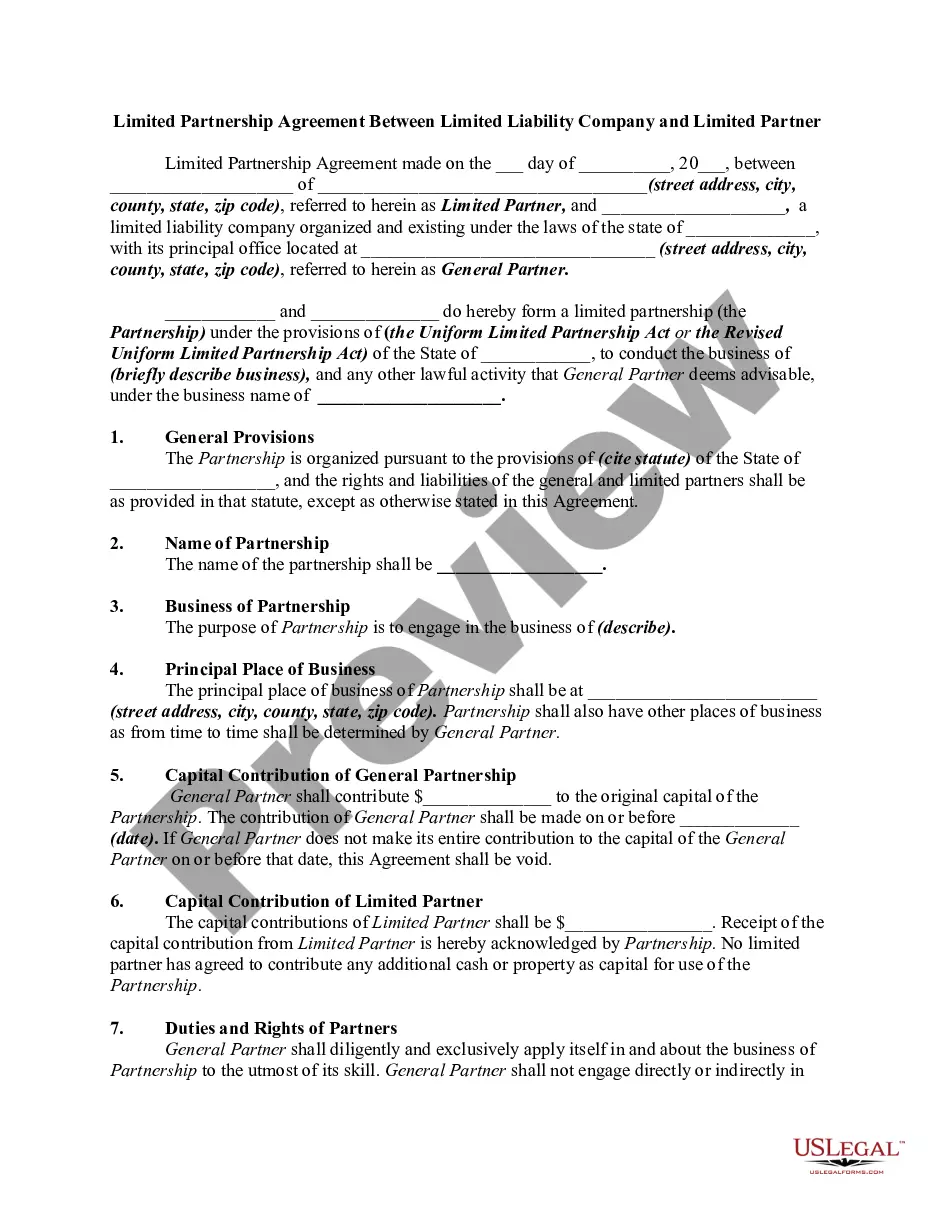
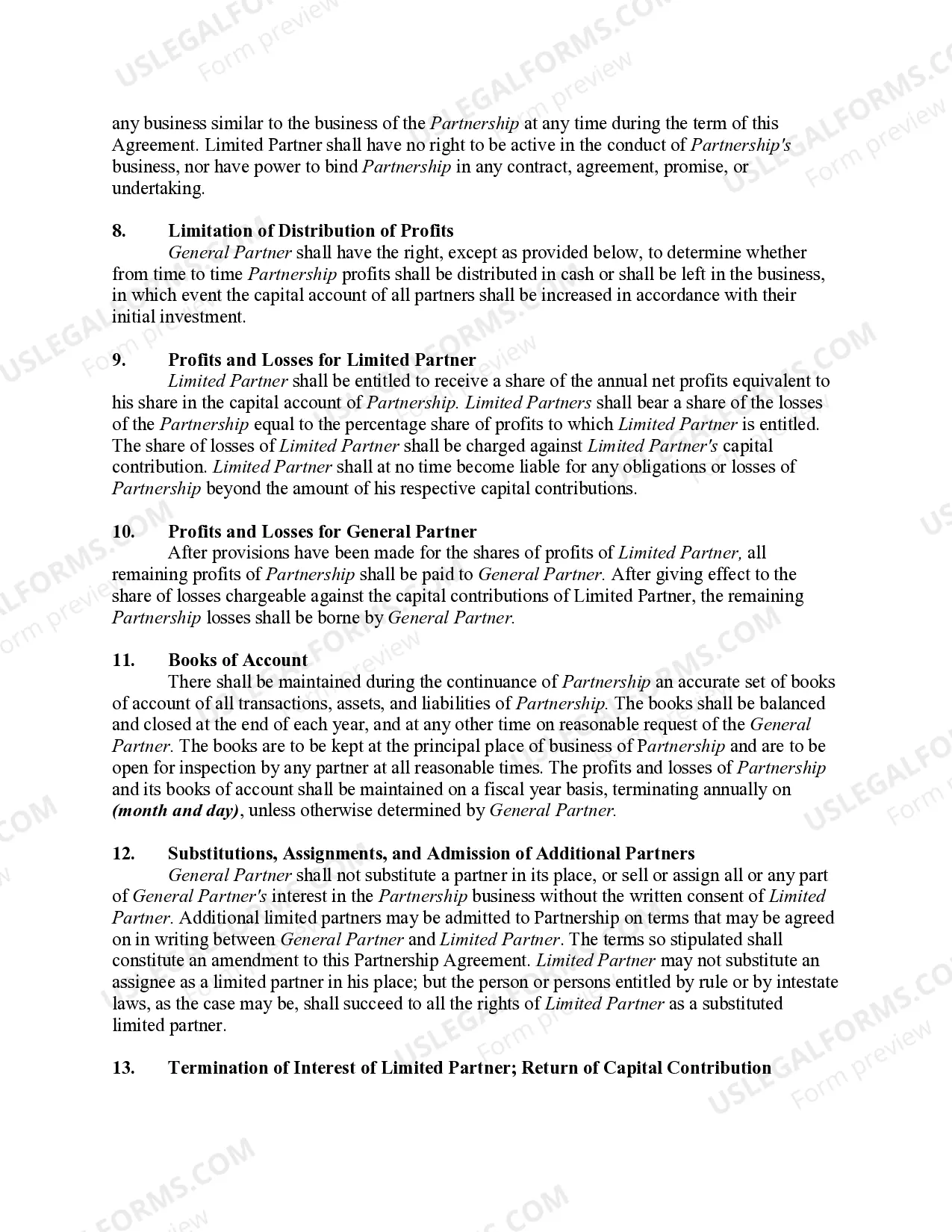
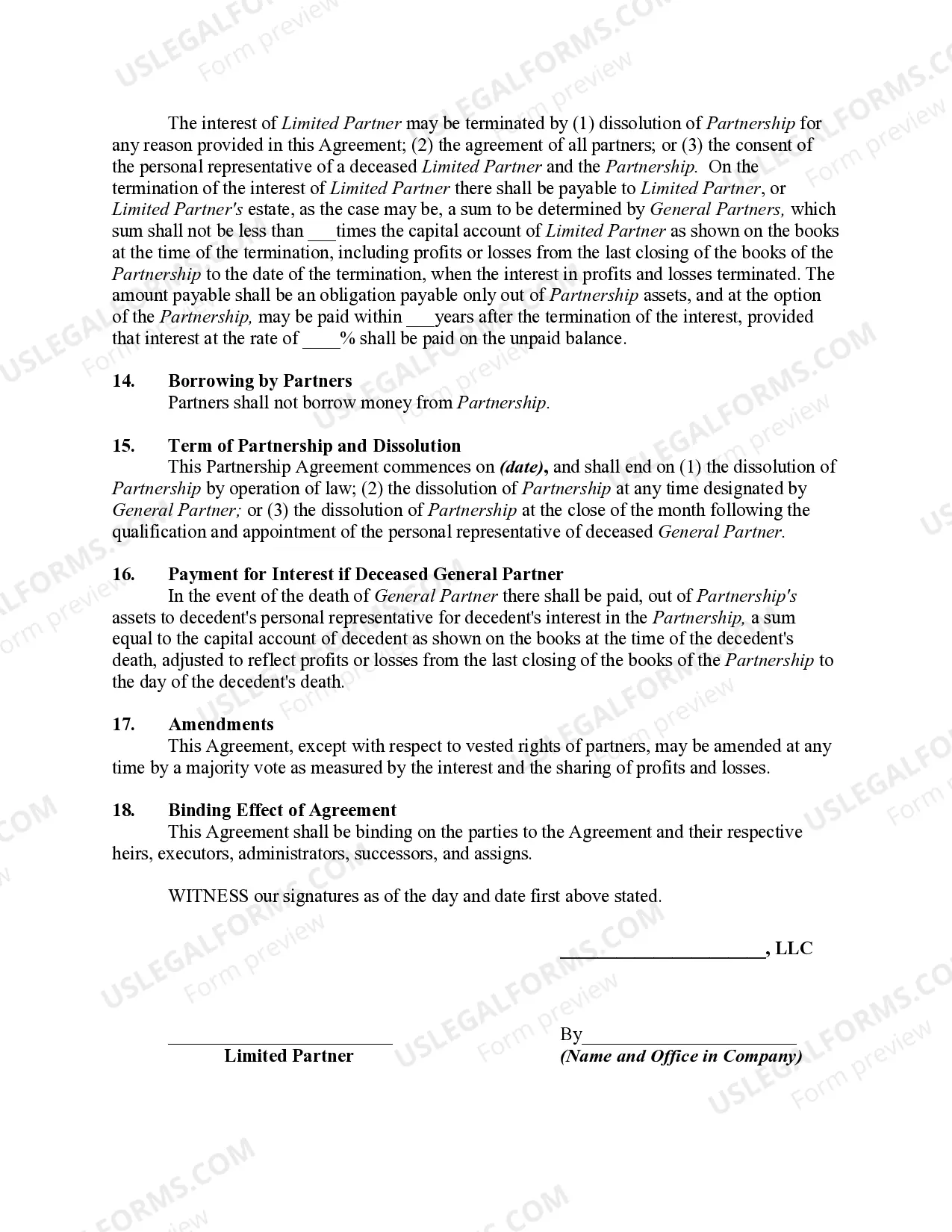
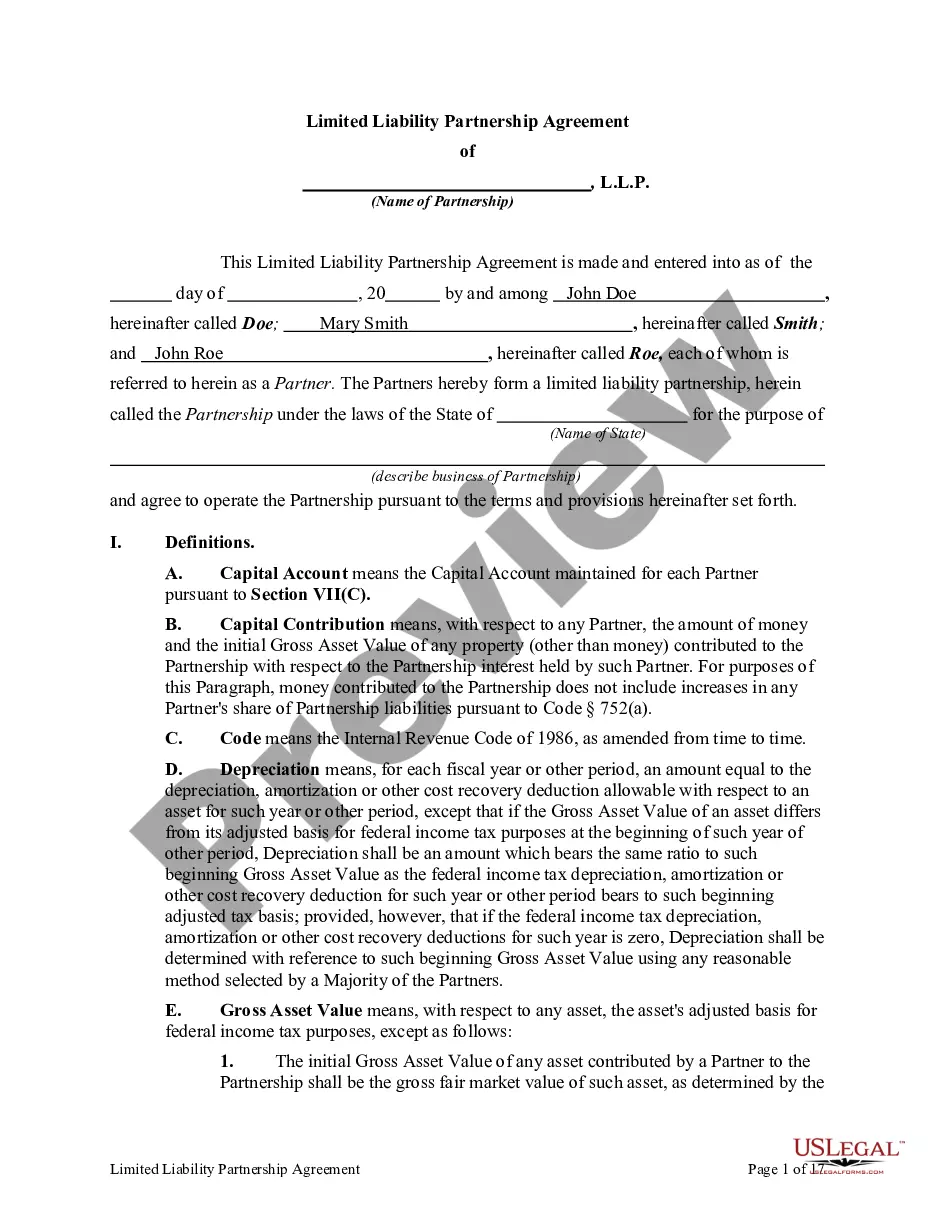
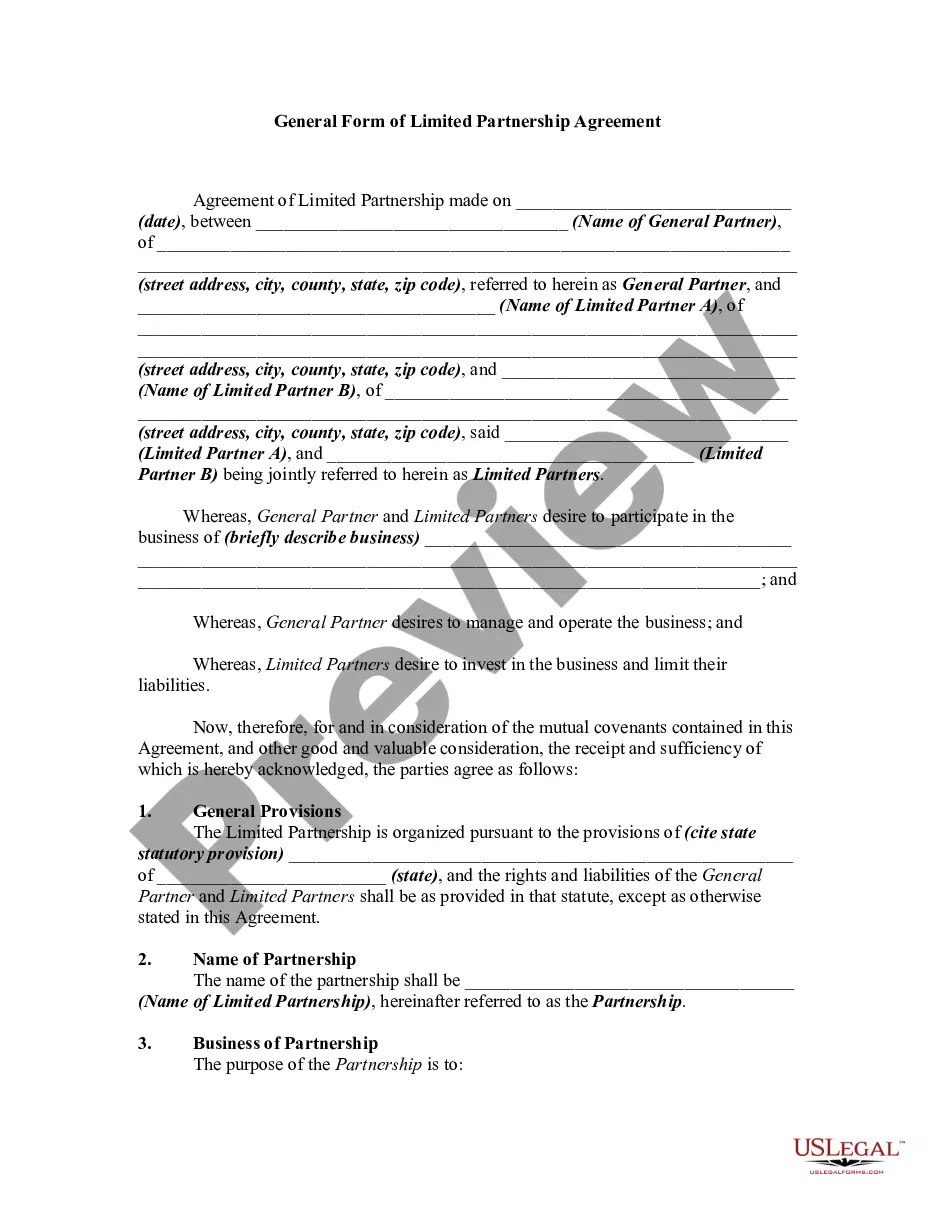
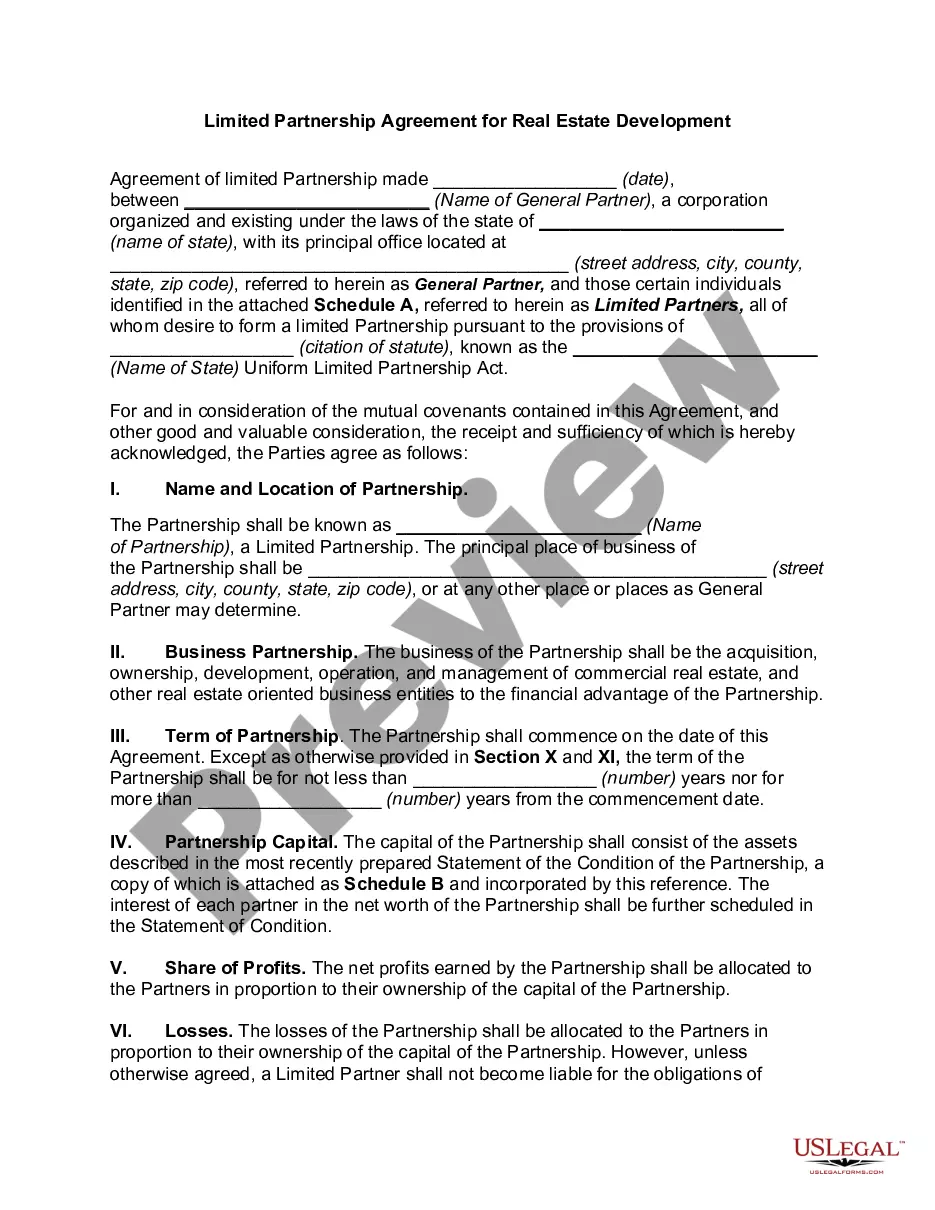
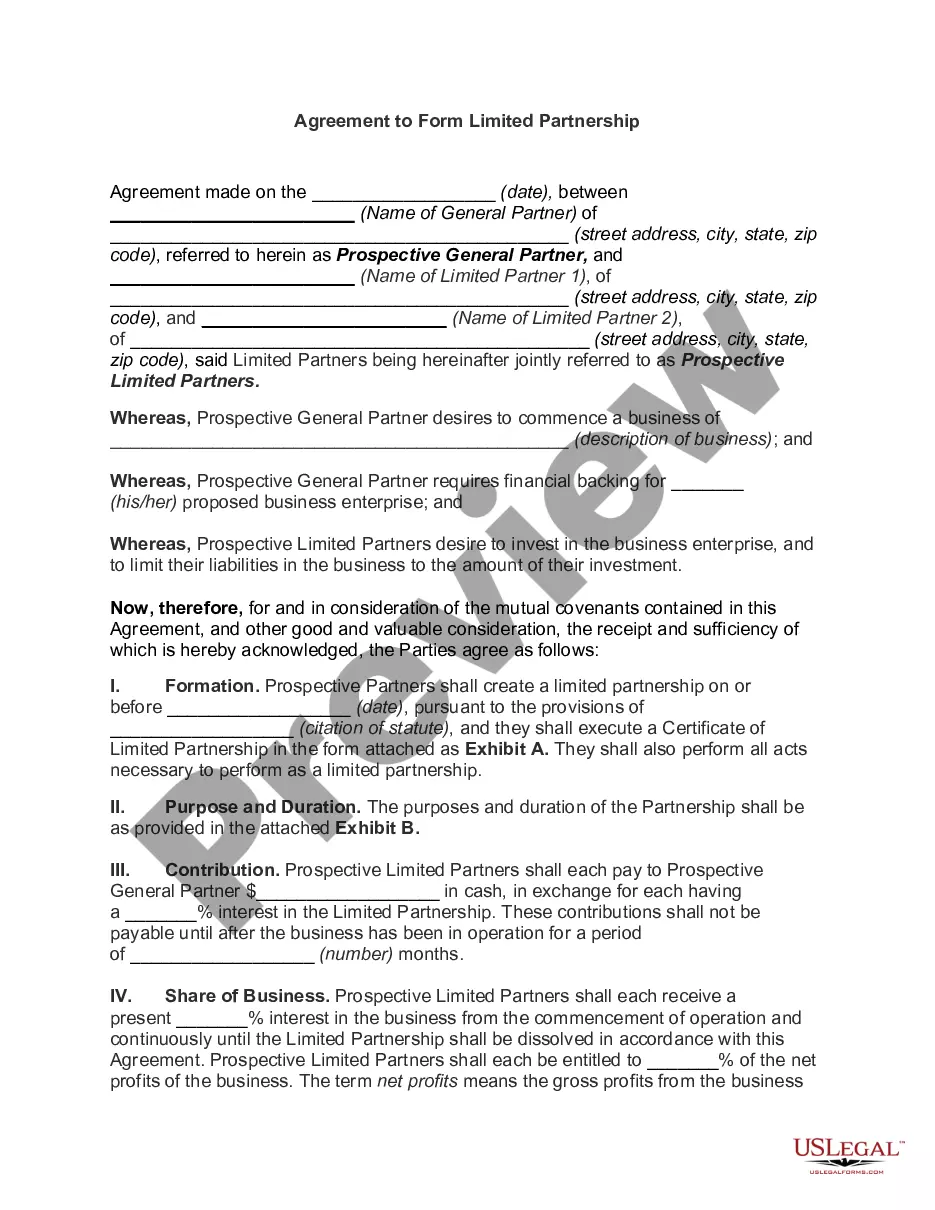
This Limited Partnership Agreement Between Limited Liability Company and Limited Partner establishes a legal framework for a partnership where one partner is a limited liability company and the other is a limited partner. This form outlines the rights and responsibilities of each party, detailing how the partnership will operate, how profits and losses will be shared, and various provisions related to capital contributions. It is essential for any investor looking to formally engage in a business venture with limited liability protections.
What’s included in this form
- Identification of the General Partner (limited liability company) and Limited Partner.
- Formation of the partnership under state law.
- Details about the capital contributions from both the General Partner and Limited Partner.
- Specification of the duties, rights, and limitations of each partner.
- Provisions regarding profit and loss distribution.
- Conditions for termination of the Limited Partner's interest.
Common use cases
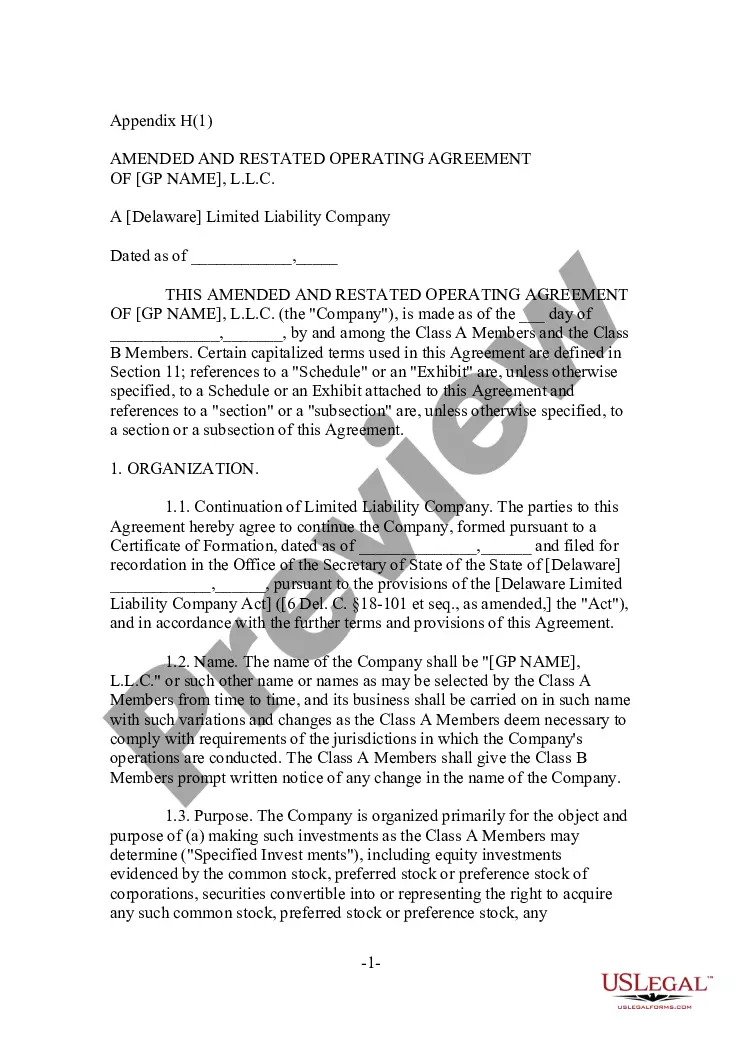
This Limited Partnership Agreement should be used when forming a partnership that involves a limited liability company and at least one limited partner. It is particularly relevant when the limited partner is primarily contributing capital to the business and is not involved in daily management. This form is essential for legal clarity concerning the partnership's structure, responsibilities, and financial arrangements.
Intended users of this form
- Individuals or entities looking to invest in a business as a limited partner.
- Limited liability companies wishing to act as general partners in a limited partnership.
- Business owners seeking to establish formal agreements with investors.
Instructions for completing this form
- Identify the parties involved in the partnership, including the General Partner and Limited Partner.
- Specify the name of the partnership and its principal place of business.
- Enter the details of capital contributions from both the General Partner and the Limited Partner.
- Outline the duties and rights of both partners as well as how profits and losses will be allocated.
- Include conditions for termination of the Limited Partner's interest and any amendments to the agreement.
Is notarization required?
Notarization is generally not required for this form. However, certain states or situations might demand it. You can complete notarization online through US Legal Forms, powered by Notarize, using a verified video call available anytime.
Get your form ready online
Our built-in tools help you complete, sign, share, and store your documents in one place.
Make edits, fill in missing information, and update formatting in US Legal Forms—just like you would in MS Word.
Download a copy, print it, send it by email, or mail it via USPS—whatever works best for your next step.
Sign and collect signatures with our SignNow integration. Send to multiple recipients, set reminders, and more. Go Premium to unlock E-Sign.
If this form requires notarization, complete it online through a secure video call—no need to meet a notary in person or wait for an appointment.
We protect your documents and personal data by following strict security and privacy standards.

Make edits, fill in missing information, and update formatting in US Legal Forms—just like you would in MS Word.

Download a copy, print it, send it by email, or mail it via USPS—whatever works best for your next step.

Sign and collect signatures with our SignNow integration. Send to multiple recipients, set reminders, and more. Go Premium to unlock E-Sign.

If this form requires notarization, complete it online through a secure video call—no need to meet a notary in person or wait for an appointment.

We protect your documents and personal data by following strict security and privacy standards.
Avoid these common issues
- Failing to clearly define the roles and responsibilities of each partner.
- Neglecting to specify the amount and timing of capital contributions.
- Omitting details on profit distribution and loss bearing.
- Entering incomplete partner information or leaving sections blank.
Why use this form online
- Convenience of downloading and completing the form at your own pace.
- Editability allows you to tailor the agreement to your specific partnership needs.
- Access to professionally drafted templates ensures legal compliance.
Main things to remember
- The Limited Partnership Agreement formalizes the relationship between a limited liability company and a limited partner.
- Understanding the roles, capital contributions, and profit-sharing is essential for a successful partnership.
- Always align the agreement with local laws to ensure it is legally binding.
Looking for another form?



Form popularity
FAQ
A limited partnership only requires one managing general partner. However, several natural persons or legal entities can also be active as general partners and jointly manage the company within the framework of a management board, and represent it externally.
A limited partner is a part-owner of a company whose liability for the firm's debts cannot exceed the amount that an individual invested in the company. Limited partners are often called silent partners.
Limited partners (limited in both their ability to manage the partnership and liability for the partnership's debts) can exclude their distributive share for self-employment tax purposes.An LLC member can enjoy limited liability and yet still participate actively in the LLC's management.
Understanding Limited Partnerships (LPs) General partners have unlimited liability and have full management control of the business. Limited partners have little to no involvement in management, but also have liability that's limited to their investment amount in the LP.
An LLC partnership can have two or more owners, called members. Limited liability companies with multiple members are referred to as multi-member LLCs or LLC partnerships. Under an LLC partnership, members' personal assets are protected. In most cases, members can't be sued for the business's actions or debts.
Limited partnerships (LPs) and limited liability partnerships (LLPs) are both businesses with more than one owner, but unlike general partnerships, limited partnerships and limited liability partnerships offer some of their owners limited personal liability for business debts.
What does a partner in a limited liability partnership have that a limited partner in a limited partnership does not have? business involvement.
The difference between a general partner vs. limited partner is a general partner is an owner of the partnership, and a limited partner is a silent partner in the business. A general partner is an owner of a partnership.
General partnerships have no restrictions on who can be owners. Owners can range from individuals to corporations to LLCs. In addition, states do not place restrictions on the types of businesses in which LLCs can participate. Therefore, LLCs can serve as general partners in a partnership.