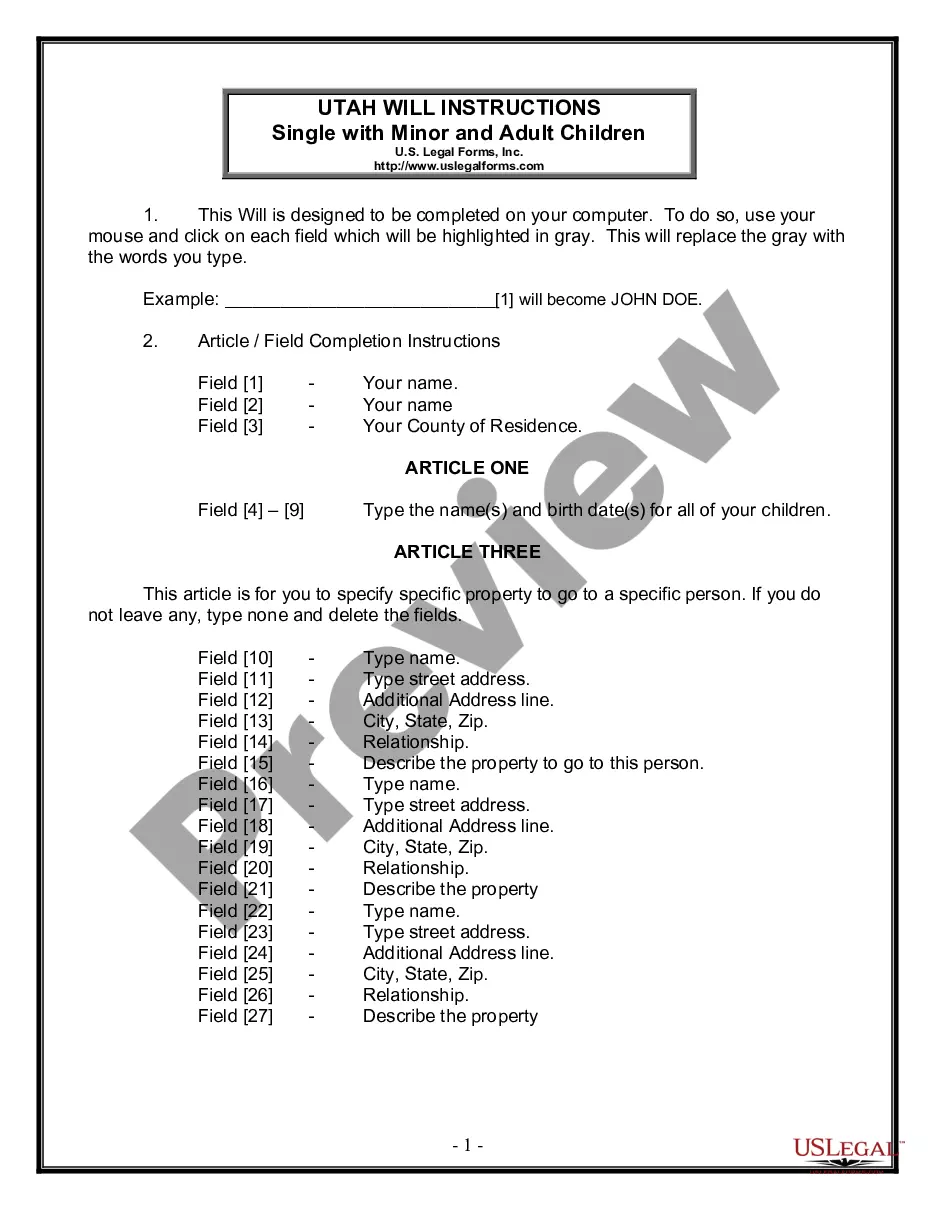
Commercial Ground Lease with Lessee to Construct Improvements - Real Estate Rental
What is this form?
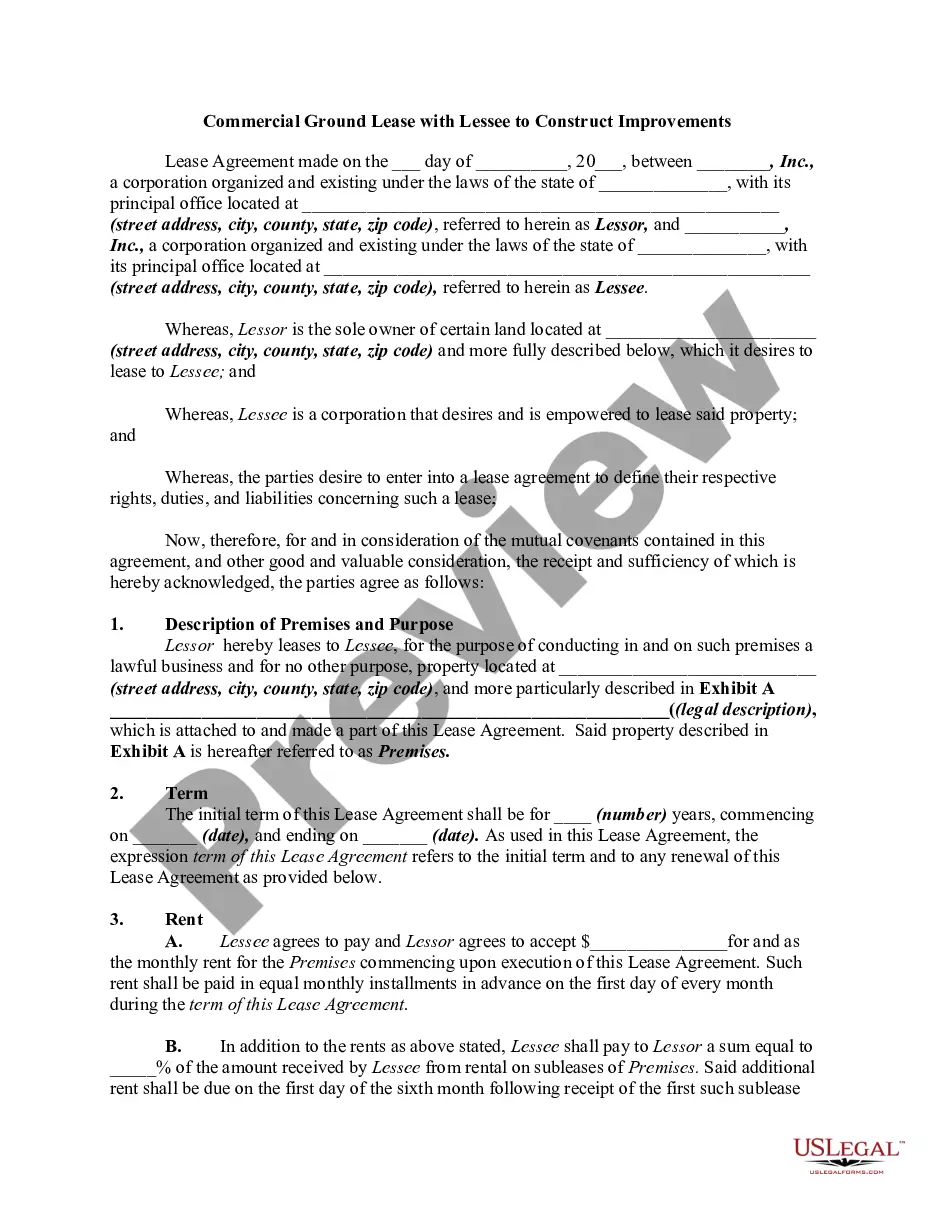
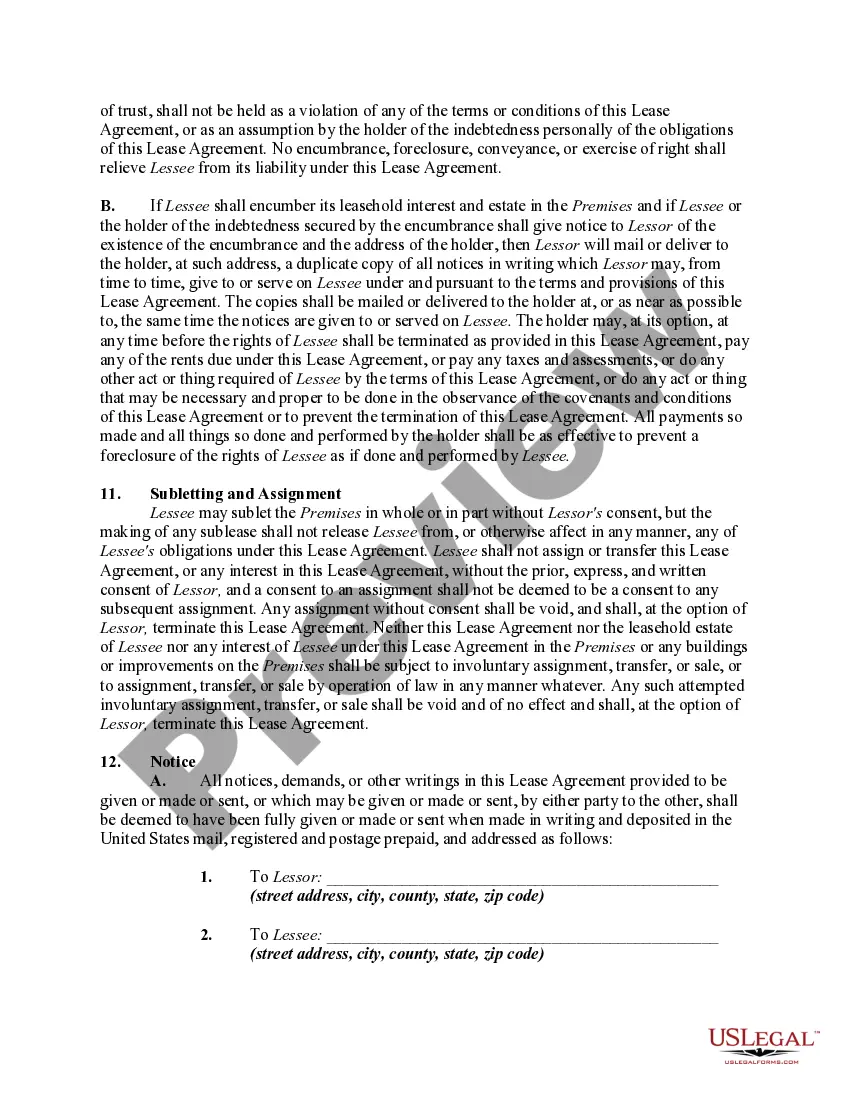
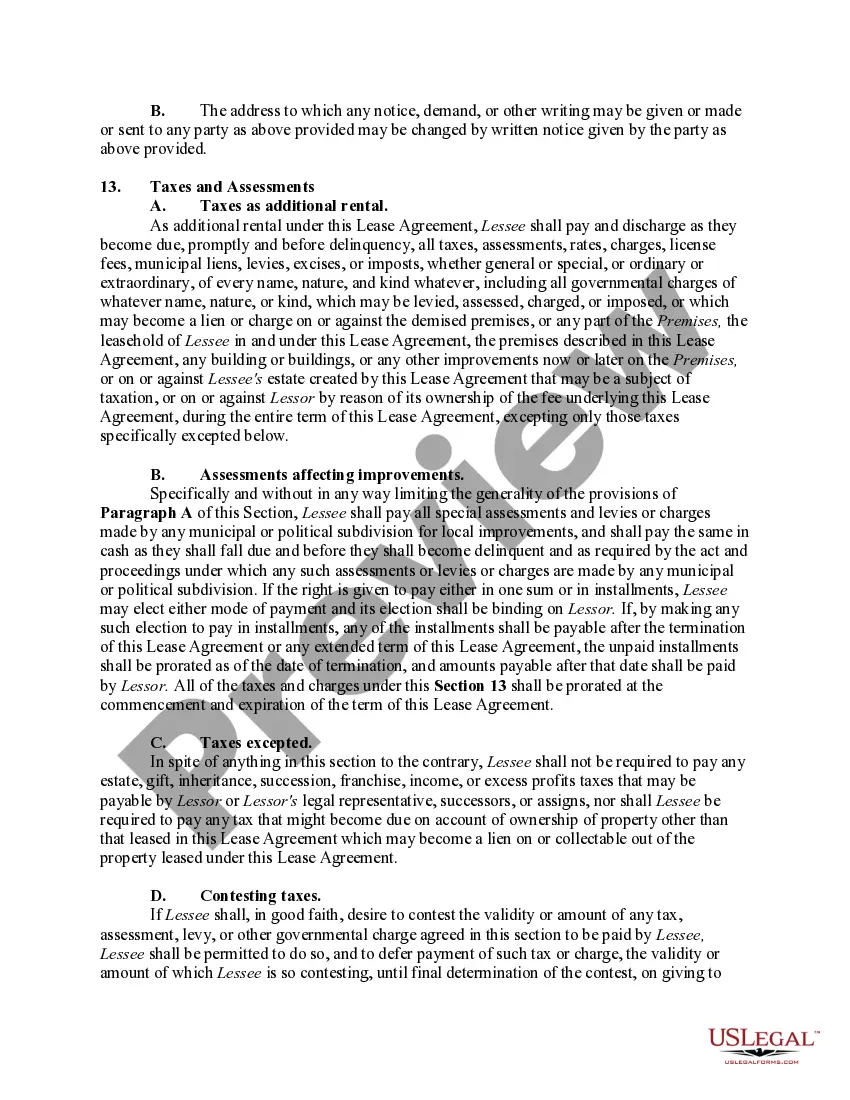
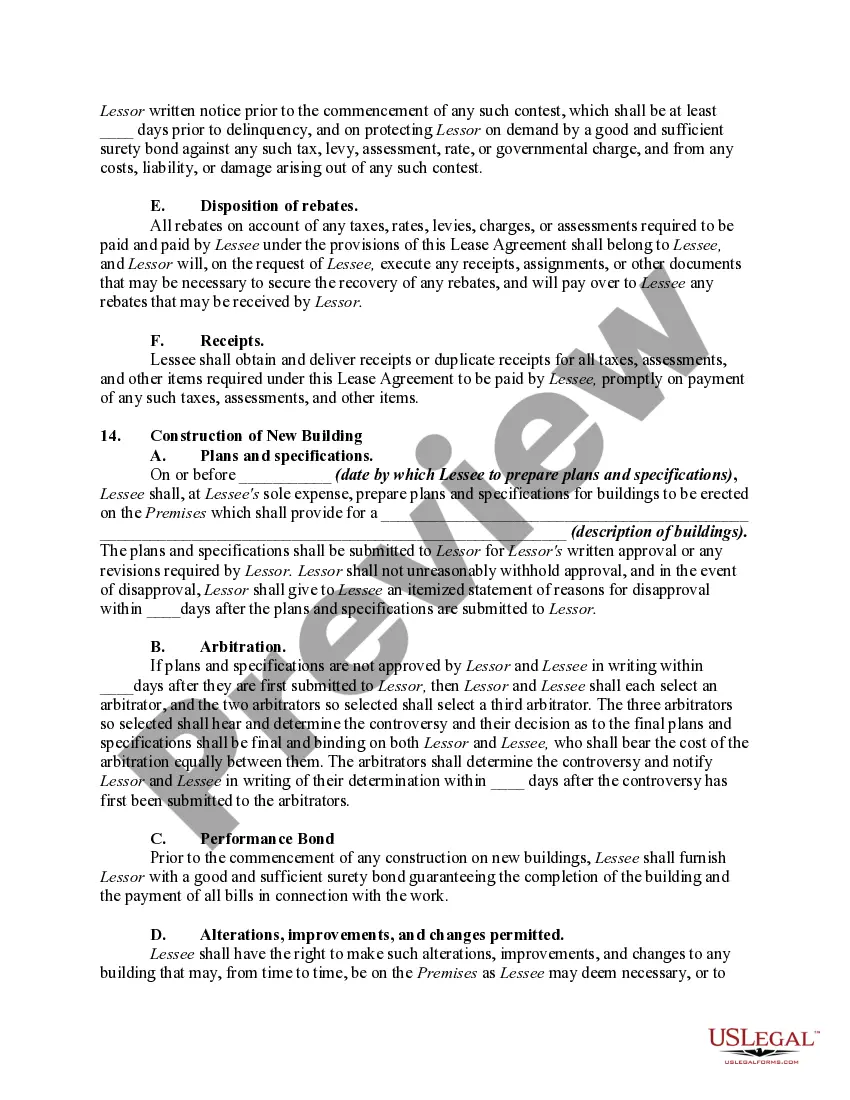
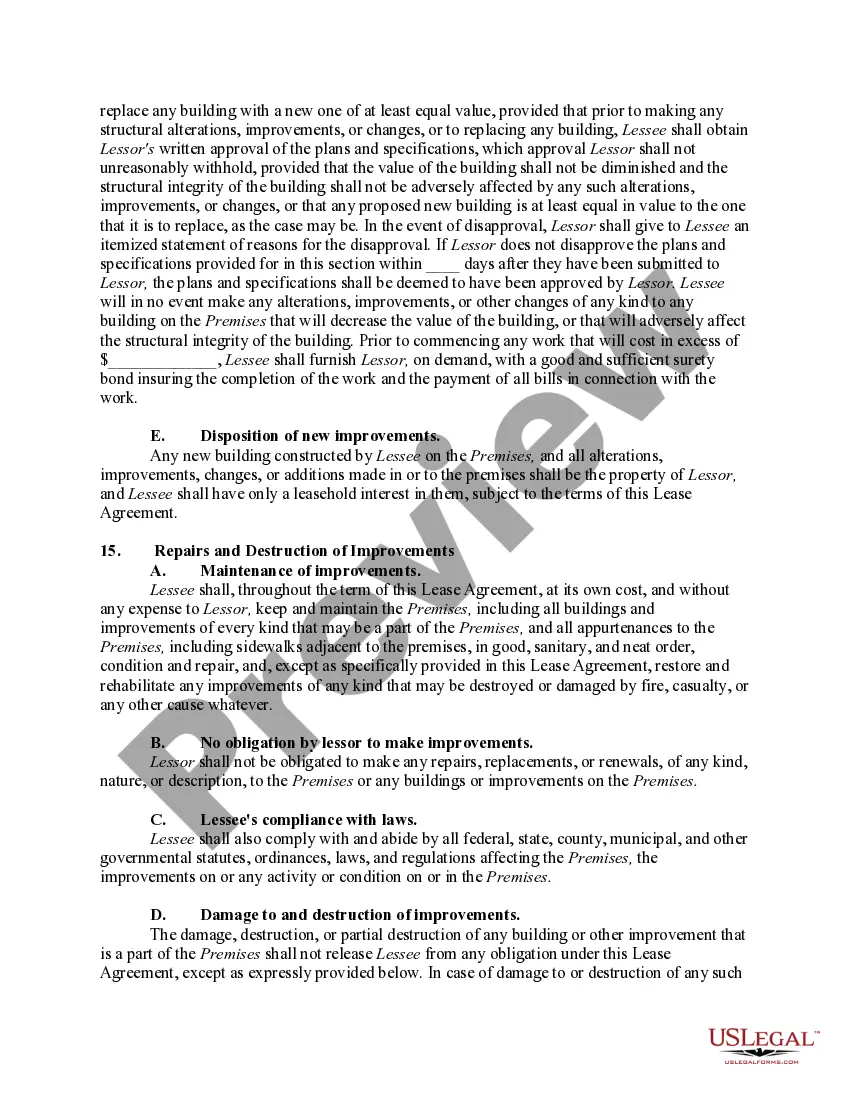
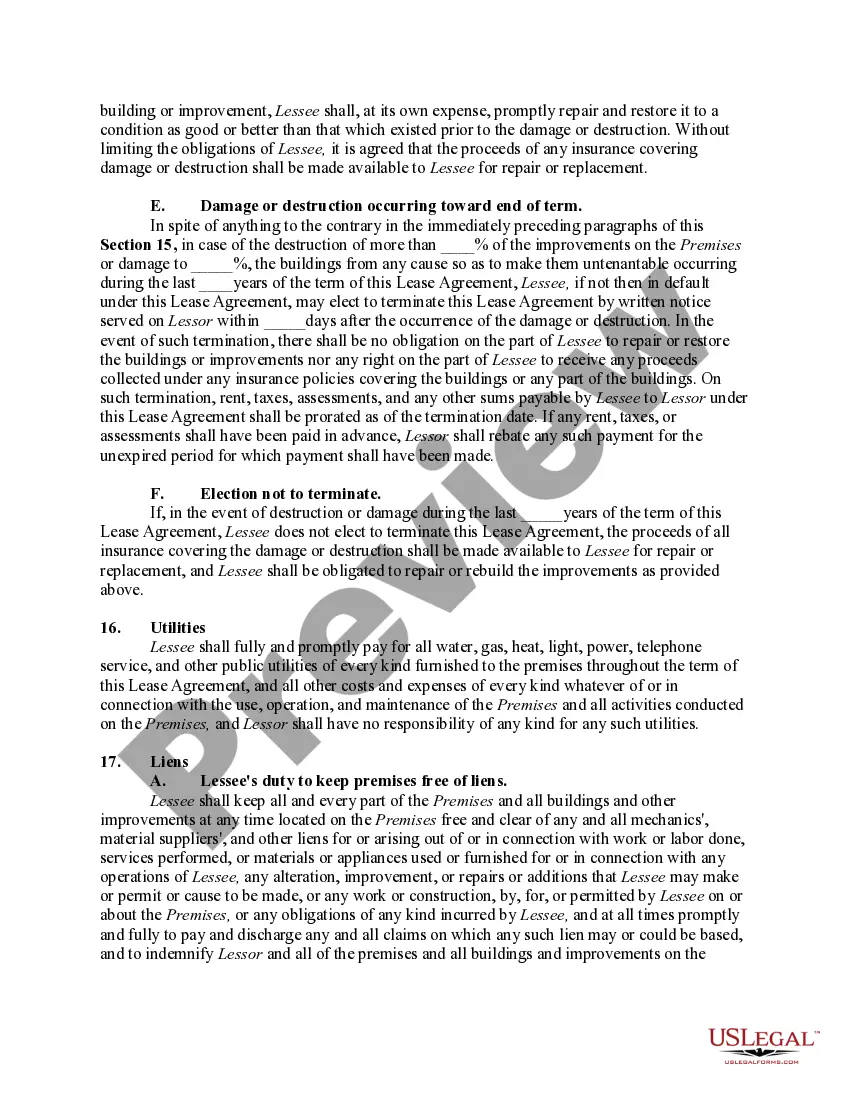
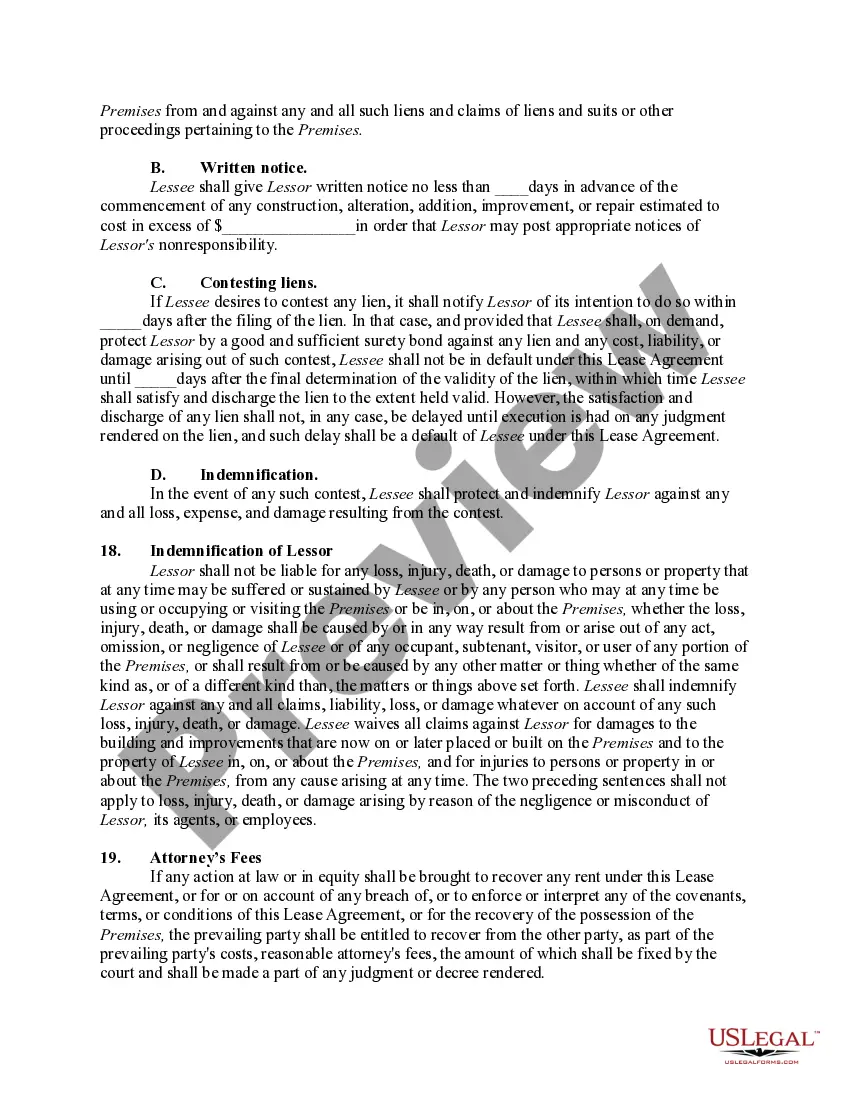
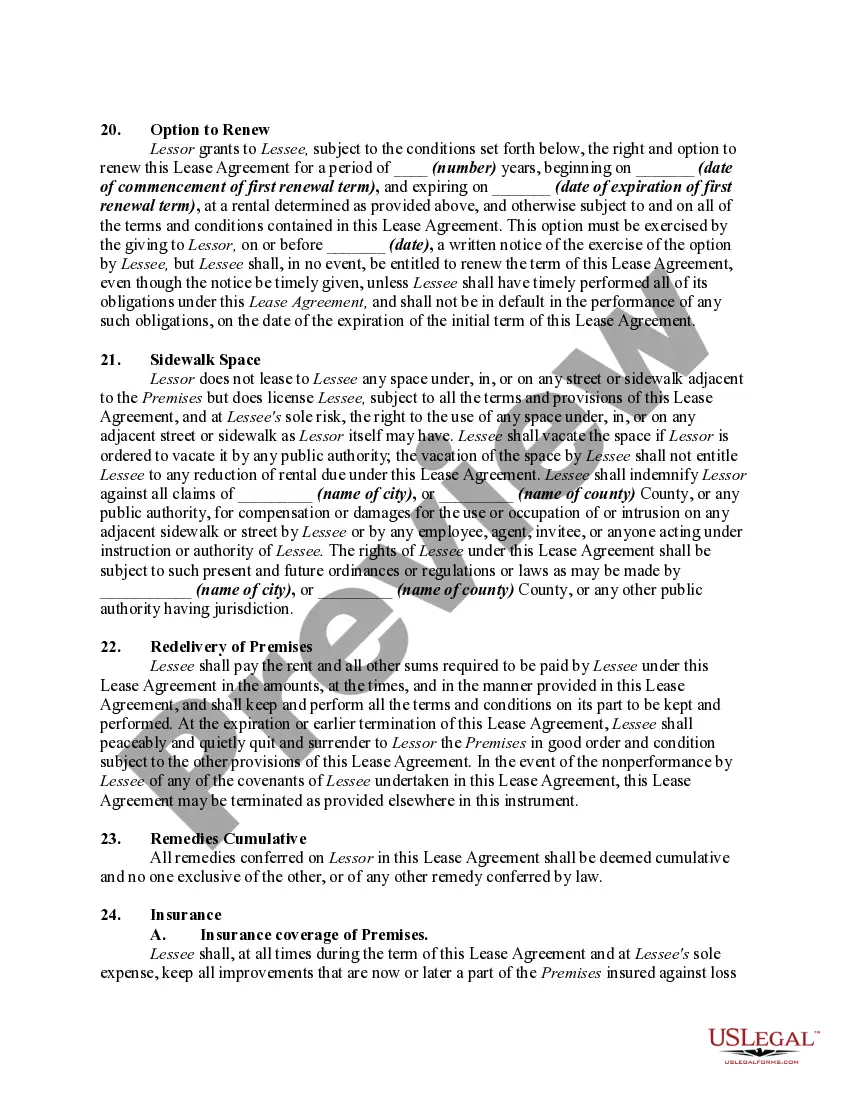
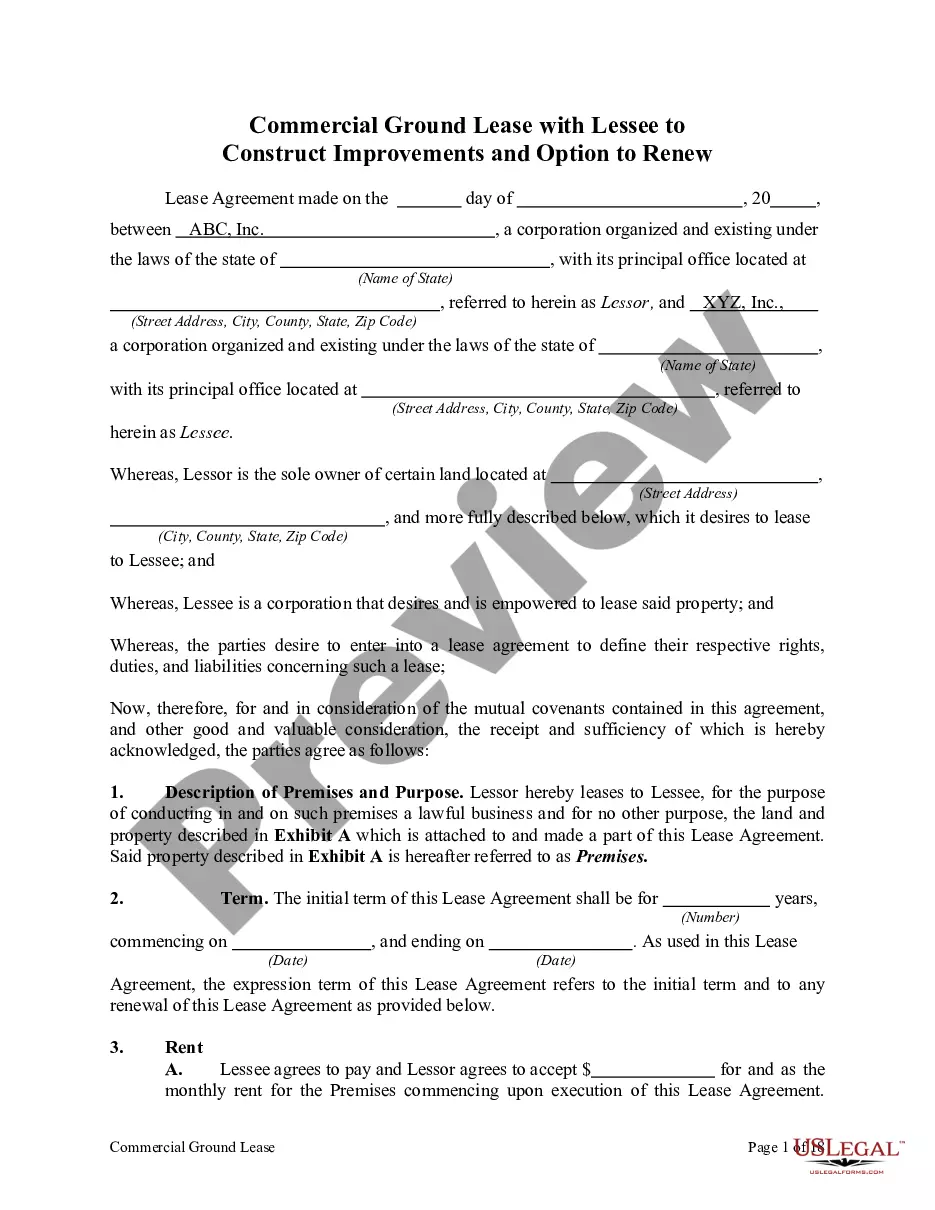
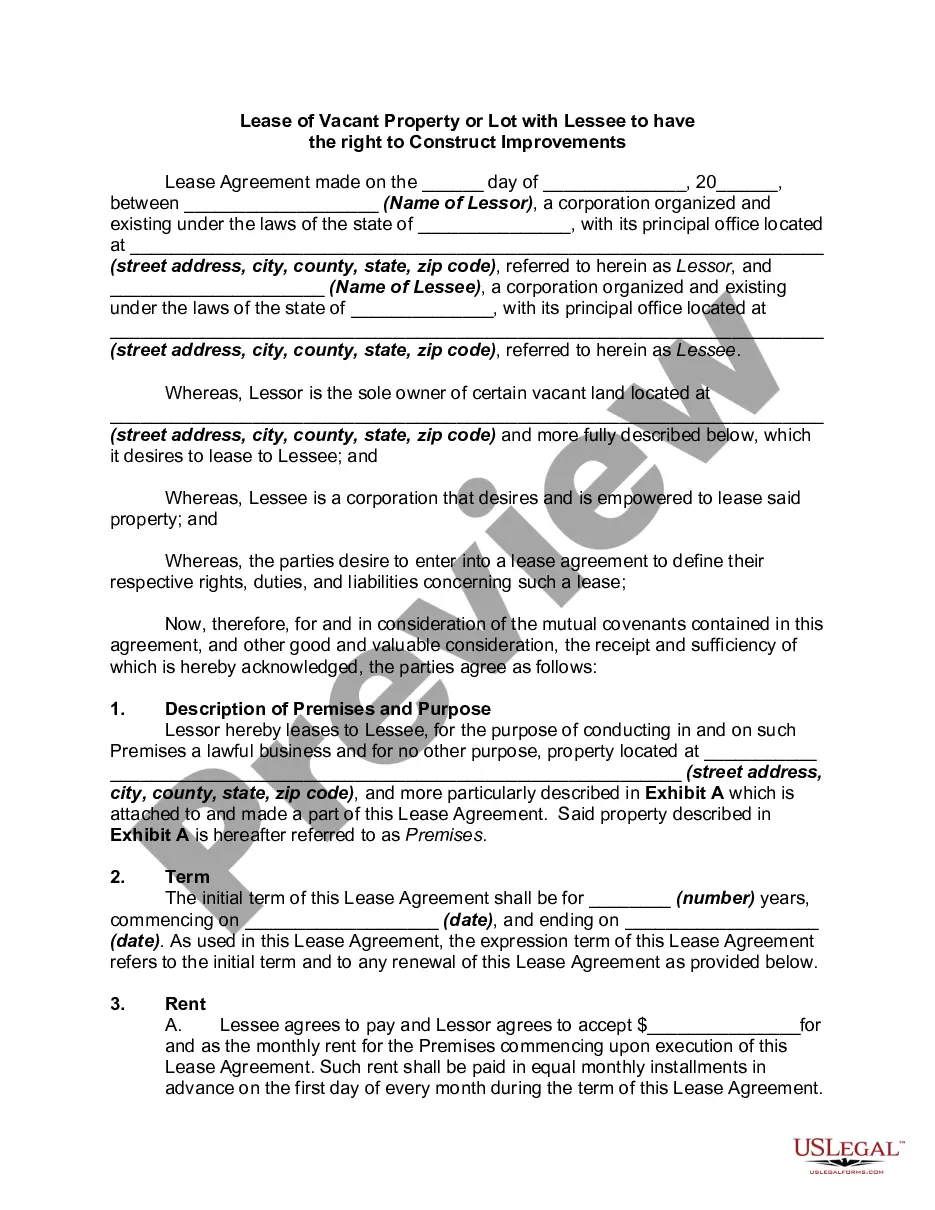
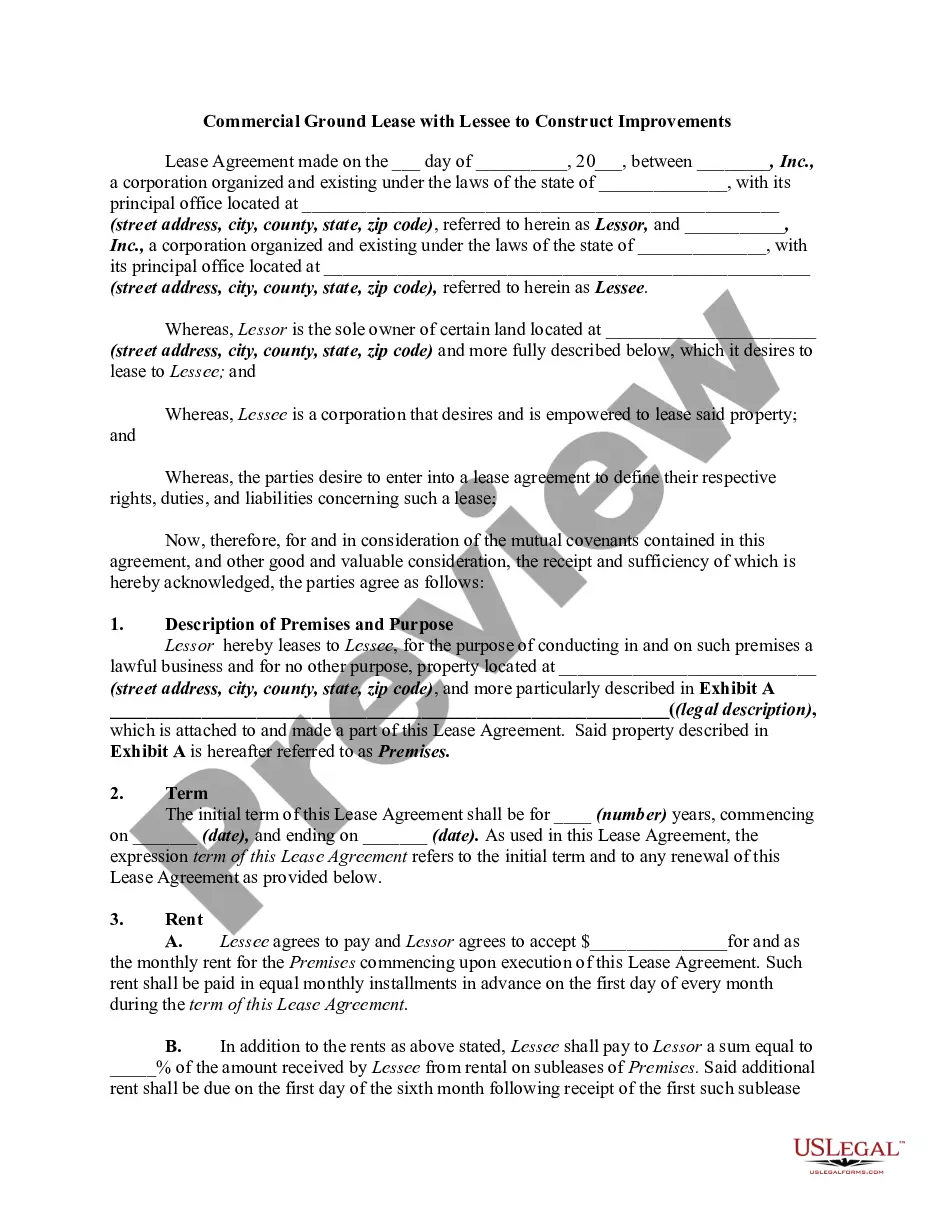
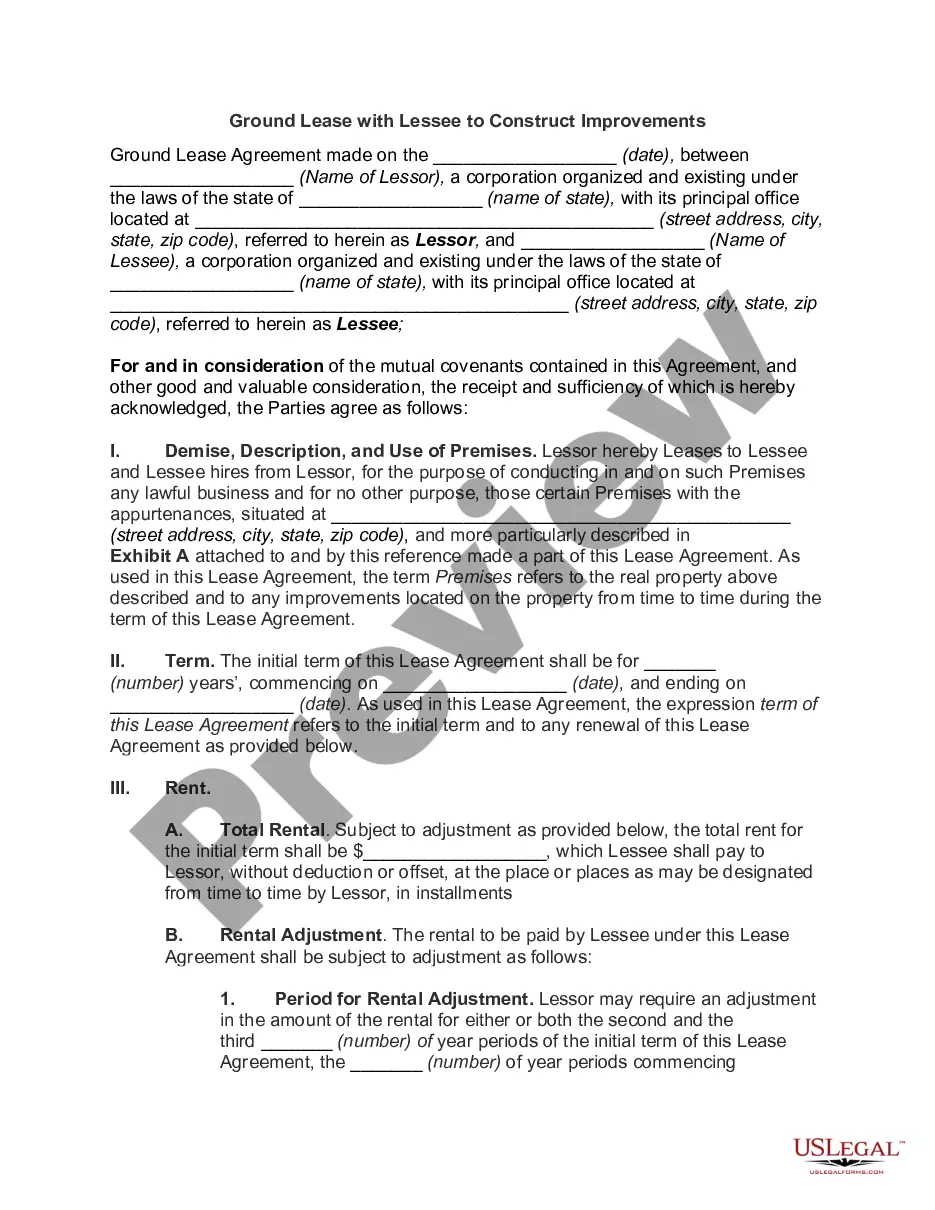
This document is a Commercial Ground Lease with Lessee to Construct Improvements. It outlines a legal agreement between a lessor (landowner) and a lessee (tenant) who seeks to lease land for the purpose of constructing improvements on the property, typically for commercial use. This lease differs from standard rental agreements as it grants the lessee the right to make significant changes to the property and specifies how rent is calculated, particularly in relation to subleasing and improvements.
Key components of this form
- Description of Premises: Defines the property to be leased and its intended use.
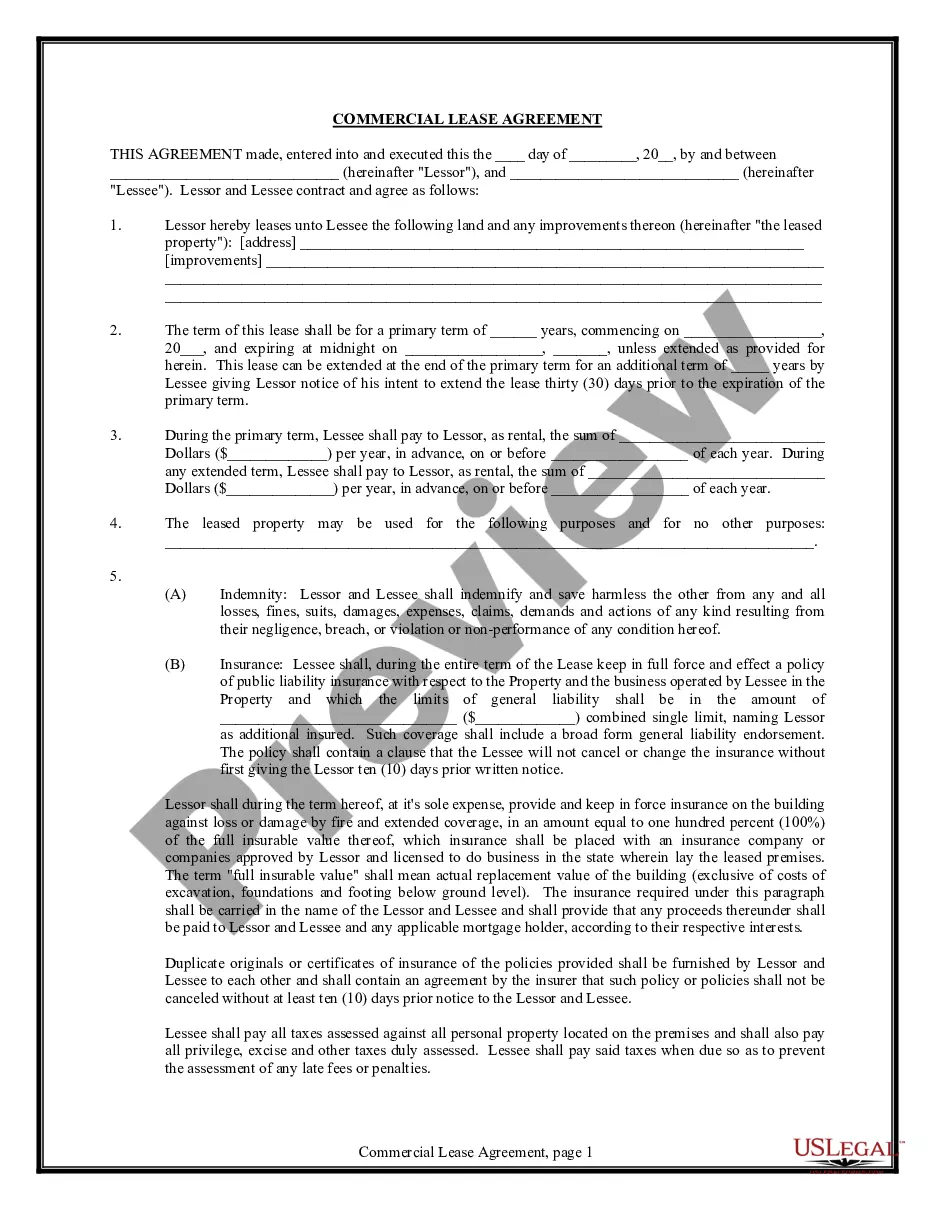
- Term: Specifies the duration of the lease agreement and any renewal options.
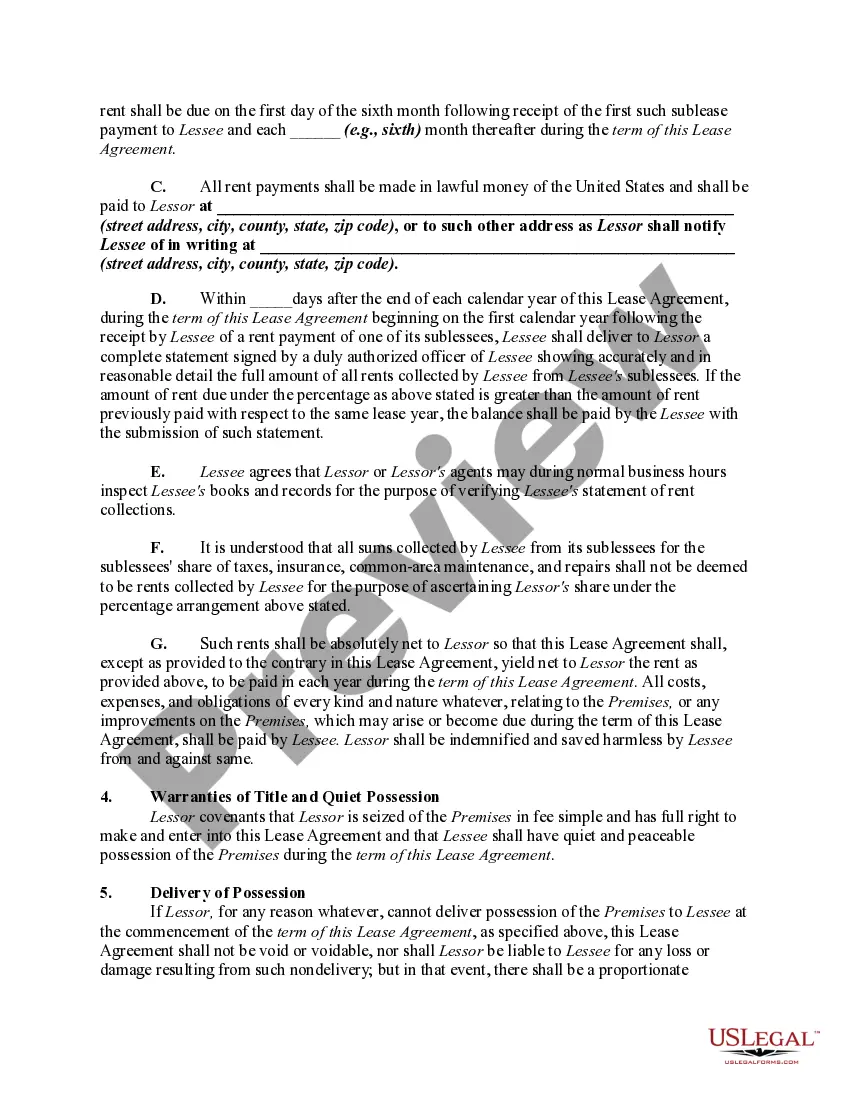
- Rent: Details the rent amount, payment schedule, and conditions for additional payments based on subleases.
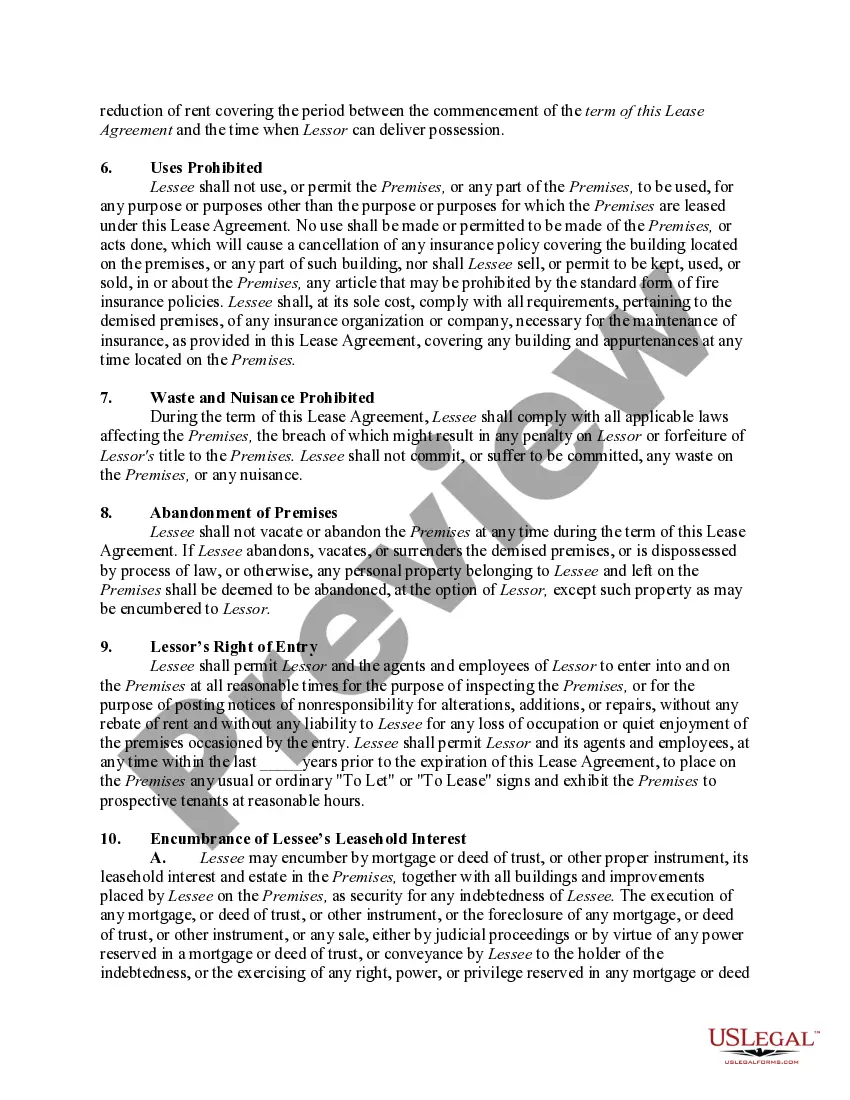
- Construction and Improvements: Outlines the lessee's rights to construct and modify structures on the leased property.
- Warranties of Title: Affirms the lessor's ownership and the lessee's right to quiet possession of the property.

Common use cases
This commercial ground lease form is useful when a business wishes to rent land that they plan to develop. It is applicable for situations where the lessee needs to build commercial facilities such as shopping centers, office buildings, or other significant structures, and wishes to specify terms for both the construction and the ongoing rental agreement.
Who should use this form
Intended Audience:
- Business owners looking to lease land for development.
- Real estate investors seeking to establish a long-term commercial presence.
- Lessees who plan to construct improvements and want legal security regarding their investment.
Completing this form step by step
Steps to complete this lease form:
- Identify both parties: Enter the names and addresses of the lessor and lessee.
- Specify the property: Detail the exact location and legal description of the premises.
- Determine the lease term: Fill in the duration of the lease and start/end dates.
- Agree on rent details: Specify the amount of rent and schedule for payments.
- Outline improvement plans: Describe any intended construction and obtain necessary approvals.
Notarization requirements for this form
This form does not typically require notarization unless specified by local law. Always check your stateâs regulations to ensure compliance.
Get your form ready online
Our built-in tools help you complete, sign, share, and store your documents in one place.
Make edits, fill in missing information, and update formatting in US Legal Forms—just like you would in MS Word.
Download a copy, print it, send it by email, or mail it via USPS—whatever works best for your next step.
Sign and collect signatures with our SignNow integration. Send to multiple recipients, set reminders, and more. Go Premium to unlock E-Sign.
If this form requires notarization, complete it online through a secure video call—no need to meet a notary in person or wait for an appointment.
We protect your documents and personal data by following strict security and privacy standards.

Make edits, fill in missing information, and update formatting in US Legal Forms—just like you would in MS Word.

Download a copy, print it, send it by email, or mail it via USPS—whatever works best for your next step.

Sign and collect signatures with our SignNow integration. Send to multiple recipients, set reminders, and more. Go Premium to unlock E-Sign.

If this form requires notarization, complete it online through a secure video call—no need to meet a notary in person or wait for an appointment.

We protect your documents and personal data by following strict security and privacy standards.
Typical mistakes to avoid
Common mistakes to avoid:
- Failing to specify the exact legal description of the premises.
- Not clearly outlining the responsibilities for maintenance and repairs.
- Ignoring local zoning laws that may restrict the intended use of the property.
Benefits of completing this form online
Benefits of using this form online:
- Convenience of easy access and downloadable formats.
- Editable templates to customize according to specific lease agreements.
- Reliability of legally drafted documents by licensed attorneys.
- The lease is legally binding and can be enforced in a court of law.
- Both parties must adhere to the lease terms to avoid default.
- Any changes or amendments must be documented in writing and signed by both parties.
Quick recap
- A Commercial Ground Lease allows for the development of leased land for commercial purposes.
- Clear terms regarding rent and property improvements protect both parties' interests.
- Understanding and completing the lease correctly is essential for enforceability.
Looking for another form?


Form popularity
FAQ
The Person Liable for the Lease. Your Business Structure. How Long You Have Been in Business. The Nature of Your Business. Contact Information. Your Proposed Terms (or, Counter Offer) The Length of the Lease. Condition of the Property.
Ground leases can provide great investment opportunities for people who want to deploy capital in real estate while never having to think about property management.The value of the rental stream and the landlord's position will typically end up well below half the value of the land and building as a whole.
A ground lease involves leasing land for a long-term periodtypically for 50 to 99 yearsto a tenant who constructs a building on the property.The ground lease defines who owns the land, and who owns the building, and improvements on the property.
The freeholder owns the land the property is built on, which means you, as a leaseholder, have to pay 'ground rent'.Once the lease expires, the property reverts 'back' to being a freehold property, where both the building and the land it is on are under the ownership of the freeholder.
An Offer to Lease, also known as a proposal to lease, is drafted when a prospective tenant is looking to lease commercial space from a landlord or property manager.
To be financeable, the ground lease should include the right of the ground lessee to mortgage the leasehold without obtaining the ground lessor's consent, coupled with the right of the lender to enforce its rights under the leasehold mortgage against the ground lease as its collateral, including the acquisition of the
A ground lease is a long-term agreement between a landlord and a tenant in which the tenant is allowed to develop the leased property. At the end of the lease term, the landlord retains ownership of the improvements made by the tenant.
Like an ordinary lease, under a ground lease a tenant or lessee pays rent to a landlord or lessor and receives in return a right to possession and use of the property for the time period covered by the rent. Like an ordinary lease, ground leases generally call for rent to be paid on a periodic basis, typically monthly.