Letter to Law Enforcement to Report Identity Theft by Known Imposter
What this document covers
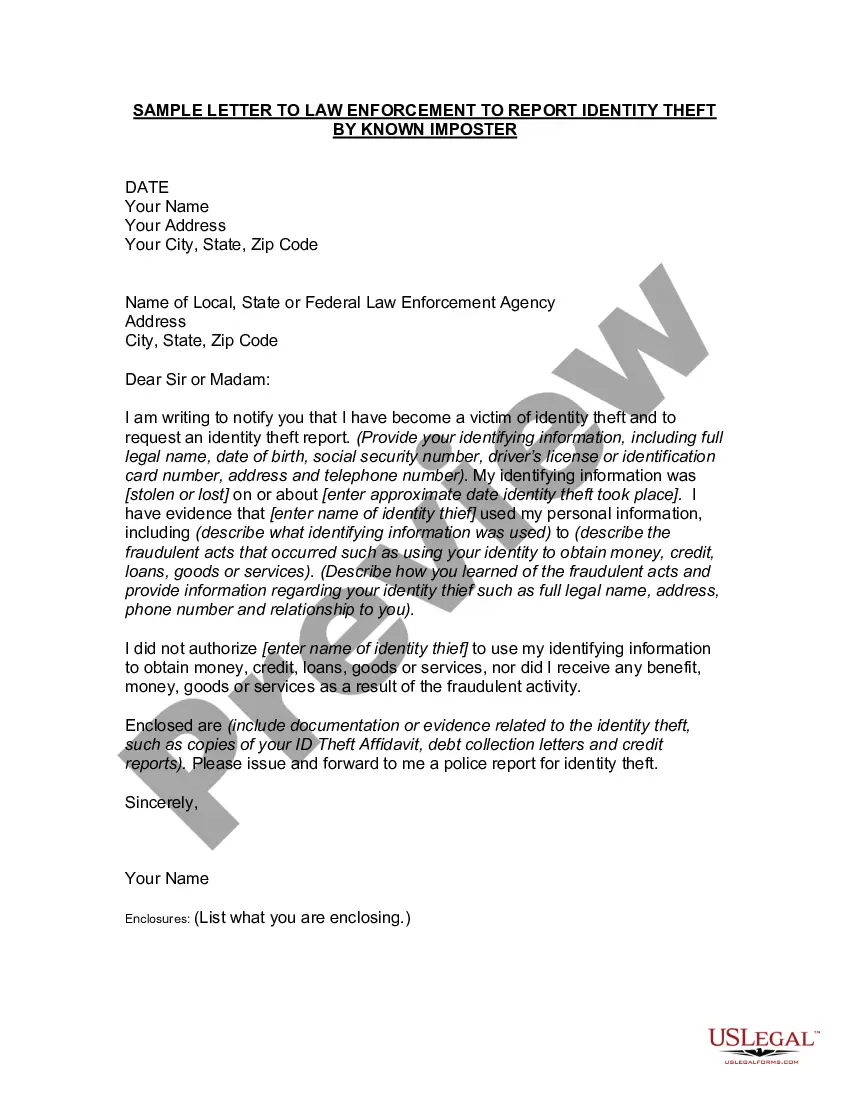
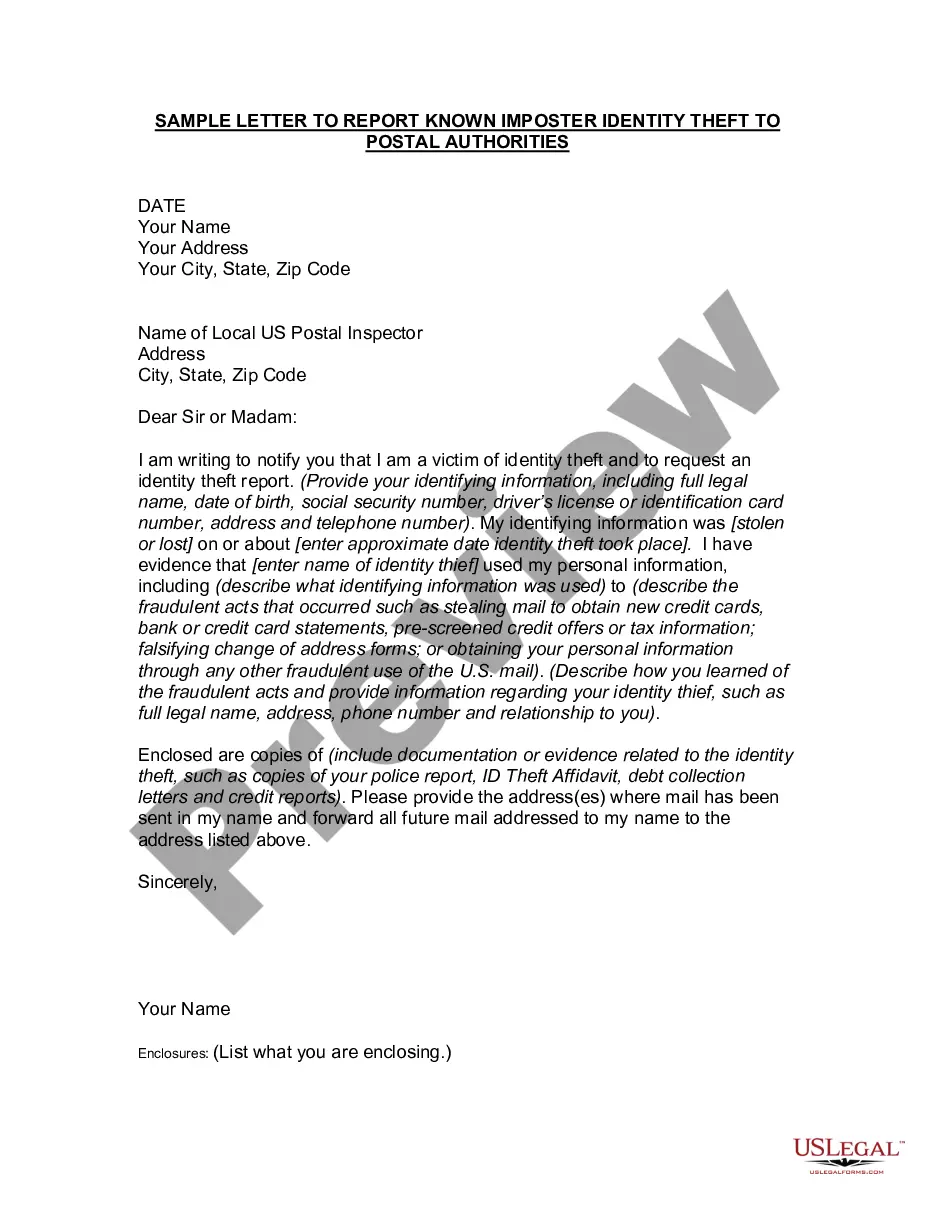
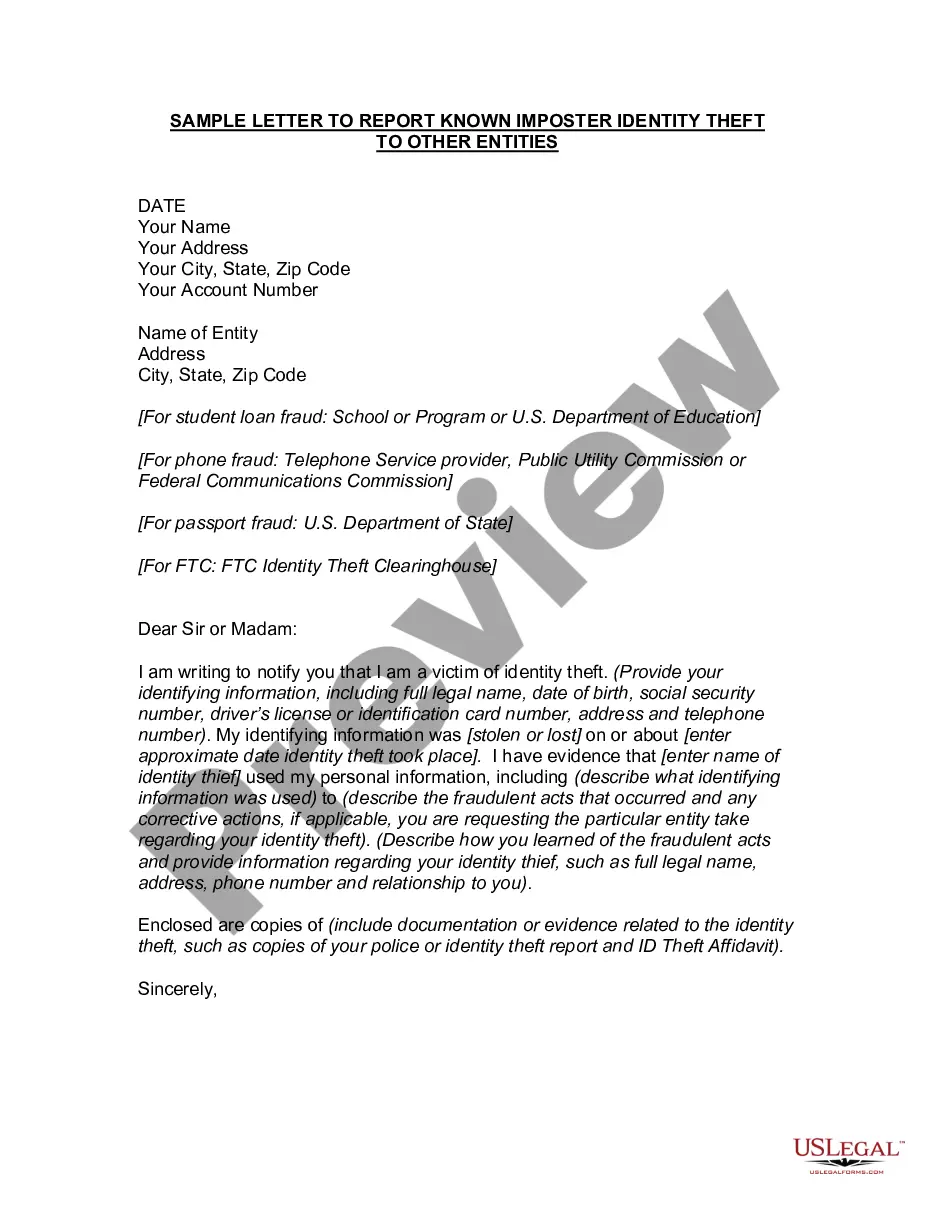
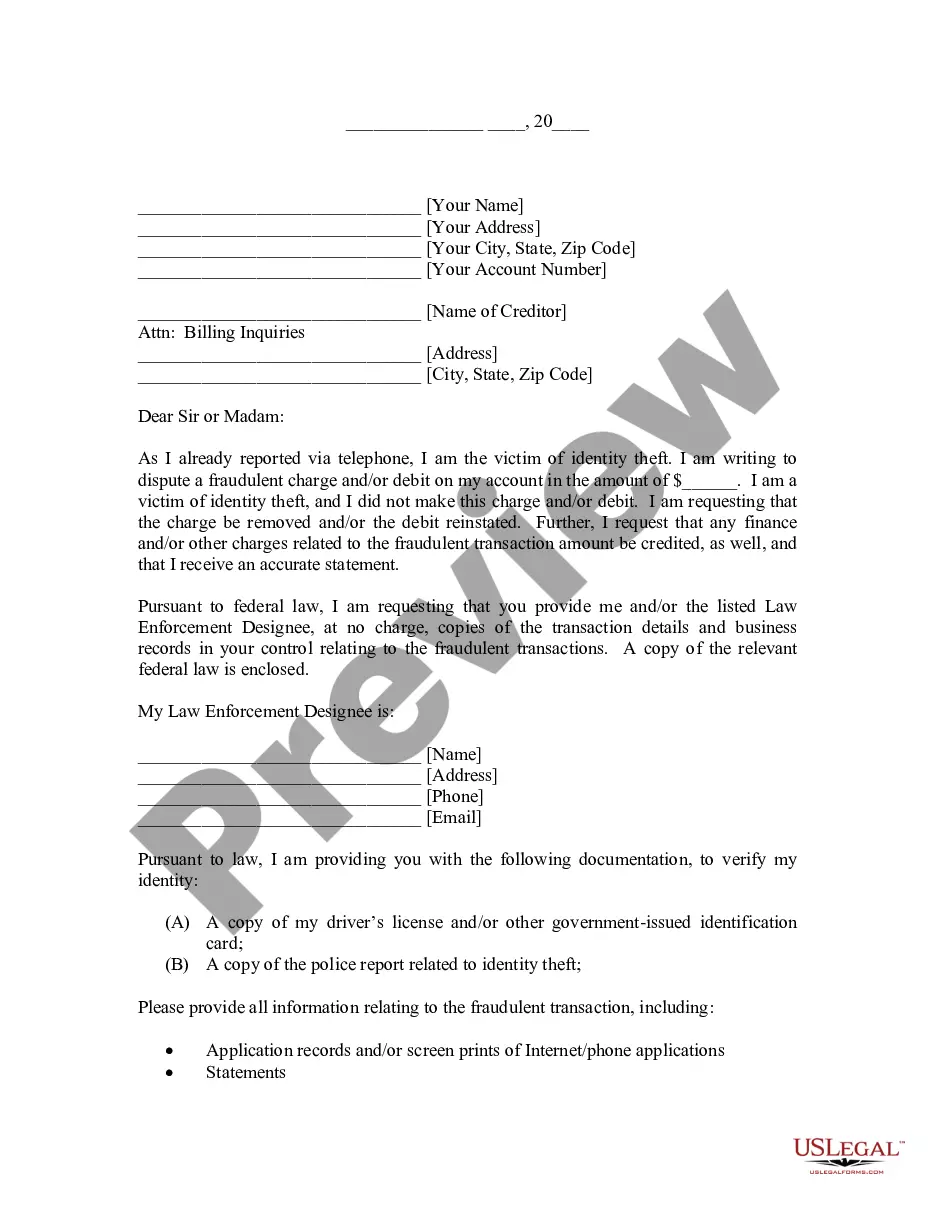
The Letter to Law Enforcement to Report Identity Theft by Known Imposter is a crucial document utilized by victims of identity theft who know the person responsible for the crime. This form allows individuals to formally notify local, state, or federal law enforcement agencies about the identity theft and request a police report. It serves a specific purpose in clarifying the identity of the perpetrator, which distinguishes it from other general identity theft reporting forms.
Key components of this form
- Date of the letter
- Your name and contact information
- Details of the law enforcement agency being contacted
- Victim's identifying information, including Social Security number and date of birth
- Description of the identity theft incident, including how the information was used
- Enclosures of supporting documents, such as affidavits or credit reports
Common use cases
This form should be used when you have identified yourself as a victim of identity theft and know who the impersonator is. Typically, you would use this letter to initiate formal law enforcement involvement in cases where personal information has been misappropriated for financial gain, such as taking out loans or acquiring goods and services without your permission.
Who should use this form
This form is intended for:
- Individuals who have experienced identity theft
- Victims who can identify the person committing the identity theft
- Anyone requiring an official police report for identity theft
How to complete this form
- Fill in the date at the top of the letter.
- Provide your full name and contact information.
- Identify the law enforcement agency you are notifying, along with their address.
- Include your personal identifying information and the details of the identity theft incident.
- Attach any relevant documents that support your case.
- Sign the letter and note any enclosures you are including.
Is notarization required?
This form usually doesn’t need to be notarized. However, local laws or specific transactions may require it. Our online notarization service, powered by Notarize, lets you complete it remotely through a secure video session, available 24/7.
Get your form ready online
Our built-in tools help you complete, sign, share, and store your documents in one place.
Make edits, fill in missing information, and update formatting in US Legal Forms—just like you would in MS Word.
Download a copy, print it, send it by email, or mail it via USPS—whatever works best for your next step.
Sign and collect signatures with our SignNow integration. Send to multiple recipients, set reminders, and more. Go Premium to unlock E-Sign.
If this form requires notarization, complete it online through a secure video call—no need to meet a notary in person or wait for an appointment.
We protect your documents and personal data by following strict security and privacy standards.

Make edits, fill in missing information, and update formatting in US Legal Forms—just like you would in MS Word.

Download a copy, print it, send it by email, or mail it via USPS—whatever works best for your next step.

Sign and collect signatures with our SignNow integration. Send to multiple recipients, set reminders, and more. Go Premium to unlock E-Sign.

If this form requires notarization, complete it online through a secure video call—no need to meet a notary in person or wait for an appointment.

We protect your documents and personal data by following strict security and privacy standards.
Typical mistakes to avoid
- Failing to include essential identifying information.
- Not providing sufficient evidence or documentation of the identity theft.
- Addressing the letter to the wrong agency.
- Omitting a signature or date on the letter.
Why use this form online
- Easy access to a professionally drafted legal template.
- Ability to customize the form to your specific situation.
- Convenient download and printing options for immediate use.
- Ensures compliance with legal standards for identity theft reporting.
Looking for another form?




Form popularity
FAQ
You can call the Federal Trade Commission (FTC) at 1-877-438-4338 or TDD at 1-866-653-4261, or online at http://www.consumer.ftc.gov/features/feature-0014-identity-theft to report identity theft.
Track what bills you owe and when they're due. If you stop getting a bill, that could be a sign that someone changed your billing address. Review your bills. Check your bank account statement. Get and review your credit reports.
Identity theft is a wobbler in California law, meaning that it can be treated as either a felony or misdemeanor.Because identity theft is so widespread, the federal government also has jurisdiction to prosecute identity theft cases. The penalty for federal identity theft is up to 30 years prison time.
Aggravated identity theft is punishable by a mandatory minimum sentence of imprisonment for two years or by imprisonment for five years if it relates to a terrorism offense. At least thus far, the government has rarely prosecuted the five-year terrorism form of the offense.
Step 1: Call the companies where you know fraud occurred. Ask them to close or freeze the accounts. Then, no one can add new charges unless you agree. Change logins, passwords and PINS for your accounts. You might have to contact these companies again after you have an FTC Identity Theft Report.
Report the fraud Contact the organisation or agency that issued your identity document and your financial institution. and tell them what happened. Report cybercrime securely to the Australian Cyber Security Centre at ReportCyber.
Go to your local police office with: Tell the police someone stole your identity and you need to file a report.
Police departments can do very little to investigate and prosecute identity theft.You can use the Identity Theft Report to help get false information taken off your credit reports, stop a company from collecting debts and place an extended fraud alert on your credit reports.
The Identity Theft Affidavit you filed with the FTC; Government-issued photographic ID (such as a state ID card or driver's license); Proof of your home address (like a utility bill or rent agreement); Proof of the theft (bills from creditors or notices from the IRS); and.