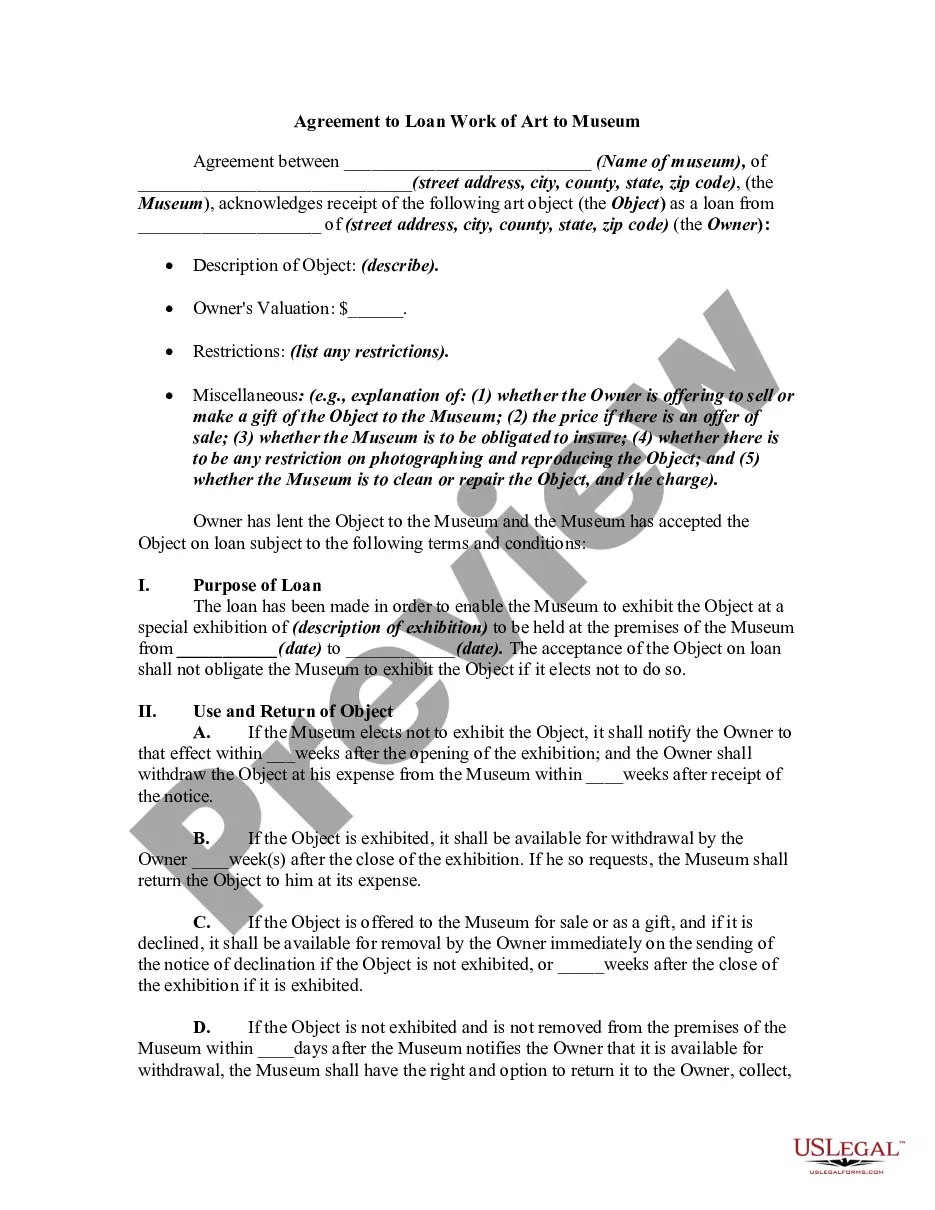
Agreement to Loan Work of Art to Museum
What is this form?
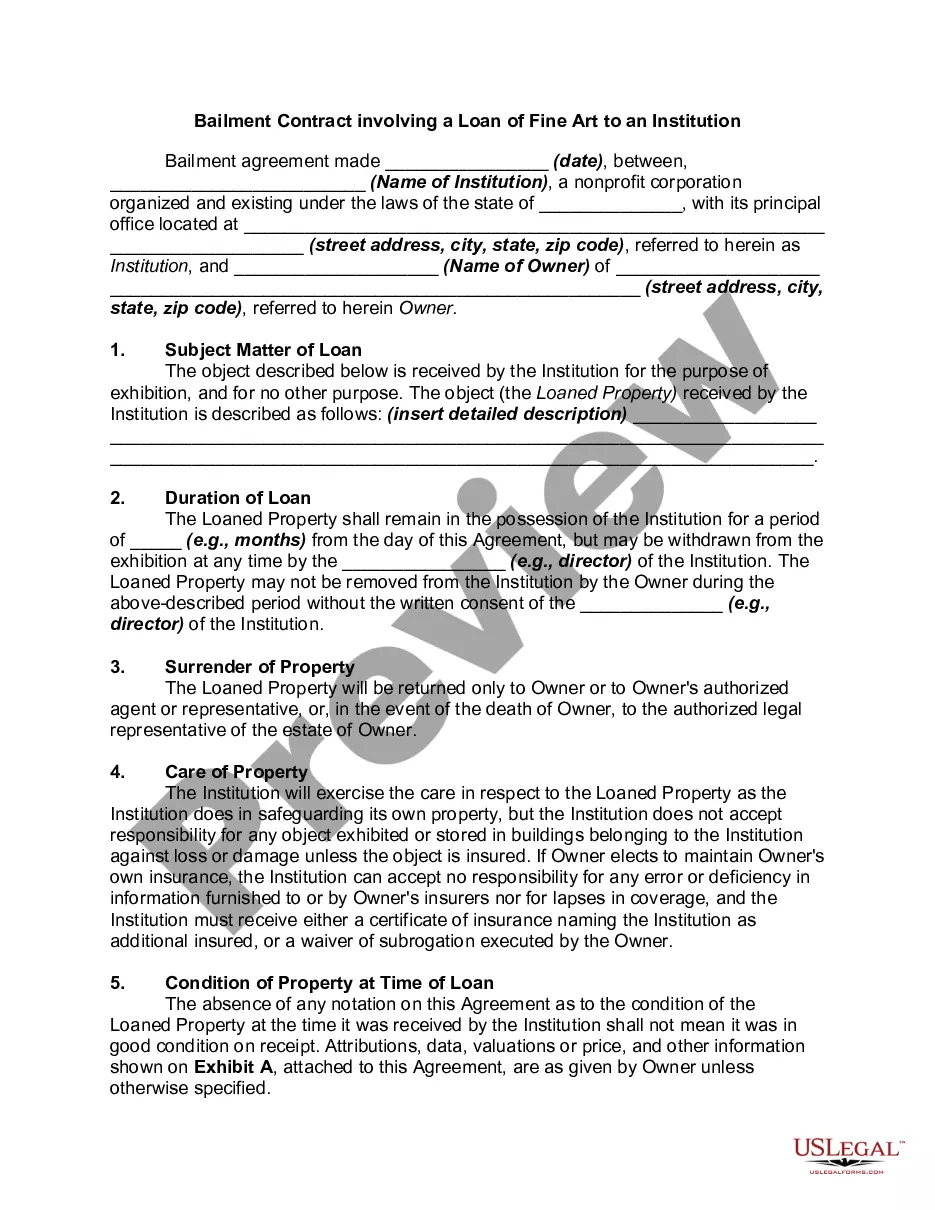
The Agreement to Loan Work of Art to Museum is a legal document that outlines the terms and conditions under which an owner lends a work of art to a museum. This agreement helps protect the interests of both parties by establishing clear expectations for the loan's purpose, duration, and conditions for the care and return of the artwork. Unlike other forms related to art transactions, this agreement is specific to temporary loans for exhibition purposes.
Form components explained
- Identification of the museum and the owner of the artwork.
- Detailed description of the artwork being loaned.
- Owner's valuation of the artwork and any restrictions on its use.
- Conditions for the loan, including purpose and duration of the exhibition.
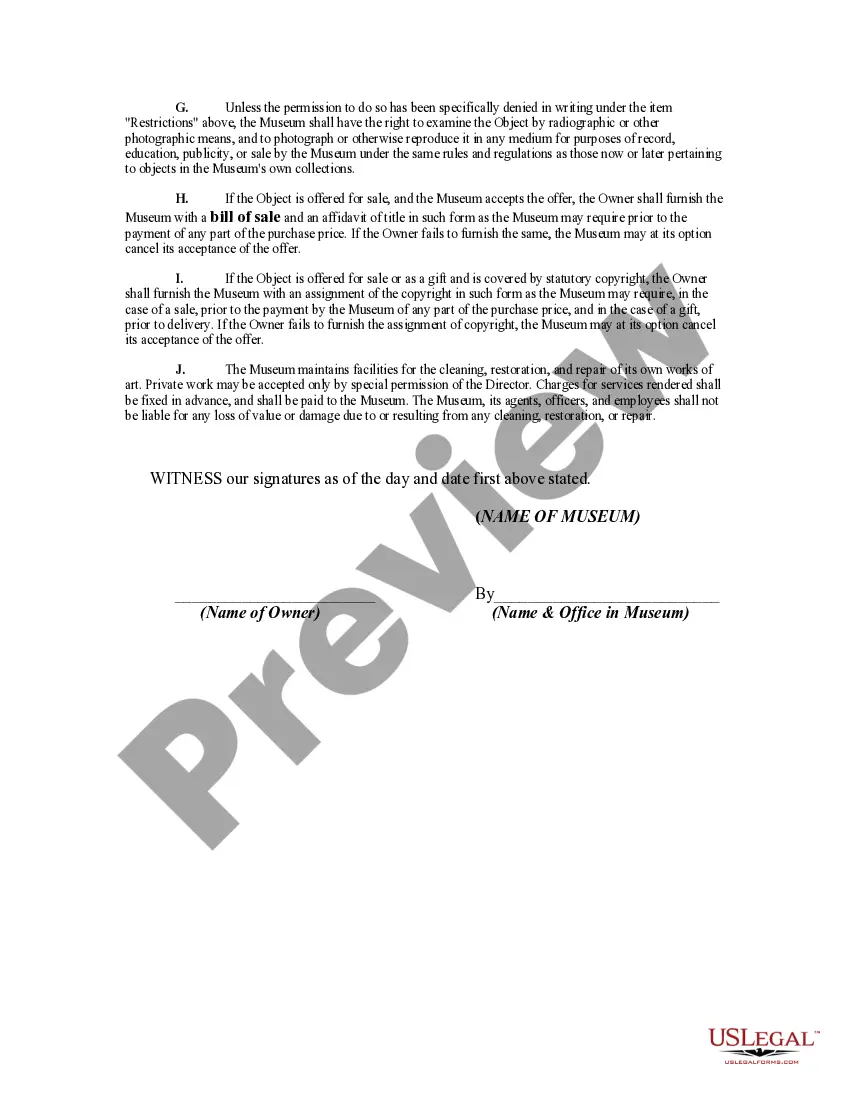
- Provisions for the return of the artwork after the exhibition concludes.
- Responsibility for insurance and care of the artwork.
When to use this document
This form should be used when an owner wants to lend a work of art to a museum for exhibition. It is particularly relevant for cases where the artwork is not for sale but is meant to be shown to the public, such as during special exhibitions or events. Utilizing this agreement ensures that both parties acknowledge and agree to the specific terms of the loan.
Intended users of this form
This agreement is suitable for:
- Owners of artworks who wish to lend their pieces to museums.
- Museum representatives responsible for managing art collections.
- Artists looking to have their works exhibited without transferring ownership.
How to complete this form
- Identify the parties involved: the museum and the art owner.
- Provide a detailed description of the artwork, including its title and medium.
- Specify the purpose of the loan and the dates for the exhibition.
- Outline any restrictions regarding the use, reproduction, or insurance of the artwork.
- Gather signatures from both the owner and an authorized museum representative to finalize the agreement.
Notarization guidance
Notarization is generally not required for this form. However, certain states or situations might demand it. You can complete notarization online through US Legal Forms, powered by Notarize, using a verified video call available anytime.
Get your form ready online
Our built-in tools help you complete, sign, share, and store your documents in one place.
Make edits, fill in missing information, and update formatting in US Legal Forms—just like you would in MS Word.
Download a copy, print it, send it by email, or mail it via USPS—whatever works best for your next step.
Sign and collect signatures with our SignNow integration. Send to multiple recipients, set reminders, and more. Go Premium to unlock E-Sign.
If this form requires notarization, complete it online through a secure video call—no need to meet a notary in person or wait for an appointment.
We protect your documents and personal data by following strict security and privacy standards.

Make edits, fill in missing information, and update formatting in US Legal Forms—just like you would in MS Word.

Download a copy, print it, send it by email, or mail it via USPS—whatever works best for your next step.

Sign and collect signatures with our SignNow integration. Send to multiple recipients, set reminders, and more. Go Premium to unlock E-Sign.

If this form requires notarization, complete it online through a secure video call—no need to meet a notary in person or wait for an appointment.

We protect your documents and personal data by following strict security and privacy standards.
Typical mistakes to avoid
- Not including a detailed description of the artwork.
- Failing to specify the duration of the loan and exhibition.
- Omitting restrictions regarding the reproduction or care of the artwork.
- Not obtaining necessary signatures from both parties.
Benefits of completing this form online
- Convenience: Access and complete the form at your own pace.
- Editability: Make changes easily before finalizing the document.
- Reliability: Trusted by legal professionals and tailored by licensed attorneys.
Legal use & context
- This agreement serves as a legally binding contract between the artwork owner and the museum.
- It outlines the responsibilities and rights of both parties regarding the loaned artwork.
- The form protects against disputes over the care, use, and eventual return of the artwork.
Key takeaways
- The Agreement to Loan Work of Art to Museum is essential for formalizing art loans.
- Clearly outline all terms and conditions to protect all parties involved.
- Ensure comprehensive descriptions and valuations of the artwork are included.
- Review local laws to verify if notarization is required.
Looking for another form?
Form popularity
FAQ
State the purpose for the loan. #Set forth the amount and terms of the loan. Your agreement should clearly state the amount of money you're lending your friend, the interest rate, and the total amount your friend will pay you back.
Prepare a Comprehensive Loan Agreement. Secure the Right Insurance. Practice Due Diligence Before Shipping Your Art. Use It as a Way to Save on Storage. Consider It a Charitable Contribution and a Learning Opportunity. Research Possible Tax Benefits.
Your art labels should include your name, object title, and media/support/techniqueat a minimum. A retrospective of your work should also include the dates. In a one-person exhibition, your name need not be as prominent on labels and you might, instead, make the title larger and put it before your name.
Starting the Document. Write the date at the top of the page. Write the Terms of the Loan. State the purpose of the personal payment agreement and the terms for returning the money. Date the Document. Statement of Agreement. Sign the Document. Record the Document.
Museums do not pay artists for exhibiting their works. The exhibit acts as a promotional event for the artist that generates publicity and public interest for the artist which may well in turn gain collectors for the artist, and turn into sales following the exhibit.
The museum (the bailee) has an obligation to protect and care for the object until the lender (the bailor) claims the work.This obligation could continue indefinitely unless the contract defines the term and method of return shipment, or a state statute provides the means of terminating the loan.
The rewards of displaying your art in a museum or gallery are many, but most important is the ability to share your work with others. Side note: If you're just getting started, or want to improve your skills, with selling your art to museums and galleries, I HIGHLY suggest getting a subscription to Skillshare.
Identity of the Parties. The names of the lender and borrower need to be stated. Date of the Agreement. Interest Rate. Repayment Terms. Default provisions. Signatures. Choice of Law. Severability.