Waste Disposal Agreement for Municipality
Understanding this form
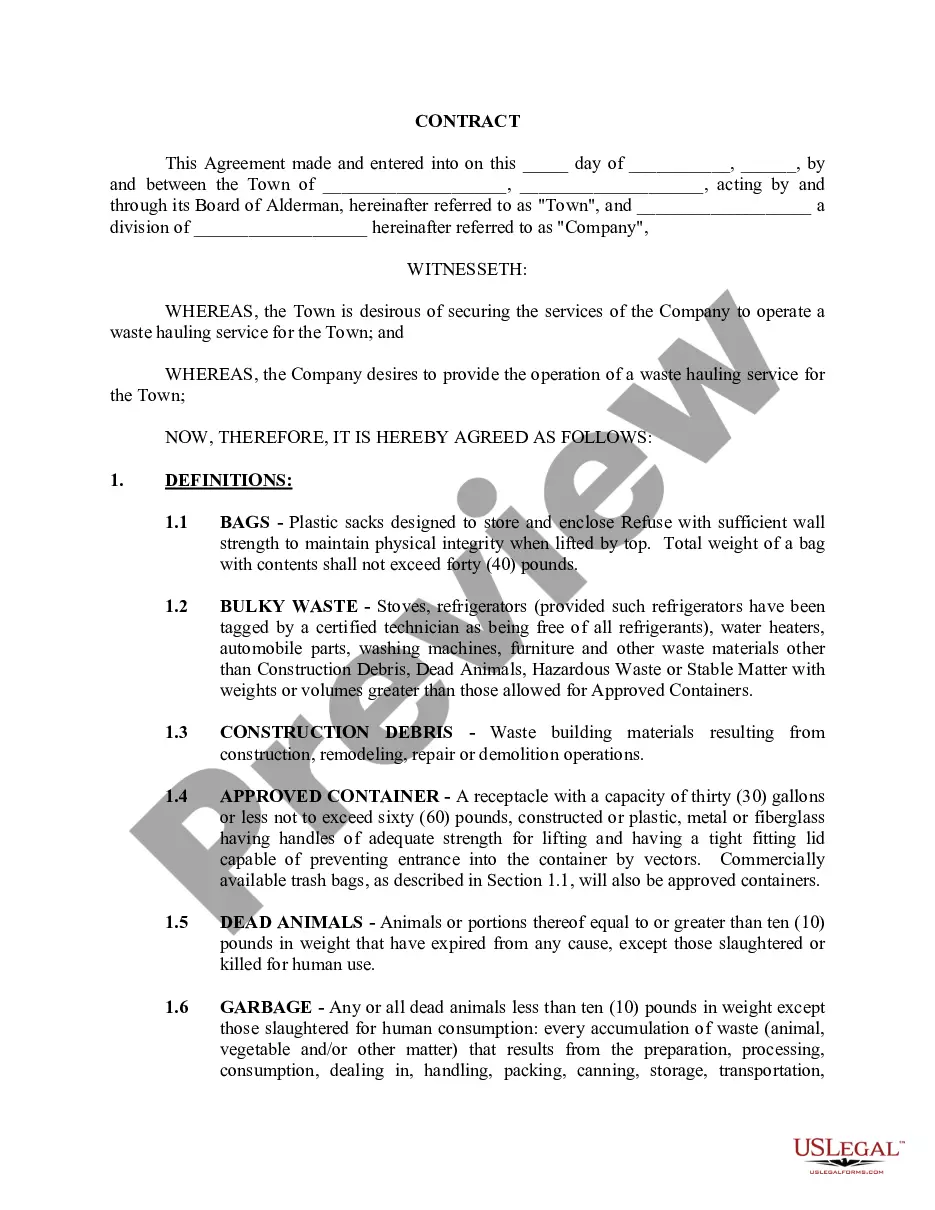
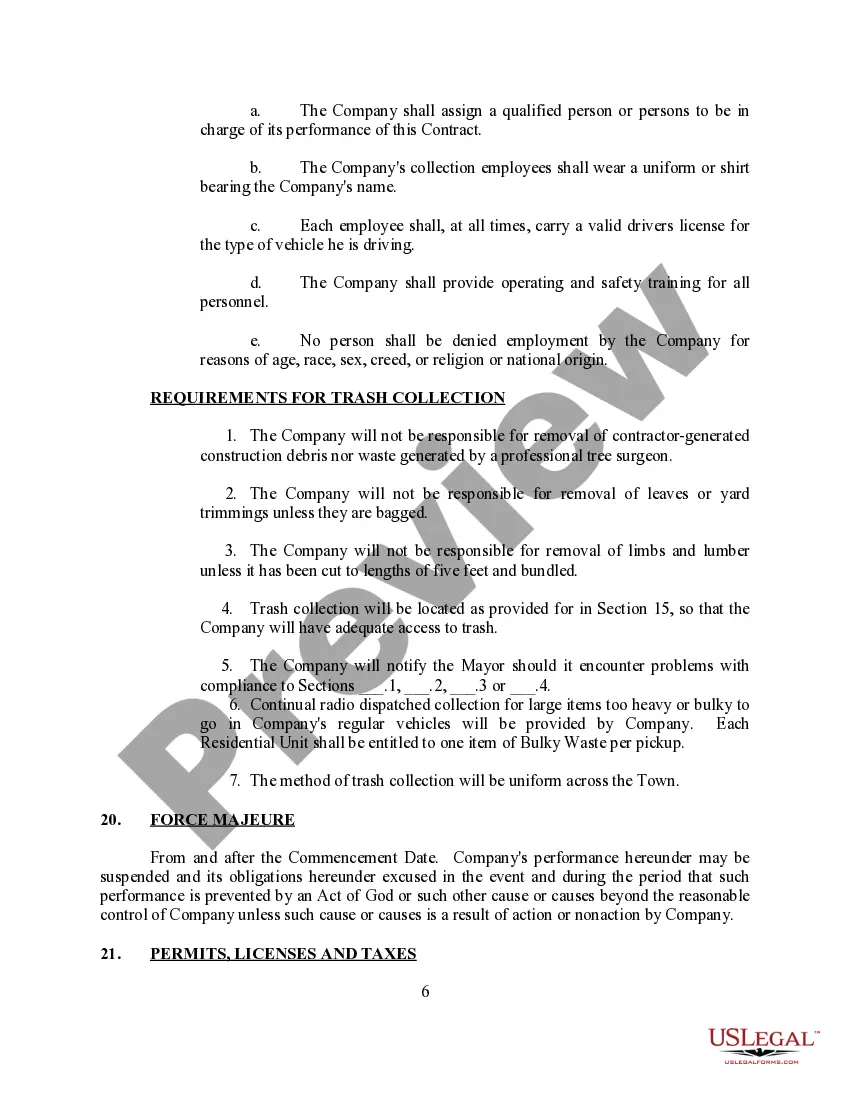
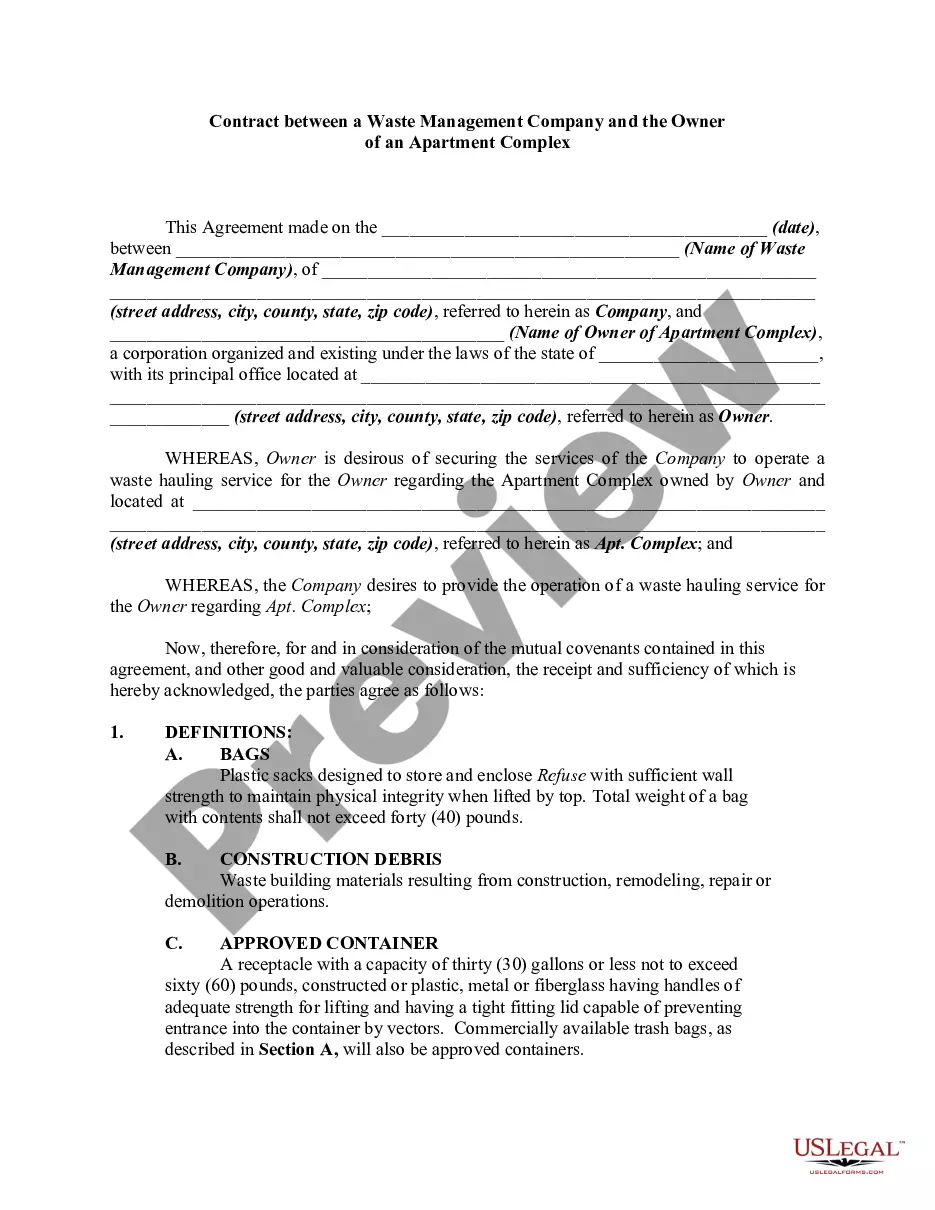
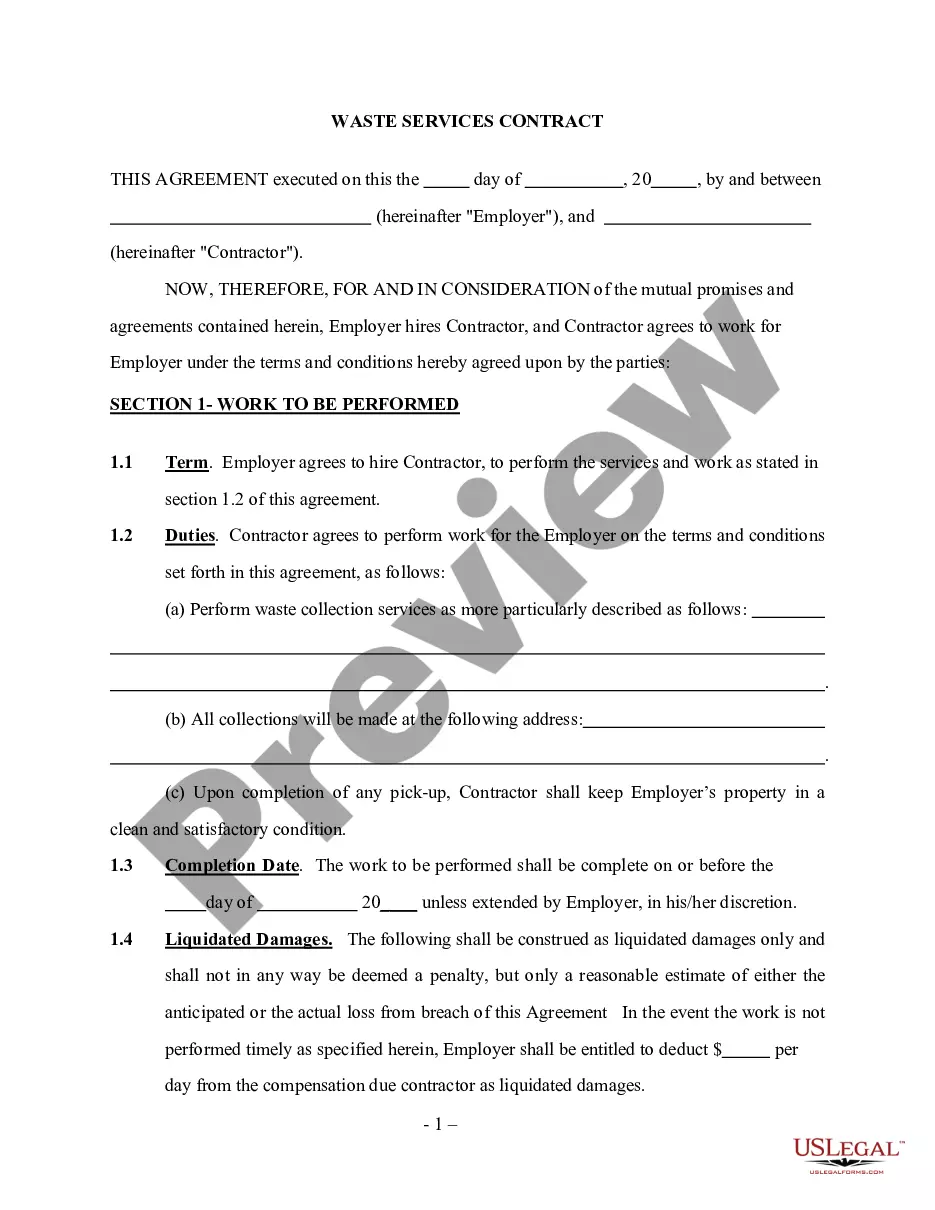
The Waste Disposal Agreement for Municipality is a comprehensive contract between a municipality and a waste hauling company. This agreement outlines the terms and conditions under which garbage pickup services will be provided, ensuring that waste management needs are met responsibly and efficiently. Unlike general waste contracts, this form is specifically tailored for municipalities, detailing service frequency and obligations of both parties involved.
Key components of this form
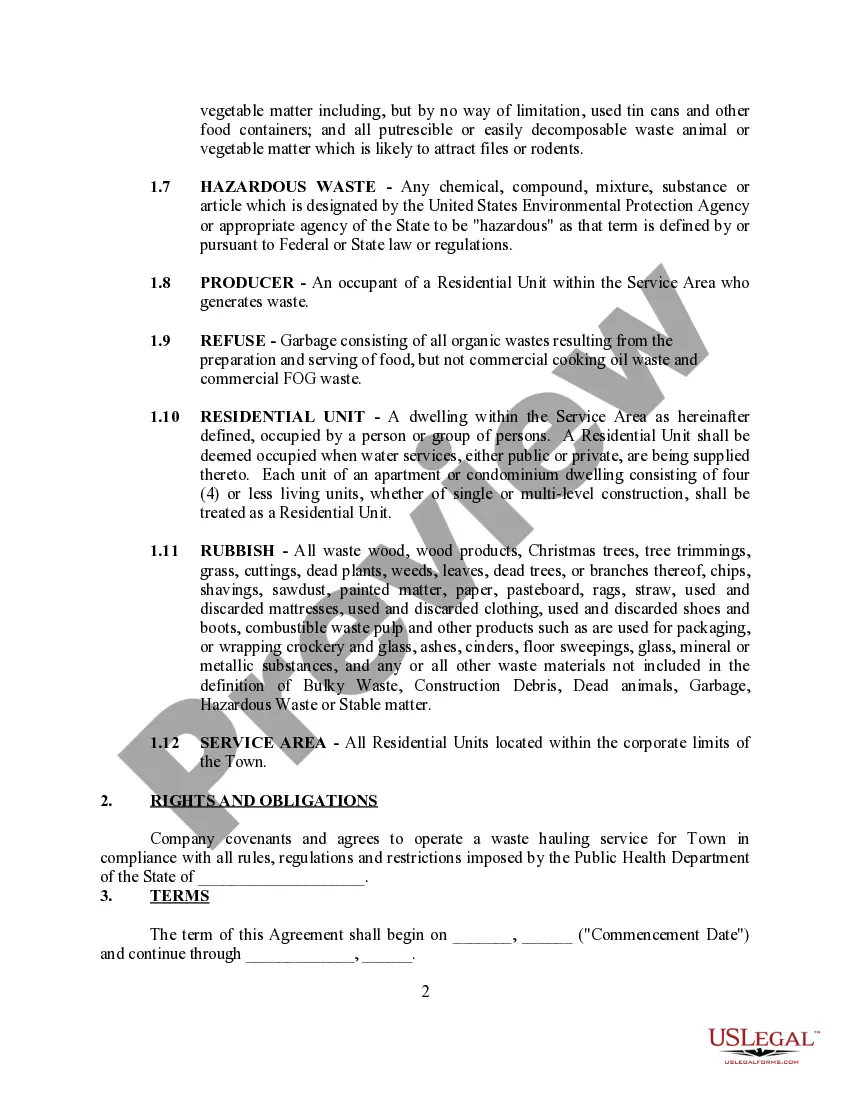
- Definitions: Clarifies terms related to waste management such as garbage, rubbish, and approved containers.
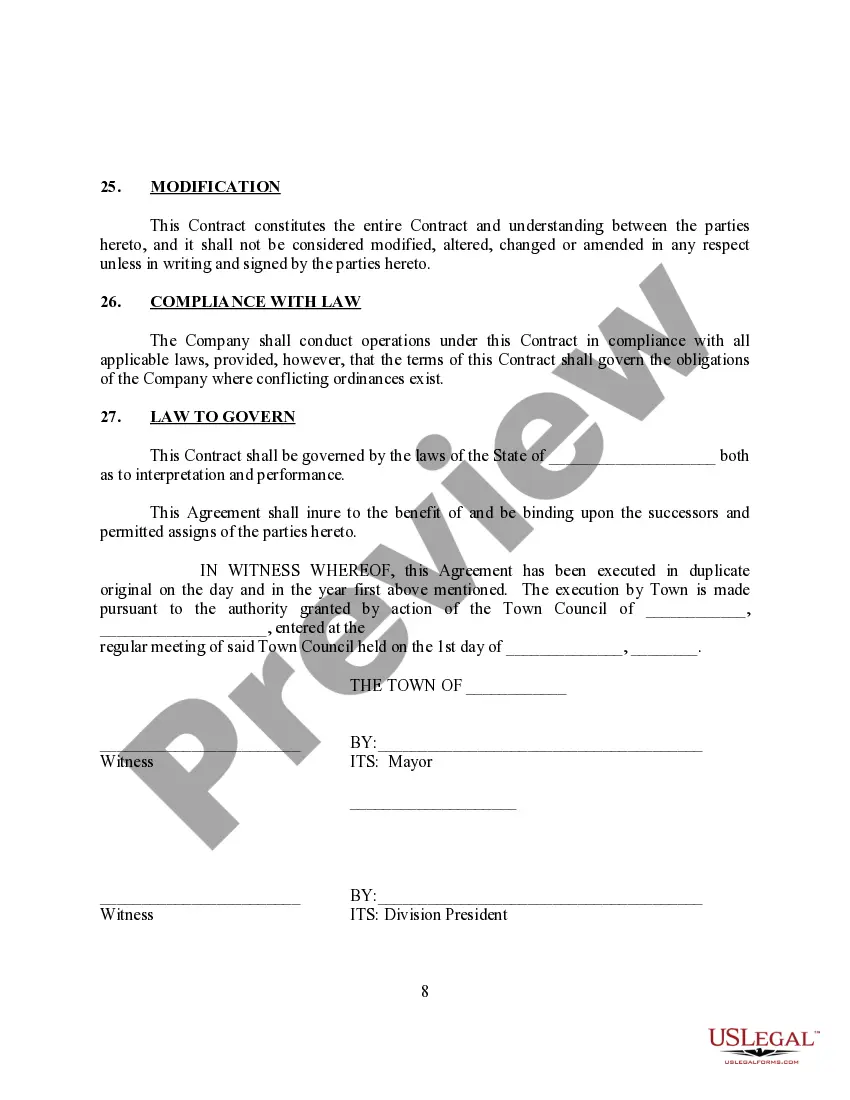
- Rights and Obligations: Outlines the responsibilities of the waste company to comply with local health regulations.
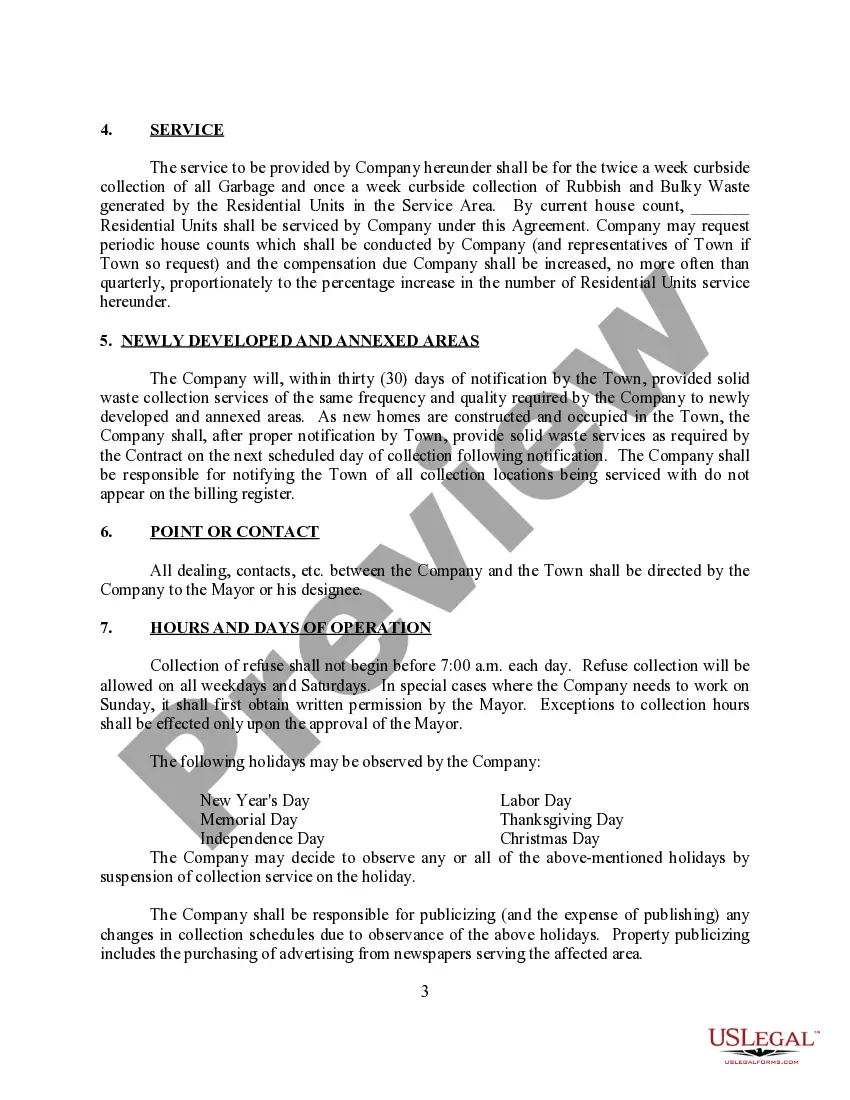
- Service Terms: Specifies the frequency and method of waste collection, including curbside pickup details.
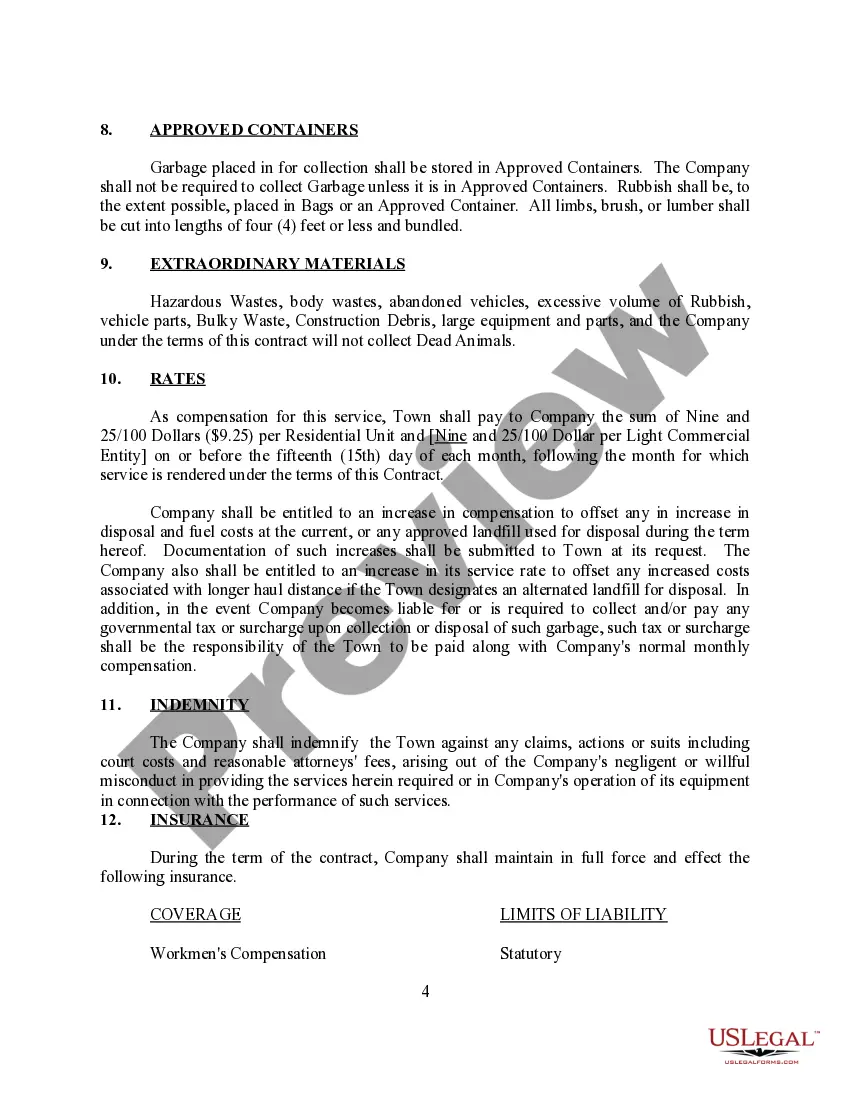
- Compensation: Details the payment structure and conditions for rate adjustments based on disposal and fuel costs.
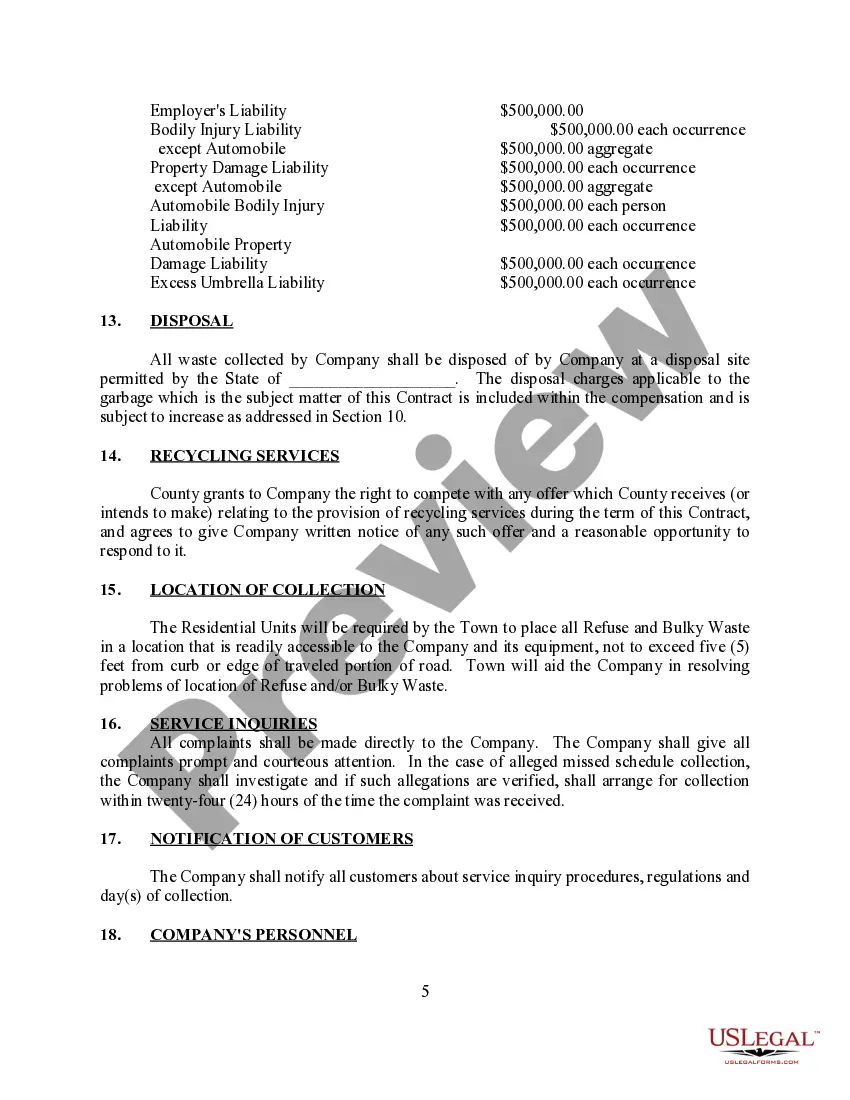
- Indemnity and Insurance: Ensures that the company maintains insurance coverage and indemnifies the municipality against claims.
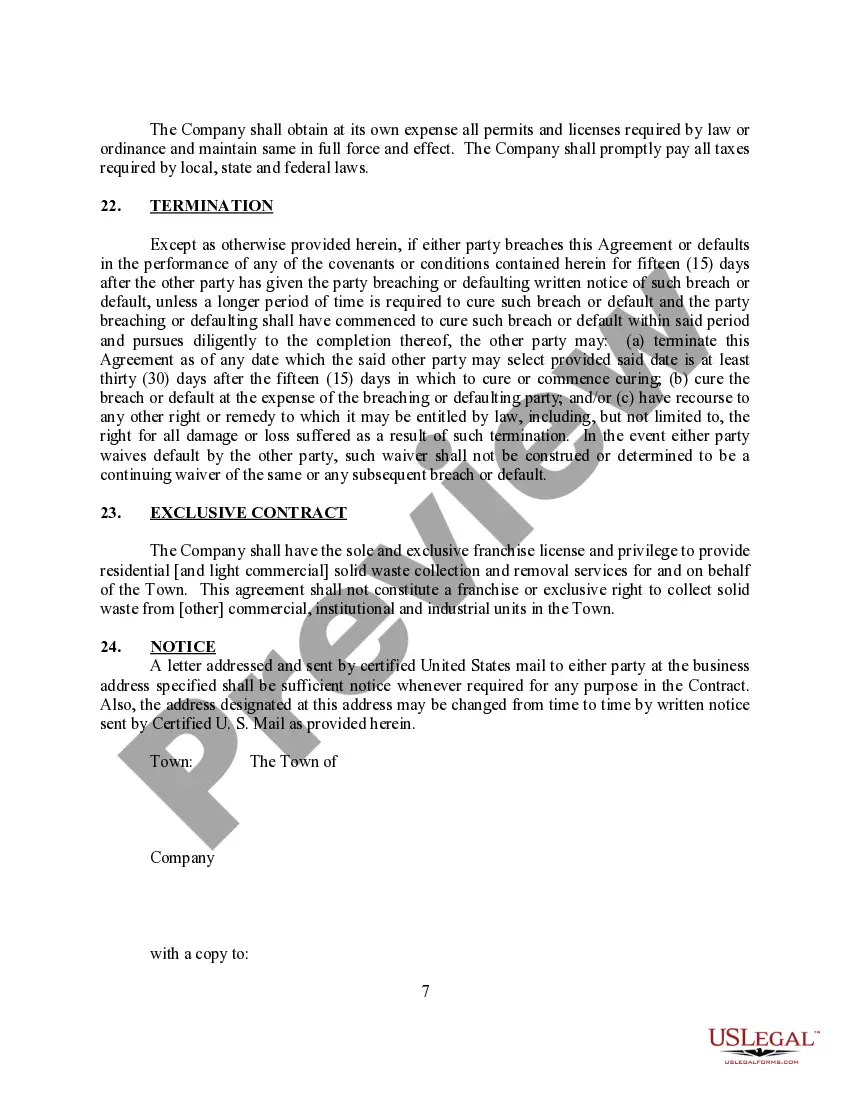
- Termination Clauses: Provides conditions under which the agreement may be terminated for non-compliance or breach.


Situations where this form applies
This form should be used when a municipality wants to formalize an agreement with a waste hauling company for the collection and disposal of waste. It is essential in situations where a standardized and legally binding contract is needed to ensure compliance with environmental regulations and to establish clear terms of service, thus protecting both the city and the waste management provider.
Who should use this form
Eligibility for using the Waste Disposal Agreement includes:
- Municipal government officials responsible for waste management services.
- Waste hauling companies seeking to establish service agreements with municipalities.
- Legal professionals involved in drafting or reviewing municipal contracts.
How to complete this form
- Identify the parties involved: Enter the names of the municipality and waste hauling company.
- Specify the service details: Fill in the service frequency, collection methods, and scope of service.
- Enter compensation terms: Clearly outline the payment structure, including any provisions for rate adjustments.
- Include key dates: Set the commencement and duration of the agreement.
- Obtain signatures: Ensure both parties sign the agreement to validate its terms.
Does this document require notarization?
Notarization is not commonly needed for this form. However, certain documents or local rules may make it necessary. Our notarization service, powered by Notarize, allows you to finalize it securely online anytime, day or night.
Get your form ready online
Our built-in tools help you complete, sign, share, and store your documents in one place.
Make edits, fill in missing information, and update formatting in US Legal Forms—just like you would in MS Word.
Download a copy, print it, send it by email, or mail it via USPS—whatever works best for your next step.
Sign and collect signatures with our SignNow integration. Send to multiple recipients, set reminders, and more. Go Premium to unlock E-Sign.
If this form requires notarization, complete it online through a secure video call—no need to meet a notary in person or wait for an appointment.
We protect your documents and personal data by following strict security and privacy standards.

Make edits, fill in missing information, and update formatting in US Legal Forms—just like you would in MS Word.

Download a copy, print it, send it by email, or mail it via USPS—whatever works best for your next step.

Sign and collect signatures with our SignNow integration. Send to multiple recipients, set reminders, and more. Go Premium to unlock E-Sign.

If this form requires notarization, complete it online through a secure video call—no need to meet a notary in person or wait for an appointment.

We protect your documents and personal data by following strict security and privacy standards.
Avoid these common issues
- Leaving out essential definitions, leading to ambiguity in responsibilities.
- Not specifying payment terms clearly, which can lead to disputes later on.
- Failing to include termination clauses, making it difficult to exit the agreement if necessary.
Benefits of completing this form online
- Convenient access to a professionally drafted agreement tailored for municipal use.
- Editability allows customization to fit specific needs and regulations.
- Reliable format that ensures all necessary legal components are included.
Legal use & context
- This agreement creates a legally binding obligation for the waste hauling company to provide services.
- Contracts drafted in this format are enforceable in a court of law, contingent on compliance with local regulations.
Looking for another form?





Form popularity
FAQ
In 2017, 12.7% of MSW generated in the U.S. was disposed of through waste incineration with energy recovery. Combustion reduces waste by 75-85% by weight and 85-95% by volume, leaving behind a residue called ash. A majority of this ash is landfilled, although recent attempts have been made to reuse the residue.
A landfill site is a site for the disposal of waste materials by burial. It is the oldest form of waste treatment.It is the most common disposal method in USA.
Recycling. Incineration. Other thermal treatment plants. Chemical-physical and biological treatment. Chemical-physical and biological treatment. Landfills. Landfills. Collection and logistics.
Landfills. Throwing daily waste/garbage in the landfills is the most popularly used method of waste disposal used today. This process of waste disposal focuses attention on burying the waste in the land. Landfills are commonly found in developing countries.
Landfill. Incineration. Waste compaction. Composting. Vermicomposting.
Step 1: Reduce. Make less waste in the first place! Step 2: Reuse. Give items a second, third or fourth life! Step 3: Recycle. Step 4: Compost. Step 5: Burn trash to make energy. Step 6: Throw it away in a landfill. Step 7: Burn without making energy.
Liquid or Solid Household Waste. This can be called 'municipal waste' or 'black bag waste' and is the type of general household rubbish we all have. Hazardous Waste. Medical/Clinical Waste. Electrical Waste (E-Waste) Recyclable Waste. Construction & Demolition Debris. Green Waste.
The process of waste management involves treating solid and liquid waste. During the treatment, it also offers a variety of solutions for recycling items that aren't categorized as trash.This includes amongst other things, collection, transport, treatment and disposal of waste together with monitoring and regulation.
Landfill. Incineration. Waste compaction. Composting. Vermicomposting.