Addendum for Continued Marketing of Property by Seller due to Contingencies
Understanding this form
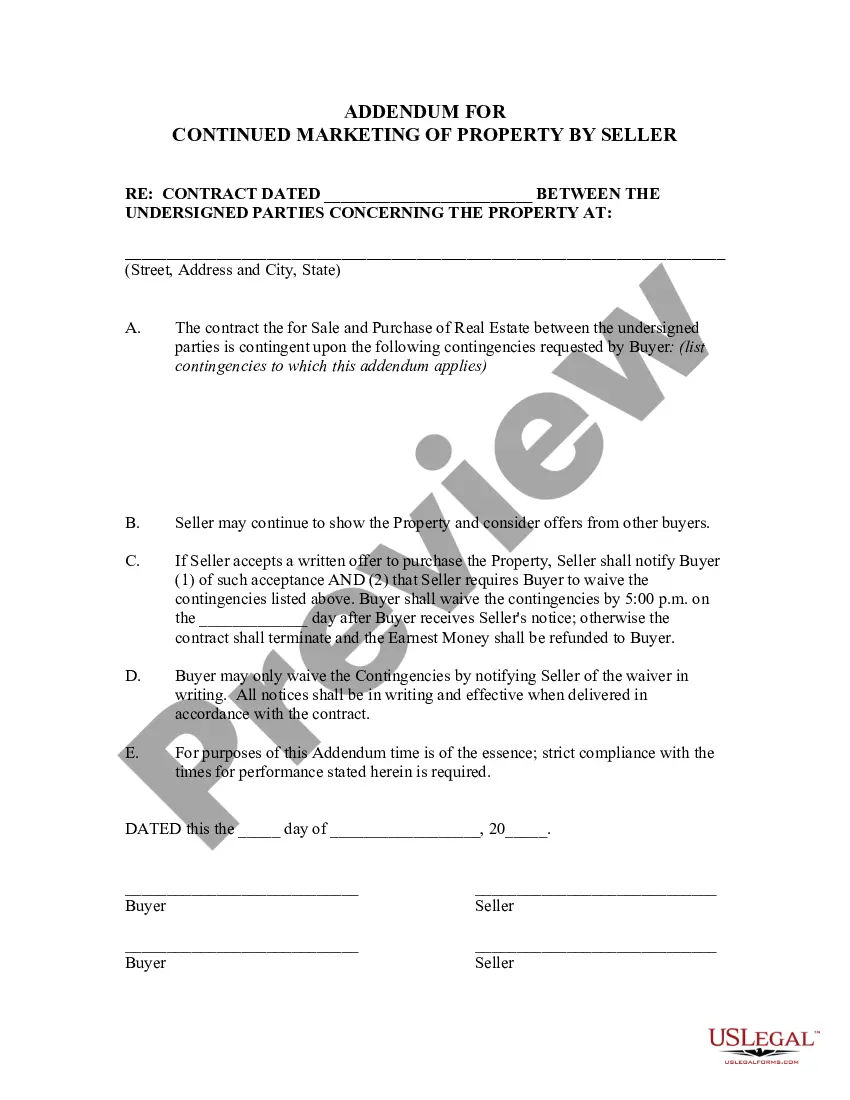
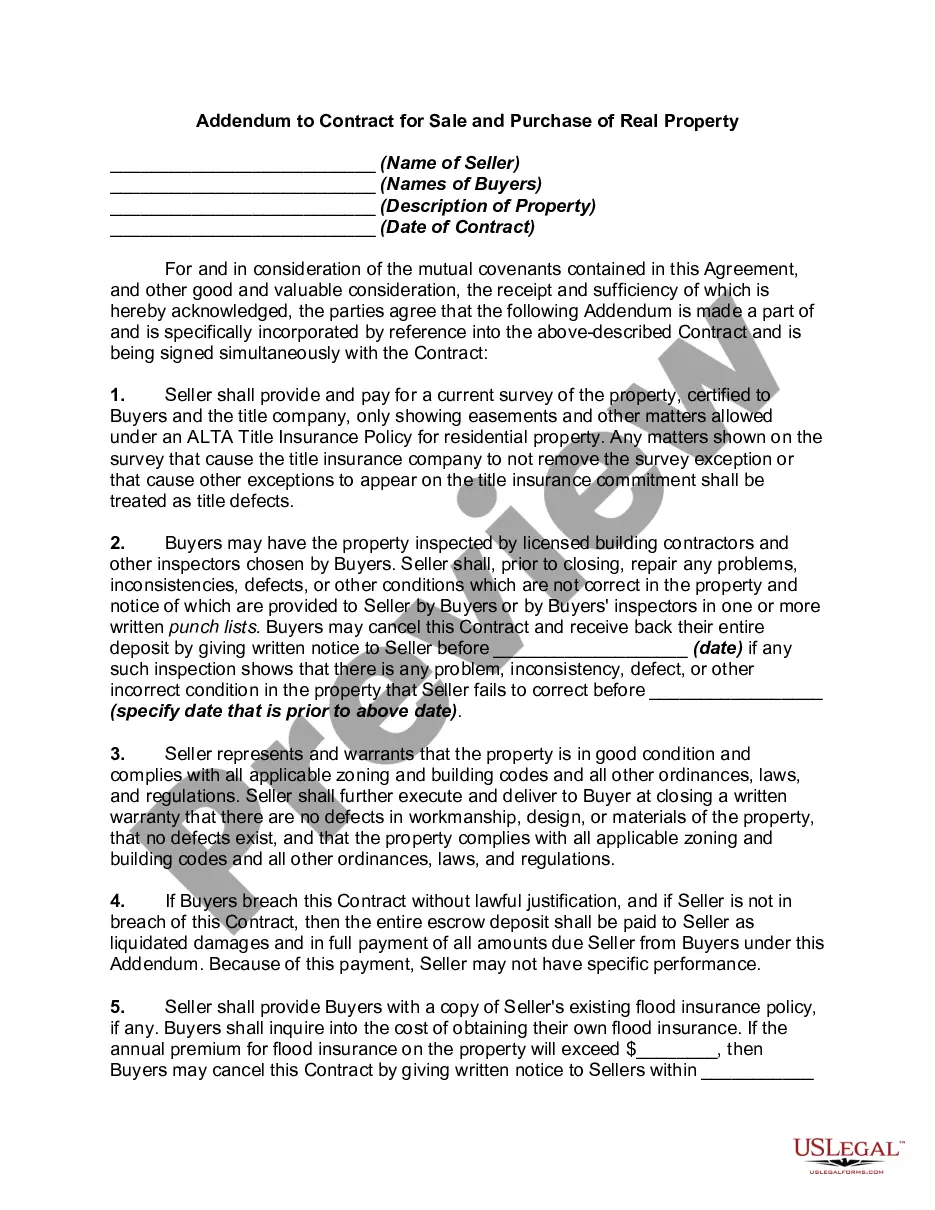
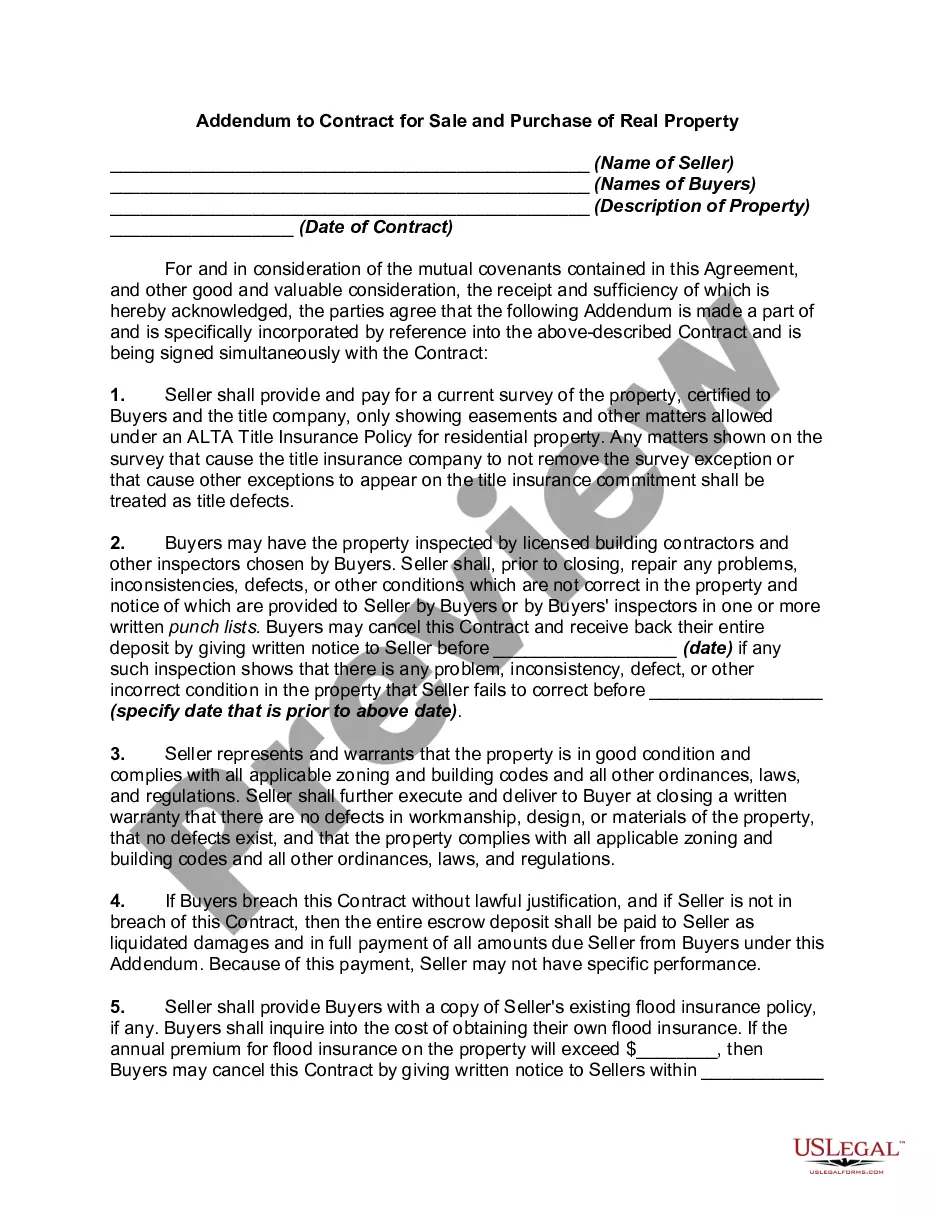
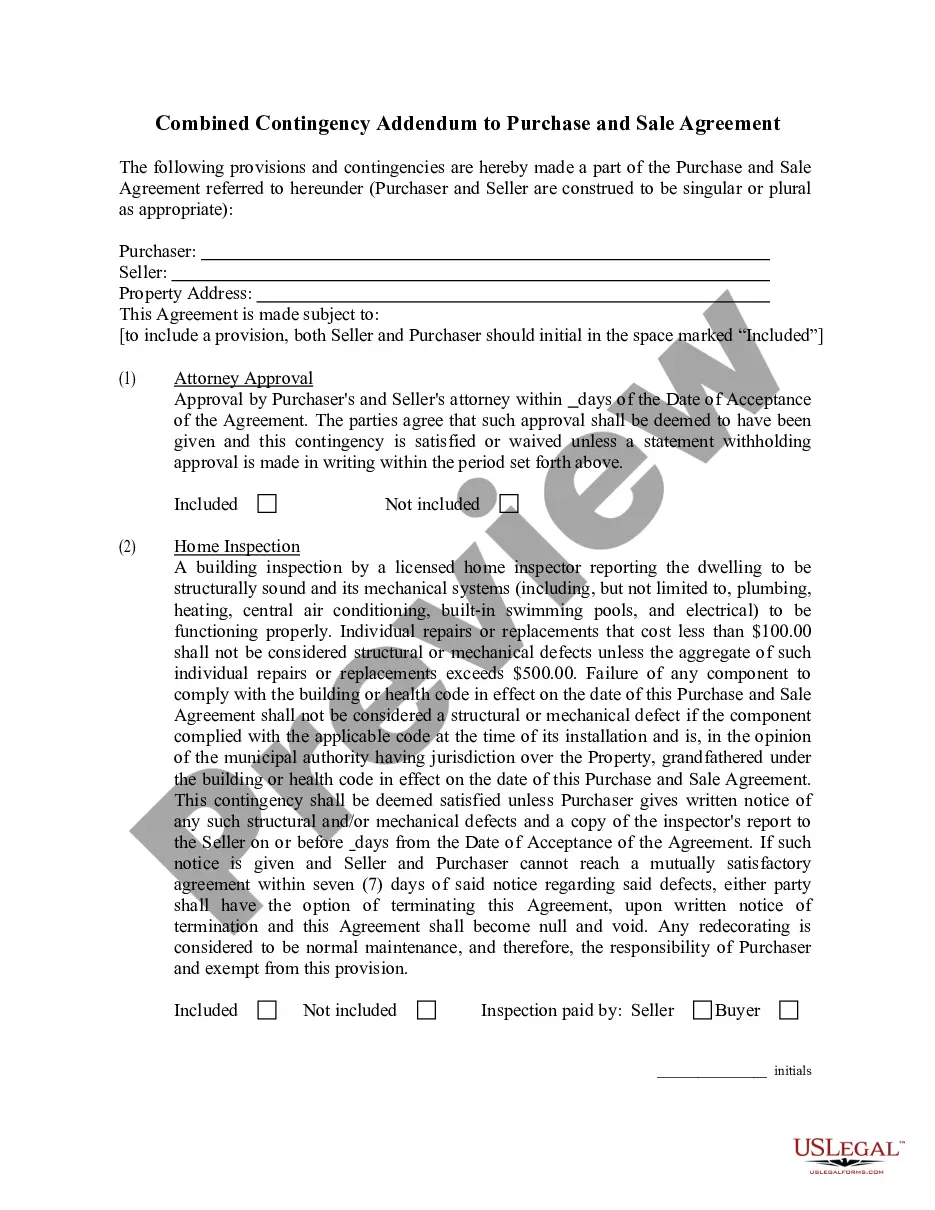
The Addendum for Continued Marketing of Property by Seller due to Contingencies is a legal document that allows the seller to continue marketing a property while certain buyer contingencies are being met. Unlike standard sales contracts, this addendum provides the seller with the flexibility to consider other offers while still honoring the existing contract with the buyer, provided the buyer is informed and waives the contingencies in a timely manner.
Form components explained
- Details the specific contingencies that may affect the sale.
- Allows sellers to show the property and accept other offers.
- Outlines the notification process to the buyer if another offer is received.
- Specifies the timeframe for the buyer to waive contingencies.
- Requires written notification for any waivers or notices.
Common use cases
This form is useful when a seller has entered into a residential real estate sales contract that includes buyer contingencies, such as financing or inspection. If the seller wishes to continue showcasing the property for potential buyers while resolving these contingencies, this addendum facilitates that process and protects the seller's interests.
Who can use this document
- Home sellers who are under contract but want to keep the property open for additional offers.
- Real estate agents representing sellers in contingent sale situations.
- Buyers who are aware of contingencies and wish to remain informed about competing offers.
How to complete this form
- Identify the parties involved in the contract by entering their names.
- Specify the property address to which this addendum applies.
- List all buyer contingencies that affect the sale in the designated area.
- Set a deadline for the buyer to waive contingencies upon receiving notice of another offer.
- Ensure all parties sign and date the form to validate the agreement.
Does this form need to be notarized?
Notarization is not commonly needed for this form. However, certain documents or local rules may make it necessary. Our notarization service, powered by Notarize, allows you to finalize it securely online anytime, day or night.
Get your form ready online
Our built-in tools help you complete, sign, share, and store your documents in one place.
Make edits, fill in missing information, and update formatting in US Legal Forms—just like you would in MS Word.
Download a copy, print it, send it by email, or mail it via USPS—whatever works best for your next step.
Sign and collect signatures with our SignNow integration. Send to multiple recipients, set reminders, and more. Go Premium to unlock E-Sign.
If this form requires notarization, complete it online through a secure video call—no need to meet a notary in person or wait for an appointment.
We protect your documents and personal data by following strict security and privacy standards.

Make edits, fill in missing information, and update formatting in US Legal Forms—just like you would in MS Word.

Download a copy, print it, send it by email, or mail it via USPS—whatever works best for your next step.

Sign and collect signatures with our SignNow integration. Send to multiple recipients, set reminders, and more. Go Premium to unlock E-Sign.

If this form requires notarization, complete it online through a secure video call—no need to meet a notary in person or wait for an appointment.

We protect your documents and personal data by following strict security and privacy standards.
Common mistakes
- Failing to list all applicable contingencies, which can lead to misunderstandings.
- Not providing timely notification to the buyer about new offers.
- Missing signatures, which can invalidate the form.
Benefits of using this form online
- Easy access to a legally vetted template crafted by licensed attorneys.
- Convenience of downloading and editing the form to fit specific situations.
- Ensured compliance with current legal standards and practices.
Summary of main points
- This addendum allows sellers to remain competitive while under contract.
- Clear communication of contingencies and deadlines is crucial.
- Proper completion and execution of the form protect both buyer and seller interests.
Looking for another form?

Form popularity
FAQ
A contingency clause defines a condition or action that must be met for a real estate contract to become binding. A contingency becomes part of a binding sales contract when both parties, the buyer and the seller, agree to the terms and sign the contract.
A home sale contingency is one type of clause frequently included in a real estate sales contract or an offer to purchase real estate. With a home sale contingency in place, the transaction is contingent on the sale of the buyer's home. If the buyer's house sells by the specified date, the contract moves forward.
What's a Seller Addendum? It's an addition to the normal sale and purchase agreement that severely limits Seller's liability during and after the sale process. For example, the Seller Addendum might limit damages to which Buyer is entitled in the event Seller fails to disclose some problem with the property.
Contingency means something that could happen or come up depending on other occurrences. An example of a contingency is the unexpected need for a bandage on a hike. The definition of a contingency is something that depends on something else in order to happen.
What's a Seller Addendum? It's an addition to the normal sale and purchase agreement that severely limits Seller's liability during and after the sale process. For example, the Seller Addendum might limit damages to which Buyer is entitled in the event Seller fails to disclose some problem with the property.
Sellers may ask for a loan contingency, which means that the offer is only valid if the buyer can get approved for a loan within a certain time frame.These problems can be big enough to dissuade a buyer from following through on the purchase of a home or can lead to a renegotiation of the contract.
To put it simply, a seller can back out at any point if contingencies outlined in the home purchase agreement are not met. These agreements are legally binding contracts, which is why backing out of them can be complicated, and something that most people want to avoid.They can't find another home to move into.
Standard contingencies include things like a buyer's inspection of the house and satisfaction with the condition that the house is in. Contingencies such as these are often considered a matter of course and their presence within a purchase agreement will likely not be contested.
Standard contingencies include things like a buyer's inspection of the house and satisfaction with the condition that the house is in. Contingencies such as these are often considered a matter of course and their presence within a purchase agreement will likely not be contested.