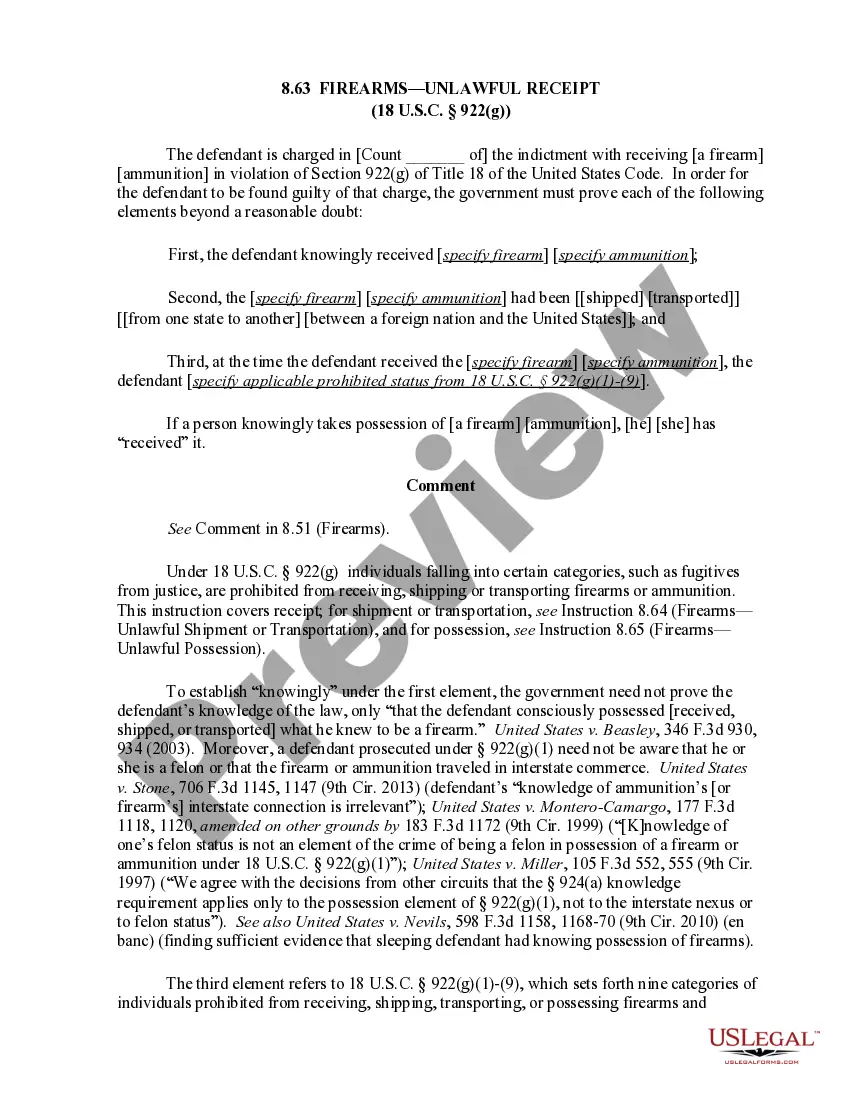
Lease for Storage of Goods
What is this form?
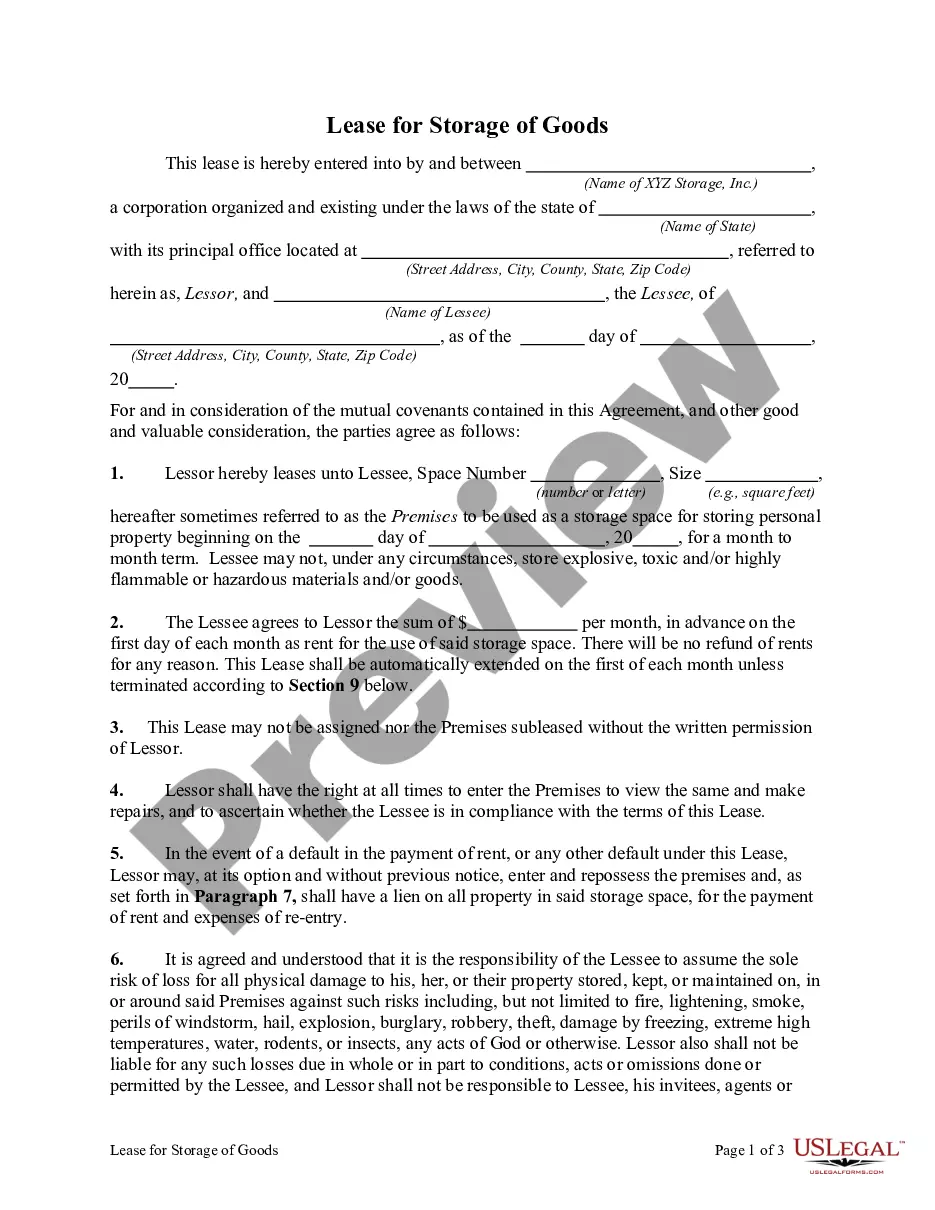
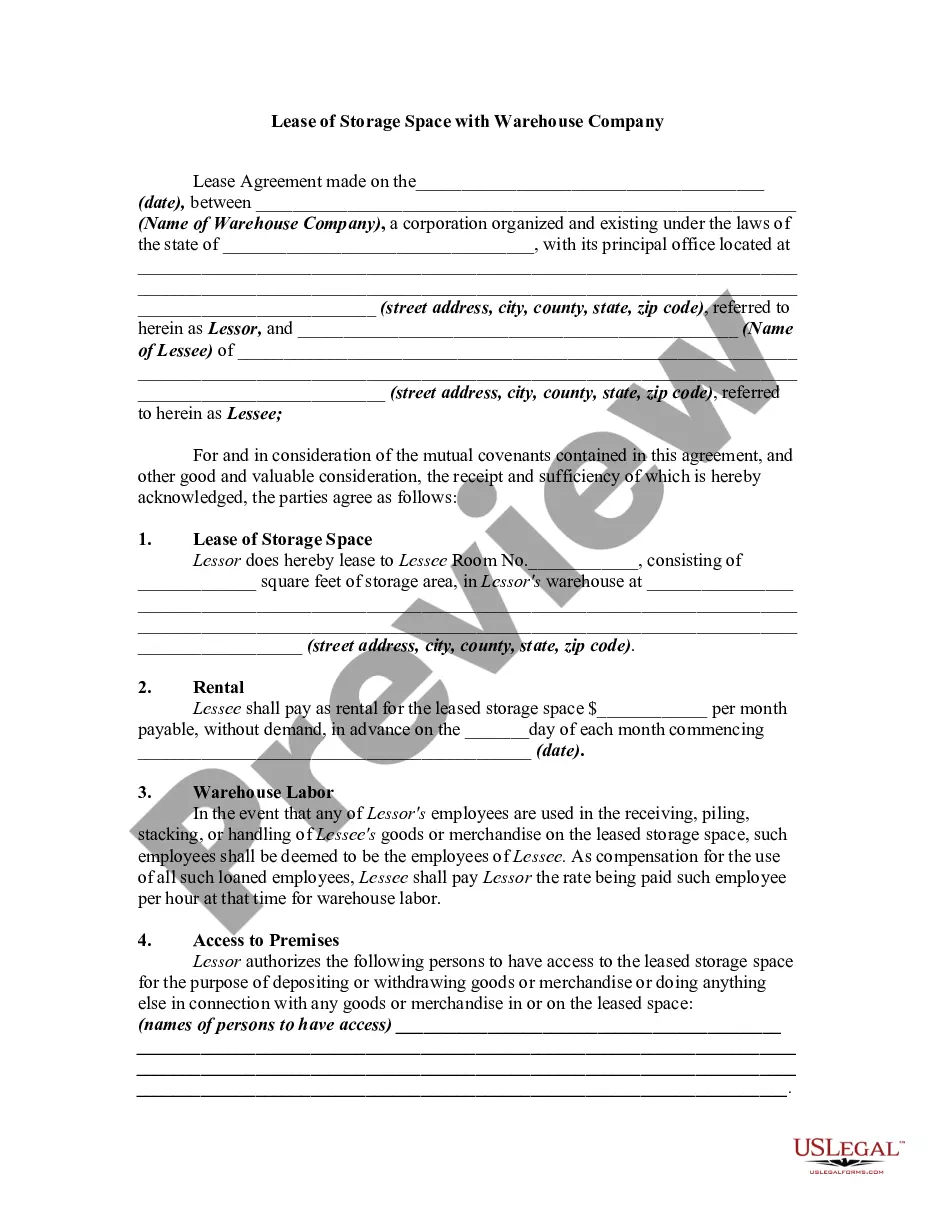
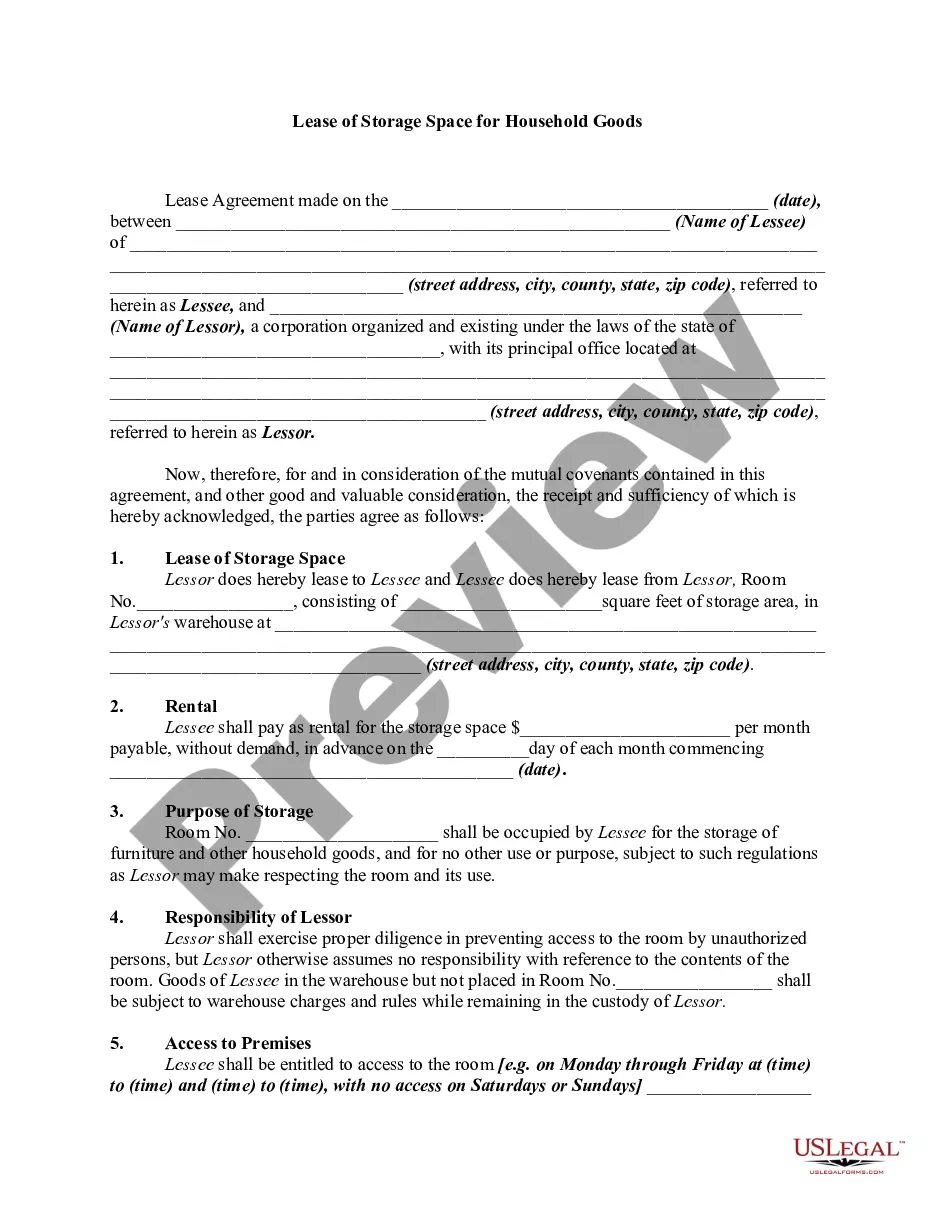
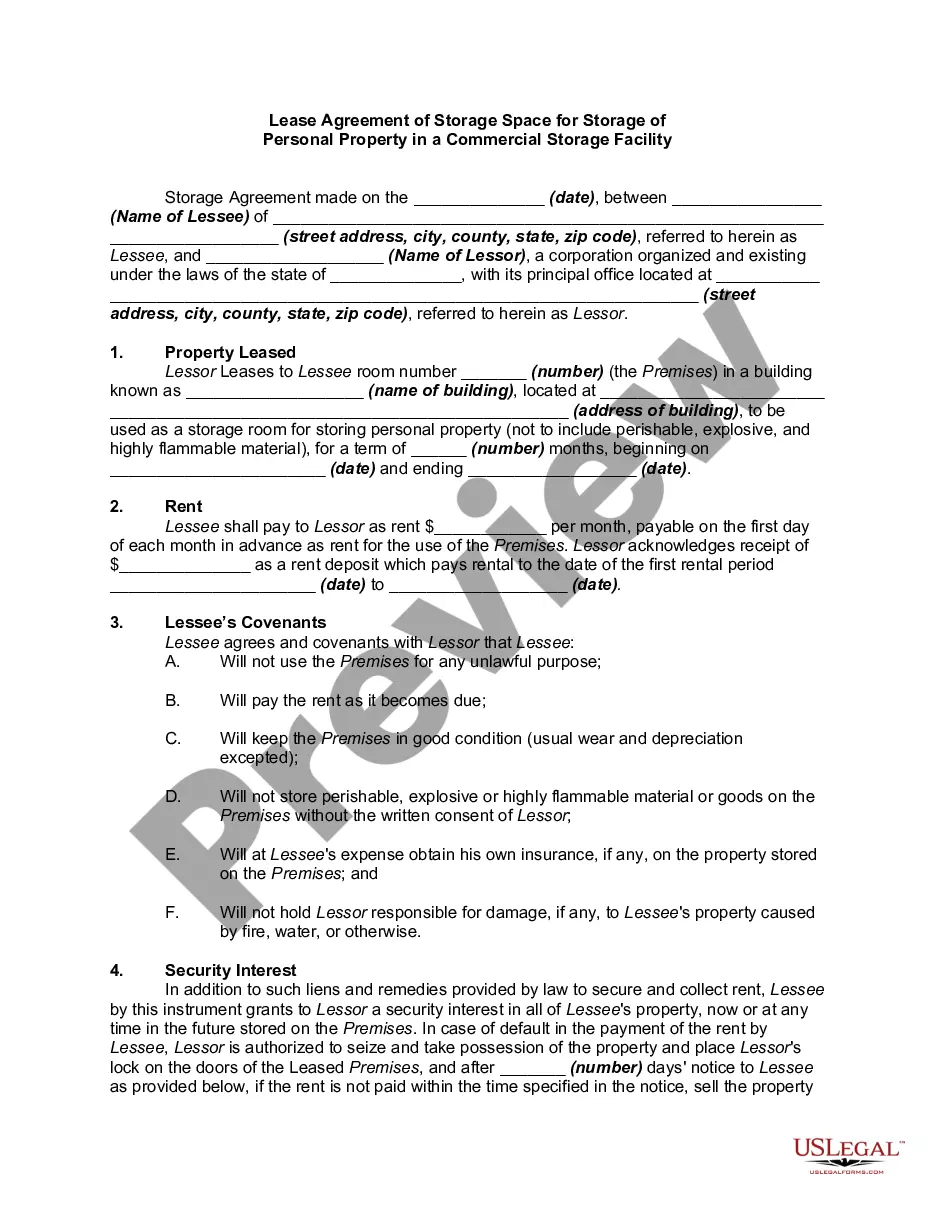
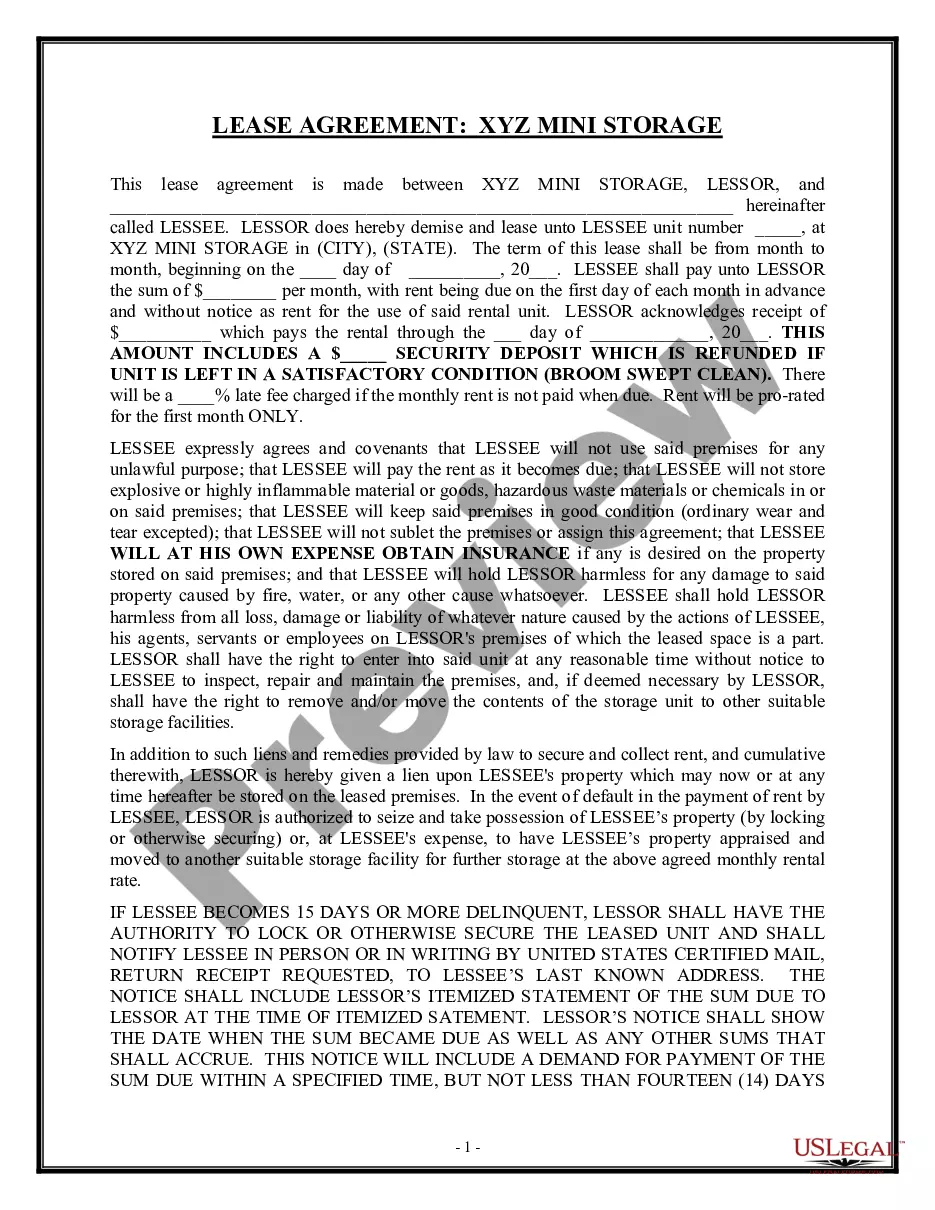
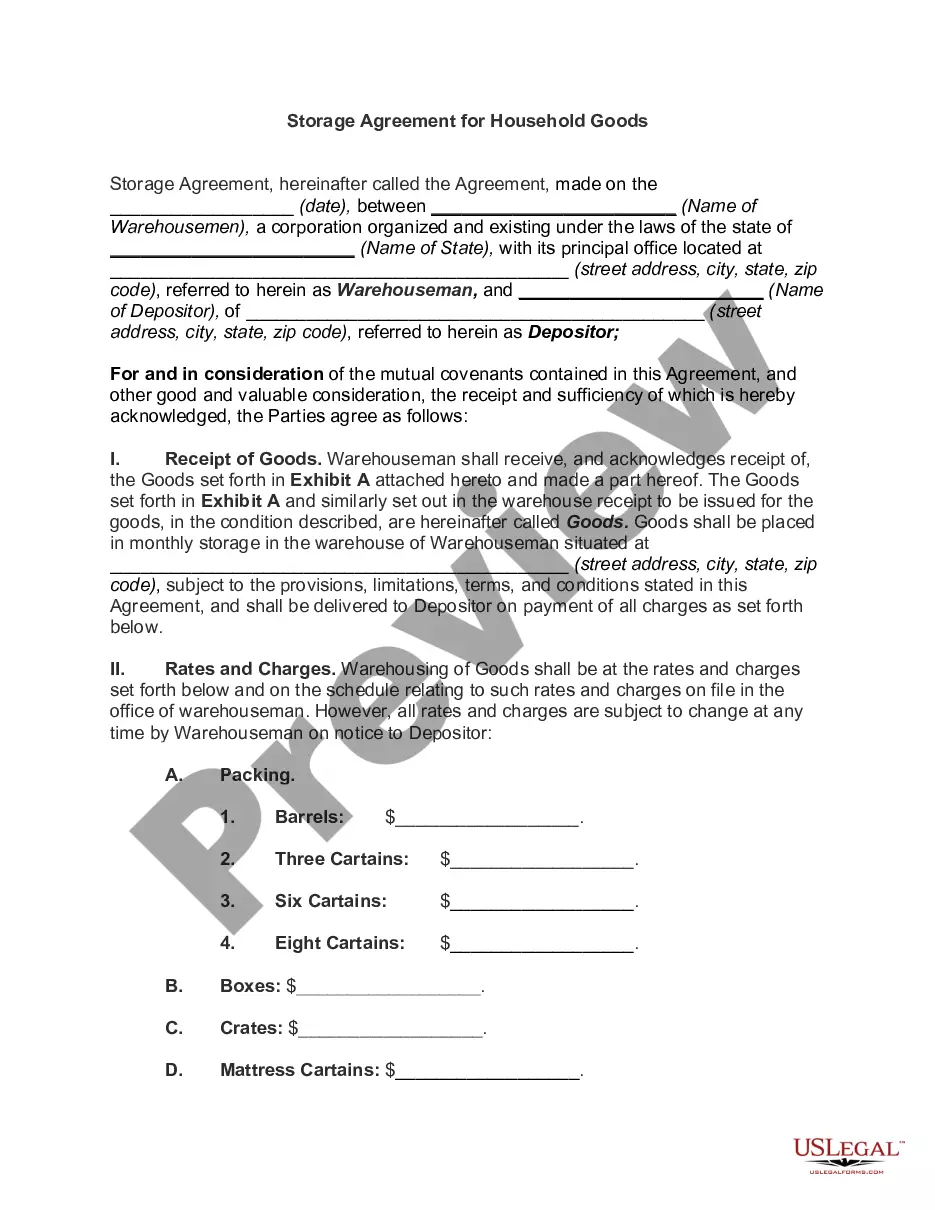
The Lease for Storage of Goods is a legal document used for renting or leasing storage space for personal property. Unlike a contract with a warehouseman, this lease clarifies that the lessee is simply renting space, not storing goods for hire. This distinction is important to limit liability and define responsibilities related to the stored items.
Form components explained
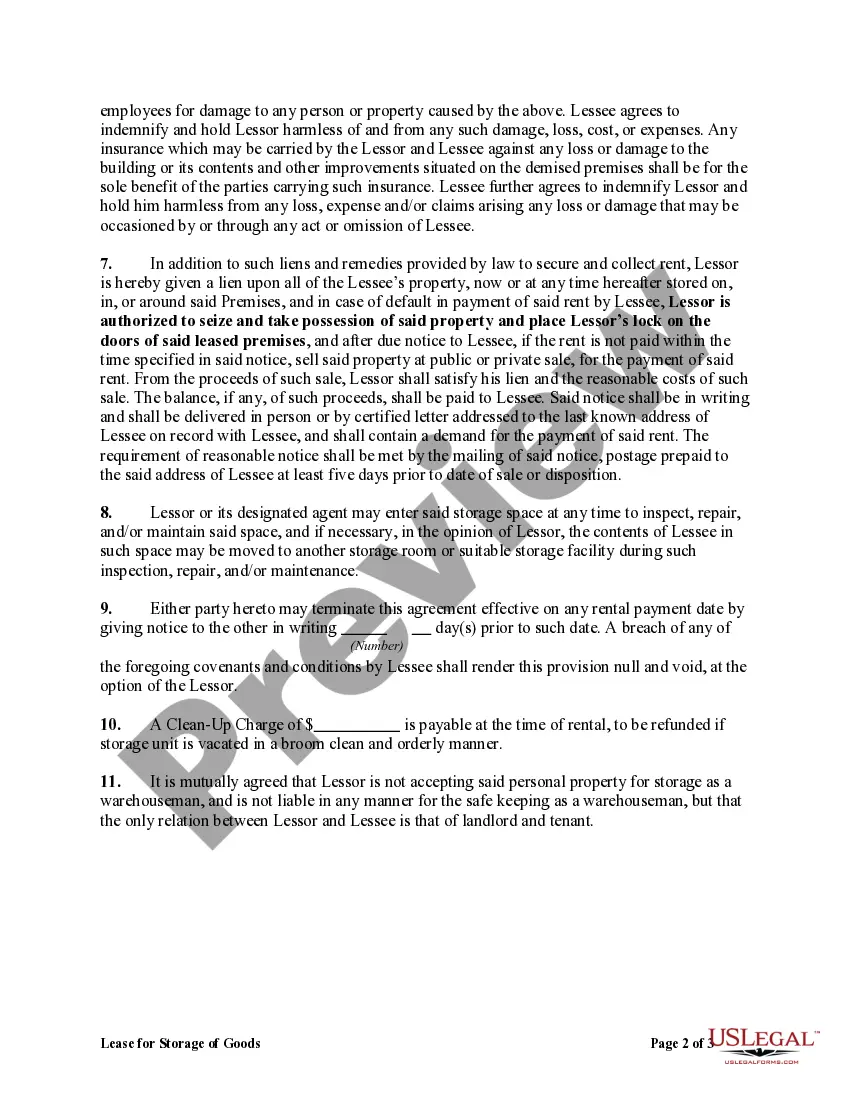
- Assignment and sublease restrictions: Lessees cannot assign or sublease without written permission from the lessor.
- Access and inspection rights: Lessor has the right to enter the premises for inspections or repairs.
- Default and repossession: Procedures for lessor repossession in case of rent defaults, including a lien on the stored property.
- Indemnification clause: Lessee agrees to assume risk for damages to stored property and indemnifies the lessor against certain losses.
- Notice requirements: Details on how the lessor must notify the lessee regarding default and potential sale of goods.
When this form is needed
This form is useful when renting storage space for personal items, such as household goods or business merchandise. It is typically needed when individuals or businesses require temporary or long-term storage solutions and want to establish clear terms regarding liability, access, and storage fees.
Who can use this document
- Individuals looking for personal storage solutions for items like furniture or seasonal decorations.
- Businesses needing extra space for inventory or equipment but not wanting to enter a traditional warehouse agreement.
- Property owners or managers who wish to create clear terms for storage leases as part of their property management responsibilities.
How to prepare this document
- Identify the parties involved: Enter the lessor's and lessee's names and contact information.
- Specify the storage premises: Clearly describe the storage space being rented, including location and any specifics.
- Enter lease terms: Fill in the duration of the lease, payment amount, and due dates.
- Detail responsibilities: Outline the liability and indemnification clauses to clarify each party's responsibilities.
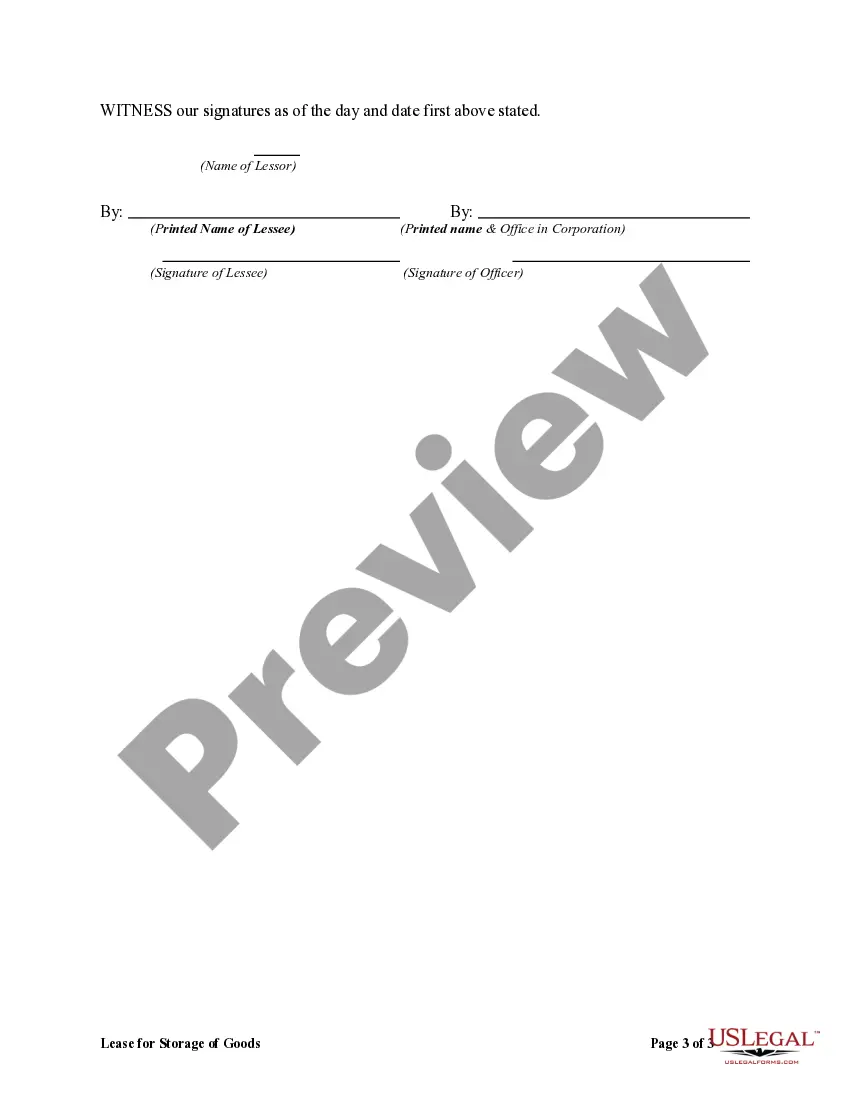
- Sign and date the form: Both parties must review and sign the document to validate the lease agreement.
Does this form need to be notarized?
This form does not typically require notarization unless specified by local law. However, having a notary witness the signing can add an extra layer of authenticity and may be required in some jurisdictions.
Get your form ready online
Our built-in tools help you complete, sign, share, and store your documents in one place.
Make edits, fill in missing information, and update formatting in US Legal Forms—just like you would in MS Word.
Download a copy, print it, send it by email, or mail it via USPS—whatever works best for your next step.
Sign and collect signatures with our SignNow integration. Send to multiple recipients, set reminders, and more. Go Premium to unlock E-Sign.
If this form requires notarization, complete it online through a secure video call—no need to meet a notary in person or wait for an appointment.
We protect your documents and personal data by following strict security and privacy standards.

Make edits, fill in missing information, and update formatting in US Legal Forms—just like you would in MS Word.

Download a copy, print it, send it by email, or mail it via USPS—whatever works best for your next step.

Sign and collect signatures with our SignNow integration. Send to multiple recipients, set reminders, and more. Go Premium to unlock E-Sign.

If this form requires notarization, complete it online through a secure video call—no need to meet a notary in person or wait for an appointment.

We protect your documents and personal data by following strict security and privacy standards.
Typical mistakes to avoid
- Failing to specify the exact storage location or size, leading to disputes later.
- Neglecting to clarify payment terms and deadlines, which can cause misunderstandings.
- Ignoring the indemnification clause, potentially exposing the lessor to liability for damages.
Why use this form online
- Convenient access: Download the form anytime and from anywhere.
- Easily editable: Customize the form to fit specific lease arrangements and requirements.
- Reliable legal accuracy: Created by licensed attorneys to meet standard legal requirements.
Legal use & context
- This Lease for Storage of Goods establishes clear rights and responsibilities for both lessor and lessee.
- Non-compliance can result in repossession of goods and liability for damages.
- Understanding the form helps to avoid legal disputes over stored property and payment obligations.
What to keep in mind
- The Lease for Storage of Goods is essential for establishing terms for renting storage space.
- Clarifying roles and responsibilities can prevent disputes and liability issues.
- Always ensure the form is completed correctly to reflect the specific agreement.
Definitions you should know
- Lessor: The person or entity renting out the storage space.
- Lessee: The person or entity renting the storage space for storing goods.
- Indemnify: To secure against hurt, loss, or damage; to compensate for a loss.
- Personal property: Movable property not affixed to land, including goods, merchandise, and household items.
Looking for another form?
Form popularity
FAQ
As long as the contract spells out specific details and both parties have signed that they agree to the contract's terms, a handwritten contract is legally binding and enforceable in court.
The Basic Structure of a Lease Purchase In a lease purchase contract, the buyer and seller agree to a lease period followed by sale of the property when the lease ends. This type of agreement combines both a lease and a purchase with the tenant/purchaser securing the option to purchase the house.
Names of all tenants. Limits on occupancy. Term of the tenancy. Rent. Deposits and fees. Repairs and maintenance. Entry to rental property. Restrictions on tenant illegal activity.
Inspect the Property and Record Any Current Damages. Know What's Included in the Rent. Can You Make Adjustments and Customizations? Clearly Understand the Terms Within the Agreement and Anticipate Problems. Communicate with Your Landlord About Your Expectations.
Names of the landlord and tenant and/or their agents. Description of the property. Amount of rent and due dates for payment, grace period, late charges. Mode of rent payment. Methods to terminate the agreement prior to the expiration date and charges if any.
Name the parties. A simple rental agreement form needs to name the parties signing the lease and where they live. Describe the premises. Define the term of the lease. Set how much rent is owed. Assign a security deposit amount. Finalize the lease.
A storage agreement is a contract that is set up by two parties.This contract covers the items being stored and the rates or cost for storage, as well as information about what happens in case of damages.
ESSENTIAL ELEMENTS OF A VALID LEASE AGREEMENT. Competent Parties. Legal Purpose. Statute of Frauds. Reversionary Right. Property Description. Mutual Assent (Offer and Acceptance) Consideration.
Names of All Tenants and Occupants. Description of Rental Property. Term of the Tenancy. Rental Price. Security Deposits and Fees. Repair and Maintenance Policies. Landlord's Right to Enter Rental Property. Rules and Important Policies.