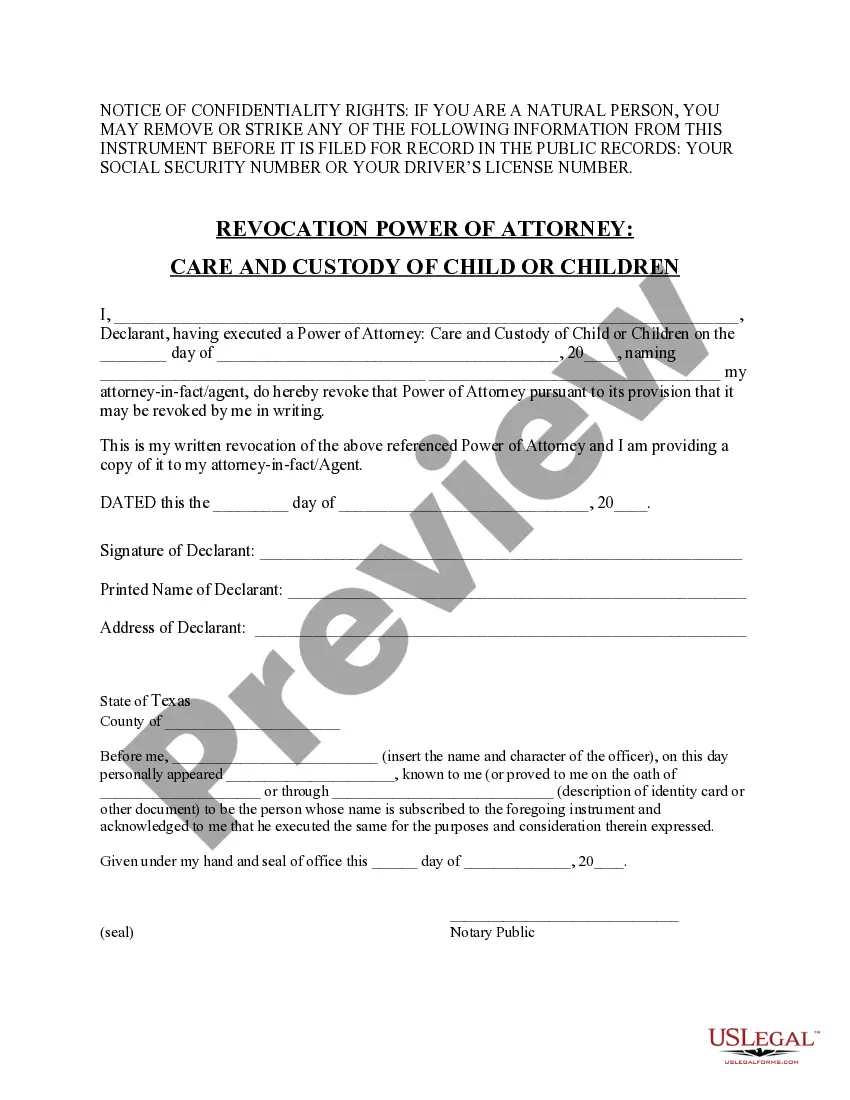
Texas Revocation of Power of Attorney for Care of Child or Children
What this document covers
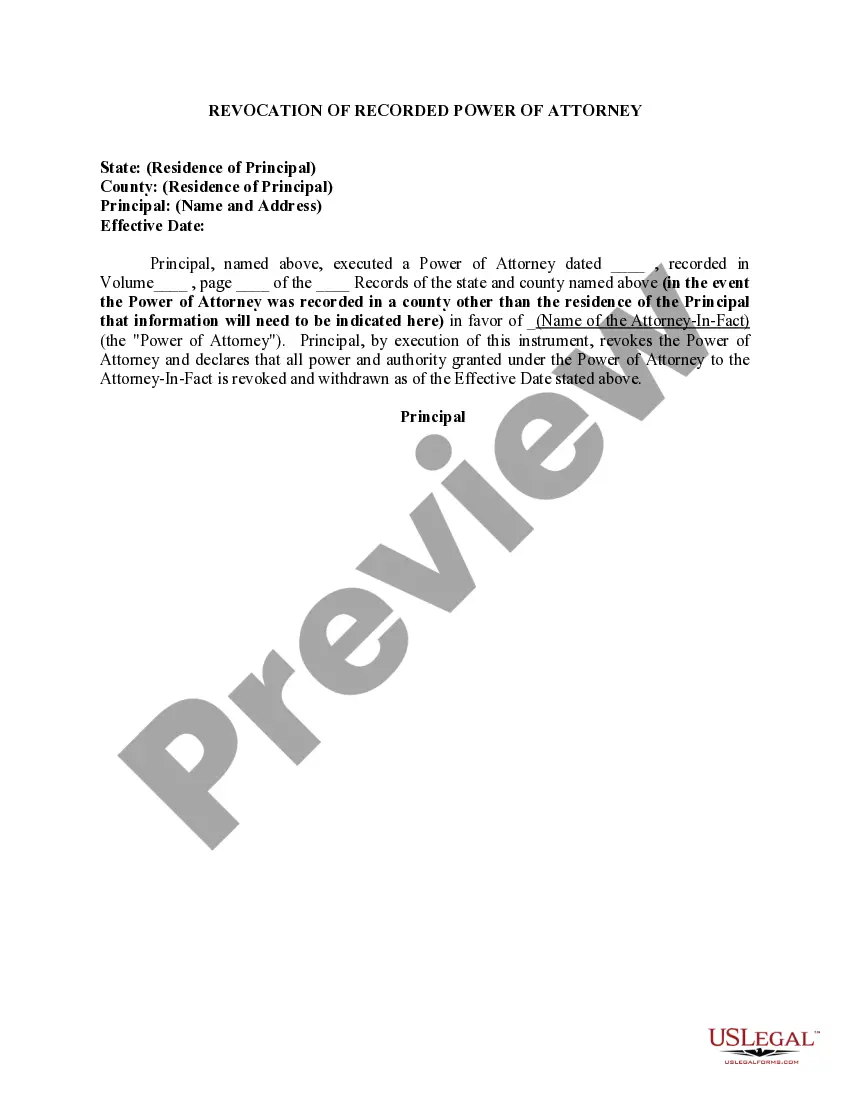
The Revocation of Power of Attorney for Care of Child or Children is a legal document that allows a principal to revoke a previously granted power of attorney concerning the care and custody of their child or children. This form clearly outlines the authority being revoked, which can be done at any time as long as the principal is competent. Unlike other power of attorney forms, this document specifically addresses the revocation process for guardianship or custody arrangements.
What’s included in this form
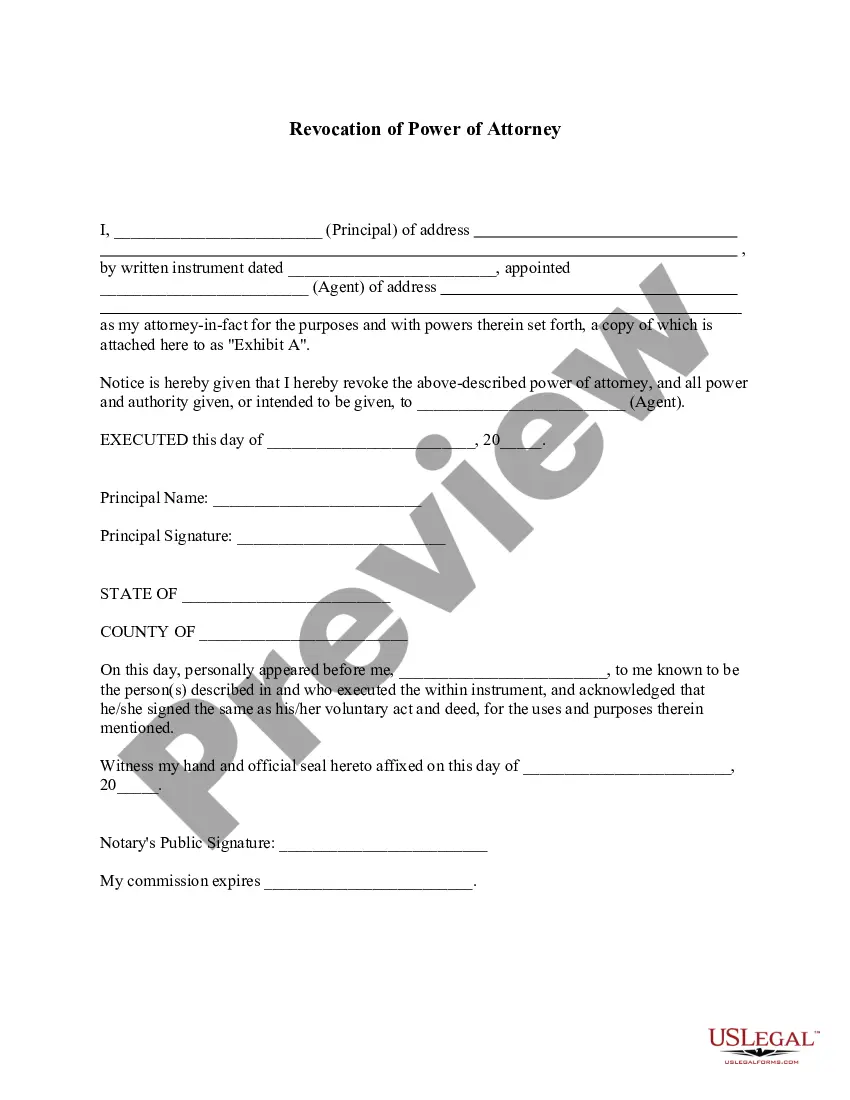
- Declaration of the principal's identity.
- Date of original Power of Attorney execution.
- Name of the agent/attorney-in-fact being revoked.
- Formal statement of revocation.
- Signature and printed name of the declarant.
- Notary acknowledgment section.
When this form is needed
This form should be used when a parent or guardian wishes to revoke an existing power of attorney that allows someone else to make decisions regarding the care and custody of their child or children. This may occur in situations where the relationship between the principal and the agent has changed, or when the principal feels it is in the best interest of the child or children involved.
Who this form is for
- Parents or legal guardians of a child or children.
- Individuals who previously assigned a power of attorney for child care.
- Anyone needing to formally revoke authority previously granted to another person regarding child custody or care.
How to prepare this document
- Enter your full name as the declarant.
- Provide the date when the original power of attorney was executed.
- Specify the name of the previously appointed agent or attorney-in-fact.
- Sign and date the revocation document.
- Have the document notarized, if required, to ensure its legal validity.
Does this document require notarization?
Yes, this form must be notarized to be legally valid. Notarization confirms the identity of the declarant and ensures that the revocation is executed willingly. US Legal Forms offers integrated online notarization services, allowing you to complete the process securely via video call without the need for physical travel.
Get your form ready online
Our built-in tools help you complete, sign, share, and store your documents in one place.
Make edits, fill in missing information, and update formatting in US Legal Forms—just like you would in MS Word.
Download a copy, print it, send it by email, or mail it via USPS—whatever works best for your next step.
Sign and collect signatures with our SignNow integration. Send to multiple recipients, set reminders, and more. Go Premium to unlock E-Sign.
If this form requires notarization, complete it online through a secure video call—no need to meet a notary in person or wait for an appointment.
We protect your documents and personal data by following strict security and privacy standards.

Make edits, fill in missing information, and update formatting in US Legal Forms—just like you would in MS Word.

Download a copy, print it, send it by email, or mail it via USPS—whatever works best for your next step.

Sign and collect signatures with our SignNow integration. Send to multiple recipients, set reminders, and more. Go Premium to unlock E-Sign.

If this form requires notarization, complete it online through a secure video call—no need to meet a notary in person or wait for an appointment.

We protect your documents and personal data by following strict security and privacy standards.
Common mistakes to avoid
- Failing to provide accurate information about the original power of attorney.
- Not signing the form or forgetting to date it.
- Neglecting to provide a copy to the revoked agent.
- Overlooking the notarization requirement if specified by state law.
Why complete this form online
- Convenient access to templates drafted by licensed attorneys.
- Immediate download and editing capabilities.
- Peace of mind knowing the form meets state-specific requirements.
Looking for another form?
Form popularity
FAQ
Revoke Your Current Power of Attorney. To change or cancel your current power of attorney, you should complete a formal, written revocation. Notify Your Power of Attorney. Once you complete your revocation, notify your agent of the cancellation in writing. Notify Relevant Third Parties. Execute a New Power of Attorney.
In other words, a Revocation of Power of Attorney is written confirmation that a principal (the person who appointed power in a Power of Attorney) no longer wants or needs their attorney-in-fact (the person who was appointed power in a Power of Attorney, sometimes called an agent or donor) to act on their behalf.
While any new power of attorney should state that old powers of attorney are revoked, you should also put the revocation in writing. The revocation should include your name, a statement that you are of sound mind, and your wish to revoke the power of attorney.
The Principal can override either type of POA whenever they want. However, other relatives may be concerned that the Agent (in most cases a close family member like a parent, child, sibling, or spouse) is abusing their rights and responsibilities by neglecting or exploiting their loved one.
Unless the power of attorney states otherwise, and they usually don't, a revocation of a POA must be made in writing. A verbal revocation may not be enough.A revocation will reference the existing POA and the current attorney-in-fact and revoke the document and the powers granted.
This can be done by firstly issuing a notice in a local daily newspaper or even a national daily. The donor of the power of attorney will have to get a registered cancellation deed (registered from the office of the respective sub-registrar).
Until an attorney-in-fact's powers are properly revoked, they can continue to legally act for the principal. To cancel a Power of Attorney, the principal can create a document called a Revocation of Power of Attorney or create a new Power of Attorney that indicates the previous Power of Attorney is revoked.
You can always resign. Just put in writing that you resign, deliver it to anyone you have dealt with under the PoA in the past, and to the principal and the alternate agent (if any) and you're done...
You may use form LHT 96.1, instrument of revocation to cancel all types of power of attorneys. Texas law requires you to file a notice of revocation with establishments dealing with the designated agent in writing. You may choose to provide the reason for revocation in the Revocation Power of Attorney Form Texas.