Texas Western District Bankruptcy Guide and Forms Package for Chapters 7 or 13
Overview of this form
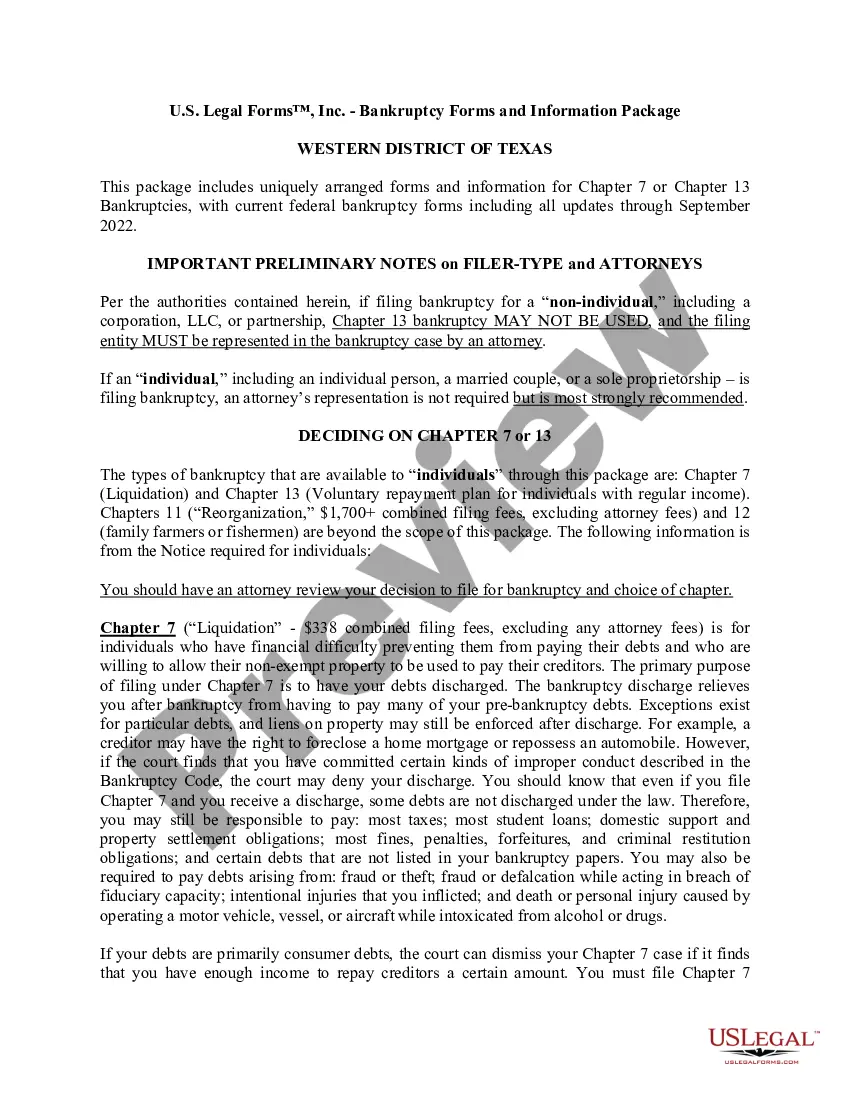
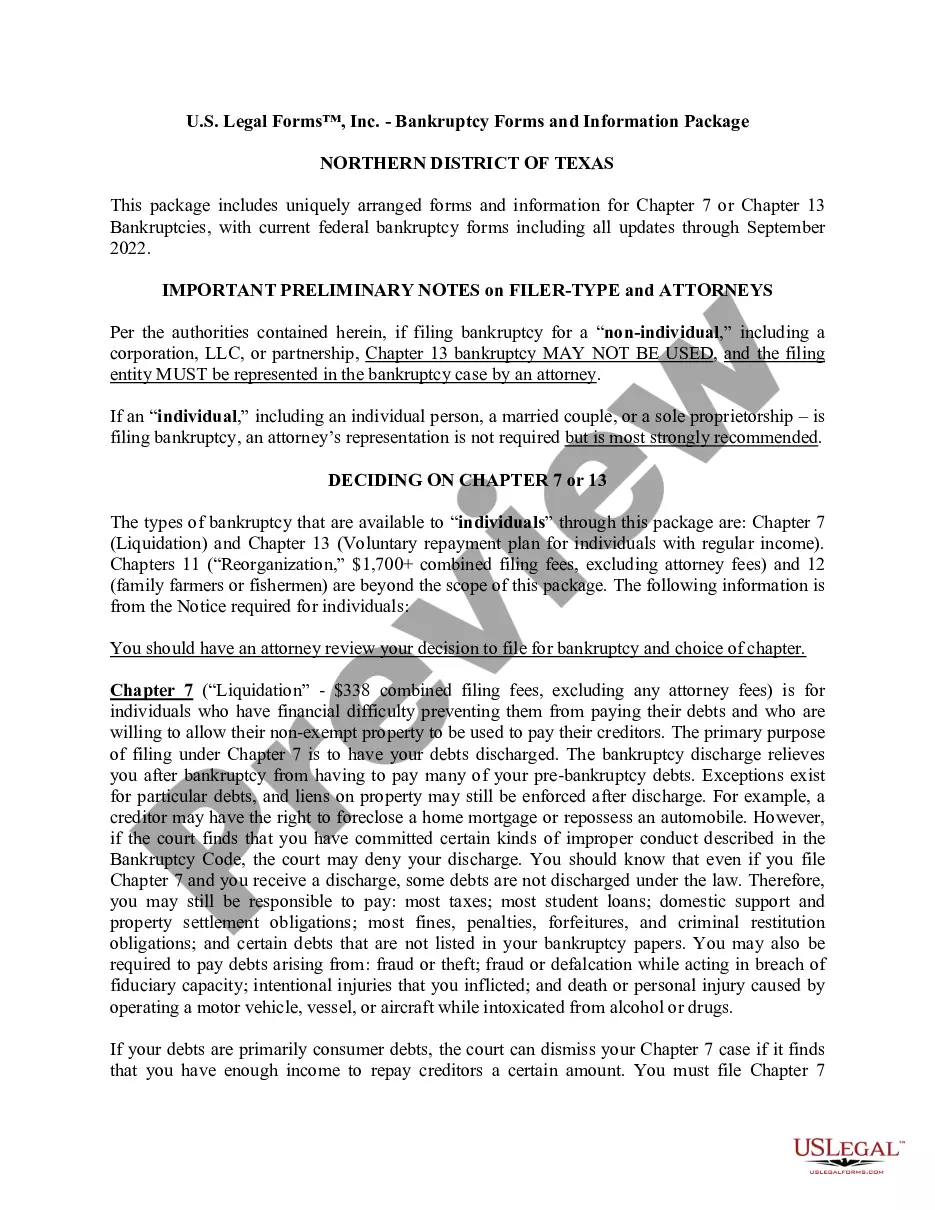
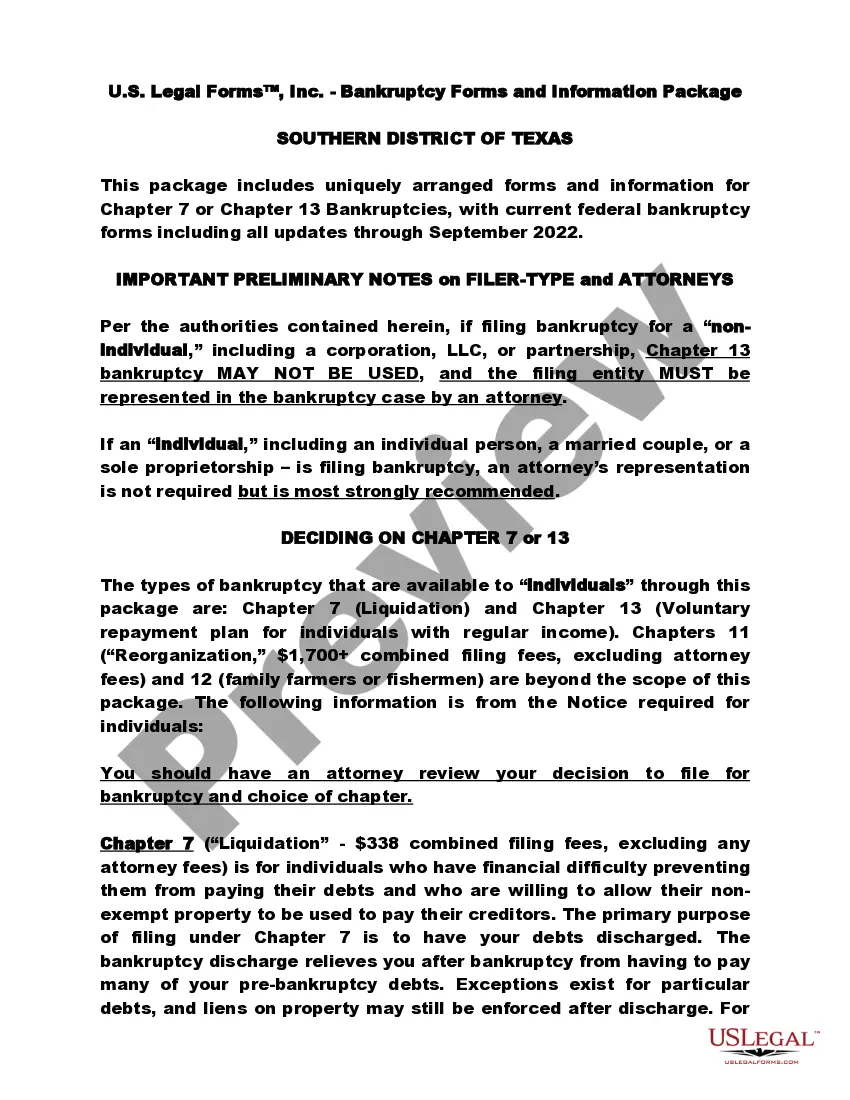
The Texas Western District Bankruptcy Guide and Forms Package for Chapters 7 or 13 is a comprehensive set of legal forms and instructions designed for individuals looking to file for bankruptcy in Texas. This package includes essential documents and detailed guidance for both Chapter 7 (Liquidation) and Chapter 13 (Voluntary repayment plan). It is specifically tailored to help users navigate the bankruptcy process, ensuring that they understand their options and comply with Texas state laws, differentiating it from general bankruptcy forms that may not address jurisdiction-specific requirements.
Key components of this form
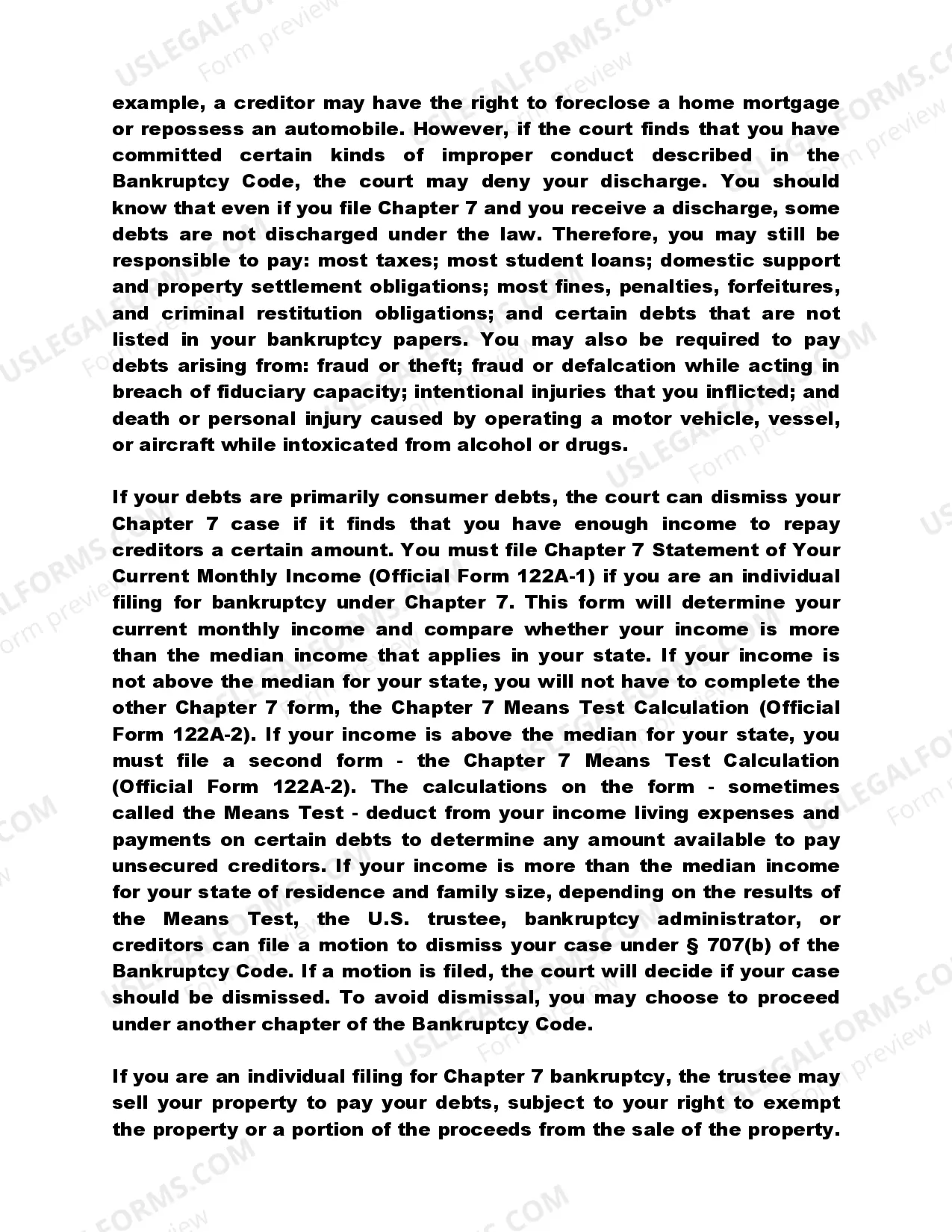
- Form for Chapter 7 bankruptcy including Statement of Current Monthly Income.
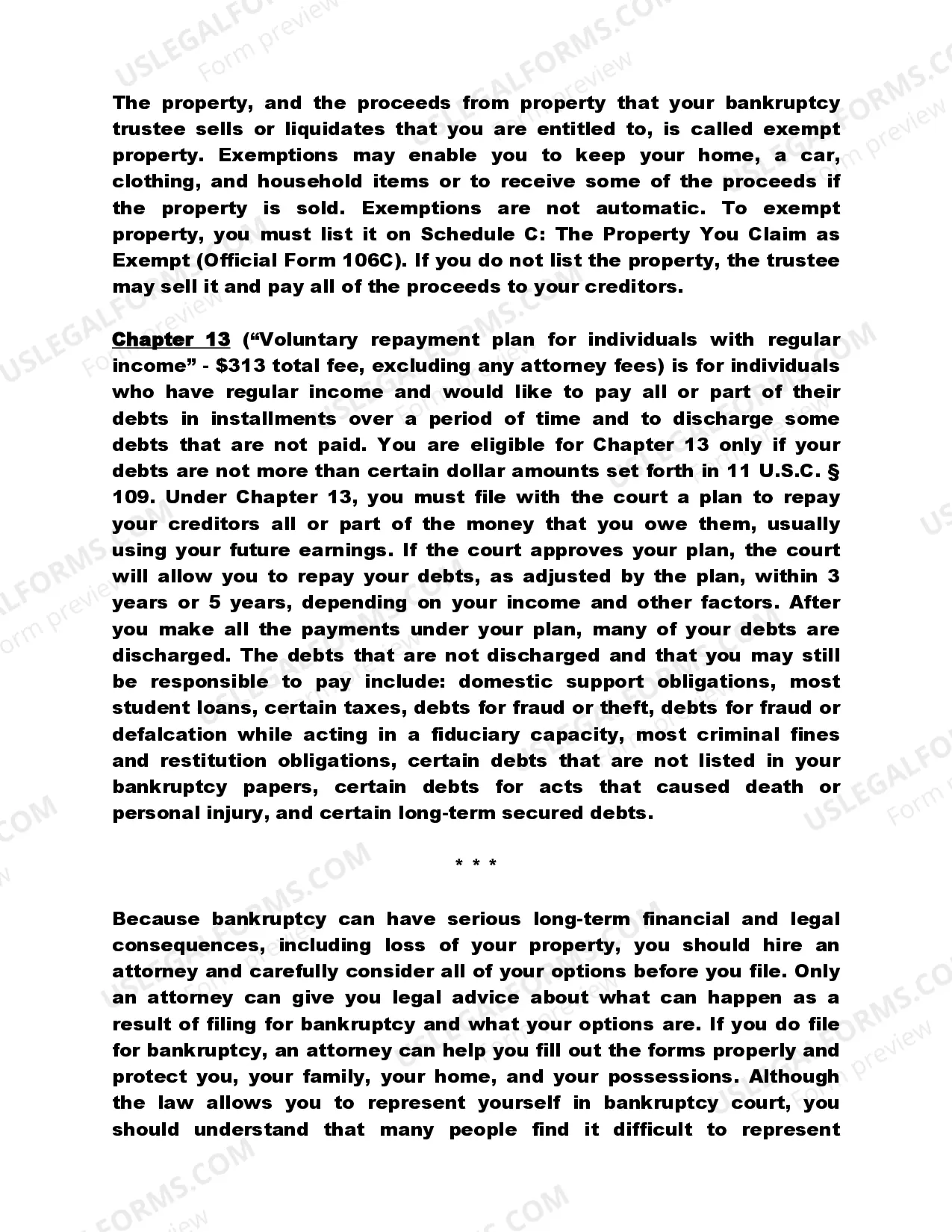
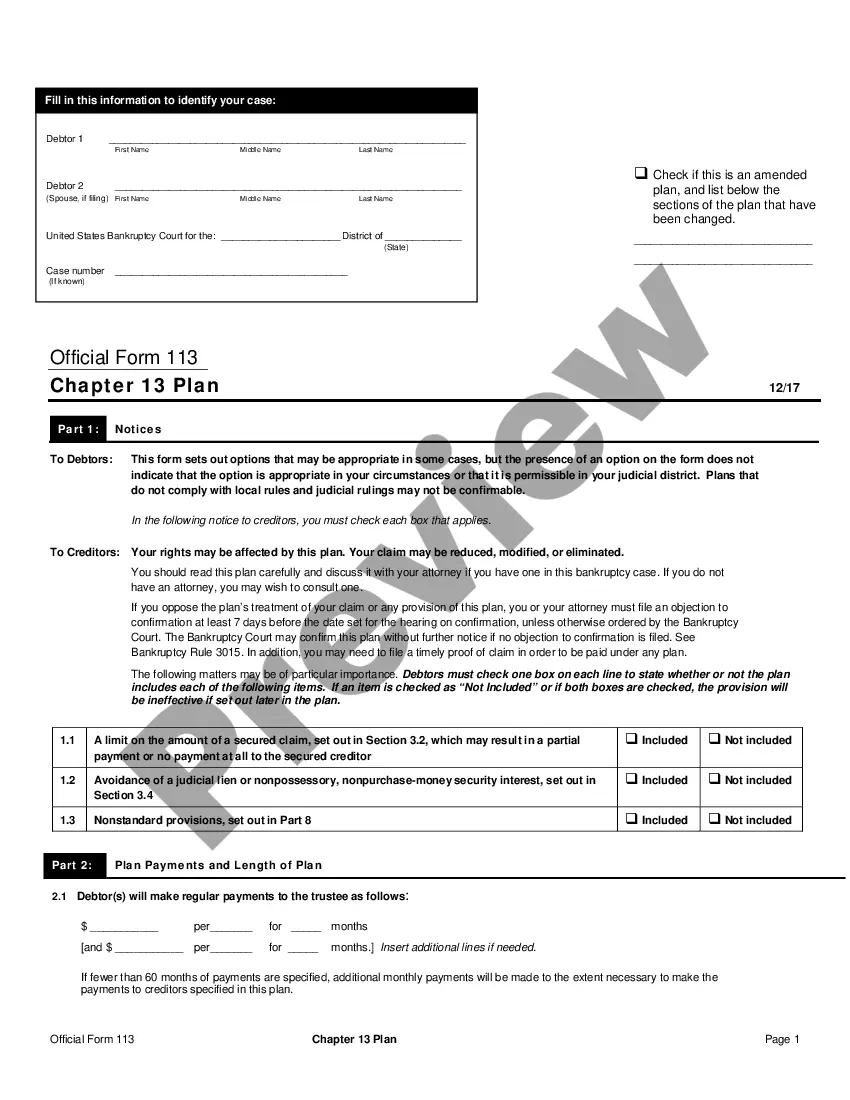
- Form for Chapter 13 bankruptcy including repayment plan outline.
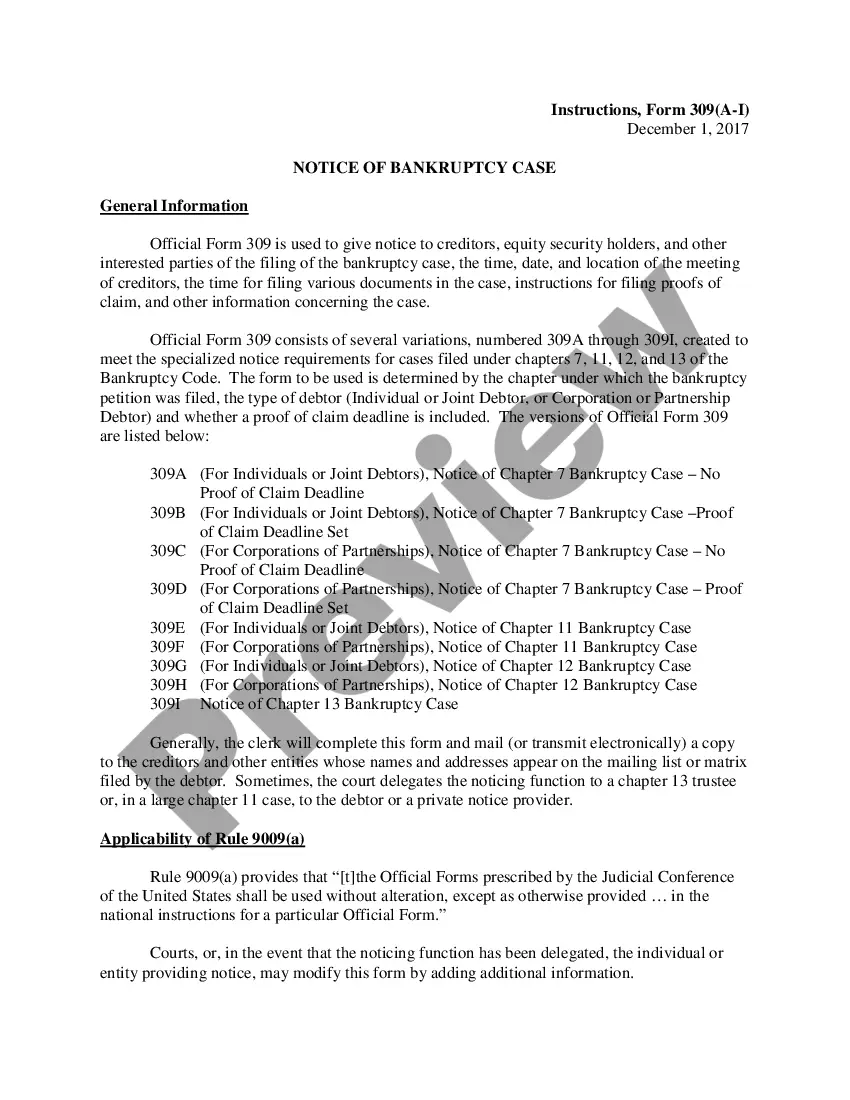
- Instructions for filing and submitting required forms.
- Guidance on exemption rules for protecting certain assets.
Situations where this form applies
This form package is needed when an individual in Texas faces financial difficulties and is considering filing for bankruptcy. Use this package if you need to discharge debts through Chapter 7 or if you prefer to reorganize your debts under Chapter 13, thereby proposing a repayment plan to creditors. It serves as a vital resource for guiding you through the complexities of bankruptcy, ensuring all necessary forms are submitted accurately and timely.
Who this form is for
This form is intended for:
- Individuals or married couples considering bankruptcy to manage debts.
- Sole proprietors looking to discharge business-related debts.
- Those seeking clarity on whether to opt for Chapter 7 or Chapter 13 bankruptcy.
Steps to complete this form
- Identify your filing type: Determine if you are filing under Chapter 7 or Chapter 13.
- Gather necessary financial documents: Collect income statements, lists of debts, and asset valuations.
- Complete the required forms: Fill out the Statement of Current Monthly Income for Chapter 7 or the repayment plan for Chapter 13.
- Review your forms: Ensure accuracy and that all necessary details are included.
- File with the court: Submit your forms along with any required fees to the appropriate Texas bankruptcy court.
Notarization guidance
In most cases, this form does not require notarization. However, some jurisdictions or signing circumstances might. US Legal Forms offers online notarization powered by Notarize, accessible 24/7 for a quick, remote process.
Get your form ready online
Our built-in tools help you complete, sign, share, and store your documents in one place.
Make edits, fill in missing information, and update formatting in US Legal Forms—just like you would in MS Word.
Download a copy, print it, send it by email, or mail it via USPS—whatever works best for your next step.
Sign and collect signatures with our SignNow integration. Send to multiple recipients, set reminders, and more. Go Premium to unlock E-Sign.
If this form requires notarization, complete it online through a secure video call—no need to meet a notary in person or wait for an appointment.
We protect your documents and personal data by following strict security and privacy standards.

Make edits, fill in missing information, and update formatting in US Legal Forms—just like you would in MS Word.

Download a copy, print it, send it by email, or mail it via USPS—whatever works best for your next step.

Sign and collect signatures with our SignNow integration. Send to multiple recipients, set reminders, and more. Go Premium to unlock E-Sign.

If this form requires notarization, complete it online through a secure video call—no need to meet a notary in person or wait for an appointment.

We protect your documents and personal data by following strict security and privacy standards.
Typical mistakes to avoid
- Failing to accurately report all debts and assets, which may lead to dismissal.
- Not completing the Means Test when required for Chapter 7 filings.
- Neglecting to list exempt property, risking its liquidation by the trustee.
Benefits of completing this form online
- Convenient access to all forms and instructions any time, from anywhere.
- Editable templates allow users to tailor the forms to their specific situation.
- Up-to-date guidelines and forms ensuring compliance with current laws.
Legal use & context
- This form package is legally recognized for individuals filing bankruptcy in Texas.
- It complies with state and federal bankruptcy laws, ensuring enforceability.
- It is designed to help users accurately present their financial situation to the court.
Summary of main points
- The package includes forms and instructions specifically for Texas bankruptcy filings.
- Choosing between Chapter 7 and Chapter 13 can significantly impact the outcome of your bankruptcy.
- Accurate completion of forms is crucial to avoid delays or dismissal of your case.
Looking for another form?

Form popularity
FAQ
As part of this phase, first day motions are typically filed on the first day of a case. These motions are to obtain permission to take certain actions necessary to maintain the debtor's business operations that cannot be taken unless the court first issues an order authorizing the debtor to take the actions.
A bankruptcy dismissal closes your bankruptcy case, and if it occurs before you receive a discharge, it will mean that: you've lost the protection of the automatic stay (the order that prohibits creditors from collecting debts), and. you'll continue to be liable for your debts.
Secured creditors, like banks, typically get paid first in a Chapter 11 bankruptcy, followed by unsecured creditors, like bondholders and suppliers of goods and services. Stockholders are typically last in line to get paid. Not all creditors get repaid in full under a Chapter 11 bankruptcy.
The Bankruptcy Code requires the court, after notice, to hold a hearing on confirmation of a plan. If no objection to confirmation has been timely filed, the Bankruptcy Code allows the court to determine whether the plan has been proposed in good faith and according to law.
This chapter of the Bankruptcy Code generally provides for reorganization, usually involving a corporation or partnership. A chapter 11 debtor usually proposes a plan of reorganization to keep its business alive and pay creditors over time. People in business or individuals can also seek relief in chapter 11.
At the confirmation hearing, the party proposing the plan, which is usually the debtor, must present evidence showing that the plan complies with the Chapter 11 confirmation requirements.A plan that has not been accepted by the holders of at least one class of impaired claims cannot be confirmed by the court.
In a Chapter 11 you don't automatically have the right to voluntarily dismiss your case like you do in a Chapter 13. You can file a motion to dismiss but the Court will sua sponte (on it's own) do an analysis and decide if conversion to Chapter 7...
In any case where a bankruptcy petition is dismissed, the individual loses the protection of the automatic stay. This means his or her creditors can resume their collection attempts until he or she gains bankruptcy protection again by successfully filing a case.
There is no absolute limit on the duration of a Chapter 11 case. Some Chapter 11 cases wrap up within a few months, but it's more usual for it to take six months to two years for a Chapter 11 case to come to a close.