Texas Residential Lease or Rental Agreement for Month to Month
Understanding this form
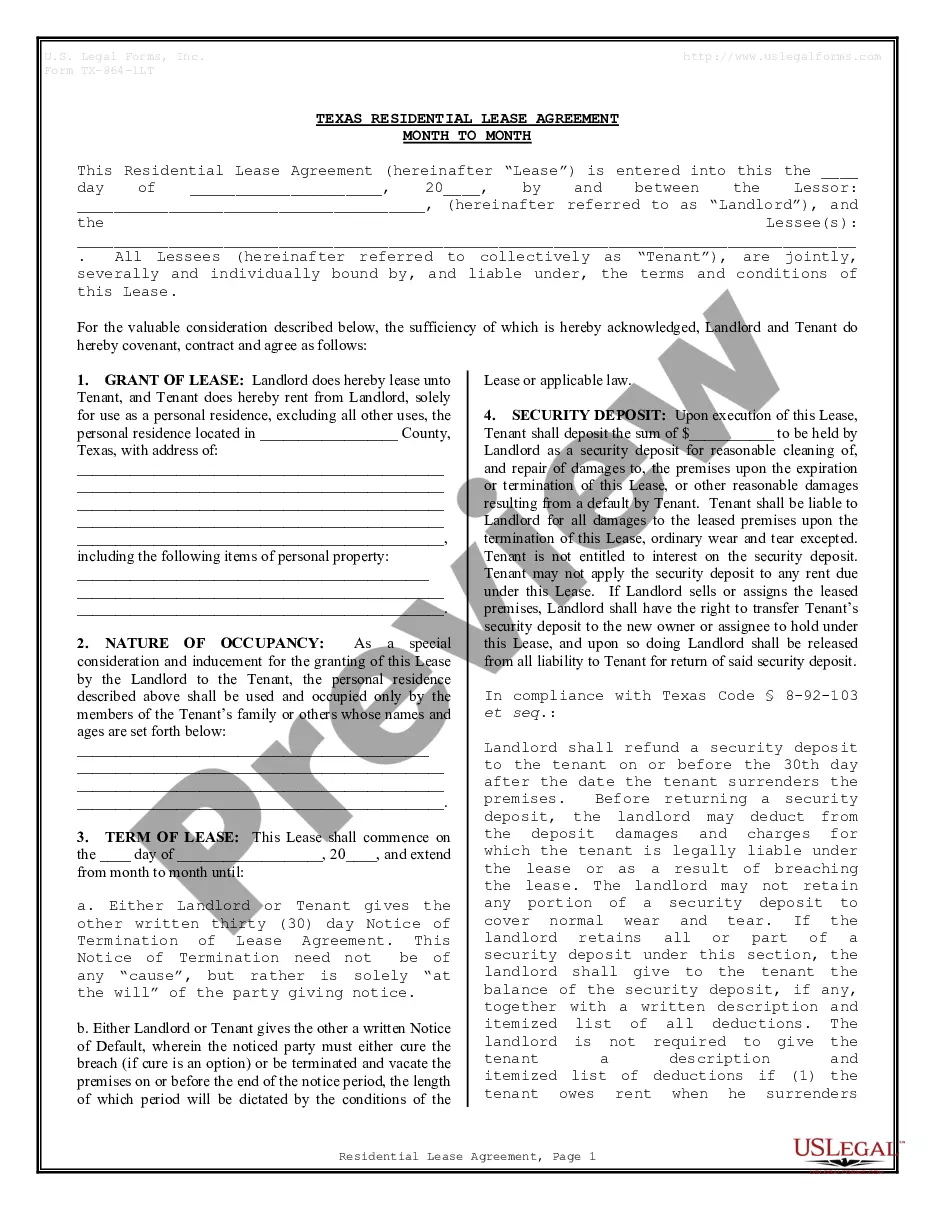
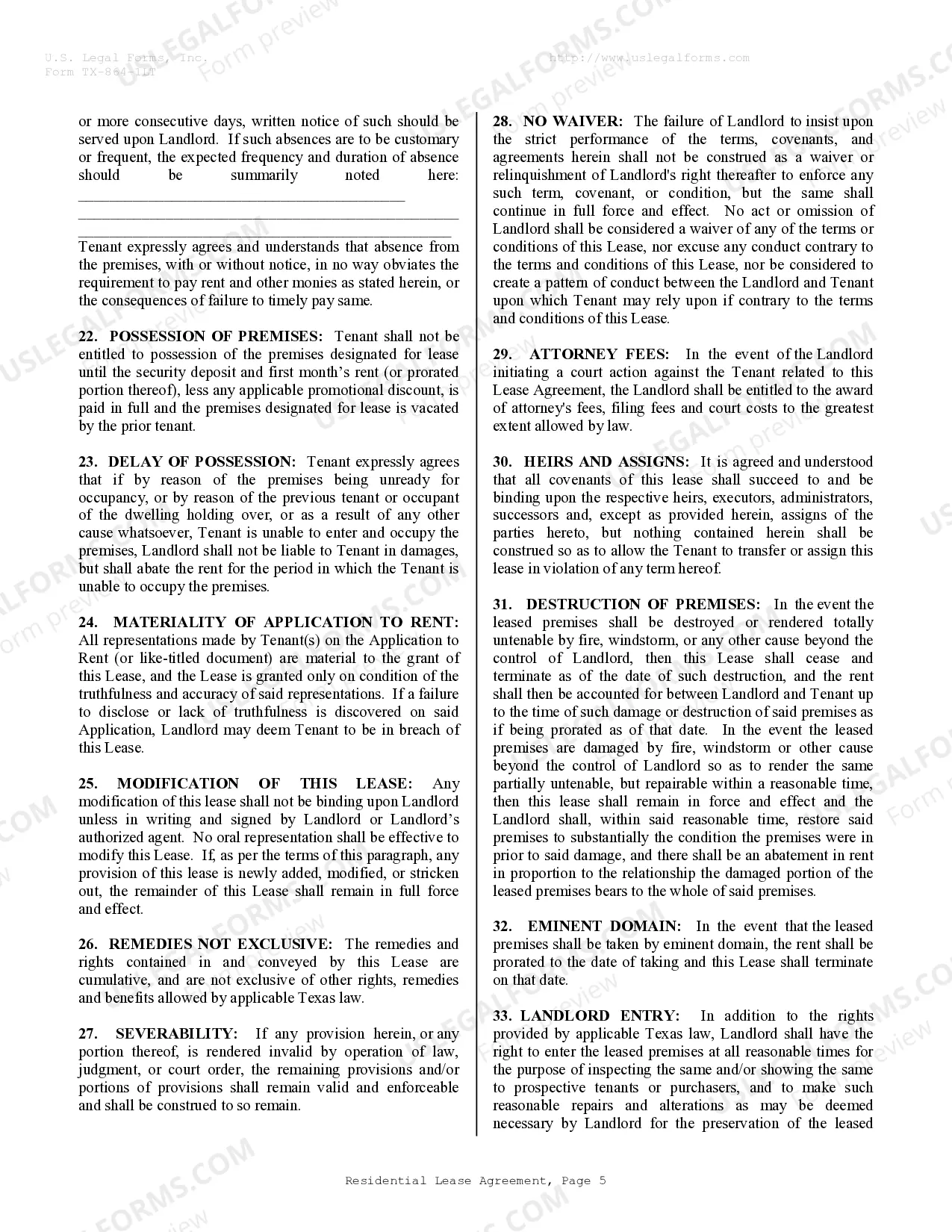
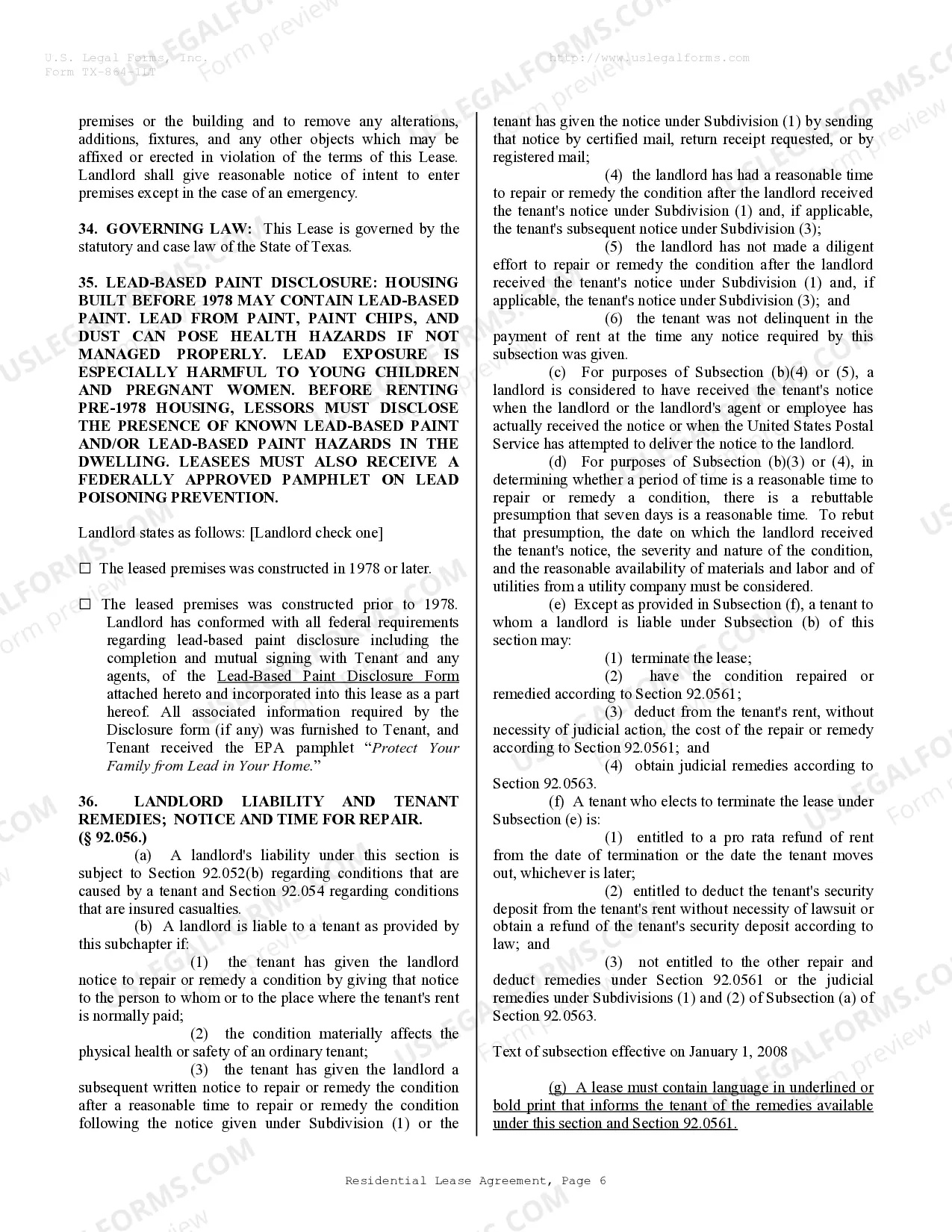
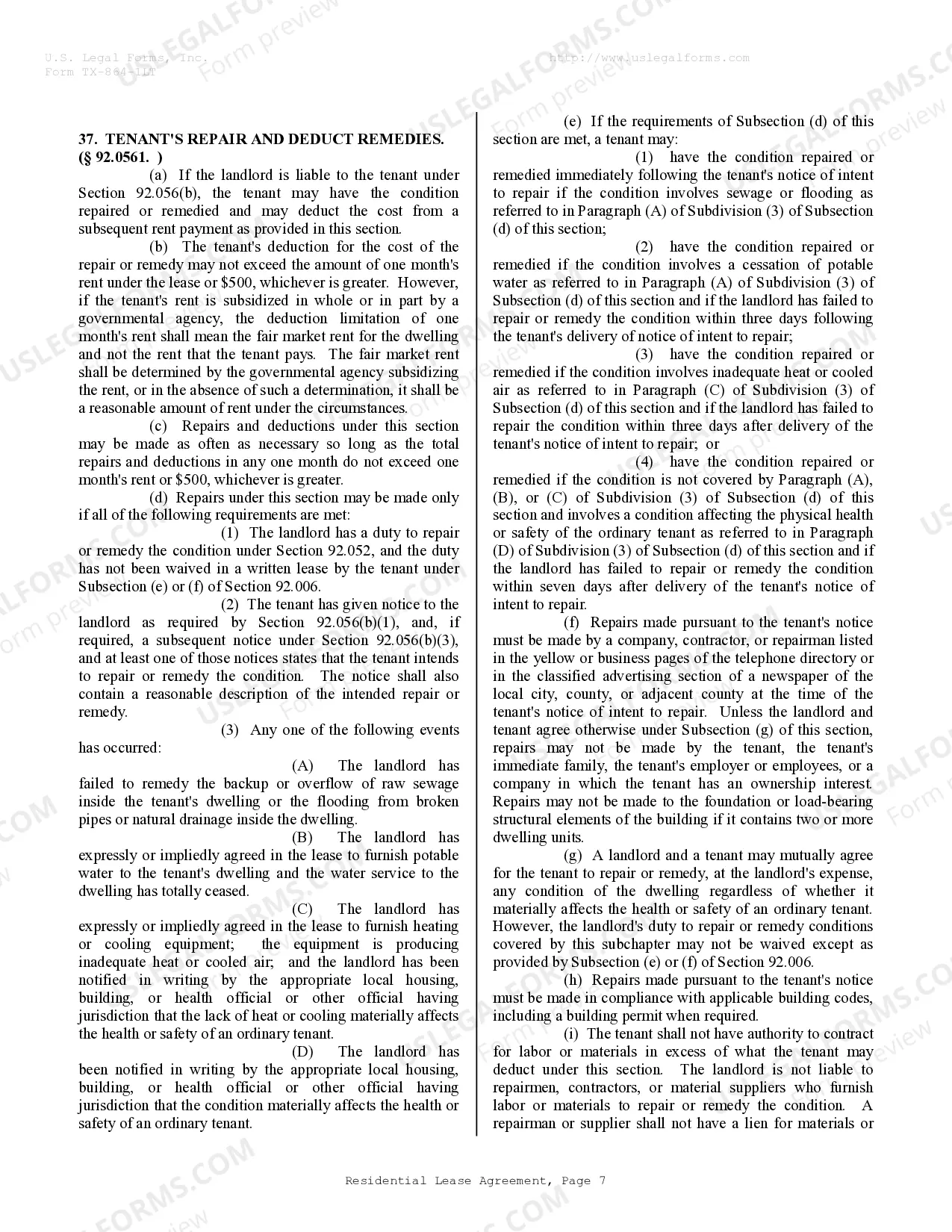
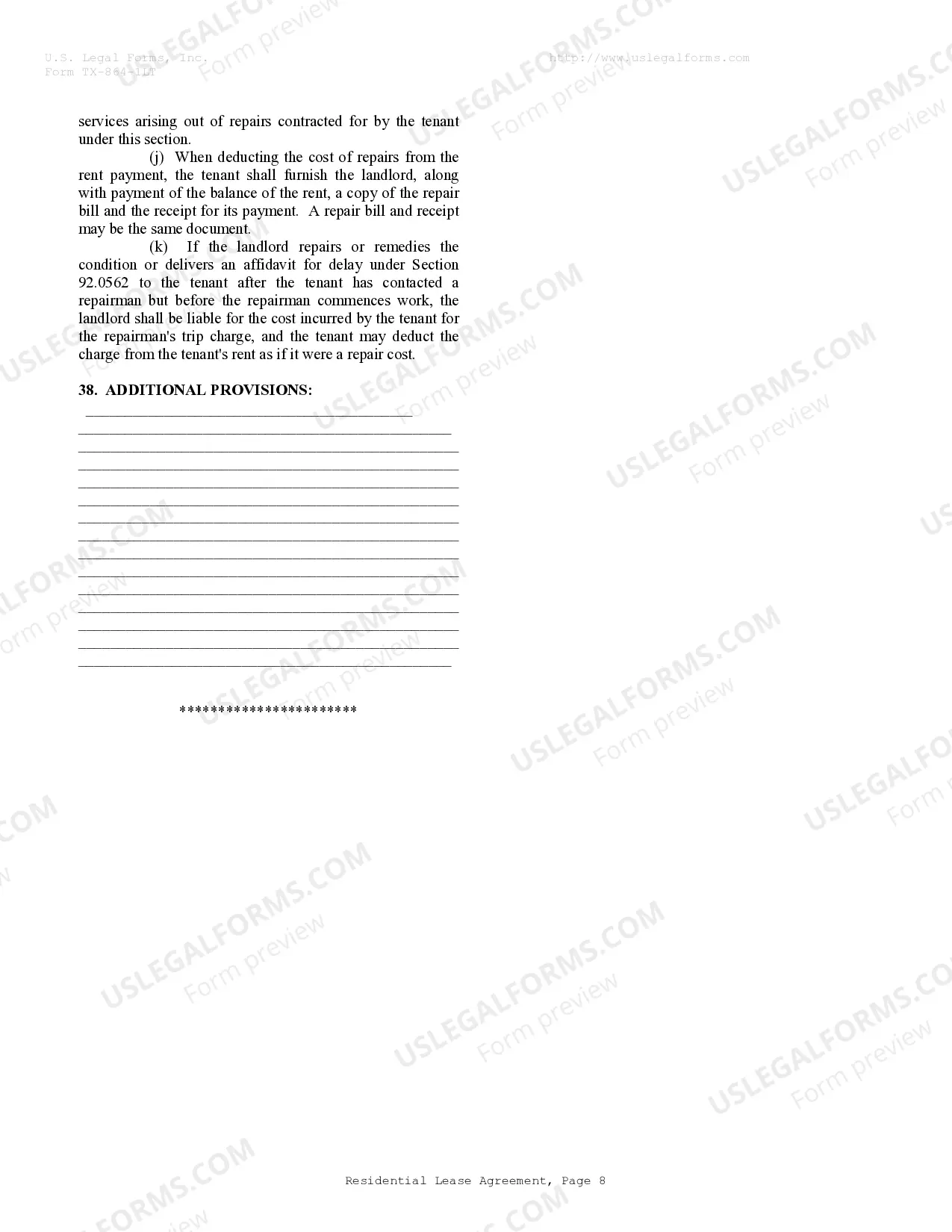
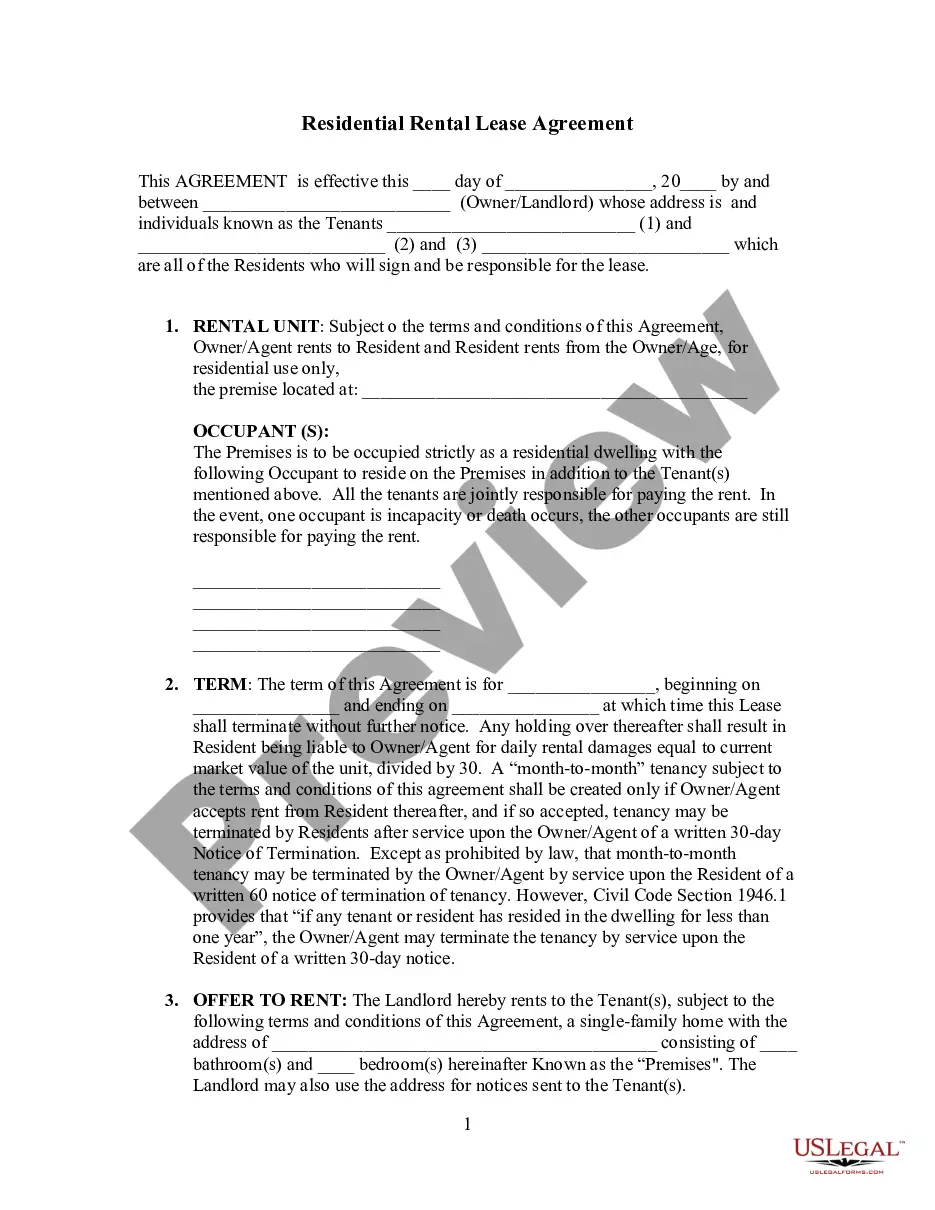
This Residential Lease or Rental Agreement for Month to Month is a legal document designed for rental situations where the tenant occupies property on a month-to-month basis. This agreement allows either the landlord or the tenant to terminate the lease with a thirty days' written notice, enabling flexibility compared to fixed-term leases, which bind parties for a specified duration. In this type of lease, the tenant can be evicted only for specific causes, allowing for higher stability in housing arrangements.
Form components explained
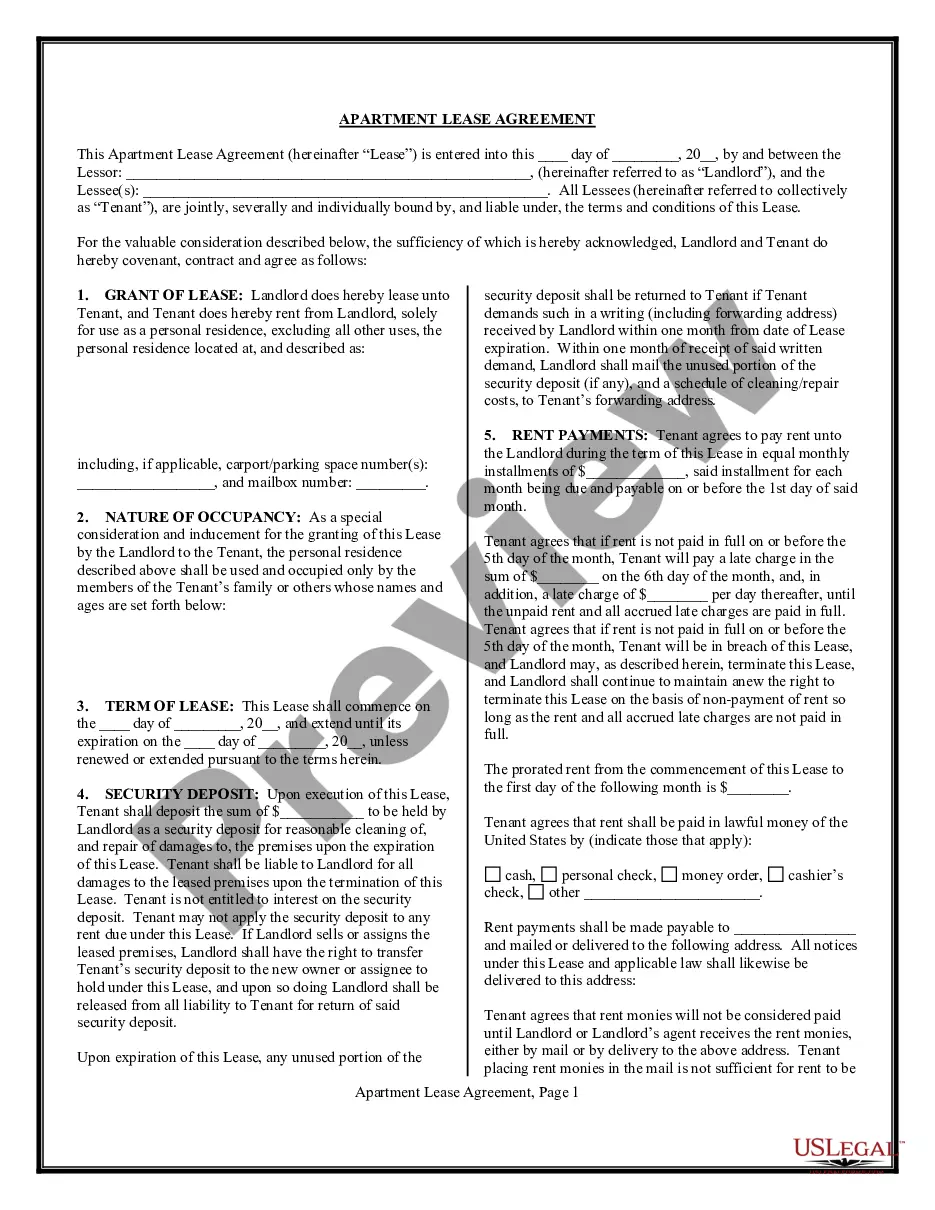
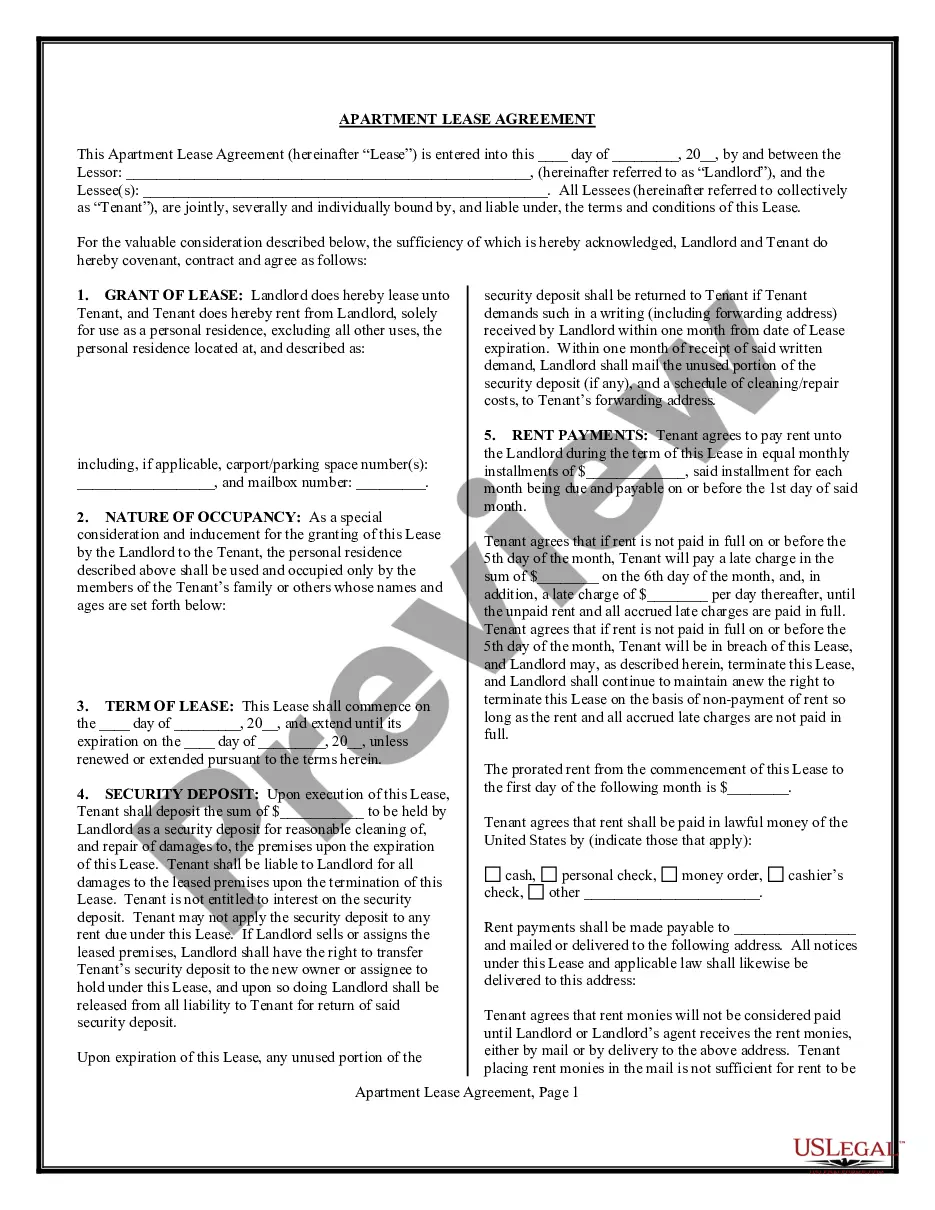
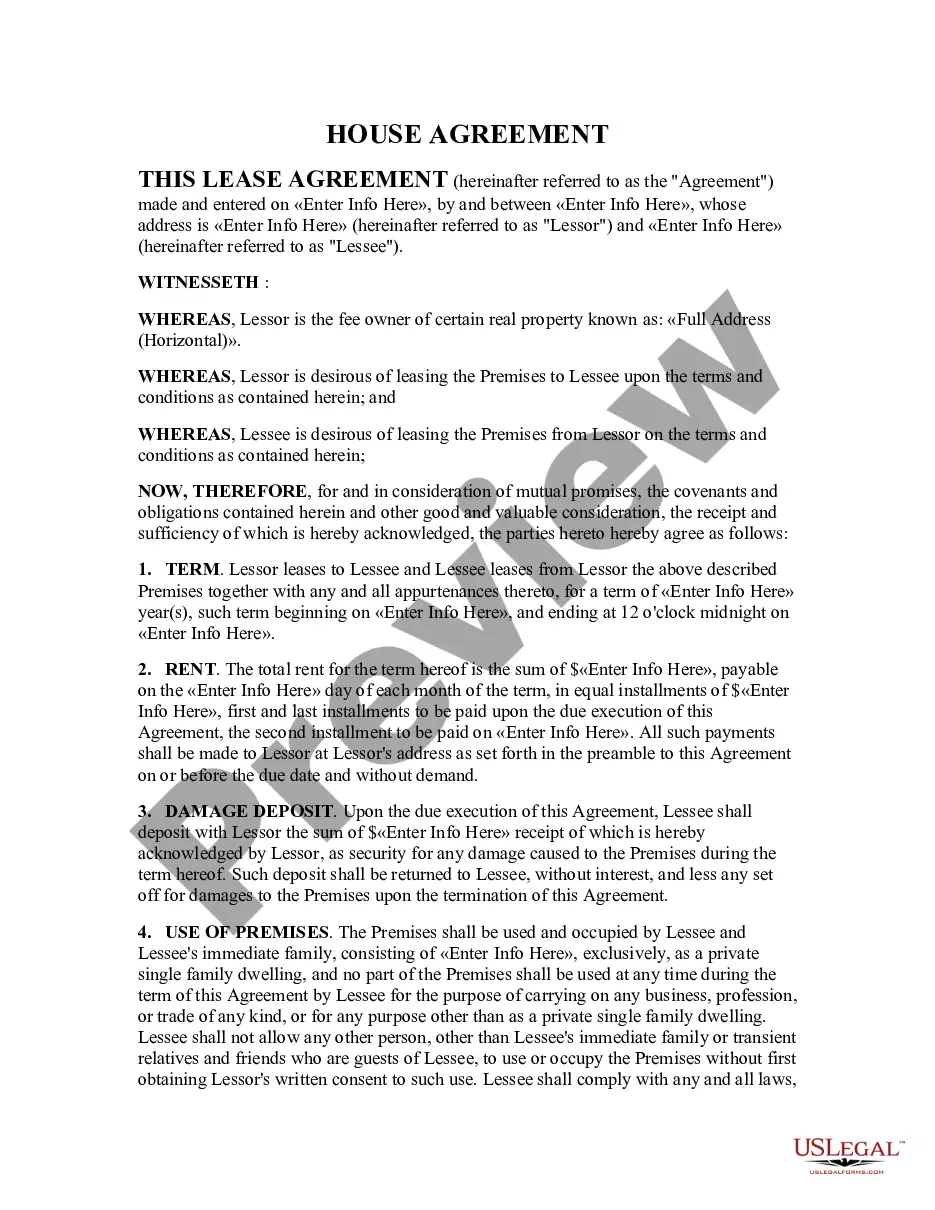
- Grant of lease, specifying the parties and property involved.
- Nature of occupancy, detailing who can reside in the premises.
- Term of lease, outlining the month-to-month rental terms and notice requirements for termination.
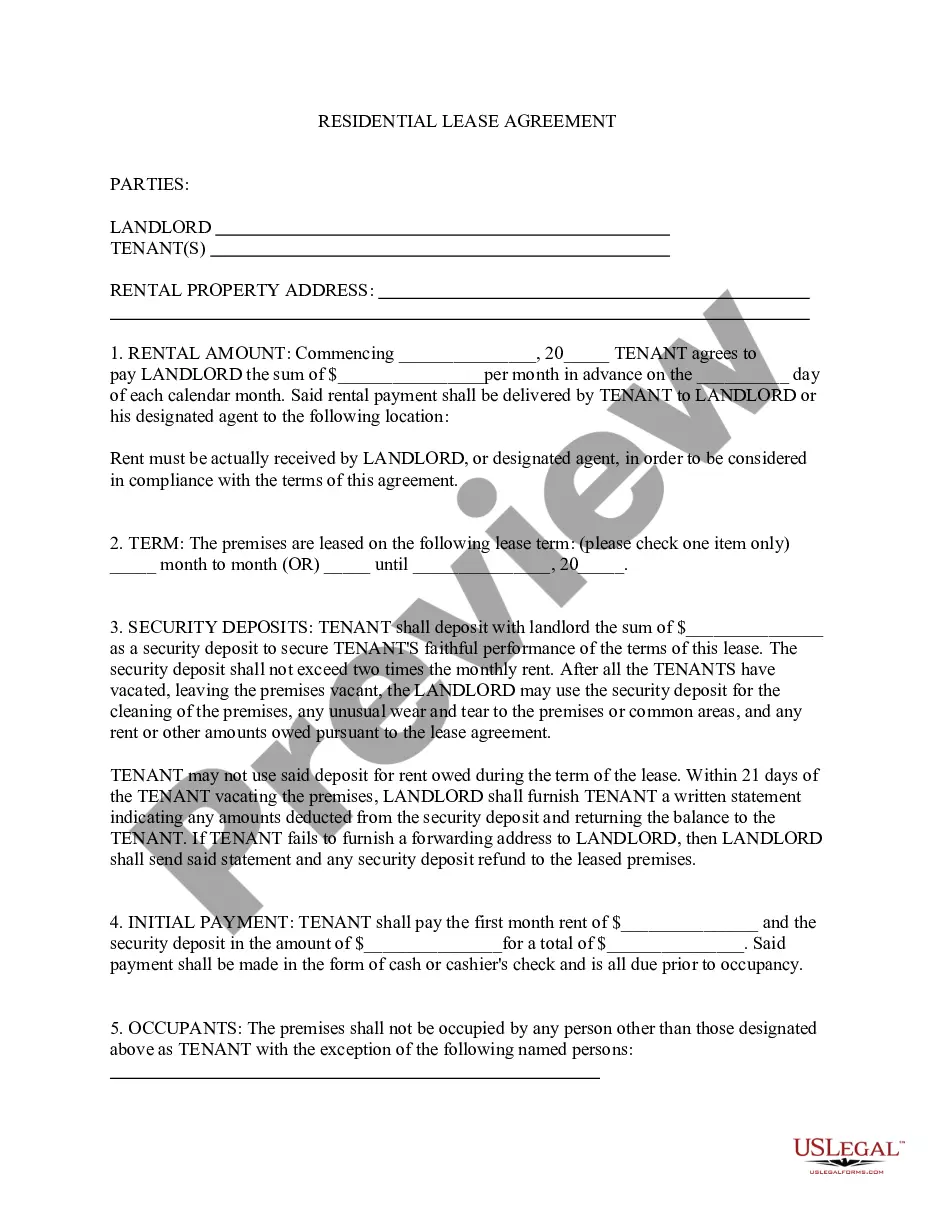
- Security deposit, explaining the conditions for its return and any potential deductions.
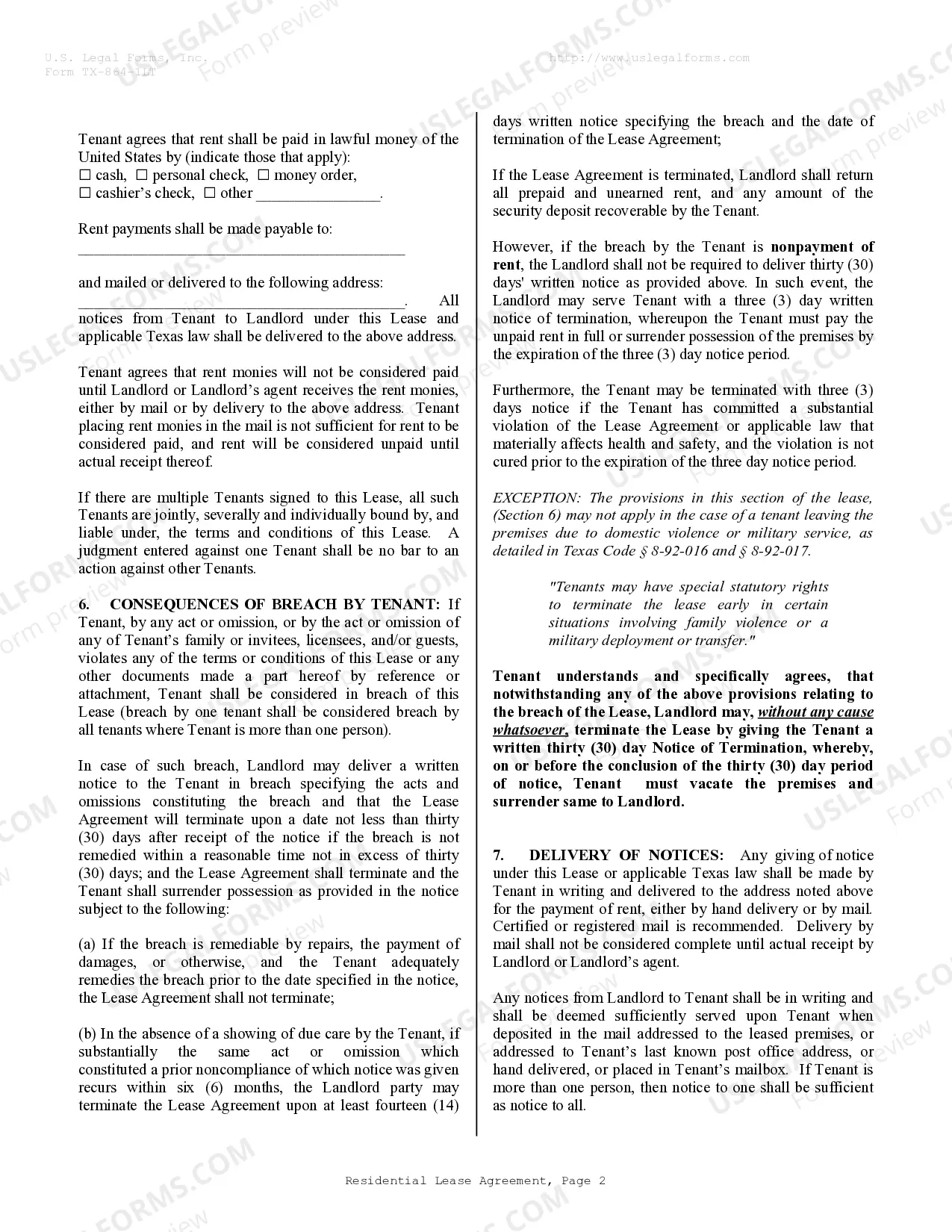
- Rent payments, specifying the amount, due dates, and late fees.
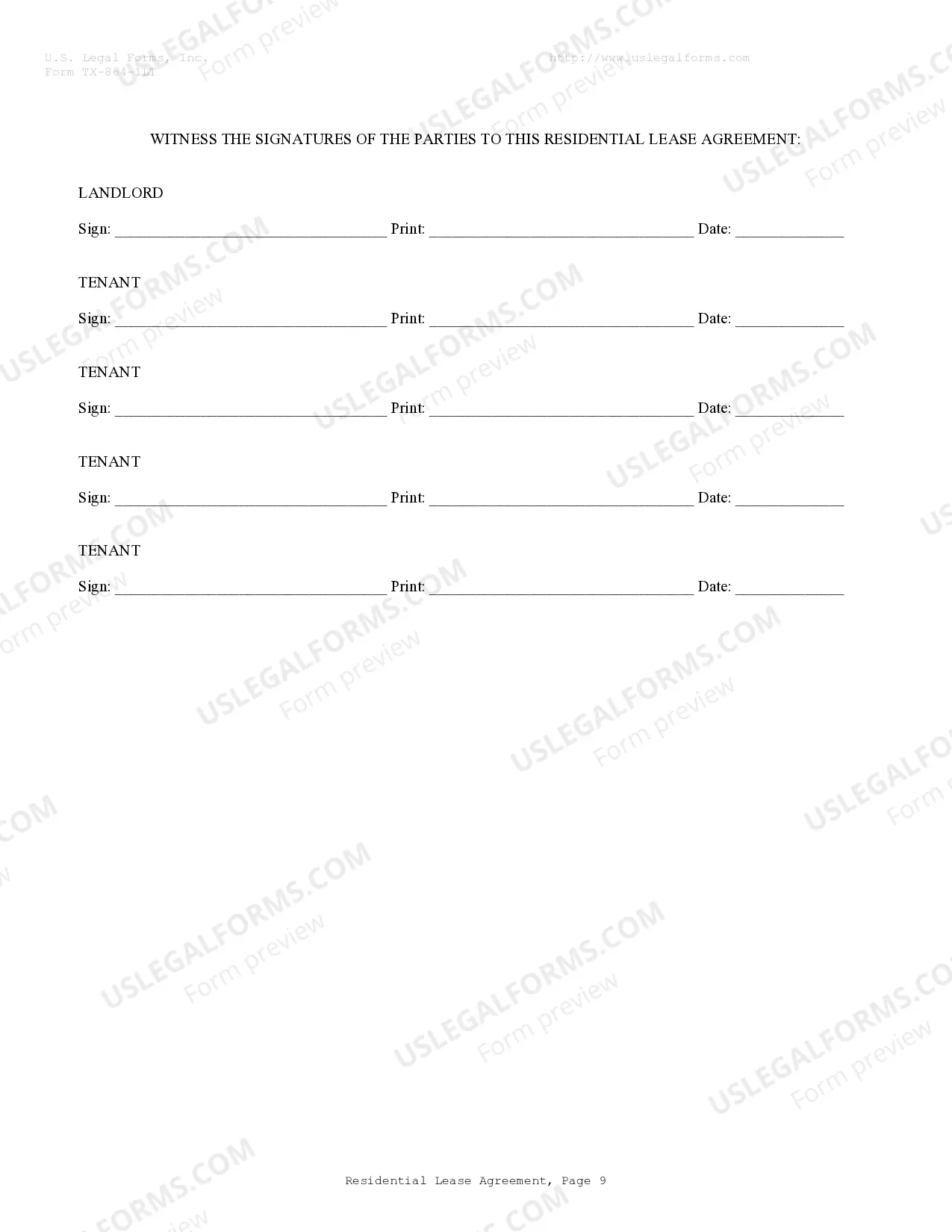
- Consequences of breach, detailing the grounds for eviction and remedial steps.

When to use this form
This lease form is recommended when a landlord seeks to rent out a property without committing to a long-term lease arrangement. It can be used when tenants require shorter-term housing solutions or prefer the flexibility to move with minimal notice. This agreement suits situations where tenants anticipate potential changes in employment, education, or personal circumstances that could affect their housing needs.
Who this form is for
- Landlords who want to establish a rental agreement with a tenant for an undetermined period.
- Tenants looking for flexible housing arrangements without the commitment of a long-term lease.
- Property managers overseeing month-to-month rentals and wanting to ensure compliance with Texas rental laws.
- Individuals or families needing transitional housing while they find a permanent residence.
Completing this form step by step
- Identify the parties involved by filling in the names of the landlord and tenants at the beginning of the lease.
- Specify the rental property address and details in the grant of lease section.
- Detail the rent amount and security deposit to be collected, along with payment methods.
- Indicate the lease commencement date and the intended use of the property by the tenants.
- Ensure all parties sign and date the agreement to finalize the lease deal.
Does this form need to be notarized?
This form does not typically require notarization unless specified by local law. However, landlords and tenants should ensure that all required signatures are collected for the agreement to be valid and enforceable in legal settings.
Get your form ready online
Our built-in tools help you complete, sign, share, and store your documents in one place.
Make edits, fill in missing information, and update formatting in US Legal Forms—just like you would in MS Word.
Download a copy, print it, send it by email, or mail it via USPS—whatever works best for your next step.
Sign and collect signatures with our SignNow integration. Send to multiple recipients, set reminders, and more. Go Premium to unlock E-Sign.
If this form requires notarization, complete it online through a secure video call—no need to meet a notary in person or wait for an appointment.
We protect your documents and personal data by following strict security and privacy standards.

Make edits, fill in missing information, and update formatting in US Legal Forms—just like you would in MS Word.

Download a copy, print it, send it by email, or mail it via USPS—whatever works best for your next step.

Sign and collect signatures with our SignNow integration. Send to multiple recipients, set reminders, and more. Go Premium to unlock E-Sign.

If this form requires notarization, complete it online through a secure video call—no need to meet a notary in person or wait for an appointment.

We protect your documents and personal data by following strict security and privacy standards.
Avoid these common issues
- Failing to provide sufficient notice before termination of the lease.
- Neglecting to specify the details of the security deposit, including conditions for its return.
- Inadequately completing the parties' names or property details, which can render the lease unenforceable.
- Overlooking rent payment methods or due dates, resulting in confusion or disputes.
- Not having all tenants sign the agreement, which can affect accountability.
Why use this form online
- Convenience of downloading and accessing the form at any time.
- Editability allows customization to fit specific needs without having to draft a lease from scratch.
- Access to reliable, attorney-drafted legal language that helps ensure compliance with state laws.
- Immediate availability saves time, reducing the stress of finding legal documents.
- This lease is enforceable under Texas law and protects the rights and obligations of both landlords and tenants.
- Tenants are advised to understand their rights regarding security deposits and notice requirements.
- Landlords must adhere to maintenance duties and comply with health and safety codes.
Quick recap
- The Residential Lease Agreement for Month to Month provides flexibility for landlords and tenants.
- Both parties must provide written notice for termination, allowing for a smooth transition.
- Clear communication regarding responsibilities is essential for a successful rental relationship.
Looking for another form?

Form popularity
FAQ
A month-to-month lease is a lease that continues each month until either party provides 30 days' notice. As the name suggests, it allows tenants to live in your rental property on a month-to-month basis. Month-to-month leases are commonly used as a way to extend a lease.
A landlord can simply give you a written notice to move, allowing you one month as required by Texas law and specifying the date on which your tenancy will end. However, the landlord and tenant may agree in writing to different notice periods, or none at all.
Negotiating a Month to Month Contract into a Lease Agreement When a potential tenant and a landlord are looking at rental forms together, they often go over most of what's on the lease, as a formality and to get on the same page regarding policy. This is the time to request a month to month lease situation.
In Texas, landlords must give tenants 30 days' notice before terminating the lease.Often, month-to-month leases are verbal, so the terms can seem murky. But Texas law is clearboth landlords and tenants can end their agreement at any time, as long as they give the other person 30 days' advance notice.
Landlords may need just cause to end month-to-month leaseMonth-to-month lease agreements where the tenant has lived in the unit for fewer than 12 months can be ended for any reasonor no reason at allas long as it doesn't violate California's extensive fair housing laws.
Annual Residential Leases The lease typically includes an automatic transition to month-to-month status unless the tenant or landlord provides notice of nonrenewal. The rental lease agreement typically states the amount of notice required to vacate the property, usually 30 or 60 days.
Tenants can give their vacate notice in as short as 30 days' time. A month to month lease means less security in the minds of many landlords. On the other hand, a year-long lease has downsides, too. If a landlord wants to get rid of a problem tenant, they often have to wait until lease renewal time to do so.
When a lease ends, a tenant may choose to move, continue to pay rent as a month-to-month tenant, or sign a new lease. If a tenant continues to pay rent after a lease ends, in most states the terms of the expired lease carry over into a month-to-month tenancy.
On occasion, commercial retail leases are originated on a month-to-month basis. But these instances are rare.Most importantly (unless otherwise noted in the original agreement) this means the tenant continues to pay the same rent and CAMs upon lease expatriation.