Texas Warranty Deed from Husband to Himself and Wife
Understanding this form
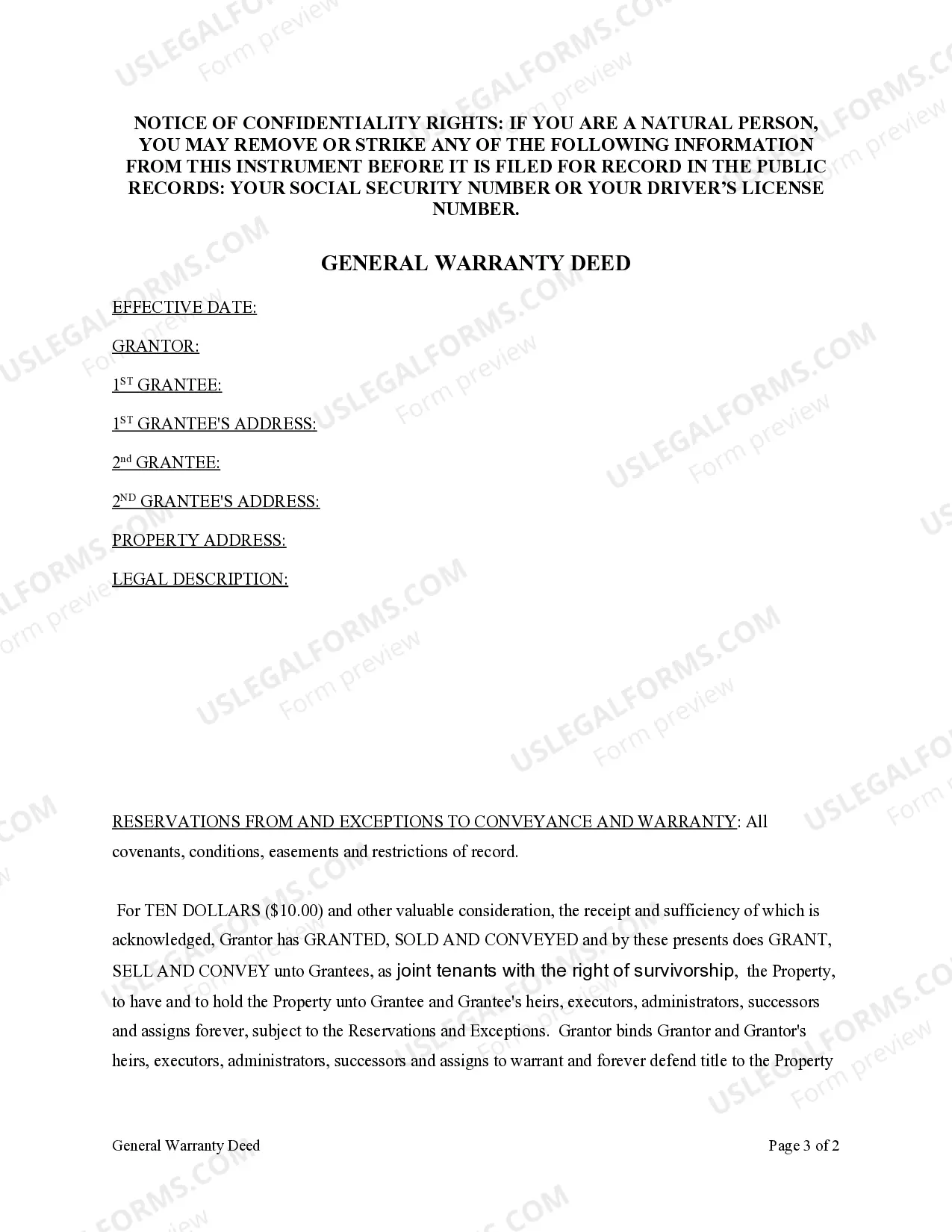
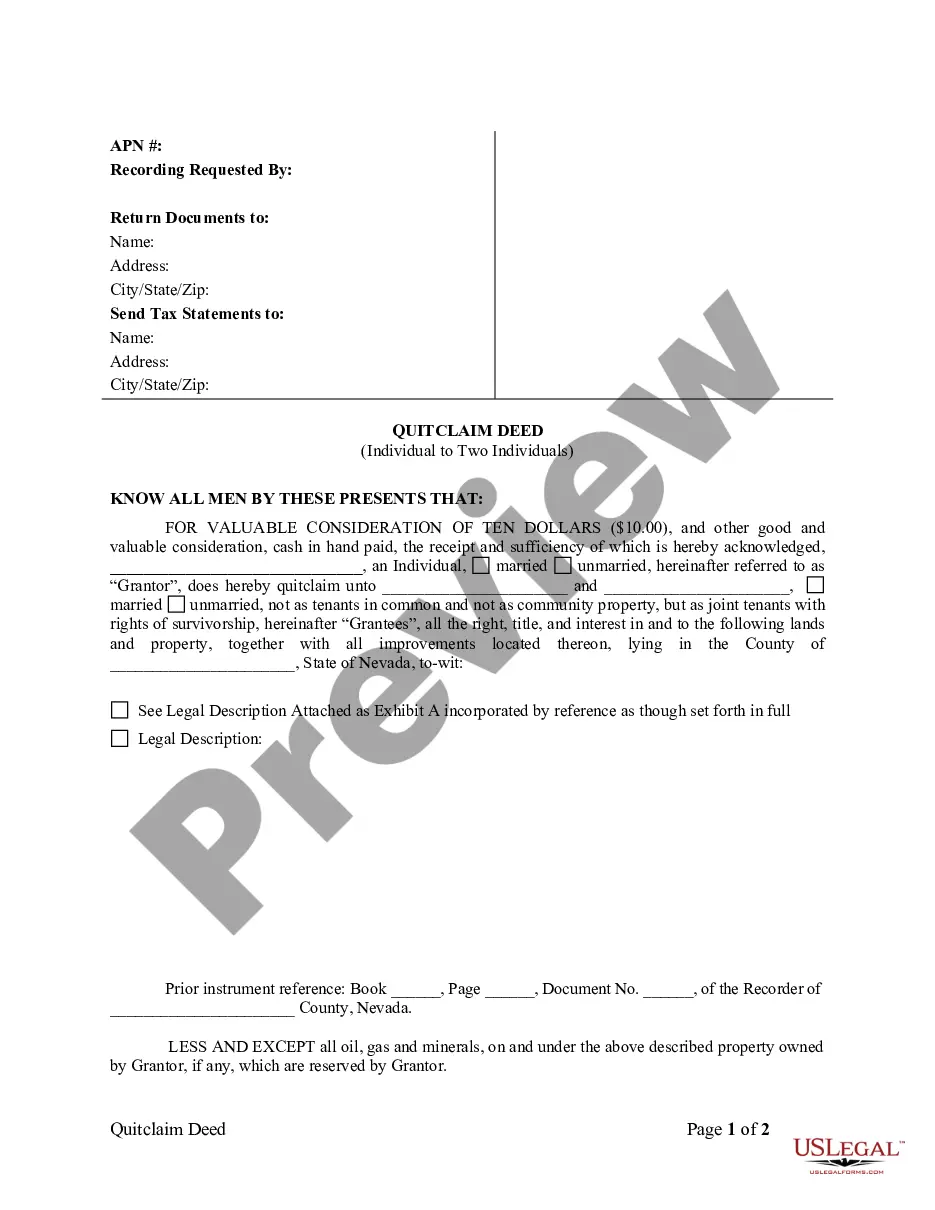
The Warranty Deed from Husband to Himself and Wife is a legal document used to transfer property ownership from a husband to both himself and his wife. This form establishes joint ownership with rights of survivorship, meaning that if one spouse passes away, the other automatically inherits the property. The document is specifically tailored to comply with state laws and contains specific provisions regarding the reservation of oil, gas, and mineral rights.
What’s included in this form
- Grantor and Grantees: Identifies the husband as the grantor and both the husband and wife as the grantees.
- Property Description: A detailed description of the property being transferred.
- Joint Tenancy Clause: Specifies that the property is held as joint tenants with rights of survivorship.
- Reservation of Rights: Indicates any retained rights by the grantor related to oil, gas, and mineral interests.
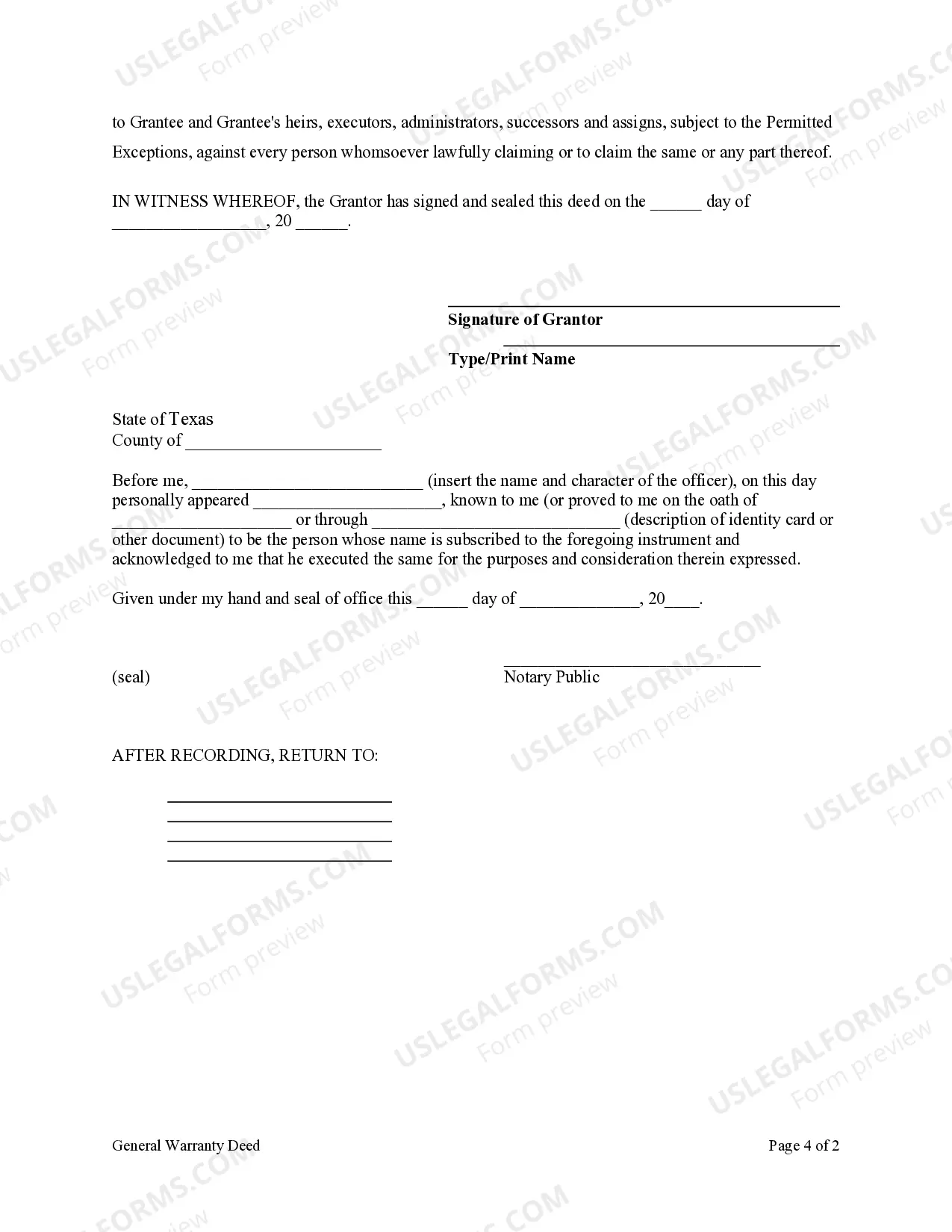
- Signatures and Date: Requires signatures from the grantor and the date of execution for validity.



When this form is needed
This form is typically used when a married couple wishes to transfer property ownership for various reasons, including asset protection, estate planning, or simplifying the inheritance process. It is particularly useful when one spouse already owns the property and wants to add the other spouse as a co-owner with rights of survivorship.
Intended users of this form
The Warranty Deed from Husband to Himself and Wife is suitable for:
- Married couples looking to jointly own property.
- Homeowners who want to include their spouse in property ownership.
- Individuals planning for estate management to ensure smooth transfer of property upon death.
Completing this form step by step
- Identify the parties involved: Fill in the names of the grantor (husband) and the grantees (husband and wife).
- Specify the property: Provide a complete legal description of the property being transferred.
- Detail the reservation: Note any reservations regarding oil, gas, and minerals as applicable.
- Enter dates and signatures: Ensure the grantor signs the document and date it correctly.
- Review for completeness: Double-check all fields for accuracy before finalizing.
Does this document require notarization?
Notarization is required for this form to take effect. Our online notarization service, powered by Notarize, lets you verify and sign documents remotely through an encrypted video session, available 24/7.
Get your form ready online
Our built-in tools help you complete, sign, share, and store your documents in one place.
Make edits, fill in missing information, and update formatting in US Legal Forms—just like you would in MS Word.
Download a copy, print it, send it by email, or mail it via USPS—whatever works best for your next step.
Sign and collect signatures with our SignNow integration. Send to multiple recipients, set reminders, and more. Go Premium to unlock E-Sign.
If this form requires notarization, complete it online through a secure video call—no need to meet a notary in person or wait for an appointment.
We protect your documents and personal data by following strict security and privacy standards.

Make edits, fill in missing information, and update formatting in US Legal Forms—just like you would in MS Word.

Download a copy, print it, send it by email, or mail it via USPS—whatever works best for your next step.

Sign and collect signatures with our SignNow integration. Send to multiple recipients, set reminders, and more. Go Premium to unlock E-Sign.

If this form requires notarization, complete it online through a secure video call—no need to meet a notary in person or wait for an appointment.

We protect your documents and personal data by following strict security and privacy standards.
Typical mistakes to avoid
- Failing to include a complete legal description of the property.
- Not signing or dating the document appropriately.
- Forgetting to acknowledge any reservations related to mineral rights.
- Missing consent from the spouse in certain jurisdictions.
Why complete this form online
- Convenience of downloading and completing forms from home.
- Editability of the form allows for easy updates before signing.
- Reliability of professionally drafted templates ensures compliance with legal standards.
Quick recap
- The Warranty Deed from Husband to Himself and Wife enables joint ownership with rights of survivorship.
- Ensure all fields are accurately filled to prevent complications.
- Consult local laws to verify any specific requirements related to the form.
Looking for another form?

Form popularity
FAQ
Adding someone to your house deed requires the filing of a legal form known as a quitclaim deed. When executed and notarized, the quitclaim deed legally overrides the current deed to your home. By filing the quitclaim deed, you can add someone to the title of your home, in effect transferring a share of ownership.
Write the county where the property is located on line provided next to the words "County of" beneath the words "The State of Texas." Write the name and address of the grantor on the lines provided after the words "Know all men by these presents, That I."
Adding someone to your house deed requires the filing of a legal form known as a quitclaim deed. When executed and notarized, the quitclaim deed legally overrides the current deed to your home. By filing the quitclaim deed, you can add someone to the title of your home, in effect transferring a share of ownership.
How do I add my spouse to the deed? In Texas, you can't add your spouse's name to an existing deed, but you can create a new deed by transferring the property from yourself to you and your spouse jointly. You can do this by using either a deed without warranty or a quit claim deed.
If you've recently married and already own a home or other real estate, you may want to add your new spouse to the deed for your property so the two of you own it jointly. To add a spouse to a deed, all you have to do is literally fill out, sign and record a new deed in your county recorder's office.
Typically, the lender will provide you with a copy of the deed of trust after the closing. The original warranty deeds are often mailed to the grantee after they are recorded. These are your original copies and should be kept in a safe place, such as a fireproof lockbox or a safe deposit box at a financial institution.
A warranty deed guarantees that: The grantor is the rightful owner of the property and has the legal right to transfer the title.The title would withstand third-party claims to ownership of the property. The grantor will do anything to ensure the grantee's title to the property.
Contrary to normal expectations, the Deed DOES NOT have to be recorded to be effective or to show delivery, and because of that, the Deed DOES NOT have to be signed in front of a Notary Public. However, if you plan to record it, then it does have to be notarized as that is a County Recorder requirement.
Fill out the "grantor" section of the warranty deed. The grantors are the givers, or current owners, of the property. Use the legal name of each grantor and insert current addresses after each grantor's name.