Tennessee Statutory Living Will
What this document covers
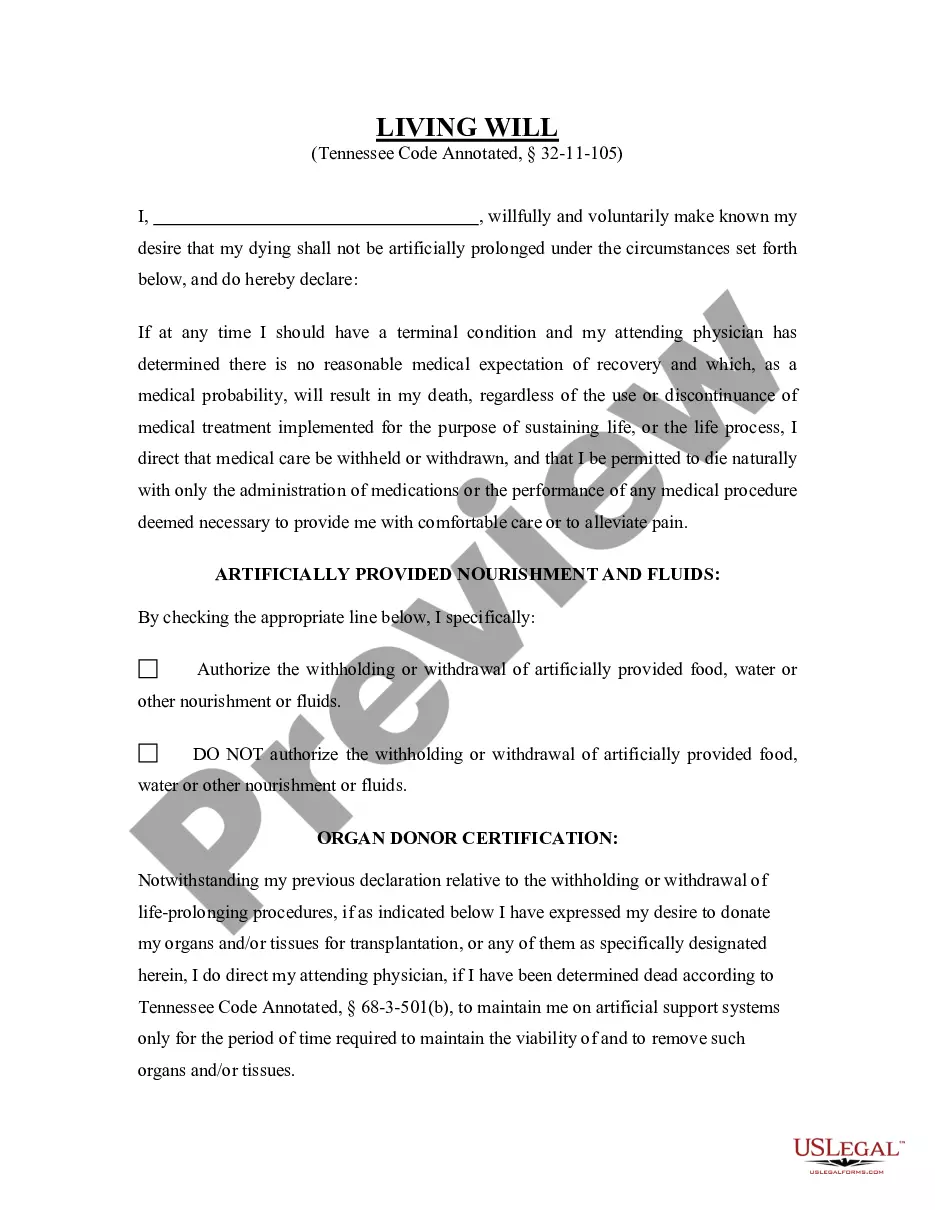
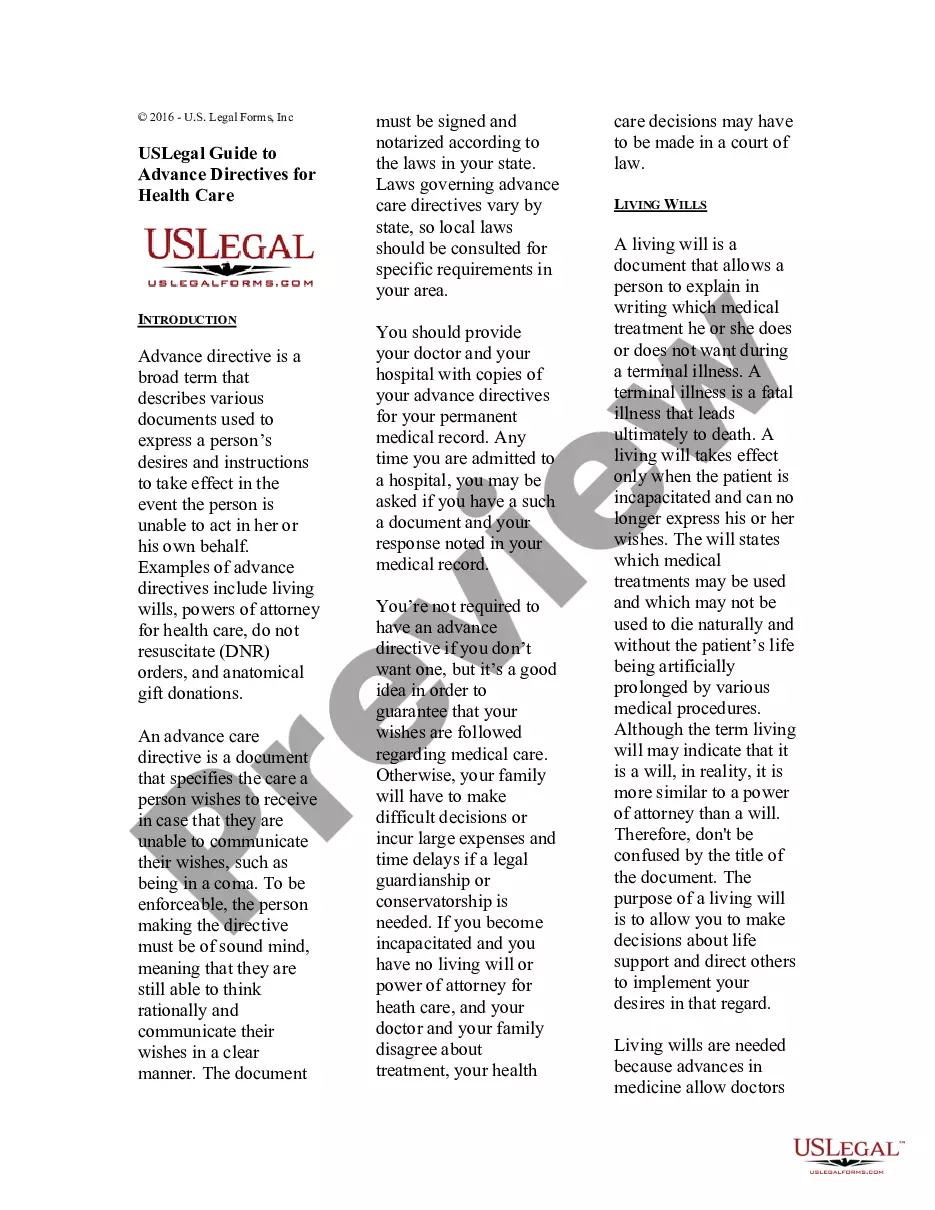
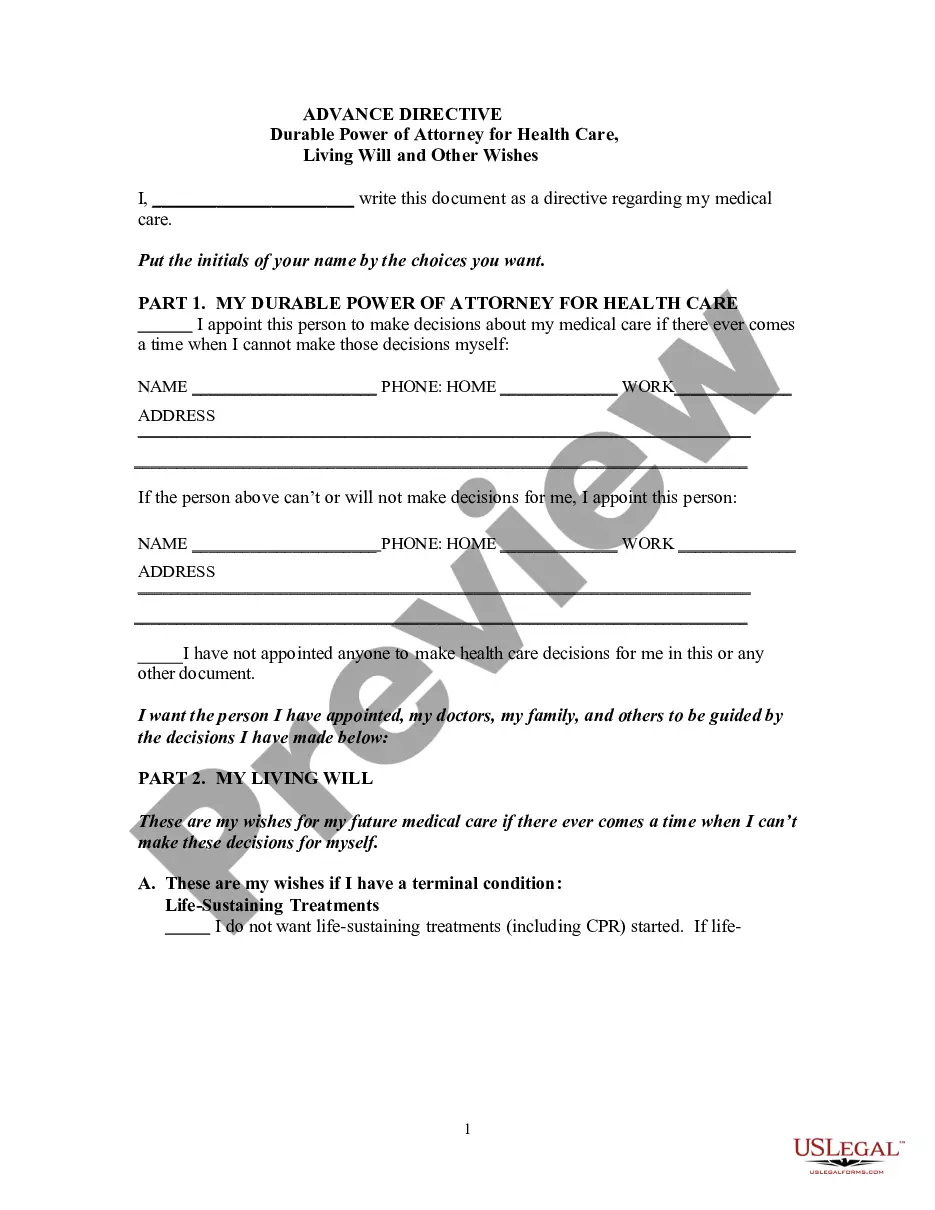
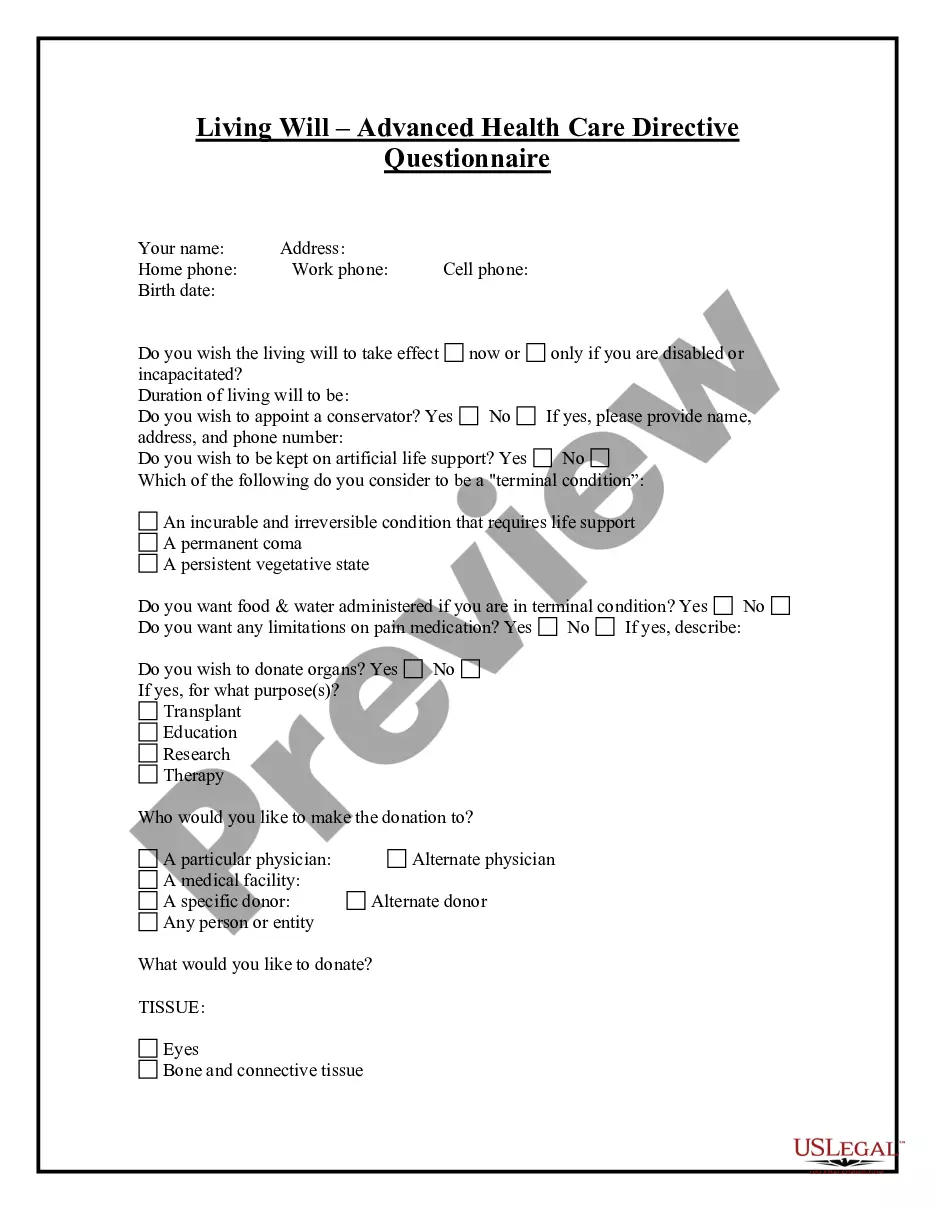
The Statutory Living Will is a legal document that allows you to communicate your healthcare preferences regarding life-sustaining procedures in the event that you are unable to make those decisions yourself. It provides guidance to medical personnel about your wishes if you are diagnosed with a terminal condition and there is no reasonable expectation of recovery. This form specifically allows you to refuse life-sustaining measures that would only extend the dying process, ensuring that you receive comfort care instead.
Main sections of this form
- Declaration of preferences regarding withholding or withdrawing life-sustaining procedures.
- Instructions on the handling of artificially provided nourishment and fluids.
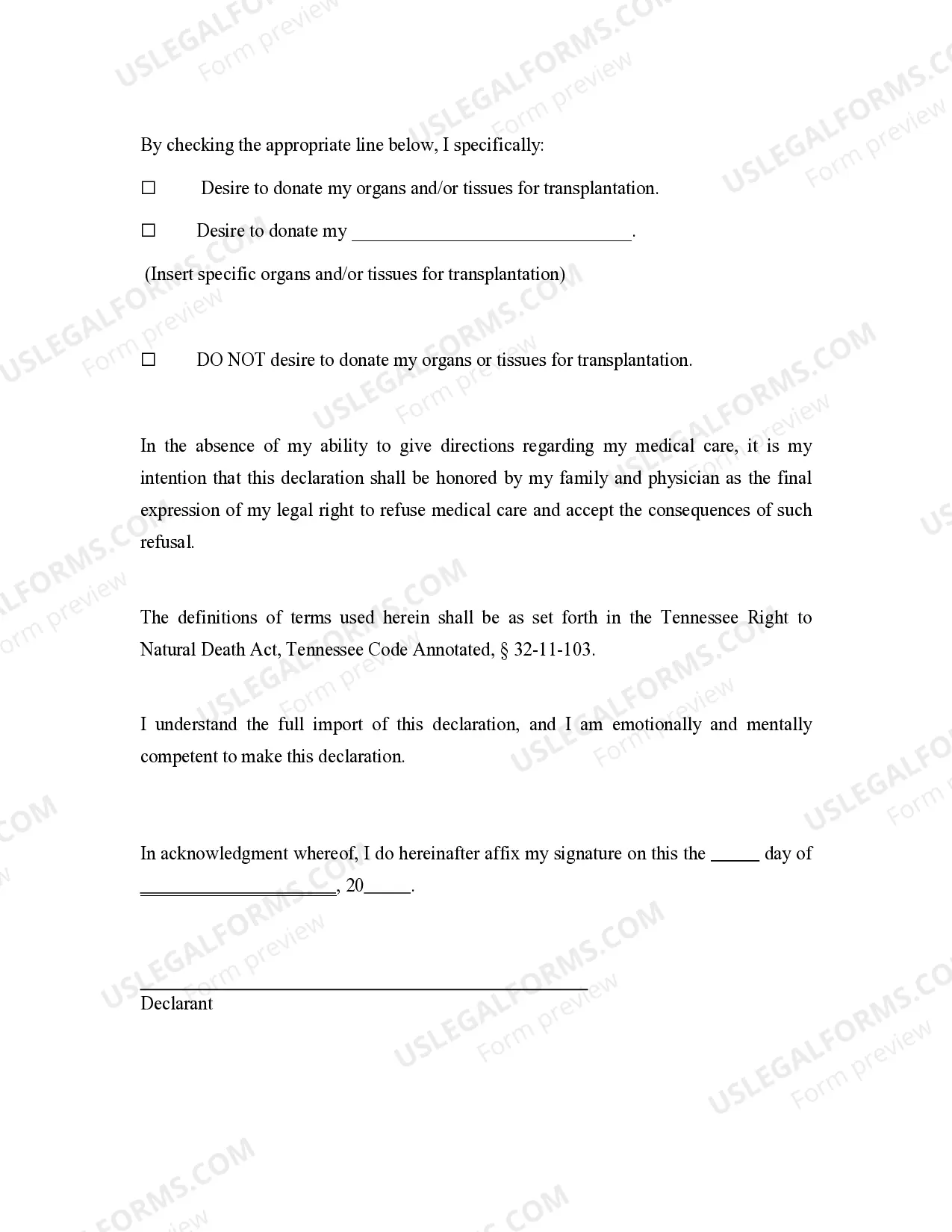
- Organ donor certification options.
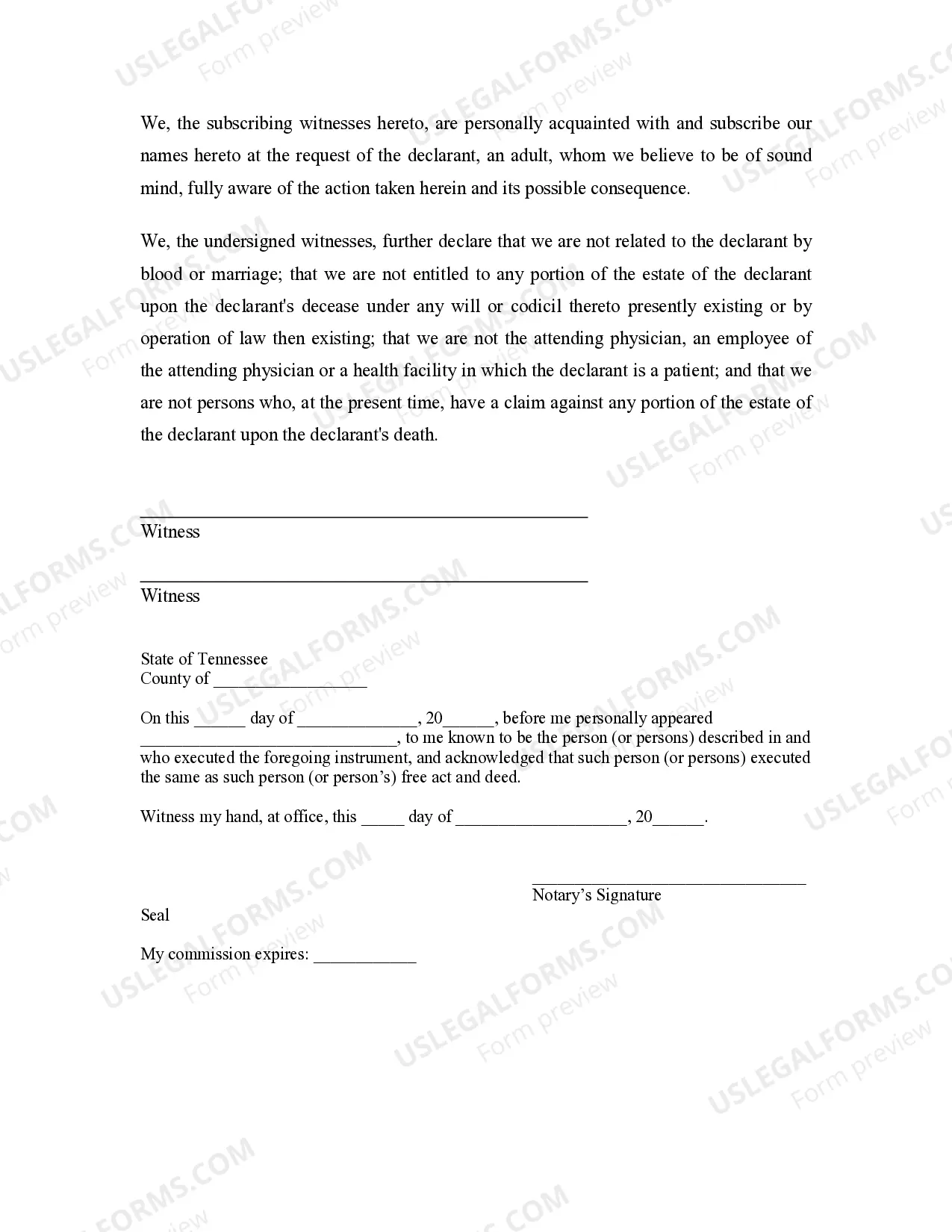
- Witness signatures and notary requirements (if applicable).
Common use cases
This form is useful when you want to ensure that your end-of-life medical care reflects your personal values and wishes. Use the Statutory Living Will if you have a terminal illness, are undergoing significant surgeries, or wish to proactively clarify your medical treatment preferences to avoid burdening your loved ones with decision-making at a difficult time.
Who this form is for
- Individuals aged 18 or older who wish to outline their healthcare preferences.
- Those diagnosed with a terminal condition or facing serious health risks.
- Persons wanting to relieve their family from the emotional burden of making medical decisions on their behalf.
Steps to complete this form
- Read the entire document carefully to understand your rights and options.
- Indicate your preferences regarding life-sustaining procedures by checking the appropriate box.
- Provide your personal information and the details of your healthcare provider.
- Sign and date the document in the presence of two witnesses.
- Consider having the form notarized if required by local law.
Is notarization required?
Notarization is not commonly needed for this form. However, certain documents or local rules may make it necessary. Our notarization service, powered by Notarize, allows you to finalize it securely online anytime, day or night.
Get your form ready online
Our built-in tools help you complete, sign, share, and store your documents in one place.
Make edits, fill in missing information, and update formatting in US Legal Forms—just like you would in MS Word.
Download a copy, print it, send it by email, or mail it via USPS—whatever works best for your next step.
Sign and collect signatures with our SignNow integration. Send to multiple recipients, set reminders, and more. Go Premium to unlock E-Sign.
If this form requires notarization, complete it online through a secure video call—no need to meet a notary in person or wait for an appointment.
We protect your documents and personal data by following strict security and privacy standards.

Make edits, fill in missing information, and update formatting in US Legal Forms—just like you would in MS Word.

Download a copy, print it, send it by email, or mail it via USPS—whatever works best for your next step.

Sign and collect signatures with our SignNow integration. Send to multiple recipients, set reminders, and more. Go Premium to unlock E-Sign.

If this form requires notarization, complete it online through a secure video call—no need to meet a notary in person or wait for an appointment.

We protect your documents and personal data by following strict security and privacy standards.
Common mistakes to avoid
- Failing to discuss your wishes with family members or healthcare providers.
- Not updating the form after significant life changes.
- Inadequately completing witness signatures or failing to follow the state's witness requirements.
Advantages of online completion
- Convenience of completing the form at your own pace and from the comfort of your home.
- Ability to easily edit and customize the document to fit your specific needs.
- Access to templates drafted by licensed attorneys, ensuring legal soundness.
Legal use & context
- This form is legally recognized under Tennessee law, providing clarity on your choices regarding medical care.
- It can play a critical role in ensuring that your wishes are followed by medical personnel and family members.
- Understanding the limitations and specifics of this form ensures it is used effectively in legal scenarios.
Looking for another form?
Form popularity
FAQ
Tennessee law requires testators to be 18 and of sound mind, while two or more witnesses must sign the will to make it valid.Signature and material provisions must be in handwriting of testator and handwriting must be proved by two witnesses (no witnesses necessary to the will).
A living will is a vital part of the estate plan.But your family cannot override your living will. They cannot take away your authority to make your own treatment and care plans. In fact, you always retain the right to override your own decisions.
Tennessee law requires testators to be 18 and of sound mind, while two or more witnesses must sign the will to make it valid.Signature and material provisions must be in handwriting of testator and handwriting must be proved by two witnesses (no witnesses necessary to the will).
You do not need a lawyer to make a living will, although you can get one from a lawyer if you prefer to. Every state has its own requirements for making a living will, so if you make one on your own, make sure you find a form that meets your state's requirements.
No, in Tennessee, you do not need to notarize your will to make it legal. However, Tennessee allows you to make your will "self-proving" and you'll need to go to a notary if you want to do that. A self-proving will speeds up probate because the court can accept the will without contacting the witnesses who signed it.
Generally, yes. The Tennessee statute on Wills recognizes the validity of holographic or handwritten Wills. T.C.A. § 32-1-105.
Living Wills are Binding Legal Documents Your living will needs to be a legal document. Telling someone what you want verbally or even writing it down is not enough.Your living will needs to cover what you wish to happen if you become terminally ill, permanently unconscious, or unable to convey your own wishes.
Living will. A living will is a written, legal document that spells out medical treatments you would and would not want to be used to keep you alive, as well as your preferences for other medical decisions, such as pain management or organ donation. In determining your wishes, think about your values.
To be valid, a living will must meet state requirements regarding notarization or witnesses. A living will can be revoked at any time. The document can take effect as soon as it's signed, or only when it's determined that the person can no longer communicate his or her wishes about treatment.