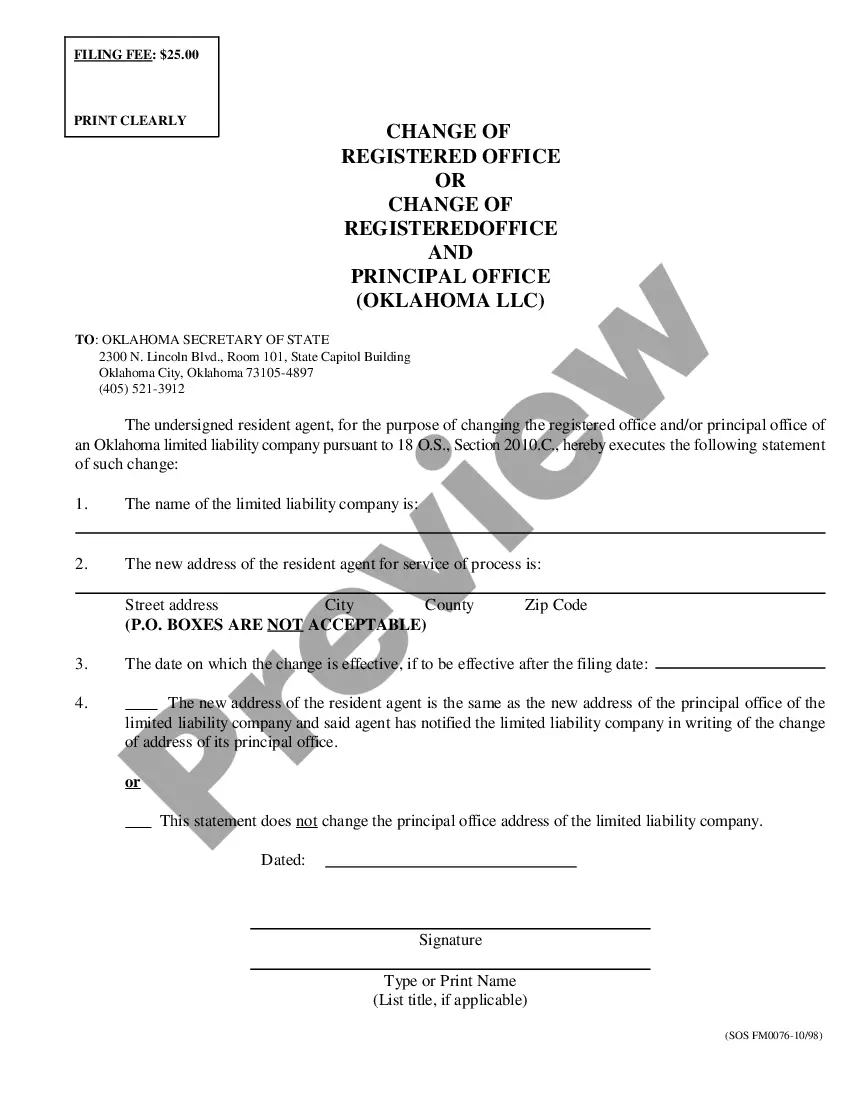
Tennessee Letter from Landlord to Tenant for Failure to use electrical, plumbing, sanitary, heating, ventilating, air conditioning and other facilities in a reasonable manner
Understanding this form
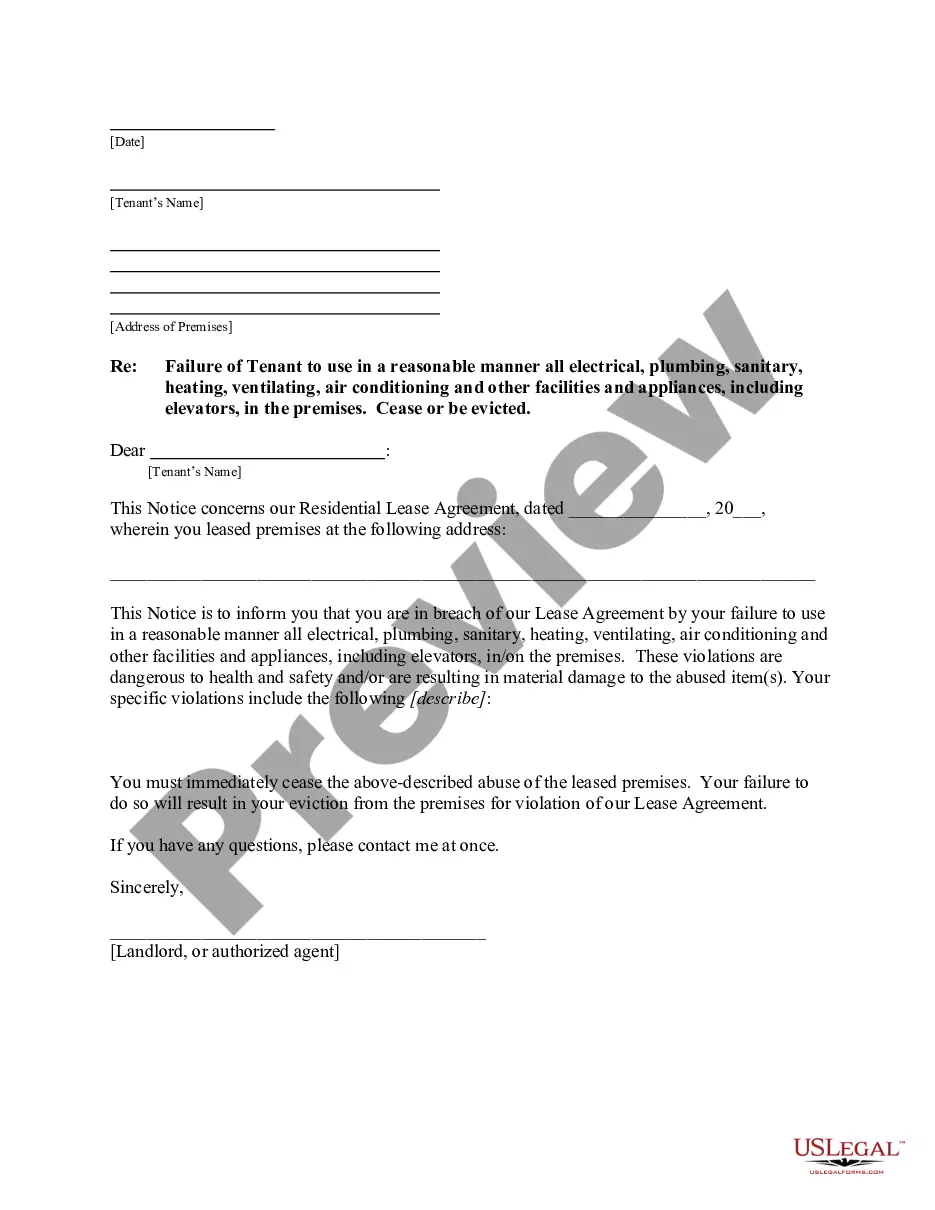
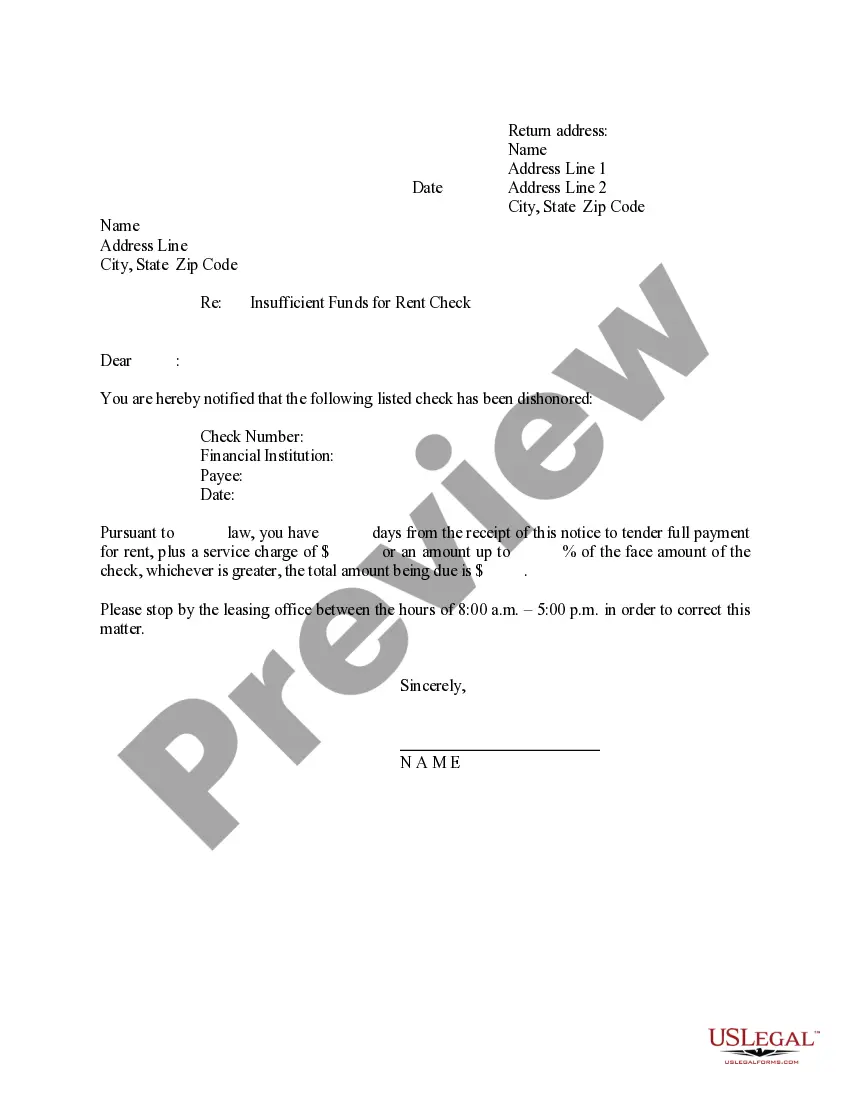
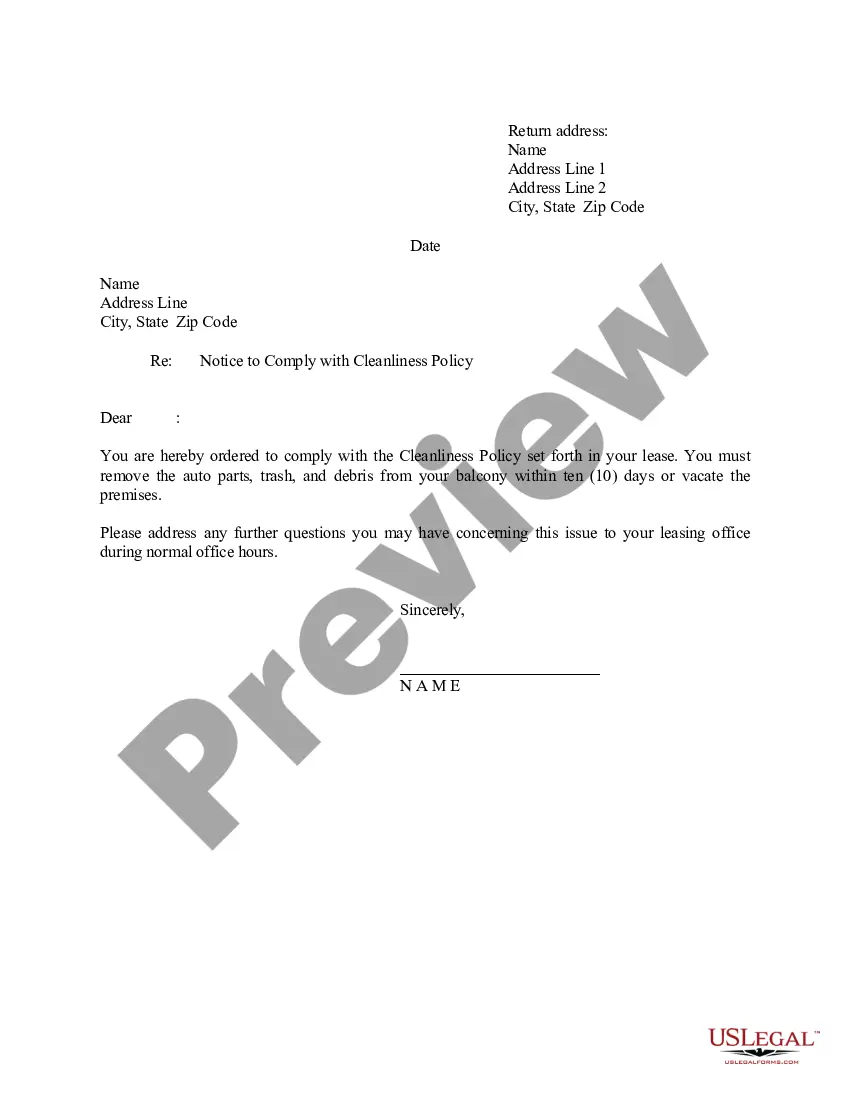
This form is a letter from a landlord to a tenant addressing the tenant's improper use of essential facilities like electrical, plumbing, and heating systems. Its primary purpose is to notify the tenant of their lease violations and to warn them that continued misuse may lead to eviction. This form serves as a formal communication that emphasizes the landlord's rights and responsibilities in maintaining property standards.
What’s included in this form
- Identification of the landlord and tenant.
- Details of the lease agreement and specific violations.
- Statement of the required standards for using facilities.
- Consequences for continued non-compliance, including potential eviction.
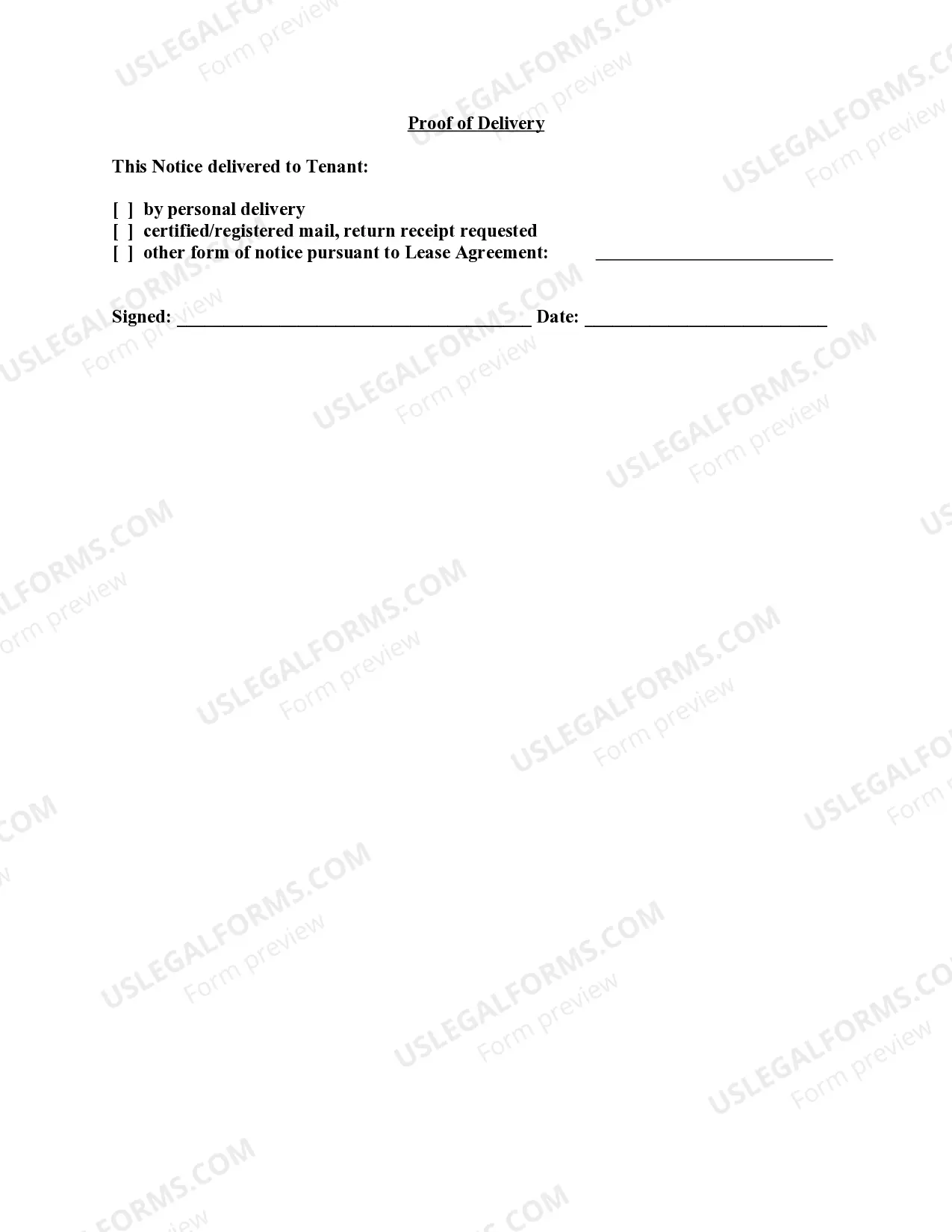
- Proof of delivery method (personal delivery or certified mail).


When to use this form
Who needs this form
- Landlords seeking to address tenant complaints about facility usage.
- Property managers representing landlords in residential leases.
- Legal representatives advising landlords on lease enforcement.
Steps to complete this form
- Identify the landlord and the tenant by entering their names and addresses.
- State the details of the lease agreement, including effective dates and terms.
- Detail the specific facilities that are being misused and outline the expectations for proper use.
- Provide a clear warning regarding potential eviction if the issues are not resolved.
- Choose the method of delivery for the notice and ensure it is documented.
Does this document require notarization?
This form usually doesn’t need to be notarized. However, local laws or specific transactions may require it. Our online notarization service, powered by Notarize, lets you complete it remotely through a secure video session, available 24/7.
Get your form ready online
Our built-in tools help you complete, sign, share, and store your documents in one place.
Make edits, fill in missing information, and update formatting in US Legal Forms—just like you would in MS Word.
Download a copy, print it, send it by email, or mail it via USPS—whatever works best for your next step.
Sign and collect signatures with our SignNow integration. Send to multiple recipients, set reminders, and more. Go Premium to unlock E-Sign.
If this form requires notarization, complete it online through a secure video call—no need to meet a notary in person or wait for an appointment.
We protect your documents and personal data by following strict security and privacy standards.

Make edits, fill in missing information, and update formatting in US Legal Forms—just like you would in MS Word.

Download a copy, print it, send it by email, or mail it via USPS—whatever works best for your next step.

Sign and collect signatures with our SignNow integration. Send to multiple recipients, set reminders, and more. Go Premium to unlock E-Sign.

If this form requires notarization, complete it online through a secure video call—no need to meet a notary in person or wait for an appointment.

We protect your documents and personal data by following strict security and privacy standards.
Typical mistakes to avoid
- Failing to include specific lease terms related to facility use.
- Not providing sufficient details about the misuse of facilities.
- Omitting the delivery method, which is crucial for proof of notice.
Why complete this form online
- Convenience of immediate download and use.
- Editability allows customization to suit specific situations.
- Reliable templates drafted by licensed attorneys ensure legal compliance.
Legal use & context
- The notice serves as a formal step before eviction proceedings.
- Properly documenting misuses can support further legal actions if necessary.
- It is legally binding once delivered in accordance with local regulations.
What to keep in mind
- This form is essential for communicating lease violations related to facility use.
- A formal notice is a required step before possible eviction proceedings.
- Ensure compliance with state-specific regulations when completing this form.
Looking for another form?





Form popularity
FAQ
You may rent without any formal agreement, or you may have a lease agreement. The most common type of renter in Tennessee is a renter who signs a lease agreement to pay rent each month throughout the year. Renters may be asked to provide a security deposit. Lease agreements are legally binding contracts.
Landlord Responsibilities It's a landlord's responsibility to ensure that a rental property's electrical system, from outlets to light fixtures, are all operating properly before the tenant takes possession of the unit.A working electrical system, including electrical outlets is an essential part of a habitable unit.
When you rent, your landlord is responsible for maintaining the functional aspects of your home such as plumbing, electricity, and heating. Landlords must also generally take action when flooding, a clogged pipe, pest infestation, or other problems occur.
Making Repairs Landlords are required to make and pay for any repairs to make the unit livable that are not caused by the tenant. Sending notice. If a tenant request repairs, they must put their request in writing to the landlord. The landlord will then have 14 days to make necessary repairs.
You may think of air conditioning when you hear utility, but in Tennessee landlords are not required to provide air unless your lease says so.
If there is a problem, such as a burst pipe resulting from the landlord's failure to maintain the property, the tenant cannot be held responsible. If a tenant has detected a problem and reported it to the landlord, it is the owner's responsibility to fix them.
A. Landlords are responsible for most repairs in a rental property, including any appliances provided by the landlord for making use of the supply of water, gas, and electricity. Landlords are not responsible for repairs to appliances owned by their tenants.
If the repairs are not made, you can sue the landlord in Small Claims Court. You cannot repair these things and deduct the cost or stop paying rent without the landlord's permission.
As stated in the Landlord and Tennant Act 1985, it is the landlord's responsibility to maintain their drainage, pipes and other areas of plumbing. If a drain becomes blocked through tenant misuse however, then the tenant is liable for the cost of repairs.