Tennessee Letter from Tenant to Landlord containing Notice to Cease Unjustified Nonacceptance of Rent
What is this form?
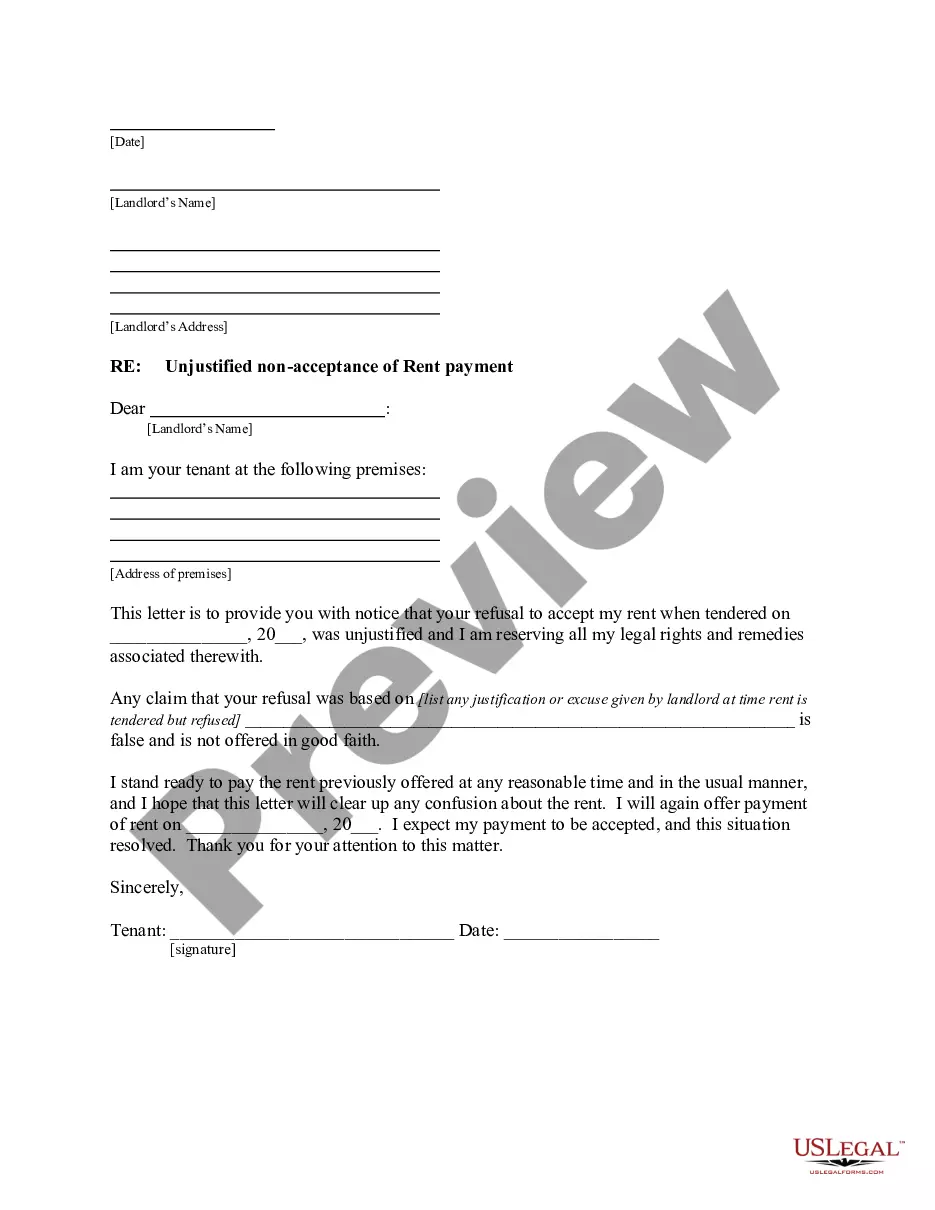
This form is a Letter from Tenant to Landlord containing Notice to Cease Unjustified Nonacceptance of Rent. It is a formal notice sent by a tenant to inform their landlord that the refusal to accept rent payments is considered unjustified. This document is essential for protecting tenantsâ rights and laying the groundwork for any potential legal claims associated with the landlord's nonacceptance of rent. Unlike typical rent payment notices, this form specifically addresses unjustified refusals and reserves the tenant's legal rights.
Key parts of this document
- A declaration of the landlord's unjustified refusal to accept rent.
- A statement asserting the tenant's readiness to pay rent at any reasonable time.
- A request for clarification regarding the rental payment issues.
- Identification of specific dates for rent payment offers.
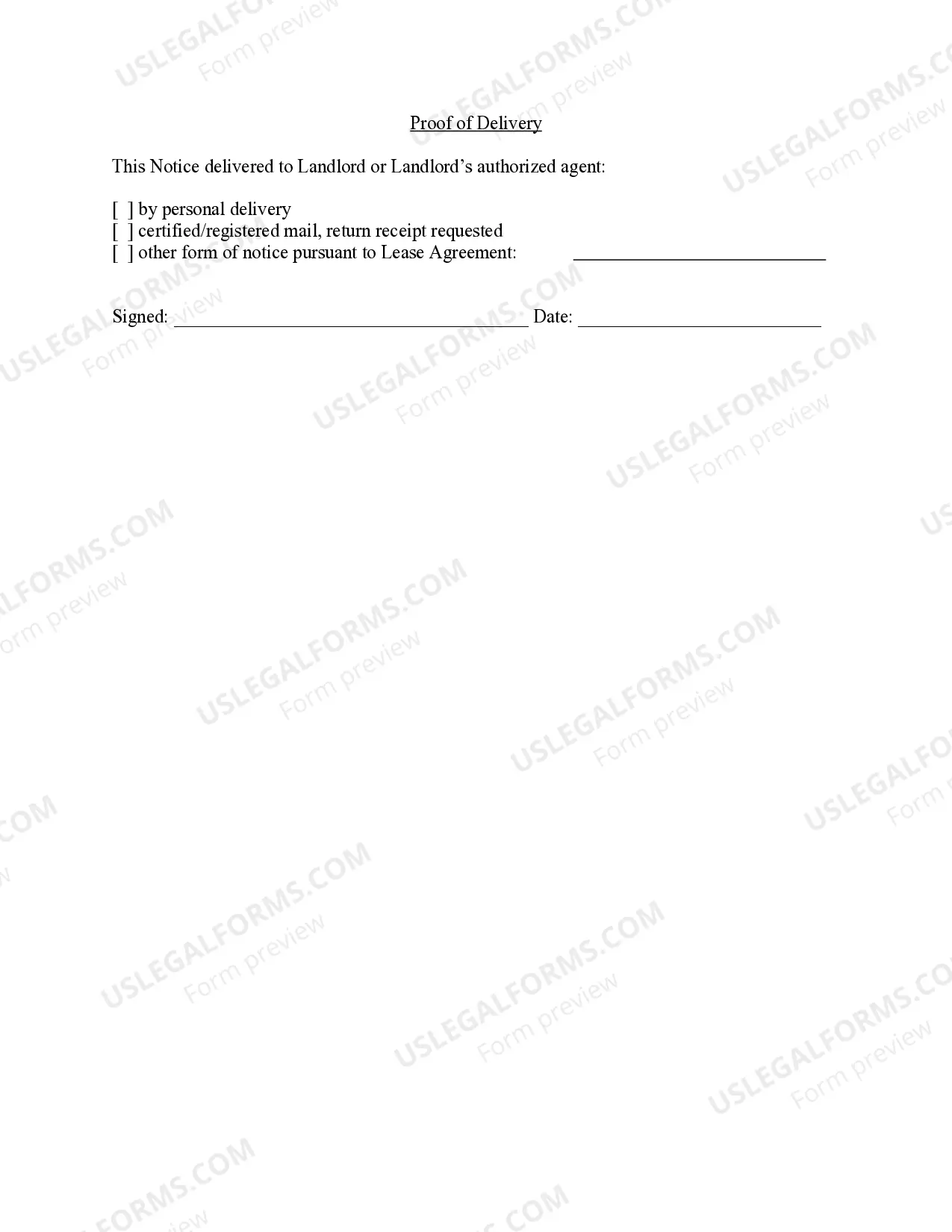
- Provision for documenting proof of delivery to the landlord.



Common use cases
You should use this form if your landlord refuses to accept your rent payments without valid justification. This notice is particularly useful if disputes arise regarding rental agreements or if the landlord's actions could lead to eviction or other legal consequences. It's important to communicate and document disagreements easily to maintain your rights as a tenant.
Who this form is for
This form is intended for:
- Tenants who face unjustified refusals from their landlords regarding rent payments.
- Individuals who want to ensure their rights are protected when dealing with payment disputes.
- Those preparing for possible legal action due to landlords' unacceptable behavior regarding rent acceptance.
How to complete this form
To complete this form, follow these steps:
- Identify the parties involved: include your name (tenant) and the landlord's name.
- Specify the reason for sending the letter, stating the landlord's refusal to accept rent.
- Enter the specific dates you attempted to pay rent.
- Reiterate your willingness to pay rent and indicate when you will offer payment again.
- Sign and date the letter, stating proof of delivery to the landlord.
Notarization requirements for this form
This form does not typically require notarization unless specified by local law. However, consider notarizing it to add extra legal weight and validation to your claim, especially if you may need to present it in court.
Get your form ready online
Our built-in tools help you complete, sign, share, and store your documents in one place.
Make edits, fill in missing information, and update formatting in US Legal Forms—just like you would in MS Word.
Download a copy, print it, send it by email, or mail it via USPS—whatever works best for your next step.
Sign and collect signatures with our SignNow integration. Send to multiple recipients, set reminders, and more. Go Premium to unlock E-Sign.
If this form requires notarization, complete it online through a secure video call—no need to meet a notary in person or wait for an appointment.
We protect your documents and personal data by following strict security and privacy standards.

Make edits, fill in missing information, and update formatting in US Legal Forms—just like you would in MS Word.

Download a copy, print it, send it by email, or mail it via USPS—whatever works best for your next step.

Sign and collect signatures with our SignNow integration. Send to multiple recipients, set reminders, and more. Go Premium to unlock E-Sign.

If this form requires notarization, complete it online through a secure video call—no need to meet a notary in person or wait for an appointment.

We protect your documents and personal data by following strict security and privacy standards.
Common mistakes
- Failing to document all instances of the landlord's refusal to accept rent.
- Not addressing the letter directly to the landlord.
- Neglecting to keep a copy of the letter for your records.
- Not providing adequate proof of delivery, which can complicate legal recourse.
Why complete this form online
- Convenient access to legally sound forms crafted by licensed attorneys.
- Ability to edit or personalize the document quickly to suit your specific situation.
- Reliability of using a professionally drafted form to protect your rights.
- Immediate download and use, saving time compared to traditional legal consultations.
- The letter serves as evidence of the tenant's intention to pay rent, which may be useful in legal disputes.
- It helps in documenting the tenant's claim against the landlord's refusal to accept rent.
- The form reinforces the tenant's legal rights and remedies in relation to nonacceptance of rent.
Summary of main points
- This letter serves to assert your rights as a tenant against unjustified rent refusals.
- Proper completion ensures that you retain a record of your attempts to resolve payment issues with your landlord.
- Utilizing this form can help lay the groundwork for any future legal actions if necessary.
- Ensure compliance with your state laws to enhance the effectiveness of the notice.
Looking for another form?

Form popularity
FAQ
In California, habitability includes the following specific warranties: A dwelling also may be considered uninhabitable (unlivable) if it substantially lacks any of the following: Effective waterproofing and weather protection of roof and exterior walls, including unbroken windows and doors.
Uninhabitable conditions can include dangerous ones, such as holes in the floor, unsafe or exposed wiring, or non-working air conditioning in dangerously hot summer months. Gross infestations of roaches, fleas or other pests are also uninhabitable conditions.
Title 66 - Property. Chapter 28 - Uniform Residential Landlord and Tenant Act. (b) The landlord may enter the premises without consent of the tenant in case of emergency.
Your landlord can end the let at any time by serving a written 'notice to quit'. The notice period will depend on the tenancy or agreement, but is often at least 4 weeks.
If you think your landlord is violating the Fair Housing Act, you can get that landlord in trouble by filing a complaint at HUD.gov. Your remedy for breach of quiet enjoyment is to terminate the lease and move or sue in small claims court.
You are responsible for: paying your rent on time, paying any late fees, keeping the place clean and safe, not letting anyone else damage it, not breaking the law, disposing of your garbage, and following your landlord's rules. If you break your lease, then it may become a legal issue.
Notice Requirements for Tennessee Landlords A landlord can simply give you a written notice to move, allowing you 30 days as required by Tennessee law and specifying the date on which your tenancy will end.
The first thing a landlord must do is provide the tenant with a written notice that an eviction will occur in 30 days if the tenant does not comply with the terms of the lease within 14 days. This notice is required by T.C.A. Section 66-28-505.