South Carolina Letter from Tenant to Landlord containing Notice of termination for landlord's noncompliance with possibility to cure
What this document covers
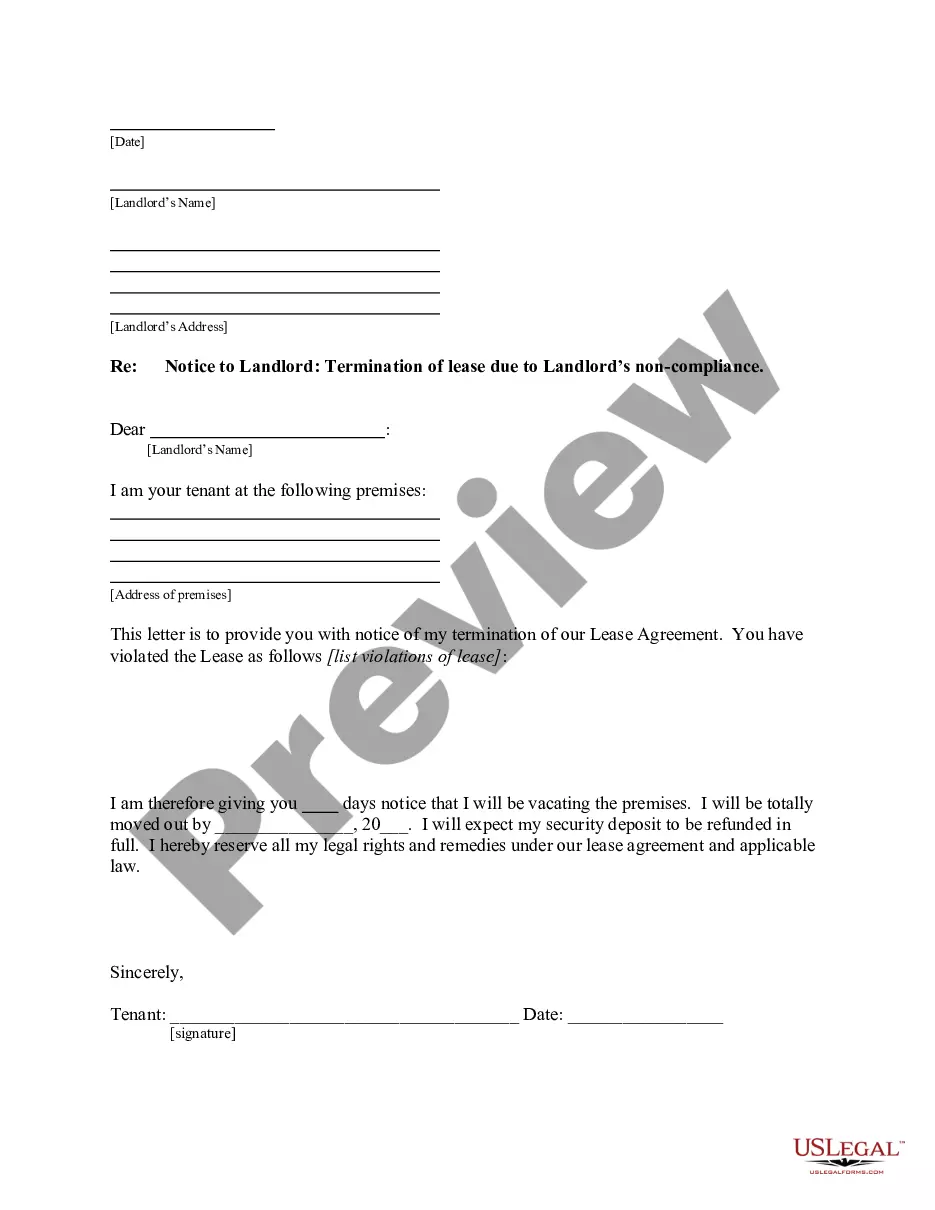
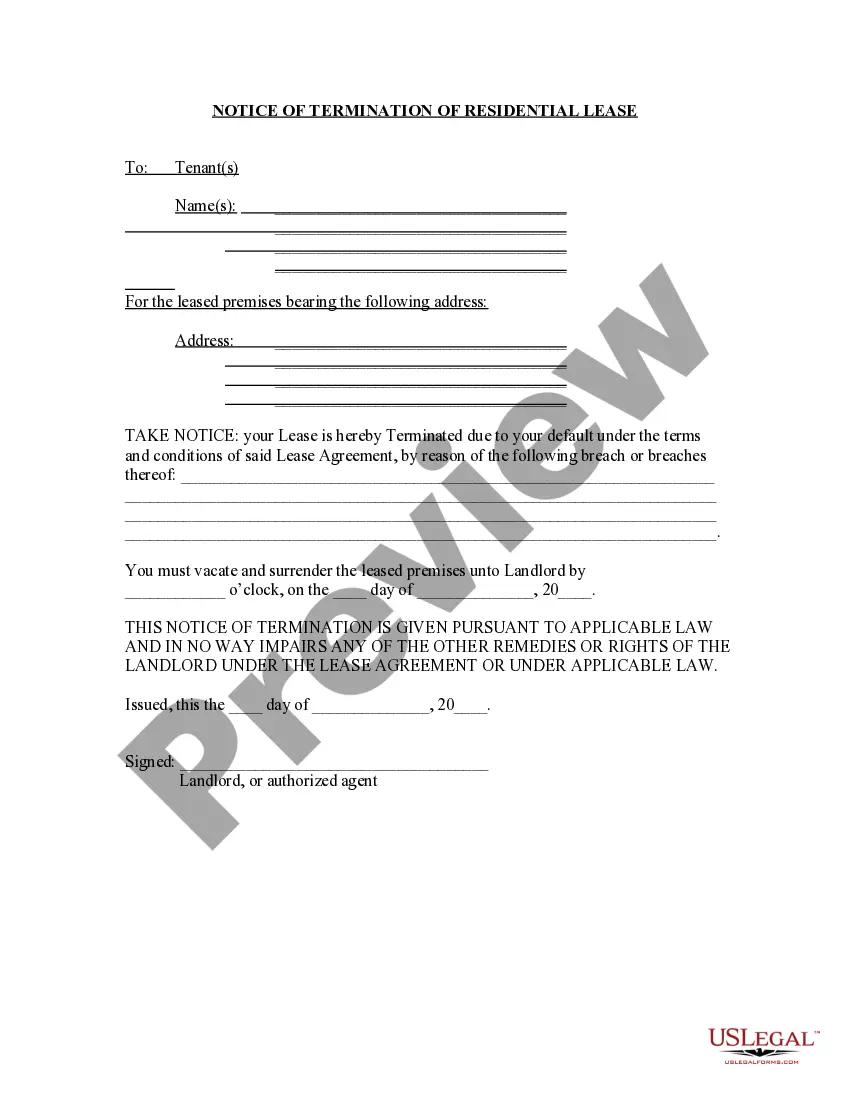
This form is a Letter from Tenant to Landlord containing Notice of Termination for Landlord's Noncompliance with Possibility to Cure. It serves as a formal notification that a tenant is vacating the premises due to the landlord's failure to comply with lease terms. This notice grants the landlord an opportunity to address the issues before the tenant departs. Unlike standard termination letters, this form specifically highlights the landlord's noncompliance as the reason for termination.
Main sections of this form
- Tenant's name and signature
- Date of the notice
- Detailed description of the landlord's noncompliance
- Statement of intent to vacate
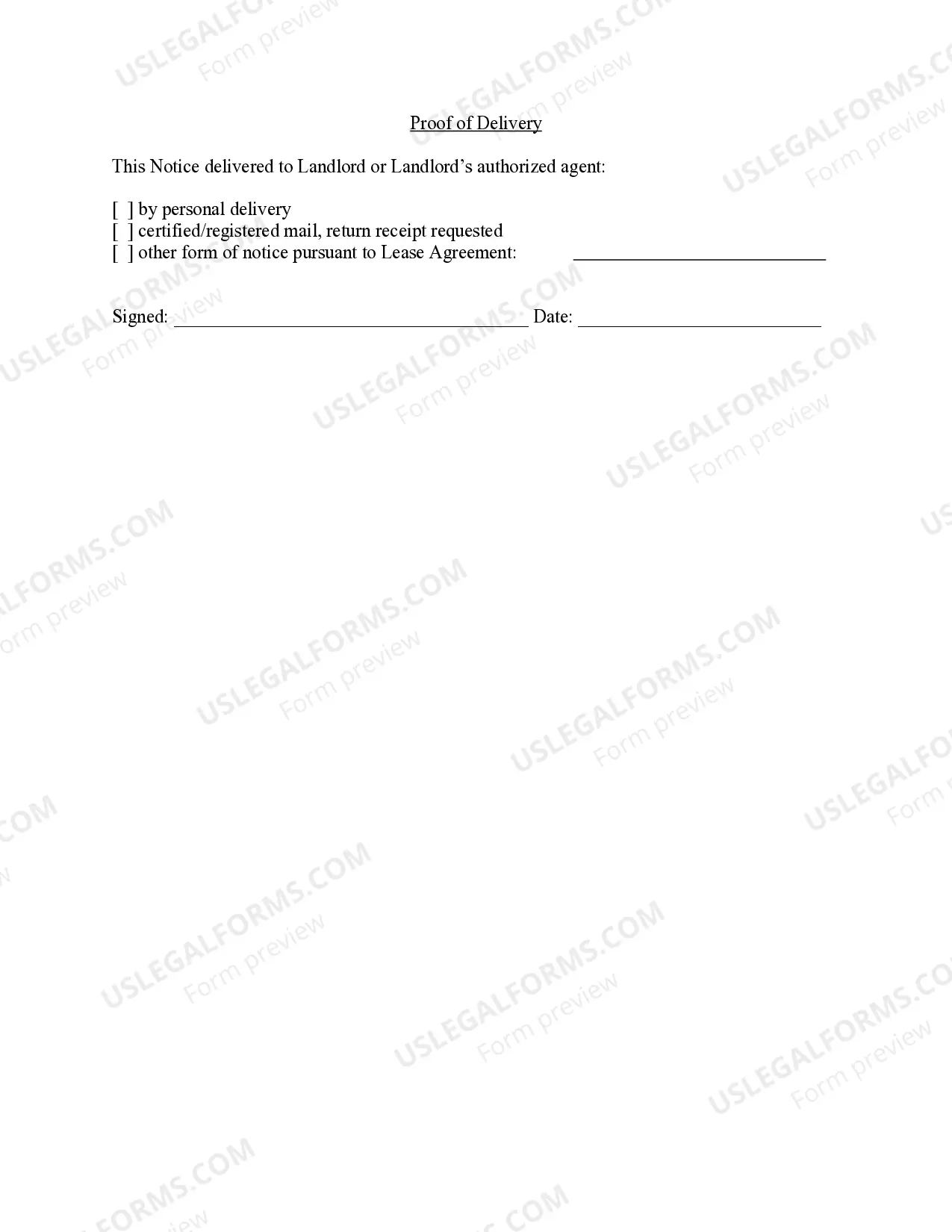
- Proof of delivery method



When this form is needed
You should use this form when you, as a tenant, have encountered issues with your landlord that constitute a violation of your lease agreement. This may include failure to perform necessary repairs, breaches of lease provisions, or other noncompliance issues. If you prefer to remain in the property but wish to alert the landlord of the breaches and allow them a chance to correct the issue, this notice is essential.
Who should use this form
- Residential tenants facing landlord breaches
- Tenants who want to formally notify their landlord of lease violations
- Individuals seeking to preserve their rights under the lease agreement before vacating
How to prepare this document
- Identify yourself as the tenant and sign the document.
- Enter the date when you are sending the notice.
- Clearly outline the specific noncompliance issues related to the landlordâs obligations.
- Include your intent to vacate the premises and the effective date of termination.
- Choose and indicate the method of delivery for the notice.
Notarization guidance
This form does not typically require notarization unless specified by local law. It is advisable to check your state regulations for any additional requirements regarding the termination notice.
Get your form ready online
Our built-in tools help you complete, sign, share, and store your documents in one place.
Make edits, fill in missing information, and update formatting in US Legal Forms—just like you would in MS Word.
Download a copy, print it, send it by email, or mail it via USPS—whatever works best for your next step.
Sign and collect signatures with our SignNow integration. Send to multiple recipients, set reminders, and more. Go Premium to unlock E-Sign.
If this form requires notarization, complete it online through a secure video call—no need to meet a notary in person or wait for an appointment.
We protect your documents and personal data by following strict security and privacy standards.

Make edits, fill in missing information, and update formatting in US Legal Forms—just like you would in MS Word.

Download a copy, print it, send it by email, or mail it via USPS—whatever works best for your next step.

Sign and collect signatures with our SignNow integration. Send to multiple recipients, set reminders, and more. Go Premium to unlock E-Sign.

If this form requires notarization, complete it online through a secure video call—no need to meet a notary in person or wait for an appointment.

We protect your documents and personal data by following strict security and privacy standards.
Mistakes to watch out for
- Failing to clearly describe the landlord's noncompliance issues.
- Not providing sufficient notice period as required by state law.
- Neglecting to keep a copy for your records after delivery.
- Using incorrect delivery methods that are not legally recognized.
Why complete this form online
- Instant access to professionally drafted legal content.
- Easy editing and customization options to fit your specific needs.
- Reliable format ensured to meet legal standards in your state.
Legal use & context
- Provides legal grounds for tenants to terminate leases due to landlord noncompliance.
- Ensures tenants follow proper notification procedures to protect their rights.
- Highlights the landlord's obligation to address and resolve issues to avoid lease termination.
What to keep in mind
- This form is essential for tenants facing landlord noncompliance.
- It provides an opportunity for a landlord to correct breaches before lease termination.
- Ensure all details are correctly filled out for legal compliance.
Looking for another form?
Form popularity
FAQ
If the tenant refuses, you are permitted to send them a notice to agree or quit the property. The tenant refusing you access constitutes a breach in the lease agreement, so they could be evicted if they continue to deny access.
The landlord verification form is a document used by a landlord when verifying the previous rental information of an applicant for tenancy. The requesting landlord must send the form to the applicant's current or past landlord in order to obtain all details related to the tenancy of the individual.
The rental property address, including unit number (if applicable) The names of all tenants on the lease agreement. The date the lease violation notice was written. The specific reason for the notice. The time and date the violation occurred (if applicable)
Be calm, objective, and rational. Keep written records of everything. Teach tenants how they should treat you. Try to get your tenants on your side. Ask the terrible tenants to leave. Begin the eviction process.
If you don't move out by the day in the notice, the landlord can ask the NSW Civil and Administrative Tribunal (NCAT) for a termination order. A termination order means the rental agreement is ended. The order will state the day when you must give vacant possession that is, you move out and return the keys.
A lease is automatically void when it is against the law, such as a lease for an illegal purpose. In other circumstances, like fraud or duress, a lease can be declared void at the request of one party but not the other.
Your name, and the landlord's name and address. The date you're writing the letter. Informing the landlord you're breaking your lease early. The reason why you're breaking your lease. The building and apartment you're vacating. The date by which you're vacating.
If you refuse access, the landlord/agent can apply to the Tribunal for an order that authorises them or any other person to enter the premises.
Yes, your tenant is within their rights to refuse you access to the property. In a lot of cases, tenants will refuse because the date and time isn't convenient for them and will suggest an alternative date or ask you to rearrange. However, some tenants will persistently try to obstruct you from entering the property.