Rhode Island Revocation of Statutory Durable Power of Attorney for Health Care
Understanding this form
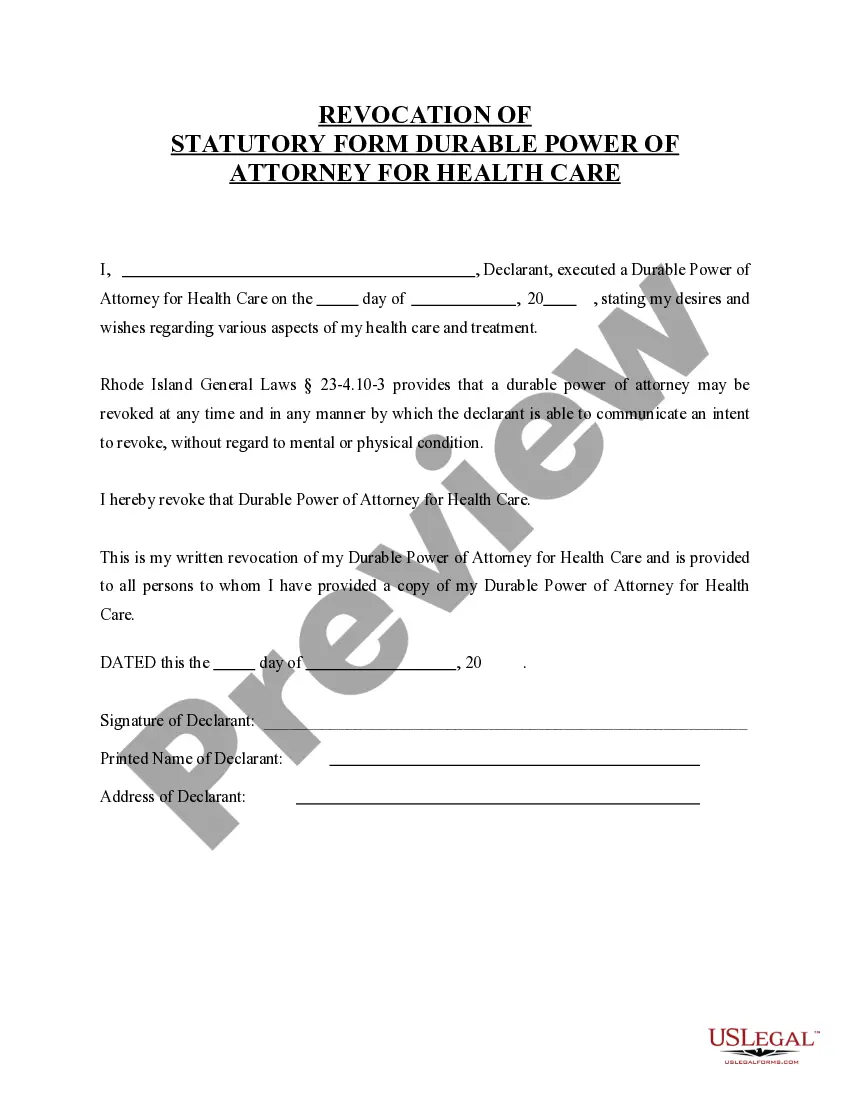
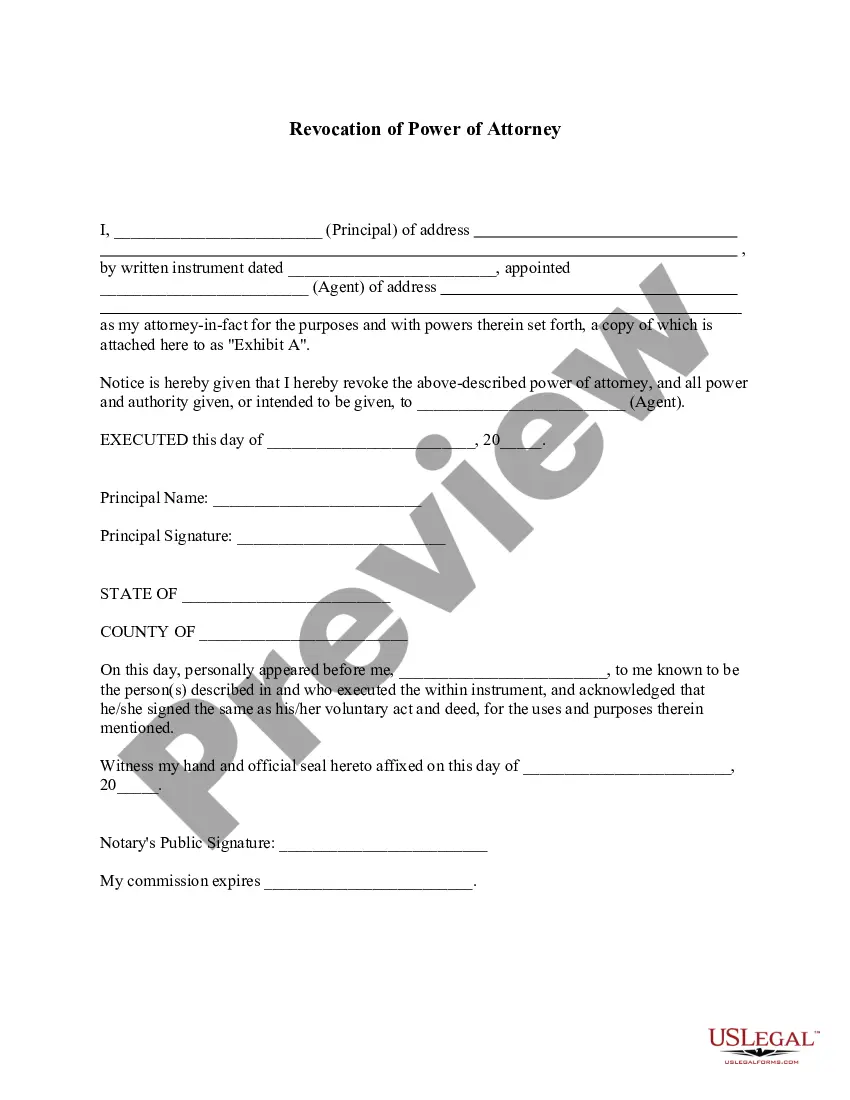
The Revocation of Statutory Durable Power of Attorney for Health Care form is a legal document that allows you to revoke the authority granted to an agent or attorney-in-fact to make health care decisions on your behalf. Unlike a standard durable power of attorney, this form specifically addresses the revocation process, ensuring that your wishes regarding health care decisions are clearly communicated and legally recognized.
Main sections of this form
- Statement of revocation: Clearly states the intention to revoke the existing durable power of attorney.
- Identification of the declarant: Specifies the person revoking the power of attorney.
- Reference to the original document: References the original durable power of attorney for clarity.
- Signature line: Contains the signature of the declarant to validate the revocation.
When to use this document
This form should be used when you wish to terminate the authority of a person previously given power to make health care decisions on your behalf. It is essential if you have designated a different agent or if your circumstances or preferences regarding health-related decisions have changed.
Who should use this form
- Individuals who have previously designated a durable power of attorney for health care.
- Persons who wish to revoke their existing health care decisions authority.
- Those who want to ensure their current medical directives are respected.
Steps to complete this form
- Identify yourself as the declarant and provide your full name.
- Reference the durable power of attorney you are revoking to eliminate ambiguity.
- Clearly state your intention to revoke this authority.
- Sign and date the document to formalize the revocation.
Notarization guidance
Notarization is required for this form to take effect. Our online notarization service, powered by Notarize, lets you verify and sign documents remotely through an encrypted video session, available 24/7.
Get your form ready online
Our built-in tools help you complete, sign, share, and store your documents in one place.
Make edits, fill in missing information, and update formatting in US Legal Forms—just like you would in MS Word.
Download a copy, print it, send it by email, or mail it via USPS—whatever works best for your next step.
Sign and collect signatures with our SignNow integration. Send to multiple recipients, set reminders, and more. Go Premium to unlock E-Sign.
If this form requires notarization, complete it online through a secure video call—no need to meet a notary in person or wait for an appointment.
We protect your documents and personal data by following strict security and privacy standards.

Make edits, fill in missing information, and update formatting in US Legal Forms—just like you would in MS Word.

Download a copy, print it, send it by email, or mail it via USPS—whatever works best for your next step.

Sign and collect signatures with our SignNow integration. Send to multiple recipients, set reminders, and more. Go Premium to unlock E-Sign.

If this form requires notarization, complete it online through a secure video call—no need to meet a notary in person or wait for an appointment.

We protect your documents and personal data by following strict security and privacy standards.
Avoid these common issues
- Failing to clearly reference the original durable power of attorney, which can lead to confusion.
- Not signing and dating the form, which is necessary for it to be legally valid.
- Assuming that verbal communication alone is sufficient to revoke authority.
Benefits of completing this form online
- Convenience: Complete the form at your own pace and from your preferred location.
- Editability: Easily modify your form to ensure all information is accurate before finalizing.
- Reliability: Forms are drafted by licensed attorneys to meet legal standards.
Summary of main points
- The Revocation of Statutory Durable Power of Attorney for Health Care is essential for communicating changes in health care decision-making authority.
- Completion of the form ensures your current health care wishes are respected and legally valid.
- Use this form if you want to revoke a previously named agent for health care decisions.
Looking for another form?

Form popularity
FAQ
You can revoke a Medical Power of Attorney even if you cannot make your own medical decisions. To cancel it, you can: Tell the agent, in person or in writing,Sign a new Medical Power of Attorney.
In California and in many other states, there are POA forms specific to healthcare, and medical decisions are excluded from the general durable POAs. This means you can designate one person to be your agent for health decisions, and another for financial or legal decisions.
A power of attorney (POA) is a legal document that allows you to appoint someone to act on your behalf, usually in financial or medical situations.An agent can never transfer their authority to another person unless the POA explicitly permits it.
Draft a deed of Revocation of the PoA. A notice of revocation of the PoA should be put in a local or national newspaper such that persons with whom the PoA has been interacting with on behalf of the authorising person is informed about the revocation.
Until an attorney-in-fact's powers are properly revoked, they can continue to legally act for the principal. To cancel a Power of Attorney, the principal can create a document called a Revocation of Power of Attorney or create a new Power of Attorney that indicates the previous Power of Attorney is revoked.
Revoke Your Current Power of Attorney. To change or cancel your current power of attorney, you should complete a formal, written revocation. Notify Your Power of Attorney. Once you complete your revocation, notify your agent of the cancellation in writing. Notify Relevant Third Parties. Execute a New Power of Attorney.
A medical power of attorney is a legal document that names one person the health care agent of another person. The agent has the ability to make health care decisions and the responsibility to make sure doctors and other medical personnel provide necessary and appropriate care according to the patient's wishes.
Unless the power of attorney states otherwise, and they usually don't, a revocation of a POA must be made in writing. A verbal revocation may not be enough.A revocation will reference the existing POA and the current attorney-in-fact and revoke the document and the powers granted.
A principal can revoke the power of attorney while he or she is still mentally competent. A principal can complete a formal written document requesting the revocation of a power of attorney at any time, for any reason, while he or she is still competent. The principal must sign and notarize the revocation request.