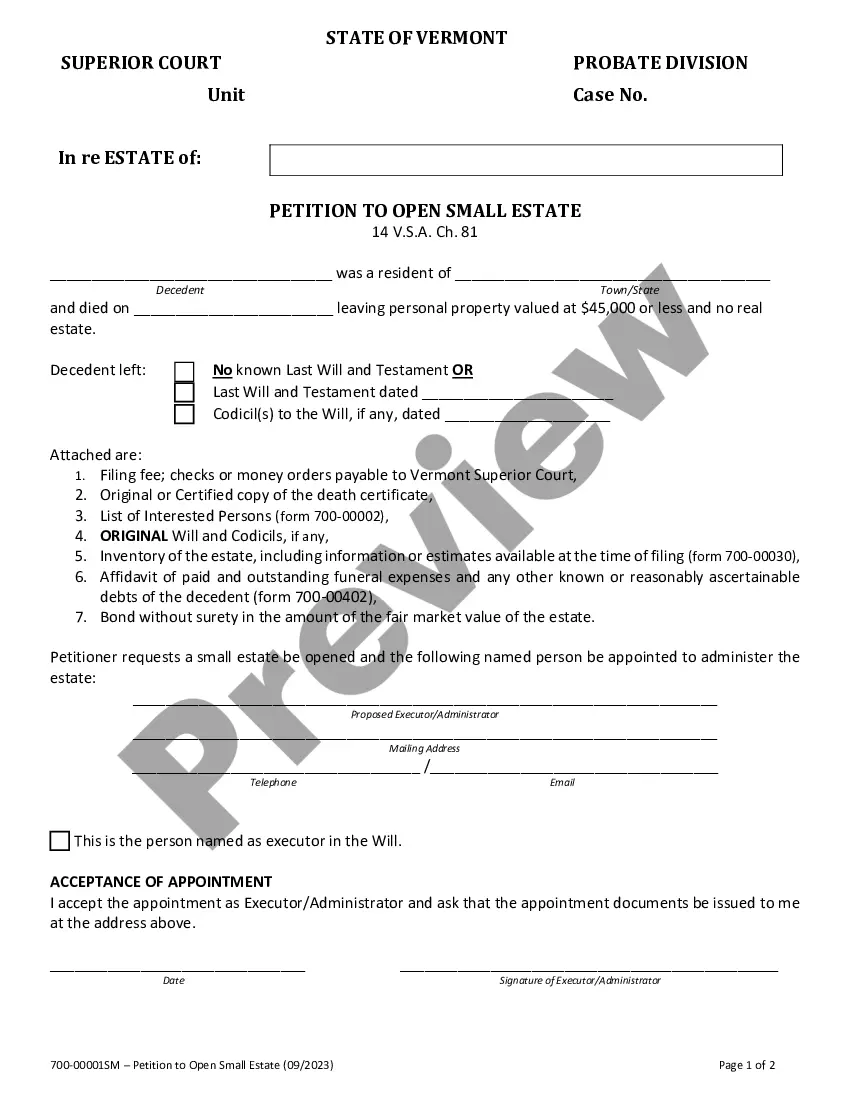
Vermont Probate Forms
We offer thousands of Probate forms. Some of the forms offered are listed by area below. For others, please use our search engine.
Vermont Probate Forms FAQ
What is probate?Â
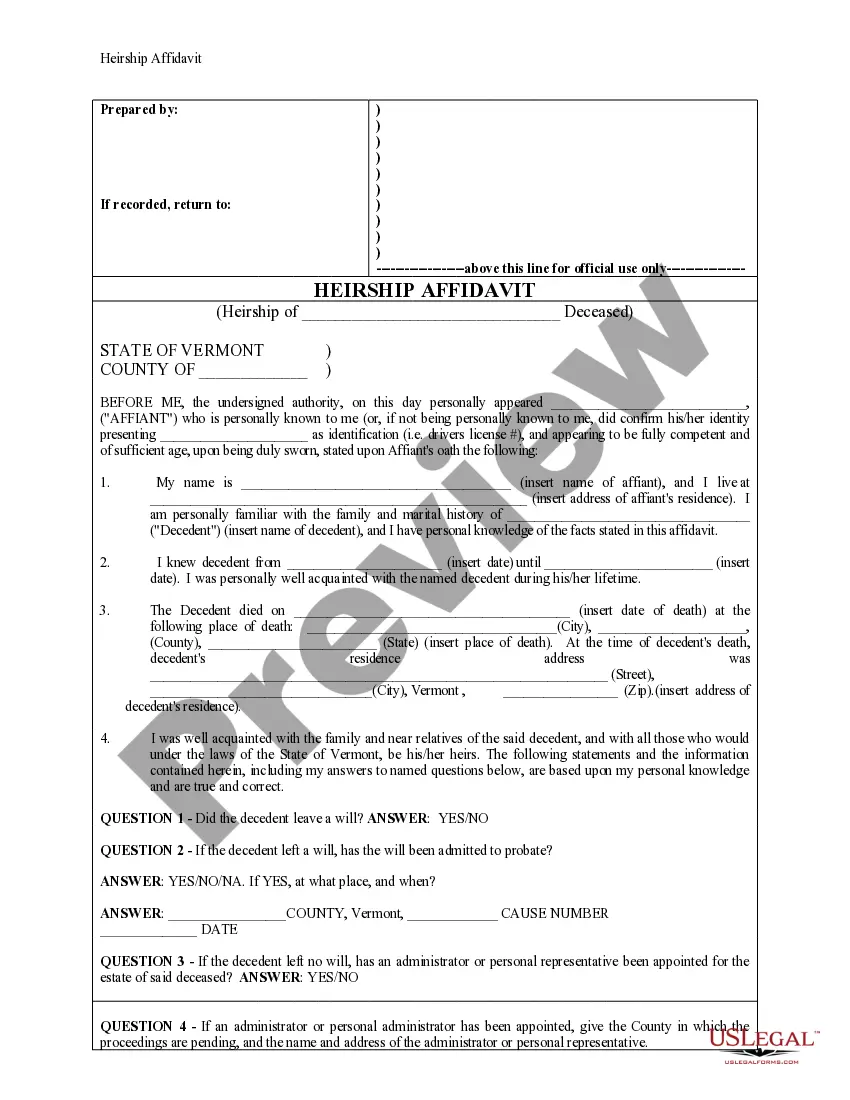
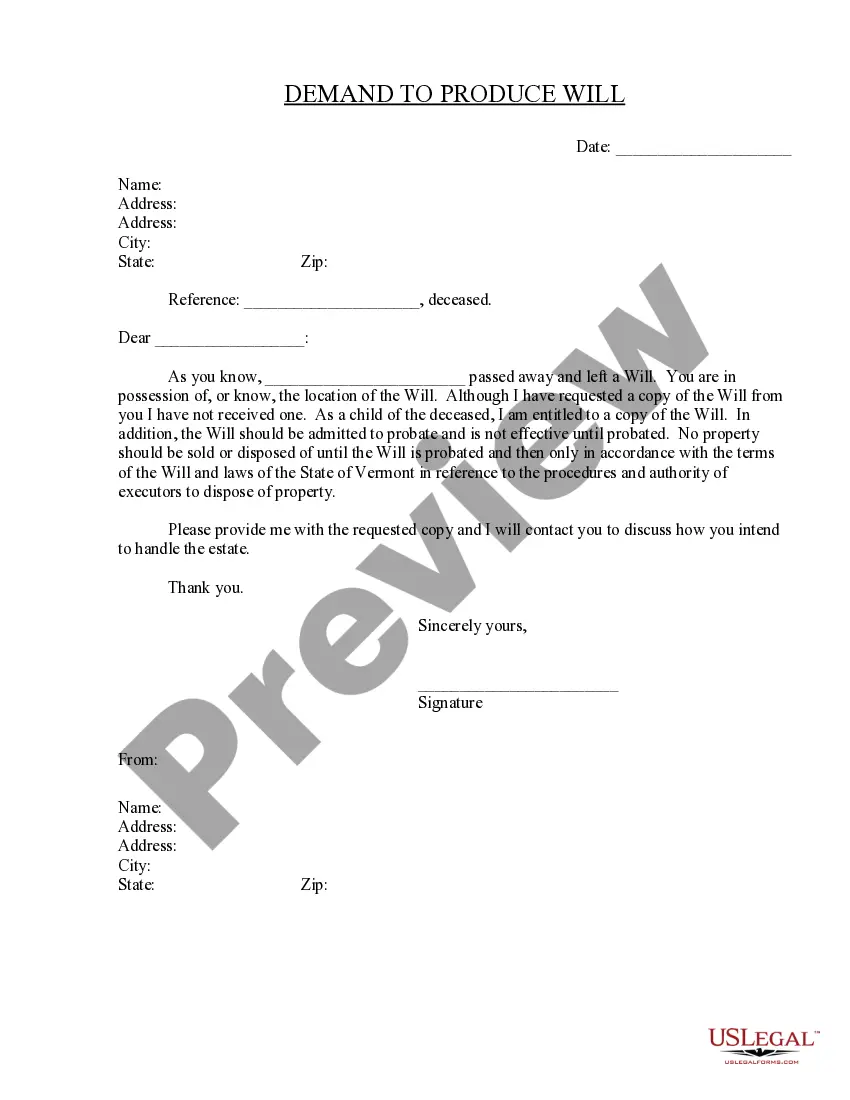
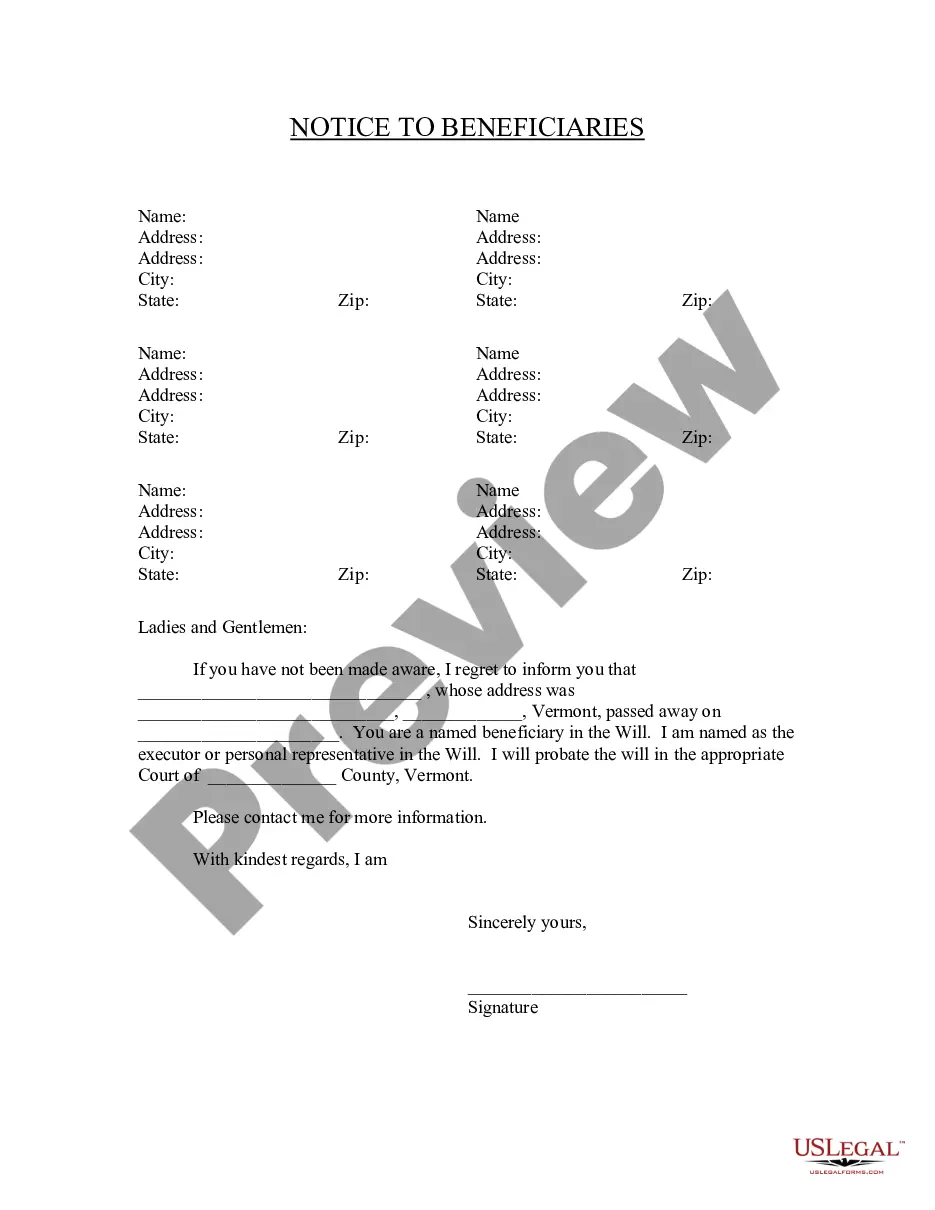
When a person dies, their assets are distributed in the probate process. Probate is a general term for the entire process of administration of estates of deceased persons, including those without wills, with court supervision. If a person dies with a will, a petition to probate the will is filed with the probate court in the county where the deceased resided at the time of death, asking for letters testamentary to be issued, giving the executor authority to handle the estate affairs. If a person dies with a valid will, an executor is named to handle the distribution of the estate. If the person dies without a valid will, the court appoints an administrator to distribute the decedent's assets according to the state's laws of intestacy. The court will issue letters of administration, also called letters testamentary, to the administrator, giving the authority to handle the affairs of the deceased. An heirship affidavit may also be used to conduct estate affairs when a small estate is involved. In cases where the decedent didn't own property valued at more than a certain amount, which varies by state, the estate may go through a small estate administration process, rather than the formal probate process.
What are the duties of an executor?Â
The executor's obligations are generally to: a. Safeguard the property and assets of the estate; b. Inventory (or make a list of) the property; c. Submit accounts or inventories to the court as required (these could be waived); d. Pay the debts and expenses of the deceased (such as funeral and burial expenses, medical expenses, and credit card bills); e. Pay any federal or state death taxes, if any; and f. Distribute the estate to those named in the will or, if no will exists, to your heirs as designated by statute.
How can probate be avoided?Â
All property of a decedent may not be subject to the probate process. Some assets, such as insurance policies or cd’s may name a beneficiary or pass automatically to a surviving joint owner outside the probate estate of the will. Assets held in trust, or in an account or policy with an insurer or financial institution with a named beneficiary, typically pass outside the probate process. Such assets go to the named beneficiary outside the probate process. If it is a survivorship account, or transfer on death account, it passes outside the probate process. Property held in trust is distributed according to the terms of the trust. It is possible to write a "pourover" clause in a will, so that property "pours over" into the trust, which is exempted from probate. The involvement of the court to transfer such property is not required. A bank account or motor vehicle title may also specify a death beneficiary and thus be exempt from the probate process.
Top Questions about Vermont Probate Forms
-
What is the inheritance law in Vermont?
Vermont’s inheritance law outlines how estate assets are distributed when someone dies without a will, often referred to as intestate succession. Generally, spouses and children have priority in inheritance, followed by parents and siblings. Knowing this framework can help in planning your estate effectively and understanding your rights as an heir. By leveraging Vermont Probate Forms, you can navigate these laws with confidence and clarity.
-
Does a will have to go through probate in Vermont?
In Vermont, a will typically must go through probate to validate its terms and ensure proper distribution of assets. However, certain assets may bypass probate if they are held in joint ownership or have designated beneficiaries. It’s important to understand these nuances to facilitate an efficient estate settlement. Utilizing Vermont Probate Forms can streamline your process, helping you address these requirements promptly.
-
How to file probate in Vermont?
To file probate in Vermont, you must first gather essential documents, including the deceased's will and death certificate. Next, you need to complete the appropriate Vermont Probate Forms and file them with the local probate court. It’s vital to adhere to deadlines and procedural rules, ensuring that the process moves smoothly. Consider using platforms like USLegalForms to access the necessary forms and guidance for your specific situation.
-
Do you have to go through probate in Vermont?
You do have to go through probate in Vermont if the estate includes certain assets like real property or if the deceased did not have a trust in place. However, for smaller estates or those with specific assets, alternatives may exist. It's crucial to evaluate the deceased's estate accurately. Utilizing Vermont Probate Forms can assist you in determining if probate is necessary.
-
What estate value triggers probate?
In Vermont, specific assets, rather than a set estate value, determine if probate is necessary. Generally, if the estate includes real estate or assets exceeding a certain threshold set by state law, you will need to initiate probate. Consult Vermont Probate Forms to gather the required documentation for the process. A legal professional can help you navigate this aspect effectively.
-
How to avoid probate in VT?
To avoid probate in Vermont, consider strategies like transferring assets into a revocable living trust or designating beneficiaries on accounts. Certain assets, like joint accounts and life insurance policies, bypass probate altogether. Planning ahead using Vermont Probate Forms can streamline this process. Always discuss options with a legal expert to ensure your assets are protected.
-
What is the minimum estate value for probate?
In Vermont, there is no specific minimum estate value that triggers probate. However, if the estate includes real property or certain financial assets, it generally requires going through the probate process. It's essential to review the assets carefully when determining if Vermont Probate Forms are necessary. Consulting with a legal professional will provide clarity on your specific situation.
-
How to fill out paperwork for probate?
Filling out paperwork for probate in Vermont involves gathering the required forms and information about the deceased's estate. Vermont Probate Forms provide a comprehensive framework to guide you through the process, ensuring you include vital details like asset verification and beneficiaries. Take your time, as accurate completion is crucial to avoid delays. If you're unsure, seeking help can make the process smoother.
-
How to fill out probate inventory?
To fill out a probate inventory in Vermont, start by listing all assets owned by the deceased, including real estate, bank accounts, and personal property. Use Vermont Probate Forms to ensure you capture all necessary details properly. Be sure to include estimated values for each asset to provide an accurate overview of the estate. Consulting a qualified attorney can help clarify any complex issues.
-
How do you avoid probate in Vermont?
Avoiding probate in Vermont can be achieved through several methods, including establishing trusts or designating beneficiaries on accounts. Additionally, assets owned jointly can transfer directly to the surviving owner without going through probate. By planning accordingly and using Vermont Probate Forms, you can outline your wishes clearly, potentially minimizing the probate process for your heirs.
Tips for Preparing Vermont Probate Forms
- Begin probate. Before you begin preparing Vermont Probate Forms, find out if you're eligible to become an estate executor. In cases where a deceased person didn't name an executor, the legal court may assign one. To start the procedure, you should submit a petition for probate, a valid will, and the death certificate to the court.
- Collect info. Acquire and look through the info you need to use to complete the Vermont Probate Forms appropriately, get ready probate paperwork, and after that give them to the legal court. The procedure can require retirement and bank accounts and stocks, property like a home, and personal assets as collections and other valuables.
- Deal with debts and taxes, and monthly bills. Make certain that the assets you dispose of can cover all obligations, rents, and monthly bills. Otherwise, the court will prioritize claims of creditors. In addition, you're accountable for filing an income tax return and paying taxes.
- Distribute belongings. When you're done paying debts, you are able to proceed to the next thing. The remaining assets is split between the heirs (brothers and sisters, parents, spouse and next of kin) or by the will.
- Close real estate. Collect statements and records, and other probate paperwork during the overall process and after that submit them to confirm that you settled an property and finished the Vermont Probate Forms based on federal and state specifications.