What is Probate?
Probate is the legal process of settling an estate after someone passes away. It involves validating a will, if one exists, and distributing assets. Explore state-specific templates to simplify the process.
Probate involves legal processes for managing a deceased person's estate. Attorney-drafted templates are quick and straightforward to complete.

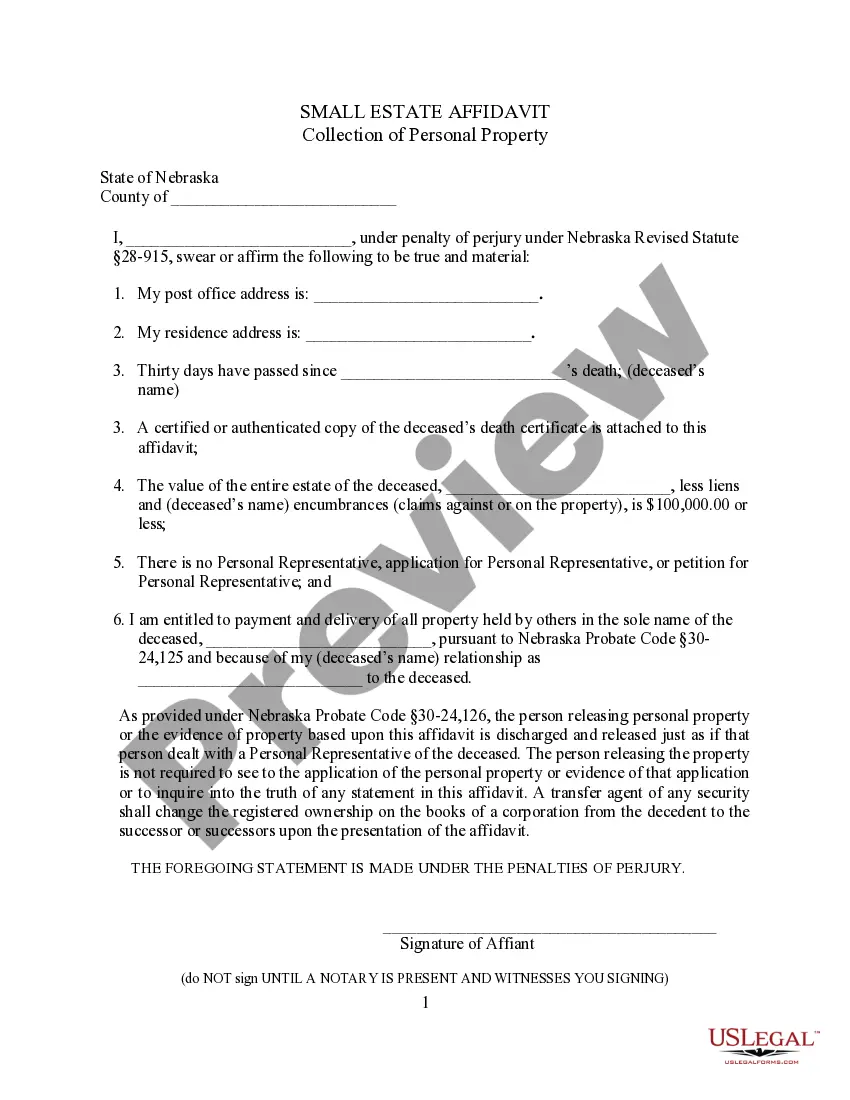
Use this affidavit to claim personal property from an estate valued at no more than $100,000 without a lengthy probate process.
Streamline the estate administration process for small estates in Nebraska by using this efficient package of essential forms.
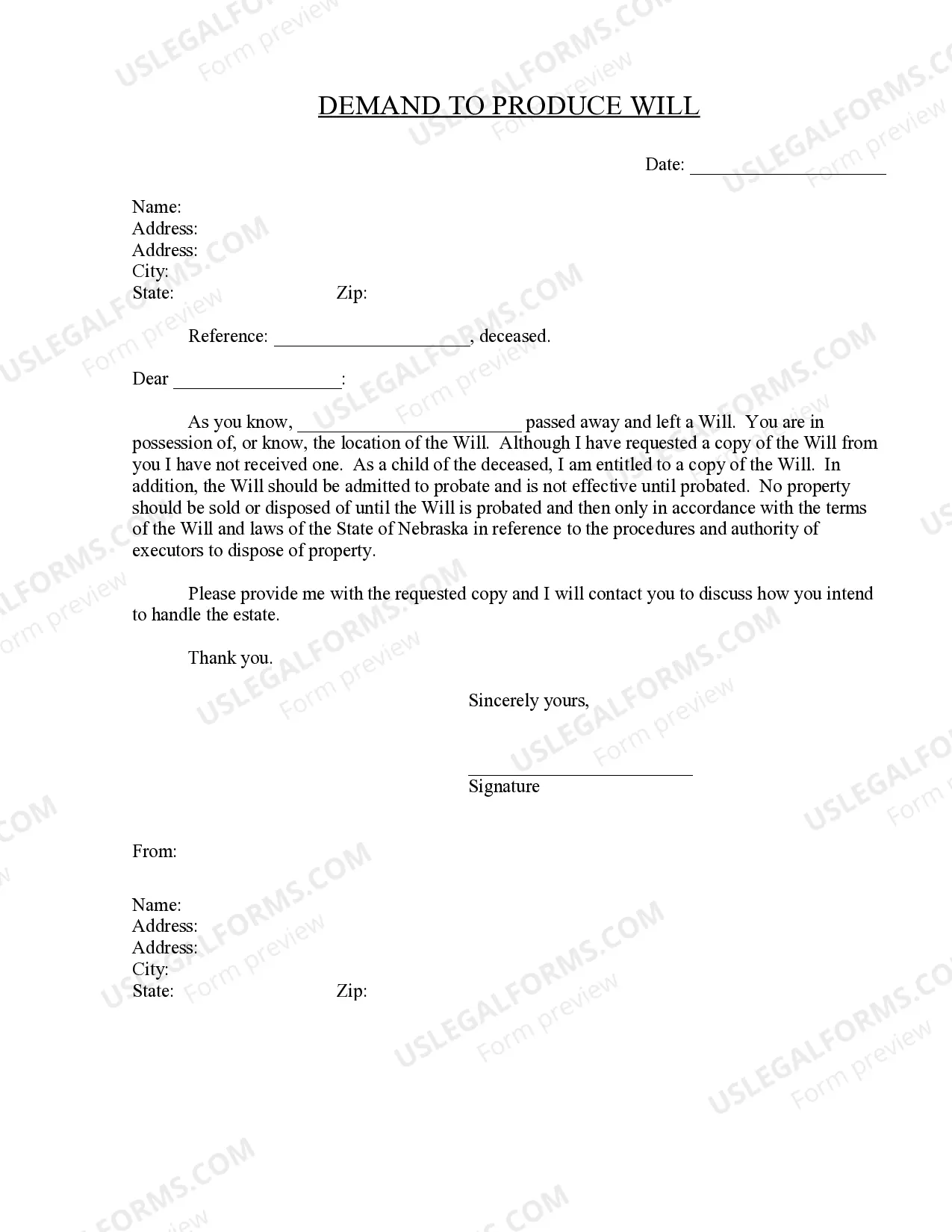
Request a copy of a deceased person's Will to understand estate distribution and your inheritance rights.
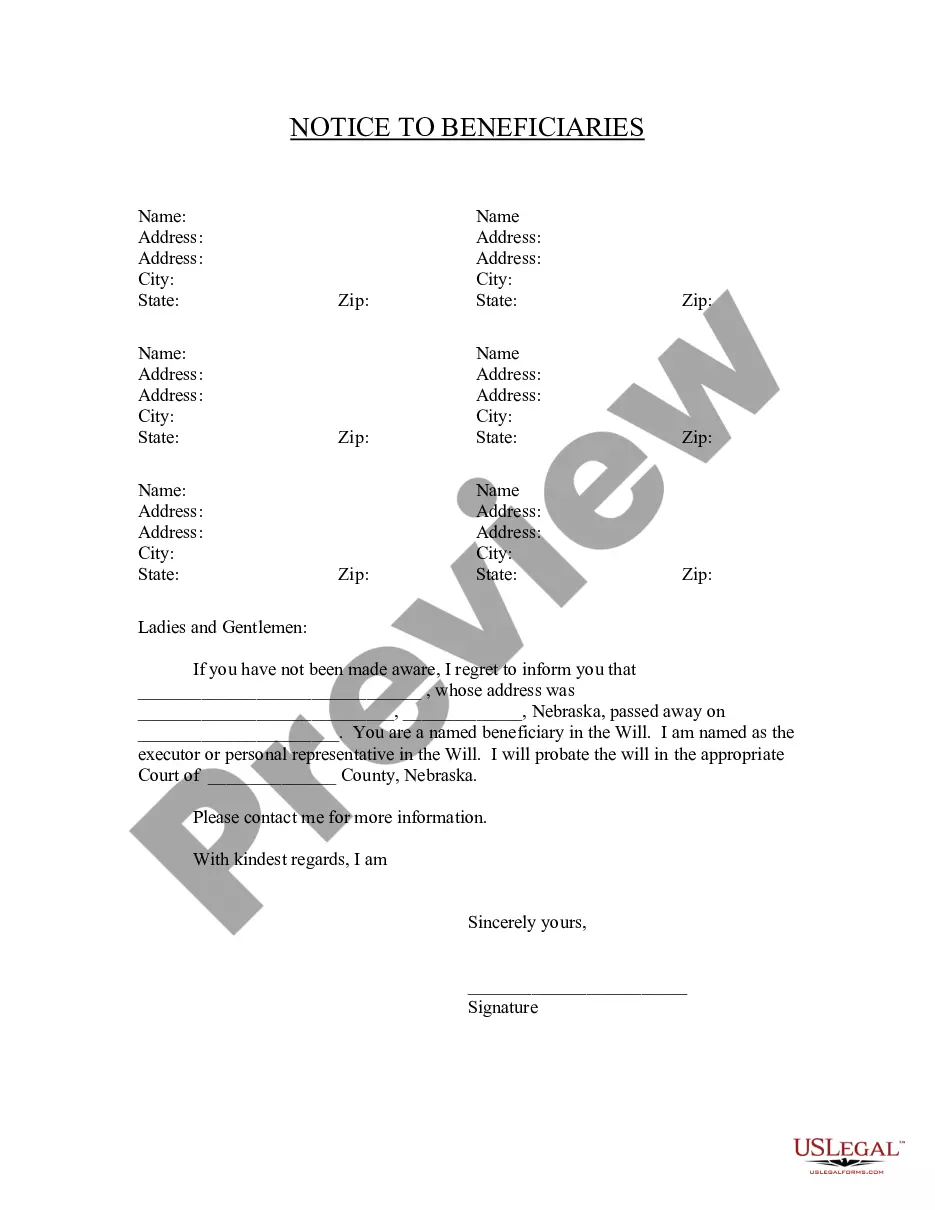
Notify beneficiaries that they are named in a will after an individual's passing, ensuring they are informed of their rights.
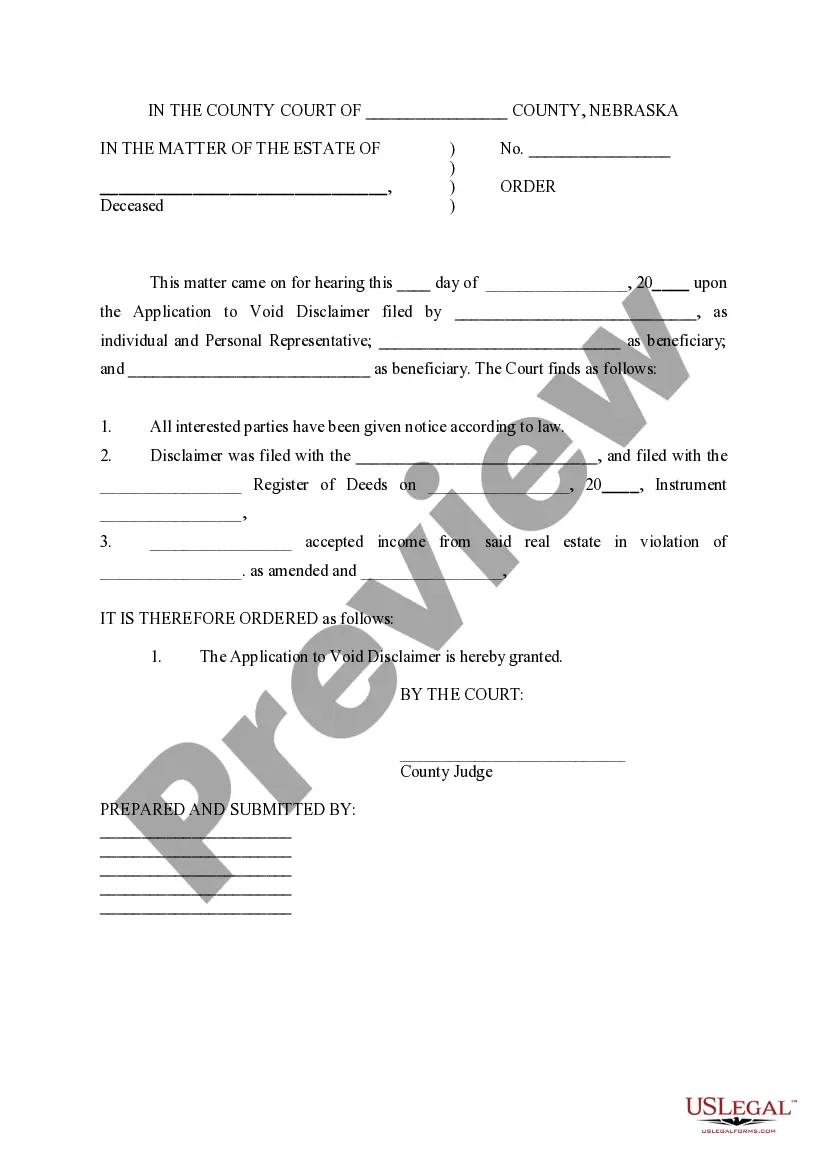
This is used to request the court to cancel a previously filed disclaimer in an estate case.
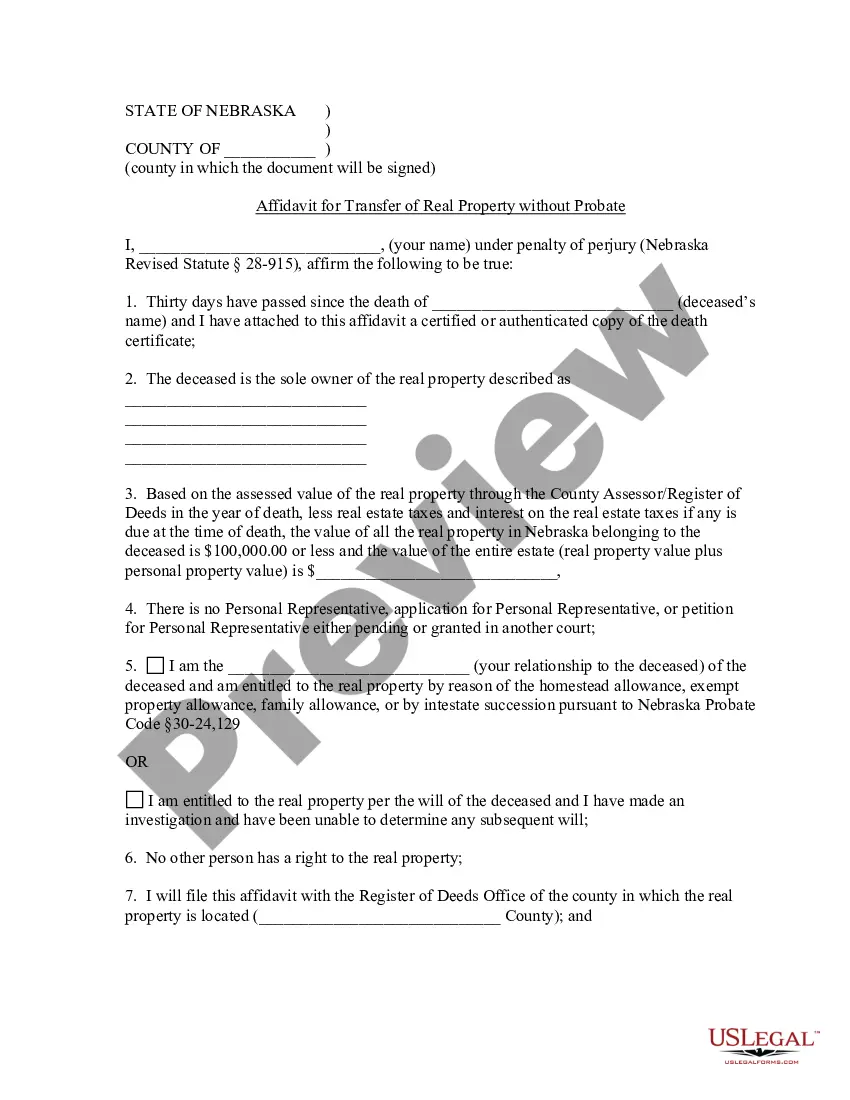
Use this affidavit to transfer real property without probate when the estate's value is under $100,000, simplifying the process for heirs.
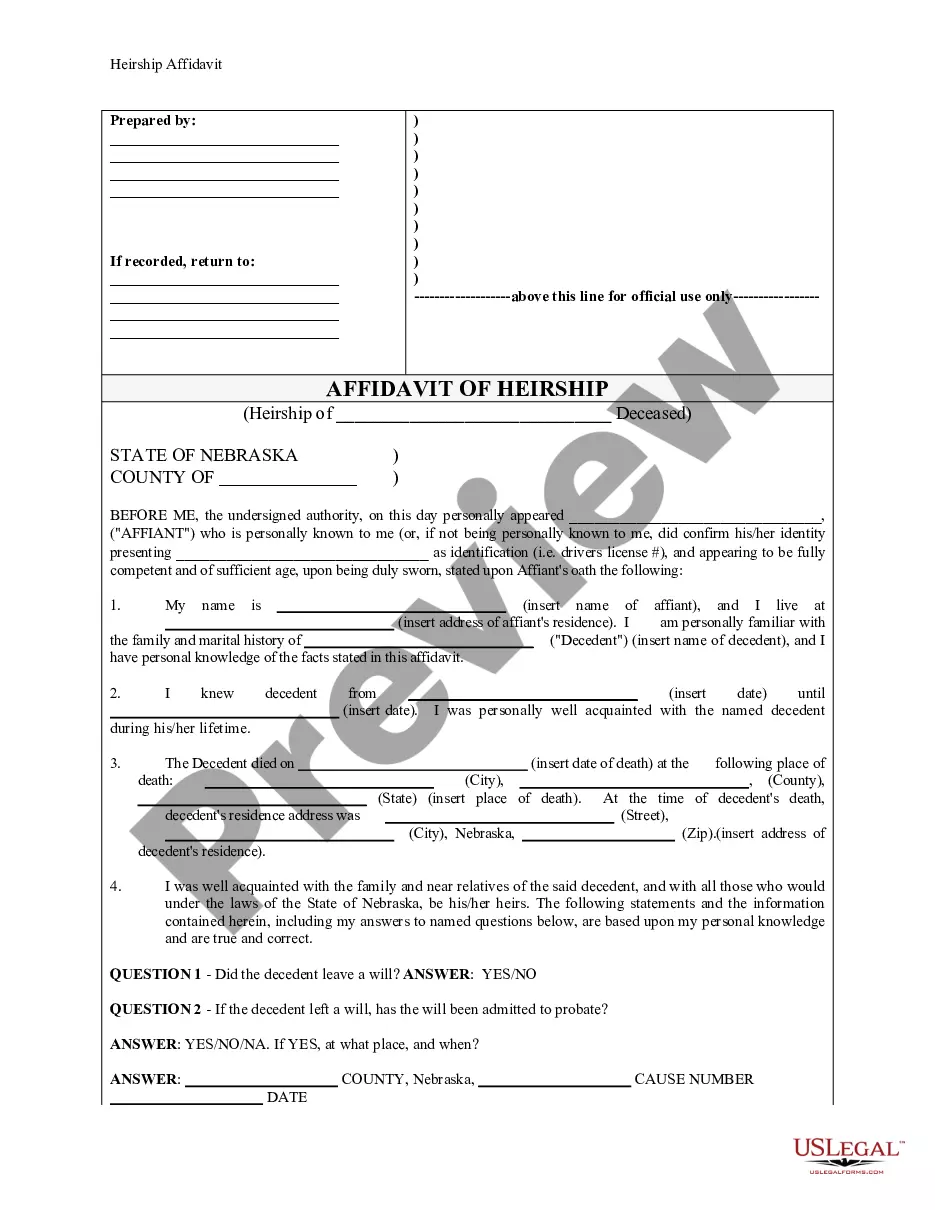
Prove the inheritance rights of individuals entitled to a deceased person's estate with this document.
Use this affidavit to transfer personal property from a deceased individual without going through probate, simplifying the process for eligible heirs.
Ensure you receive all crucial notifications regarding a deceased person's estate by demanding notice under Nebraska law.
Probate is necessary for distributing assets after death.
Not all assets go through probate, such as joint accounts.
Probate can be a lengthy process depending on estate complexity.
All debts and taxes must be settled before asset distribution.
A will needs to be validated by the probate court.
Begin your probate journey in just a few simple steps.
A trust can help manage assets during your lifetime, while a will distributes them after death.
If no estate plan exists, state laws dictate how your assets are distributed.
It's wise to review your plan after major life events, such as marriage or the birth of a child.
Beneficiary designations typically override wills, so ensure they align with your overall estate plan.
Yes, you can designate separate individuals for financial and healthcare decisions in your estate plan.