What is Probate?
Probate refers to the legal process for settling an estate after someone passes away. It involves validating the will and distributing assets. Explore state-specific templates for your needs.
Probate involves managing a deceased person's estate. Attorney-drafted templates are quick and straightforward to complete.

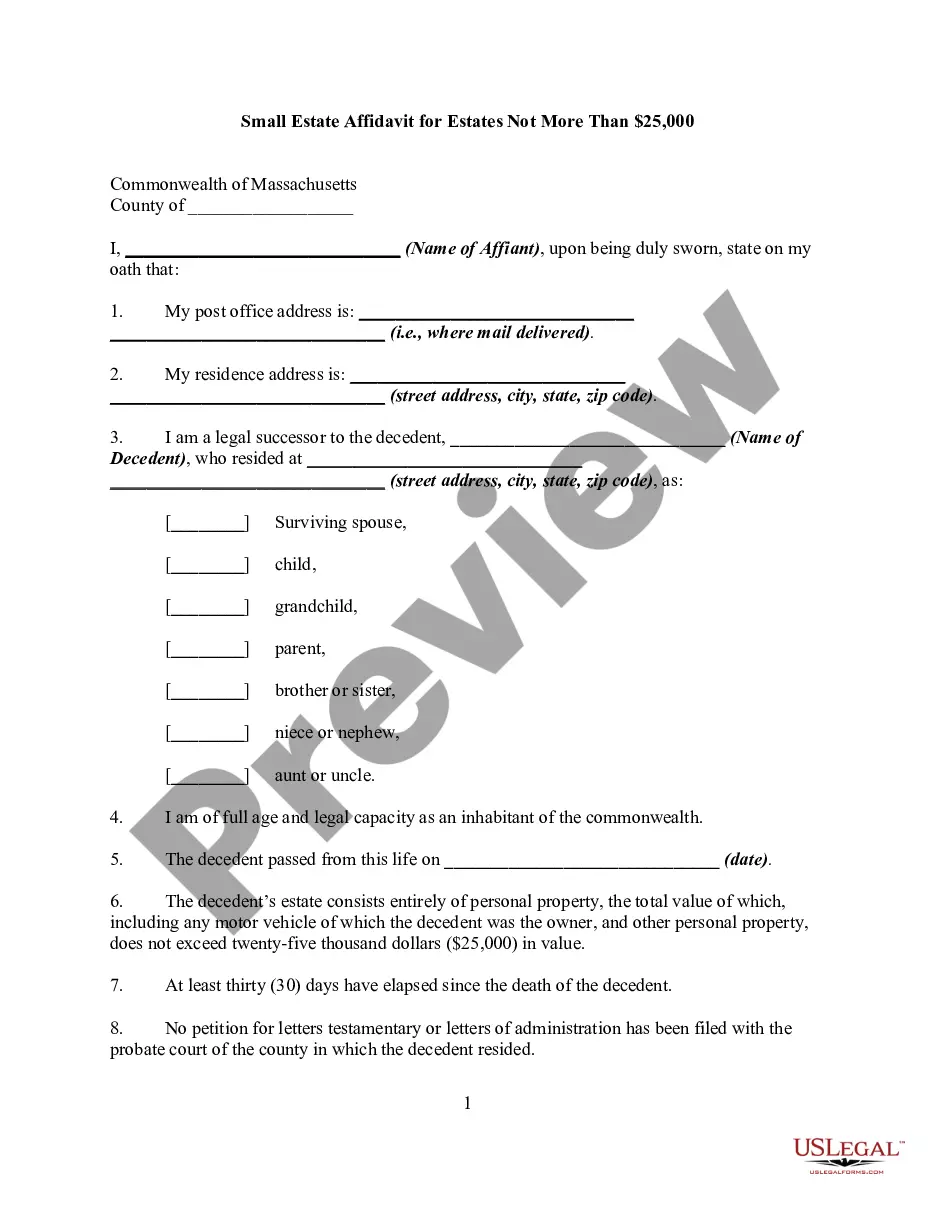
Use this affidavit to settle small estates valued under $25,000 without formal probate, streamlining the process for heirs.
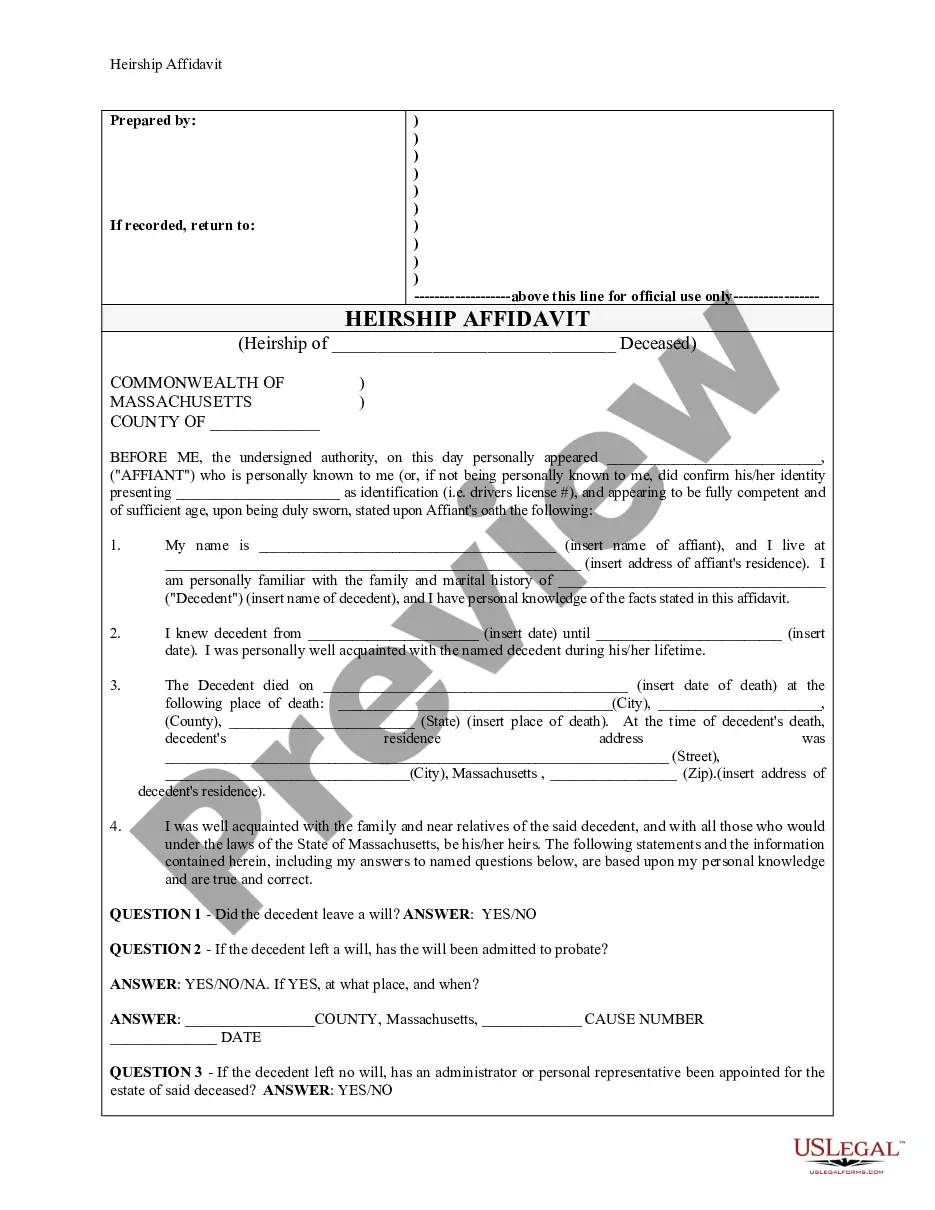
Establish the rightful heirs of a deceased person in Massachusetts, clarifying their legal standing in estate matters.
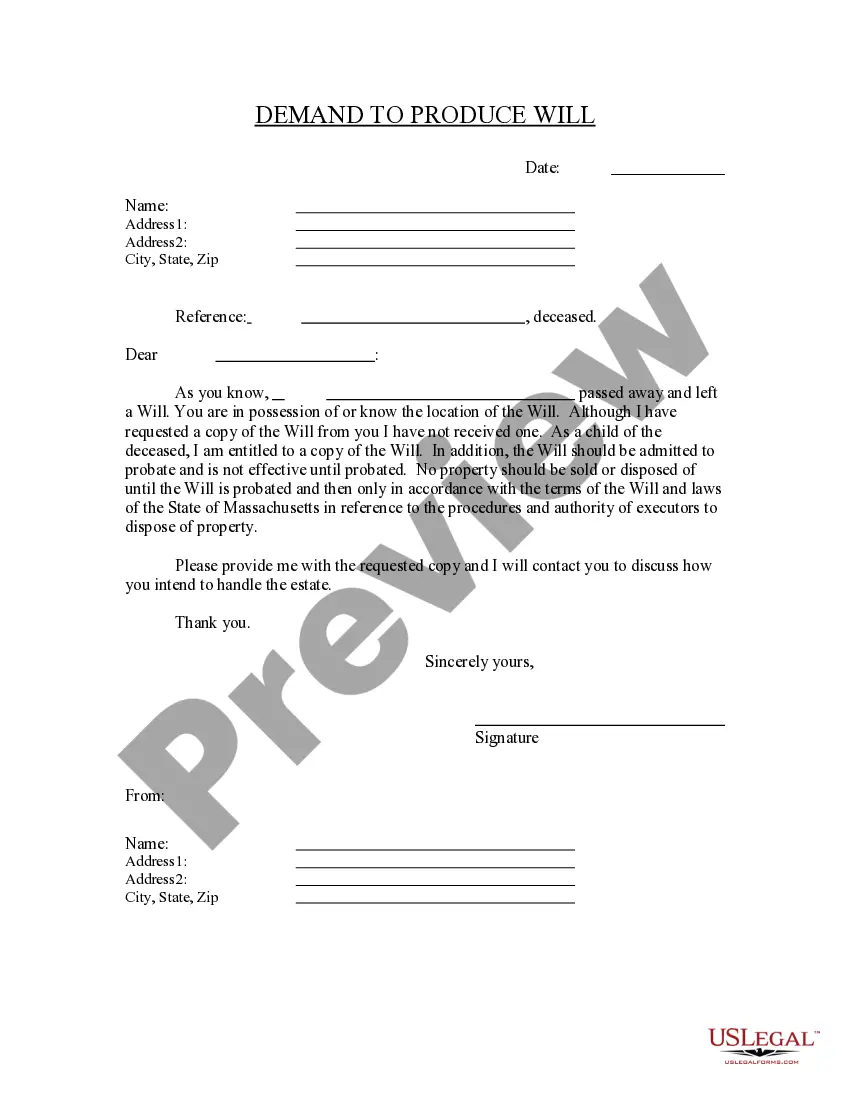
Request copies of a deceased person's will to clarify estate management responsibilities.
This document is essential for supporting the release of financially secured obligations, providing clarity in surety arrangements.
Use this form for straightforward estate administration in Massachusetts, especially when a decedent's estate is valued under $25,000.
Use this affidavit to declare that a marriage cannot be repaired, facilitating divorce proceedings.
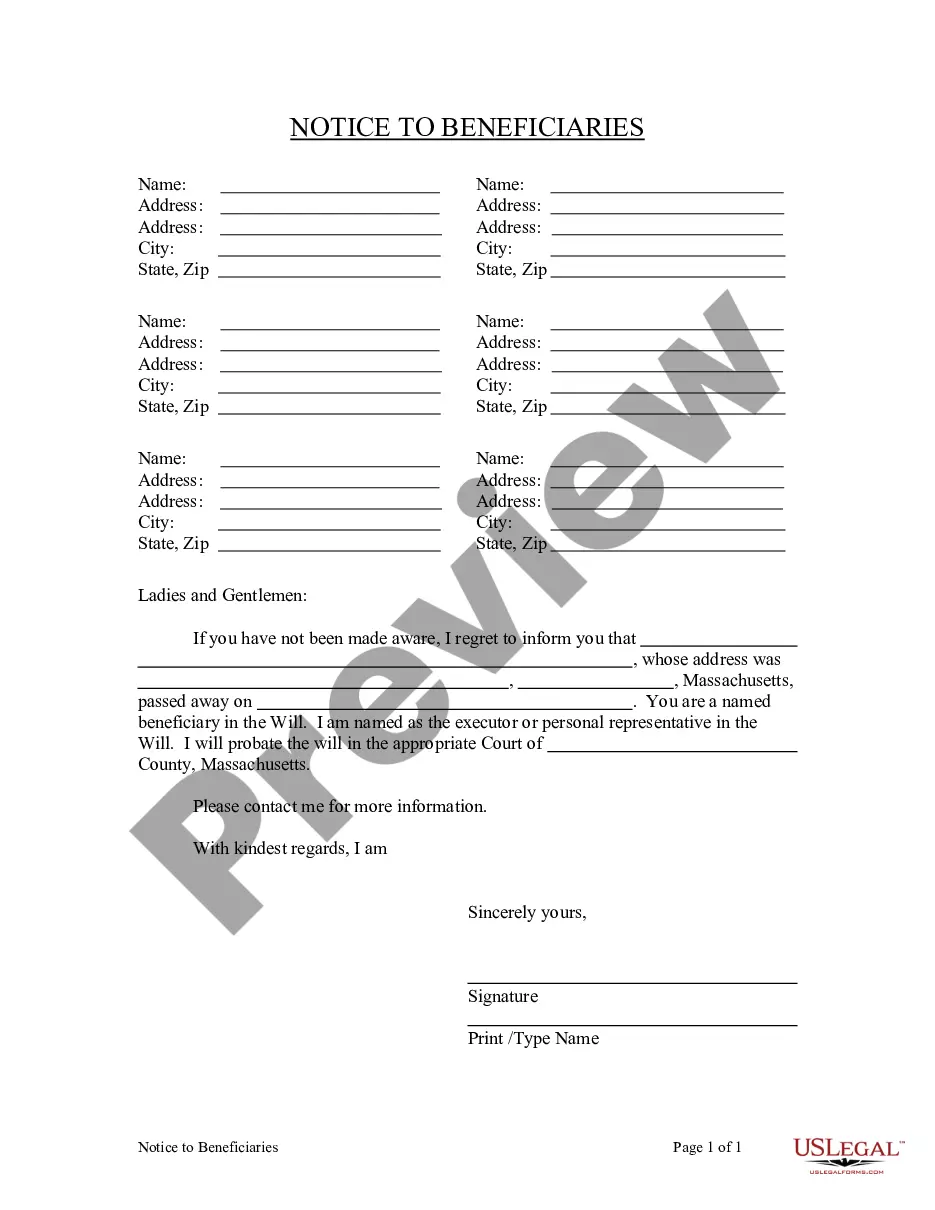
Notify beneficiaries of their involvement in a deceased person's will to ensure they understand their rights and obligations.
Prepare for court by outlining key issues and evidence in disputes. Essential for effective communication during settlement conferences.
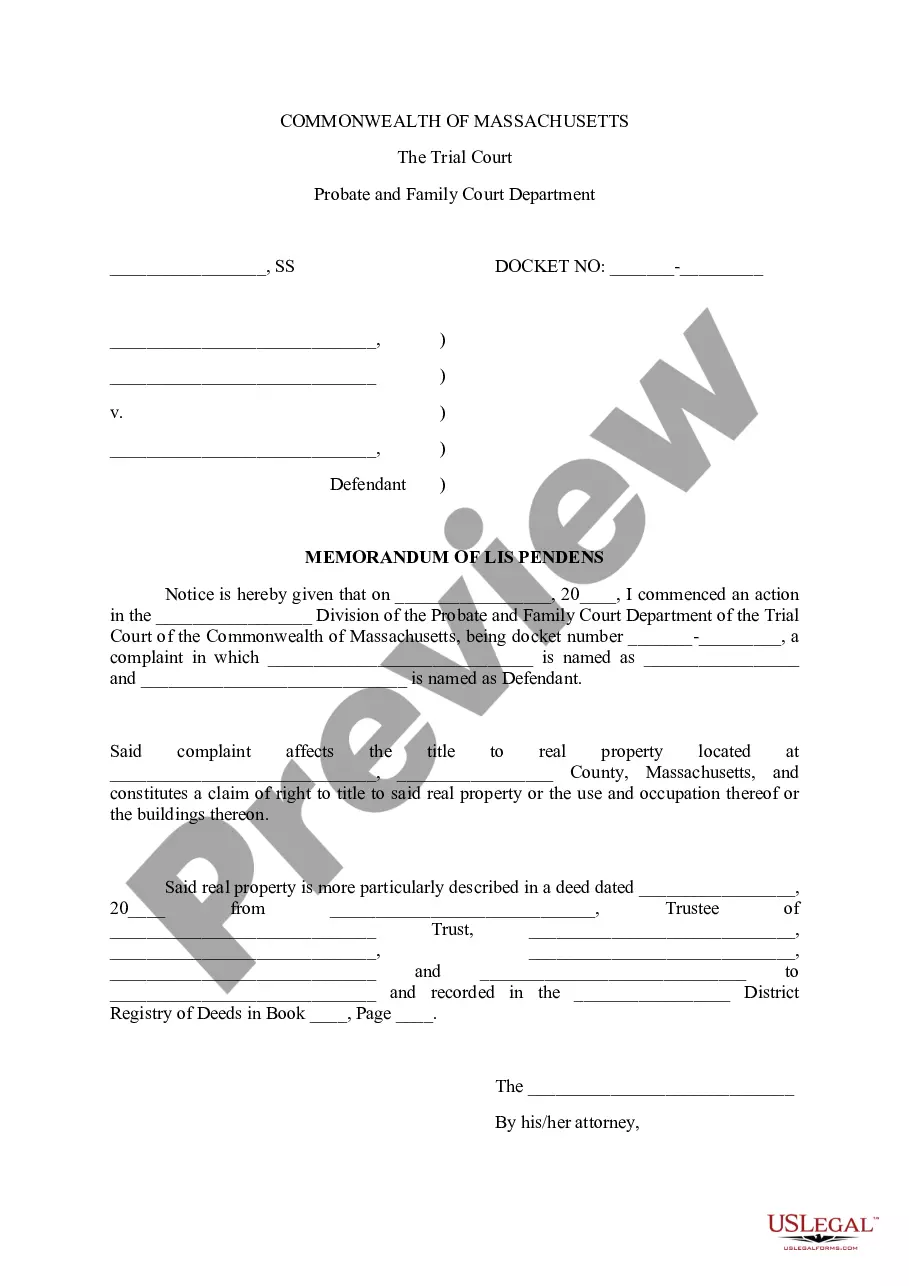
Notify interested parties of an ongoing legal claim affecting real property ownership.
Identify the legal heirs of a decedent based on their degrees of kinship to ensure accurate estate distribution.
Probate is required for most estates to ensure proper asset distribution.
Wills must be filed in probate court to be valid.
Heirs may contest a will if they believe it is invalid.
Probate can take several months to years, depending on estate complexity.
Certain assets may bypass probate, like joint accounts or life insurance.
Begin your probate process with these easy steps.
A trust may offer additional benefits, such as avoiding probate.
The state will follow intestate laws to distribute assets, which may not align with your wishes.
Review your estate plan every few years or after major life events.
Beneficiary designations typically override will and trust instructions.
Yes, you can appoint separate agents for financial and healthcare decisions.