Florida Probate Forms

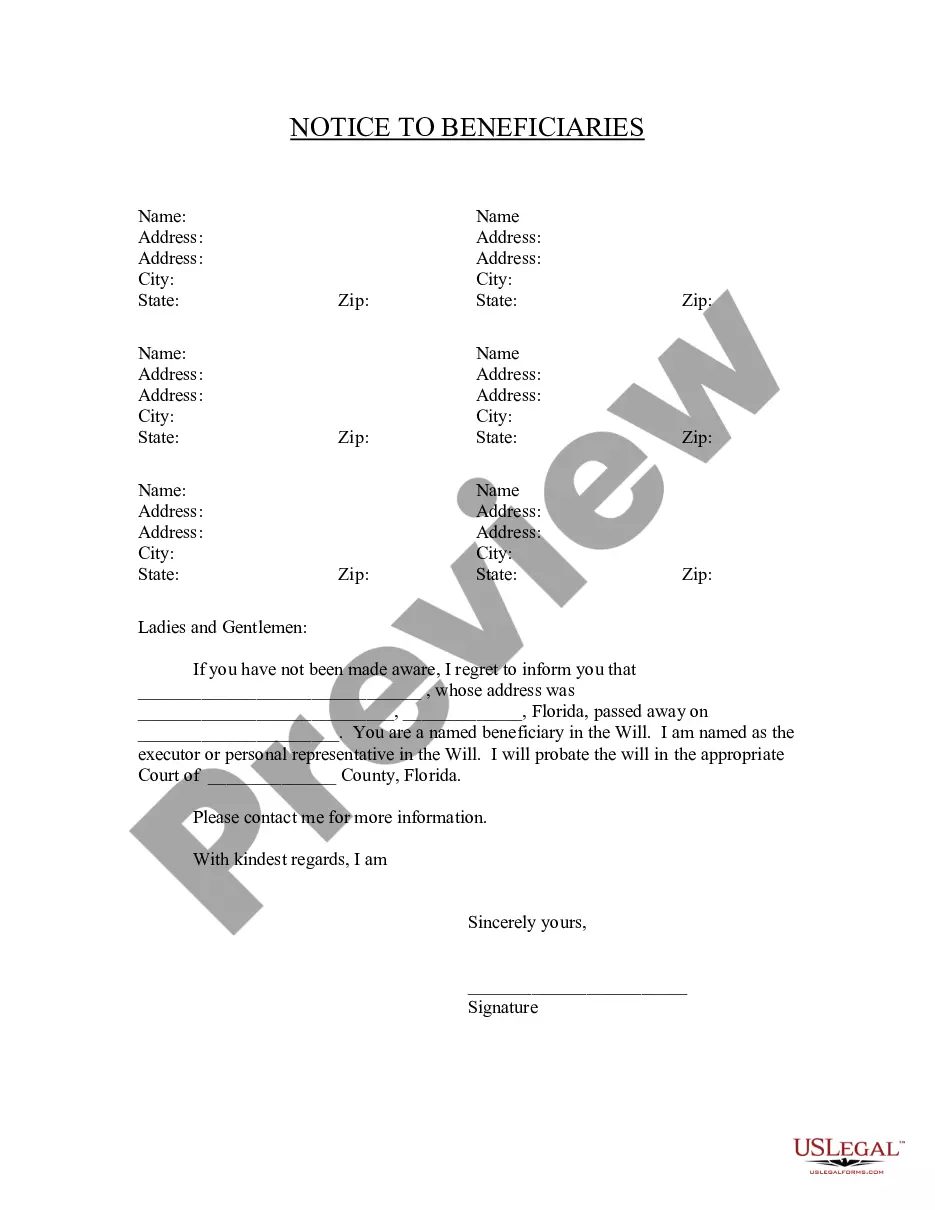
We offer thousands of Probate forms. Some of the forms offered are listed by area below. For others, please use our search engine.

Florida Probate Forms FAQ

What is probate? 

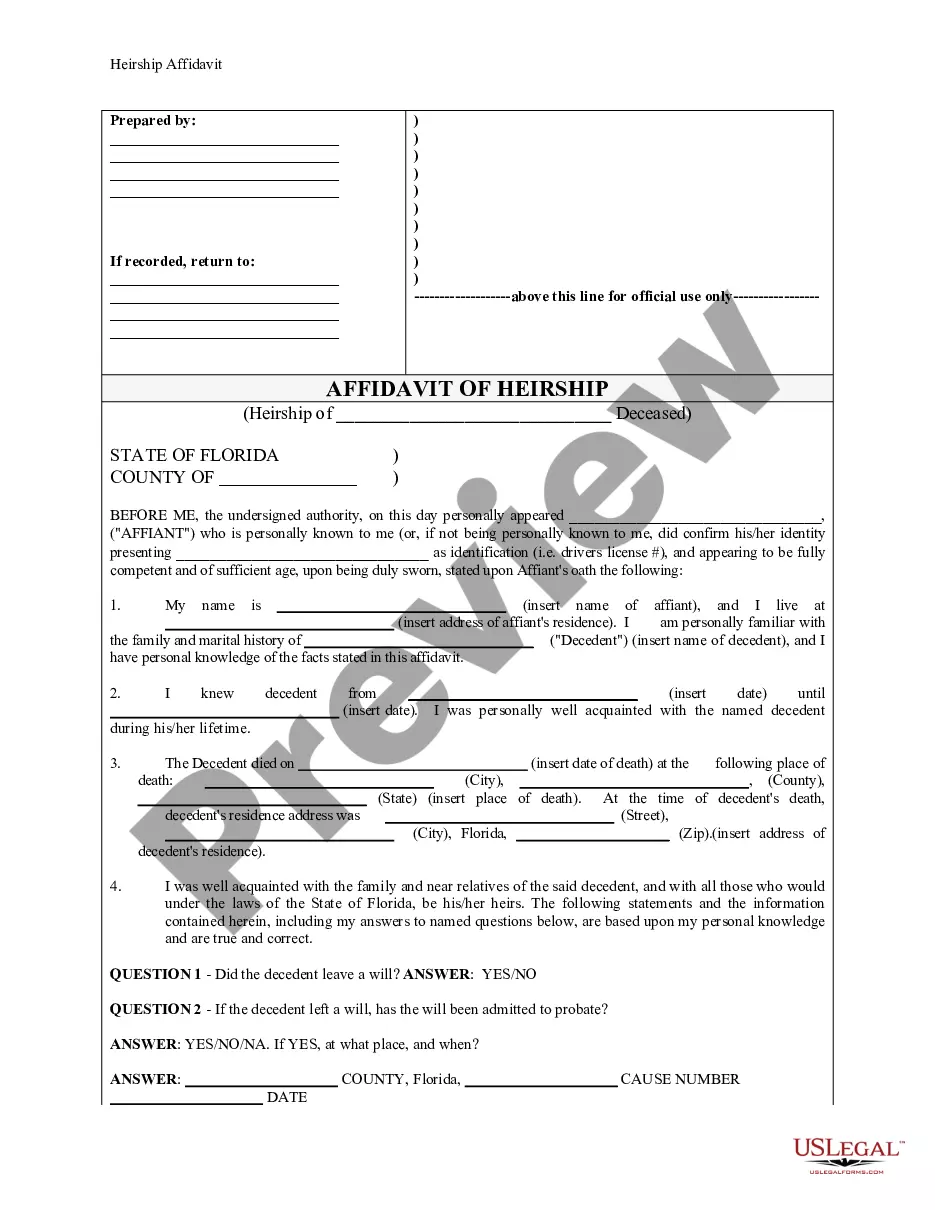
When a person dies, their assets are distributed in the probate process. Probate is a general term for the entire process of administration of estates of deceased persons, including those without wills, with court supervision. If a person dies with a will, a petition to probate the will is filed with the probate court in the county where the deceased resided at the time of death, asking for letters testamentary to be issued, giving the executor authority to handle the estate affairs. If a person dies with a valid will, an executor is named to handle the distribution of the estate. If the person dies without a valid will, the court appoints an administrator to distribute the decedent's assets according to the state's laws of intestacy. The court will issue letters of administration, also called letters testamentary, to the administrator, giving the authority to handle the affairs of the deceased. An heirship affidavit may also be used to conduct estate affairs when a small estate is involved. In cases where the decedent didn't own property valued at more than a certain amount, which varies by state, the estate may go through a small estate administration process, rather than the formal probate process.

What are the duties of an executor? 

The executor's obligations are generally to: a. Safeguard the property and assets of the estate; b. Inventory (or make a list of) the property; c. Submit accounts or inventories to the court as required (these could be waived); d. Pay the debts and expenses of the deceased (such as funeral and burial expenses, medical expenses, and credit card bills); e. Pay any federal or state death taxes, if any; and f. Distribute the estate to those named in the will or, if no will exists, to your heirs as designated by statute.

How can probate be avoided? 

All property of a decedent may not be subject to the probate process. Some assets, such as insurance policies or cd’s may name a beneficiary or pass automatically to a surviving joint owner outside the probate estate of the will. Assets held in trust, or in an account or policy with an insurer or financial institution with a named beneficiary, typically pass outside the probate process. Such assets go to the named beneficiary outside the probate process. If it is a survivorship account, or transfer on death account, it passes outside the probate process. Property held in trust is distributed according to the terms of the trust. It is possible to write a "pourover" clause in a will, so that property "pours over" into the trust, which is exempted from probate. The involvement of the court to transfer such property is not required. A bank account or motor vehicle title may also specify a death beneficiary and thus be exempt from the probate process.

Top Questions about Florida Probate Forms

  • Can I file probate myself in Florida?

    Yes, you can file probate yourself in Florida. Individuals often choose to manage probate independently to save costs. With the right resources, such as Florida Probate Forms, you can confidently prepare and submit your documents, ensuring your estate matters are addressed properly and efficiently.

  • How much does an estate have to be worth to go to probate in Florida?

    In Florida, any estate with assets exceeding $75,000 generally requires probate. However, there are some exemptions, such as for homestead property. Using Florida Probate Forms can provide clarity on the specific requirements and help you determine the best course of action for your estate.

  • How long do you have to file probate after death in Florida?

    In Florida, you typically have two years from the date of death to file for probate. However, it's advisable to initiate the process as soon as possible to manage the estate efficiently. By utilizing Florida Probate Forms, you can streamline your application, making sure you adhere to the required timeframes and legal standards.

  • Can you go through probate without a lawyer in Florida?

    Yes, you can go through probate without a lawyer in Florida. While hiring legal assistance can simplify the process, Florida allows individuals to handle their probate matters independently. However, using Florida Probate Forms can help you navigate the necessary documentation and requirements, ensuring you meet all legal obligations while saving time and effort.

  • Can I do my own probate in Florida?

    Yes, you can handle your own probate in Florida if you are comfortable with the required processes. Many individuals choose to do so to save on legal fees, particularly for simpler estates. However, ensure you have access to the Florida Probate Forms and understand the legal procedures involved. USLegalForms can provide essential tools and guidance to help you navigate this journey confidently.

  • What forms do I need to file probate in Florida?

    To file for probate in Florida, you will need specific forms such as a Petition for Administration, the Last Will and Testament, and a Death Certificate. Each case may require different forms depending on the estate's complexity. USLegalForms offers a comprehensive suite of Florida Probate Forms to help simplify your filing process. Make sure to gather all necessary documents to facilitate a smooth probate process.

  • How long after death do you have to file probate in Florida?

    In Florida, you typically have 2 years from the date of death to file probate, but it's advisable to file as soon as possible. Filing within 10 days is essential if you have any property that requires probate. Timely filing helps ensure a smoother administration process for the estate. Using the right Florida Probate Forms from USLegalForms can help you get started promptly.

  • What happens if probate is not filed within 10 days in Florida?

    If probate is not filed within 10 days of the decedent's passing, it could result in complications for the estate. The court may impose penalties, and interested parties could question your ability to manage the estate. It's crucial to follow the proper timeline and file the necessary Florida Probate Forms to avoid issues. USLegalForms provides the resources to help you meet these deadlines.

  • Can probate be done without a lawyer in Florida?

    In Florida, it is possible to handle probate without a lawyer, especially for simple estates. However, you must ensure that you understand the legal requirements and paperwork involved. Utilizing Florida Probate Forms from USLegalForms can simplify the process and help you stay organized. It's important to assess the complexity of your estate before deciding to proceed without legal assistance.

  • Can an estate be settled without probate in Florida?

    Yes, an estate can sometimes be settled without probate in Florida. If the estate is small enough, certain assets may pass directly to heirs without going through the probate process. Additionally, using tools like a living trust can help avoid probate entirely. To understand your options better, consider using Florida Probate Forms available on USLegalForms.

Tips for Preparing Florida Probate Forms

  1. Begin probate. Before you start preparing Florida Probate Forms, see if you're qualified to become an property executor. In cases where a deceased person didn't name an executor, the court may assign one. To start the process, you should submit a petition for probate, a valid will, along with the death certificate to the court.
  2. Get info. Collect and review the information you need to use to submit the Florida Probate Forms appropriately, put together probate documents, and then present them to the legal court. The process may involve retirement and bank accounts and stocks and shares, estate such as a house, and personal belongings as collections and other valuable items.
  3. Take care of obligations and taxes, and monthly bills. Make sure that the resources you dispose of can cover all obligations, rents, and bills. Otherwise, the legal court will focus on claims of loan companies. Additionally, you're in charge of filing an income tax return and paying taxes.
  4. Distribute belongings. When you're completed paying out financial obligations, you are able to move on to the next thing. The rest of the assets is split between the beneficiaries (brothers and sisters, parents, spouse and next of kin) or by the will.
  5. Close estate. Gather receipts and records, and other probate documents during the entire procedure and after that submit them to affirm that you settled an real estate and accomplished the Florida Probate Forms in accordance with state and federal specifications.