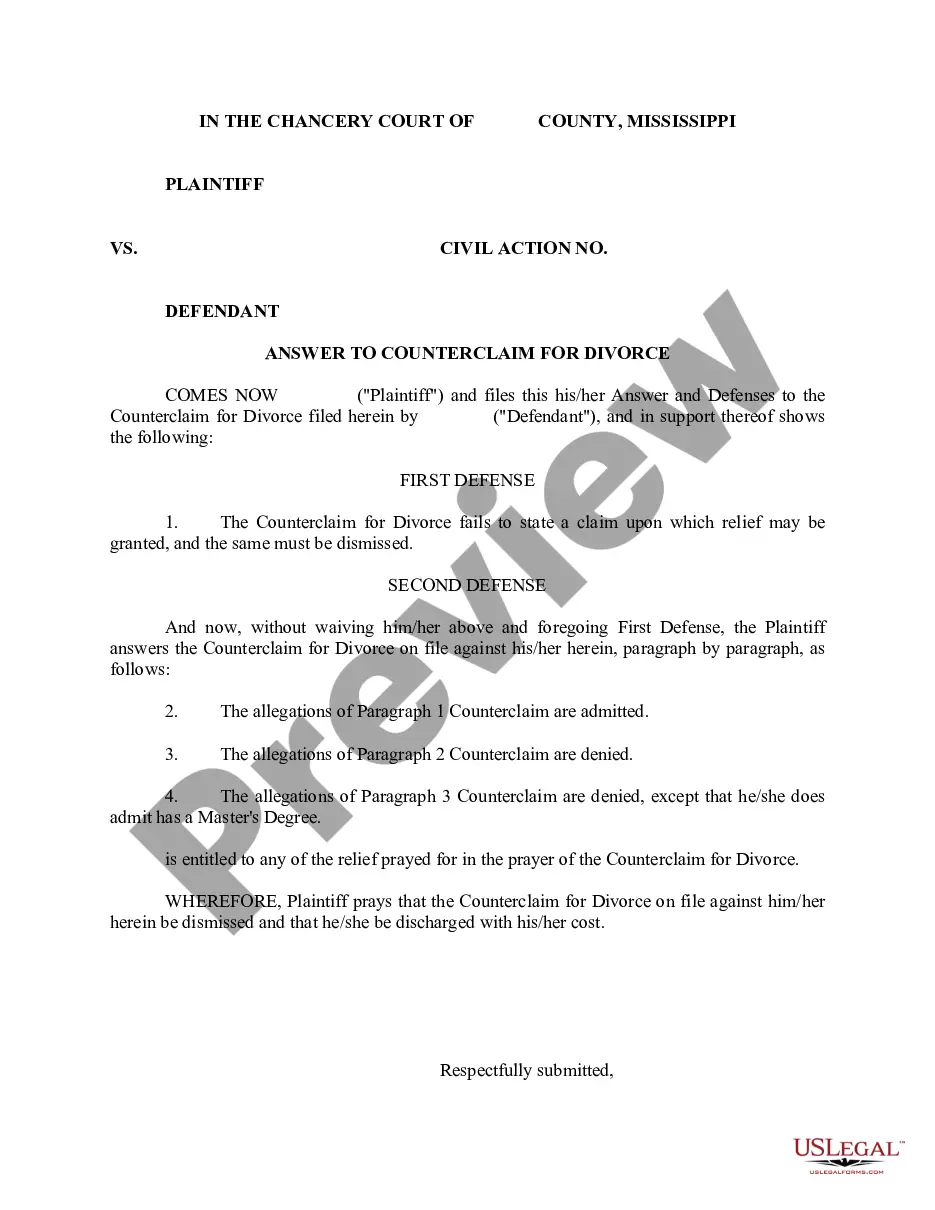
Pennsylvania Mutual Wills Package with Last Wills and Testaments for Married Couple with Minor Children
Overview of this form
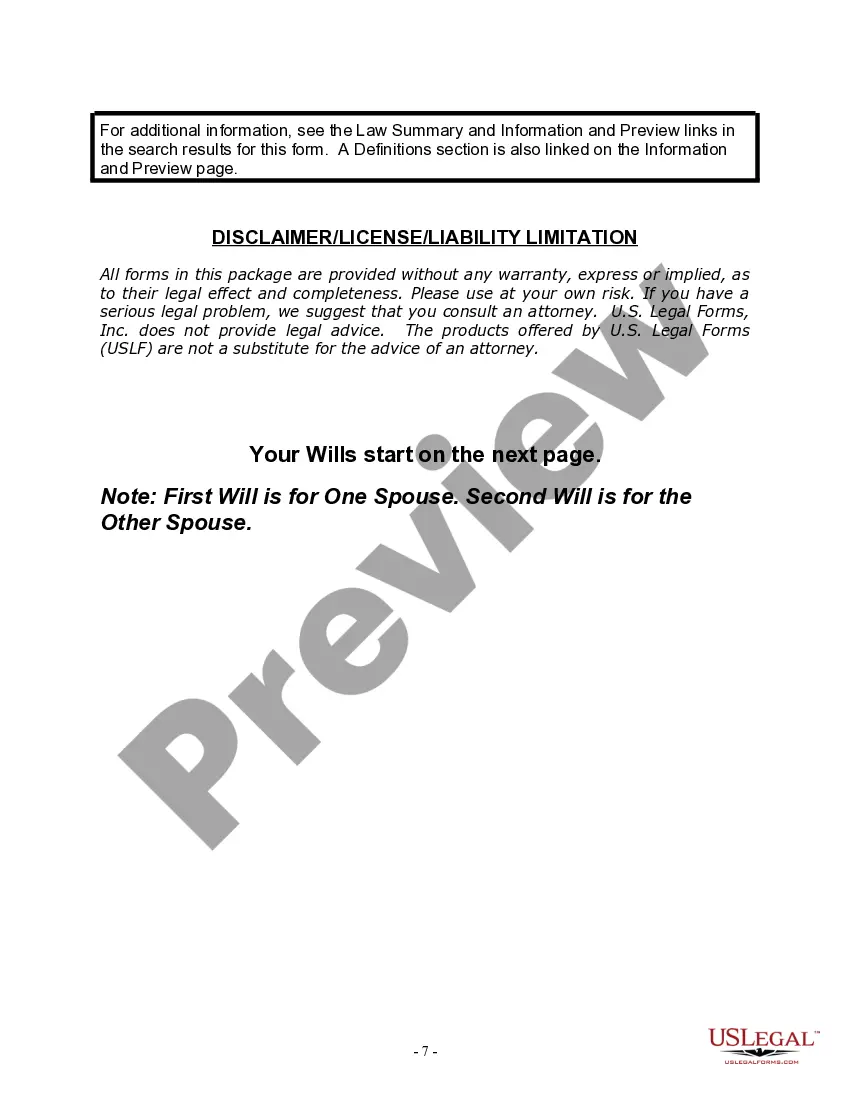
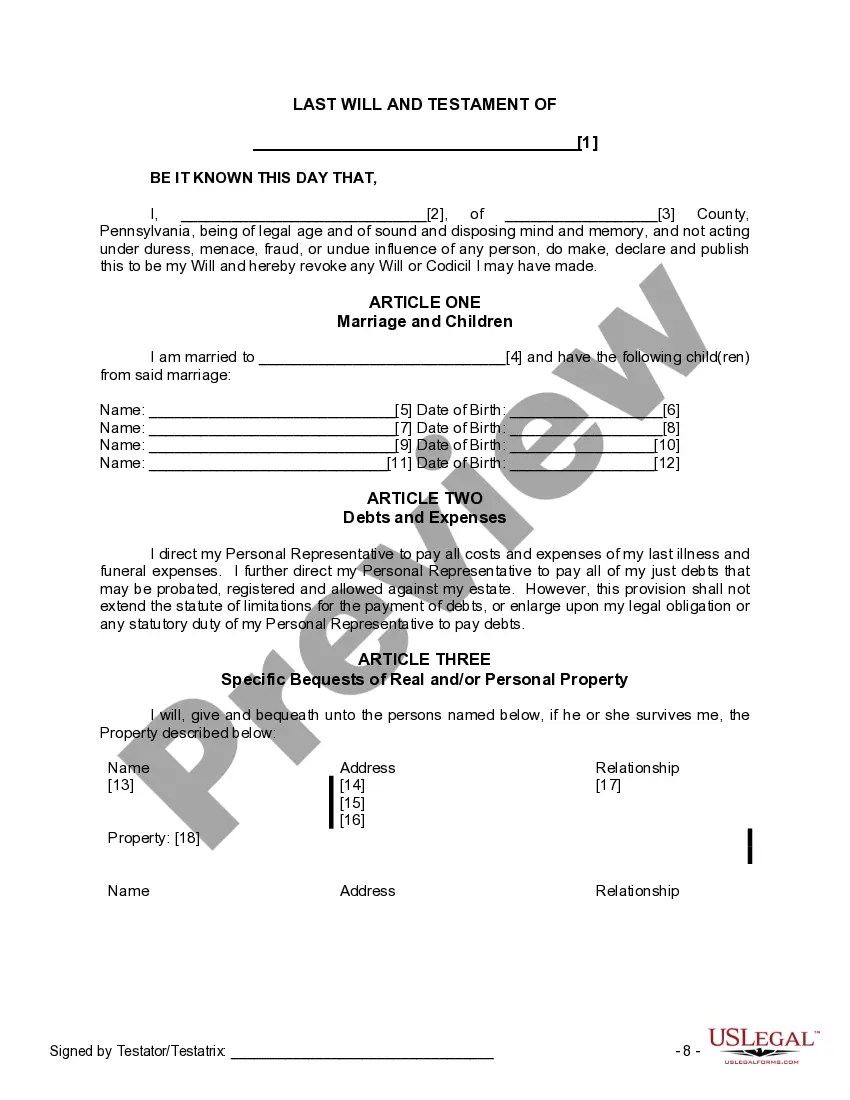
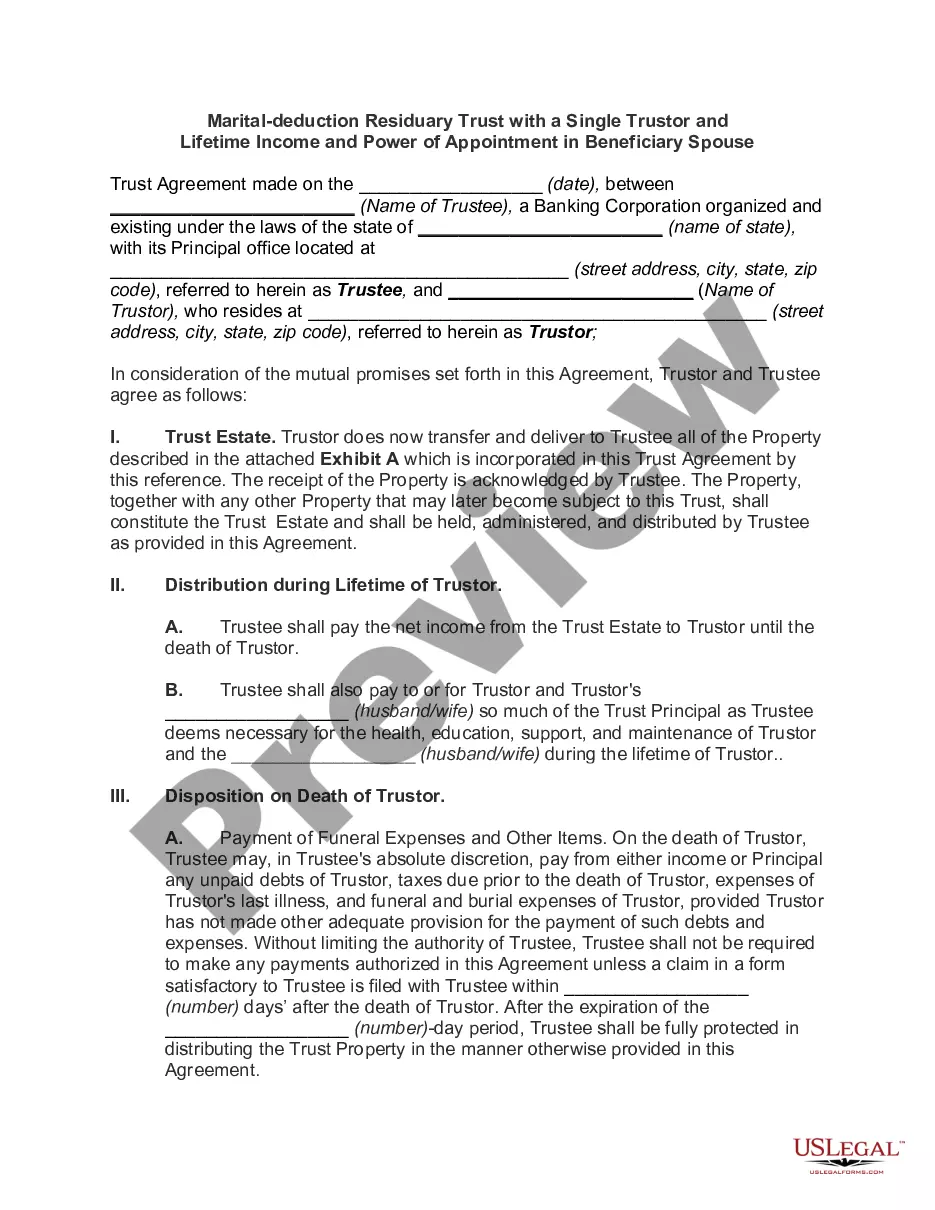
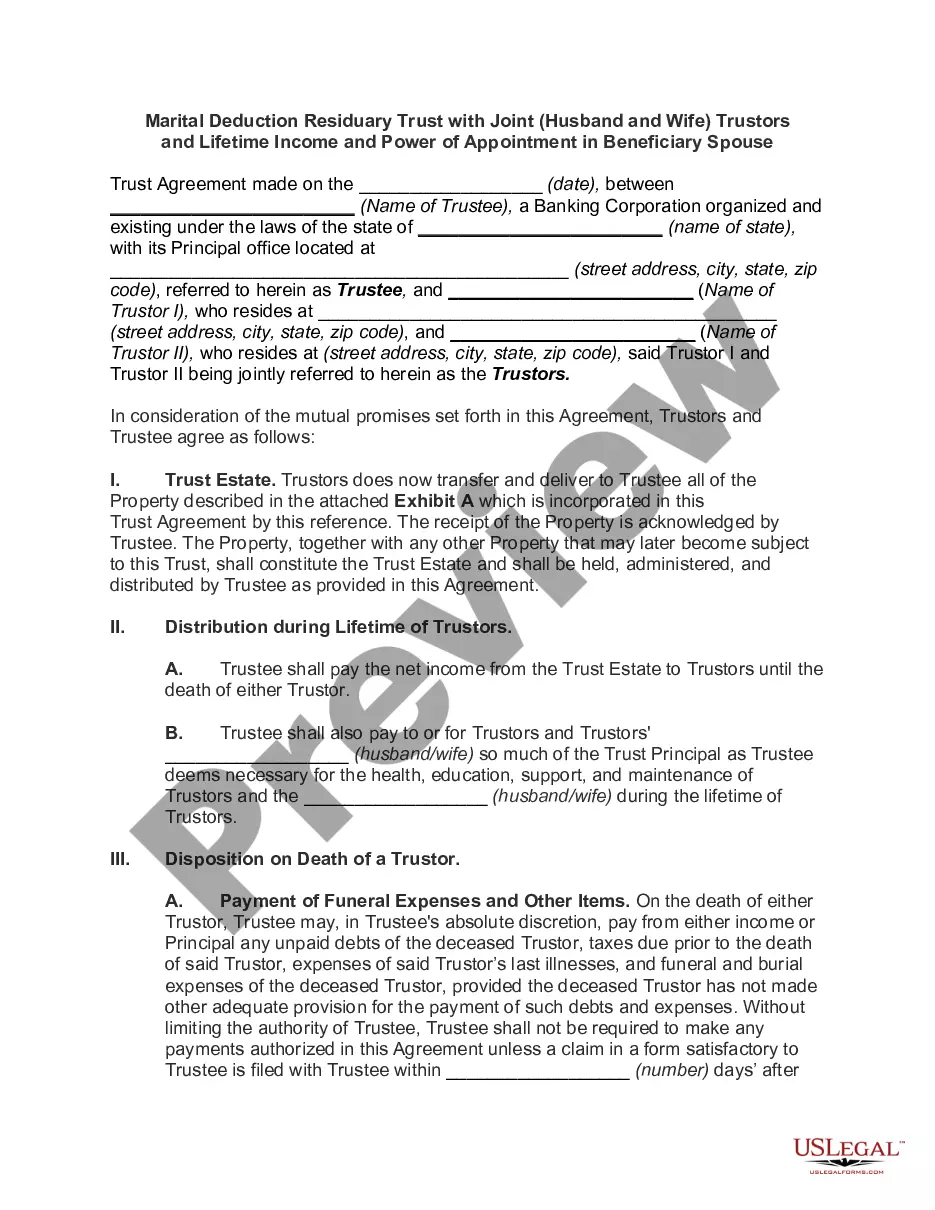
The Mutual Wills Package with Last Wills and Testaments for Married Couples with Minor Children is a comprehensive legal form designed for spouses who wish to outline the distribution of their assets after death. This form is specifically tailored to couples with minor children and includes provisions for appointing guardians, managing children's inheritance through a trust, and designating personal representatives. Unlike standard wills, mutual wills create a binding contract between spouses regarding their estate plans, ensuring that each partner's wishes are honored even after one partner's passing.
Main sections of this form
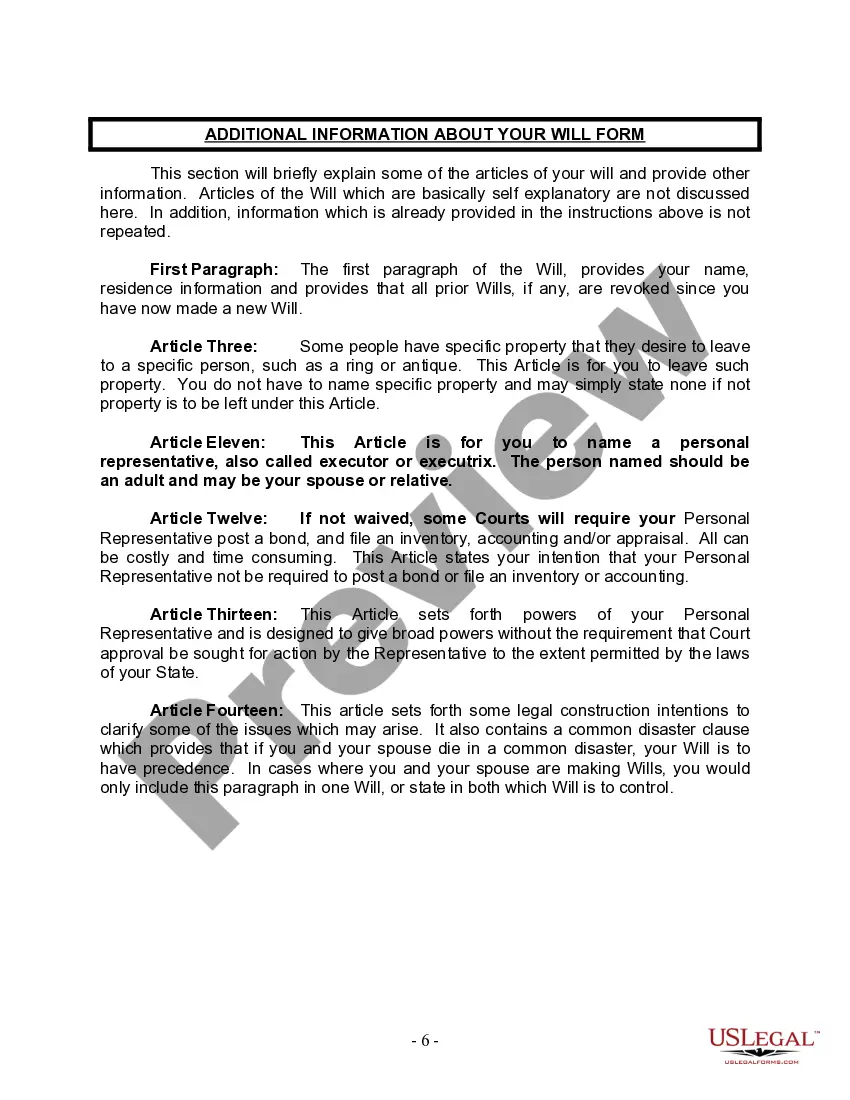
- Appointment of personal representatives or executors to manage the estate
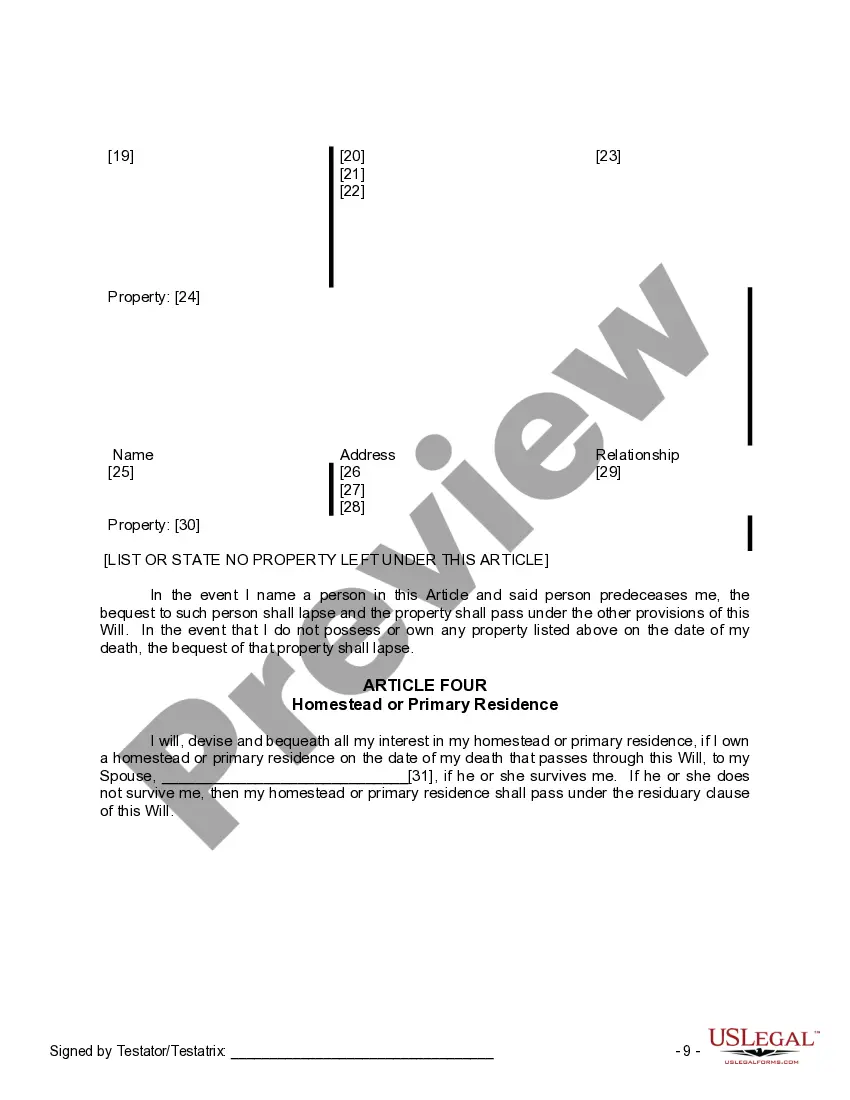
- Designation of property distribution among spouse and children
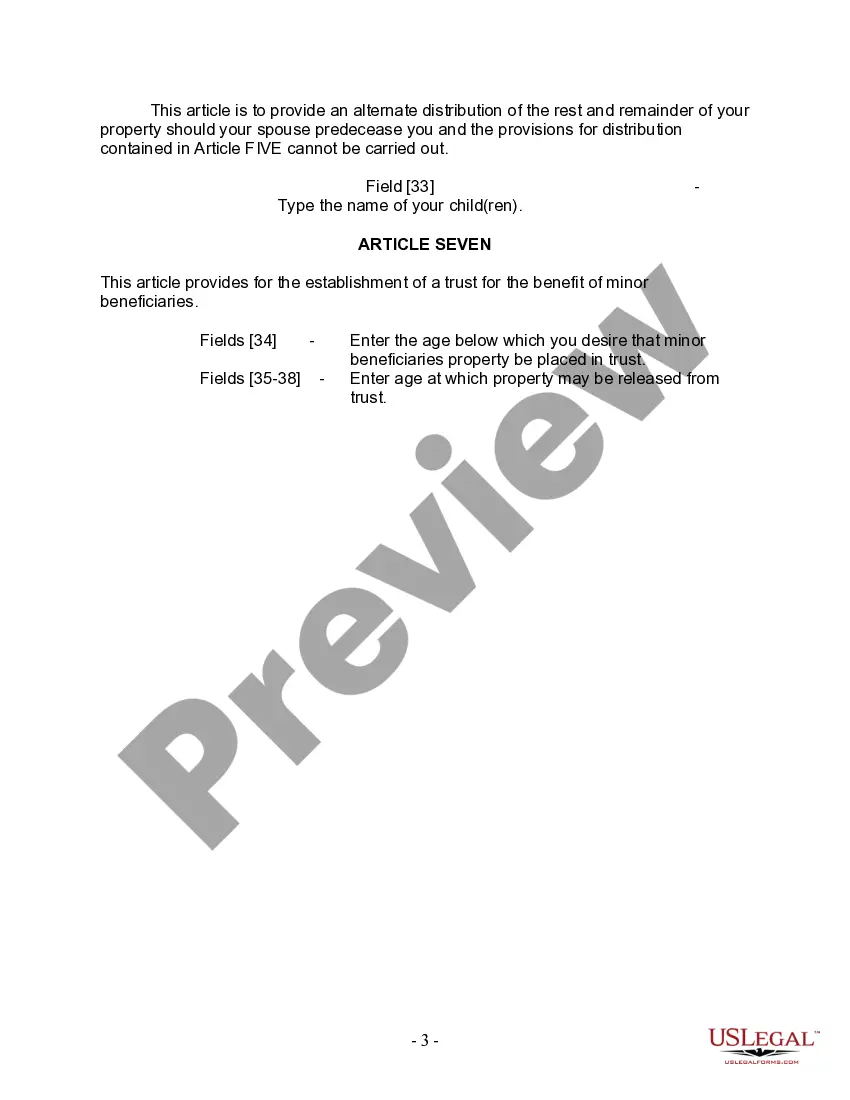
- Establishment of a trust for minor children's inheritance
- Appointment of a guardian for minor children, ensuring their care
- Provisions for specific bequests of personal and real property
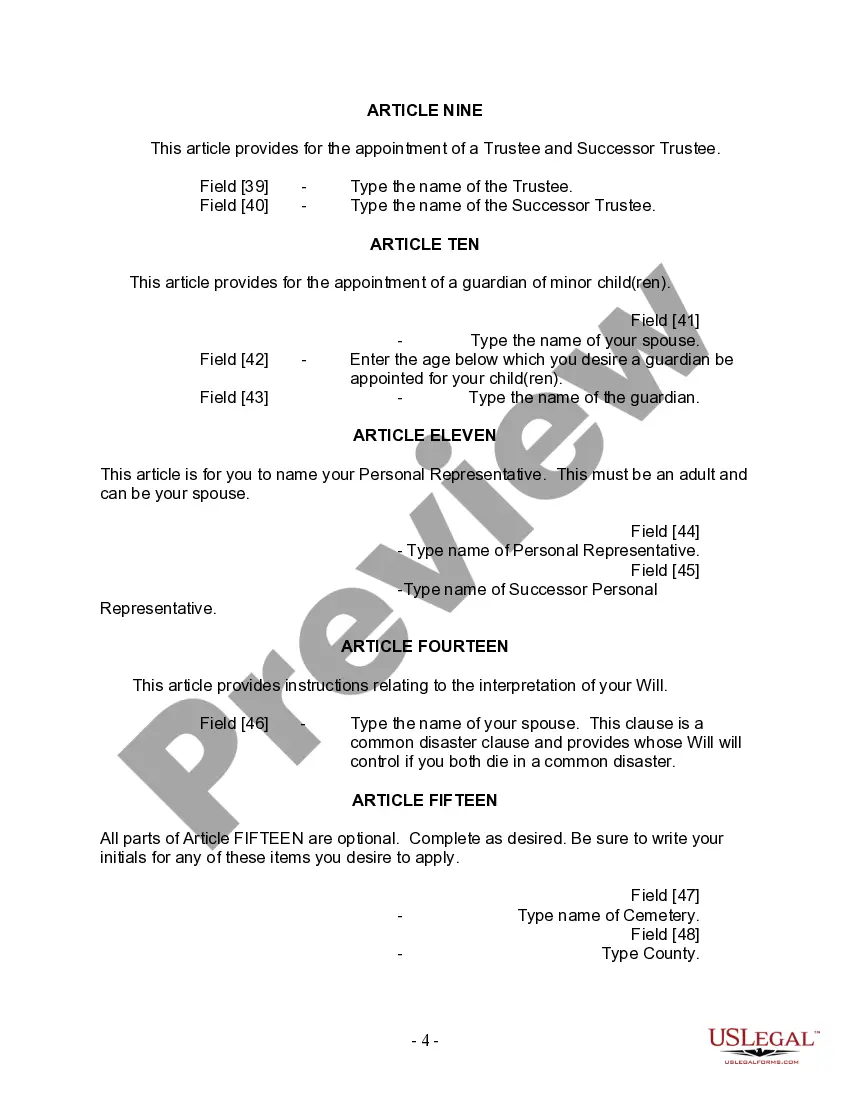
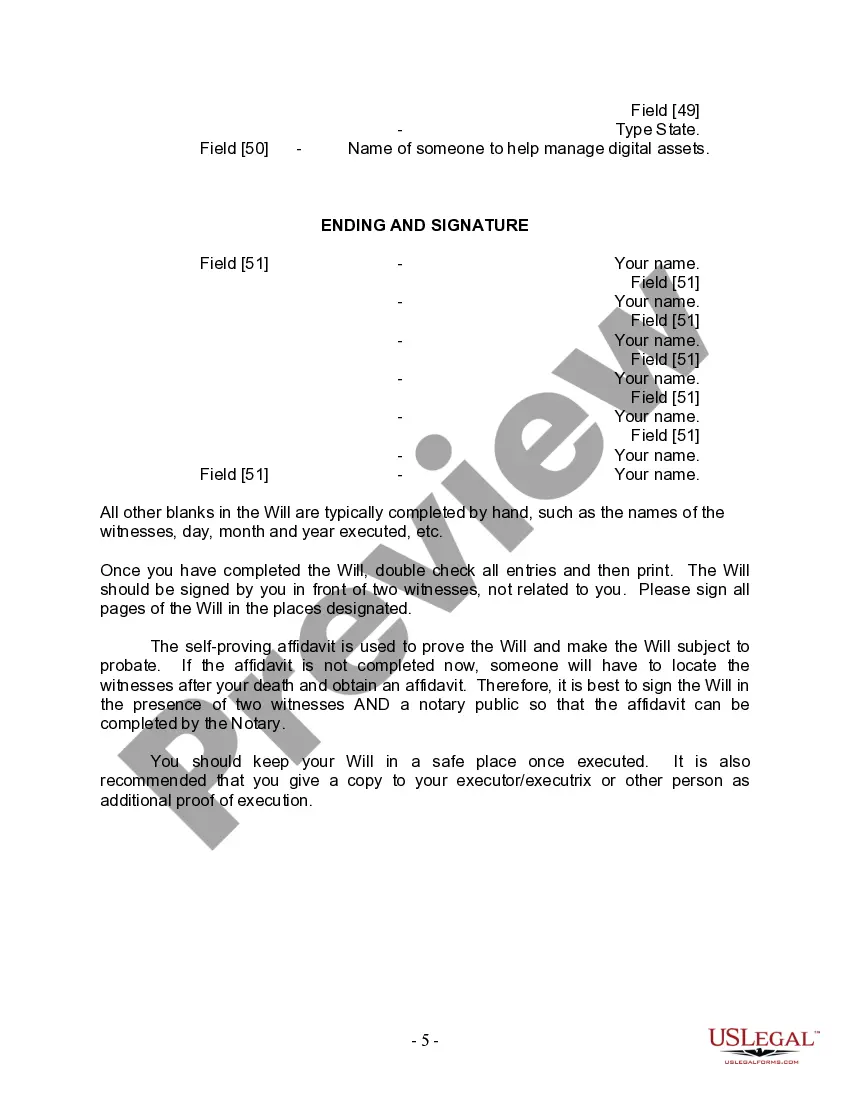
- Instructions for executing and witnessing the wills




When to use this document
This form should be utilized by married couples who want to secure their estate planning while considering their minor children's future. It is particularly useful when both spouses want to ensure that their wishes are mutually acknowledged and upheld, even in the event of one partner's death. This package is recommended for couples who are starting a family, planning for estate management, or those with prior estate planning that needs updating to reflect current wishes and life situations.
Who this form is for
- Married couples with minor children
- Couples looking to establish clear estate plans that benefit both partners
- Individuals wanting to designate guardians for their children in case of untimely death
- Spouses who wish to outline special provisions for specific assets or bequests
- Those seeking peace of mind regarding their family's future and financial stability
Instructions for completing this form
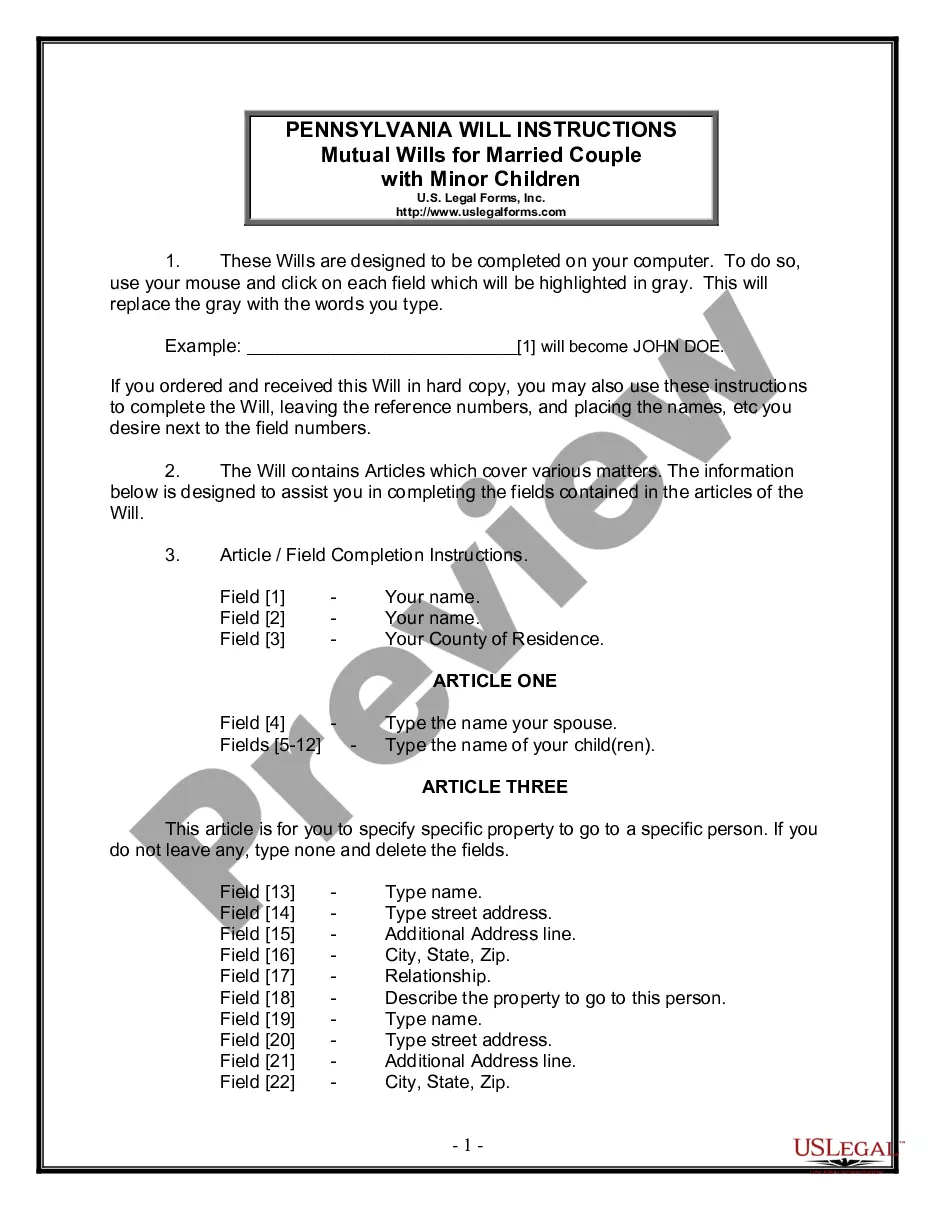
- Begin by entering the full names and addresses of both spouses.
- Specify the names and ages of your minor children in the designated fields.
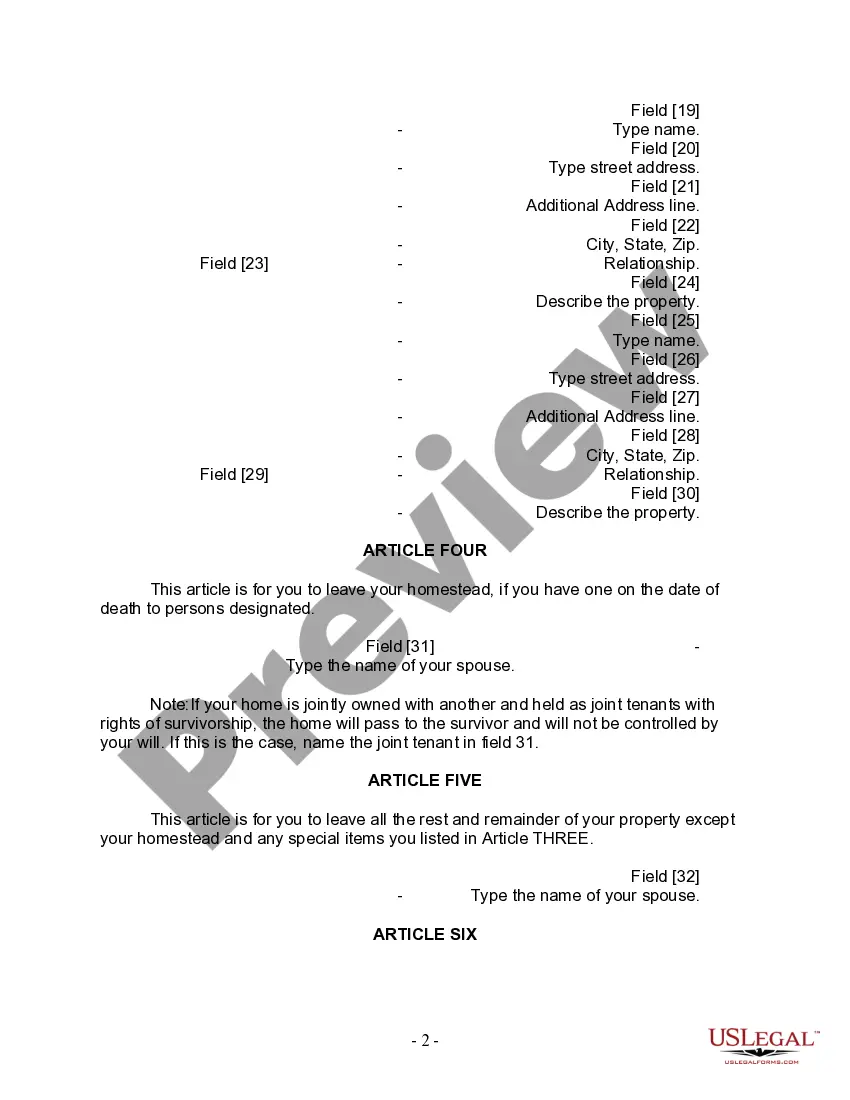
- Detail any specific property you wish to bequeath to designated beneficiaries.
- Choose a personal representative and an alternate, indicating their names and contact information.
- Have the wills signed in front of two disinterested witnesses and, if required, notarized.
- Store the completed wills in a secure location and provide copies to trusted individuals like your executor.
Notarization guidance
Yes, this form must be notarized to be legally valid. The package includes a notary acknowledgment to facilitate this process, ensuring the wills are executed properly and recognized in court.
Get your form ready online
Our built-in tools help you complete, sign, share, and store your documents in one place.
Make edits, fill in missing information, and update formatting in US Legal Forms—just like you would in MS Word.
Download a copy, print it, send it by email, or mail it via USPS—whatever works best for your next step.
Sign and collect signatures with our SignNow integration. Send to multiple recipients, set reminders, and more. Go Premium to unlock E-Sign.
If this form requires notarization, complete it online through a secure video call—no need to meet a notary in person or wait for an appointment.
We protect your documents and personal data by following strict security and privacy standards.

Make edits, fill in missing information, and update formatting in US Legal Forms—just like you would in MS Word.

Download a copy, print it, send it by email, or mail it via USPS—whatever works best for your next step.

Sign and collect signatures with our SignNow integration. Send to multiple recipients, set reminders, and more. Go Premium to unlock E-Sign.

If this form requires notarization, complete it online through a secure video call—no need to meet a notary in person or wait for an appointment.

We protect your documents and personal data by following strict security and privacy standards.
Typical mistakes to avoid
- Failing to update the wills as family circumstances change (e.g., birth of additional children)
- Not having the wills signed in the presence of required witnesses
- Inaccurately identifying property or beneficiaries in specific bequests
- Not providing clear instructions for guardianship of minor children
- Assuming mutual wills remain unchanged without regular review
Benefits of completing this form online
- Convenience of downloading and completing the forms from home
- Editability to customize the wills to meet specific family needs
- Access to professionally drafted legal documents ensuring compliance with applicable laws
- Immediate access to forms without waiting for postal delivery
- Ability to securely store and manage documents electronically for easy retrieval
Legal use & context
- The wills are effective at the time of signing if all legal requirements are met.
- Properly executed wills generally simplify the probate process.
- Ensuring the document complies with local state laws increases its enforceability.
Main things to remember
- The Mutual Wills Package is ideal for married couples with minor children needing clear estate instructions.
- Careful completion and notarization are crucial for legal validity.
- A trust for minor children can ensure their future financial security.
- Regular updates to the wills are important to reflect changes in personal circumstances.
Looking for another form?
Form popularity
FAQ
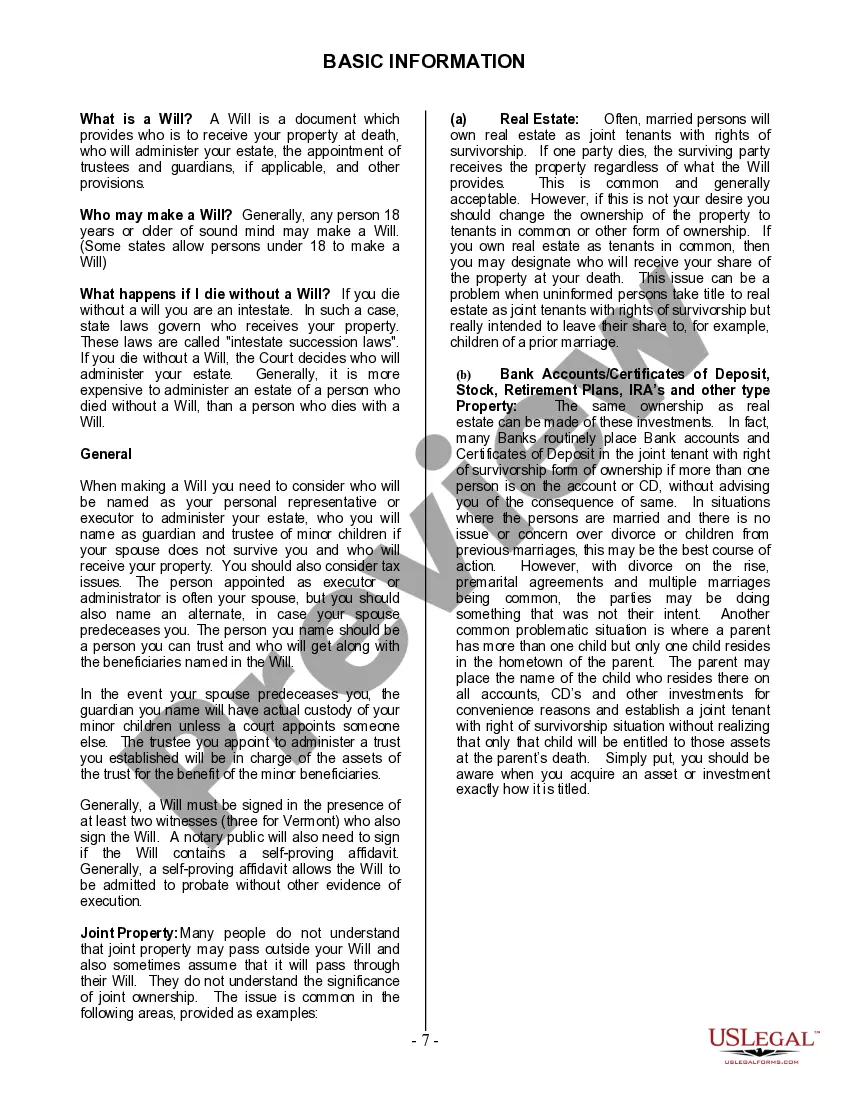
To create a valid will in Pennsylvania, the will creator (testator) must be 18 years of age and must possess a sound mind. Possessing a sound mind means that the testator is mentally competent and fully understands what property they own and who they are conveying their property to.
In Pennsylvania, living persons do NOT have wills 'registered' and stored by the county Register of Wills.
Pennsylvania wills have been filed with the "register of wills" in each county, where they are recorded in indexed books.The Family History Library has microfilmed the wills and orphans' court records for most counties, usually up to the early 1900s.
You can make your own will in Pennsylvania, using Nolo's do-it-yourself will software or online will programs. However, you may want to consult a lawyer in some situations. For example, if you think that your will might be contested or if you want to disinherit your spouse, you should talk with an attorney.
Include personal identifying information. Include a statement about your age and mental status. Designate an executor. Decide who will take care of your children. Choose your beneficiaries. List your funeral details. Sign and date your Last Will and Testament.
To create a valid will in Pennsylvania, the will creator (testator) must be 18 years of age and must possess a sound mind. Possessing a sound mind means that the testator is mentally competent and fully understands what property they own and who they are conveying their property to.
The short answer is yes, online wills are legitimate as long as you ensure they comply with federal and state laws. Online will companies hire licensed attorneys and legal professionals to carefully word their estate planning documents so that each is legally binding.
A handwritten or typed will can be created at no cost. Many online services set a price at less than $100 for a will. Most estate planners charge more than your average do-it-yourself service, Farrell says. For help with a will, an attorney will likely charge several hundred dollars or more.
A valid will in Pennsylvania must be in writing, either typed or handwritten. Pennsylvania only accepts oral wills in very narrow circumstances. In all cases, the testator, or person drafting the document, must also sign it.