Pennsylvania Commercial Sublease
What is this form?
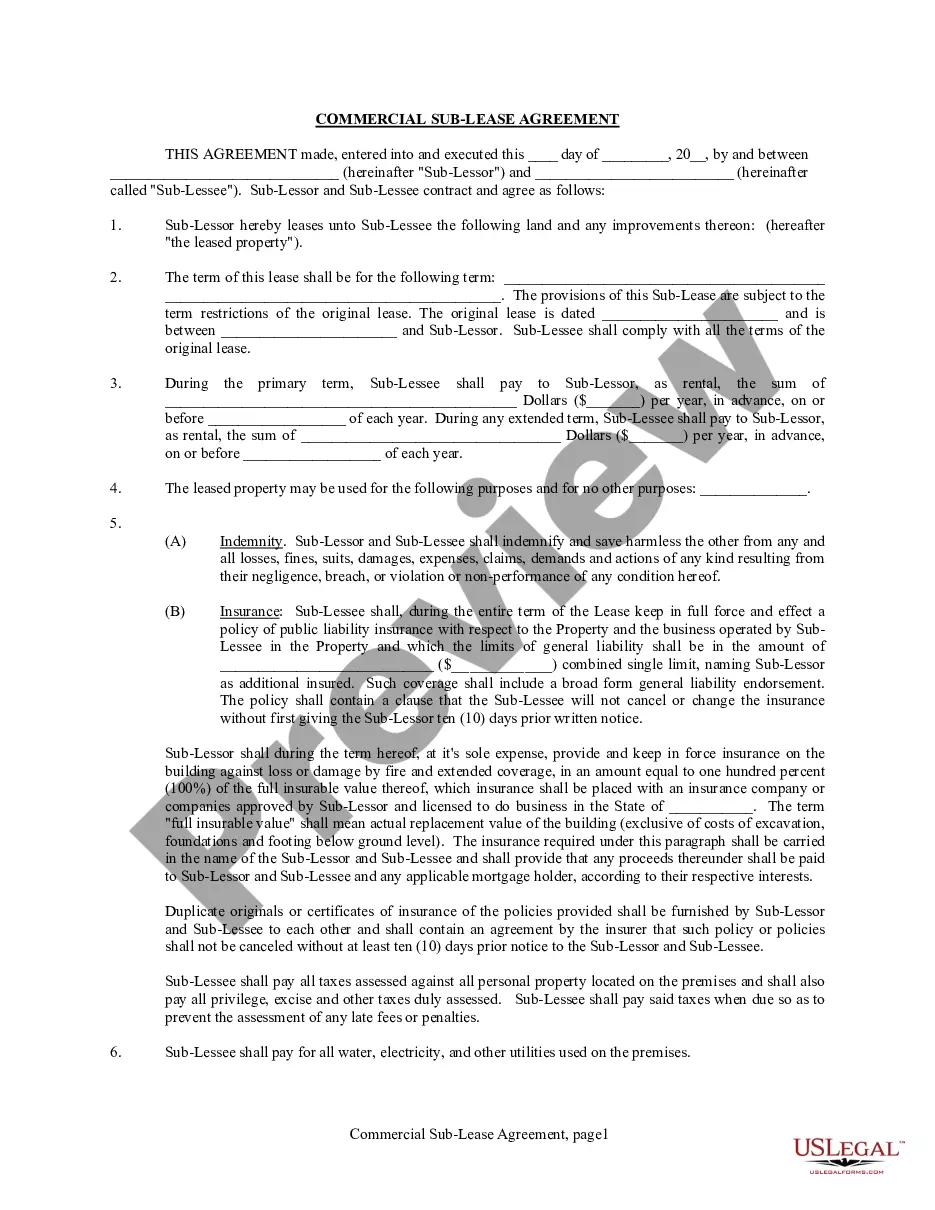
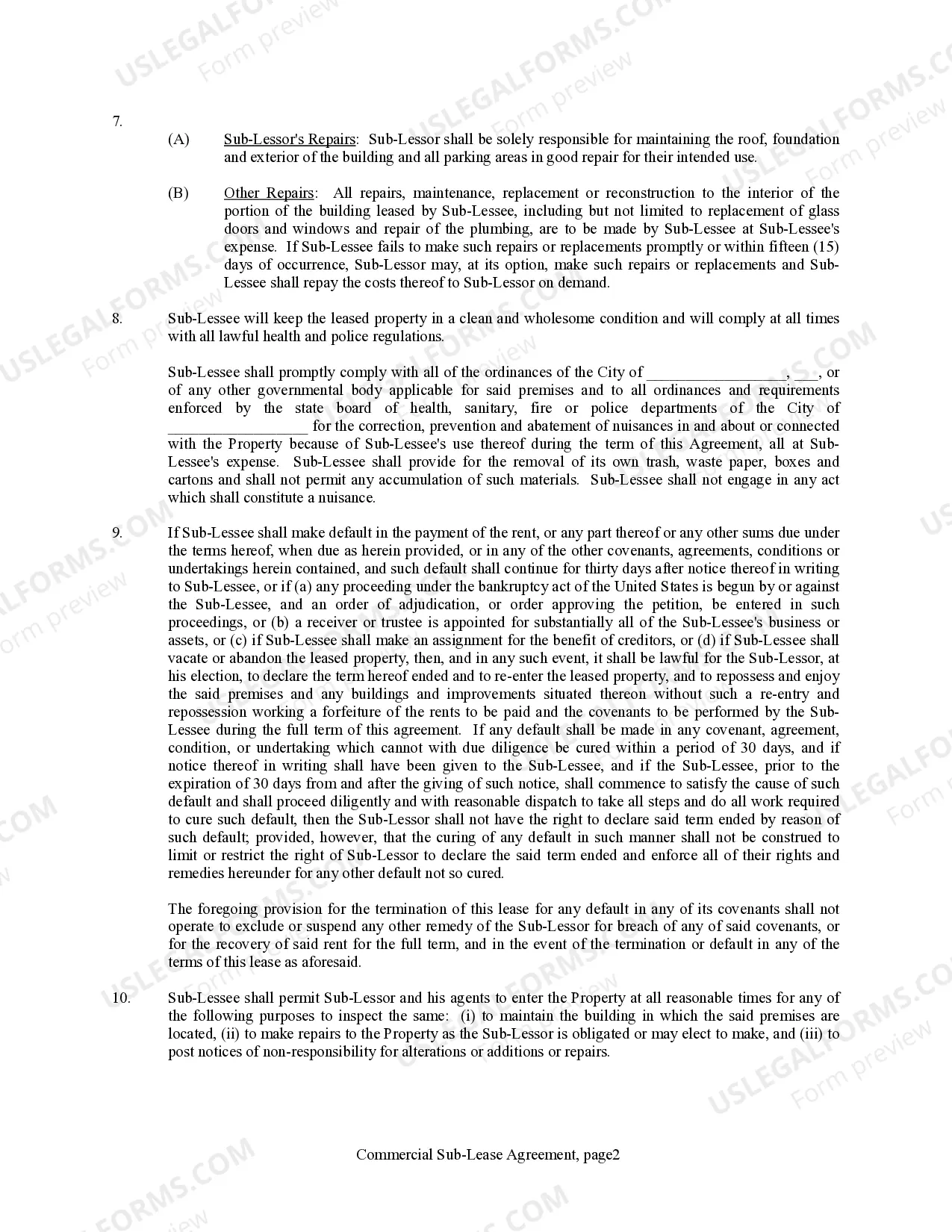
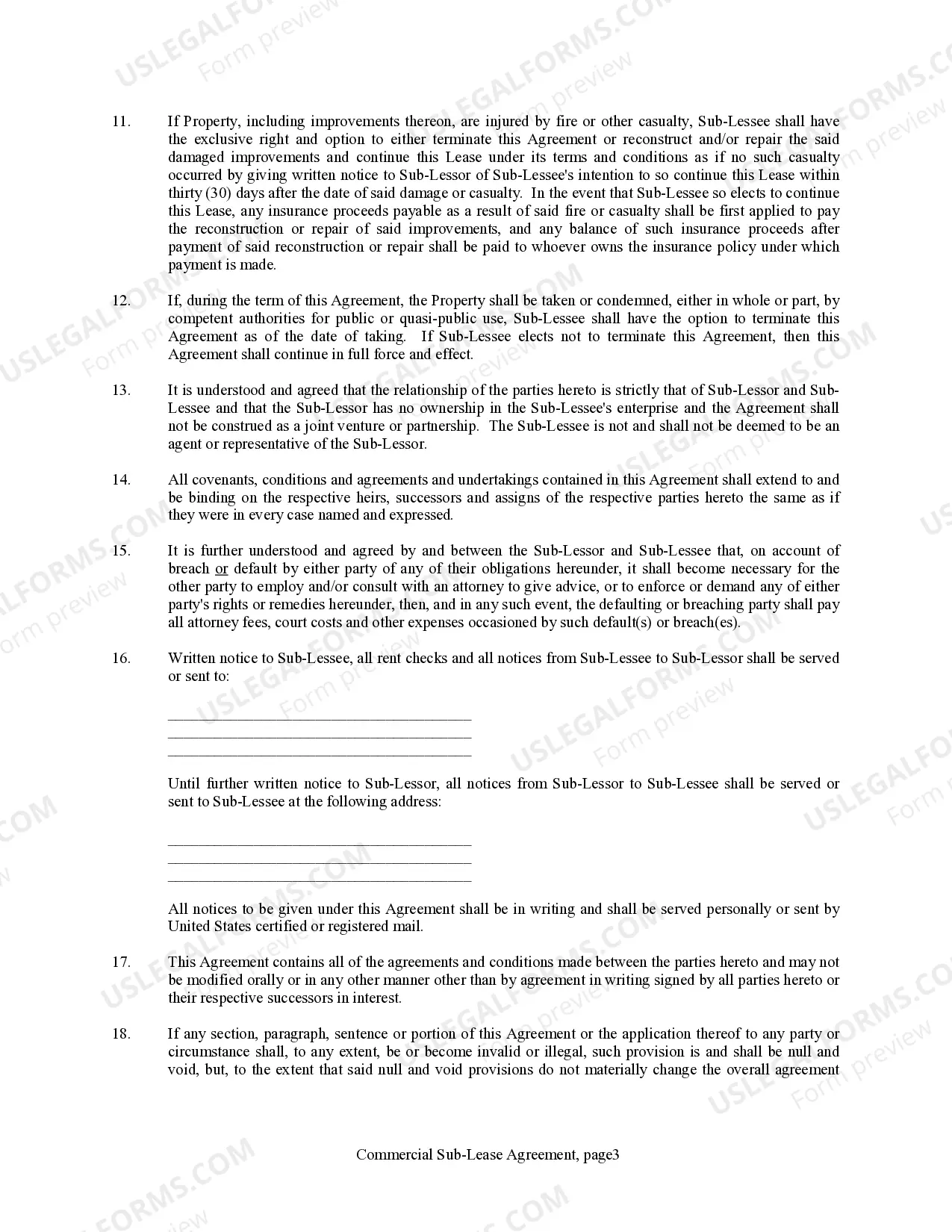
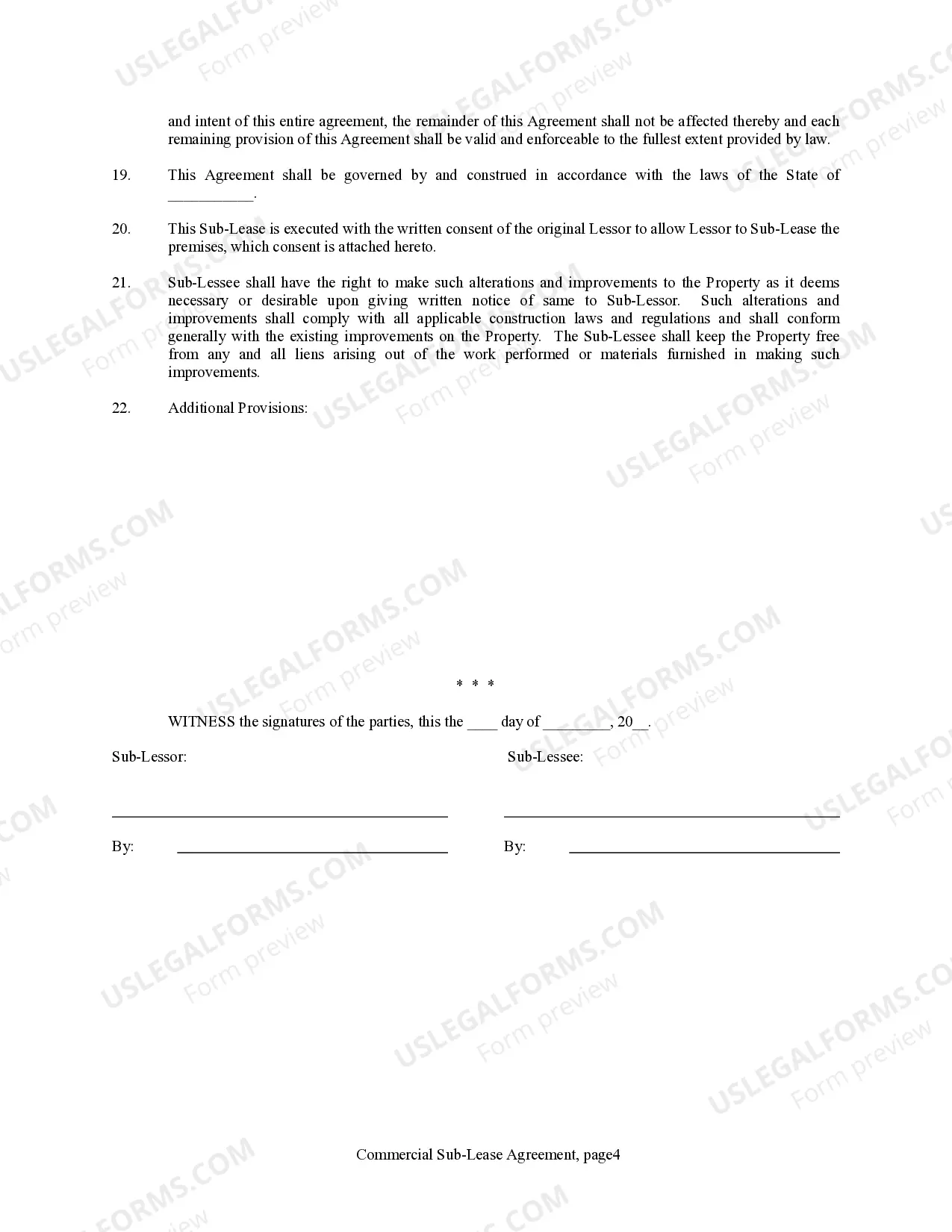
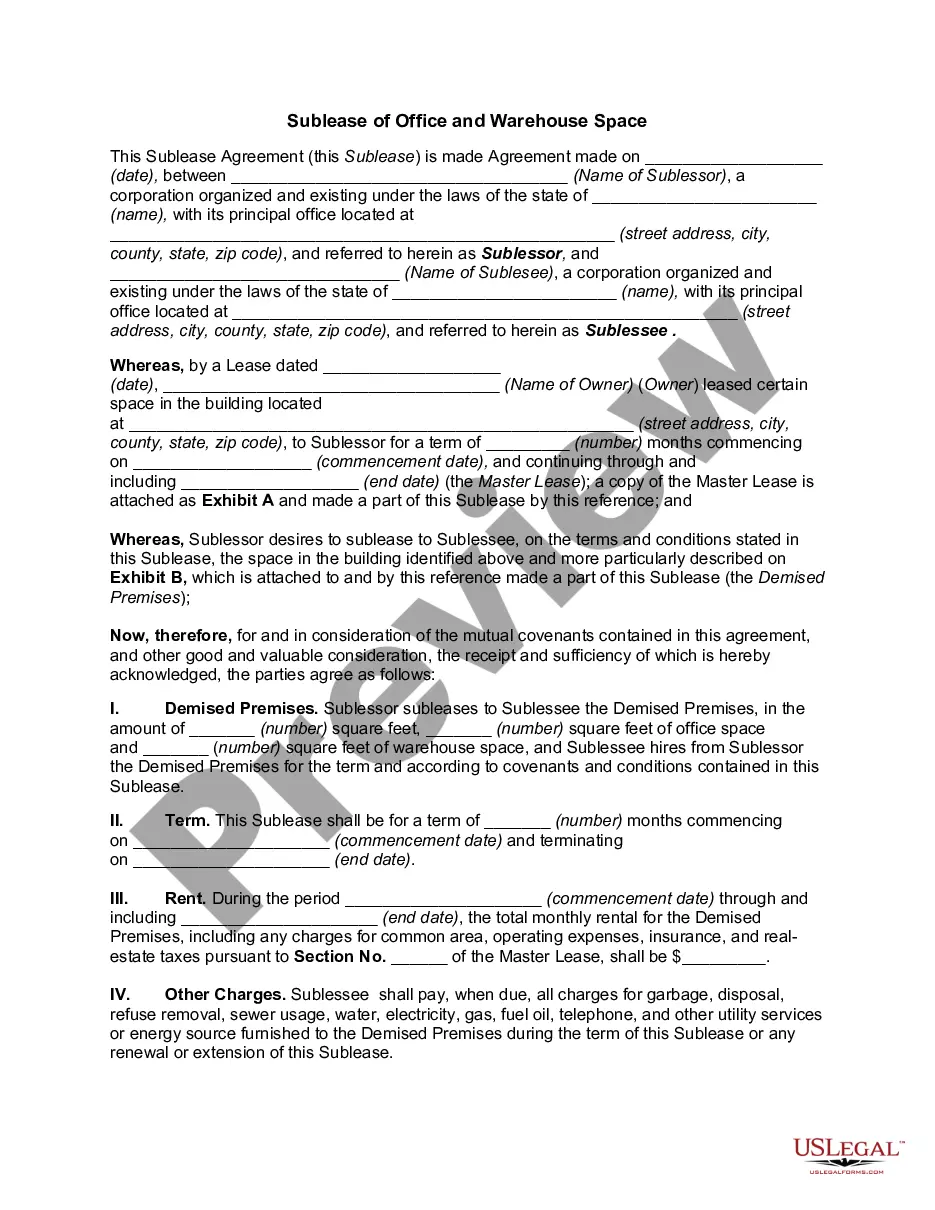
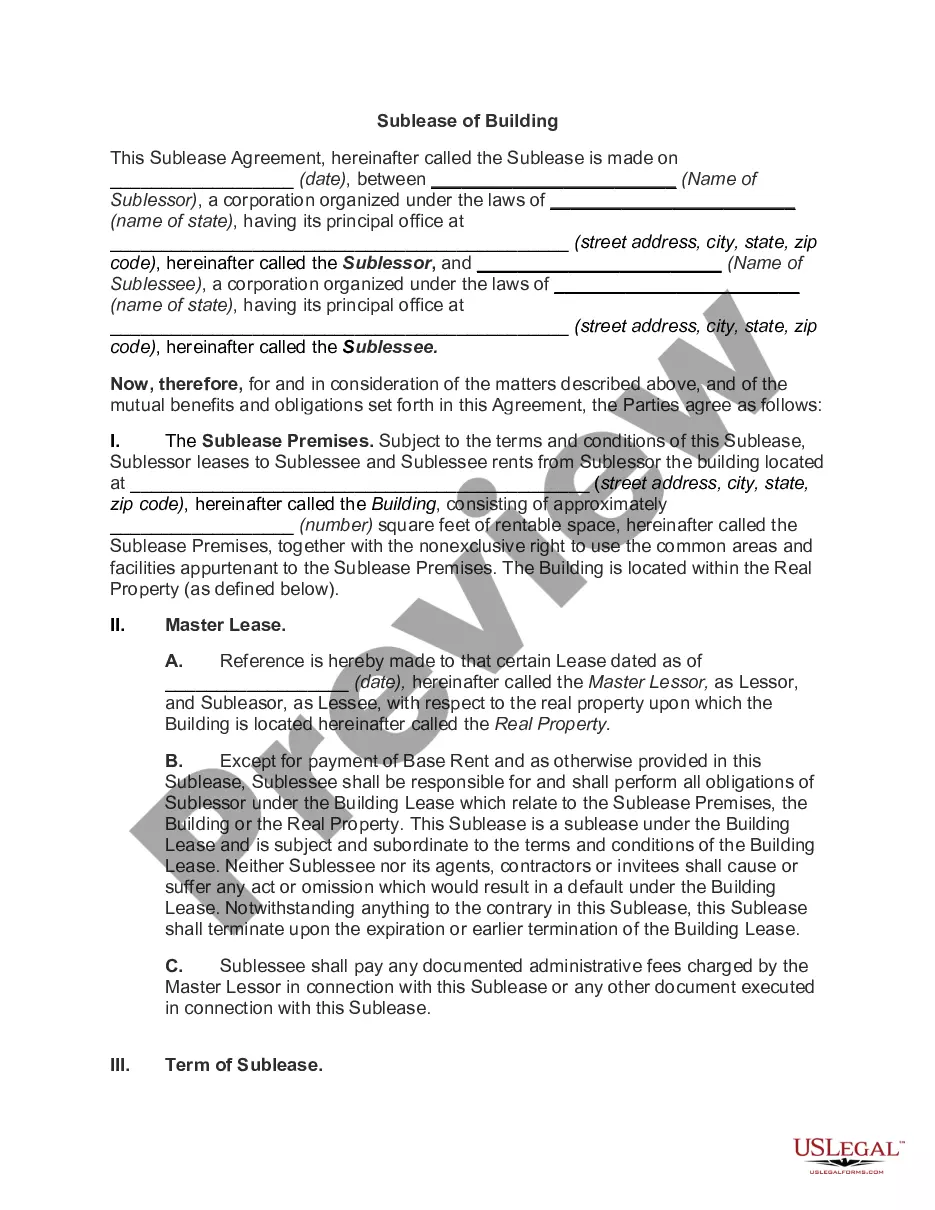
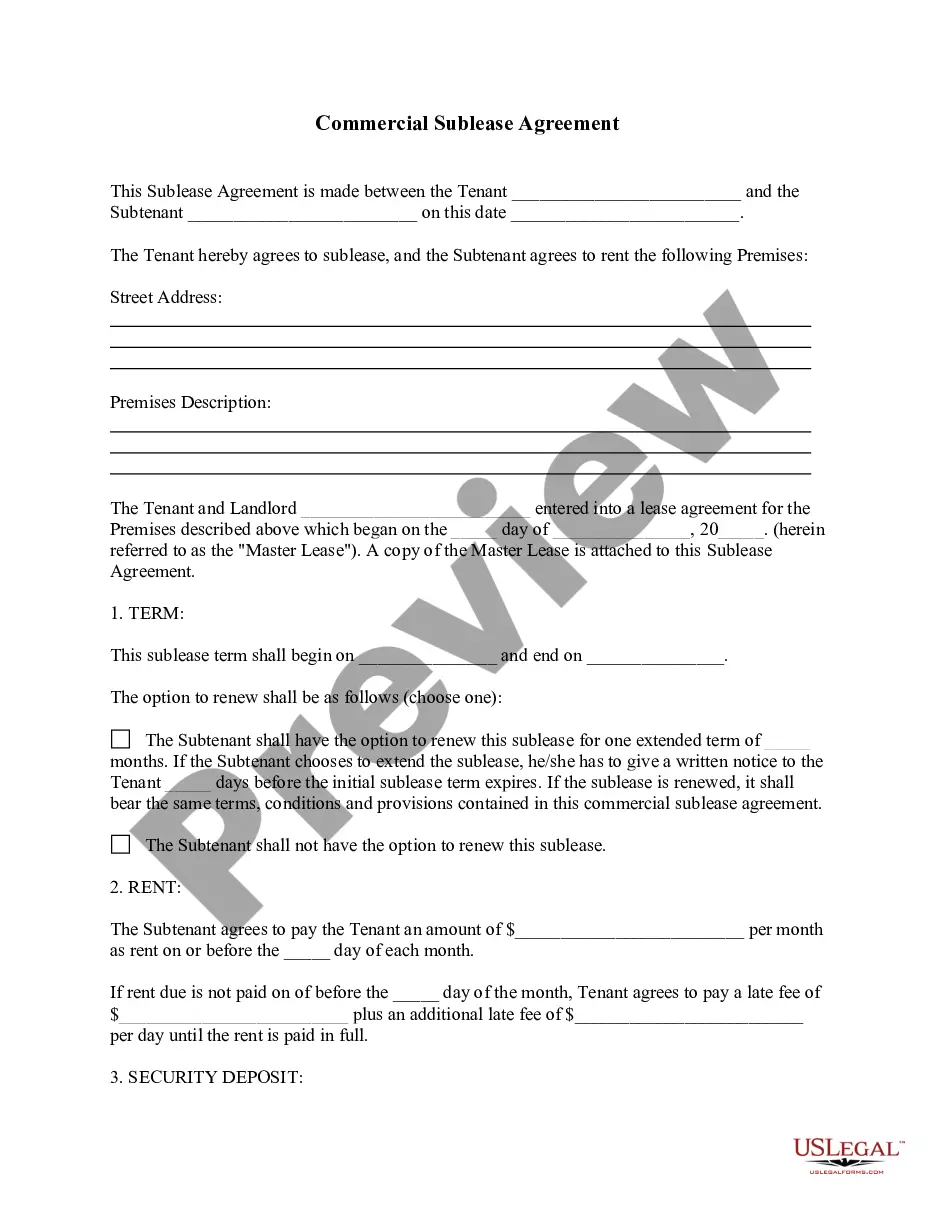
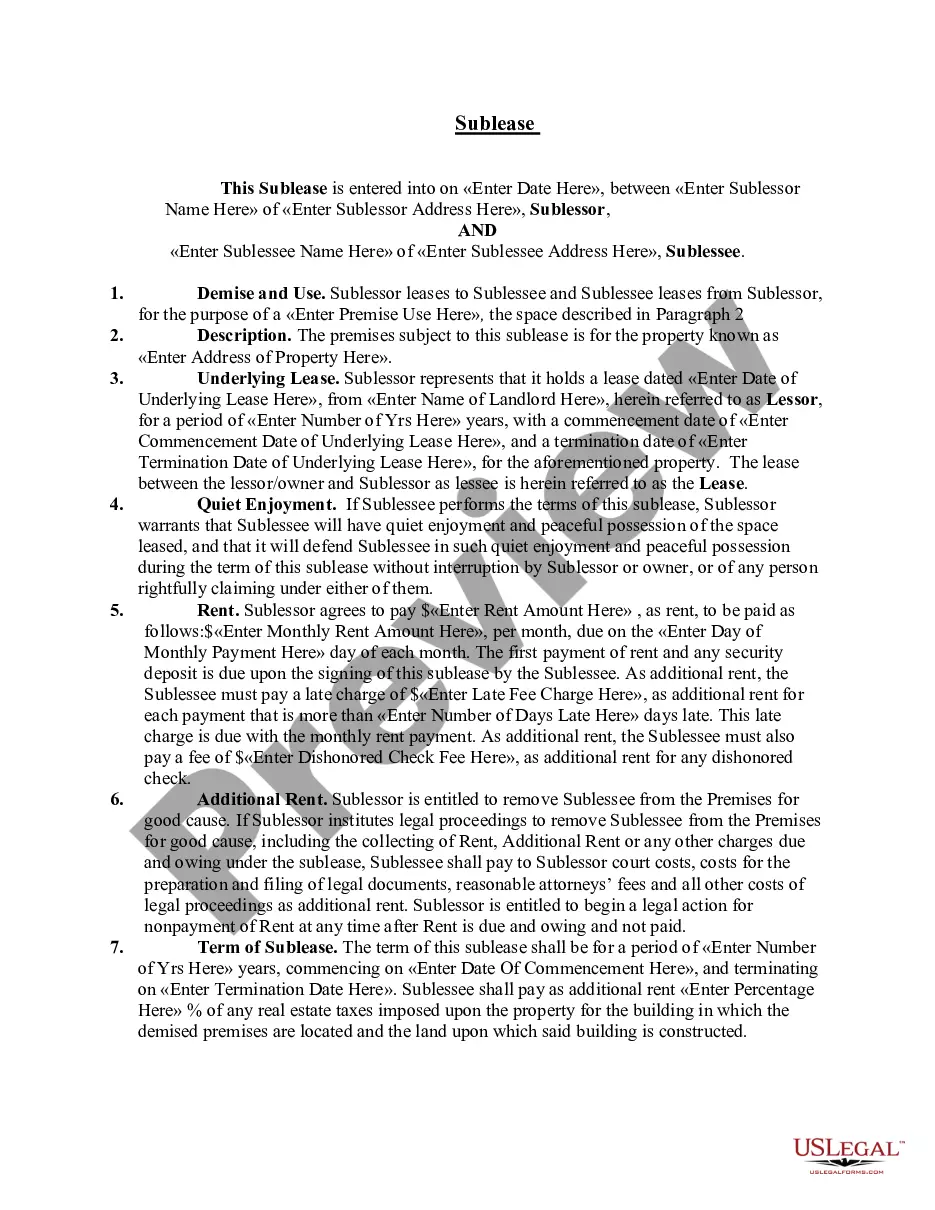
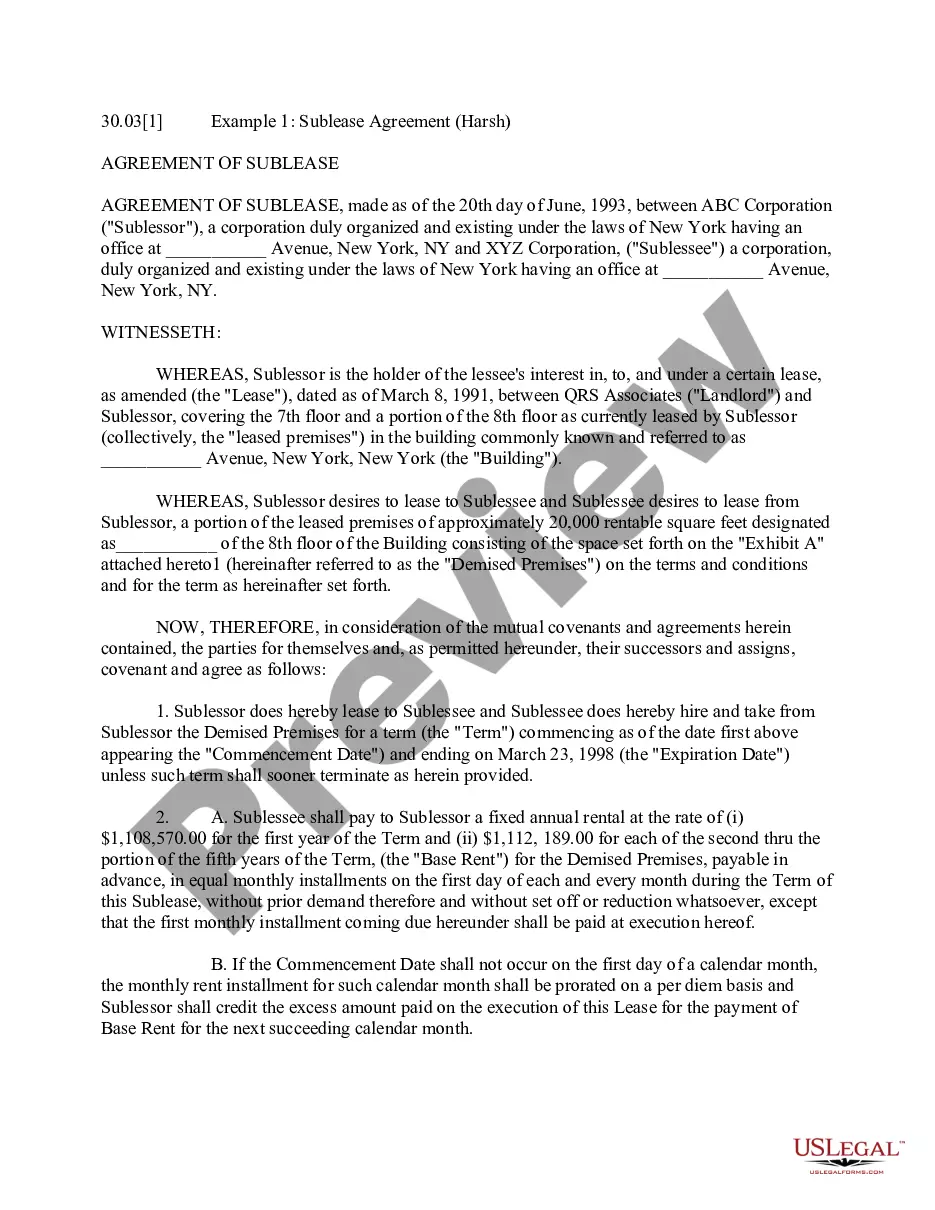
The Commercial Sublease form allows a tenant (the Sub-Lessor) to lease a property to another tenant (the Sub-Lessee). This sublease must adhere to the terms outlined in the original lease agreement, ensuring that both parties understand their rights and responsibilities. This form is different from a standard lease agreement, as it specifically addresses the subletting of commercial property rather than direct leasing from a property owner.
Main sections of this form
- Identifying information for the Sub-Lessor and Sub-Lessee.
- Description of the leased property, including land and buildings.
- Terms of the lease, including duration and rental payment details.
- Indemnity clauses and insurance requirements for both parties.
- Conditions for maintenance and repairs of the leased property.
- Details regarding compliance with local laws and health regulations.
- Provisions for termination of the lease under certain conditions.
Common use cases
This form is necessary when a current tenant of a commercial property wants to sublet the space to another party. It is useful in various situations, such as when a tenant needs to relocate but wishes to maintain their lease, or when they want to share the space to reduce expenses. Using a Commercial Sublease ensures that the new tenant is legally bound to follow the original lease terms.
Who this form is for
- Current tenants seeking to sublet their commercial space.
- Businesses looking to temporarily transfer their lease agreements.
- Property managers or landlords overseeing subleasing arrangements.
- Legal teams needing a structured sublease template for commercial use.
Steps to complete this form
- Identify the parties involved by entering the names and addresses of the Sub-Lessor and Sub-Lessee.
- Specify the property being leased, including a detailed description of the land and any buildings.
- Enter the duration of the lease, including start and end dates.
- Detail the rental payment amount and specify the payment schedule (e.g., annually, monthly).
- Include any specific conditions or usage requirements for the leased property.
- Provide signatures and dates for both parties to finalize the agreement.
Notarization requirements for this form
This form does not typically require notarization unless specified by local law. However, both parties should ensure that they comply with any state-specific requirements to validate the agreement.
Get your form ready online
Our built-in tools help you complete, sign, share, and store your documents in one place.
Make edits, fill in missing information, and update formatting in US Legal Forms—just like you would in MS Word.
Download a copy, print it, send it by email, or mail it via USPS—whatever works best for your next step.
Sign and collect signatures with our SignNow integration. Send to multiple recipients, set reminders, and more. Go Premium to unlock E-Sign.
If this form requires notarization, complete it online through a secure video call—no need to meet a notary in person or wait for an appointment.
We protect your documents and personal data by following strict security and privacy standards.

Make edits, fill in missing information, and update formatting in US Legal Forms—just like you would in MS Word.

Download a copy, print it, send it by email, or mail it via USPS—whatever works best for your next step.

Sign and collect signatures with our SignNow integration. Send to multiple recipients, set reminders, and more. Go Premium to unlock E-Sign.

If this form requires notarization, complete it online through a secure video call—no need to meet a notary in person or wait for an appointment.

We protect your documents and personal data by following strict security and privacy standards.
Mistakes to watch out for
- Failing to specify the duration of the sublease, leading to confusion over terms.
- Not adhering to the conditions of the original lease, which can invalidate the sublease.
- Omitting necessary insurance coverage details required by the original lease.
- Neglecting to ensure all parties sign the form, which is crucial for legal enforceability.
- Assuming verbal agreements are sufficient when written documentation is needed.
Benefits of using this form online
- Convenience of downloading and completing the form at any time without needing an appointment.
- Editability to tailor the document according to specific leasing terms and conditions.
- Reliability of having a professionally drafted form that meets legal standards.
- Quick access to essential legal documents without needing to pay a lawyer for basic templates.
Legal use & context
- A Commercial Sublease must comply with the terms of the original lease and applicable state laws.
- Both parties in the agreement should be aware of their rights and obligations under the terms set forth in the form.
- Failure to adhere to the agreement could result in legal disputes or termination of the sub-lease.
Looking for another form?

Form popularity
FAQ
Landlords can try and forfeit a lease if a tenant is in breach of their obligations (this assumes that the lease document includes a right to forfeit).If a commercial lease contains a break clause, either or both parties to the agreement may seek to terminate the lease before its fixed period has ended.
A sublet, sometimes called a sublease, is a contract under which a tenant rents out their apartment to another individual while their name is still on the lease.When subleasing, only the original tenant's name is on the lease. In a roommate situation, all tenants are named on the lease.
A sublease is a legally binding contract made between a tenant and a new tenant (also known as a subtenant or a sublessee).Usually, the first tenant must get consent from the landlord before he/she is allowed to sublease the premises.
A sublease is the re-renting of property by an existing tenant to a new third party for a portion of the tenant's existing lease contract.Even if a sublease is permitted, the original tenant is still liable for the obligations stated in the lease agreement, such as the payment of rent each month.
In short, subletting allows a new renter to take over the lease directly with the landlord, while subleasing involves renting all or part of the space to another renter through the original renter.
Can the landlord refuse consent to an Assignment? Most leases will say that the Landlord cannot unreasonably withhold consent. According to section 19 (1A) of the Landlord and Tenant Act 1927 the landlord can insert conditions in the lease, which need to be met in the case of an assignment.
The Bottom Line: The Pennsylvania Tenant's Rights Act, holds you accountable to the terms of your lease. So if your lease prohibits sublets, then you aren't allowed to sublet. You should also obtain written approval from your landlord prior to subletting.
A commercial sublease is an agreement between a tenant currently leasing a property, a new tenant looking for space, and the property owner. When you sublease your space you are the sublessor (or sublandlord) and your new tenant is the sublessee (or subtenant).
Recording a lease means that it (or a Notice of Lease) is submitted to the public record, usually at the local Registry of Deeds following the signing of it by both parties. Generally, recording of the lease protects the tenant against subsequent claims to the property.