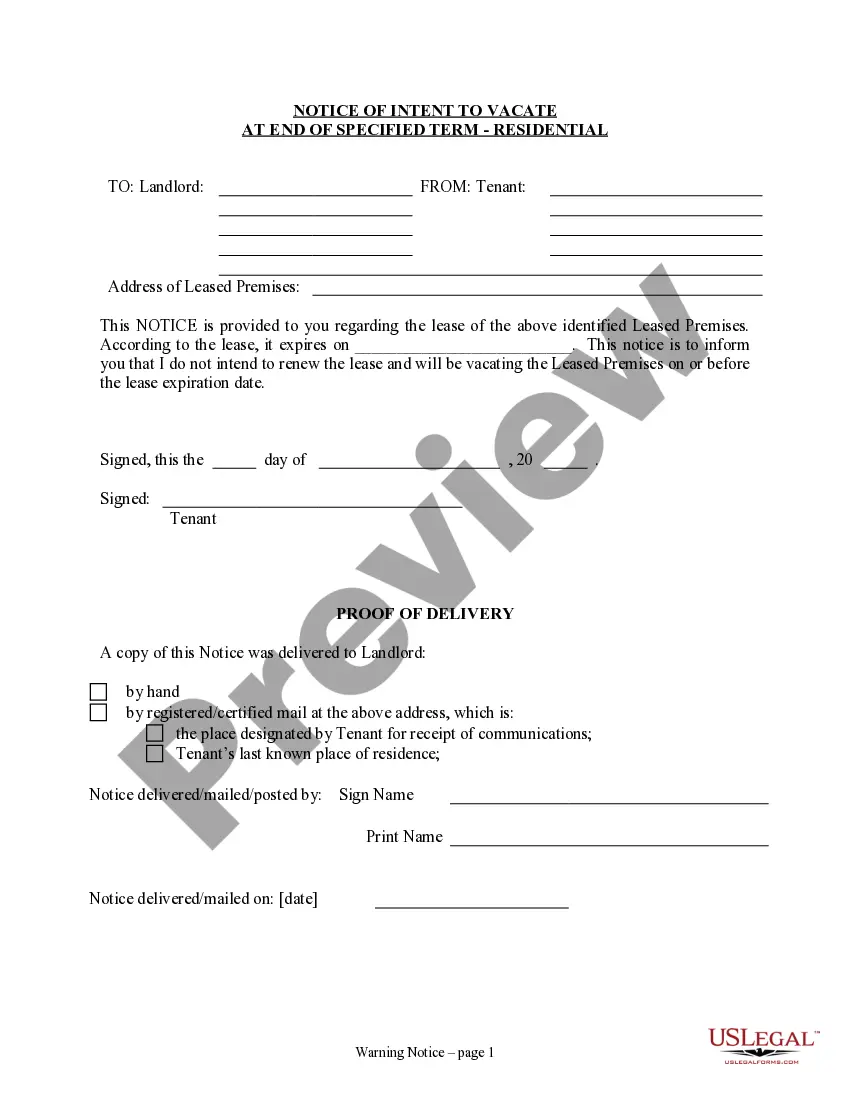
Pennsylvania Letter from Tenant to Landlord containing Notice that premises leaks during rain and demand for repair
About this form
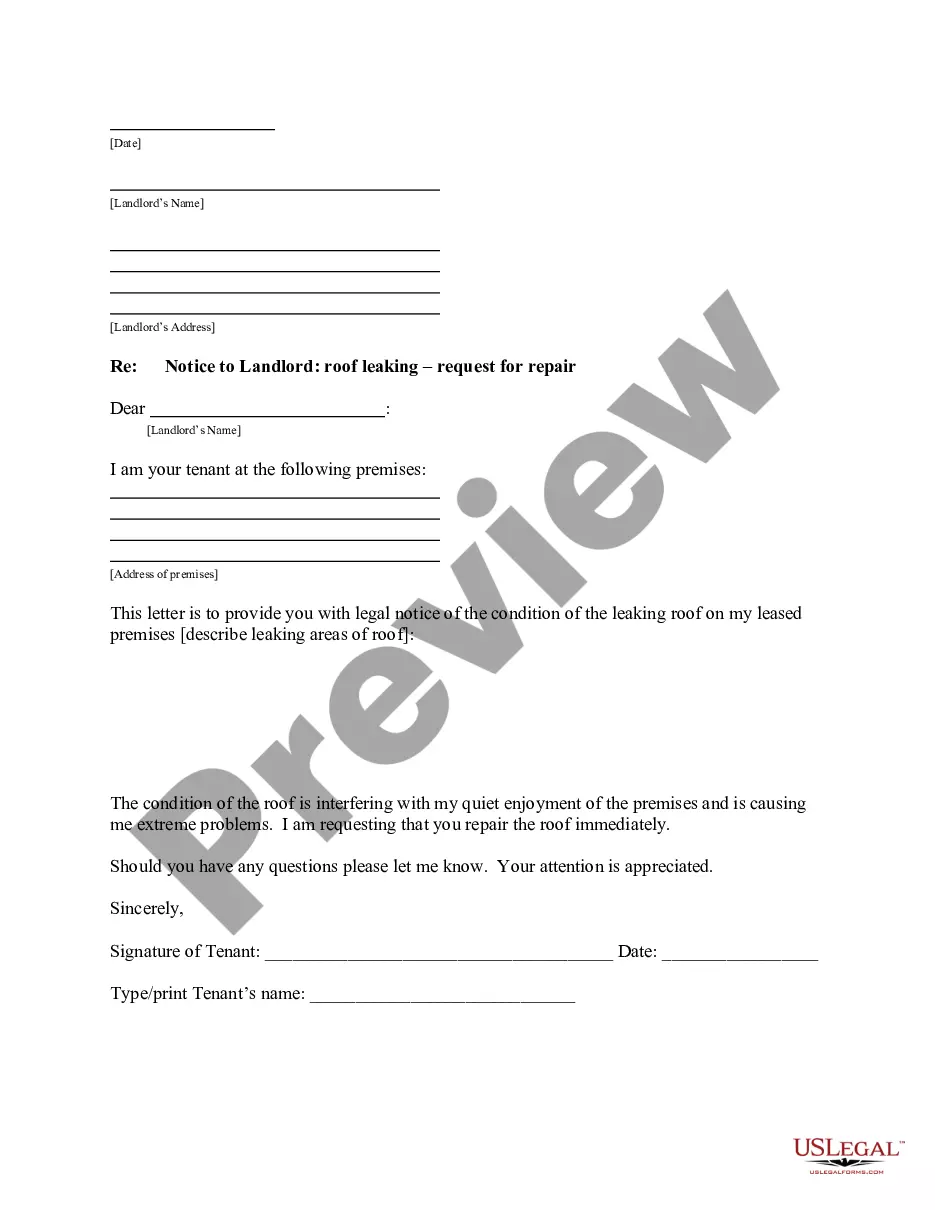
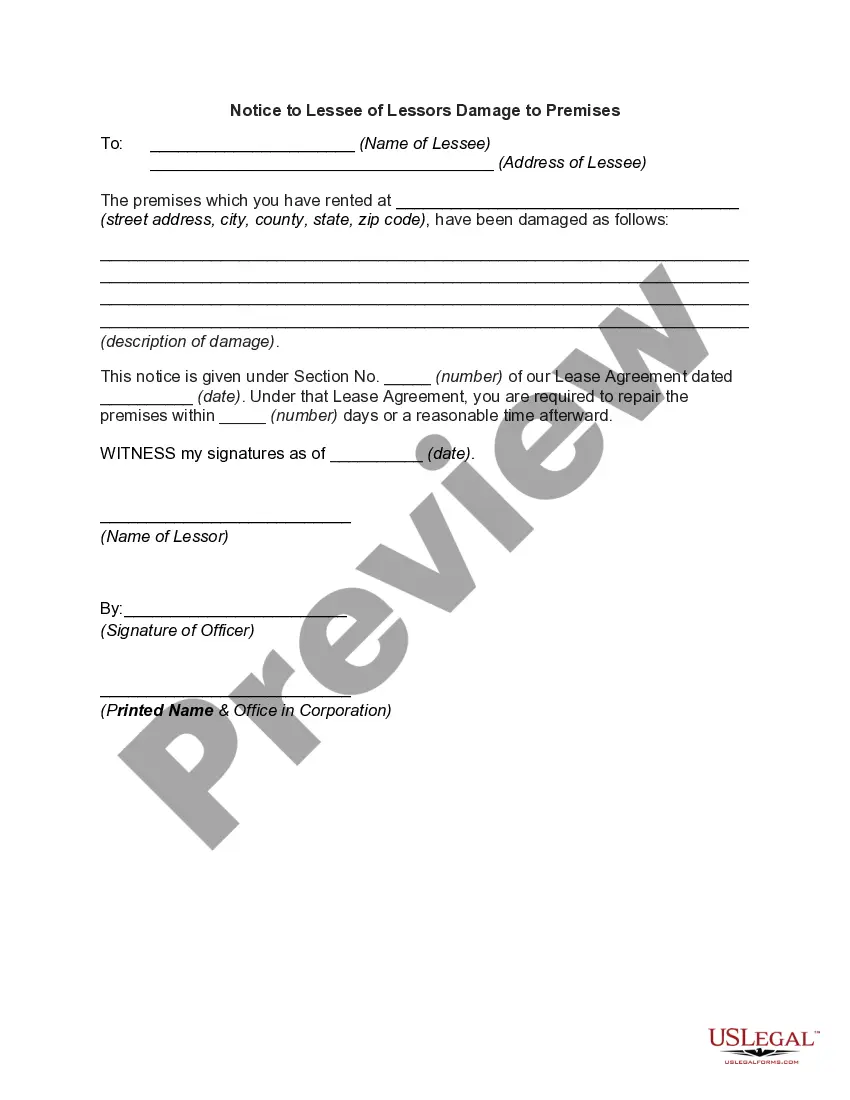
This form is a Letter from Tenant to Landlord concerning a leak during rain and requests repair. It allows tenants to formally notify their landlord of issues affecting the leased premises, distinguishing it from other forms that may focus on different maintenance or lease violations. This letter serves as a vital communication tool to ensure the landlord addresses the leak promptly.
Key components of this form
- Tenant's signature and date of the notice.
- Printed name of the tenant for clarity.
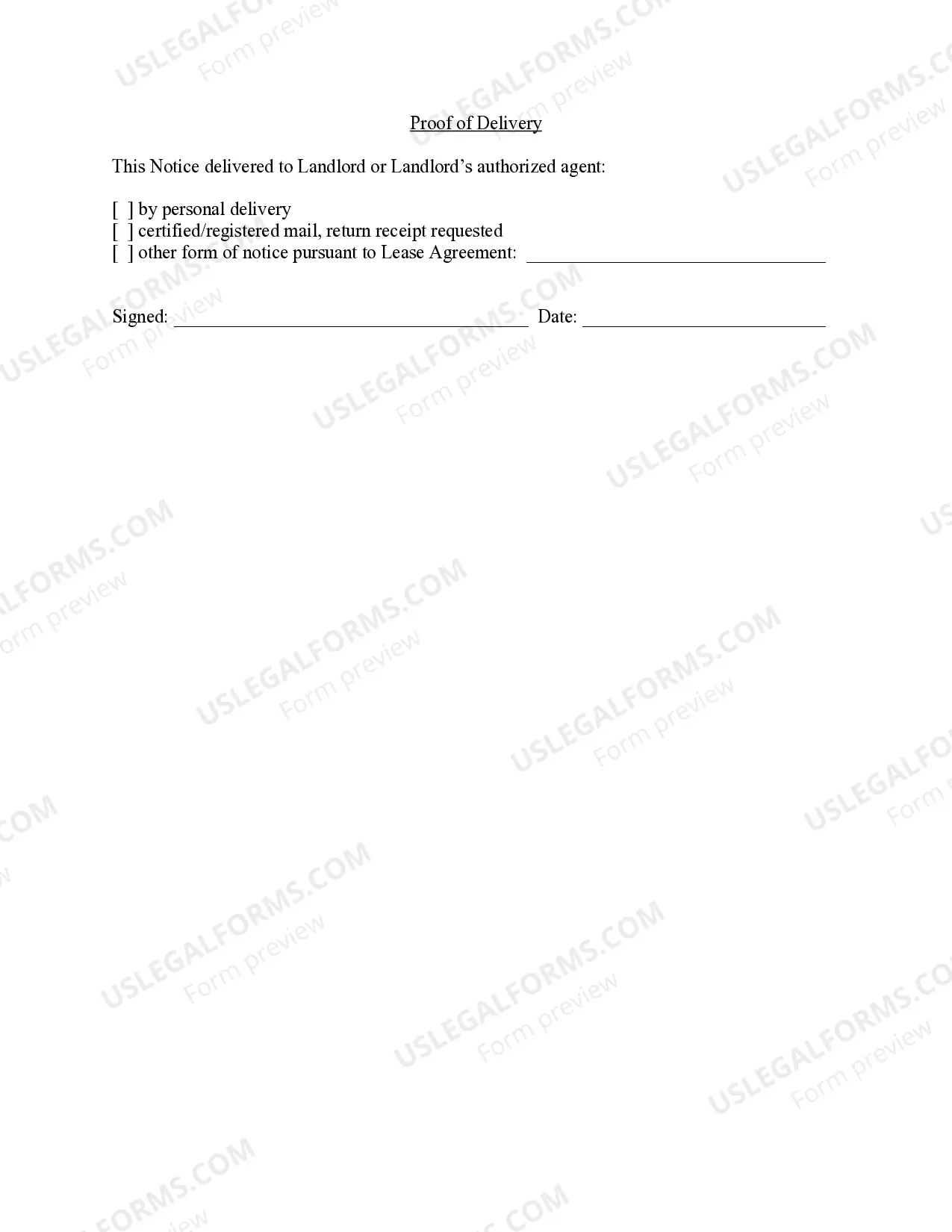
- Delivery proof options, such as personal delivery or certified mail.
- A section to note the date on which the notice is delivered.

Common use cases
Use this form when you, as a tenant, experience a leak in the premises during rainfall that requires immediate attention. It is essential to inform the landlord about such issues, especially if they affect your living conditions or could lead to further damage. This form serves as written notice to initiate repairs, adhering to your lease agreement's obligations.
Who needs this form
- Tenants currently renting a property experiencing leaks.
- Individuals seeking to formally communicate maintenance issues to their landlords.
- Renters wanting to ensure compliance with lease terms regarding repairs.
Instructions for completing this form
- Identify the tenant by including the printed name and signature.
- Specify the date of the notice to establish a timeline for the repair request.
- Choose and mark the method of delivery for the notice to the landlord.
Notarization guidance
This form does not typically require notarization unless specified by local law. It serves as a direct communication tool between tenant and landlord, effectively functioning without needing a notary's signature in most situations.
Get your form ready online
Our built-in tools help you complete, sign, share, and store your documents in one place.
Make edits, fill in missing information, and update formatting in US Legal Forms—just like you would in MS Word.
Download a copy, print it, send it by email, or mail it via USPS—whatever works best for your next step.
Sign and collect signatures with our SignNow integration. Send to multiple recipients, set reminders, and more. Go Premium to unlock E-Sign.
If this form requires notarization, complete it online through a secure video call—no need to meet a notary in person or wait for an appointment.
We protect your documents and personal data by following strict security and privacy standards.

Make edits, fill in missing information, and update formatting in US Legal Forms—just like you would in MS Word.

Download a copy, print it, send it by email, or mail it via USPS—whatever works best for your next step.

Sign and collect signatures with our SignNow integration. Send to multiple recipients, set reminders, and more. Go Premium to unlock E-Sign.

If this form requires notarization, complete it online through a secure video call—no need to meet a notary in person or wait for an appointment.

We protect your documents and personal data by following strict security and privacy standards.
Typical mistakes to avoid
- Failing to clearly specify the repair needed, which can delay action.
- Neglecting to keep a copy of the notice for personal records.
- Not indicating the preferred method of delivery, which could lead to disputes over notice receipt.
Benefits of completing this form online
- Quick access to a legally drafted template, saving time compared to writing from scratch.
- Easy to fill out with customizable fields to reflect your situation accurately.
- Reduces the risk of overlooking important details, ensuring complete communication with your landlord.
- This notice establishes a formal record of the tenantâs request for repairs.
- Failure to provide such notice may impact the tenant's legal rights regarding timely repairs.
Main things to remember
- The form is essential for tenants to formally notify landlords of repairs needed due to leaks.
- Clear and documented communication is important for legal protection.
- Using this form can help expedite the repair process for issues affecting the livability of the rental property.
Looking for another form?





Form popularity
FAQ
Do landlords in Pennsylvania have to provide notice of entry? The landlord is not required to provide notice of entry and therefore may enter the premises for the following reasons: Non-emergency maintenance and repairs.
A landlord cannot evict a tenant without an adequately obtained eviction notice and sufficient time. A landlord cannot retaliate against a tenant for a complaint. A landlord cannot forego completing necessary repairs or force a tenant to do their own repairs.A landlord cannot remove a tenant's personal belongings.
For lease or rental agreement violations, the landlord must give the tenant 15 days to move out (for lease terms of one year or less) or 30 days (for leases of one year or more).
Notice is posted to correct the issue/vacate. If uncured and tenant remains, the complaint is filed and served. Hearing is held and judgment issued. If granted, writ of possession is posted. Possession of property is returned to landlord.
Tenant Rights to Withhold Rent in PennsylvaniaTenants may withhold rent or exercise the right to repair and deduct if a landlord fails to take care of important repairs, such as a broken heater. For specifics, see Pennsylvania Tenant Rights to Withhold Rent or Repair and Deduct.
The Landlord/Tenant Act requires your landlord to give you a written eviction notice. This notice must be a 10-day notice if he/she is evicting you for nonpayment of rent, or 15 days if the eviction is for breach of the lease or end of lease term.
That being said, we recommend at least 24 hours of notice. The majority of our Pennsylvania landlords noted that they provide the tenant with at least 48-hours notice before entering the premises. The notice must be given in writing and must state the nature of the repair.
You have the right to enjoy your property and not have your landlord interfere with that enjoyment unless it is necessary. Pennsylvania tenant rights allow landlords to enter a dwelling only for repairs or inspections, and only after providing reasonable notice.
No. Many Pennsylvania courts have said your landlord cannot evict you by self-help, meaning such things as padlocking your door, shutting off your utilities, using force to evict you, or using any eviction method other than going to court.