Pennsylvania Formal Notice of Intent to File Lien by Individual
About this form
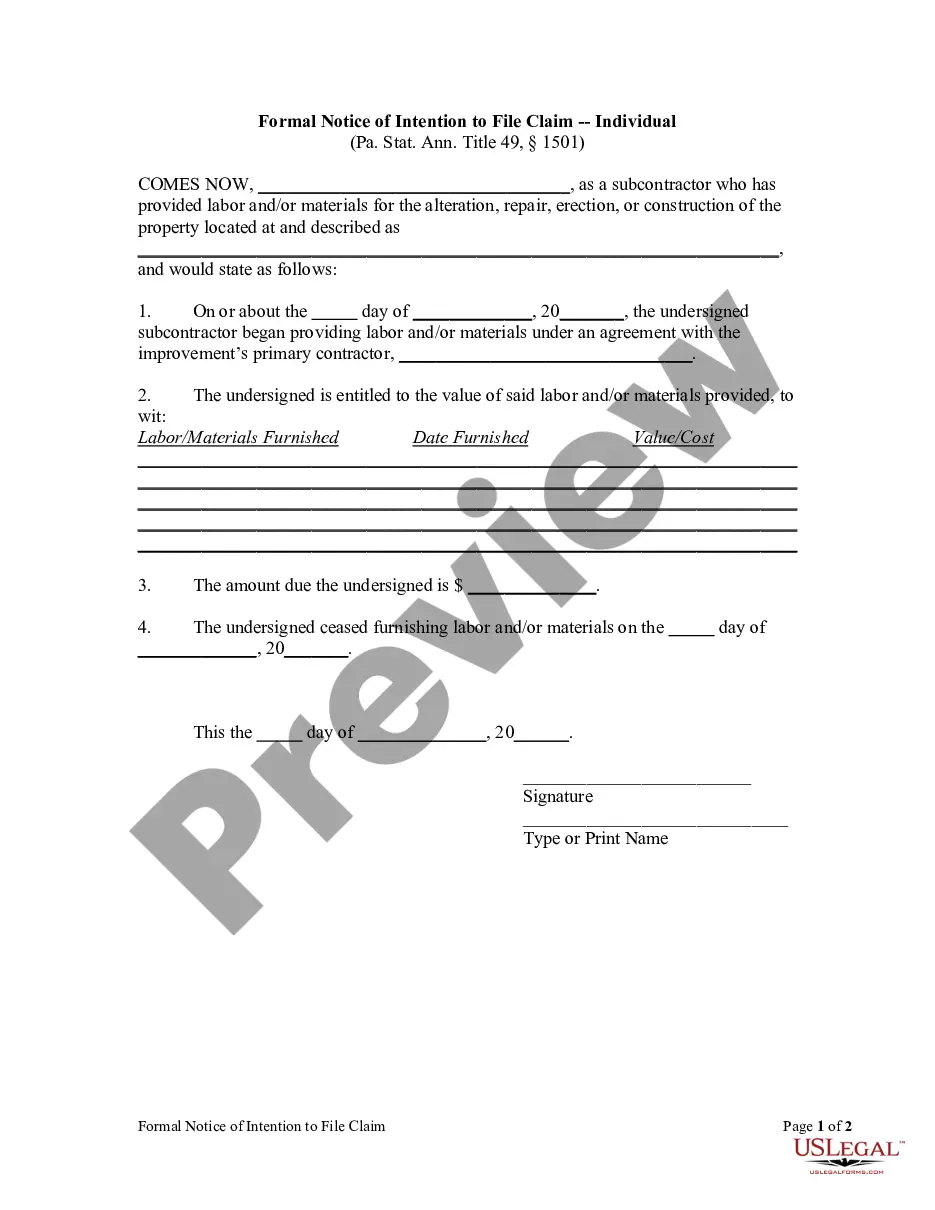
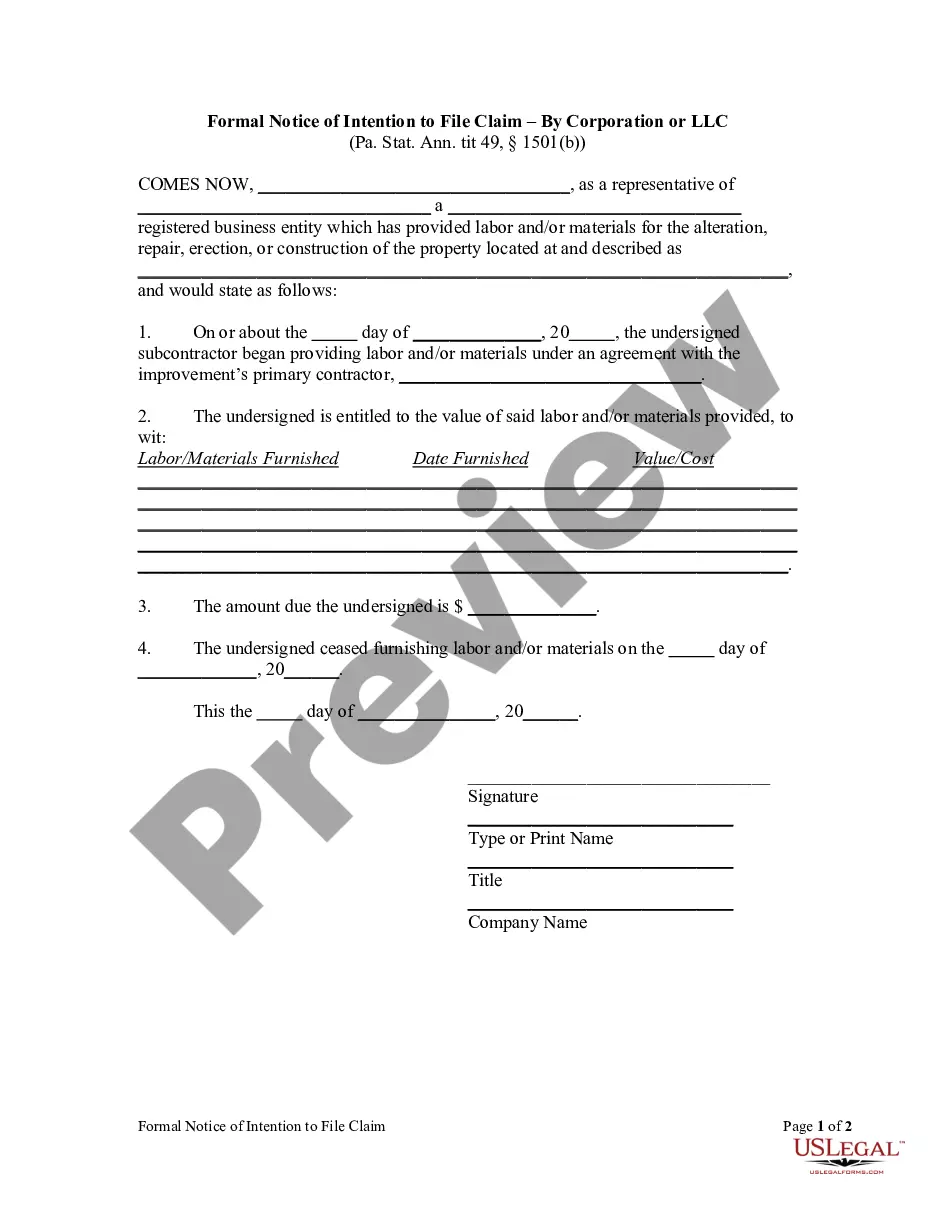
The Formal Notice of Intent to File Lien by Individual is a legal document that a subcontractor must provide to the property owner or their agent when they plan to claim a lien for unpaid labor or materials. This form serves as a formal notice, distinguishing it from the Preliminary Notice, and must be submitted at least thirty days before the lien is filed. The requirement for this notice ensures transparency and gives property owners a chance to settle any disputes before a lien is officially placed on the property.
Key parts of this document
- Identification of the subcontractor providing labor and materials.
- Description of the property involved in the lien claim.
- Details of the labor and materials furnished, including dates and costs.
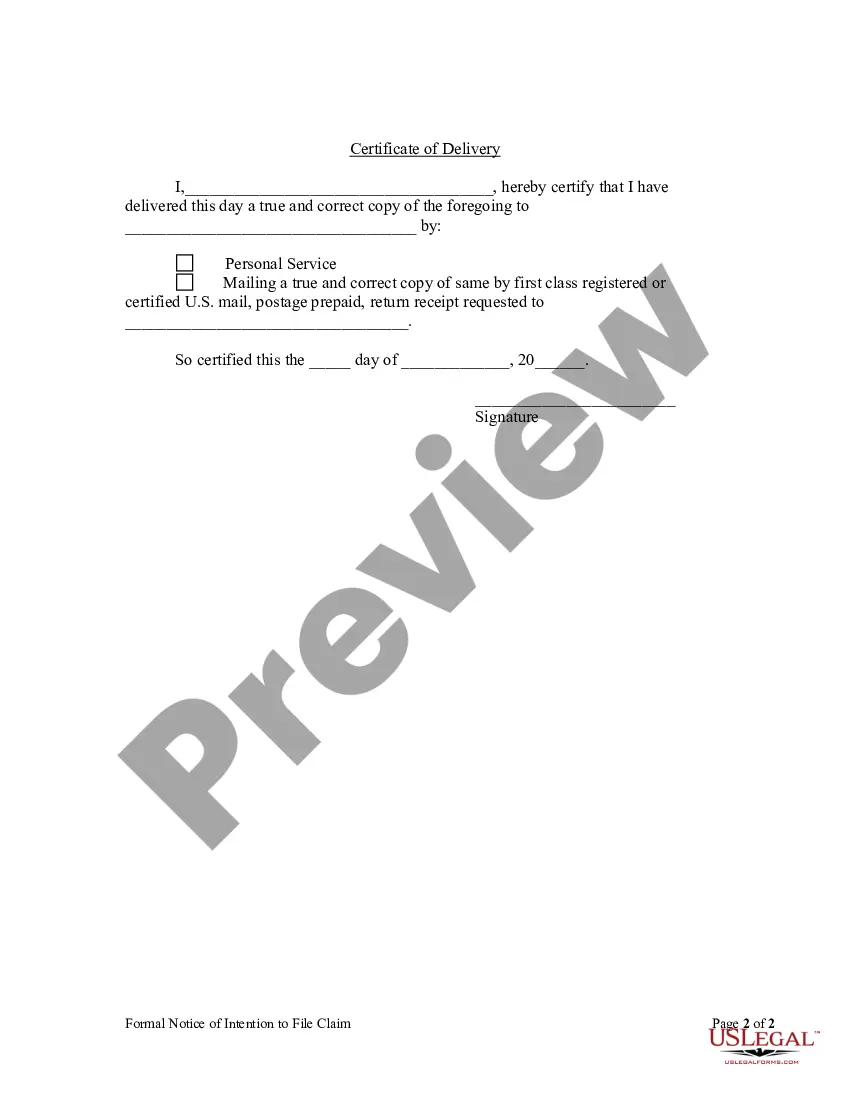
- Certification of delivery to the property owner, specifying how the notice was delivered.
- Signature of the subcontractor affirming the notice has been sent.
When to use this document
This form should be used when a subcontractor has provided services or materials for property alteration or repair and intends to file a lien due to non-payment. It is a crucial step to notify the property owner formally and ensure compliance with legal requirements before proceeding with a lien claim.
Who needs this form
- General contractors or subcontractors providing labor and materials for property projects.
- Individuals or companies that have not received payment for their work within the specified timeframe.
- Property owners receiving notice of potential liens on their property.
How to prepare this document
- Identify and enter the name of the subcontractor.
- Specify the property address where labor or materials were provided.
- Document the services rendered, including the date and value of each item.
- Choose how the notice was delivered and provide the recipient's information.
- Sign and date the form to certify the accuracy of the information.
Is notarization required?
In most cases, this form does not require notarization. However, some jurisdictions or signing circumstances might. US Legal Forms offers online notarization powered by Notarize, accessible 24/7 for a quick, remote process.
Get your form ready online
Our built-in tools help you complete, sign, share, and store your documents in one place.
Make edits, fill in missing information, and update formatting in US Legal Forms—just like you would in MS Word.
Download a copy, print it, send it by email, or mail it via USPS—whatever works best for your next step.
Sign and collect signatures with our SignNow integration. Send to multiple recipients, set reminders, and more. Go Premium to unlock E-Sign.
If this form requires notarization, complete it online through a secure video call—no need to meet a notary in person or wait for an appointment.
We protect your documents and personal data by following strict security and privacy standards.

Make edits, fill in missing information, and update formatting in US Legal Forms—just like you would in MS Word.

Download a copy, print it, send it by email, or mail it via USPS—whatever works best for your next step.

Sign and collect signatures with our SignNow integration. Send to multiple recipients, set reminders, and more. Go Premium to unlock E-Sign.

If this form requires notarization, complete it online through a secure video call—no need to meet a notary in person or wait for an appointment.

We protect your documents and personal data by following strict security and privacy standards.
Common mistakes
- Failing to deliver the notice at least thirty days before filing a lien.
- Not providing accurate information regarding the services or materials.
- Using an incorrect delivery method; failing to follow the specified methods might invalidate the notice.
Benefits of completing this form online
- Convenience of filling out the form at any time from your home or office.
- Ability to edit and save the form for later use, ensuring accuracy.
- Access to attorney-drafted templates which increase legal reliability.
Legal use & context
- This form serves as a formal notification to the property owner and is a prerequisite for filing a lien.
- Following the proper notice protocols helps protect the subcontractor's right to enforce a lien.
- Failure to comply with notice requirements may result in losing the right to claim a lien.
Quick recap
- The Formal Notice of Intent to File Lien is essential for subcontractors seeking to enforce payment rights.
- Timeliness and proper delivery of this notice are critical to uphold legal enforceability.
- Understanding state-specific regulations when filing liens can expedite the claims process.
Looking for another form?
Form popularity
FAQ
2. States where the lien law doesn't require a written contract. In these states, contractors and suppliers are generally allowed to file a lien even if they don't have a written contract.These states typically permit parties with verbal, oral, or even implied contracts to claim lien rights.
First of all, you can sue your contractor for breach of contract, even without a written contract, and she can sue you as well.See Nolo's article, "Breach of Contract Cases in Small Claims Court," for more on this. However, an alleged oral contract does create difficult evidentiary questions for the judge.
In addition to seizing bank accounts, you can also have the sheriff levy and sell personal assets of the debtor to collect a judgment in Pennsylvania. Personal assets can include furniture, tv's, jewelry, guns and firearms, other valuables or antiques. Typically, you cannot seize retirement accounts or pensions.
While it's unlikely that just anyone can put a lien on your home or land, it's not unheard of for a court decision or a settlement to result in a lien being placed against a property.
If you want to place a lien on a commercial rental property and you are not the landlord, you may need to put a lien on the property by filing with the court of record in the jurisdiction where the property is actually located.
Who you are. The services or materials you provided. The last date you provided the services or materials. How much payment should be. The date on which you will file a lien if you do not receive payment. How the debtor should pay.
The entry of judgment in Pennsylvania acts as a lien on all real property of the judgment debtor in the county in which the judgment has been entered. In Pennsylvania, a judgment lien is fully effective for five years, and is governed by the five year statute of limitations.
Fill out the Pennsylvania mechanics lien form. Fill out the PA lien form completely and accurately. File your lien claim with the county recorder. Serve a copy of the lien on the property owner.
Those who have the right to file a mechanic's lien in Pennsylvania are limited to second-tier subs and suppliers who have a claim of at least $500. In other words, anyone who contracted directly with the property owner, the prime contractor, or a subcontractor hired by the prime contractor are eligible for lien rights.