Pennsylvania Quitclaim Deed from Husband and Wife to Husband and Wife
Understanding this form
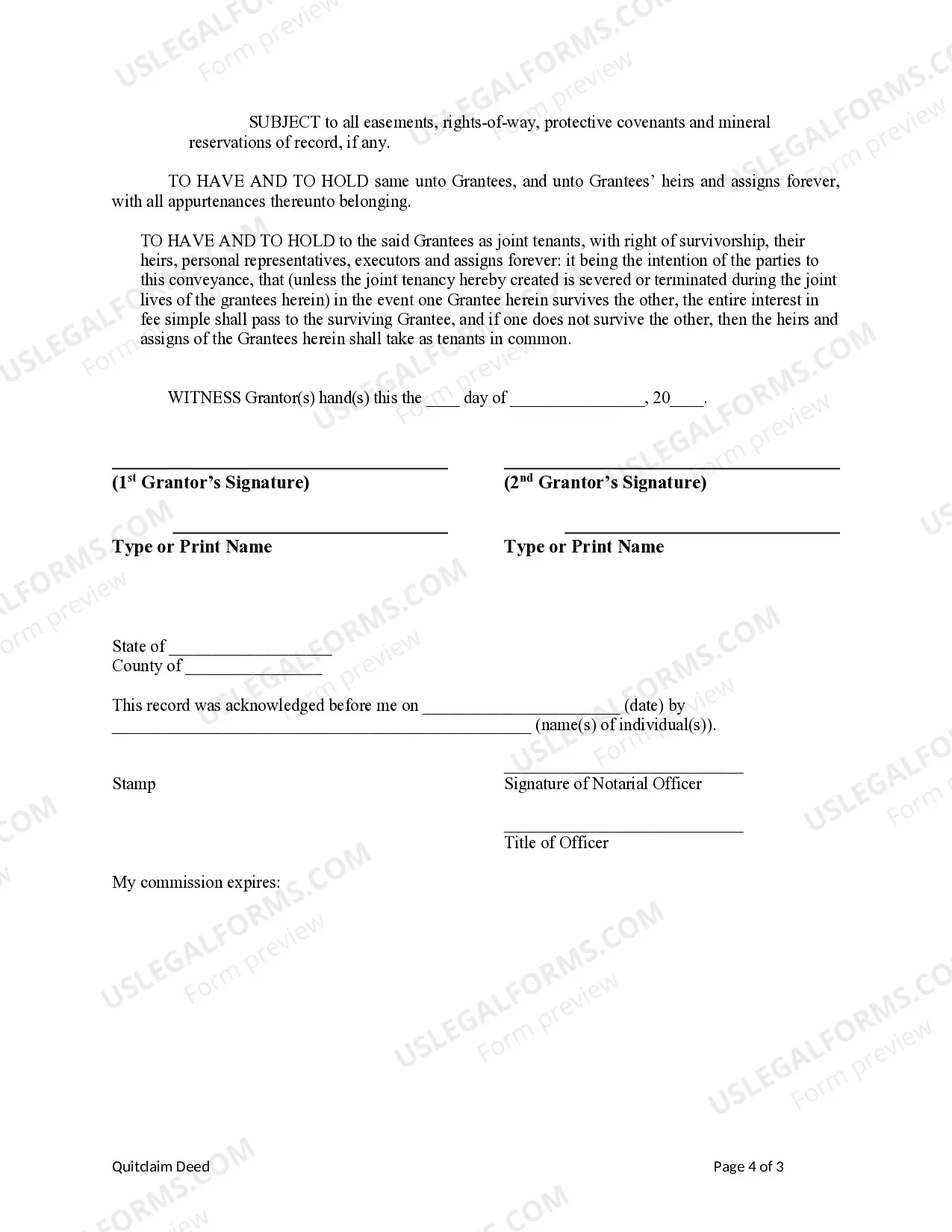
The Quitclaim Deed from Husband and Wife to Husband and Wife is a legal document used to transfer ownership of property between spouses. This form allows the grantors, who are the husband and wife, to convey their interest in the property to themselves as grantees. Unlike warranty deeds, this quitclaim deed does not guarantee that the property is free of liens or claims; it merely conveys whatever interest the grantors have in the property at the time of transfer. This is particularly useful for avoiding the complications of probate or simplifying the property title management within a marriage.
Key components of this form
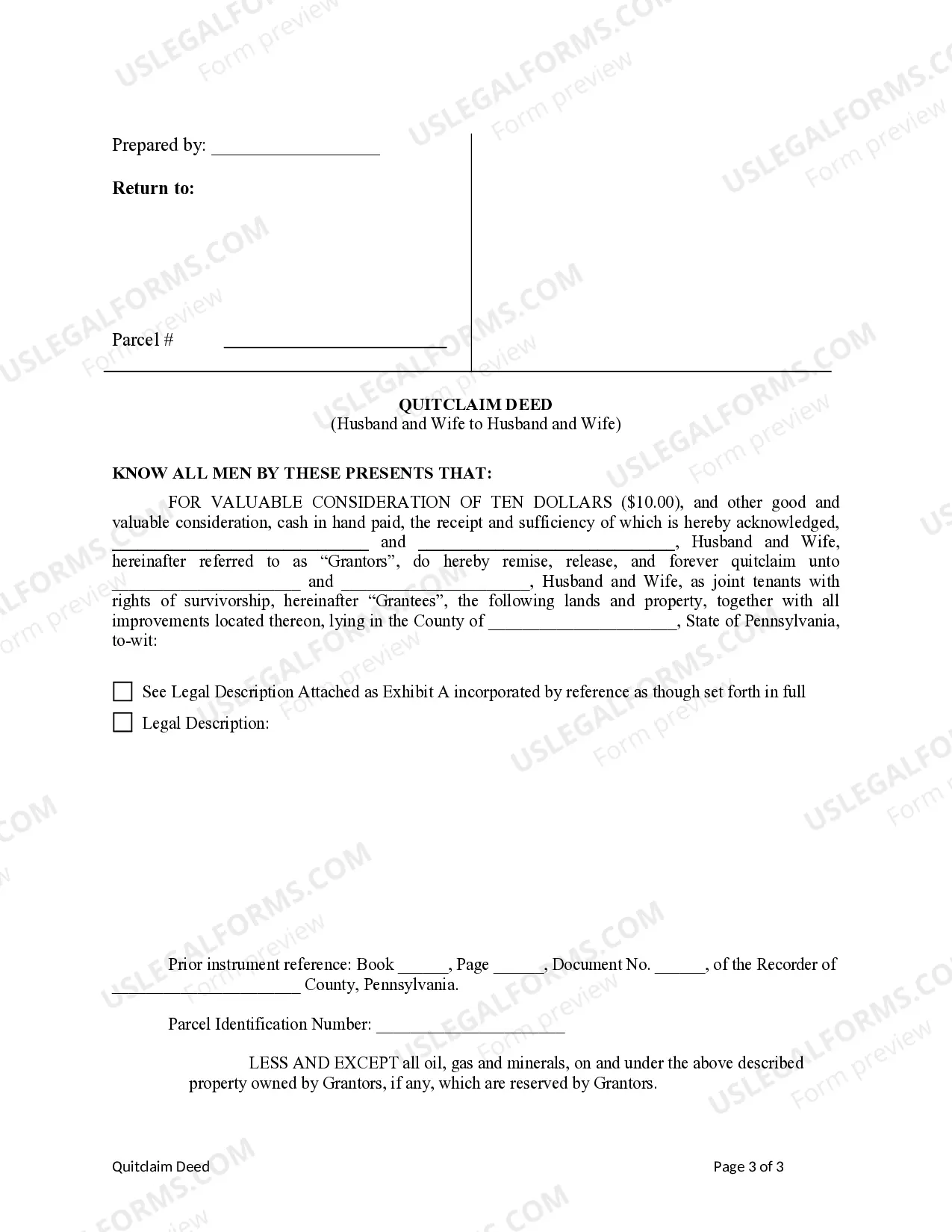
- Identification of the grantors (husband and wife) and grantees (husband and wife).
- A description of the property being transferred.
- Provision for the reservation of rights for oil, gas, and minerals owned by the grantors.
- Joint tenancy with rights of survivorship to ensure surviving spouses inherit the property.
- Subject to existing easements and mineral rights recorded against the property.
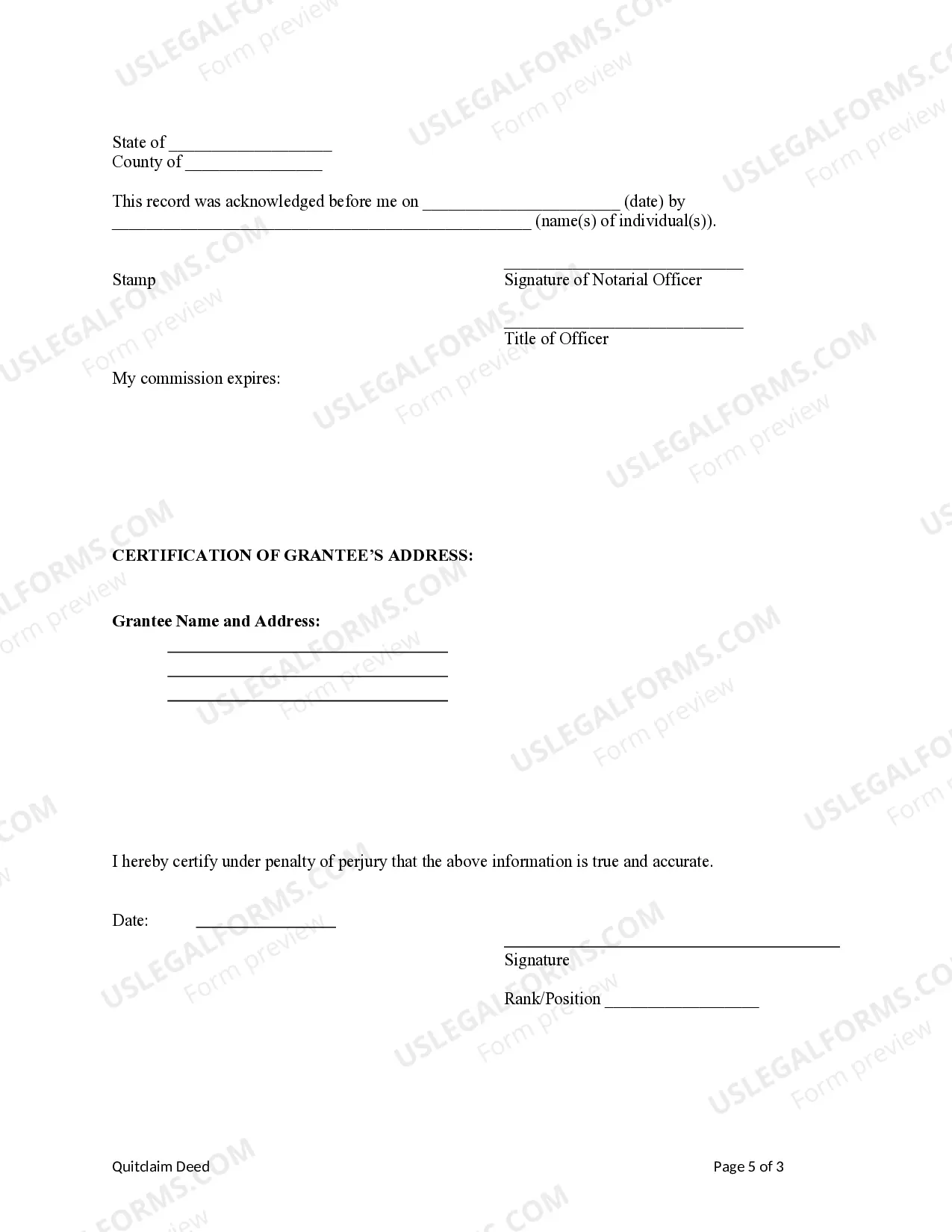
- Signature space for the parties involved to validate the deed.






When this form is needed
This form is typically used when a husband and wife wish to transfer ownership of property between themselves. Situations may include consolidating property titles for estate planning, simplifying the transfer of property when one spouse inherits property, or when both spouses want to clarify ownership interests jointly. It can also be useful in cases of divorce settlement where the property is awarded to one spouse.
Who needs this form
- Married couples who want to transfer property ownership to themselves.
- Spouses dealing with property as part of estate planning or during a divorce.
- Individuals looking to clarify joint ownership of real estate without complex warranties.
Steps to complete this form
- Identify and list the full names of both grantors (husband and wife) at the beginning of the deed.
- Provide the full names of the grantees (husband and wife) in the designated section.
- Clearly describe the property being transferred, including any legal descriptions as necessary.
- Specify any reservations, such as oil, gas, or mineral rights, that are to remain with the grantors.
- Review the document for completion and sign it in the presence of a notary, if required.
Does this document require notarization?
This document requires notarization to meet legal standards. US Legal Forms provides secure online notarization powered by Notarize, allowing you to complete the process through a verified video call, available 24/7.
Get your form ready online
Our built-in tools help you complete, sign, share, and store your documents in one place.
Make edits, fill in missing information, and update formatting in US Legal Forms—just like you would in MS Word.
Download a copy, print it, send it by email, or mail it via USPS—whatever works best for your next step.
Sign and collect signatures with our SignNow integration. Send to multiple recipients, set reminders, and more. Go Premium to unlock E-Sign.
If this form requires notarization, complete it online through a secure video call—no need to meet a notary in person or wait for an appointment.
We protect your documents and personal data by following strict security and privacy standards.

Make edits, fill in missing information, and update formatting in US Legal Forms—just like you would in MS Word.

Download a copy, print it, send it by email, or mail it via USPS—whatever works best for your next step.

Sign and collect signatures with our SignNow integration. Send to multiple recipients, set reminders, and more. Go Premium to unlock E-Sign.

If this form requires notarization, complete it online through a secure video call—no need to meet a notary in person or wait for an appointment.

We protect your documents and personal data by following strict security and privacy standards.
Mistakes to watch out for
- Failing to include a proper legal description of the property.
- Not identifying both grantors and grantees correctly, including legal names.
- Omitting signatures, which can render the deed invalid.
- Overlooking any necessary state-specific requirements, such as notarization.
Benefits of using this form online
- Convenient online access allows for easy completion at any time.
- Editable templates ensure you can fill out the form accurately.
- Reliable legal forms drafted by licensed attorneys for peace of mind.
Legal use & context
- This form is legally recognized in property transfers between spouses in Pennsylvania.
- A quitclaim deed does not guarantee a clear title, so it's essential to ensure there are no outstanding claims against the property.
- While this document facilitates a quick transfer of ownership, it is advisable to consult with an attorney for complex situations or concerns.
What to keep in mind
- The Quitclaim Deed from Husband and Wife to Husband and Wife allows for straightforward property transfers between spouses.
- Each spouse's rights to minerals, gas, and oil can be retained by the grantors.
- Completing the form accurately and ensuring notarization is crucial for its legal efficacy.
Looking for another form?
Form popularity
FAQ
You can transfer the property from your sole and separate property to mutual tenancy, such as joint tenants with right of survivorship, with your wife.The two other easy ways to transfer property into your wife's name, which is by grant deed or quitclaim deed, don't automatically trigger tax exemptions.
It is also crucial that a spouse know about the loan, even if he or she is not on the mortgage. In general, the spouse must sign a deed of trust, the Truth in Lending and Right to Cancel documents. By signing these documents, they are simply acknowledging the existence of the mortgage.
You may want to transfer ownership of a property if you are newly married and want your spouse on the title deeds. You can do this through a transfer of equity.You might also need to consult with your mortgage lender if you have a mortgage on your property.
To transfer property in Pennsylvania, you'll need to prepare and execute a deed and record it in the county where the property is located. If the transfer was in exchange for money, you'll have to pay transfer tax.
If you want to transfer the house in your wife's name, it will involve the stamp duty on the entire value of the property. There are two other methods by which the property can be transferred to your wife name. (1) By giving a gift of the property to your wife through Registered Gift Deed.
Two of the most common ways to transfer property in a divorce are through an interspousal transfer deed or quitclaim deed. When spouses own property together, but then one spouse executes an interspousal transfer or a quitclaim deed, this is known as transmutation.
You can gift property to spouse, child or any relative and register the same. Under section 122 of the Transfer of Property Act, 1882, you can transfer immovable property through a gift deed. The deed should contain your details as well as those of the recipient.
In order to transfer ownership of the marital home pursuant to a divorce, one spouse is going to need to sign a quitclaim deed, interspousal transfer deed, or a grant deed, in order to convey the title to the property.
You can gift property to spouse, child or any relative and register the same. Under section 122 of the Transfer of Property Act, 1882, you can transfer immovable property through a gift deed. The deed should contain your details as well as those of the recipient.