Oregon Revocation of Statutory Power of Attorney for Mental Health Care
What this document covers
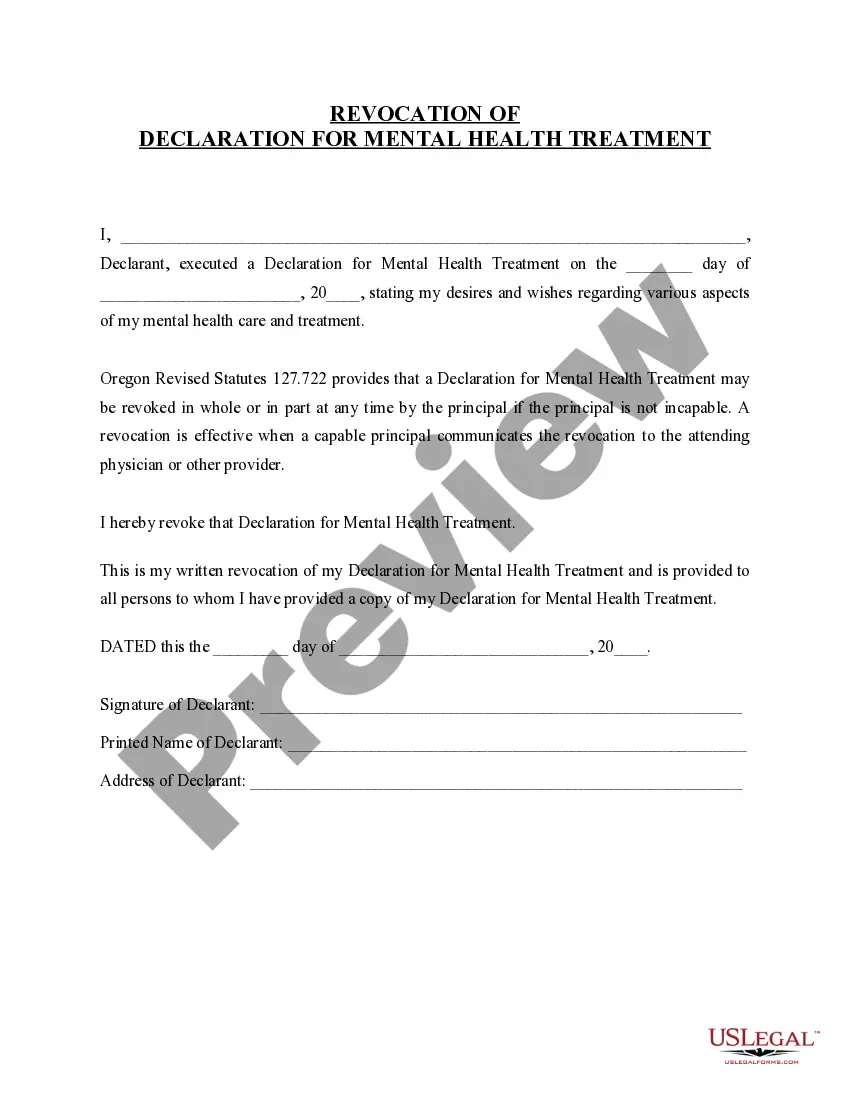
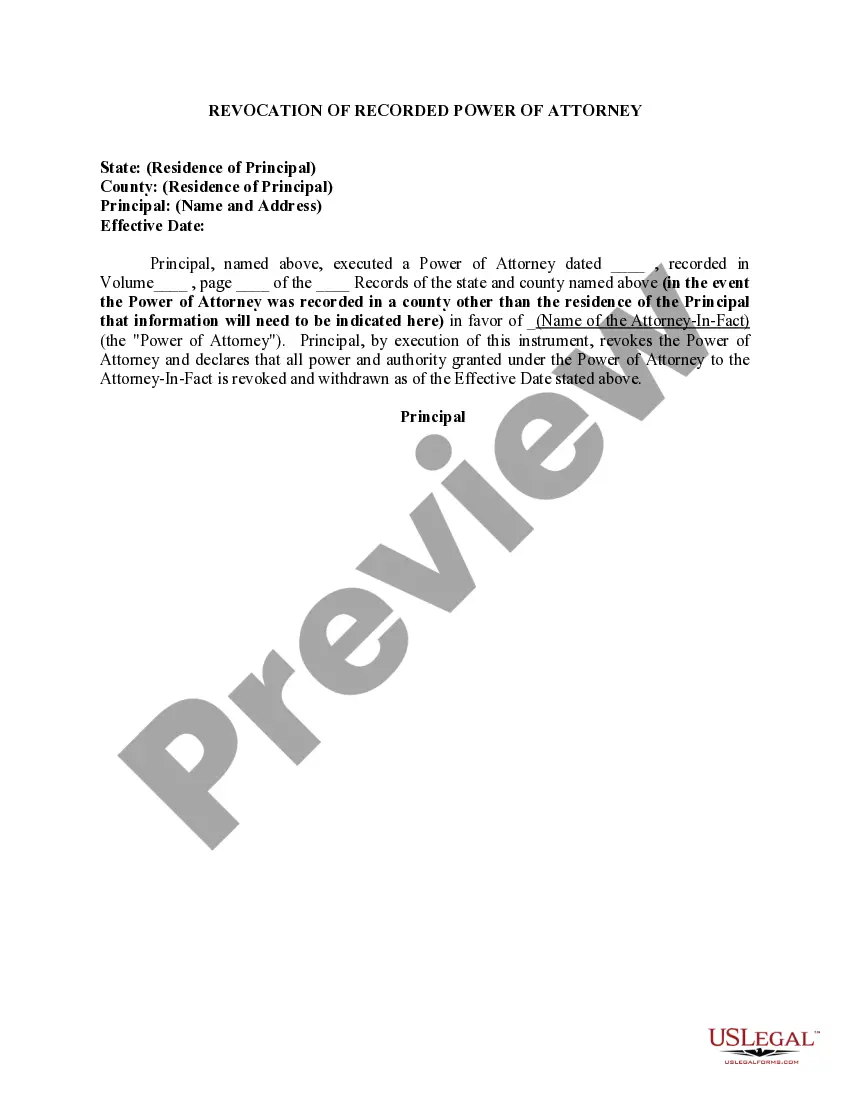
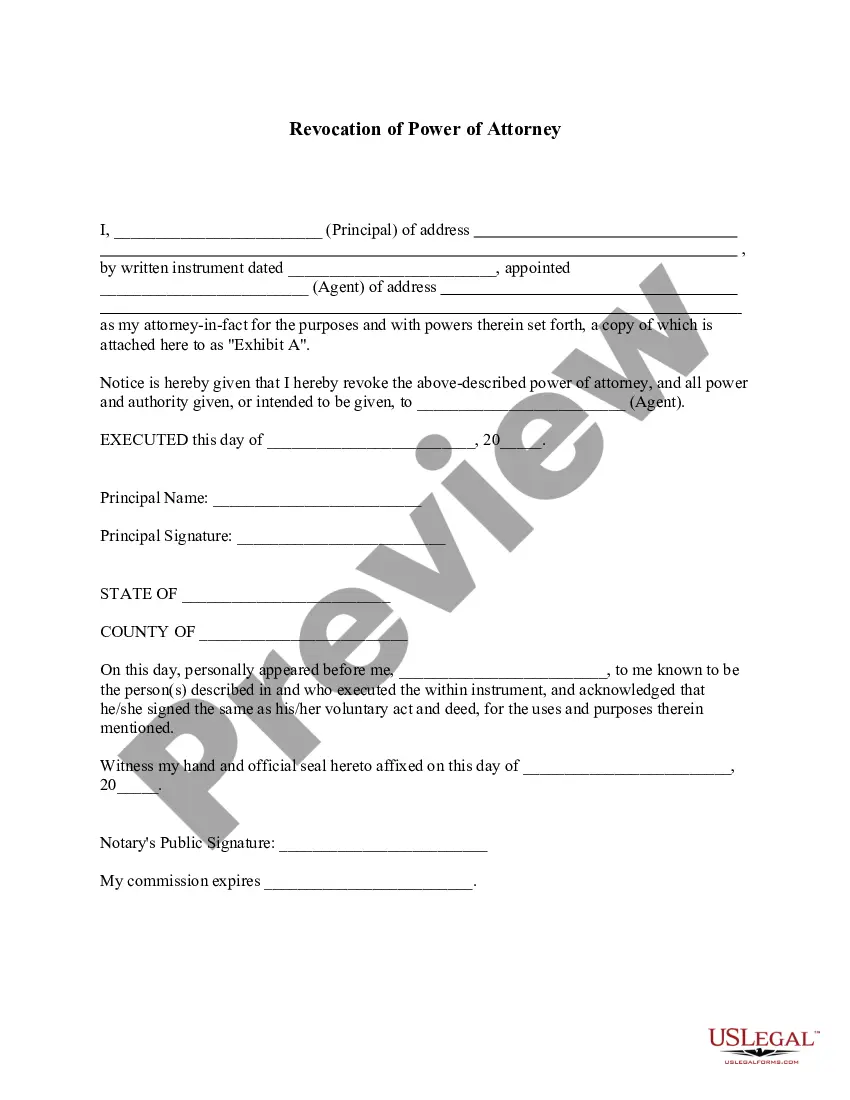
The Revocation of Statutory Power of Attorney for Mental Health Care is a legal document that allows an individual to revoke a previously executed Declaration for Mental Health Treatment. This form serves to communicate the principal's desire to retract authority previously granted regarding their mental health care decisions. Unlike other power of attorney forms, this specific revocation focuses solely on mental health treatment provisions.
Form components explained
- Declarant's full name and identification.
- Date of the original Declaration for Mental Health Treatment.
- Statement indicating the revocation of the previous Declaration.
- Signature and printed name of the Declarant.
- Address of the Declarant.
- Date of revocation.
When to use this form
This form is used when a person who has previously designated mental health treatment preferences wishes to revoke that designation. Common scenarios include changes in relationships with healthcare professionals, alterations in mental health conditions, or simply a desire to establish new directives regarding mental health treatment.
Intended users of this form
This form is intended for:
- Individuals who have previously completed a Declaration for Mental Health Treatment.
- Those who are currently capable of making decisions regarding their mental health care.
- Individuals who wish to ensure their current wishes regarding mental health preferences are clearly communicated.
How to prepare this document
- Enter your full name as the Declarant.
- Fill in the date when you initially executed your Declaration for Mental Health Treatment.
- Clearly state your intention to revoke the Declaration.
- Sign and print your name to validate the revocation.
- Include your address for identification purposes.
- Indicate the date on which you are completing this revocation.
Is notarization required?
This form does not typically require notarization unless specified by local law. However, having the form notarized may provide an additional layer of legal security and validation.
Get your form ready online
Our built-in tools help you complete, sign, share, and store your documents in one place.
Make edits, fill in missing information, and update formatting in US Legal Forms—just like you would in MS Word.
Download a copy, print it, send it by email, or mail it via USPS—whatever works best for your next step.
Sign and collect signatures with our SignNow integration. Send to multiple recipients, set reminders, and more. Go Premium to unlock E-Sign.
If this form requires notarization, complete it online through a secure video call—no need to meet a notary in person or wait for an appointment.
We protect your documents and personal data by following strict security and privacy standards.

Make edits, fill in missing information, and update formatting in US Legal Forms—just like you would in MS Word.

Download a copy, print it, send it by email, or mail it via USPS—whatever works best for your next step.

Sign and collect signatures with our SignNow integration. Send to multiple recipients, set reminders, and more. Go Premium to unlock E-Sign.

If this form requires notarization, complete it online through a secure video call—no need to meet a notary in person or wait for an appointment.

We protect your documents and personal data by following strict security and privacy standards.
Common mistakes
- Failing to date the revocation form, which can create confusion about its validity.
- Not providing the full name as originally stated in the Declaration for Mental Health Treatment.
- Omitting to inform healthcare providers about the revocation after submitting the form.
Benefits of using this form online
- Immediate access to legally vetted templates created by licensed attorneys.
- Convenient editing options to tailor the form to individual needs.
- Reliable storage and quick retrieval for future reference.
Legal use & context
- Utilizing this form can help clarify your mental health preferences and ensure they are respected in clinical settings.
- A properly executed revocation form is essential to avoid potential conflicts with prior directives.
Summary of main points
- The Revocation of Statutory Power of Attorney for Mental Health Care allows you to withdraw previous mental health treatment preferences.
- Complete the form accurately to ensure your current wishes are known and respected.
- Communicate the revocation to all relevant healthcare providers.
Looking for another form?
Form popularity
FAQ
Until an attorney-in-fact's powers are properly revoked, they can continue to legally act for the principal. To cancel a Power of Attorney, the principal can create a document called a Revocation of Power of Attorney or create a new Power of Attorney that indicates the previous Power of Attorney is revoked.
Such Power of Attorney may be revoked by the principal or the Power of Attorney holder by the procedure according to law. For revocation of irrevocable Power of Attorney, the principal is required to issue a public notice through local newspapers, without which, the revocation shall stand void.
The revocation should include your name, a statement that you are of sound mind, and your wish to revoke the power of attorney. You should also specify the date the original power of attorney was executed and the person selected as your agent.
Such Power of Attorney may be revoked by the principal or the Power of Attorney holder by the procedure according to law. For revocation of irrevocable Power of Attorney, the principal is required to issue a public notice through local newspapers, without which, the revocation shall stand void.
Revoke Your Current Power of Attorney. To change or cancel your current power of attorney, you should complete a formal, written revocation. Notify Your Power of Attorney. Once you complete your revocation, notify your agent of the cancellation in writing. Notify Relevant Third Parties. Execute a New Power of Attorney.
You can end the agent's authority by revoking the authority in writing. All powers of attorney end upon your death. A power of attorney generally become effective when you sign the document. Oregon law also specifically allows powers of attorney that take effect at the time other than when signed.
Until an attorney-in-fact's powers are properly revoked, they can continue to legally act for the principal. To cancel a Power of Attorney, the principal can create a document called a Revocation of Power of Attorney or create a new Power of Attorney that indicates the previous Power of Attorney is revoked.
"In case you forget to mention when and under what circumstances your power of attorney can be revoked, and if the power of attorney does not state it is irrevocable, then the power of attorney can be revoked if you execute a document cancelling it.
After you make a power of attorney, you can revoke it at any time, as long as you are of sound mind. But to make the revocation legally effective, you must carefully follow all the procedures set out in this section.