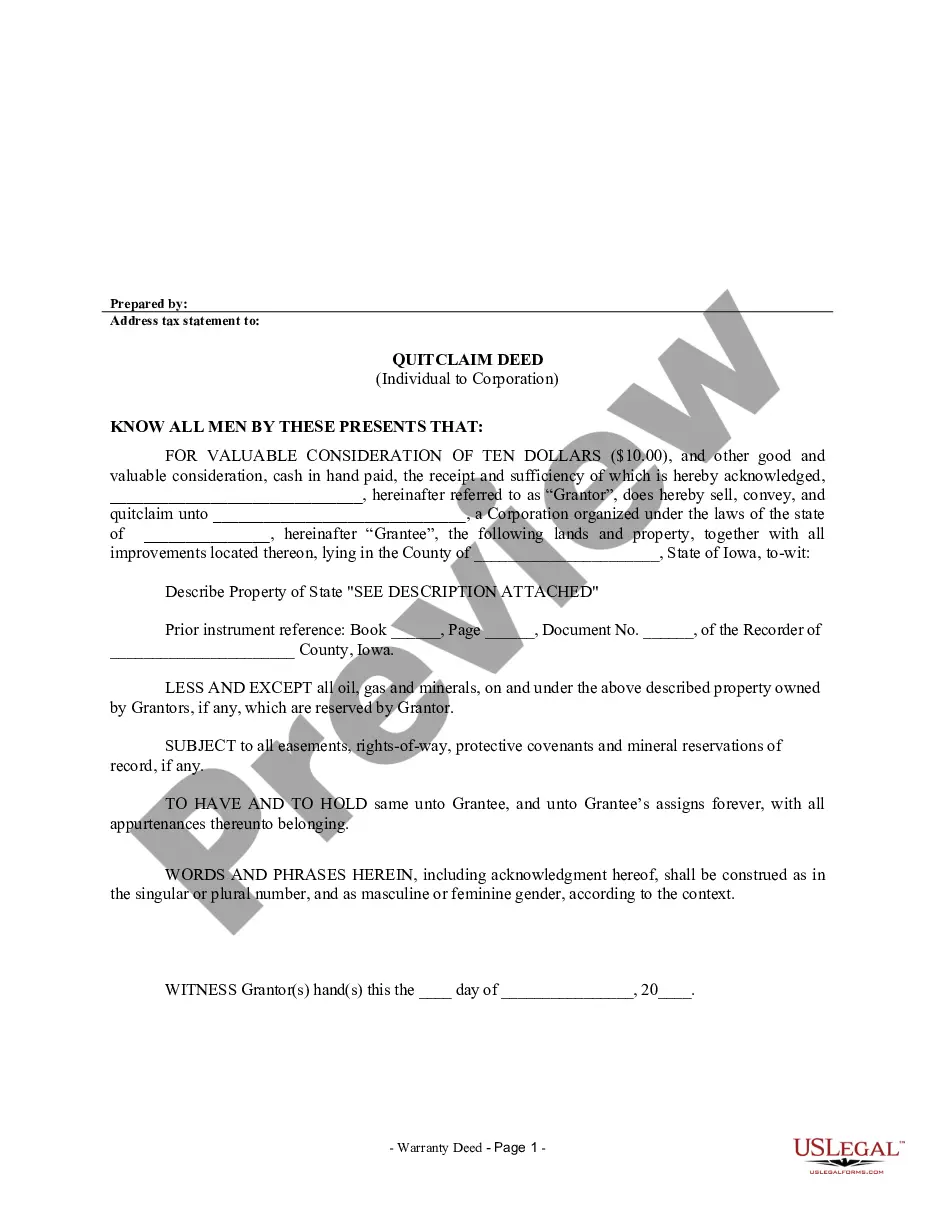
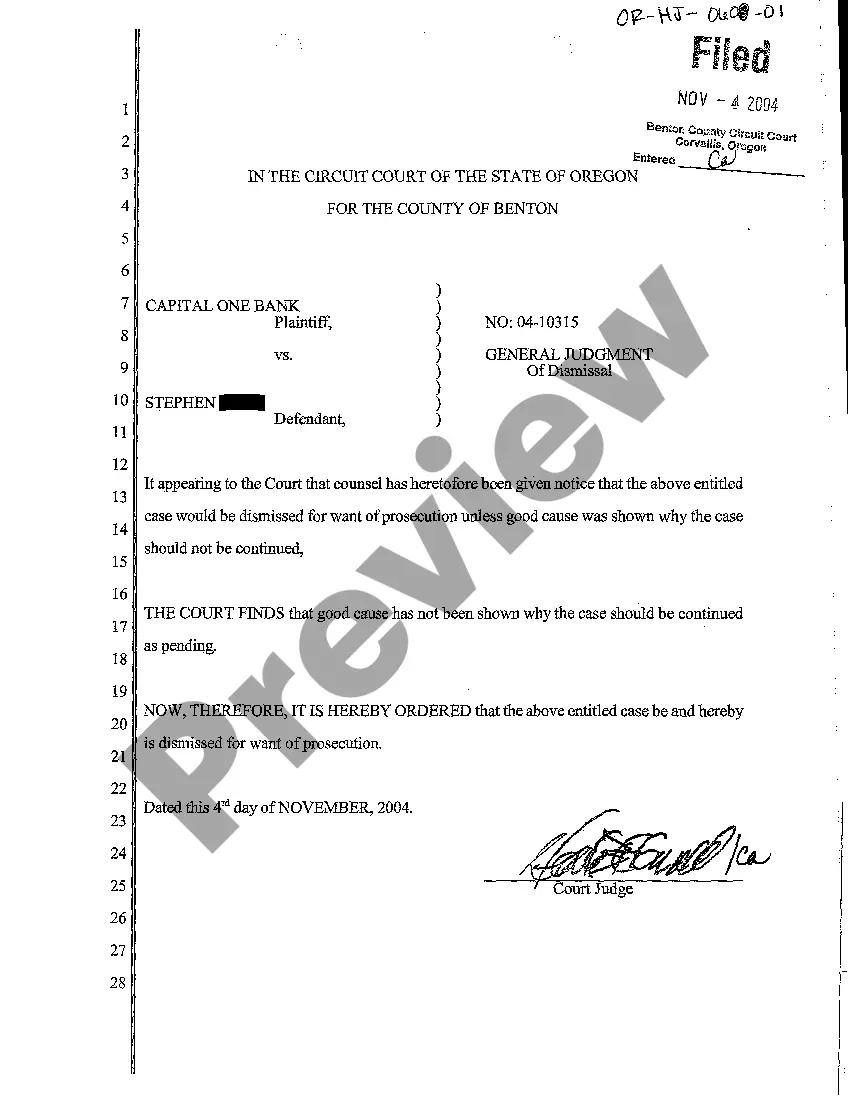
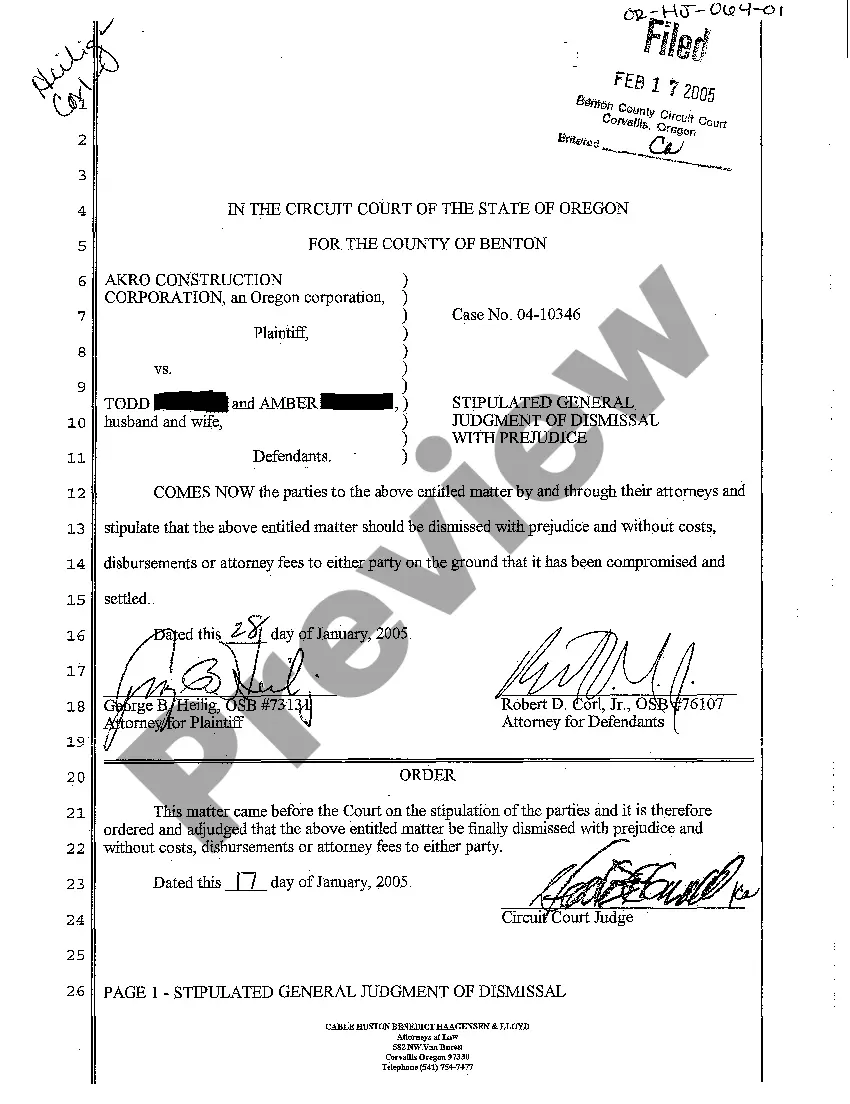
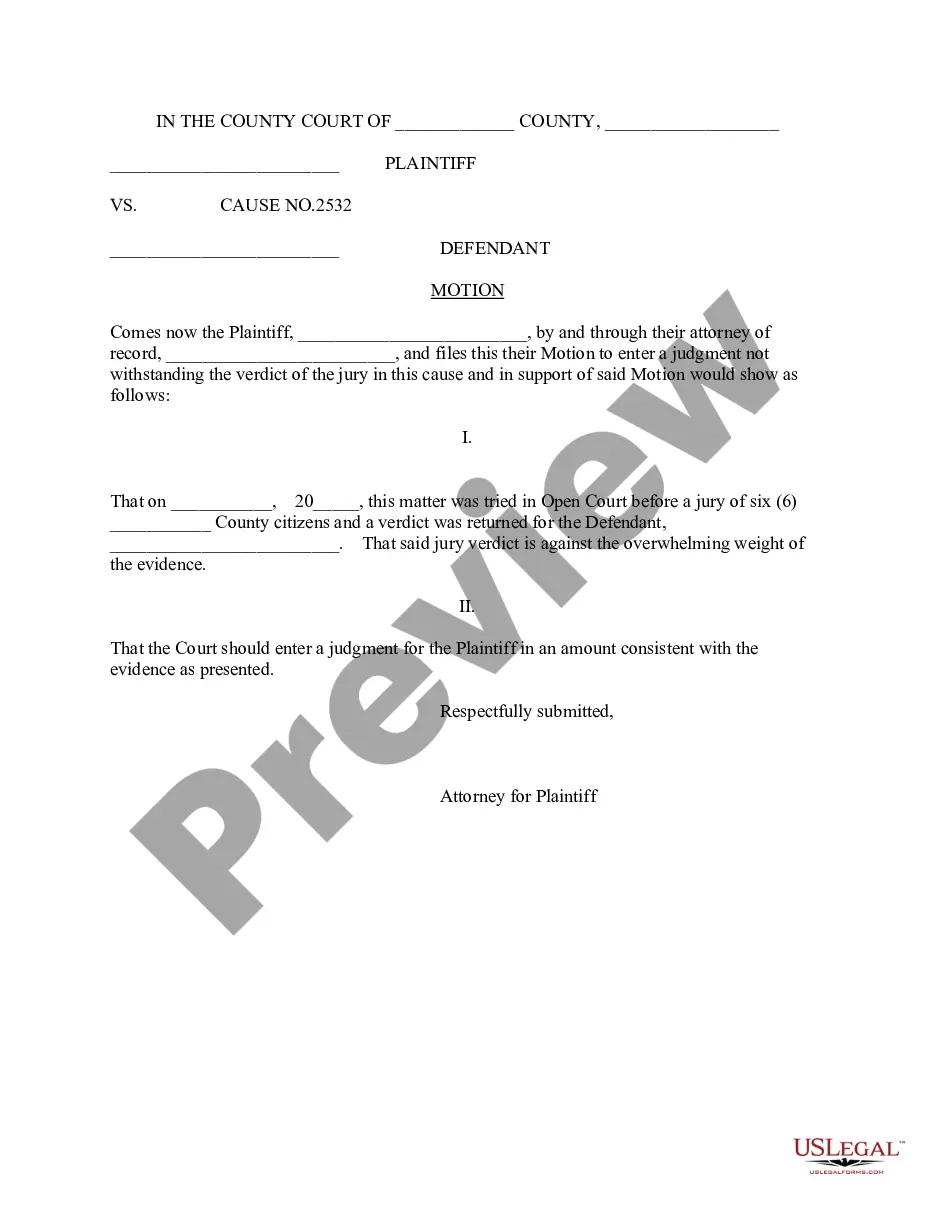
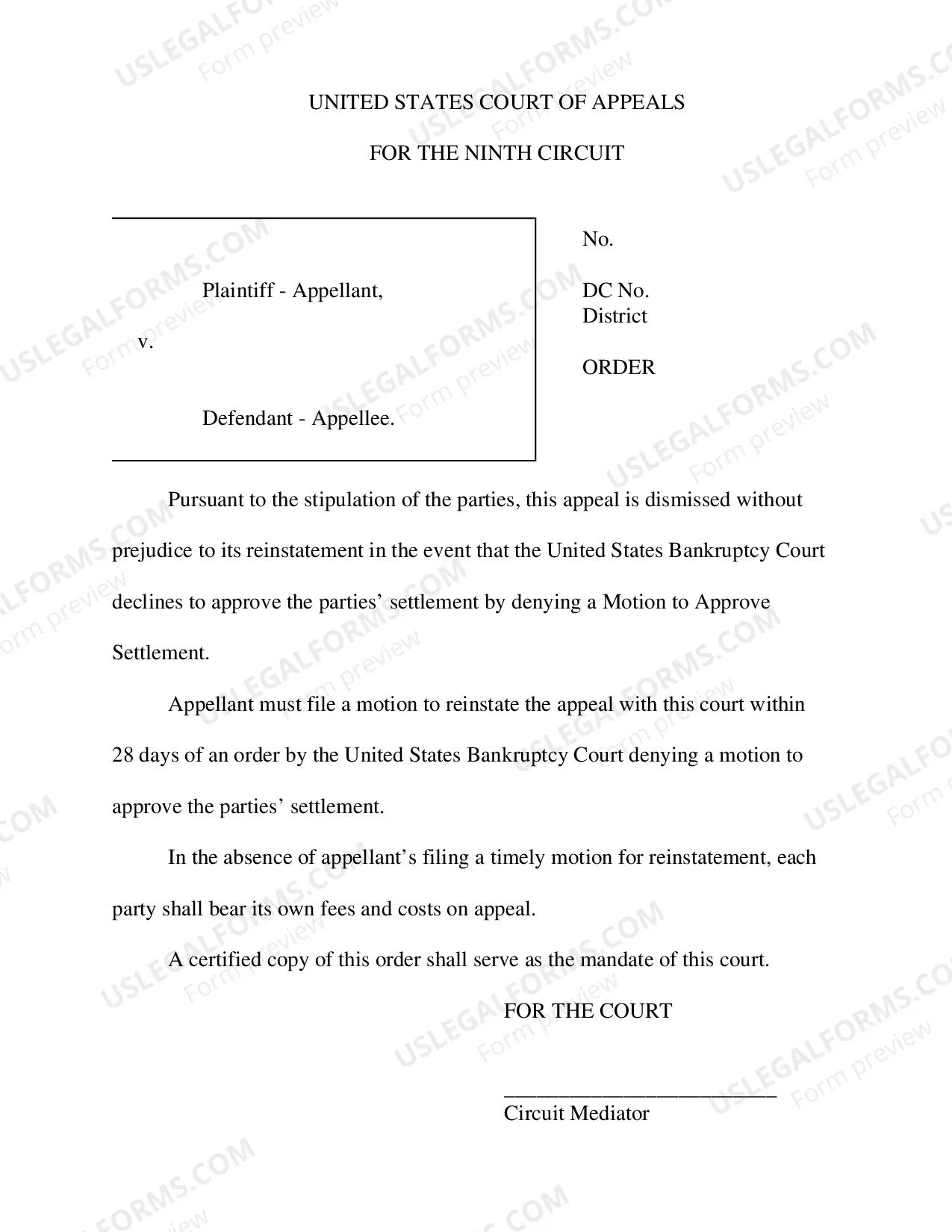
Oregon General Judgment of Dismissal with Prejudice and Motion Thereon Ex Parte
Description
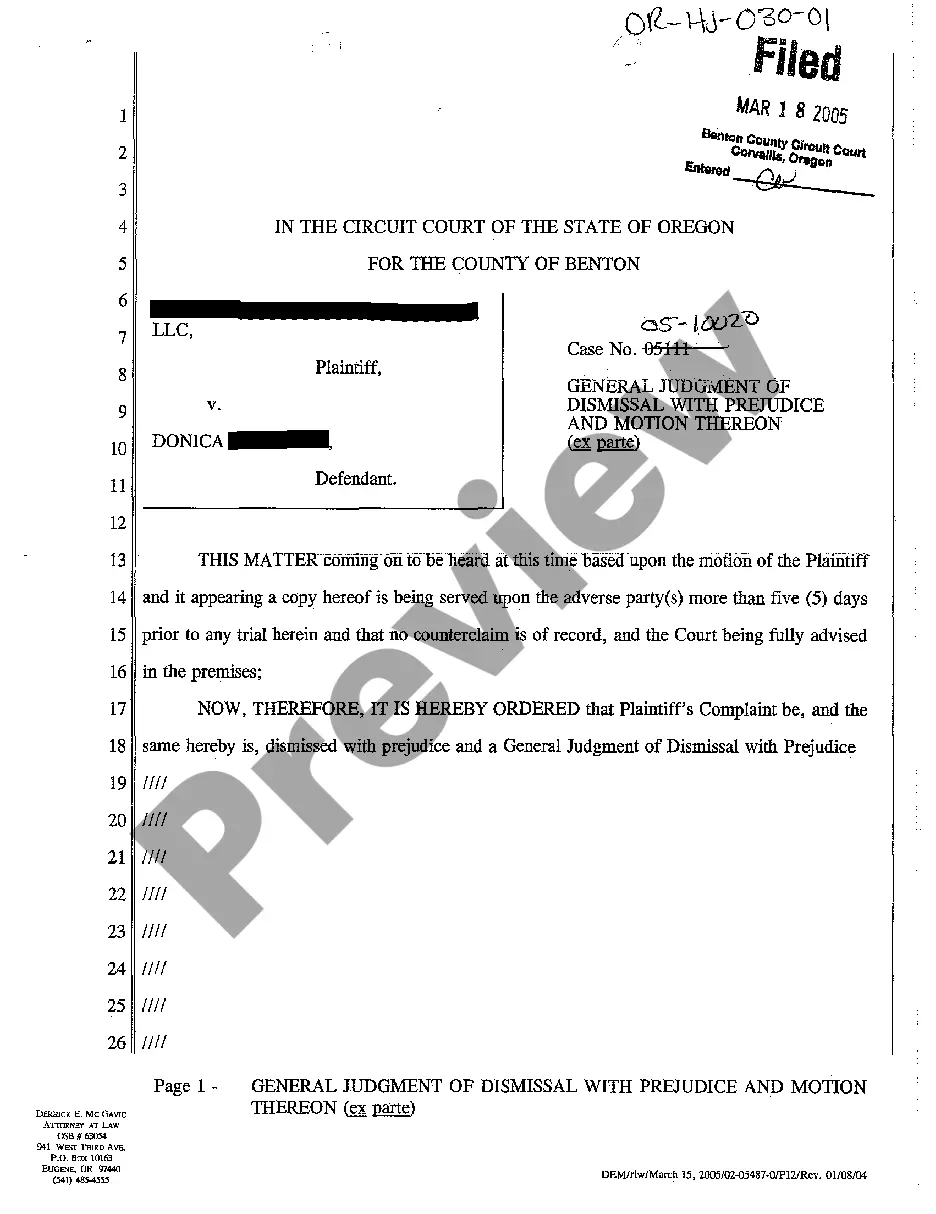
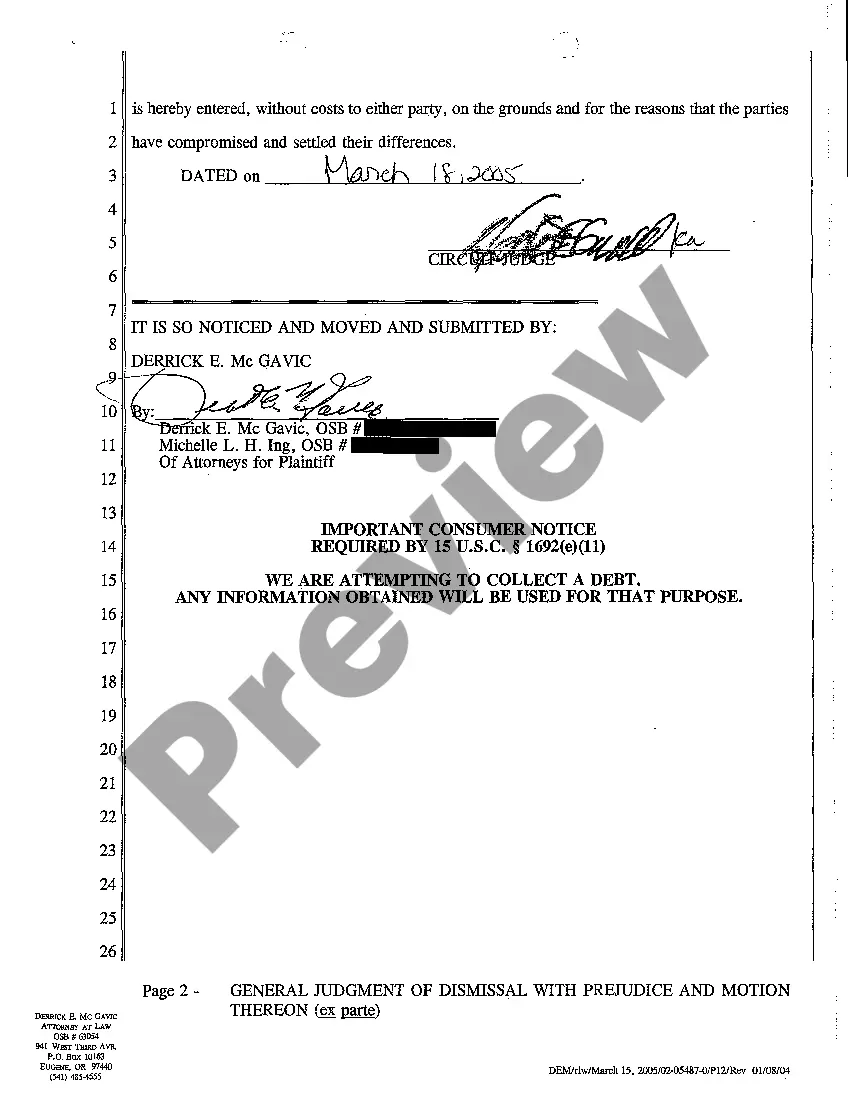
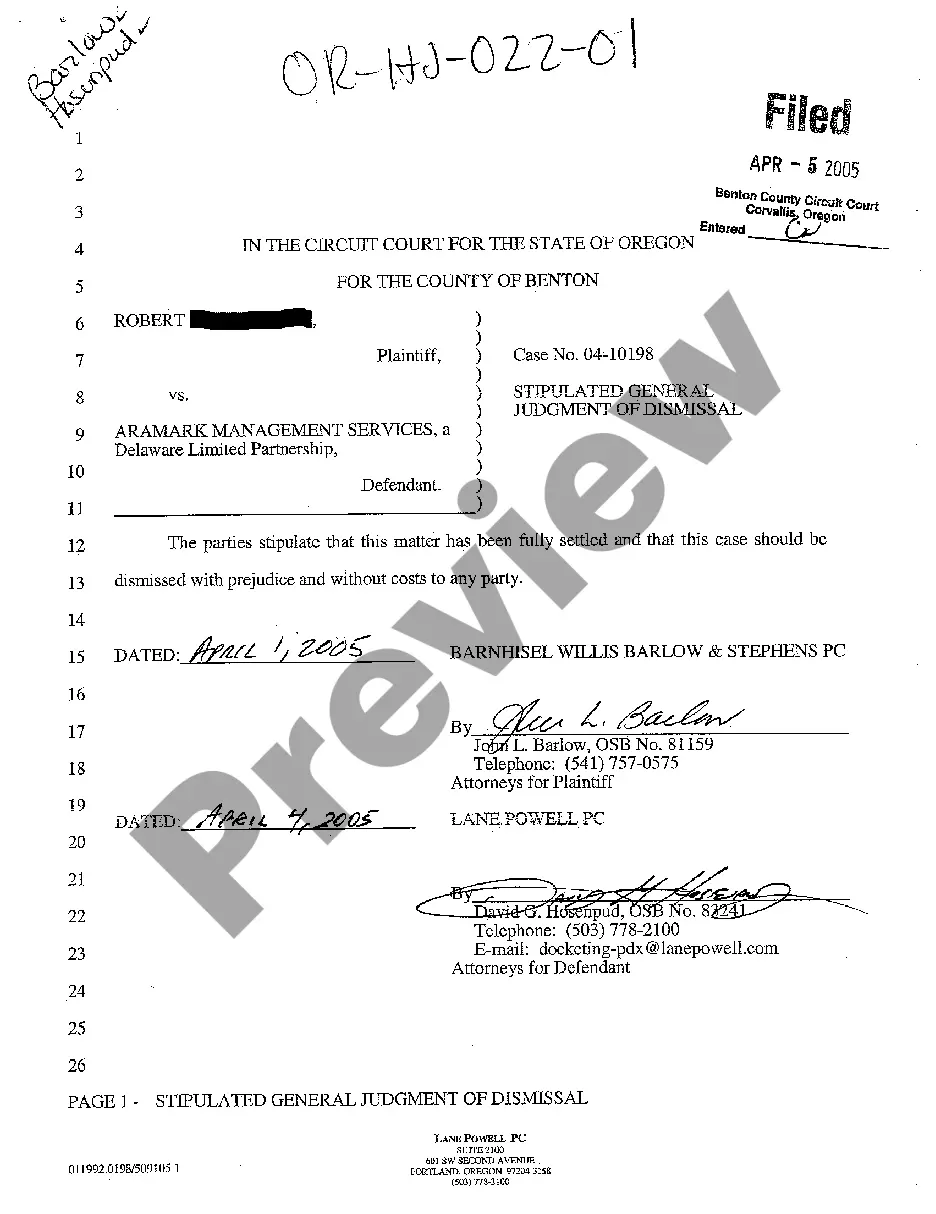






How to fill out Oregon General Judgment Of Dismissal With Prejudice And Motion Thereon Ex Parte?
In terms of submitting Oregon General Judgment of Dismissal with Prejudice and Motion Thereon Ex Parte, you most likely think about an extensive process that involves finding a ideal form among a huge selection of similar ones after which needing to pay a lawyer to fill it out to suit your needs. On the whole, that’s a slow and expensive choice. Use US Legal Forms and pick out the state-specific form in just clicks.
For those who have a subscription, just log in and then click Download to find the Oregon General Judgment of Dismissal with Prejudice and Motion Thereon Ex Parte template.
If you don’t have an account yet but need one, keep to the step-by-step guideline below:
- Be sure the document you’re getting applies in your state (or the state it’s needed in).
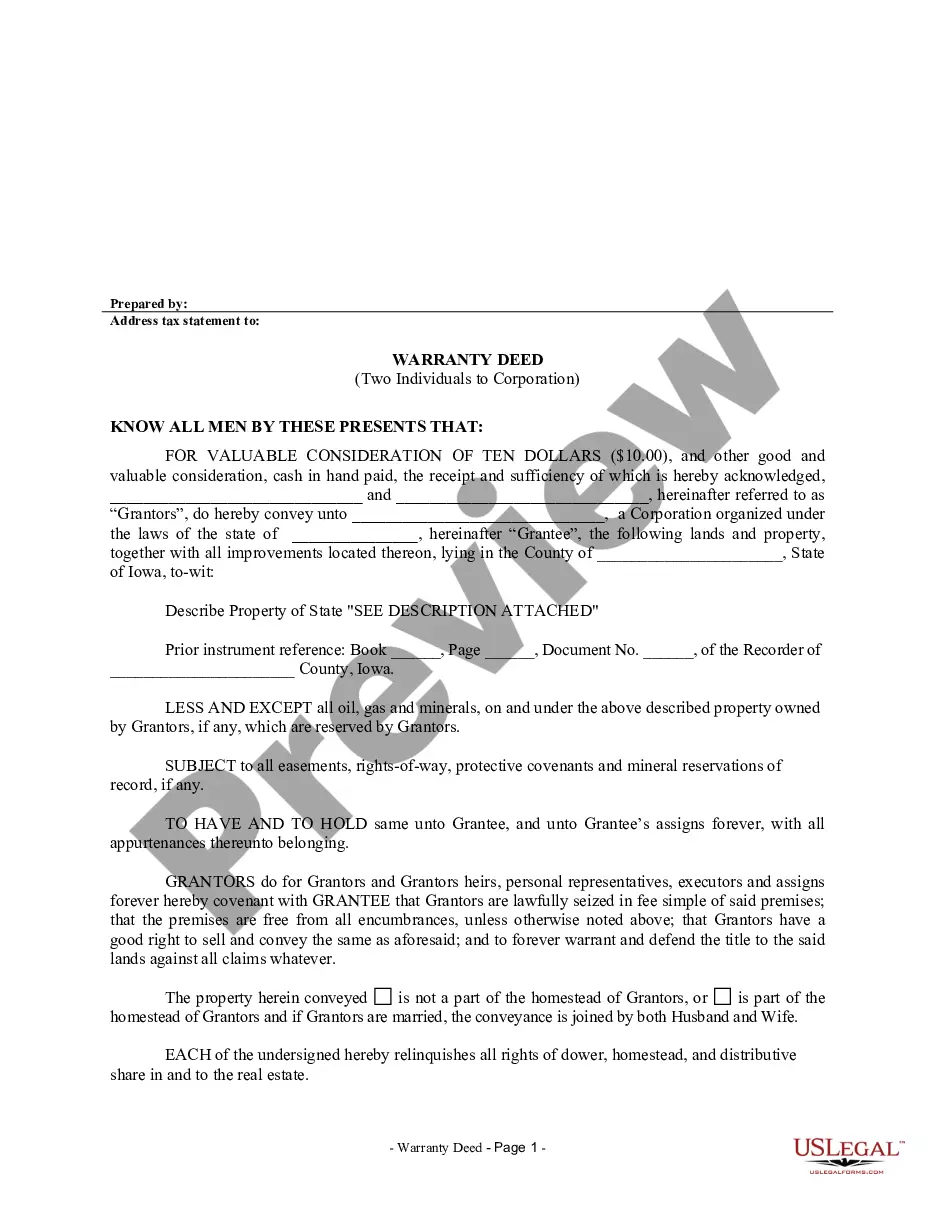
- Do it by reading through the form’s description and through clicking on the Preview option (if accessible) to find out the form’s content.
- Click on Buy Now button.
- Select the appropriate plan for your financial budget.
- Sign up for an account and select how you would like to pay out: by PayPal or by card.
- Save the document in .pdf or .docx format.
- Get the document on the device or in your My Forms folder.
Skilled lawyers draw up our templates to ensure after downloading, you don't need to bother about editing and enhancing content material outside of your personal info or your business’s information. Sign up for US Legal Forms and receive your Oregon General Judgment of Dismissal with Prejudice and Motion Thereon Ex Parte document now.
Form popularity
FAQ
A case will be dismissed with prejudice if there is reason for the case not to be brought back to court; for example, if the judge deems the lawsuit frivolous or the the matter under consideration is resolved outside of court.
In a criminal court, a judge can dismiss a case with prejudice, for example, when false accusations and lingering suspicions may do harm to the defendant's reputation or position in the community.
Dismissal with prejudice is a final judgment and the case becomes res judicata on the claims that were or could have been brought in it; dismissal without prejudice is not.
A dismissed case means that a lawsuit is closed with no finding of guilt and no conviction for the defendant in a criminal case by a court of law. Even though the defendant was not convicted, a dismissed case does not prove that the defendant is factually innocent for the crime for which he or she was arrested.
WHAT IS A DISMISSED CASE? A dismissed criminal case is one in which you were not convicted. When a criminal charge is dismissed, you are not guilty and the case is concluded.
1. judgment of dismissal - a judgment disposing of the matter without a trial.
Noun. 1. judgment of dismissal - a judgment disposing of the matter without a trial. dismissal, judgement of dismissal. judicial decision, judgment, judgement - (law) the determination by a court of competent jurisdiction on matters submitted to it.
When a lawsuit is dismissed with prejudice, the court is saying that it has made a final determination on the merits of the case, and that the plaintiff is therefore forbidden from filing another lawsuit based on the same grounds. See also: dismiss, dismissal without prejudice. courts.
The ruling by a judge that all or a portion (one or more of the causes of action) of the plaintiff's lawsuit is terminated (thrown out) at that point without further evidence or testimony.A defendant may be "dismissed" from a lawsuit, meaning the suit is dropped against that party.