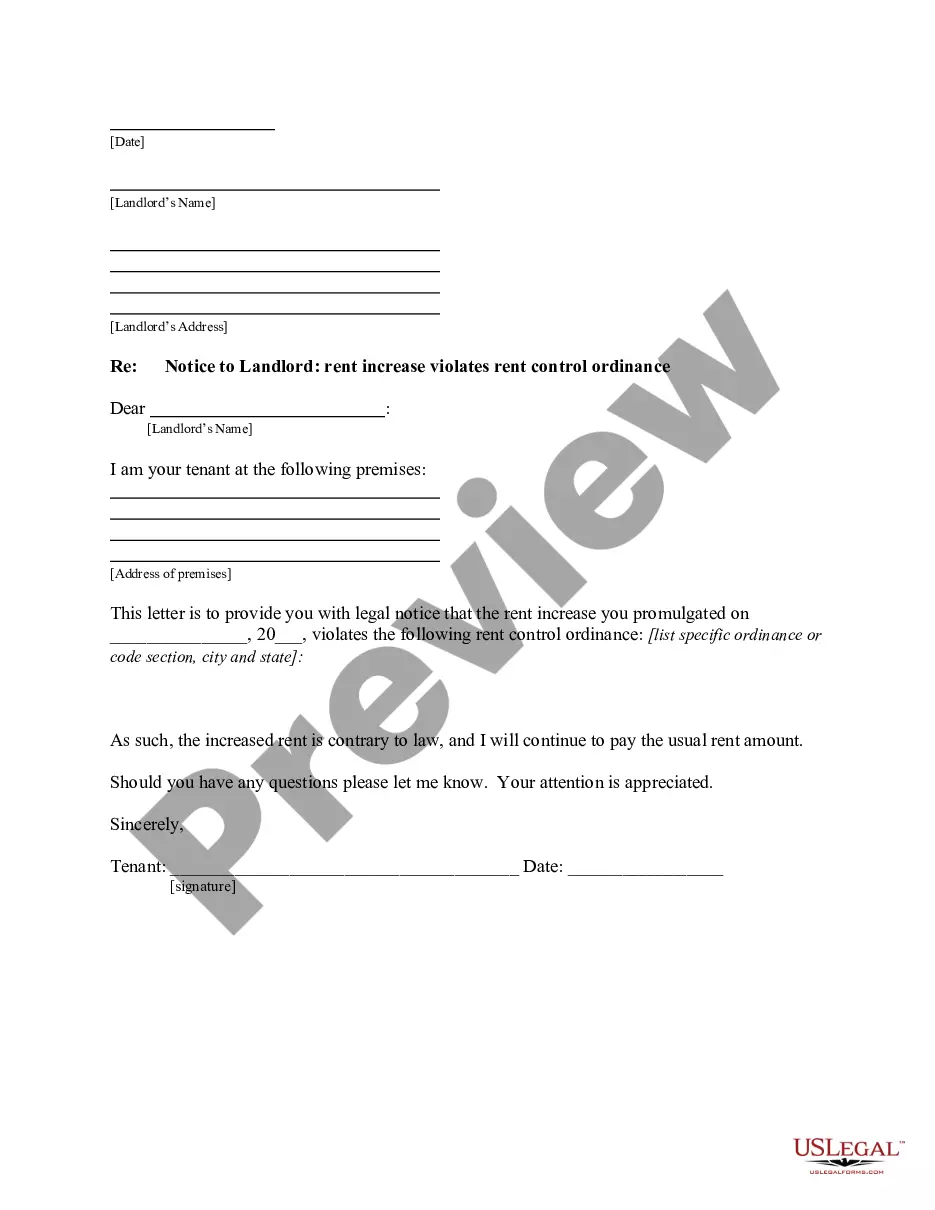
Oklahoma Letter from Tenant to Landlord containing Notice to landlord to withdraw improper rent increase due to violation of rent control ordinance
About this form
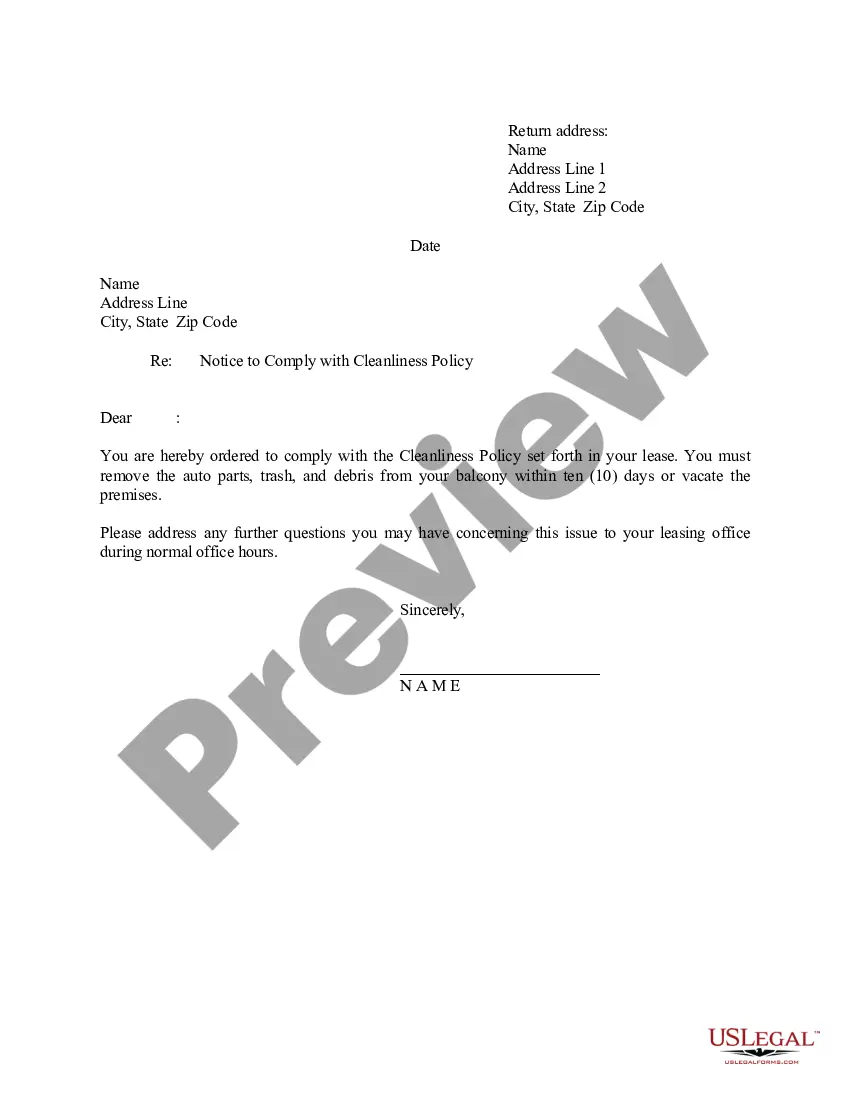
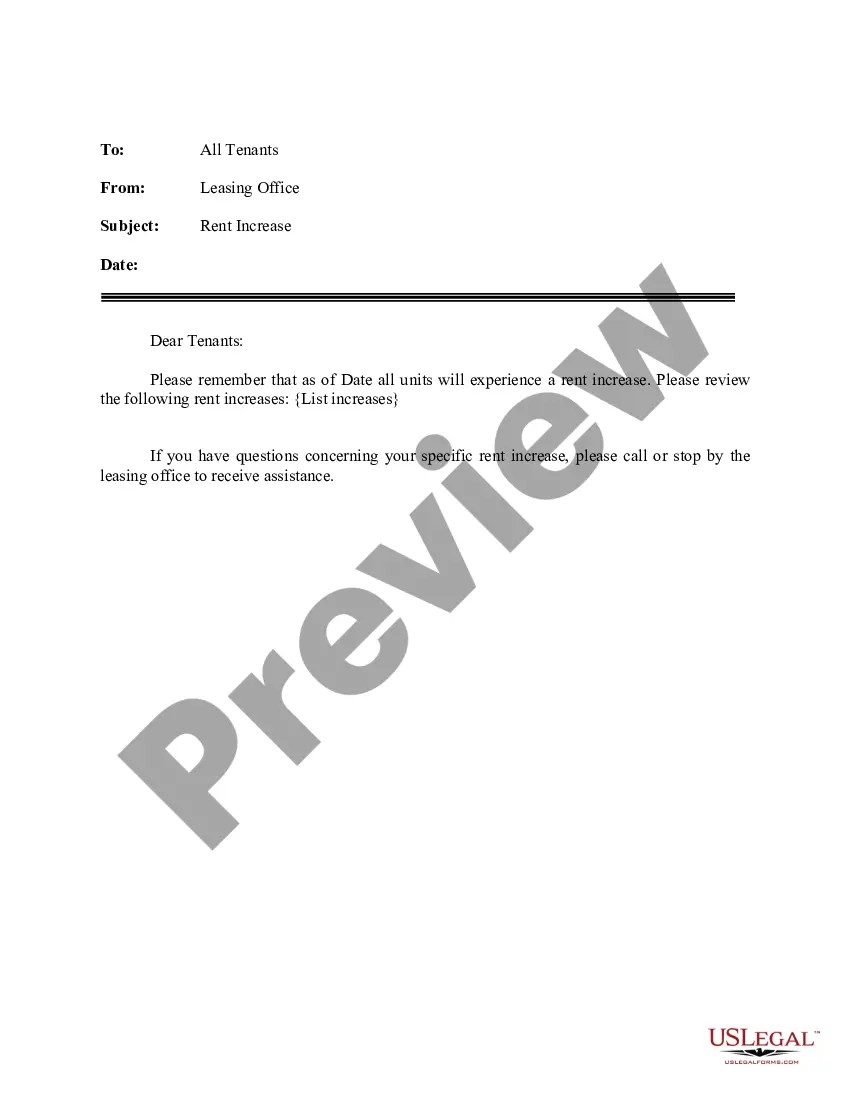
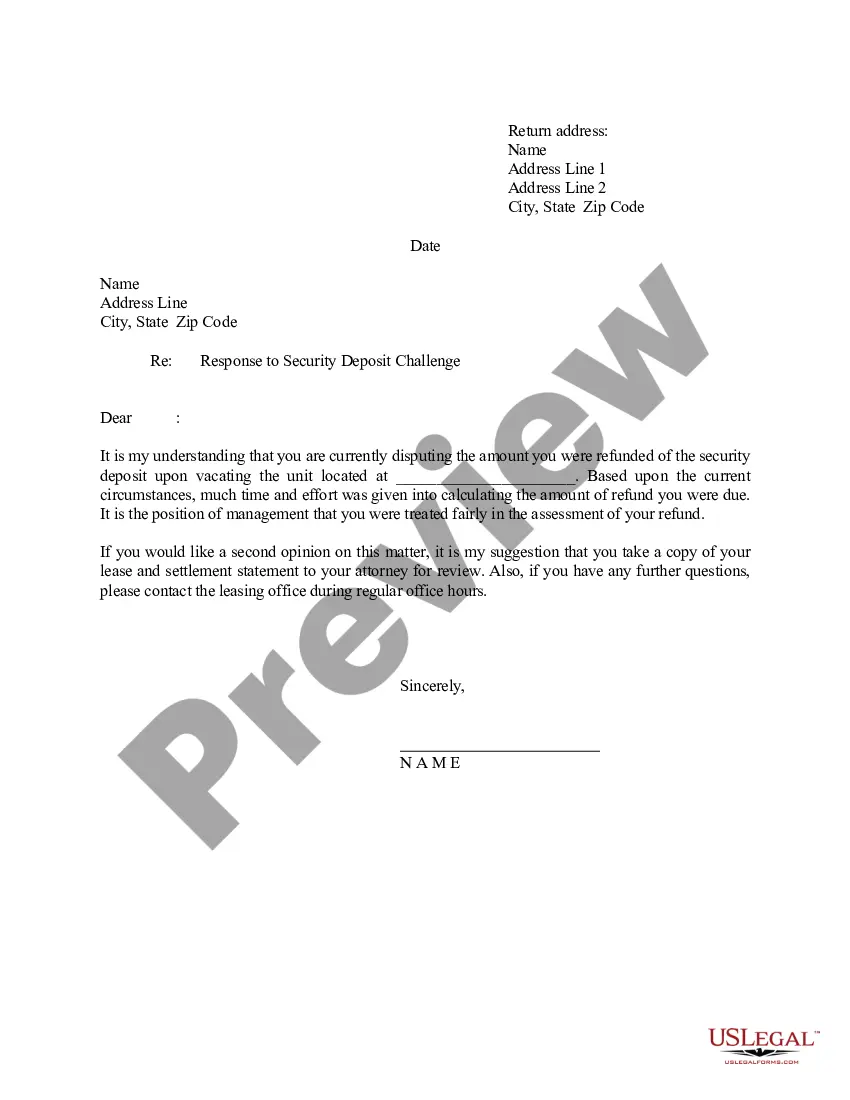
This form is a letter from a tenant to a landlord that serves as a notice to withdraw an improper rent increase. It is used when the rent increase violates local rent control ordinances. By using this form, tenants can formally alert their landlord to the unlawful nature of the increase, which helps to protect their rights as renters. This form is distinct from general complaint letters as it specifically addresses the legality of rent increases under applicable laws.
Main sections of this form
- Date of the letter
- Tenant's signature
- Statement declaring the improper rent increase
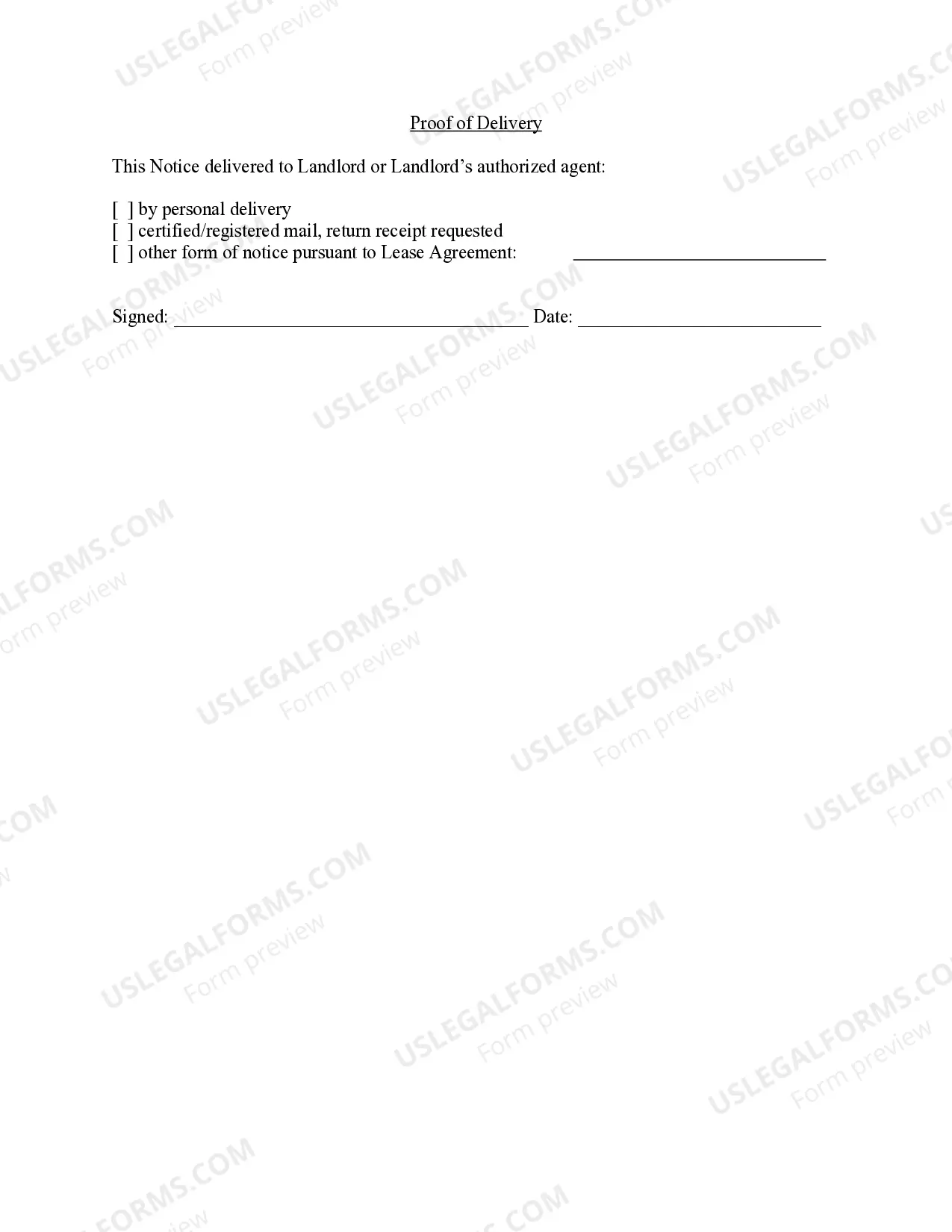
- Proof of delivery section
- Notice to withdraw the rent increase

Common use cases
Use this form if you, as a tenant, have received a notice of rent increase from your landlord that appears to violate local rent control laws. This letter acts as an official notification to your landlord to reconsider the increase and ensures your objections are documented. It is particularly relevant in markets with strict rent control regulations.
Who can use this document
- Tenants who have been notified of a rent increase
- Individuals living in areas with rent control ordinances
- Renters looking to legally contest an unlawful rent increase
Completing this form step by step
- Identify the parties involved (tenant and landlord).
- Enter the date of the letter.
- Clearly state the improper rent increase and reference the applicable rent control ordinance.
- Sign the letter where indicated.
- Select the method of delivery (personal delivery or certified mail) and complete the proof of delivery section.
Is notarization required?
In most cases, this form does not require notarization. However, some jurisdictions or signing circumstances might. US Legal Forms offers online notarization powered by Notarize, accessible 24/7 for a quick, remote process.
Get your form ready online
Our built-in tools help you complete, sign, share, and store your documents in one place.
Make edits, fill in missing information, and update formatting in US Legal Forms—just like you would in MS Word.
Download a copy, print it, send it by email, or mail it via USPS—whatever works best for your next step.
Sign and collect signatures with our SignNow integration. Send to multiple recipients, set reminders, and more. Go Premium to unlock E-Sign.
If this form requires notarization, complete it online through a secure video call—no need to meet a notary in person or wait for an appointment.
We protect your documents and personal data by following strict security and privacy standards.

Make edits, fill in missing information, and update formatting in US Legal Forms—just like you would in MS Word.

Download a copy, print it, send it by email, or mail it via USPS—whatever works best for your next step.

Sign and collect signatures with our SignNow integration. Send to multiple recipients, set reminders, and more. Go Premium to unlock E-Sign.

If this form requires notarization, complete it online through a secure video call—no need to meet a notary in person or wait for an appointment.

We protect your documents and personal data by following strict security and privacy standards.
Common mistakes
- Failing to include the date, which may delay the process.
- Not signing the letter, making it unofficial.
- Ignoring specific local laws that may dictate additional requirements.
Why use this form online
- Immediate access to a legally vetted document.
- Convenient editing options to tailor the letter to your needs.
- Easy downloading and printing for quick delivery to your landlord.
Legal use & context
- This notice serves as preliminary documentation should the issue escalate to legal proceedings.
- Confirming the violation of rent control ordinances can establish a strong defense for tenants.
Quick recap
- The form helps tenants contest illegal rent increases.
- Ensure compliance with state-specific regulations.
- A clear notification can prevent future disputes.
Looking for another form?


Form popularity
FAQ
Showing the premises to prospective tenants 'reasonable' notice / number of times. The law does not say what 'reasonable' means.If you refuse access, the landlord/agent can apply to the Tribunal for an order that authorises them or any other person to enter the premises.
If the tenant refuses, you are permitted to send them a notice to agree or quit the property. The tenant refusing you access constitutes a breach in the lease agreement, so they could be evicted if they continue to deny access.
If there is no lease in place, you are not a landlord under Florida law. As such, you cannot evict your roommate.
Notice Requirements for Lease Violations The landlord must wait another five days before filing an eviction lawsuit if the tenant does not fix the violation within the ten-day time period, making a total of fifteen days from when the tenant first received the notice.
Eviction Process in OklahomaIf the tenant has not paid rent or fixed the lease violation within the given time frame, then the landlord can terminate the rental agreement and file an eviction lawsuit (forcible entry and detainer action) with the court.
While tenants cannot unreasonably deny access to a landlord, landlords must also follow all of the state and local rules regarding access to tenants' apartments. Roughly half of states have rules governing landlord entry into tenants' apartments.
Every tenant has a right to enjoy peaceful possession of the property without any disturbance or encumbrance from anyone including the owner. At no point of time under your tenancy can your landlord ask you to evict or leave the premises without assigning a valid reason.
Under Oklahoma law, a landlord must give a tenant or tenant at-will 30 days' written notice to vacate. If the arrangement has been for less than a month, the host must still give at least seven days' notice. If there is no lease, or it is open-ended with no termination date, that creates a complication, Klinger said.