Ohio General Warranty Deed from Individual to a Trust
Overview of this form
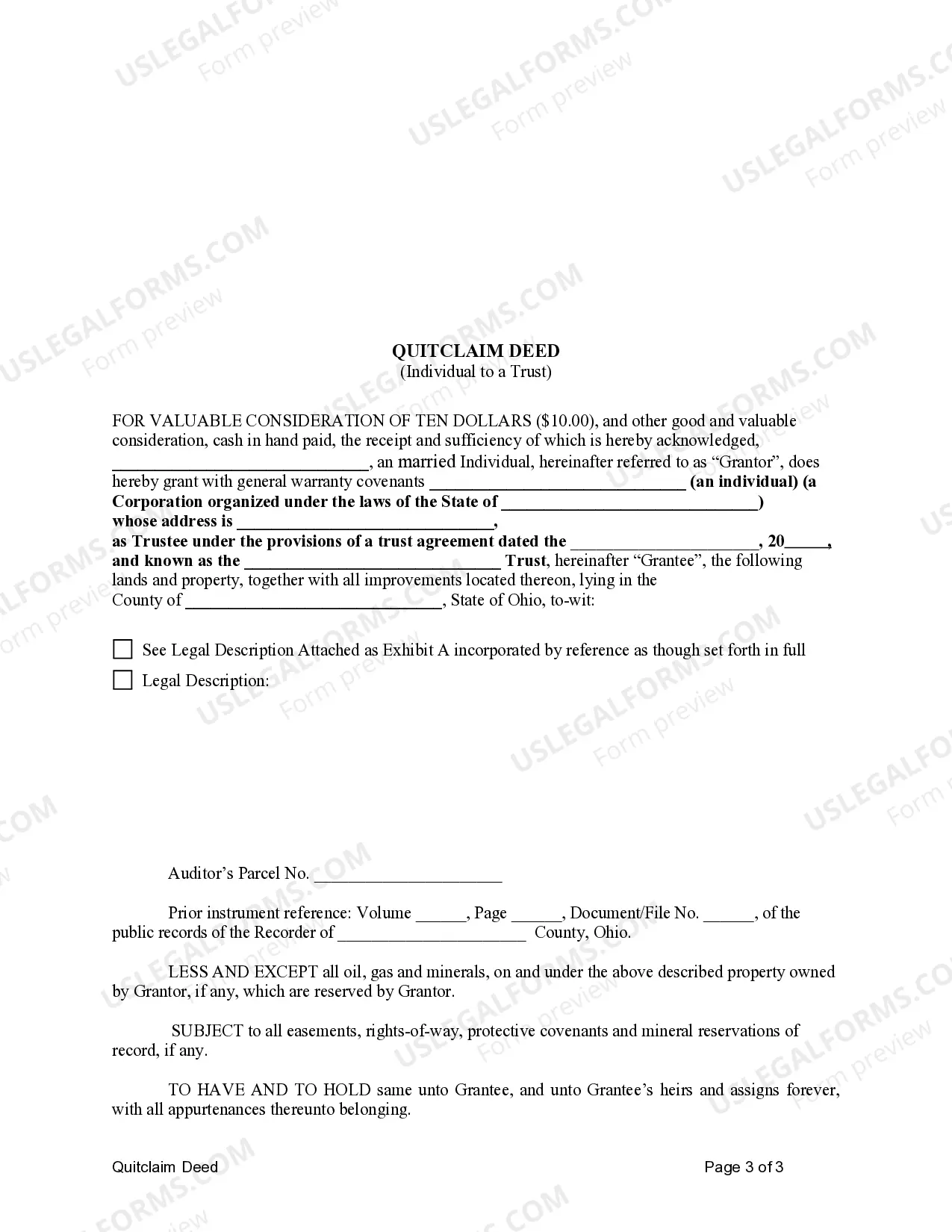
The General Warranty Deed from Individual to a Trust is a legal document that transfers ownership of property from an individual (the grantor) to a trust (the grantee). This form guarantees that the grantor has clear title to the property being transferred and has the right to convey it. Unlike other deeds, this warranty deed includes specific warranties against defects in ownership, providing additional security for the trust.
Form components explained
- The parties involved: identification of the grantor and trustee of the trust.
- The legal description of the property being transferred.
- A reservation clause for oil, gas, and minerals owned by the grantor.
- Details regarding prior instruments and public records.
- Notices of easements and other rights affecting the property.





When this form is needed
This form is appropriate when an individual wishes to transfer their property into a trust. This is often done for estate planning purposes, asset protection, or to facilitate the management of property. It is also used when the trust needs to hold real estate as part of its assets.
Who can use this document
- Individuals looking to legally transfer property to a trust.
- Trustees who need to formalize the acceptance of property into the trust.
- Estate planners or real estate professionals facilitating property transfers.
Instructions for completing this form
- Identify the parties: Fill in the names and addresses of the grantor and trustee.
- Specify the property: Enter the legal description of the property being transferred.
- Indicate any reservations: Note any mineral rights or reservations you want to retain.
- Provide prior instrument details: Enter information about previous transactions related to the property.
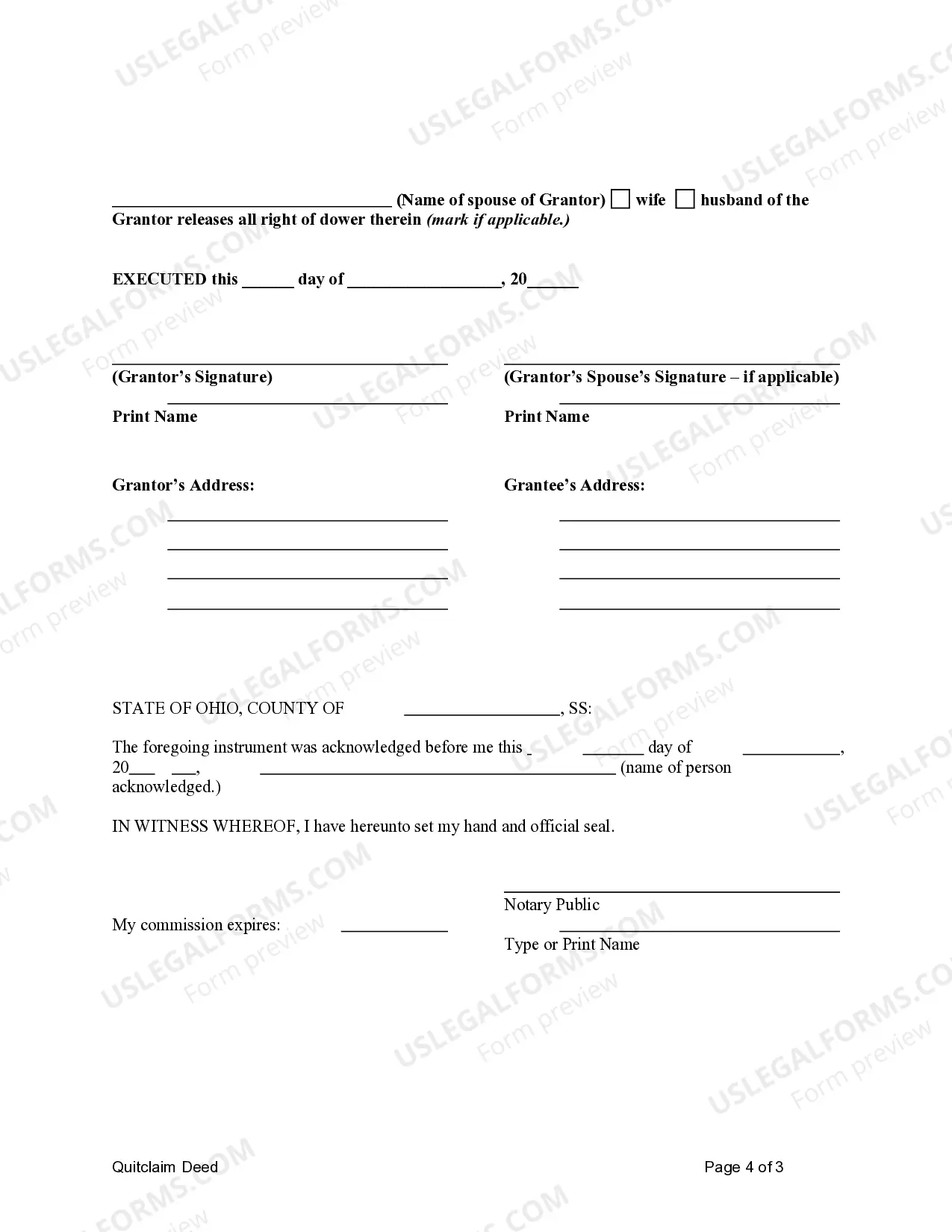
- Sign and date: The grantor must sign and date the document to validate the transfer.
Does this form need to be notarized?
This form does not typically require notarization unless specified by local law. However, it's advisable to consult a legal expert or local regulations to confirm any specific notarization requirements in your area.
Get your form ready online
Our built-in tools help you complete, sign, share, and store your documents in one place.
Make edits, fill in missing information, and update formatting in US Legal Forms—just like you would in MS Word.
Download a copy, print it, send it by email, or mail it via USPS—whatever works best for your next step.
Sign and collect signatures with our SignNow integration. Send to multiple recipients, set reminders, and more. Go Premium to unlock E-Sign.
If this form requires notarization, complete it online through a secure video call—no need to meet a notary in person or wait for an appointment.
We protect your documents and personal data by following strict security and privacy standards.

Make edits, fill in missing information, and update formatting in US Legal Forms—just like you would in MS Word.

Download a copy, print it, send it by email, or mail it via USPS—whatever works best for your next step.

Sign and collect signatures with our SignNow integration. Send to multiple recipients, set reminders, and more. Go Premium to unlock E-Sign.

If this form requires notarization, complete it online through a secure video call—no need to meet a notary in person or wait for an appointment.

We protect your documents and personal data by following strict security and privacy standards.
Avoid these common issues
- Failing to include the complete legal description of the property.
- Not reserving oil, gas, or mineral rights if intended to be retained.
- Missing signatures and dates, which can invalidate the deed.
Benefits of completing this form online
- Convenient access from anywhere, allowing you to complete the form at your own pace.
- Clear guidance on filling out the document accurately with pre-defined fields.
- Reliability in compliance with Ohio state laws and regulations.
Legal use & context
- This deed provides a legal guarantee that the grantor has clear title to the property.
- The reservation of rights can protect the grantor's interests in natural resources.
- Filing the deed with the appropriate county office establishes public record and ownership.
Main things to remember
- The General Warranty Deed securely transfers property from an individual to a trust.
- It includes warranties from the grantor regarding property ownership.
- It is essential to follow state-specific requirements for legality.
- Online access provides convenience and ensures accurate completion of the form.
Looking for another form?



Form popularity
FAQ
Let's start with the definition of a deed: DEED: A written instrument by which one party, the Grantor, conveys the title of ownership in property to another party, the Grantee. A Warranty Deed contains promises, called covenants, that the Grantor makes to the Grantee.
To transfer title, you must deliver the executed and acknowledged deed to the grantee. This means that you must give up control over the deed during your lifetime and intend to transfer title to the grantee. To complete the transfer, the grantee must accept the delivered deed.
The answer is yes. Parties to a transaction are always free to prepare their own deeds. If you do so, be sure your deed measures up to your state's legal regulations, to help avert any legal challenge to the deed later.
A trustee deedsometimes called a deed of trust or a trust deedis a legal document created when someone purchases real estate in a trust deed state, such as California (check your local laws to see what is required in your state). A trust deed is used in place of a mortgage.
Trustee's deeds convey real estate out of a trust.This type of conveyance is named for the person using the form the trustee who stands in for the beneficiary of the trust and holds title to the property.
Special warranties allow the transfer of property title between seller and buyer. The purchase of title insurance can mitigate the risk of prior claims to the special warranty deed.
A warranty deed protects property owners from future claims that someone else actually owns a portion (or all) of their property, while trustee deeds protect lenders when borrowers default on their mortgage loans.
The name and address of the seller (called the grantor) The name and address of the buyer (called the grantee) A legal description of the property (found on the previous deed) A statement that the grantor is transferring the property to the grantee.
A warranty deed is a document often used in real estate that provides the greatest amount of protection to the purchaser of a property. It pledges or warrants that the owner owns the property free and clear of any outstanding liens, mortgages, or other encumbrances against it.