New York Last Will and Testament for Married Person with Adult and Minor Children from Prior Marriage
What this document covers
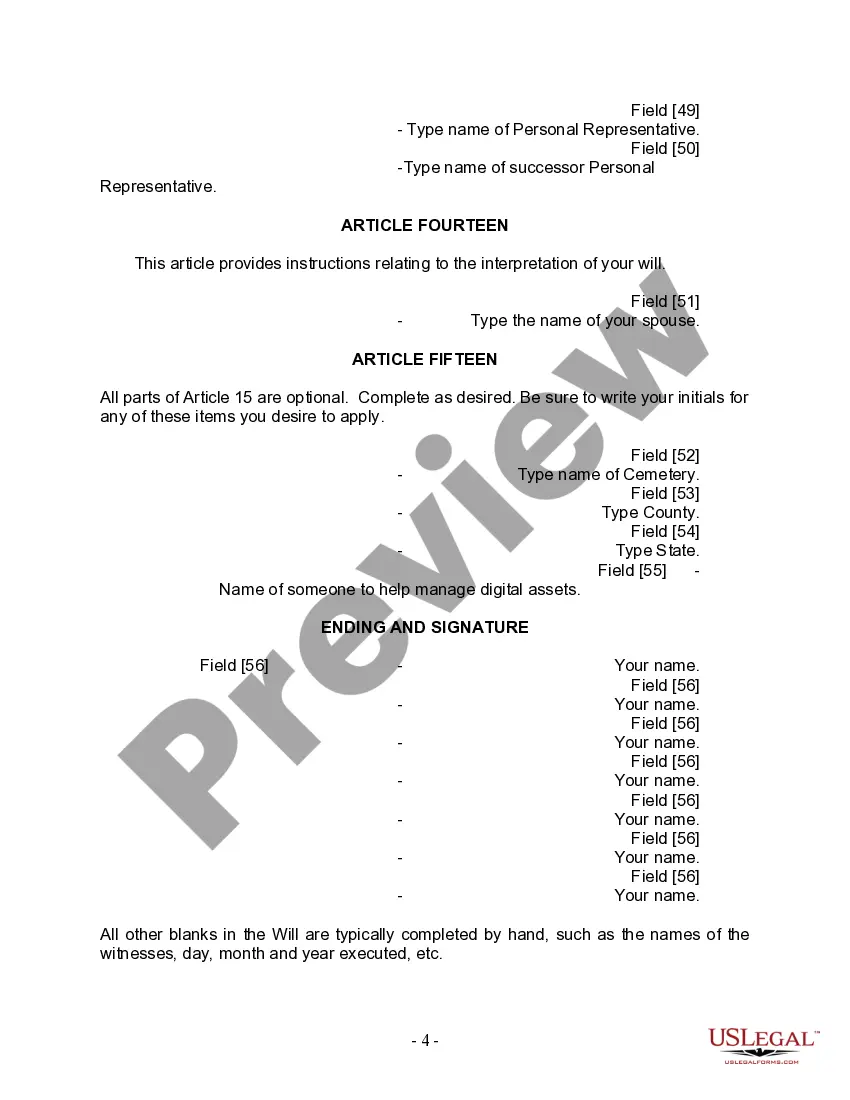
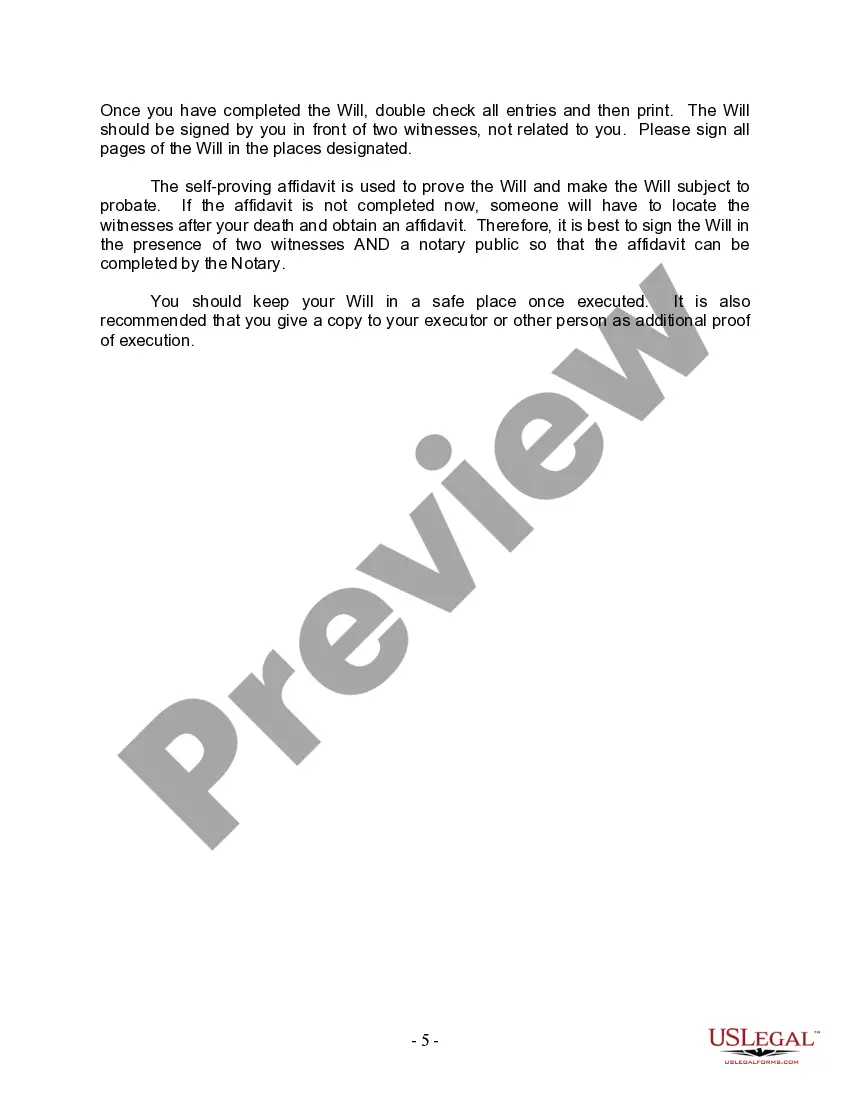
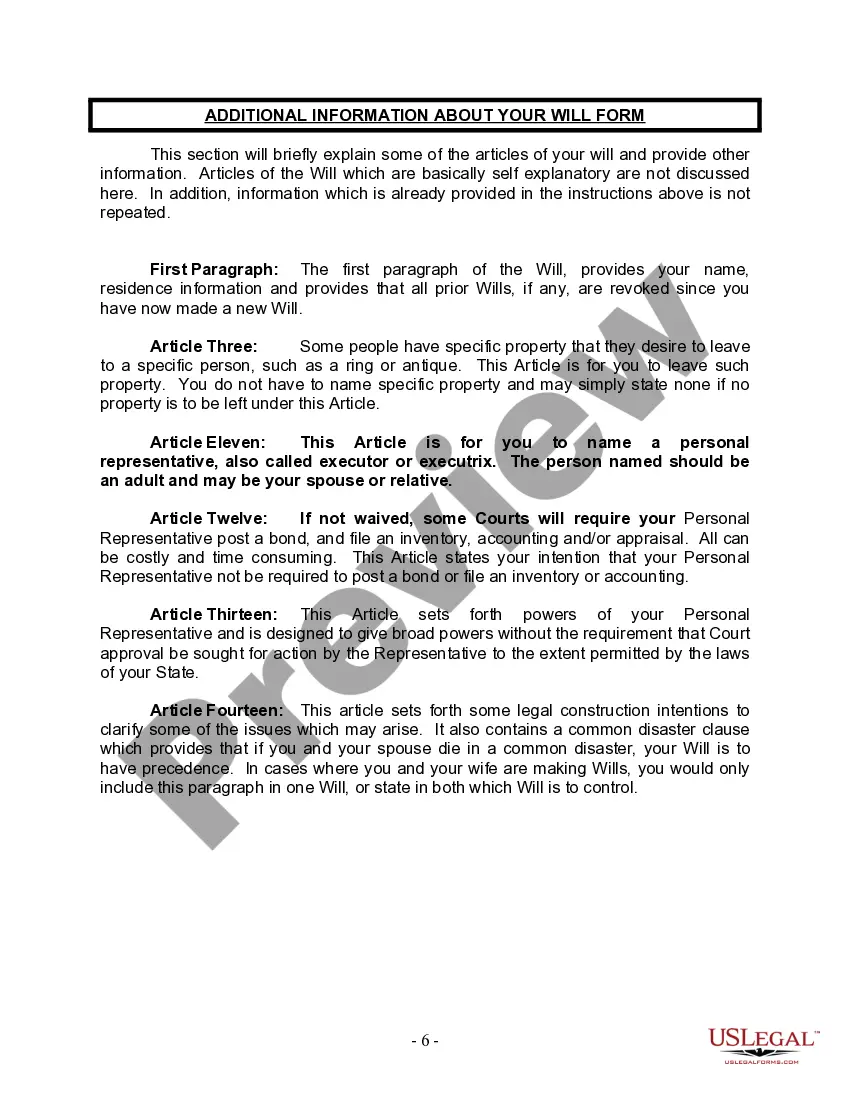
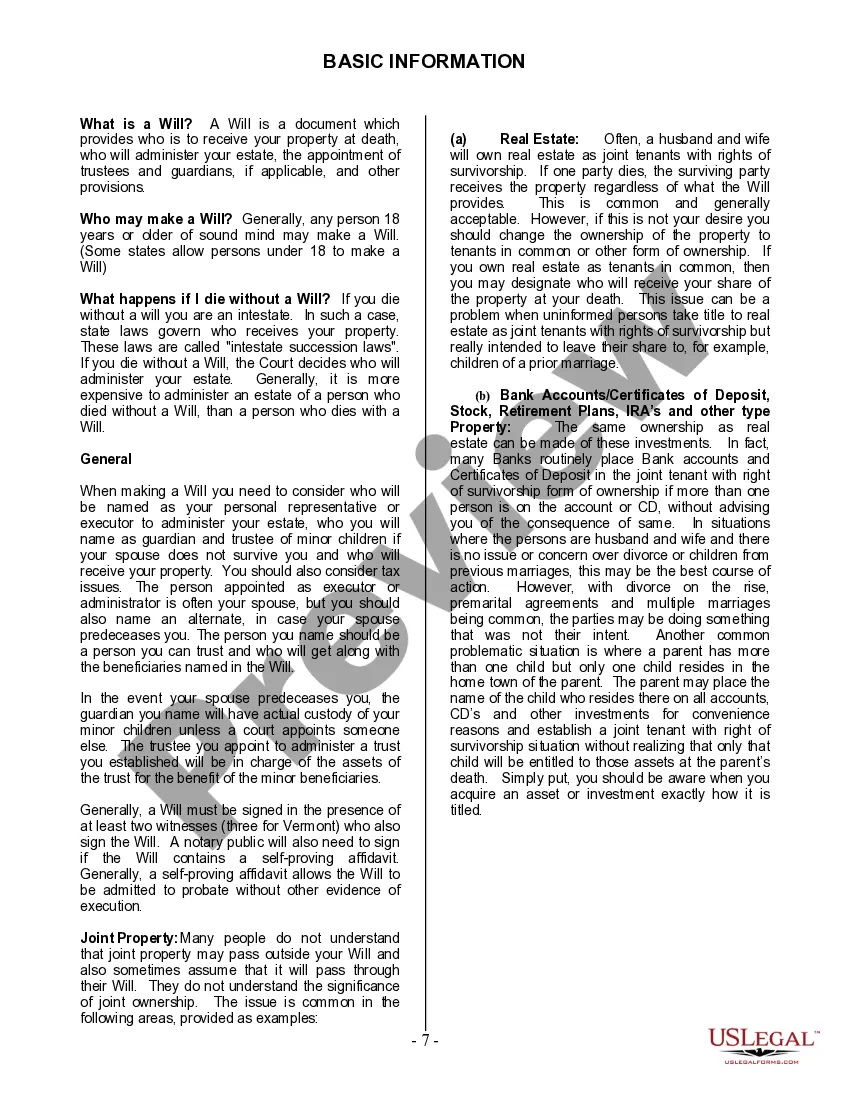
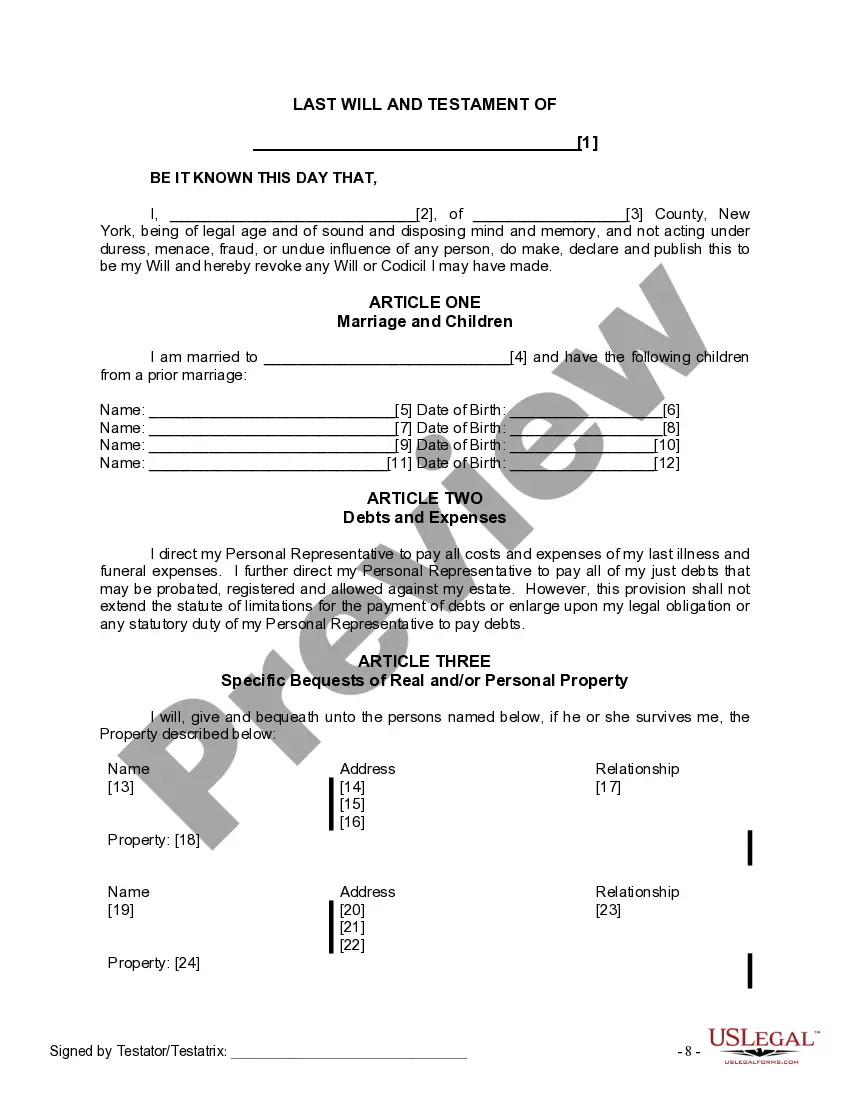
The Last Will and Testament for a married person with adult and minor children from a prior marriage is a legal document that outlines how your property and assets will be distributed after your death. This form is specifically designed for individuals who are married and have children from previous relationships. Unlike simpler wills, this document includes provisions for appointing an executor, distributing assets among both adult and minor children, and setting up a trust for those minor children. It ensures that your wishes are clear and legally binding, providing peace of mind for both you and your loved ones.
Key components of this form
- Personal information, including your name and county of residence.
- Appointment of a personal representative (executor) to manage your estate.
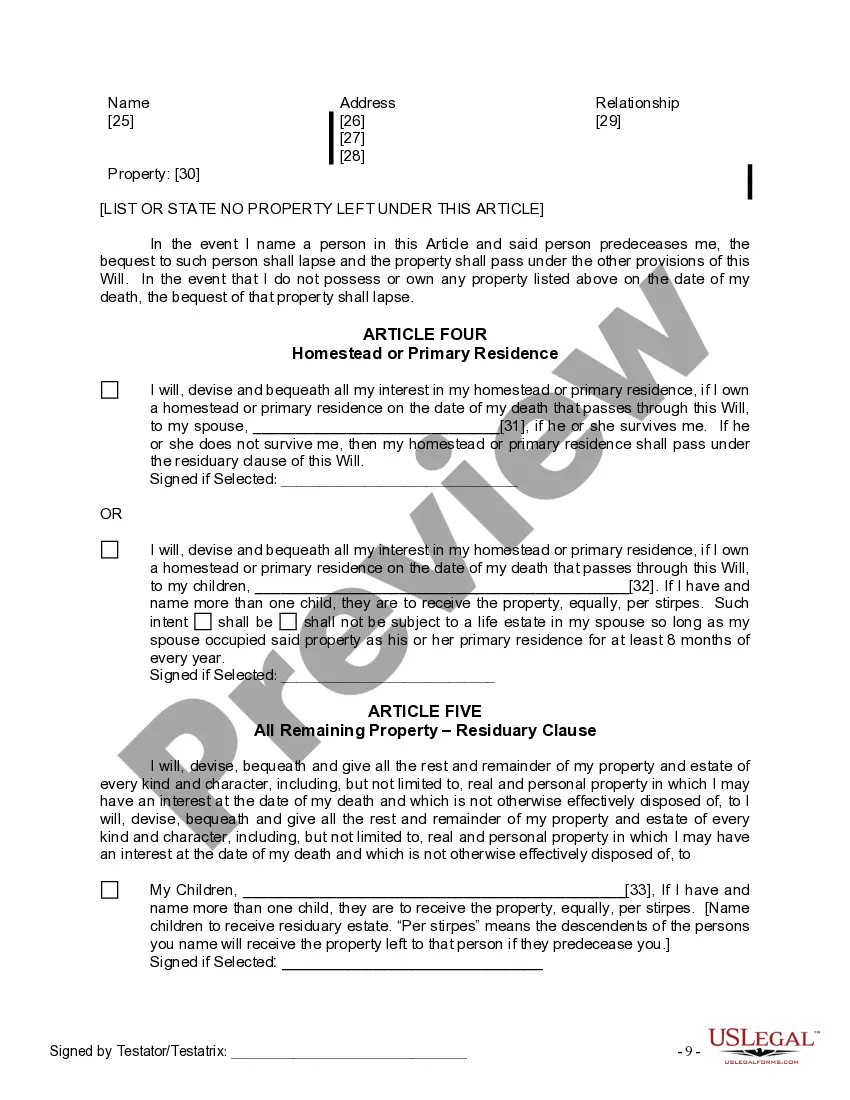
- Provisions for the distribution of property to your spouse and children.
- Instructions for paying debts and funeral expenses.
- Designation of a trustee for assets left to minor children.
- Appointment of a guardian for any minor children if necessary.




Common use cases
This Last Will and Testament should be used when you are a married individual who has children from a prior marriage. You may need this form if you want to ensure that your assets are distributed according to your specific wishes after your death, especially considering that some beneficiaries are adults while others are minors. It is also useful if you wish to clearly outline your preferences regarding the care and management of your assets on behalf of your minor children.
Who needs this form
- Married individuals with children from previous relationships.
- Parents looking to ensure their minor children's financial security.
- Anyone wanting to define the distribution of their estate explicitly.
- Testators seeking to appoint a personal representative and trustee.
Steps to complete this form
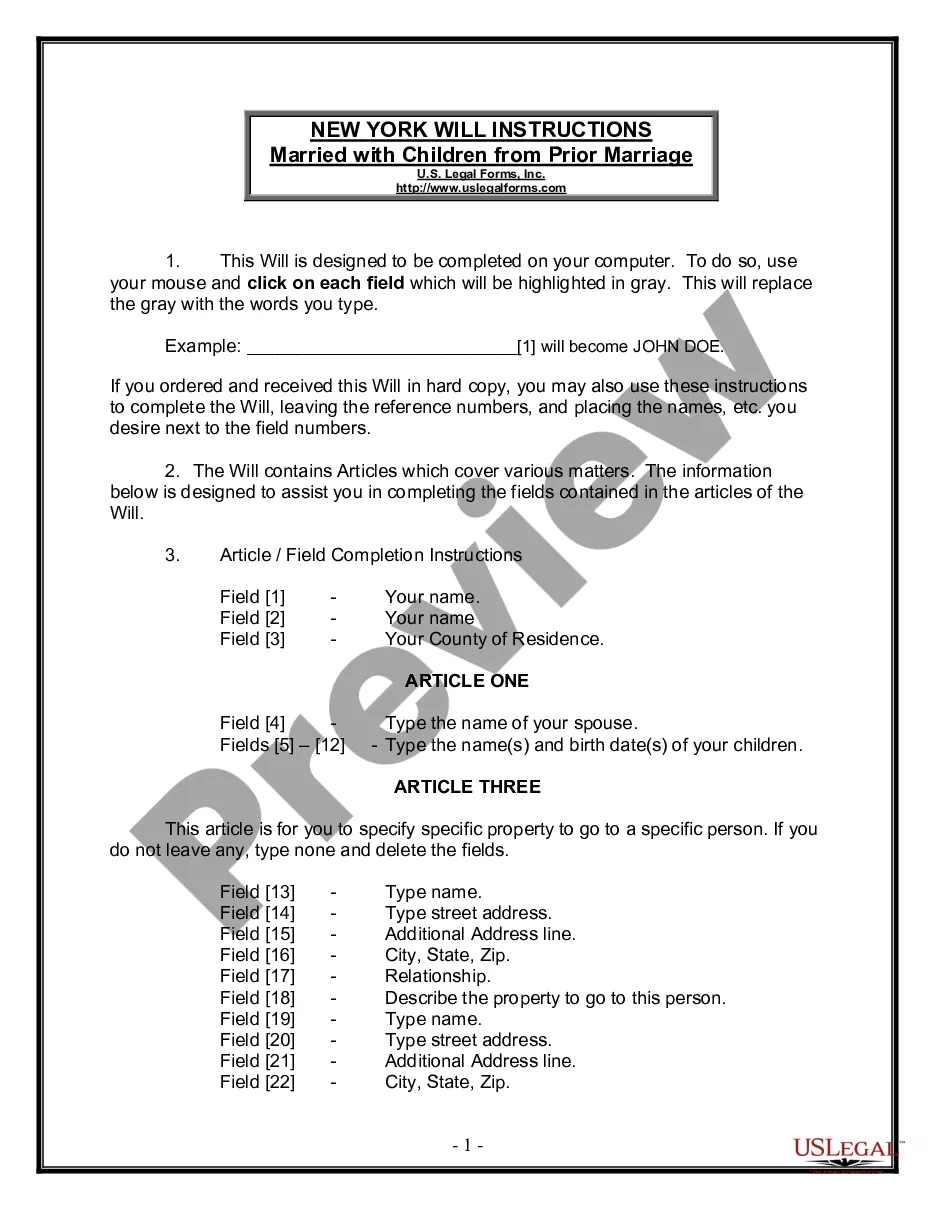
- Identify yourself by filling in your name and residence details.
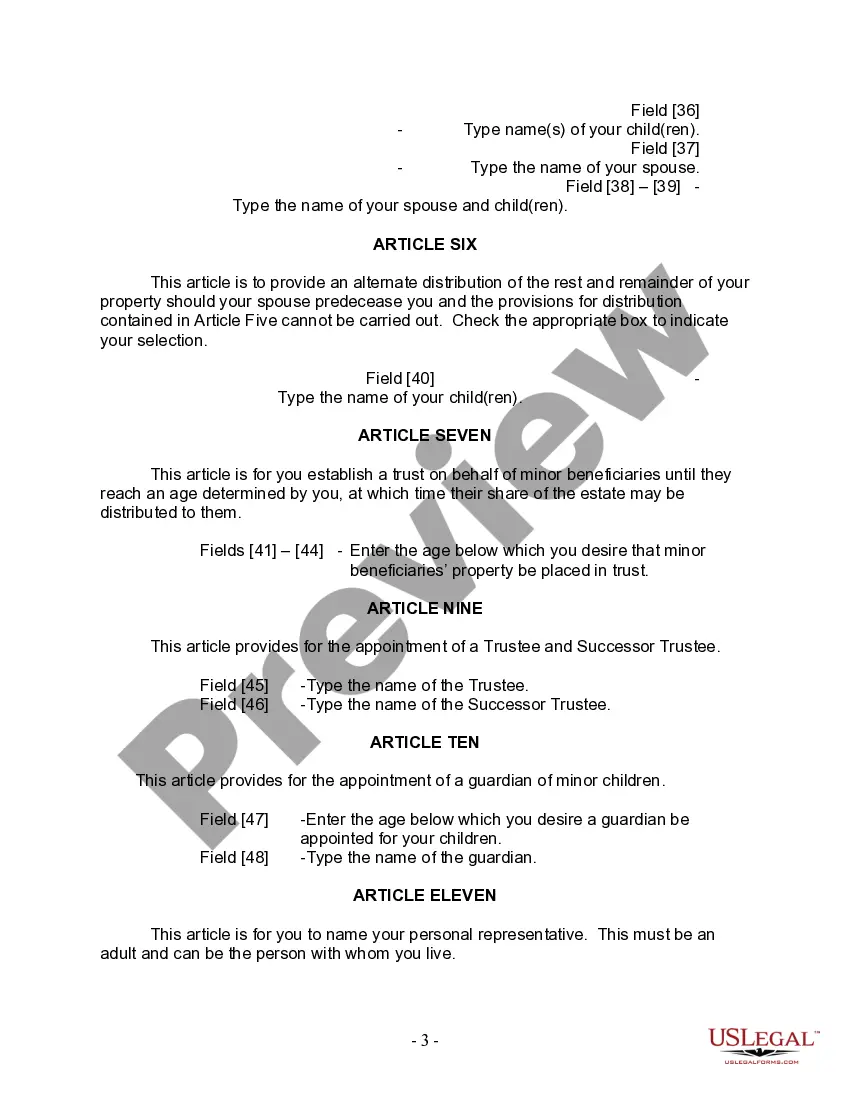
- Appoint a personal representative (executor) to manage your estate.
- Detail your marital status and list your children from prior relationships.
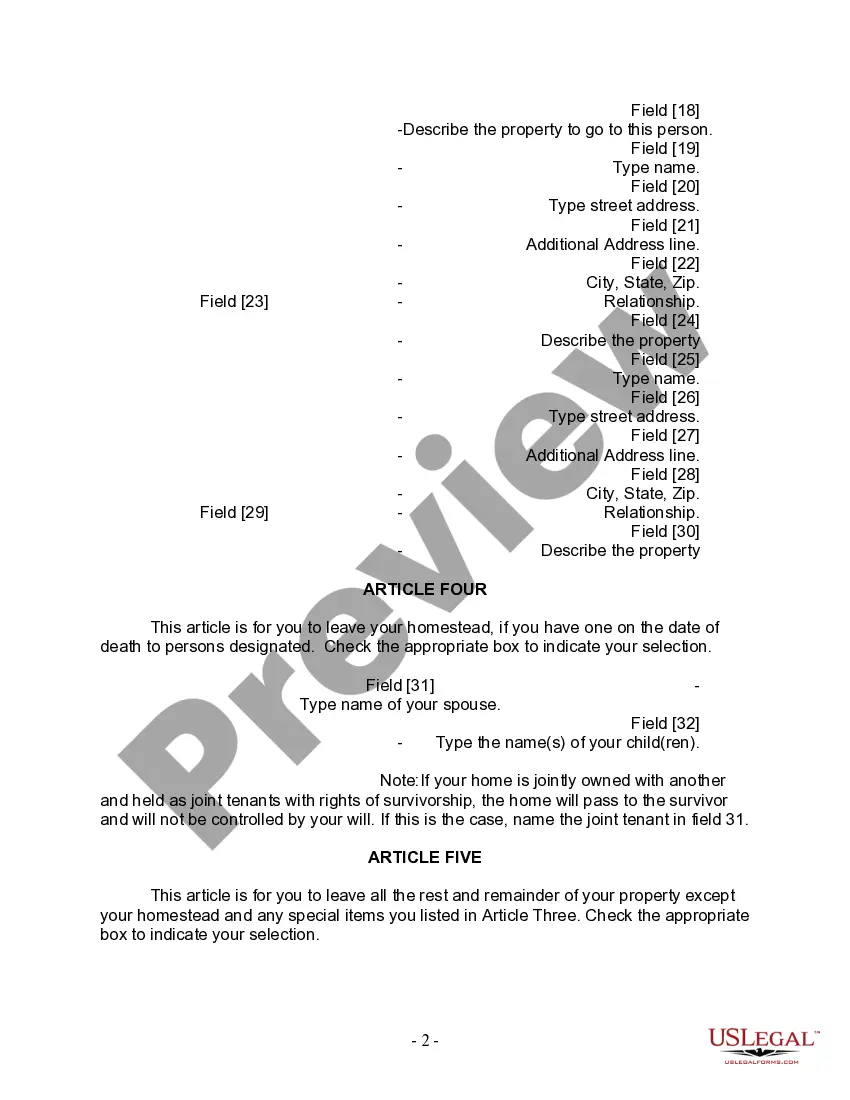
- Specify how you want your assets to be divided among your spouse and children.
- Include any provisions for minor children, such as setting up a trust.
- Ensure signatures from you and two witnesses, as required by New York law.
Does this form need to be notarized?
Yes, this form must be notarized to be legally valid in New York. It requires the presence of a notary public at the time of signing to ensure that the document is executed properly, adding an extra layer of legal security.
Get your form ready online
Our built-in tools help you complete, sign, share, and store your documents in one place.
Make edits, fill in missing information, and update formatting in US Legal Forms—just like you would in MS Word.
Download a copy, print it, send it by email, or mail it via USPS—whatever works best for your next step.
Sign and collect signatures with our SignNow integration. Send to multiple recipients, set reminders, and more. Go Premium to unlock E-Sign.
If this form requires notarization, complete it online through a secure video call—no need to meet a notary in person or wait for an appointment.
We protect your documents and personal data by following strict security and privacy standards.

Make edits, fill in missing information, and update formatting in US Legal Forms—just like you would in MS Word.

Download a copy, print it, send it by email, or mail it via USPS—whatever works best for your next step.

Sign and collect signatures with our SignNow integration. Send to multiple recipients, set reminders, and more. Go Premium to unlock E-Sign.

If this form requires notarization, complete it online through a secure video call—no need to meet a notary in person or wait for an appointment.

We protect your documents and personal data by following strict security and privacy standards.
Common mistakes to avoid
- Not updating the will after major life changes such as a divorce or new marriage.
- Failing to appoint a reliable personal representative.
- Not clearly specifying who receives each asset or property.
- Overlooking the need for witness signatures or notarization where required.
Why complete this form online
- Convenient access to a professionally drafted legal document.
- Ability to edit and customize the form easily to fit your individual needs.
- Secure, downloadable format that allows for easy storage and sharing.
- Comprehensive instructions included to simplify the completion process.
Key takeaways
- Create a clear estate plan that reflects your wishes for both adult and minor children.
- Ensure proper witness and notary requirements are followed for validity.
- Review and update your will regularly, especially after changes in family circumstances.
- Consider the importance of appointing a guardian for minor children in your will.
Looking for another form?

Form popularity
FAQ
You do not need a lawyer to write your Will for you.The witnesses must sign your Will at the bottom and place their addresses after their signatures to complete the formality. A notary is not required for a Will in New York State.
A notarized will does not need to be probated.When a person dies leaving behind a will that is not notarized, the law requires that its validity be ascertained by a notary or by a court. Similarly, any non-notarized modification made to a will must be probated, whether the will is notarized or not.
Any notary can notarize a will and any person can be a witness. Witnesses should be disinterested parties, meaning that they do not collect under the will. I often suggest three witnesses, just because there is always a possibility that a a witness will...
If each spouse has their own Will, California law allows them to make new Wills after the divorce has been filed and creating the new Will does not violate the Automatic Temporary Restraining Order (ATRO) against changing beneficiaries, selling assets, etc.
A Will only needs to be probated if the decedent died with assets valued at $50,000 or more. Before the Will has any legal effect, it must be admitted to probate by the Surrogate's Court located in the county where the person died. In other words, the court must make a determination that the Will is valid.
Under New York law, a surviving spouse has a right to share in a decedent's estate.EPTL § 5-1.1-A provides that a surviving spouse has the right to override the Will's terms and receive the greater of $50,000 or one-third of the net estate.
No. You can make your own will in New York, using Nolo's do-it-yourself will software or online will programs. However, you may want to consult a lawyer in some situations. For example, if you think that your will might be contested or if you want to disinherit your spouse, you should talk with an attorney.
It is a customary estate planning practice for each spouse to have his or her own will. While some practitioners may draft a joint will for a married couple, it is not recommended. Here are a few reasons why.