New York Residential Rental Lease Agreement

About this form
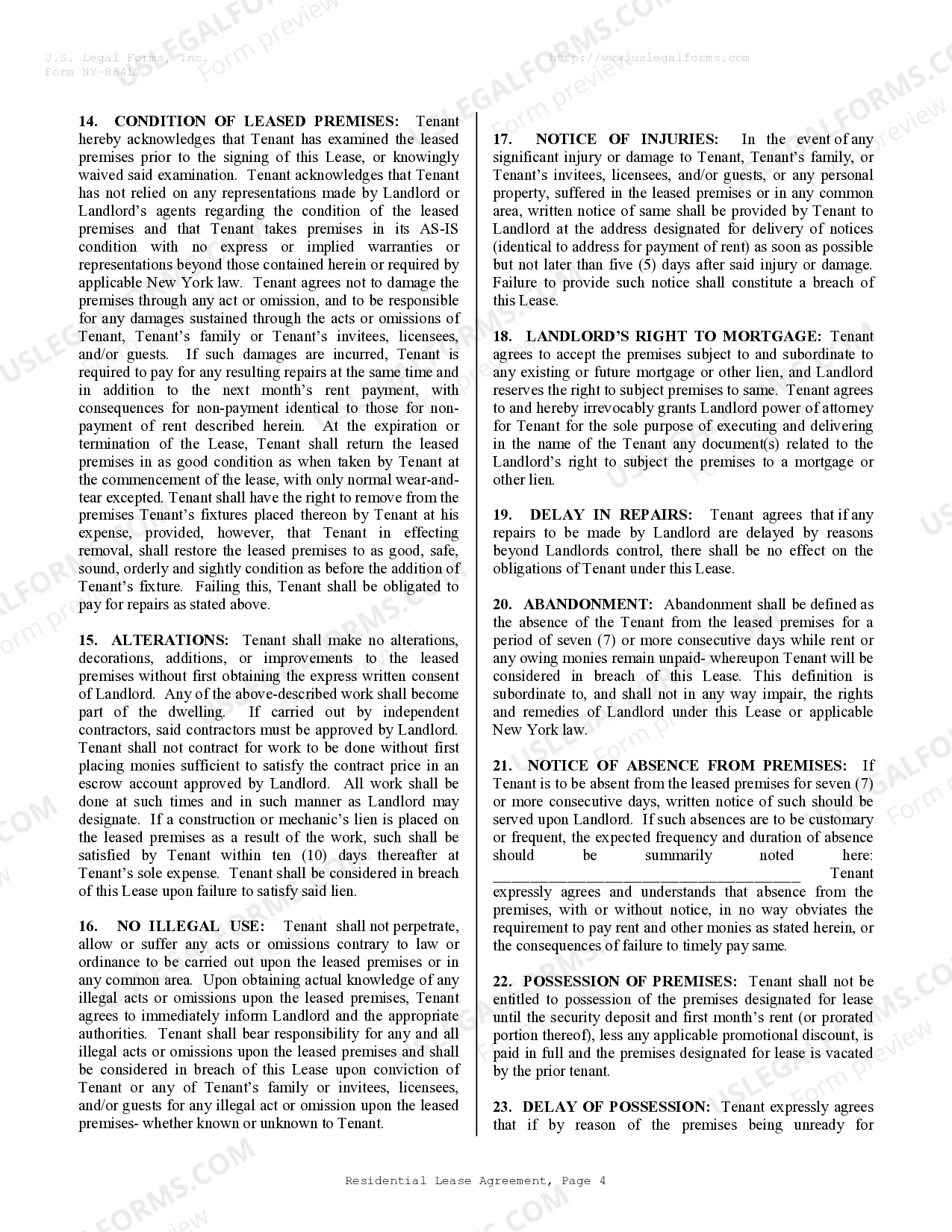
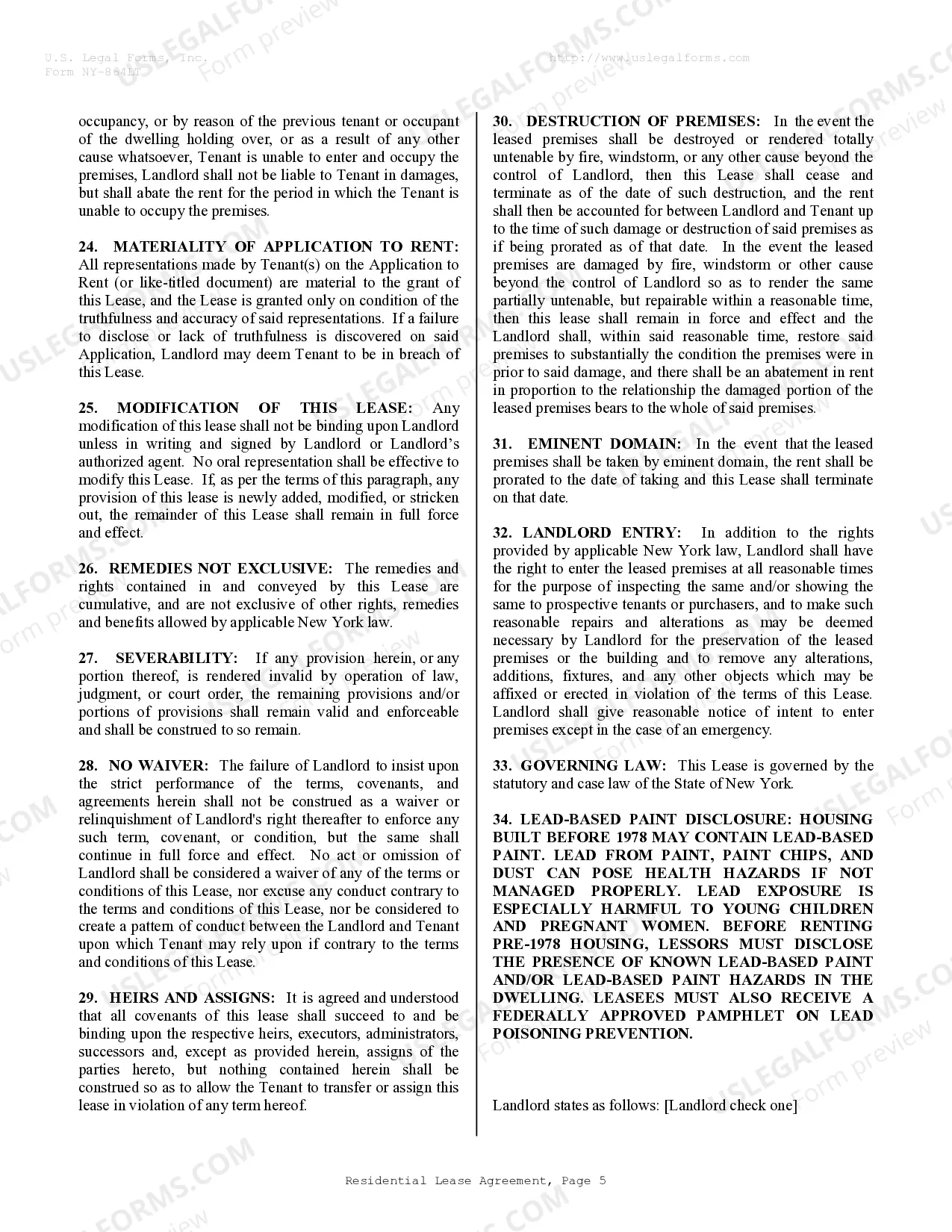
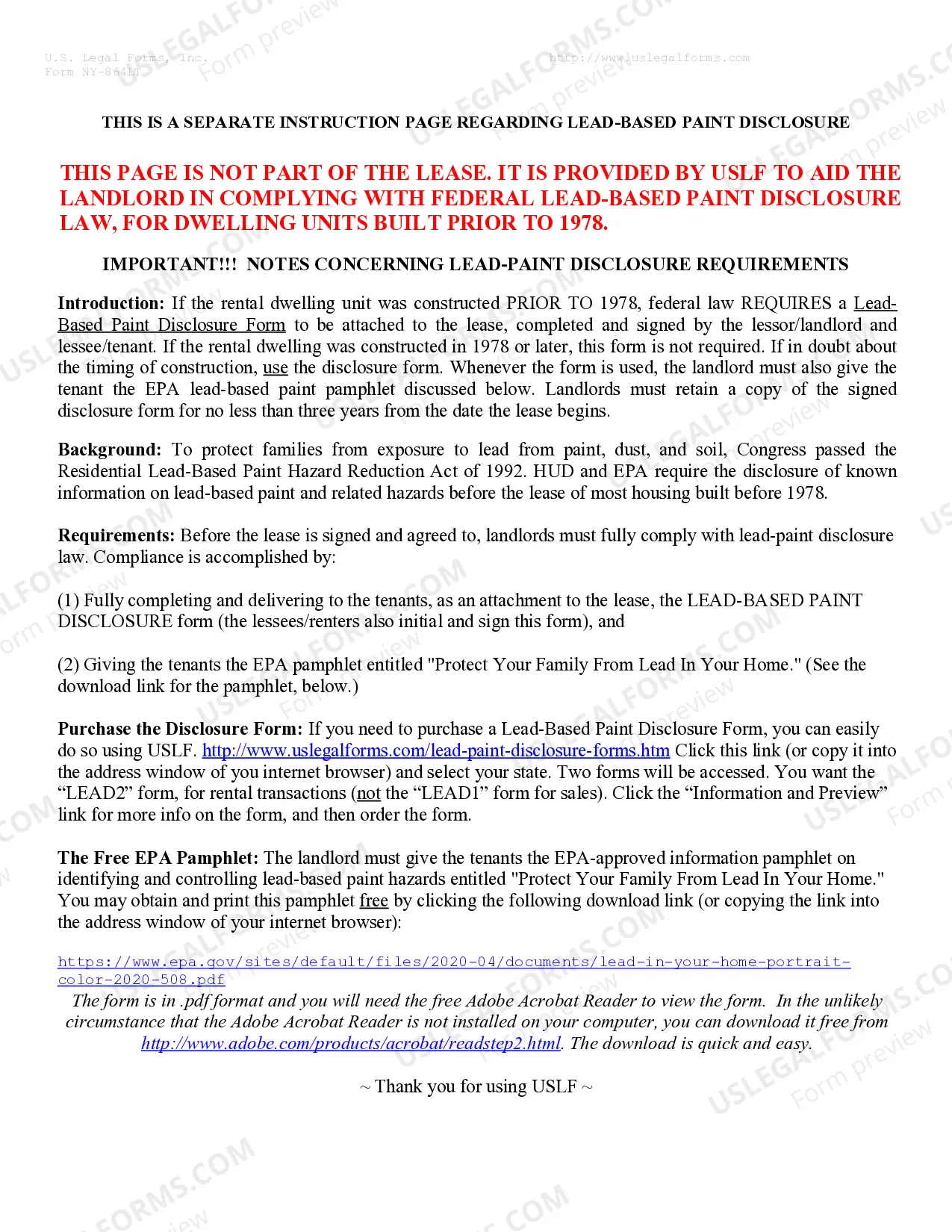
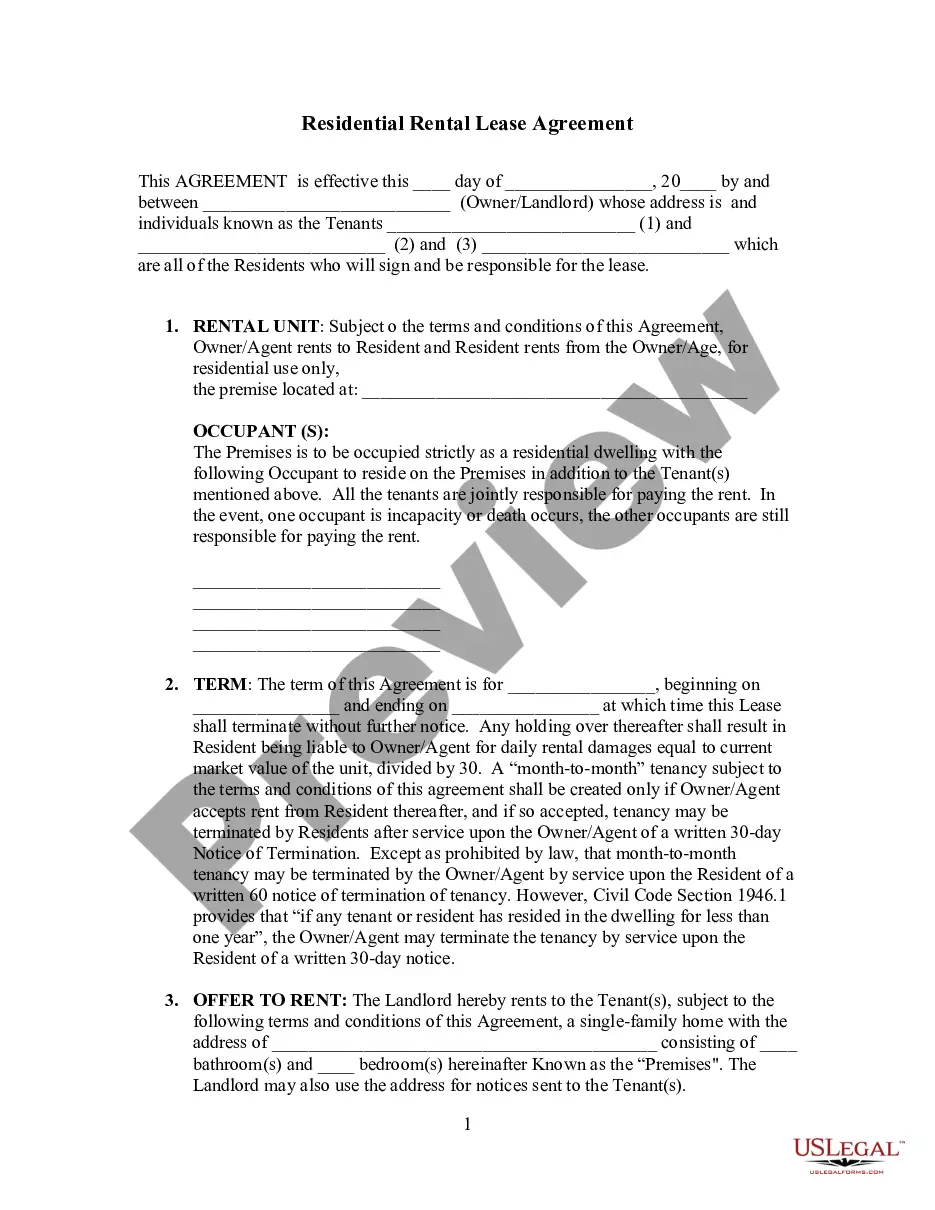
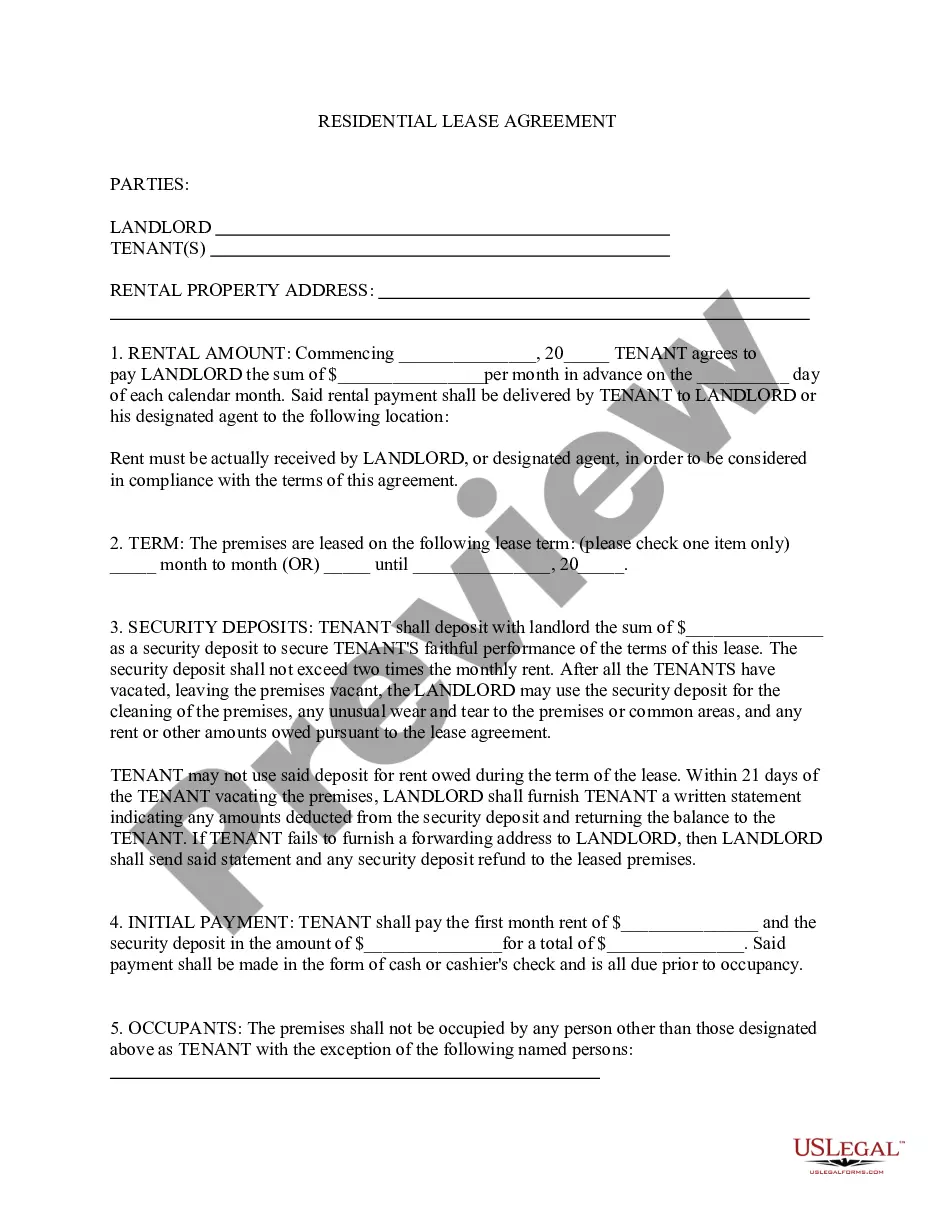
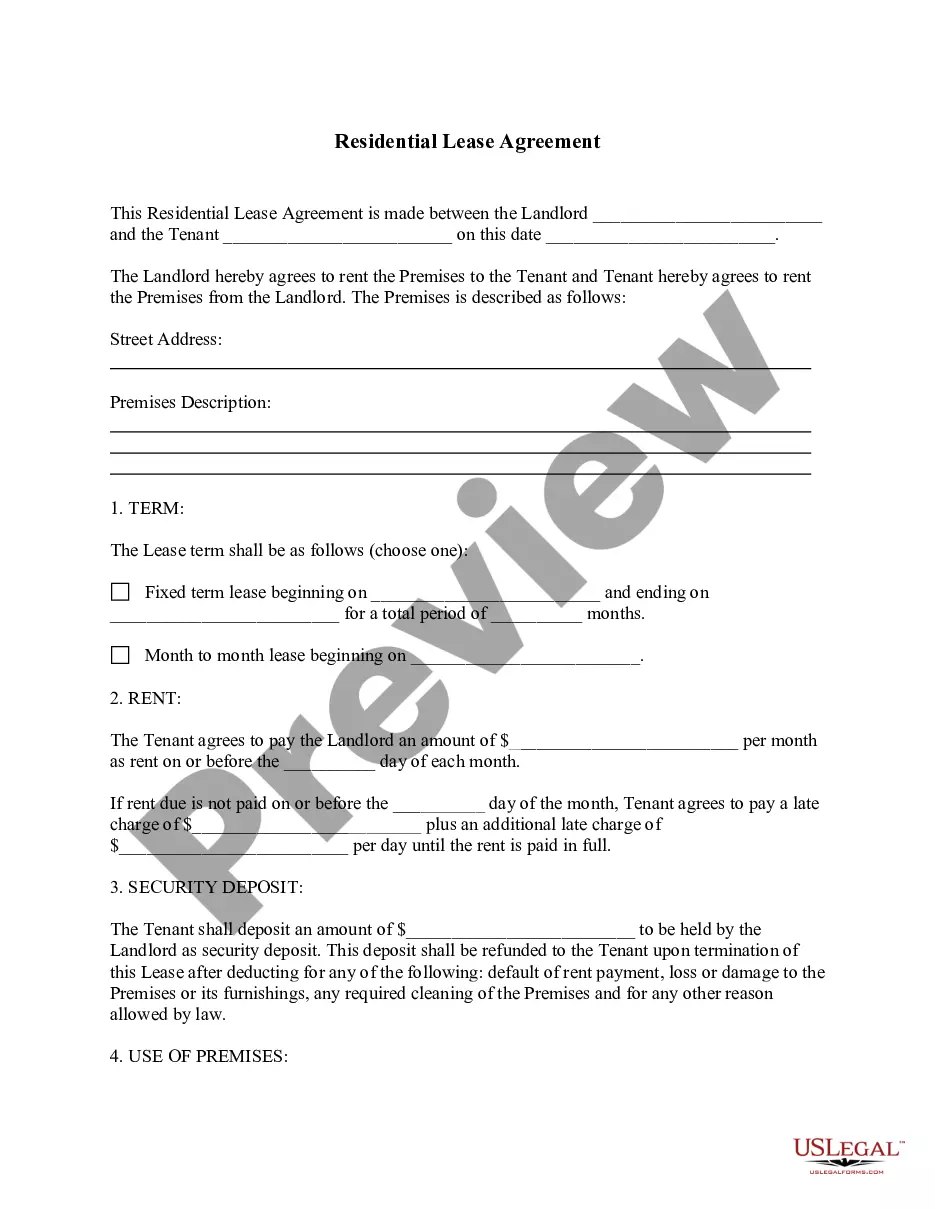
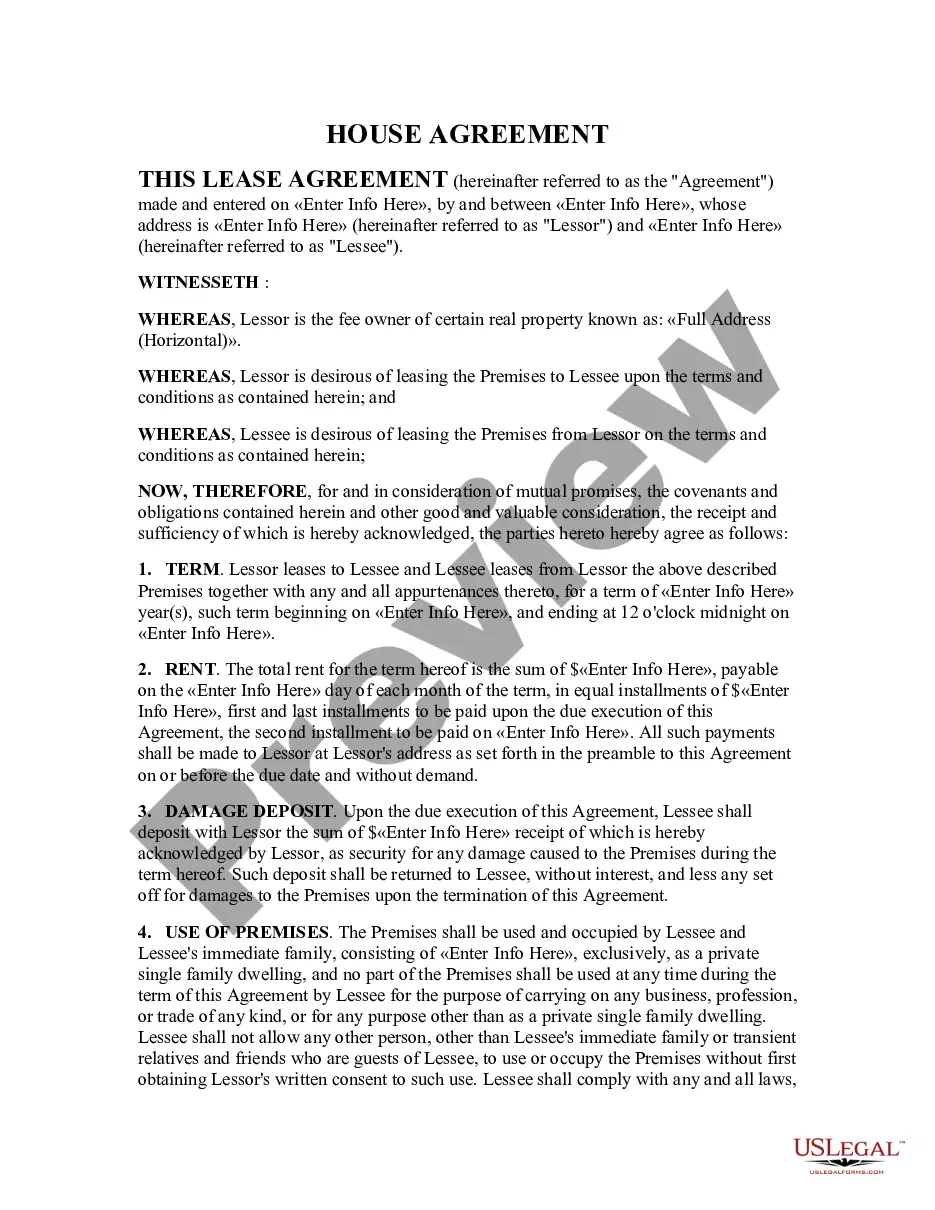
The Residential Rental Lease Agreement is a legal document that outlines the terms of renting a property for a specified period, typically one year or six months. This agreement establishes the obligations and rights of both the landlord and tenant while differentiating it from a month-to-month lease, where either party can terminate with short notice. Through this lease, tenants commit to pay rent for the full term, ensuring stability for both parties during the rental period.
Key components of this form
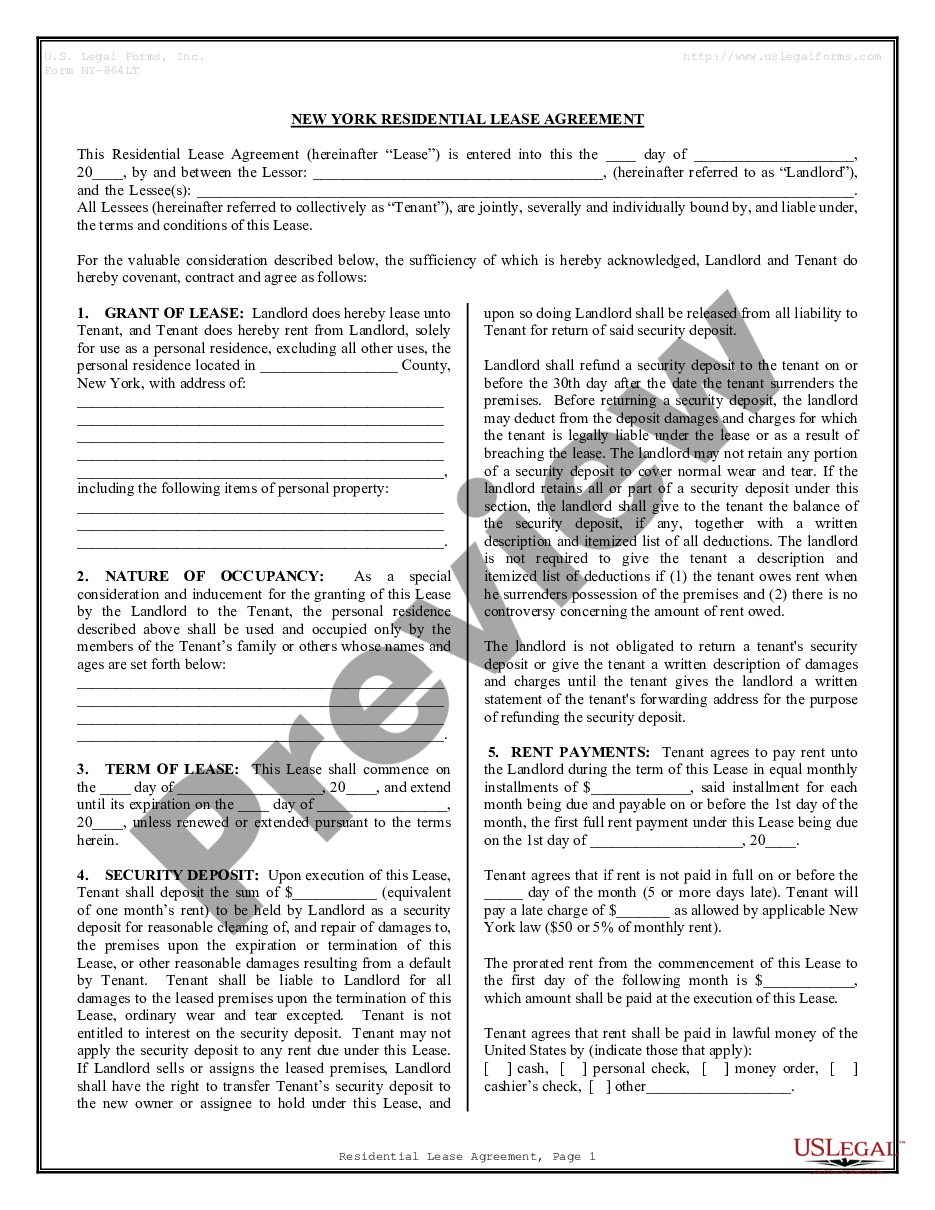
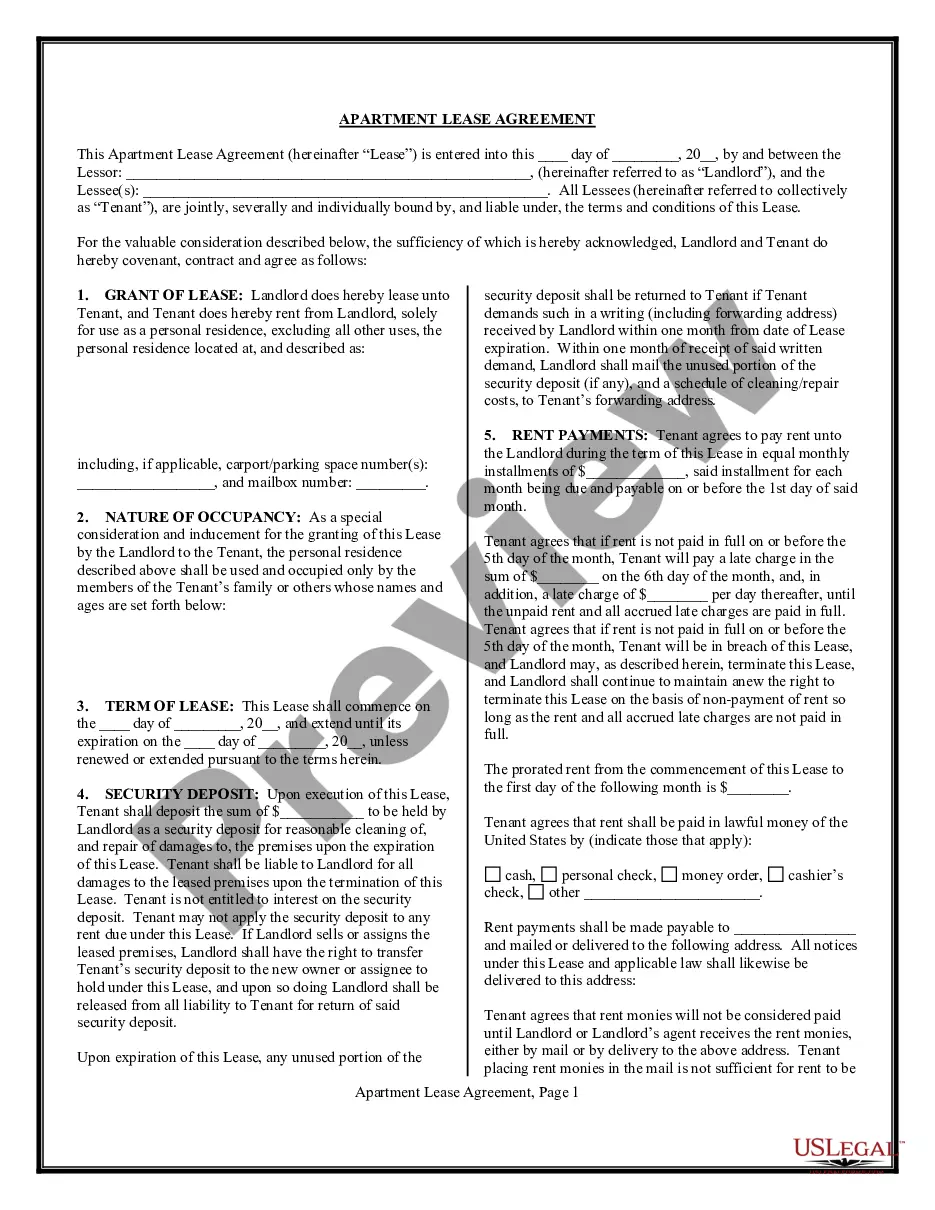
- Grant of Lease: Specifies the rental property and its designated use.
- Nature of Occupancy: Details who may reside in the property.
- Term of Lease: Outlines the lease duration and renewal options.
- Security Deposit: Explains deposit amount, terms, and conditions for return.
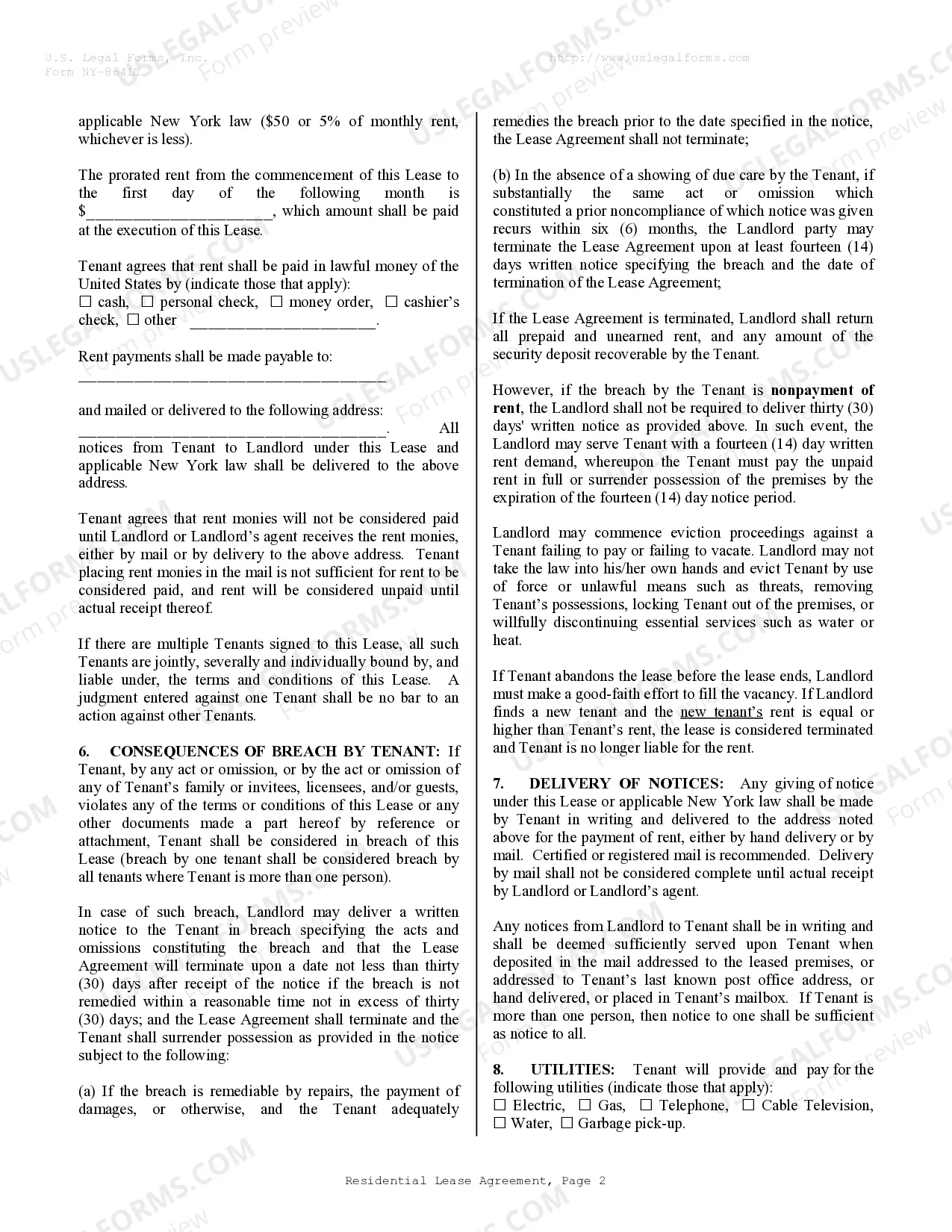
- Rent Payments: Describes rent due dates, accepted payment methods, and late fees.
- Consequences of Breach: Lists potential outcomes if lease terms are violated.
When to use this document
This form is essential when a landlord and tenant wish to formalize a rental arrangement for a residential property. Use it when renting apartments, houses, or any living spaces for a defined period. It's especially relevant for new rentals, renewals of existing leases, or when transitioning from a month-to-month agreement to a fixed-term lease.
Who this form is for
- Landlords and property owners seeking to lease their properties.
- Tenants looking for a clearly defined rental agreement.
- Individuals moving into new rental properties.
- Real estate agents facilitating rental transactions.
Completing this form step by step
- Identify the parties: Fill in the names of the landlord and tenant.
- Specify the property: Clearly describe the location and type of property being rented.
- Enter dates: Include the start and end dates of the lease term.
- Detail rent and security deposit: Indicate the monthly rent amount and security deposit to be paid.
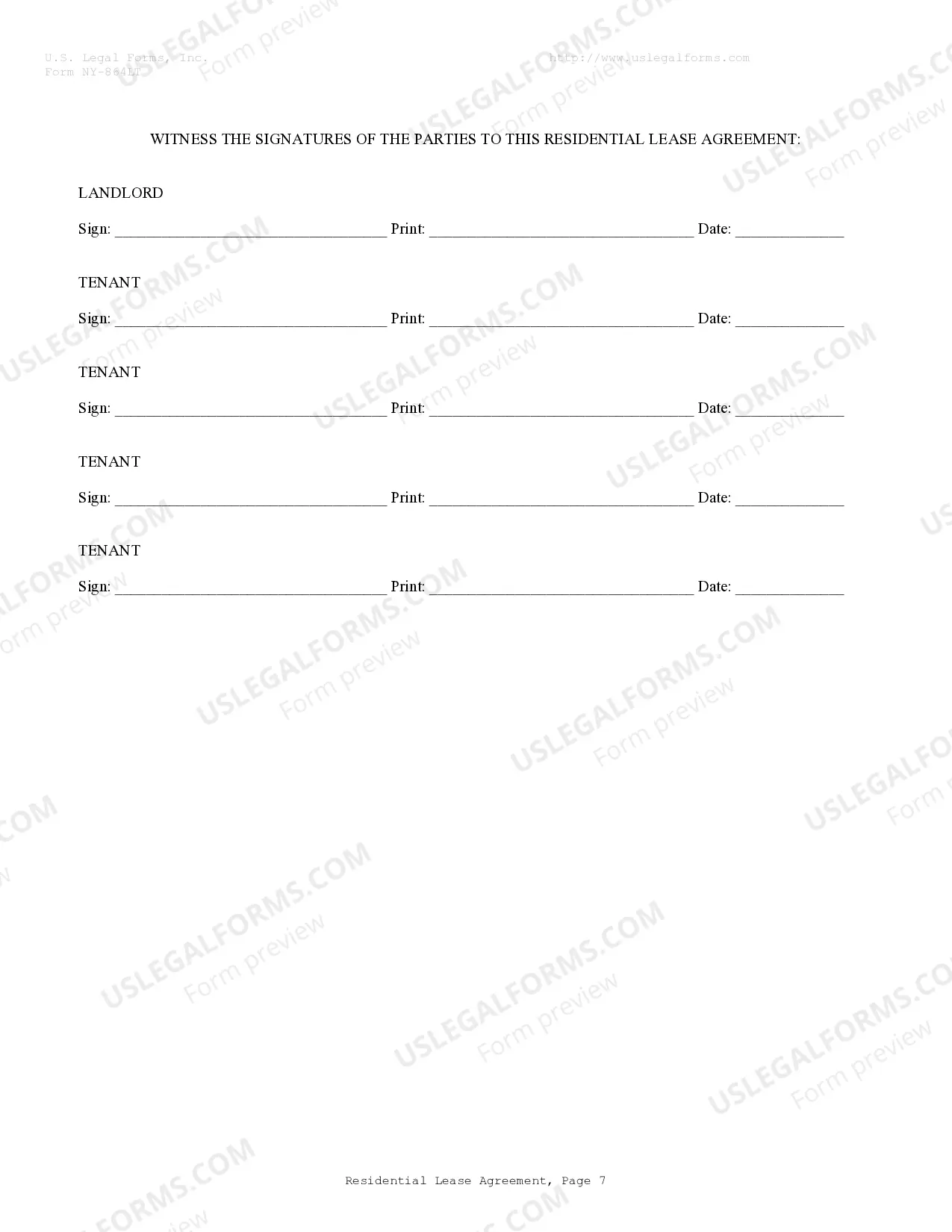
- Sign and date: Ensure all parties sign and date the agreement at the end.
Notarization guidance
This form usually doesn’t need to be notarized. However, local laws or specific transactions may require it. Our online notarization service, powered by Notarize, lets you complete it remotely through a secure video session, available 24/7.
Get your form ready online
Our built-in tools help you complete, sign, share, and store your documents in one place.
Make edits, fill in missing information, and update formatting in US Legal Forms—just like you would in MS Word.
Download a copy, print it, send it by email, or mail it via USPS—whatever works best for your next step.
Sign and collect signatures with our SignNow integration. Send to multiple recipients, set reminders, and more. Go Premium to unlock E-Sign.
If this form requires notarization, complete it online through a secure video call—no need to meet a notary in person or wait for an appointment.
We protect your documents and personal data by following strict security and privacy standards.

Make edits, fill in missing information, and update formatting in US Legal Forms—just like you would in MS Word.

Download a copy, print it, send it by email, or mail it via USPS—whatever works best for your next step.

Sign and collect signatures with our SignNow integration. Send to multiple recipients, set reminders, and more. Go Premium to unlock E-Sign.

If this form requires notarization, complete it online through a secure video call—no need to meet a notary in person or wait for an appointment.

We protect your documents and personal data by following strict security and privacy standards.
Avoid these common issues
- Failing to specify the rent amount or payment date.
- Not including all tenants' names, leading to liability issues.
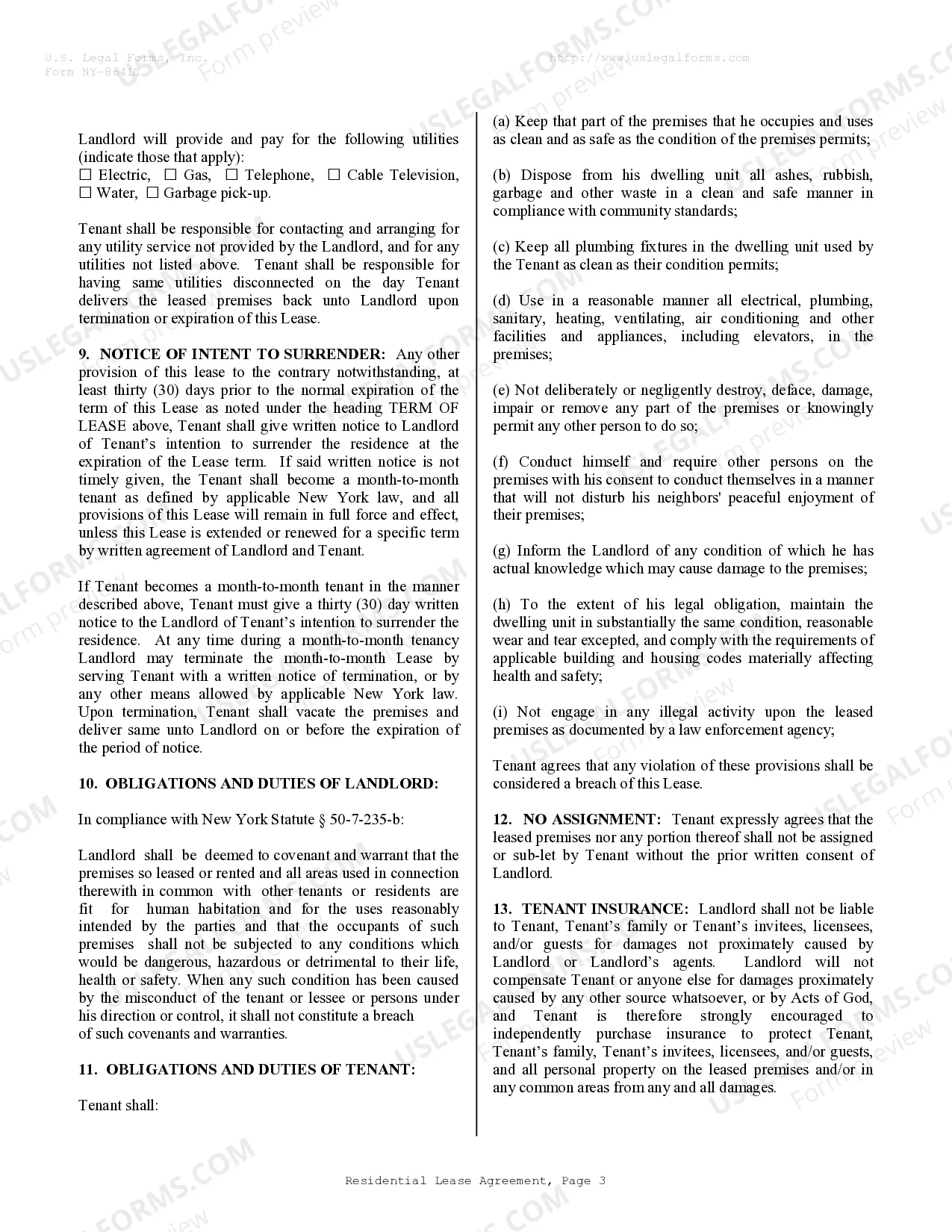
- Omitting important clauses about utilities and maintenance responsibilities.
- Neglecting to detail the security deposit conditions properly.
Benefits of completing this form online
- Convenience of accessing and downloading the form at any time.
- Editability allows for customization to meet specific needs and circumstances.
- Affordability compared to hiring an attorney for a custom lease.
- Reliability, as forms are drafted by licensed attorneys to ensure compliance with current laws.
What to keep in mind
- The Residential Rental Lease Agreement outlines essential terms for renting a property.
- It is crucial for protecting both landlord and tenant rights during the lease term.
- Clearly specified obligations can help prevent disputes during tenancy.
- Using a standardized form simplifies the leasing process for all parties involved.
Looking for another form?


Form popularity
FAQ
The New York Residential Rental Lease Agreement is a legal document that sets the terms for renting a property for a defined period, typically six months to a year. It clarifies landlord and tenant rights and obligations and distinguishes a fixed-term lease from a month-to-month arrangement. It’s used for new rentals, renewals, or converting from month-to-month to a fixed term.
Look for vague or missing details in the Grant of Lease and Nature of Occupancy, or in the Term. Check the Security Deposit for amount, return conditions, and deductions; confirm Rent Payments details (due dates, methods, late fees); and ensure the Consequences of Breach clearly spell out remedies. Ambiguity in any of these sections can signal a problem.
This form does not define wear and tear. The lease includes a Security Deposit clause and a Consequences of Breach clause that govern deductions for damage beyond normal wear and tear. For specifics on paint or other property conditions, review the lease terms and consider consulting a licensed attorney.
Keep communications in writing and reference the lease sections (Rent Payments, Security Deposit, and Consequences of Breach) when addressing issues. Avoid unverified promises or admissions and seek guidance from a licensed attorney if needed. The form emphasizes clear, documented terms rather than informal assurances.
The New York Residential Rental Lease Agreement doesn’t include an income-based rule. The 30% rule is a general affordability guideline some tenants use to gauge rent affordability. This form focuses on defined terms, deposits, and payments; for affordability guidance, consult a licensed professional.
This form establishes a fixed Term of Lease (such as six months or one year) with defined renewal options, rent terms, security deposit terms, and breach consequences. It formalizes a fixed rental arrangement, unlike a month-to-month lease that allows ongoing, shorter-notice terminations.