Nevada Letter from Tenant to Landlord about Insufficient Notice of Change in Rental Agreement for other than rent increase
Understanding this form
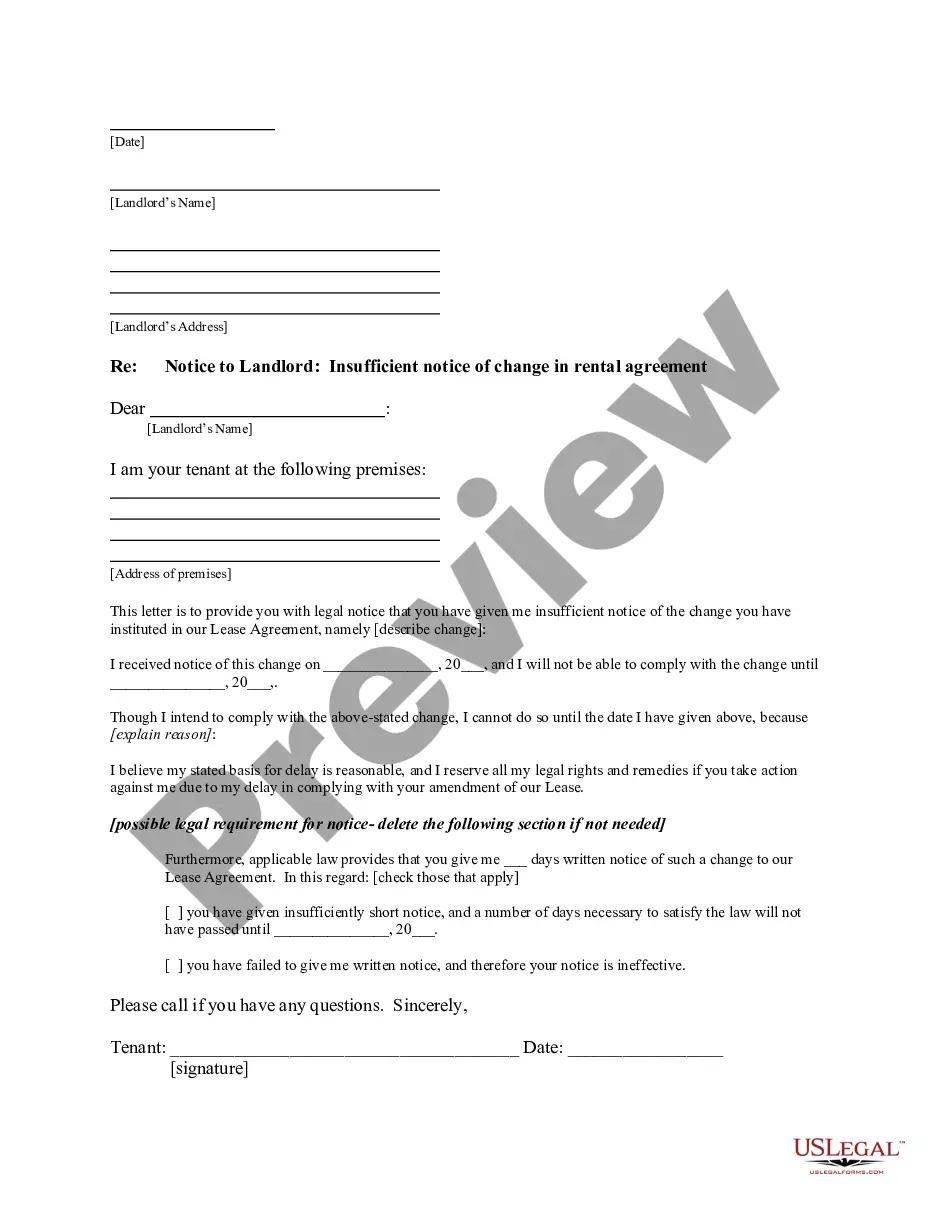
This form is a Letter from Tenant to Landlord regarding insufficient notice of changes in a rental agreement, excluding rent increases. It serves to notify the landlord that the provided notice does not meet legal requirements, allowing the tenant to delay compliance with the change until proper notice is given.
What’s included in this form
- Identification of the tenant and landlord
- Statement regarding the insufficient notice provided by the landlord
- Specification of the necessary number of notice days according to applicable law
- Signed date and signature of the tenant
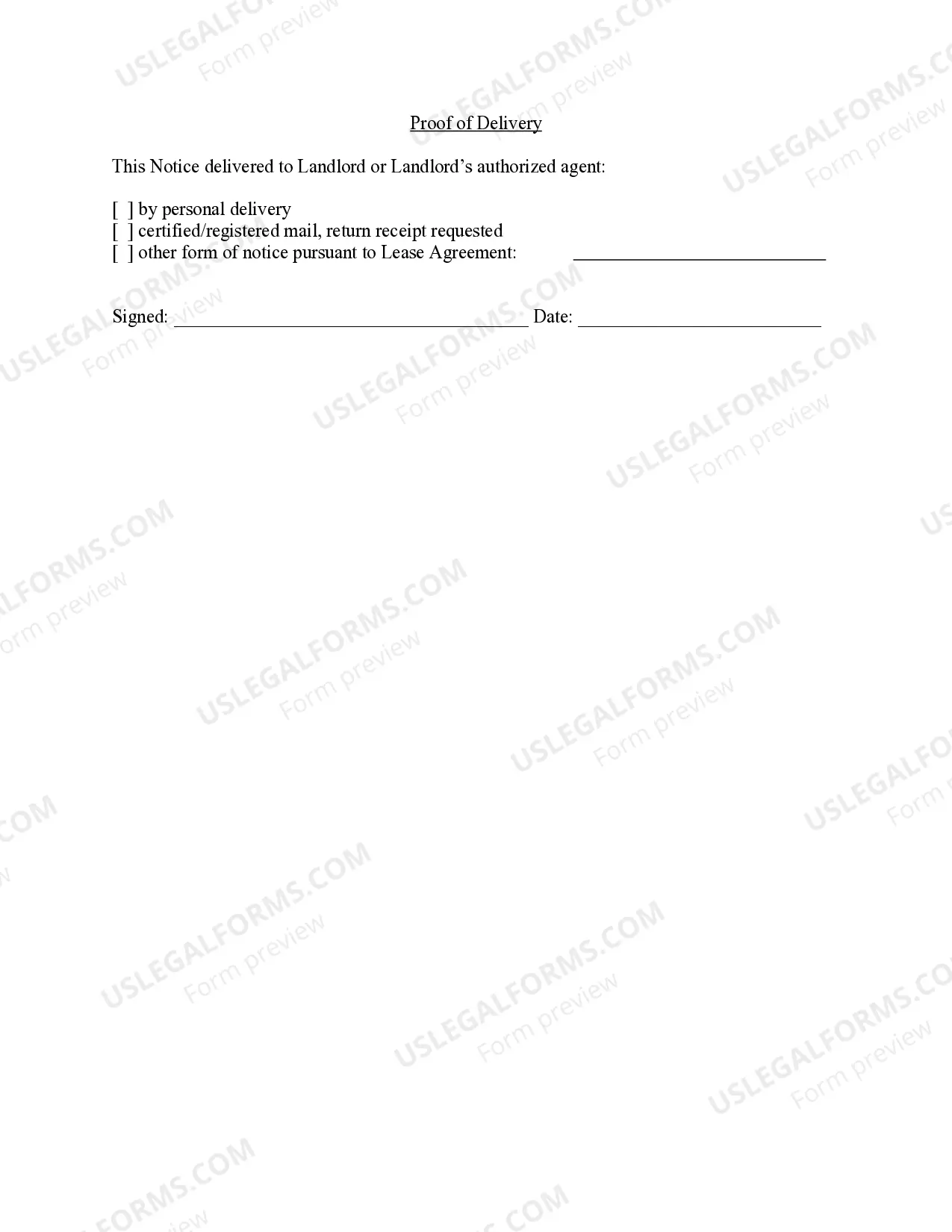
- Proof of delivery method (personal delivery or certified mail)


When this form is needed
This form is needed when a landlord makes changes to a rental agreement but fails to provide adequate notice as required by law. If you have received a change notification that does not comply with the legal notice period, this letter allows you to formally communicate with your landlord about the issue.
Who can use this document
- Tenants who have received a notice of change in their rental agreement
- Individuals who feel their landlord has not provided sufficient notice regarding changes
- Renters looking to assert their rights under the lease agreement
Completing this form step by step
- Identify the parties involved by entering the tenant's and landlord's names and addresses.
- State the date of the letter and the date by which the notice should have been provided.
- Clearly explain how the landlord's notice was insufficient.
- Specify the required notice period according to applicable law.
- Sign and date the letter to make it official.
- Choose a delivery method and document it for proof of delivery.
Notarization guidance
Notarization is not commonly needed for this form. However, certain documents or local rules may make it necessary. Our notarization service, powered by Notarize, allows you to finalize it securely online anytime, day or night.
Get your form ready online
Our built-in tools help you complete, sign, share, and store your documents in one place.
Make edits, fill in missing information, and update formatting in US Legal Forms—just like you would in MS Word.
Download a copy, print it, send it by email, or mail it via USPS—whatever works best for your next step.
Sign and collect signatures with our SignNow integration. Send to multiple recipients, set reminders, and more. Go Premium to unlock E-Sign.
If this form requires notarization, complete it online through a secure video call—no need to meet a notary in person or wait for an appointment.
We protect your documents and personal data by following strict security and privacy standards.

Make edits, fill in missing information, and update formatting in US Legal Forms—just like you would in MS Word.

Download a copy, print it, send it by email, or mail it via USPS—whatever works best for your next step.

Sign and collect signatures with our SignNow integration. Send to multiple recipients, set reminders, and more. Go Premium to unlock E-Sign.

If this form requires notarization, complete it online through a secure video call—no need to meet a notary in person or wait for an appointment.

We protect your documents and personal data by following strict security and privacy standards.
Mistakes to watch out for
- Failing to specify the number of days required for notice
- Not signing the letter
- Confusing the reasons for the insufficient notice
- Using the wrong address for the landlord
Advantages of online completion
- Convenience of downloading and completing at your own pace
- Editability to customize the letter to your specific situation
- Access to legally vetted content created by licensed attorneys
Legal use & context
- This notice serves as a formal legal communication to the landlord.
- It ensures that the landlord is made aware of their failure to comply with notice requirements.
- Protects tenant rights in the event of a dispute over the lease change.
Key takeaways
- A Letter from Tenant to Landlord about Insufficient Notice is essential for protecting tenant rights.
- It details the grounds for not complying with changes to a lease agreement.
- Using this form online is efficient and customizable, allowing for quick communication with landlords.
Looking for another form?







Form popularity
FAQ
If you don't move out by the day in the notice, the landlord can ask the NSW Civil and Administrative Tribunal (NCAT) for a termination order. A termination order means the rental agreement is ended. The order will state the day when you must give vacant possession that is, you move out and return the keys.
An assignment is the complete transfer of one party's interest in an agreement to a third party. In this case, the original tenant is giving all of his or her interest to a new tenant.
When there is a lease of Immovable property for a term of 1 year or more This can only be made by a registered deed. All other leases of Immovable property Can be either made by a registered deed or an oral agreement or settlement along with the transfer of possession of that property.
If the landlord/agent wants to end your agreement at the end of the fixed term, they must give you at least 30 days notice that includes the last day of the term. If the landlord/agent applies for a termination order, the Tribunal must terminate the agreement.
The landlord verification form is a document used by a landlord when verifying the previous rental information of an applicant for tenancy. The requesting landlord must send the form to the applicant's current or past landlord in order to obtain all details related to the tenancy of the individual.
If you want to leave If one co-tenant is leaving in a periodic term, they can end their own tenancy under a periodic agreement by giving a 21- day termination notice to the landlord and each other co-tenant. Once they vacate the premises by the date in the notice, they are no longer a tenant under the agreement.
An assignment of the lease is a transfer of the entire leasehold interest by a tenant, the assignor, to a third party, the assignee.The assignee becomes primarily liable for the lease and rent, and the assignor, the original tenant, remains secondarily liable. The assignee pays rent directly to the landlord.
Leaving without giving notice Your tenancy won't have ended and you'll still have to pay your rent until you end your tenancy in the right way. You might also have to pay other bills - for example, council tax. Your landlord can get a court order to make you pay the rent you owe.
An assignment of the leasehold the original tenant holds under a lease agreement transfers the tenant's entire interest in the property to a successor tenant, leaving no interest held by the original tenant.