Nevada Letter from Tenant to Landlord containing Notice to landlord to withdraw retaliatory rent increase
About this form
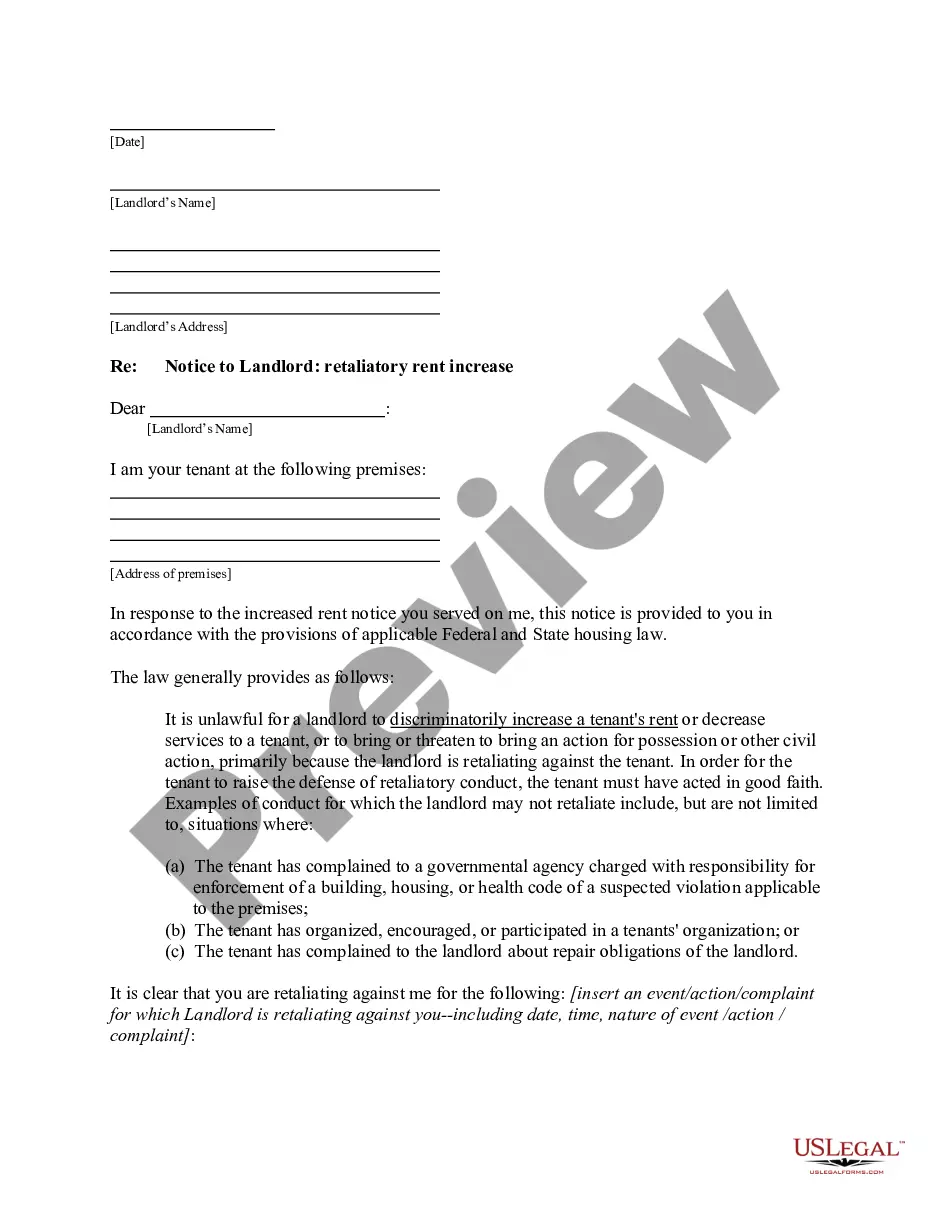
This form, a letter from tenant to landlord containing notice to landlord to withdraw retaliatory rent increase, notifies the landlord that a rent increase is unlawful if it is done in retaliation against the tenant. It serves to protect tenants from discriminatory practices while also providing a formal and documented way to assert their rights. This form ensures compliance with state housing laws and helps tenants defend against unfair rent increases linked to complaints or tenant engagement activities.
Main sections of this form
- Identification of the tenant and landlord
- Date of the letter
- A clear statement of the retaliatory rent increase
- Notice of the unlawful nature of the increase according to housing laws
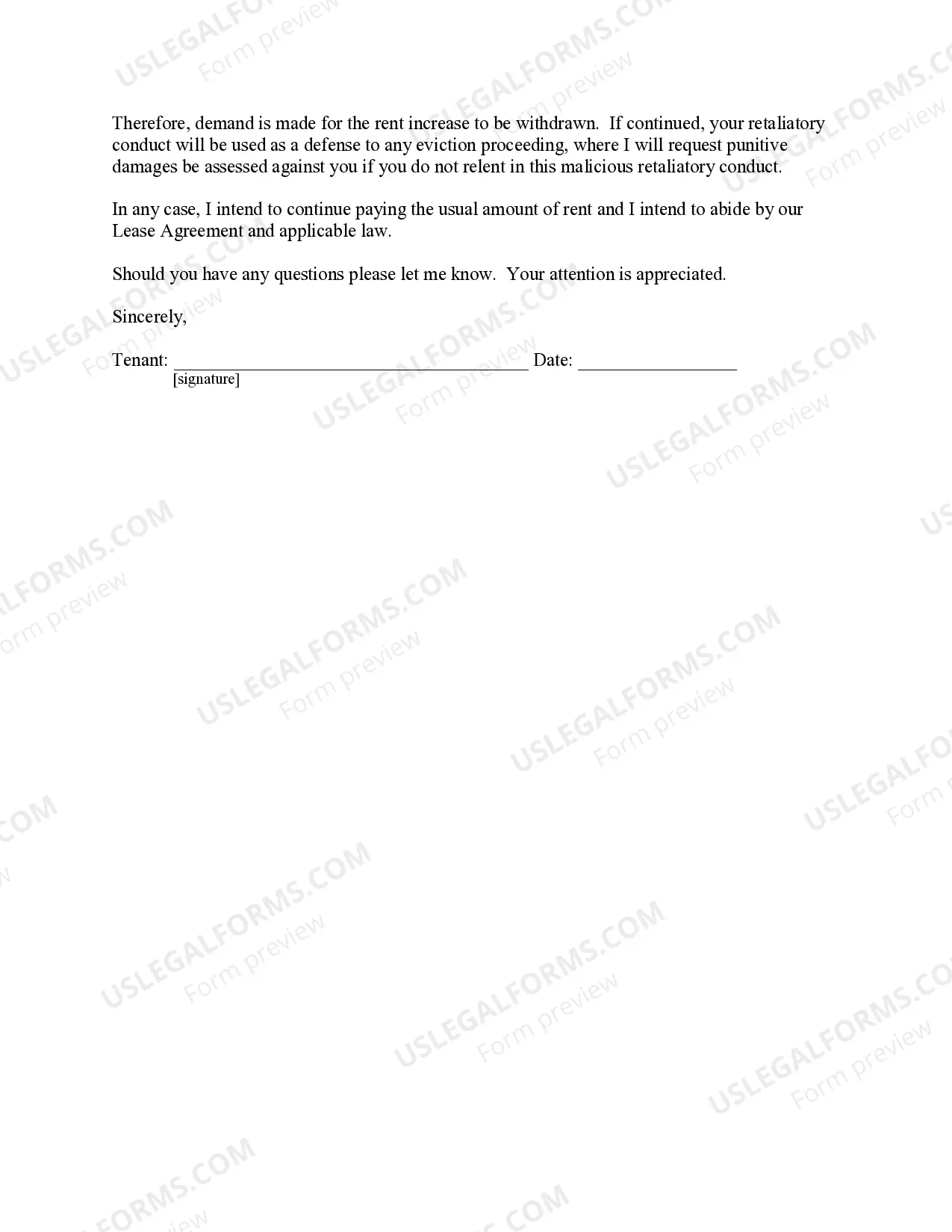
- Affirmation of the tenant's intention to continue paying the usual rent
- Space for tenant's signature

Situations where this form applies
Use this form when you, as a tenant, have experienced a rent increase deemed retaliatory after you have engaged in certain protective actions such as reporting code violations, participating in tenant organizations, or making formal complaints to your landlord regarding repairs. This notice allows you to communicate legally and formally to your landlord that such actions are unlawful and that you expect the rent increase to be withdrawn.
Intended users of this form
- Tenants who have been subject to a retaliatory rent increase
- Individuals who have raised concerns about health and safety violations to their landlord
- Members of tenant organizations who have exercised their rights
- Any tenant intending to assert their rights against unfair treatment by the landlord
Steps to complete this form
- Identify and input your name and address as the tenant.
- Include the landlord's name and address.
- Clearly state the date of the rent increase and the nature of your complaint.
- Affirm your intention to pay the usual amount of rent and comply with the lease agreement.
- Sign and date the letter to validate the notice.
Does this form need to be notarized?
This form does not typically require notarization unless specified by local law. However, it is advisable to confirm any specific local requirements regarding notary needs when issuing such notifications.
Get your form ready online
Our built-in tools help you complete, sign, share, and store your documents in one place.
Make edits, fill in missing information, and update formatting in US Legal Forms—just like you would in MS Word.
Download a copy, print it, send it by email, or mail it via USPS—whatever works best for your next step.
Sign and collect signatures with our SignNow integration. Send to multiple recipients, set reminders, and more. Go Premium to unlock E-Sign.
If this form requires notarization, complete it online through a secure video call—no need to meet a notary in person or wait for an appointment.
We protect your documents and personal data by following strict security and privacy standards.

Make edits, fill in missing information, and update formatting in US Legal Forms—just like you would in MS Word.

Download a copy, print it, send it by email, or mail it via USPS—whatever works best for your next step.

Sign and collect signatures with our SignNow integration. Send to multiple recipients, set reminders, and more. Go Premium to unlock E-Sign.

If this form requires notarization, complete it online through a secure video call—no need to meet a notary in person or wait for an appointment.

We protect your documents and personal data by following strict security and privacy standards.
Common mistakes
- Failing to include the specific date of the rent increase.
- Not keeping a copy of the notice for personal records.
- Missing the landlord's correct name or address.
- Not signing or dating the letter before sending.
Why complete this form online
- Convenience of immediate access to the form anytime.
- Editability allows tenants to customize the letter easily.
- Guidance ensures that all necessary components are included.
- Secure download and storage solutions may be available.
Legal use & context
- This form serves as documentation in case legal issues arise concerning retaliatory rent increases.
- Using this form helps tenants establish a formal record of their objections.
- Understanding the legal framework surrounding retaliatory actions helps tenants navigate disputes effectively.
Key takeaways
- The letter is a necessary step for tenants facing unfair rent increases.
- Understanding your rights can protect you from landlord retaliation.
- Completing the form correctly is essential for legal protection.
Looking for another form?










Form popularity
FAQ
The landlord had a duty to reasonably maintain the property; The landlord knew or should have known of the dangerous condition; The landlord breached their duty by failing to repair/fix the dangerous condition;
I am giving 1 month's notice to end my tenancy, as required by law. I will be leaving the property on (date xxxxx). I would like you to be at the property on the day I move out to check the premises and for me to return the keys. I also need you to return my tenancy deposit of (state amount).
Tenant's name. Property address. Landlord name and contact information. Date the letter is written. Date the rent increase will take effect. Amount of rent increase. Current cost of rent.
If your landlord breaches the warranty of habitability or the warranty of quiet enjoyment, you may be able to sue her to recover monetary damages.In some states, such as California and Arizona, you may be able to seek emotional distress damages if the landlord's actions were particularly egregious.
If you're seeking damages for emotional distress caused by a landlord's discrimination, or punitive damages for especially blatant and intentional discrimination, a lawsuit may well be your best bet. Understand what's involved in suing your landlord. You may file a lawsuit in either federal or state court.
Benefits of Suing Your Landlord Filing a lawsuit does have some potential advantages for tenants. Could Motivate a Landlord to Settle Outside of Court: Notifying your landlord of your intention to sue him or her could motivate your landlord to do everything in their power to avoid actually going to court.
I feel very sorry to inform you that your request for reducing the rent has been rejected. The company is already facing a financial crisis and in such situation, we cannot afford to give you any leniency in the monthly rent. The prices are final and non-negotiable. (Write your actual problems and situations).
Remember you're a business. Do your research. Raise the rent all at once or incrementally. Don't negotiate or ask tenants what they think a fair rent increase would be. Be courteous and firm. Find a template you like. Send a formal letter by certified mail. Give the tenant notice.
Know your state's landlord/tenant laws. Read and respond to the court summons. Try to work out a settlement. Consider legal counsel. Show up for court. Look sharp and provide evidence.