New Mexico Last Will and Testament for a Married Person with No Children
About this form
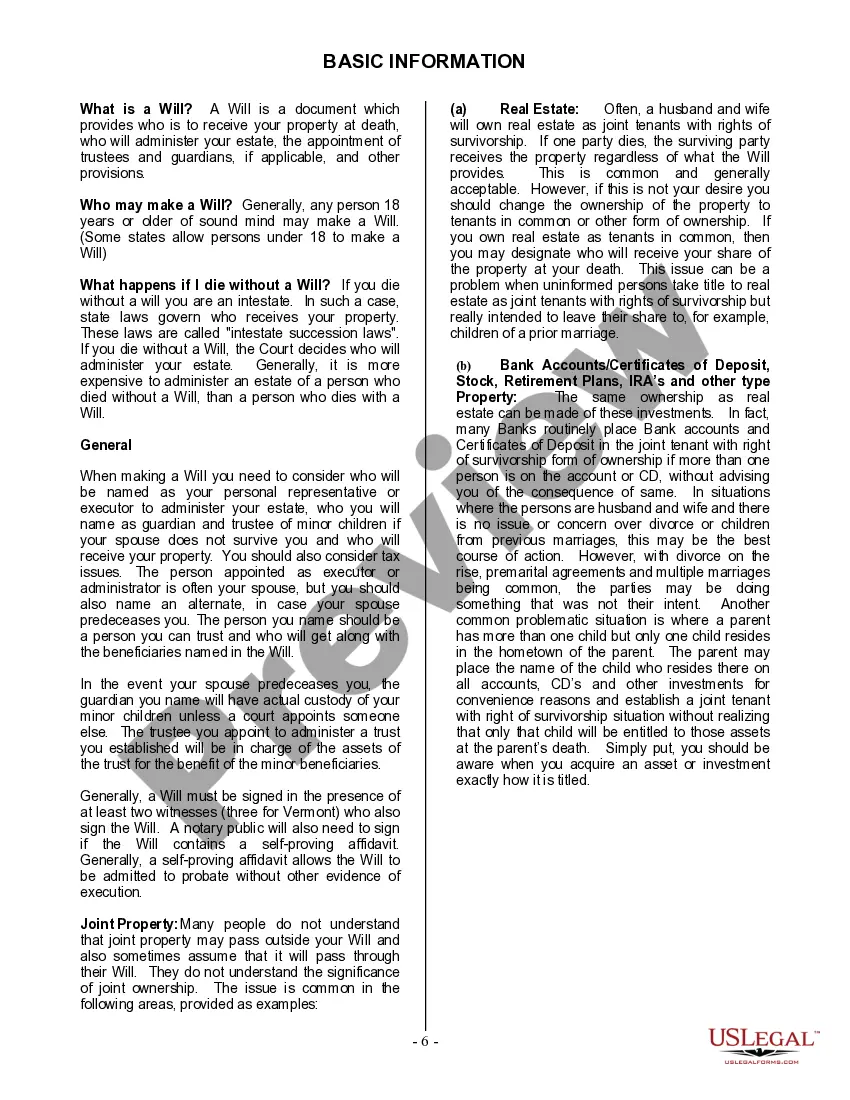
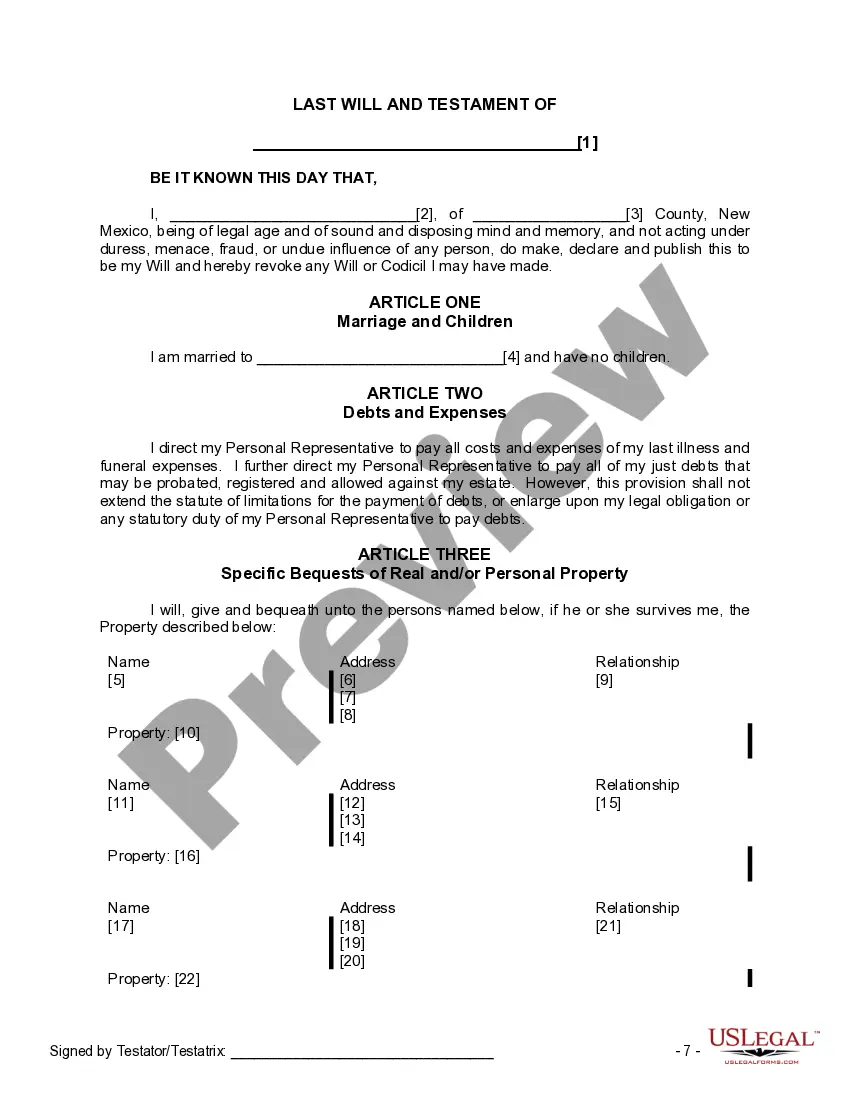
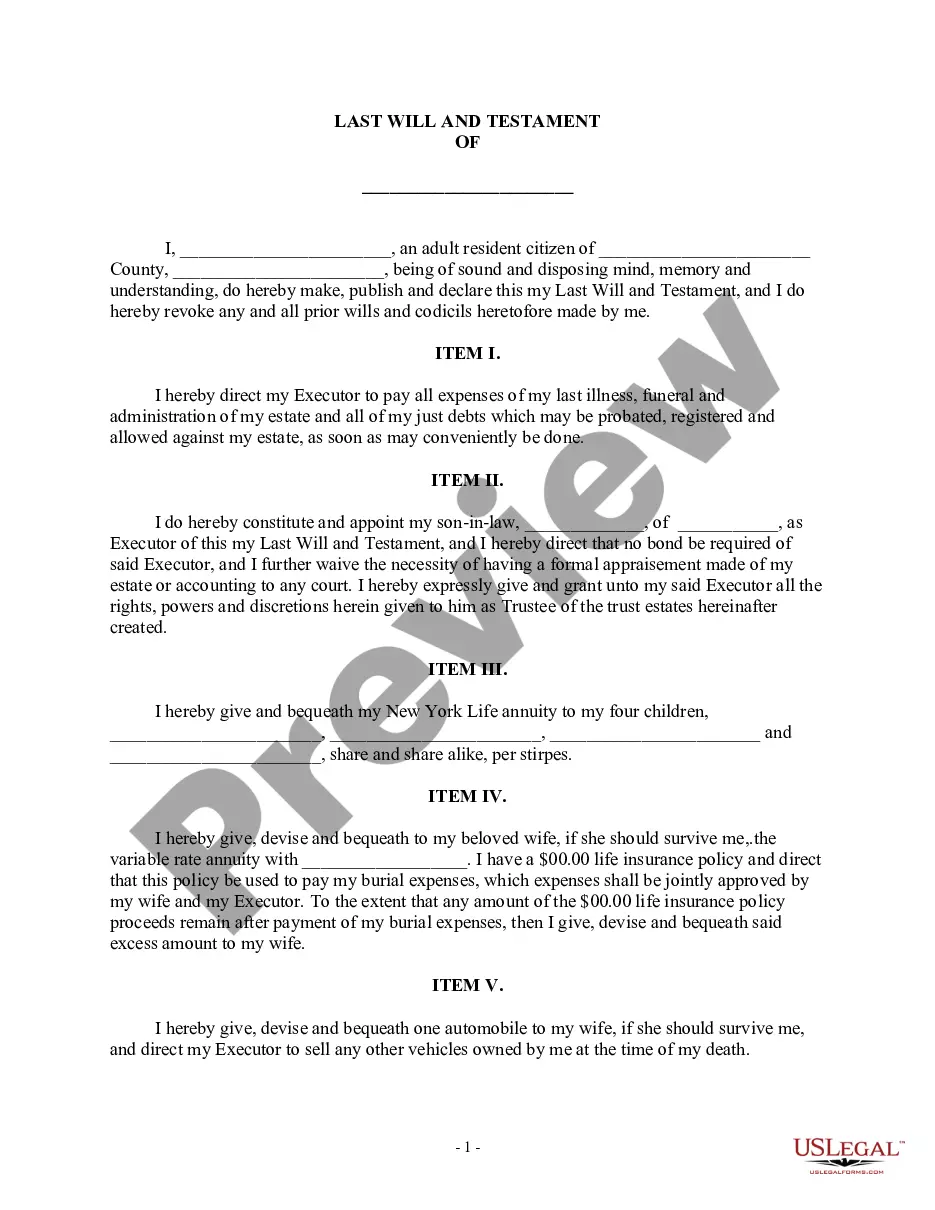
The Last Will and Testament for a Married Person with No Children is a legal document that outlines how your property will be distributed upon your death. This form is specifically designed for married individuals who do not have children, providing clear instructions for the appointment of an executor and the distribution of assets to your spouse and other designated beneficiaries. Unlike other wills, it includes provisions tailored for your marital situation without the need to account for childrenâs inheritance rights.
Main sections of this form
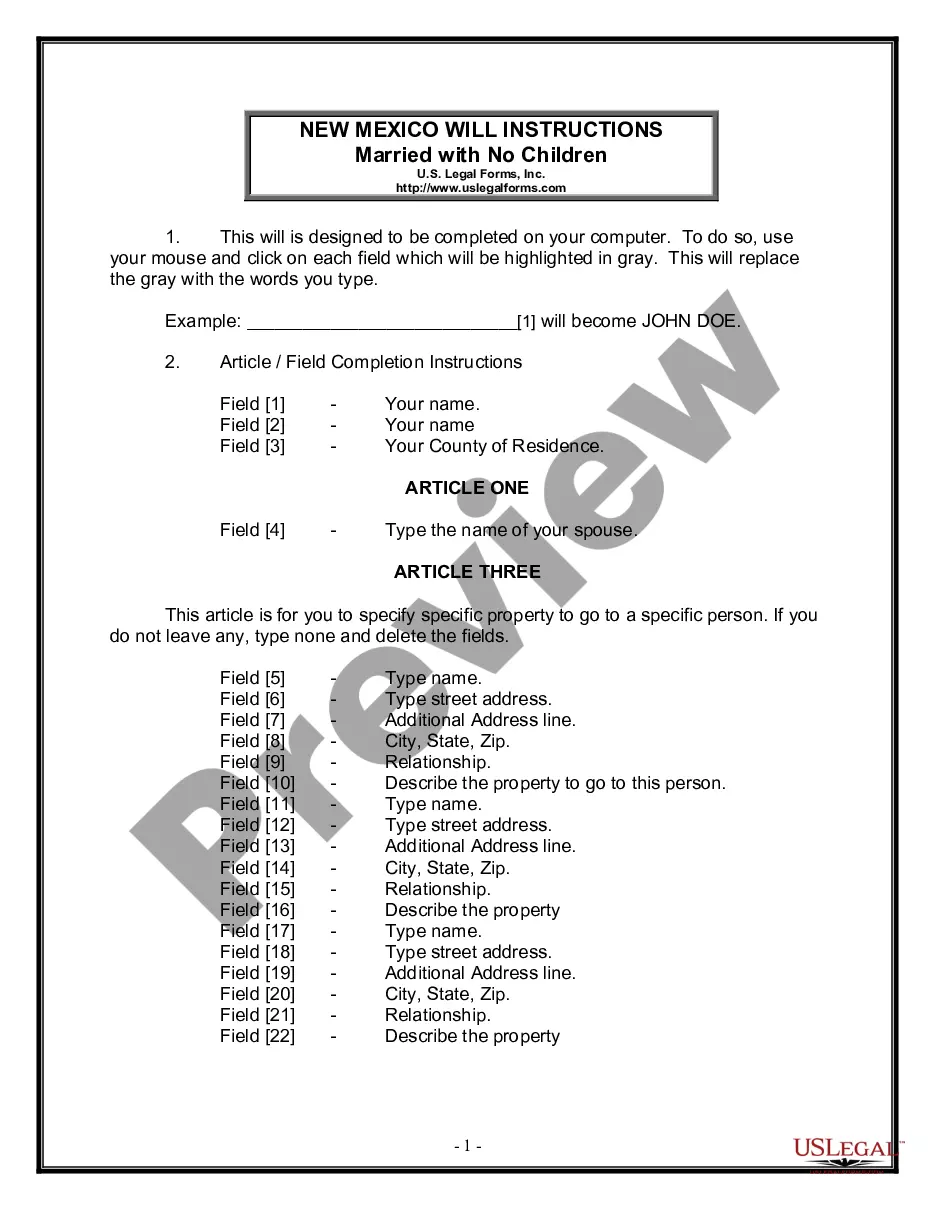
- Personal Information: Fields for entering your name and county of residence.
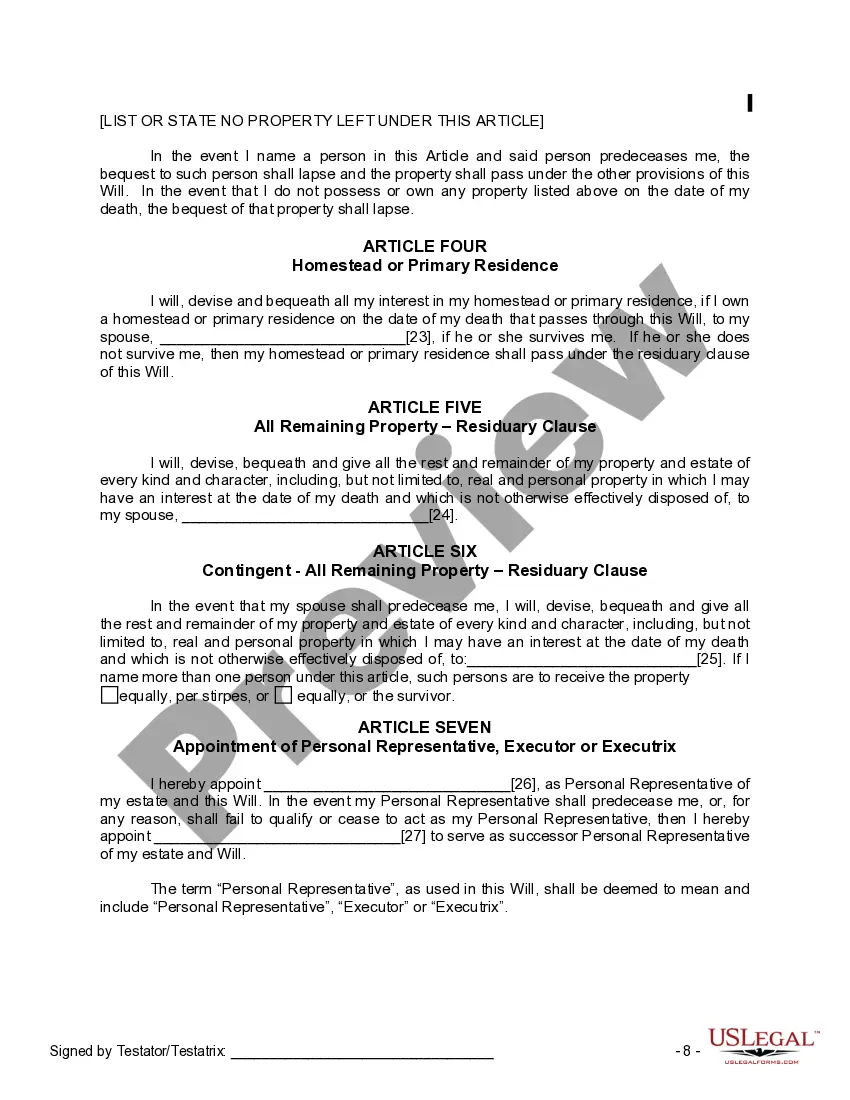
- Spouseâs Name: Designation of your spouse as a primary beneficiary.
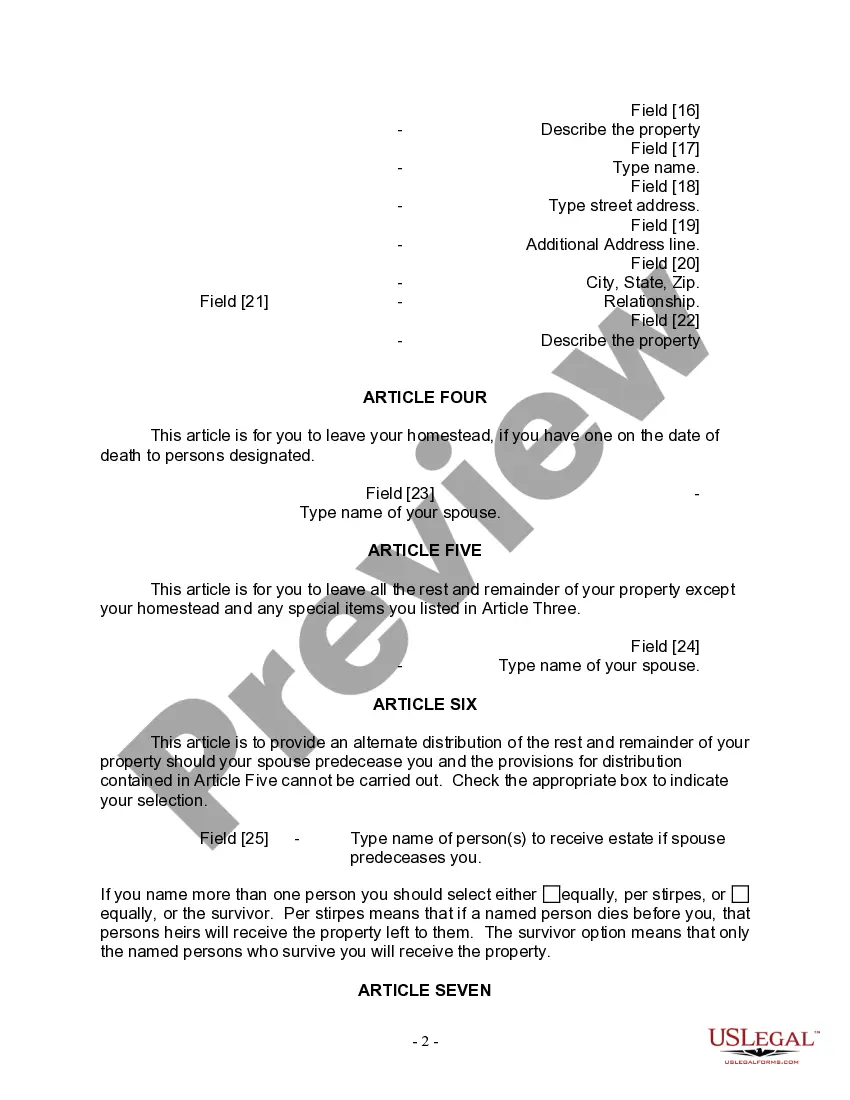
- Specific Bequests: Instructions for leaving specific property to named individuals.
- Homestead Provision: Designation of your primary residence to your spouse or alternate beneficiaries.
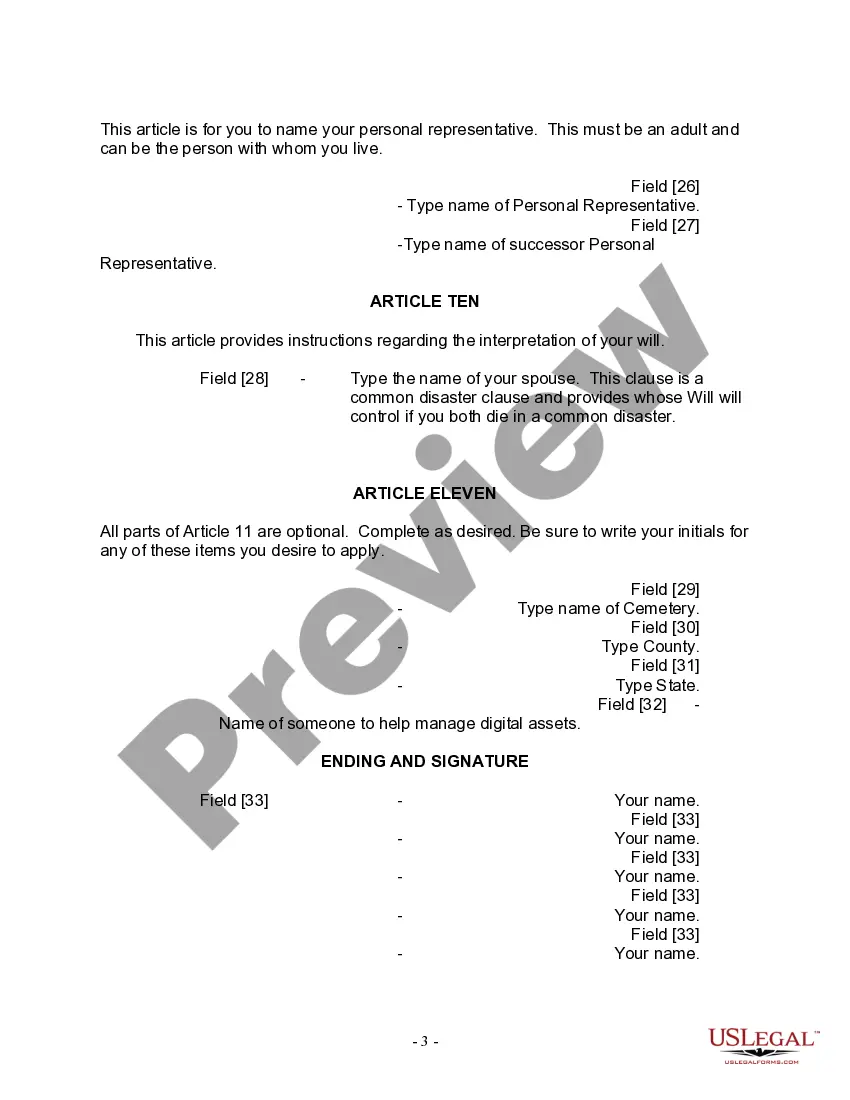
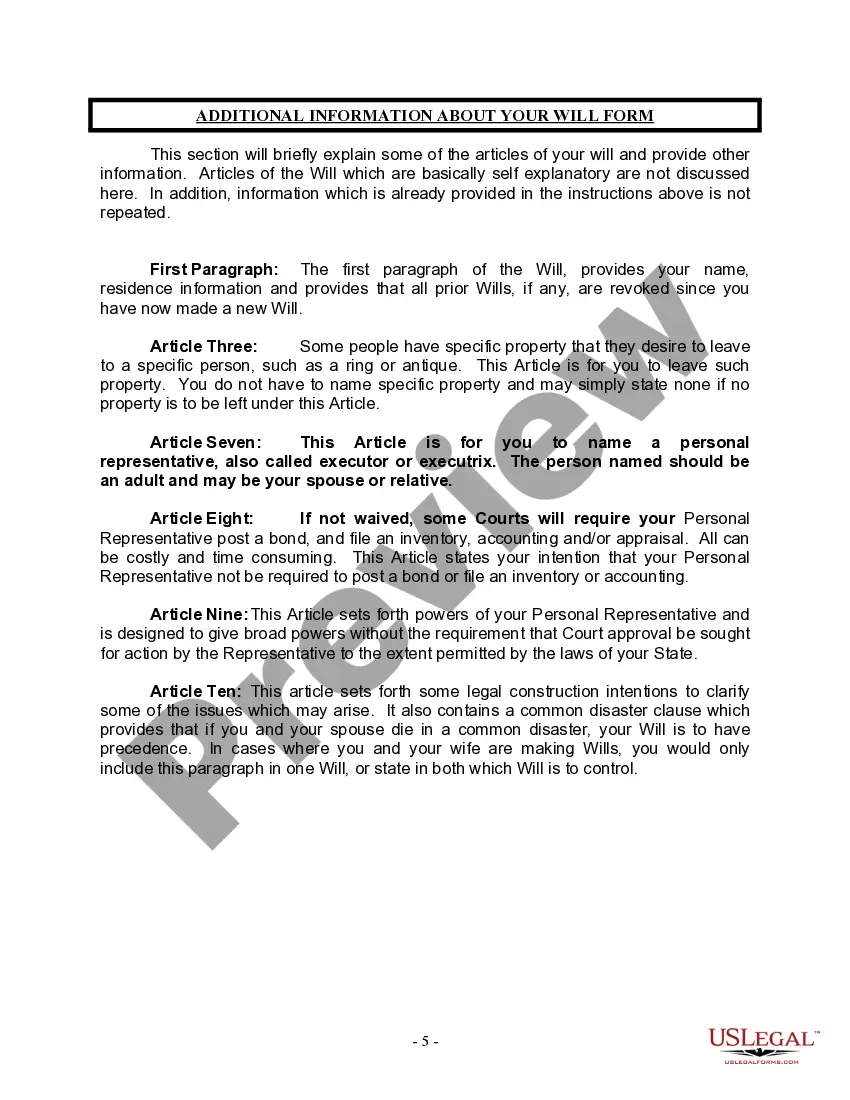
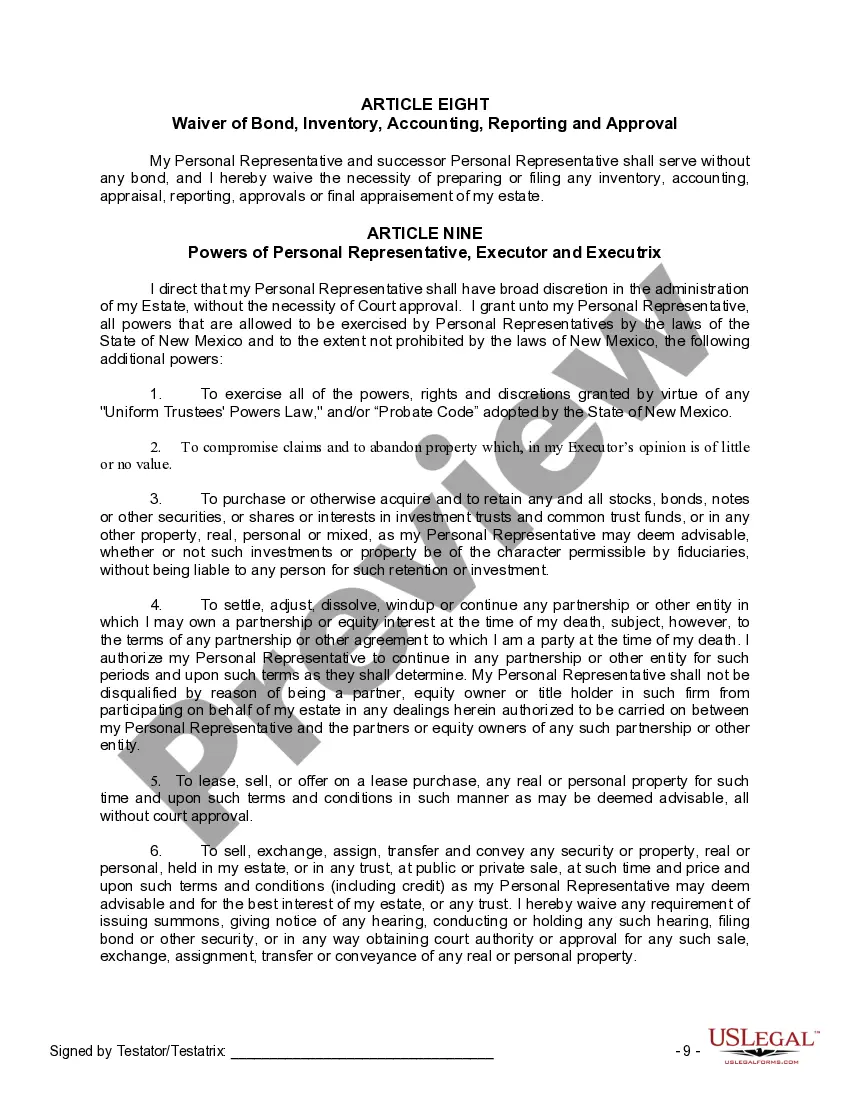
- Executor Appointment: Selection of a personal representative to manage your estate.
- Notarization Clause: Self-proving affidavit for validating the will, if applicable.




When this form is needed
This form is used when a married individual without children wishes to establish a formal will. It is particularly important to create this document to ensure that your wishes regarding the distribution of assets are honored, avoiding the default state laws that may apply if you die intestate (without a will). This will is essential for clarifying the intentions for your estate and can be used in situations such as the transfer of family heirlooms, real estate, or financial accounts to your spouse or others.
Who should use this form
- Married individuals who do not have children.
- Anyone wanting to specify their wishes regarding property distribution after death.
- Spouses wishing to ensure that their partner receives the entirety of their estate.
How to prepare this document
- Enter your full name and county of residence in the designated fields.
- Specifically name your spouse in the appropriate sections to indicate them as the primary beneficiary.
- Complete the specific bequests section if you wish to leave particular items to individuals other than your spouse.
- Appoint a personal representative by entering their name, who will handle your estate after your passing.
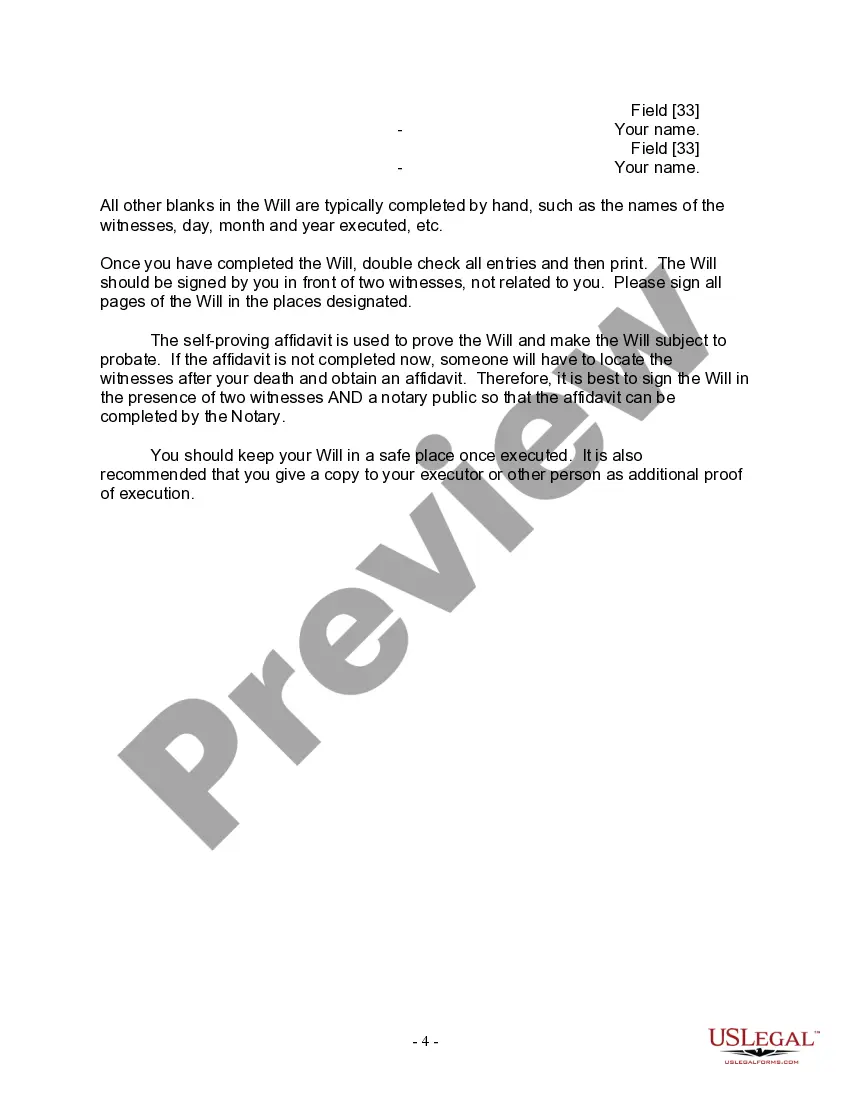
- Sign the will in the presence of at least two witnesses, who also sign the document to validate it.
- If applicable, have the self-proving affidavit notarized to simplify the probate process.
Notarization guidance
Yes, this form must be notarized to be legally valid if it includes a self-proving affidavit. This affidavit helps streamline the probate process by reducing the need for witnesses later. U.S. Legal Forms offers integrated online notarization services for added convenience, allowing you to complete this process securely and without travel.
Get your form ready online
Our built-in tools help you complete, sign, share, and store your documents in one place.
Make edits, fill in missing information, and update formatting in US Legal Forms—just like you would in MS Word.
Download a copy, print it, send it by email, or mail it via USPS—whatever works best for your next step.
Sign and collect signatures with our SignNow integration. Send to multiple recipients, set reminders, and more. Go Premium to unlock E-Sign.
If this form requires notarization, complete it online through a secure video call—no need to meet a notary in person or wait for an appointment.
We protect your documents and personal data by following strict security and privacy standards.

Make edits, fill in missing information, and update formatting in US Legal Forms—just like you would in MS Word.

Download a copy, print it, send it by email, or mail it via USPS—whatever works best for your next step.

Sign and collect signatures with our SignNow integration. Send to multiple recipients, set reminders, and more. Go Premium to unlock E-Sign.

If this form requires notarization, complete it online through a secure video call—no need to meet a notary in person or wait for an appointment.

We protect your documents and personal data by following strict security and privacy standards.
Common mistakes
- Failing to have the will signed in the presence of the required witnesses.
- Not updating the will after significant life changes, such as moving to a new state.
- Overlooking the need for a notarized self-proving affidavit if applicable in the jurisdiction.
Why complete this form online
- Convenience of completing the form digitally at your own pace.
- Easy editing capabilities allow for quick adjustments as life circumstances change.
- Access to professionally drafted templates ensures legal soundness and compliance.
Summary of main points
- A Last Will and Testament is essential for designating how your assets are distributed after death.
- It's crucial to appoint a reliable personal representative to carry out your wishes.
- Be clear about specific bequests to avoid confusion or disputes.
- Regularly review and update your will, especially after major life events.
Looking for another form?




Form popularity
FAQ
No, in New Mexico, you do not need to notarize your will to make it legal. However, New Mexico allows you to make your will "self-proving" and you'll need to go to a notary if you want to do that. A self-proving will speeds up probate because the court can accept the will without contacting the witnesses who signed it.
To make a will self-proved in New Mexico, the testator and witnesses must sign a self proving affidavit before a notary public. An affidavit is a sworn statement, and a notary public is an officer of the court. Therefore, an affidavit before a notary public is like making a statement in court.
A handwritten will can be used in New Mexico, but only if it comports with other statutory requirements to create a valid will. Some states also require that the will be dated.
The will must be administered through probate once the will has been submitted. Probate also is necessary if a person dies without a will or a living trust. In this situation, the assets of the decedent are distributed based on a priority established under New Mexico intestate succession law.
No, in New Mexico, you do not need to notarize your will to make it legal. However, New Mexico allows you to make your will "self-proving" and you'll need to go to a notary if you want to do that. A self-proving will speeds up probate because the court can accept the will without contacting the witnesses who signed it.
New Mexico law does not require a notary's signature and seal on a will. The only requirements for a valid will in New Mexico are that it be: in writing; signed by you or signed by someone directed by you and in your presence; and signed by two witnesses who both sign in the presence of you and each other.
Age: The testator must be at least 18 years old. Capacity: The testator must be of sound mind. Signature: The will must be signed by the testator or by someone else in the testator's name in his conscious presence, by his direction.