New Mexico Landlord Tenant Lease Co-Signer Agreement
Overview of this form
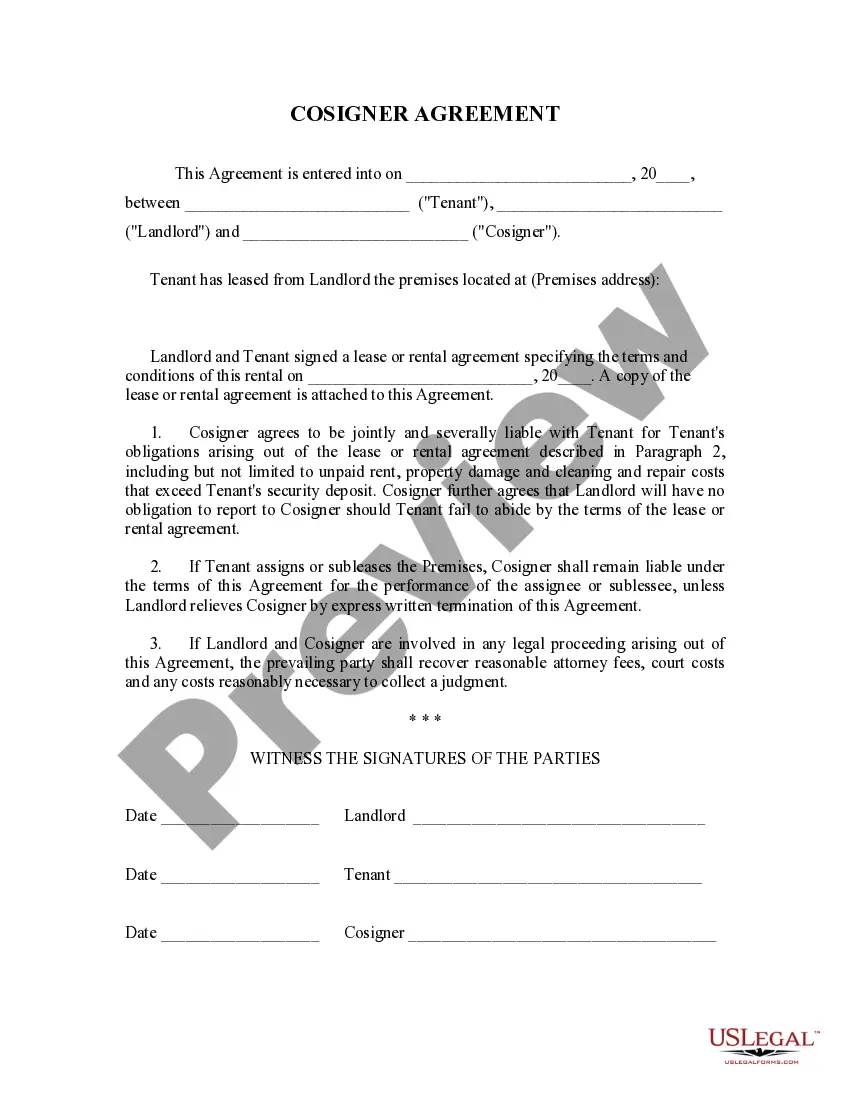
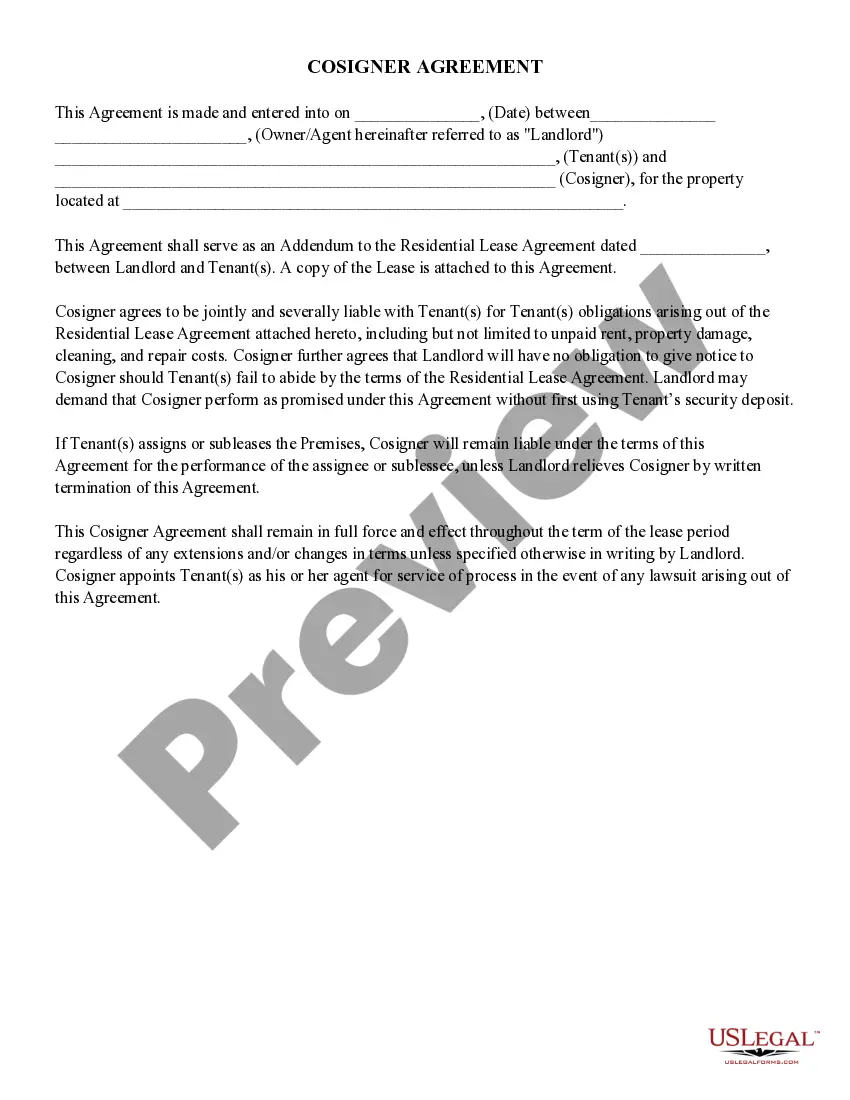
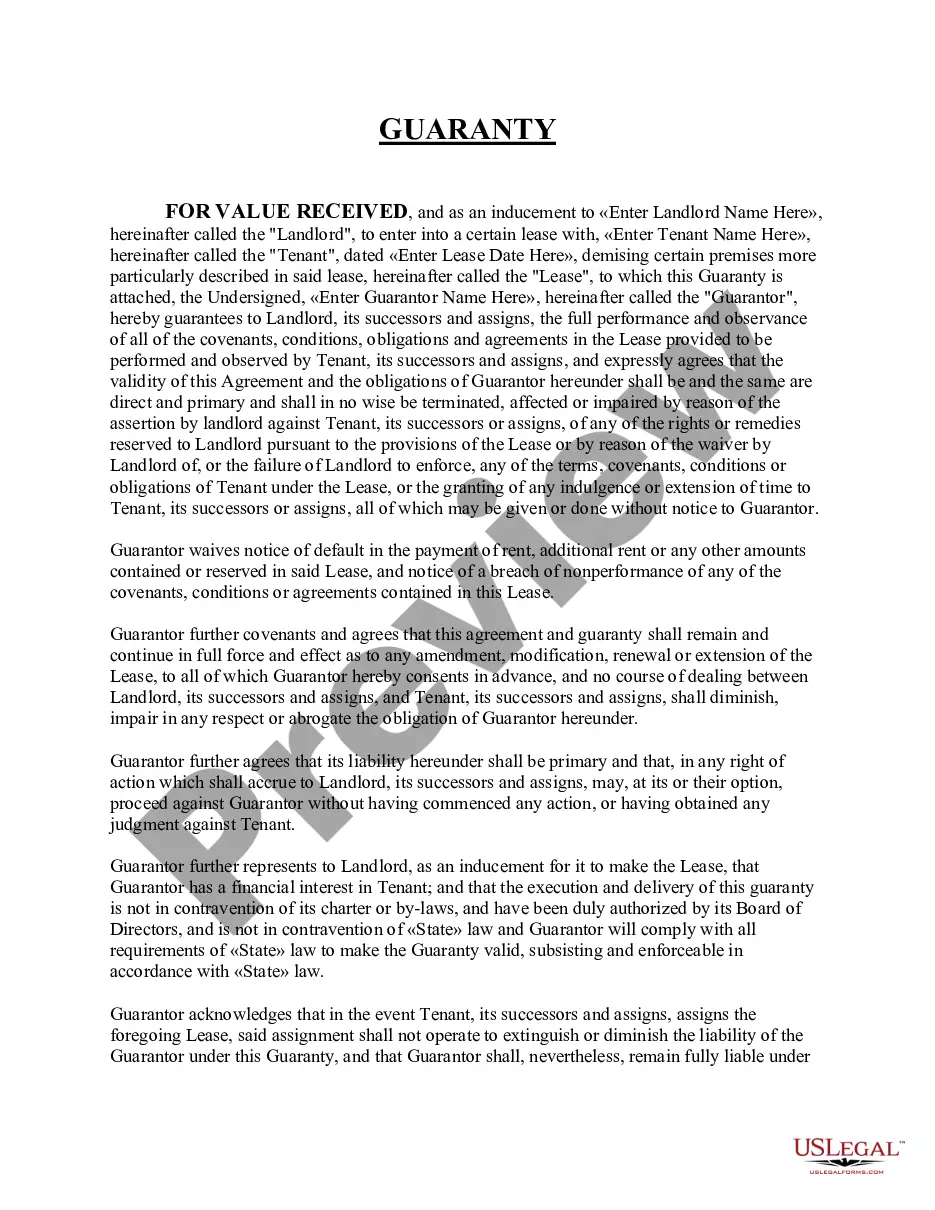
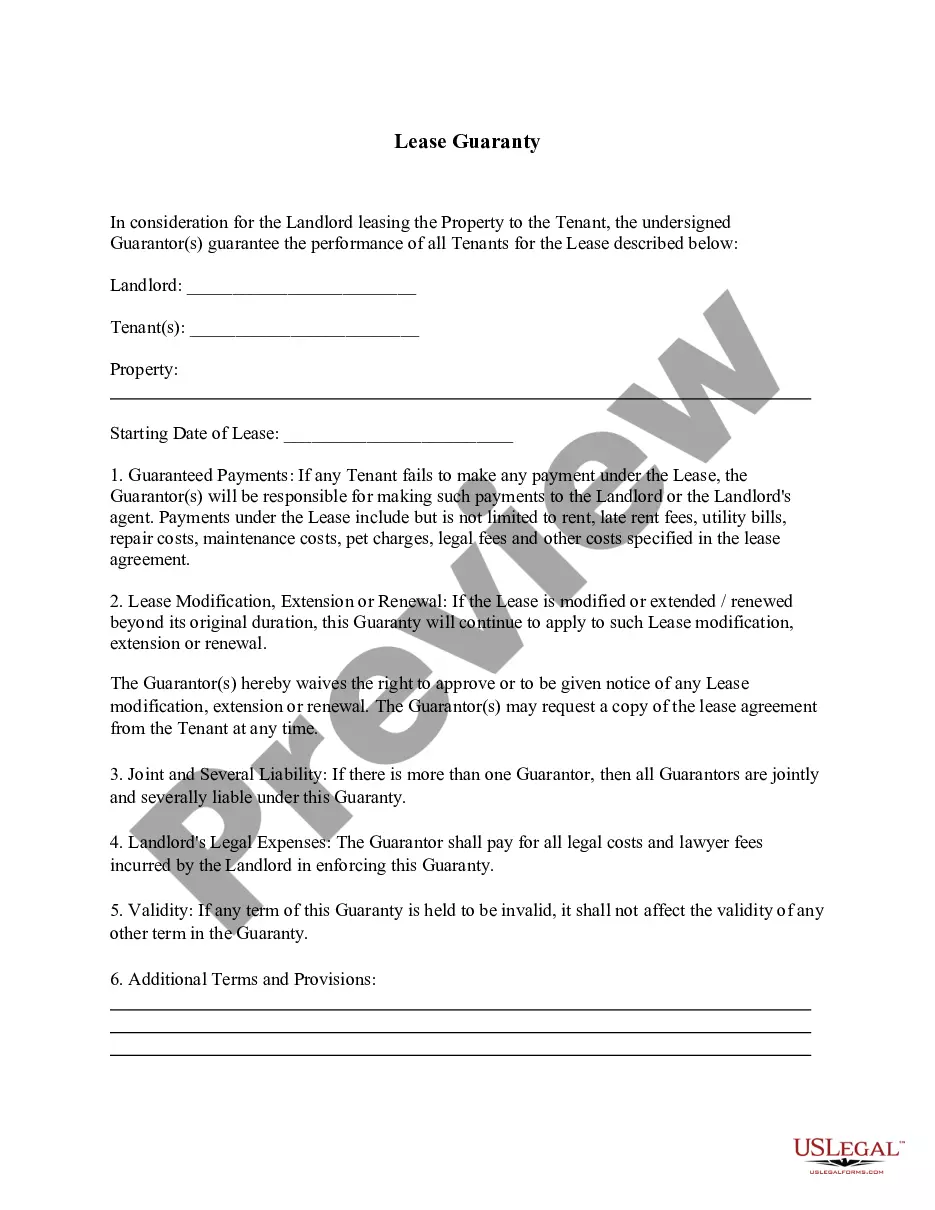
The Landlord Tenant Lease Co-Signer Agreement is a legal document that outlines the responsibilities and liabilities of a co-signer in a rental lease. This agreement ensures that the co-signer, often referred to as a guarantor, is held accountable for the tenant's obligations, such as paying rent and covering damages, should the tenant fail to meet these terms. It provides landlords with a safeguard while enhancing tenants' ability to secure a lease by involving a co-signer, thus differentiating itself from standard lease agreements.
Key parts of this document
- Identifying parties: Includes the names of the tenant, landlord, and co-signer.
- Property details: Specifies the address of the leased premises.
- Liability terms: Clarifies the responsibility of the co-signer for the tenant's obligations under the lease.
- Subletting clause: States that the co-signer remains liable if the tenant subleases the property.
- Legal proceedings: Outlines the handling of legal disputes, including the recovery of attorney fees.
When to use this form
This form is useful when a tenant requires a co-signer to secure a lease, often due to inadequate credit history or income. It can be necessary in scenarios where the landlord needs an additional assurance of payment. Using this agreement ensures that all parties understand their rights and responsibilities, providing a clear legal framework in case of disputes.
Who should use this form
- Landlords who require a co-signer for leasing a property.
- Tenants seeking to rent a property but needing a co-signer for financial assurance.
- Co-signers who want to formalize their agreement and understand their liability in the lease.
Instructions for completing this form
- Identify the parties by entering the names of the tenant, landlord, and co-signer.
- Specify the property by providing the complete address of the leased premises.
- Fill in the date of the agreement at the top of the form.
- Ensure all parties review the terms for understanding their liabilities.
- Obtain signatures from the landlord, tenant, and co-signer, including the date for each signature.
Does this document require notarization?
Notarization is not commonly needed for this form. However, certain documents or local rules may make it necessary. Our notarization service, powered by Notarize, allows you to finalize it securely online anytime, day or night.
Get your form ready online
Our built-in tools help you complete, sign, share, and store your documents in one place.
Make edits, fill in missing information, and update formatting in US Legal Forms—just like you would in MS Word.
Download a copy, print it, send it by email, or mail it via USPS—whatever works best for your next step.
Sign and collect signatures with our SignNow integration. Send to multiple recipients, set reminders, and more. Go Premium to unlock E-Sign.
If this form requires notarization, complete it online through a secure video call—no need to meet a notary in person or wait for an appointment.
We protect your documents and personal data by following strict security and privacy standards.

Make edits, fill in missing information, and update formatting in US Legal Forms—just like you would in MS Word.

Download a copy, print it, send it by email, or mail it via USPS—whatever works best for your next step.

Sign and collect signatures with our SignNow integration. Send to multiple recipients, set reminders, and more. Go Premium to unlock E-Sign.

If this form requires notarization, complete it online through a secure video call—no need to meet a notary in person or wait for an appointment.

We protect your documents and personal data by following strict security and privacy standards.
Mistakes to watch out for
- Failing to clearly outline the property address.
- Not having all parties sign the agreement.
- Ignoring local laws that may affect the co-signer's liability.
- Completing the form without thoroughly reviewing the terms.
Why complete this form online
- Convenience of easily downloading and printing the form.
- Editability allows for quick adjustments to fit specific needs.
- Access to templates created by licensed attorneys, ensuring legal validity.
Looking for another form?

Form popularity
FAQ
According to Nolo, a cosigner is a person designated to make the rental payments if the tenant does not pay. They sign their name to the lease agreement and are held fully responsible for rent if the tenant stops paying rent.
Guarantors sign the lease and are responsible for the payments under the law, but they don't occupy the apartment nor are they entitled to occupy it.
According to the Experian.com website, cosigning for an apartment lease doesn't normally affect a cosigner's credit. Rental payments aren't normally reported to credit bureaus.However, if you cosign an apartment lease, and the person you cosigned for later defaults, your credit can be negatively affected.
Ask the owner whether he allows for co-signers. Schedule a meeting with the owner and your co-signer. Sign the lease or rental agreement once the co-signer passes the property owner's requirements. Ask the landlord whether he objects to another tenant moving into the home.
The cosigner, simply by signing on to the debt, is liable for the debt without the creditor needing to to take any additional actions. The guarantor is only liable for the debt after the creditor has exhausted all other options of collections from the original borrower.
A co-signer, on the other hand, will usually have their name on the title of the home or automobile. Guarantors are usually liable for default only when the lender has done everything possible to get the primary borrower to make the payments.
Co-signers have equal responsibility for payment of monthly rental costs, while a guarantor is generally sought for payment only when the primary signer is unable to make the rental payment.
The Basics: A Co-signor is part owner of the property, may or may not live in the property and is responsible for the debt repayment. A Guarantor is responsible for the debt repayment if the borrower (applicant) is unable to pay but has no benefits of owning any part of the property.
This Cosigner Addendum adds the undersigned as a Cosigner to the Application and Promissory Note (Note) for a student loan for the borrower listed in Section B below.Annual Monthly You do not need to reveal alimony, child support or maintenance if you do not wish to have it considered as a basis for loan repayment.