New Jersey Complaint for Return of Deposit Under Real Estate Contract
Overview of this form
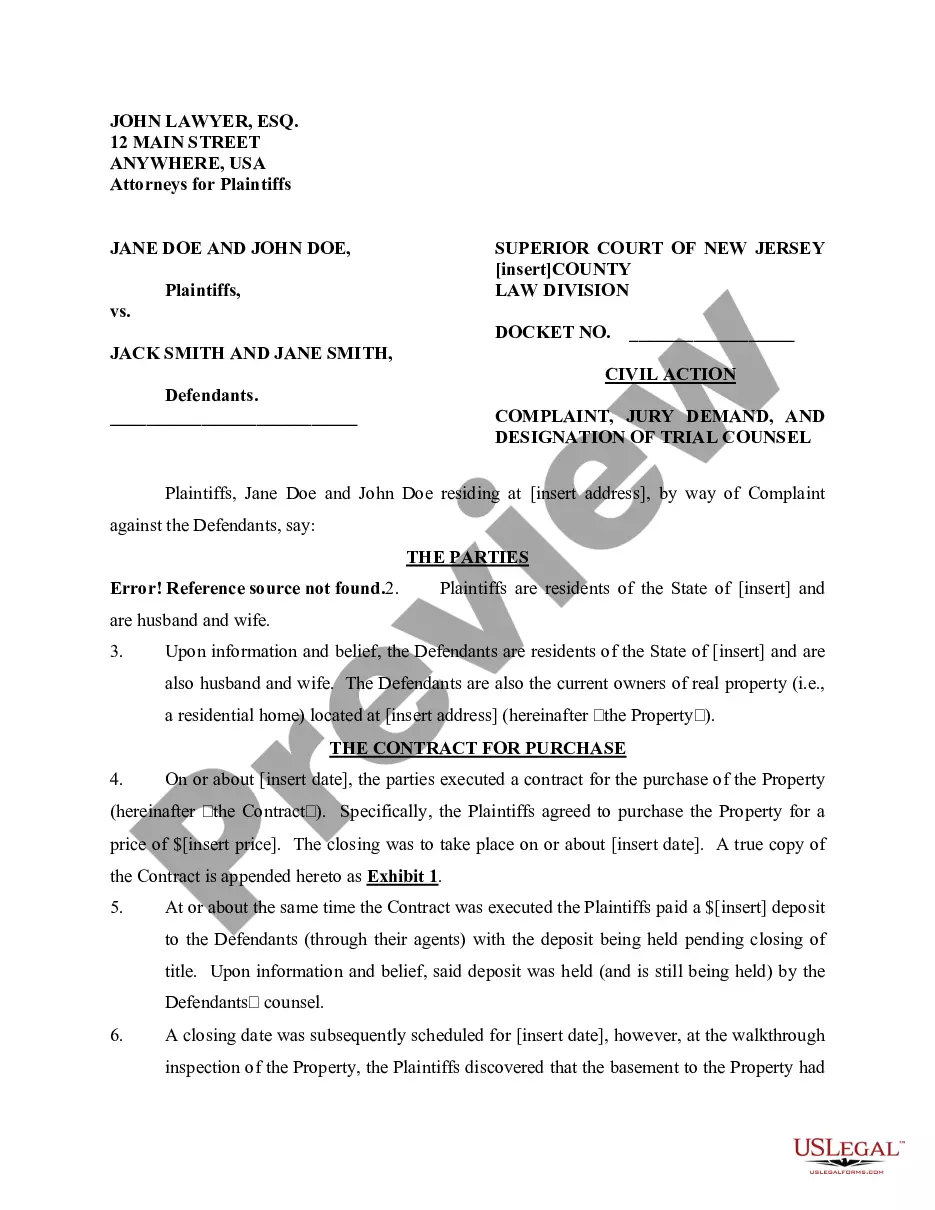
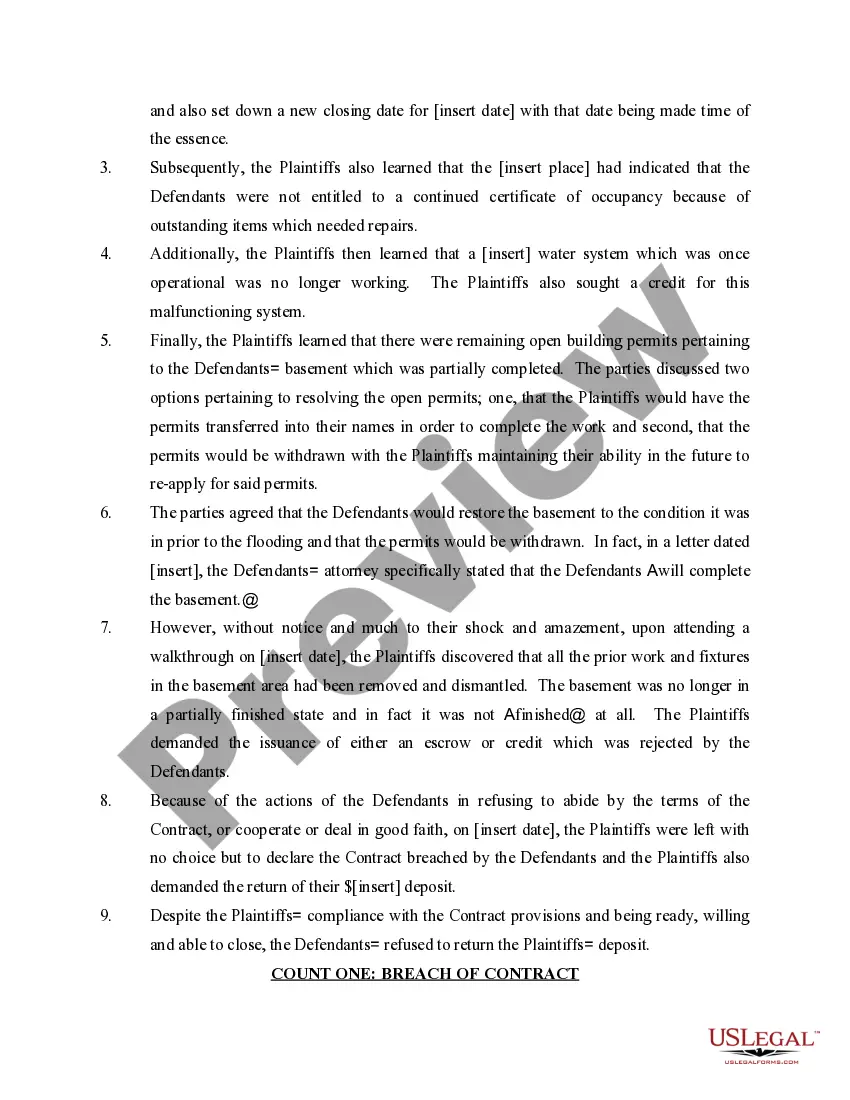
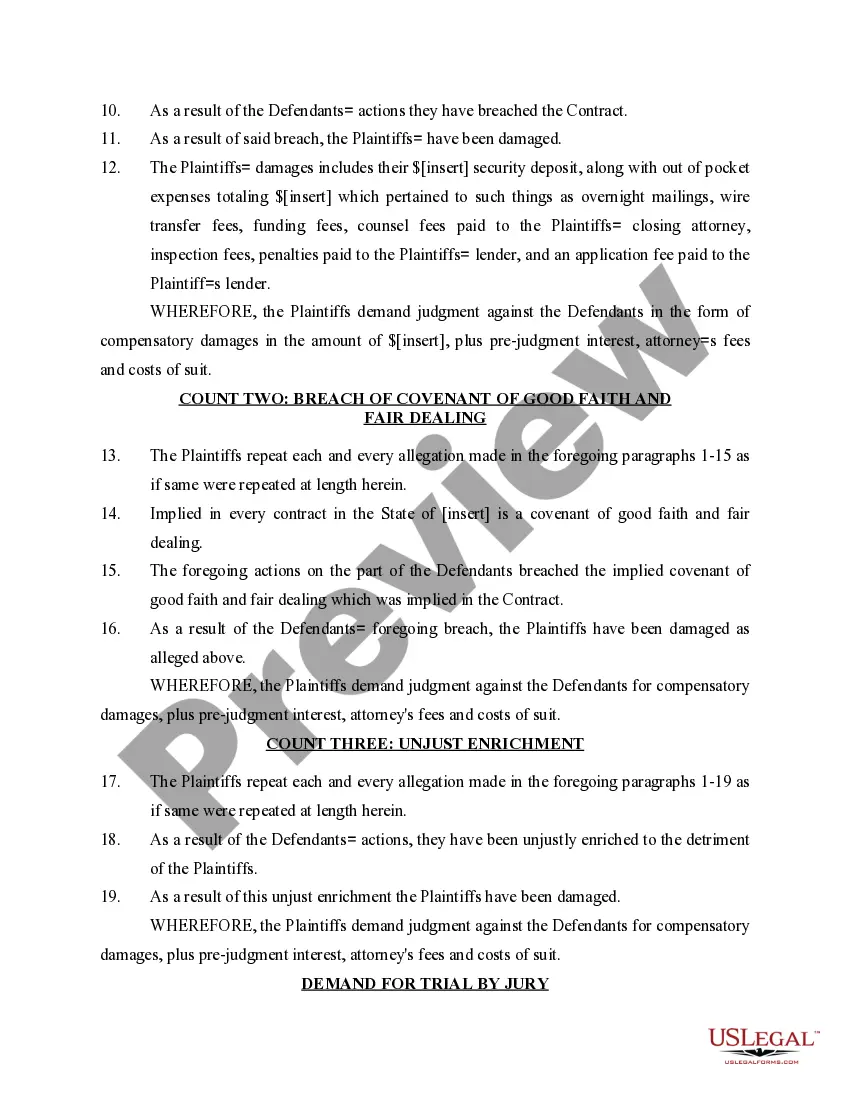
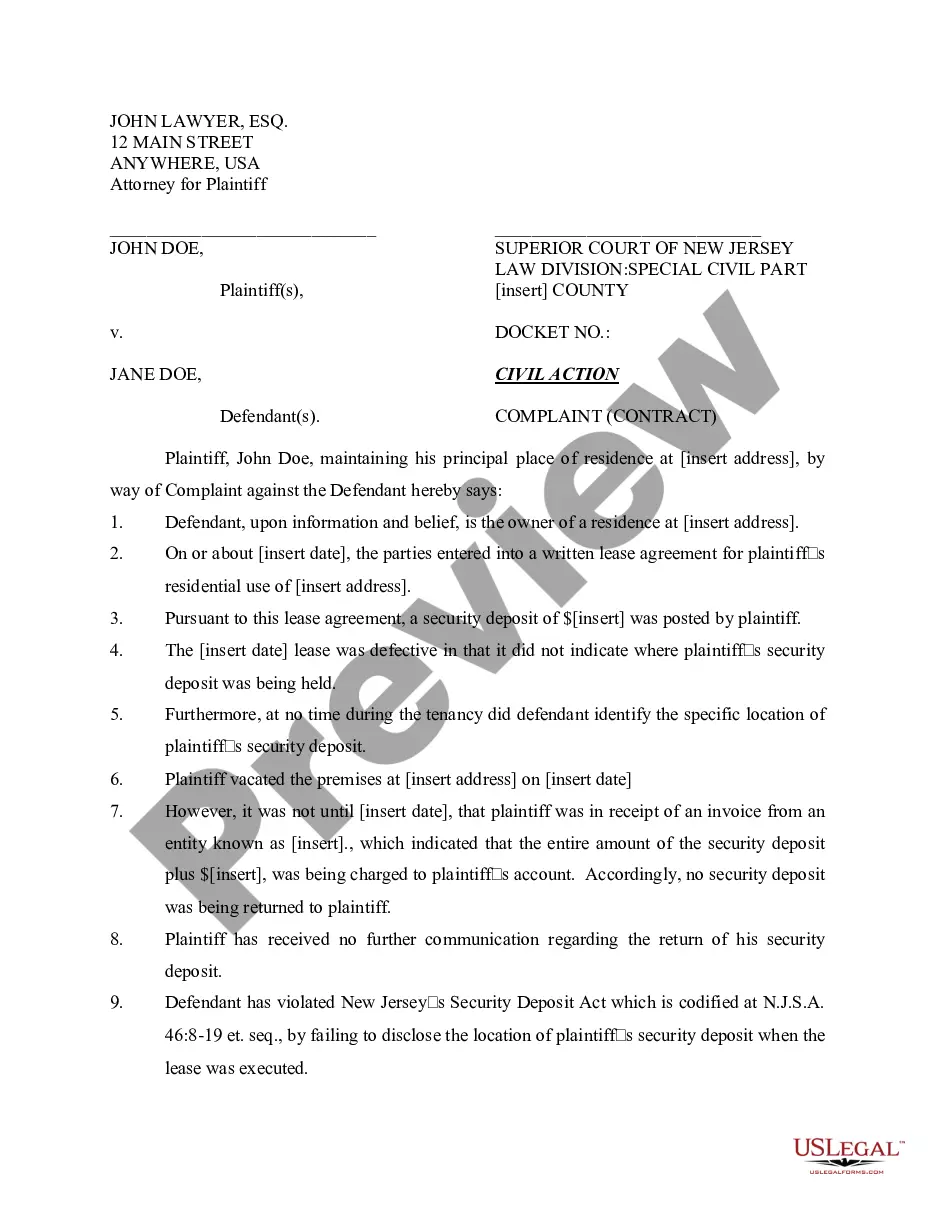
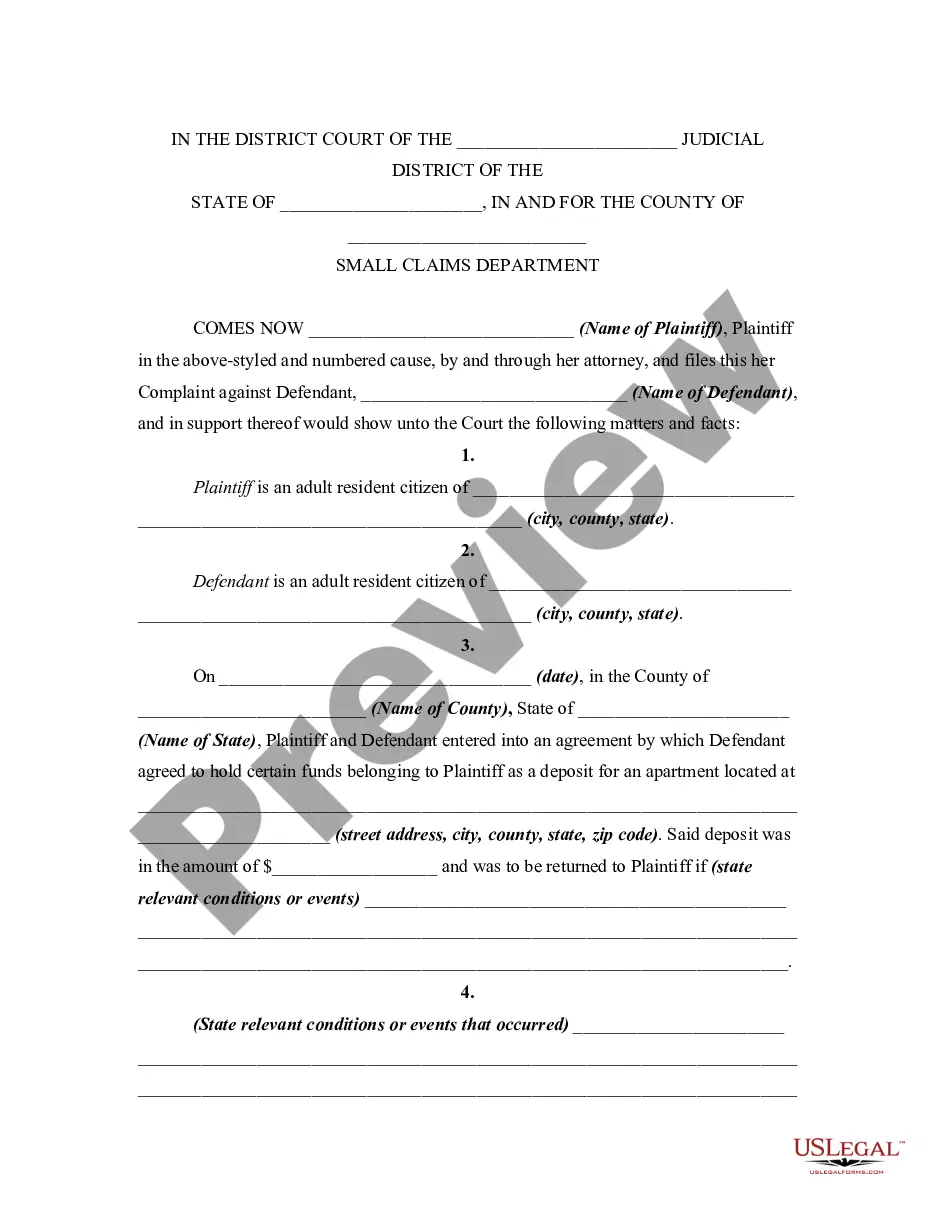
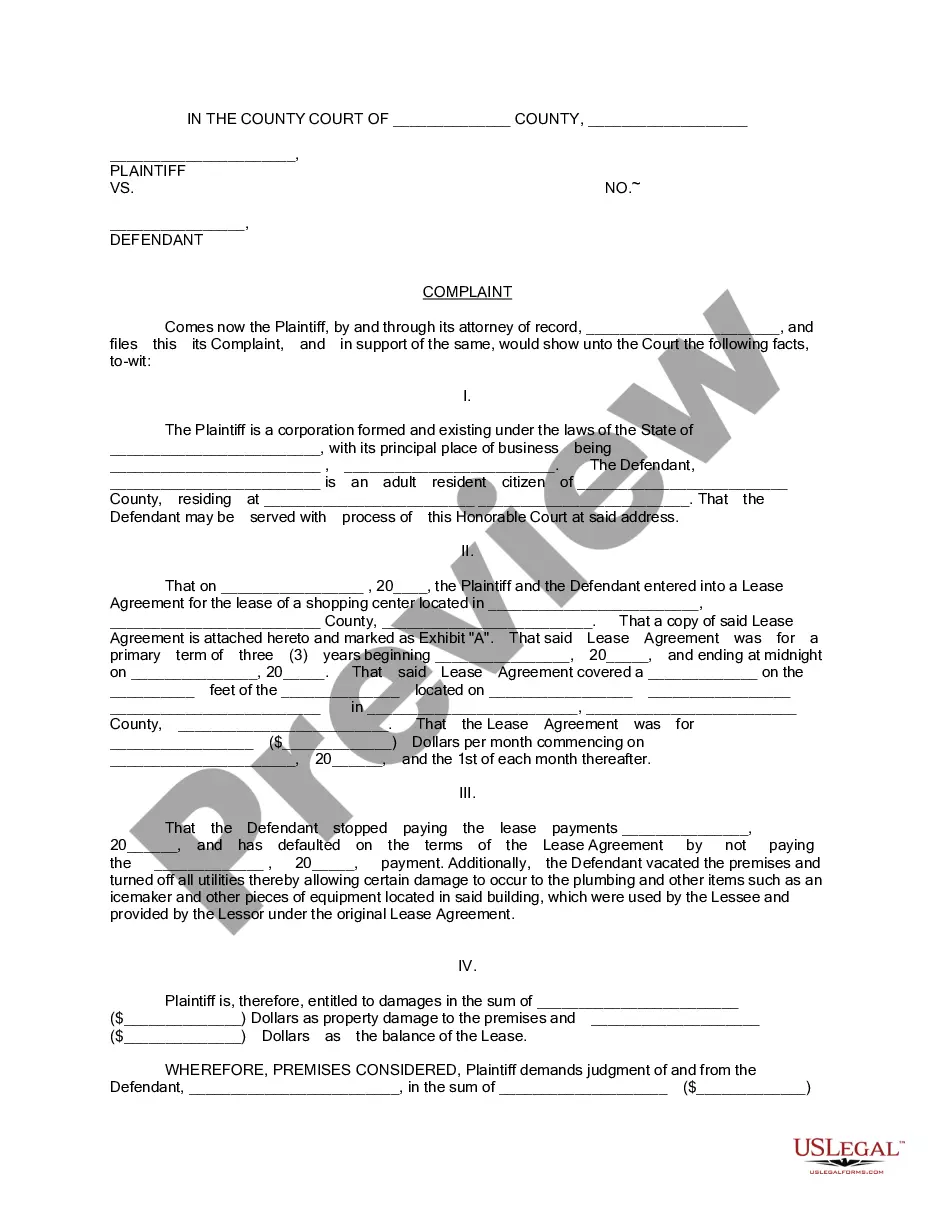
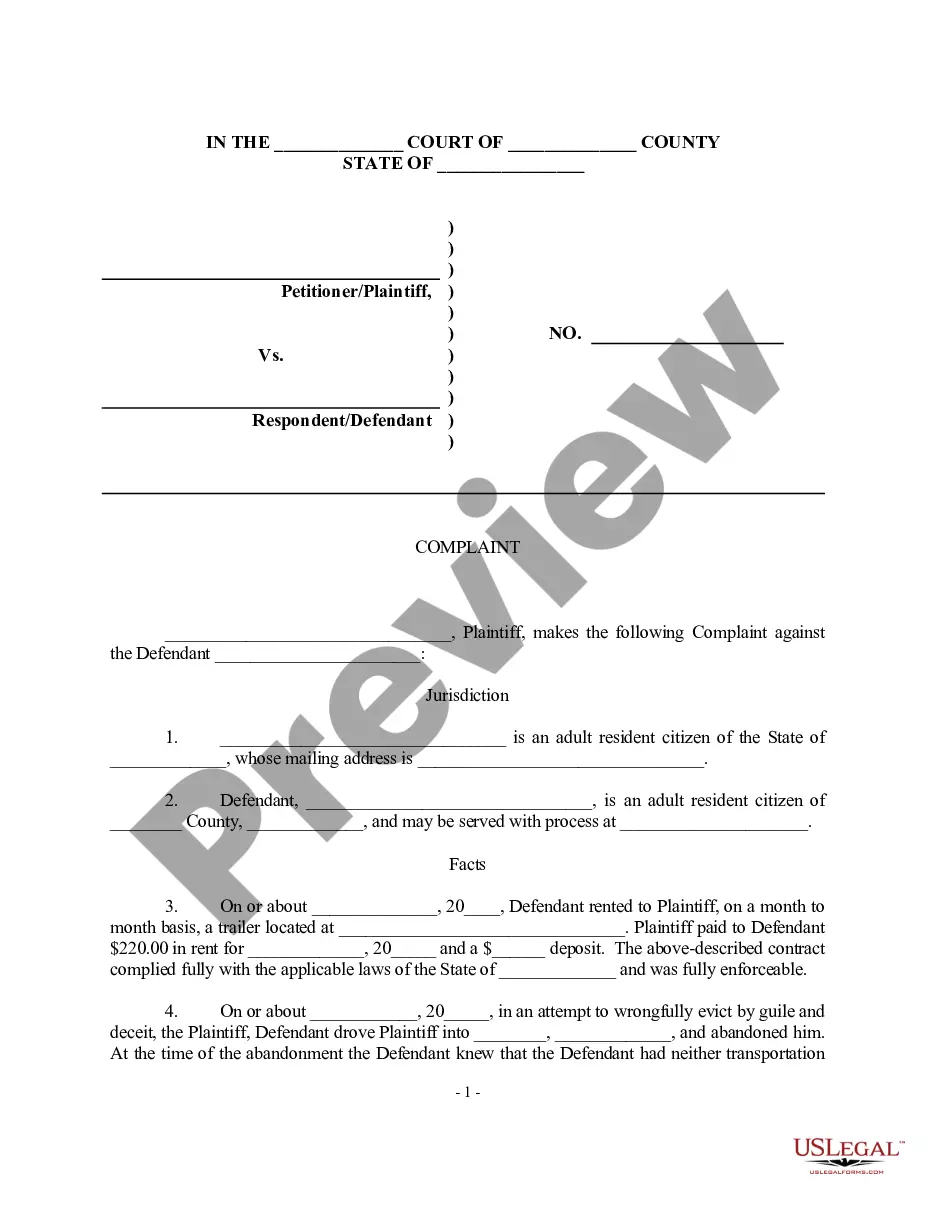
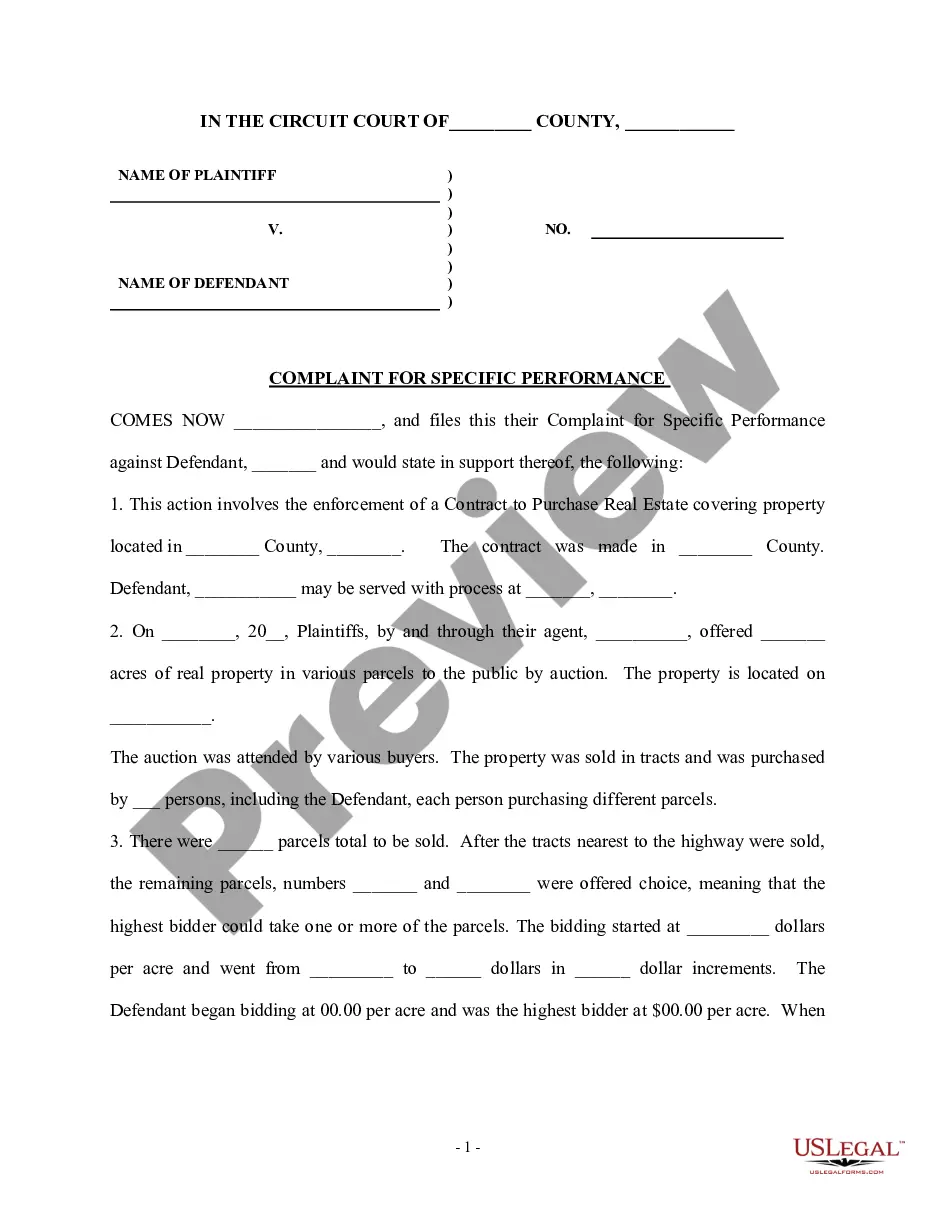
The Complaint for Return of Deposit Under Real Estate Contract is a legal document used by the plaintiff to initiate a lawsuit against the defendant for failing to adhere to the terms of a real estate contract. This form specifically addresses issues of breach of contract, breach of the covenant of good faith and fair dealing, and unjust enrichment, primarily focusing on the recovery of a deposit made during a real estate transaction. Unlike general complaints, this form is tailored to situations involving real estate agreements and the specific legal recourse associated with them.
What’s included in this form
- Identification of the plaintiffs and defendants, including their residences.
- Details about the real estate property and the contract for purchase.
- Specific allegations regarding contract breaches and failures to communicate.
- Claims for damages resulting from the breach, including deposit recovery and additional expenses.
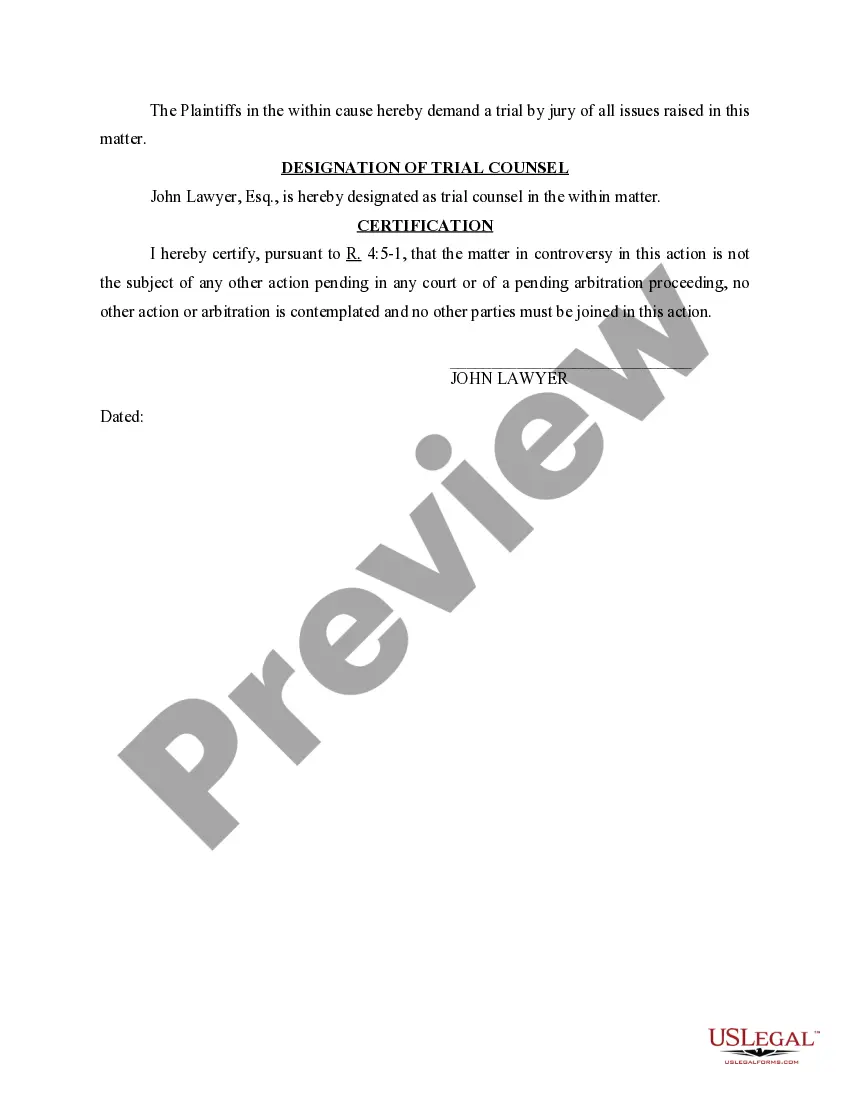
- Jury demand and designation of trial counsel.
Common use cases
This form should be utilized when a buyer of real estate has made a deposit and the seller fails to meet the obligations outlined in the purchase contract. You may consider using this form if you encounter issues such as unaddressed repairs, poor communication regarding property conditions, or refusal to return your deposit after a contract has been declared breached.
Who should use this form
- Homebuyers who have paid a deposit on a property that the seller failed to deliver.
- Individuals seeking to formally address grievances with a contractual partner in a real estate transaction.
- Those who wish to recover their financial investment due to a breach by the other party.
How to prepare this document
- Identify the names and addresses of all parties involved in the real estate transaction.
- Fill in details about the property being purchased, including the specific address and purchase price.
- Specify the date on which the contract was executed and any subsequent relevant dates.
- Describe the issues encountered that led to the breach of contract.
- State the damages sought, including the return of the deposit and any additional expenses incurred.
Does this document require notarization?
This form needs to be notarized to ensure legal validity. US Legal Forms provides secure online notarization powered by Notarize, allowing you to complete the process through a verified video call, available anytime.
Get your form ready online
Our built-in tools help you complete, sign, share, and store your documents in one place.
Make edits, fill in missing information, and update formatting in US Legal Forms—just like you would in MS Word.
Download a copy, print it, send it by email, or mail it via USPS—whatever works best for your next step.
Sign and collect signatures with our SignNow integration. Send to multiple recipients, set reminders, and more. Go Premium to unlock E-Sign.
If this form requires notarization, complete it online through a secure video call—no need to meet a notary in person or wait for an appointment.
We protect your documents and personal data by following strict security and privacy standards.

Make edits, fill in missing information, and update formatting in US Legal Forms—just like you would in MS Word.

Download a copy, print it, send it by email, or mail it via USPS—whatever works best for your next step.

Sign and collect signatures with our SignNow integration. Send to multiple recipients, set reminders, and more. Go Premium to unlock E-Sign.

If this form requires notarization, complete it online through a secure video call—no need to meet a notary in person or wait for an appointment.

We protect your documents and personal data by following strict security and privacy standards.
Common mistakes to avoid
- Failing to provide complete information about the parties and the property.
- Omitting specific details about the breach of contract and its implications.
- Not clearly stating the damages being claimed.
- Neglecting to verify the state-specific requirements before submission.
Benefits of using this form online
- Easy access to a professionally drafted legal document tailored for your needs.
- Immediate download availability to help expedite your legal proceedings.
- Editability to ensure all unique information specific to your situation is accurately captured.
- Compliance with current legal standards, ensuring your form is valid and enforceable.
Quick recap
- The form allows you to officially address breaches in real estate contracts.
- Clear identification of damages and claims is critical for a successful complaint.
- Understanding state-specific regulations can help streamline the process.
Looking for another form?
Form popularity
FAQ
Keeping security deposits in interest-bearing accounts is not required; however, if the account is interest bearing, interest earned during the first five years of the tenancy goes to the landlord and thereafter to the tenant.
Notice to Terminate the Lease A month-to-month tenant must give written notice of lease termination at least one full month prior to moving. Most yearly leases require a 60 to 90 day notice from the tenants in order to terminate the lease.
A landlord must have good cause to evict a tenant.Each cause, except for nonpayment of rent, must be described in detail by the landlord in a written notice to the tenant. A Notice to Quit is required for all good cause evictions, except for an eviction for nonpayment of rent.
A landlord should keep accurate accounting records related to a rental business, including the tenant security deposit. Again, many states have rules about how to handle the money. Some of them require the landlord to keep the tenant security deposit with a local bank in an interest-bearing account.
The landlord is required to pay the tenant the interest or the earnings generated on their security deposit annually. If the tenant wishes, they can have this amount credited toward their next month's rent instead.
They don't have to give you any reasons why they want to evict you. They have to give you at least 28 days notice, but this could be longer depending on your agreement. If you don't leave by the time your notice ends, your landlord has to go to court to get a court order to make you leave.
Late last week, Governor Phil Murphy signed Executive Order #128 that allows tenants to use funds that are being held as a security deposit to pay their monthly rent.The Order does not contain any exceptions for those with higher incomes and applies to any residential tenant that has a lease agreement in place.
All states allow landlords to collect a security deposit when a tenant moves in and hold it until the tenant leaves. The general purpose of a security deposit is to assure that a tenant pays rent when due and keeps the rental unit in good condition.
Under New Jersey law, a landlord must return the tenant's security deposit within 30 days after the tenant has surrendered the rental property to the landlord (that is, returned the keys and vacated the property), but within five days in case of fire, flood, condemnation, or evacuation.