New Hampshire Last Will and Testament for Married person with Minor Children from Prior Marriage
What this document covers
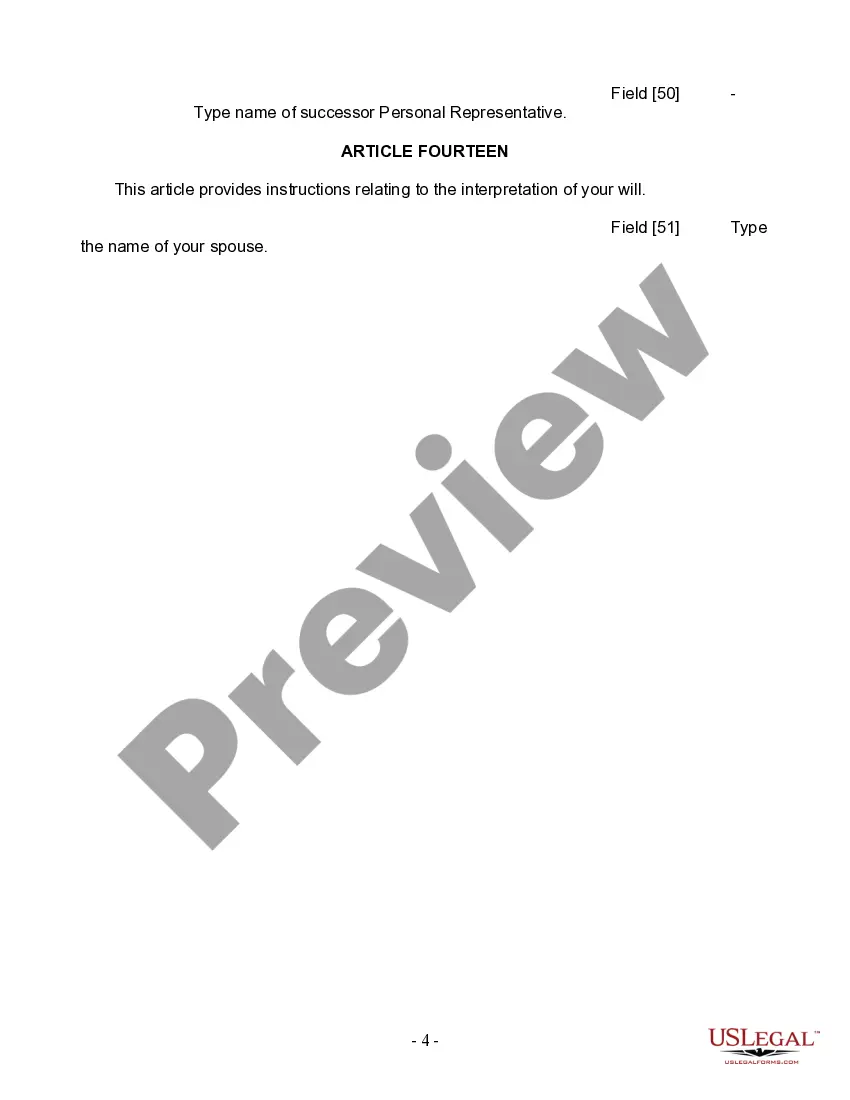
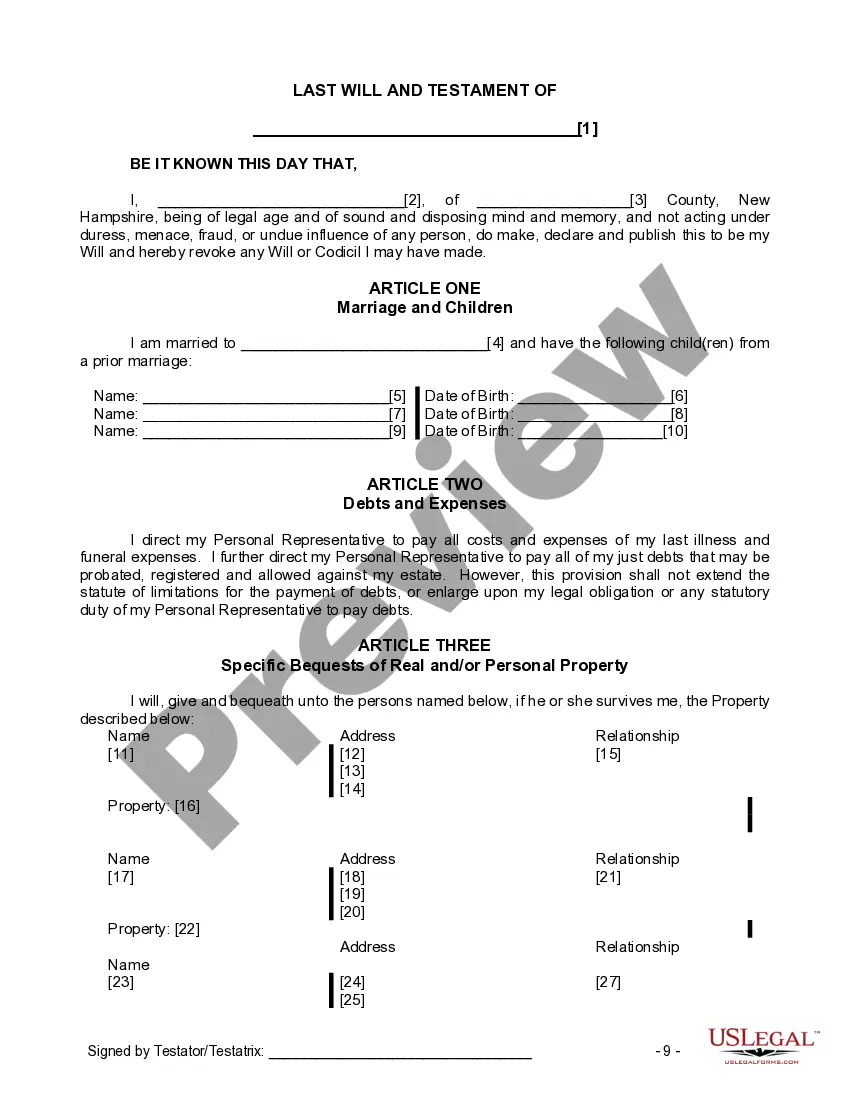
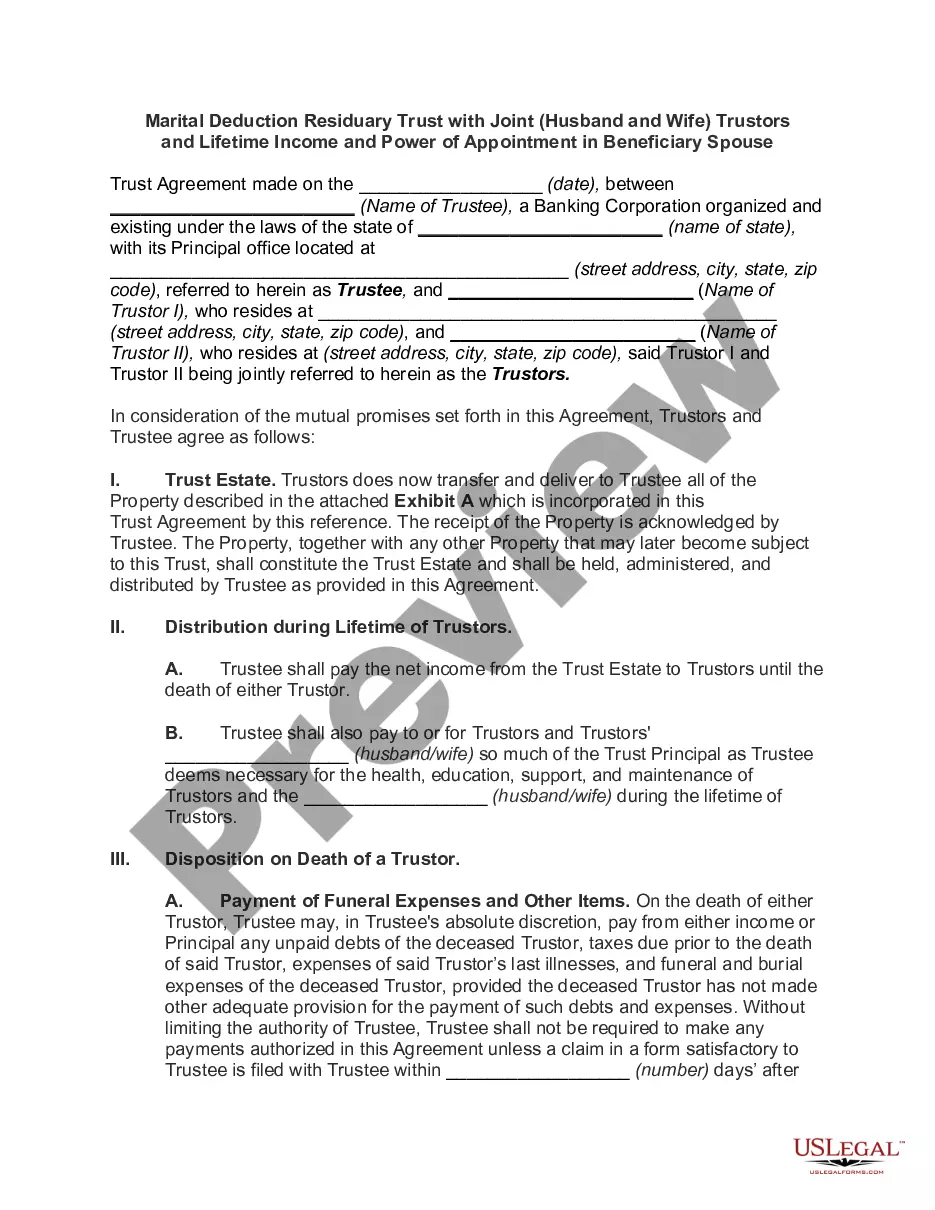
The Last Will and Testament for Married Person with Minor Children from Prior Marriage is a legal document that specifies how a married person wishes to distribute their assets after death, particularly when they have minor children from a previous relationship. This will outlines the appointment of a personal representative or executor, defines beneficiaries, and includes terms for a trustee to manage assets for minor children. It ensures that the individual's wishes are honored regarding inheritance, guardianship, and the management of property, providing peace of mind for the individual and their family.
Key components of this form
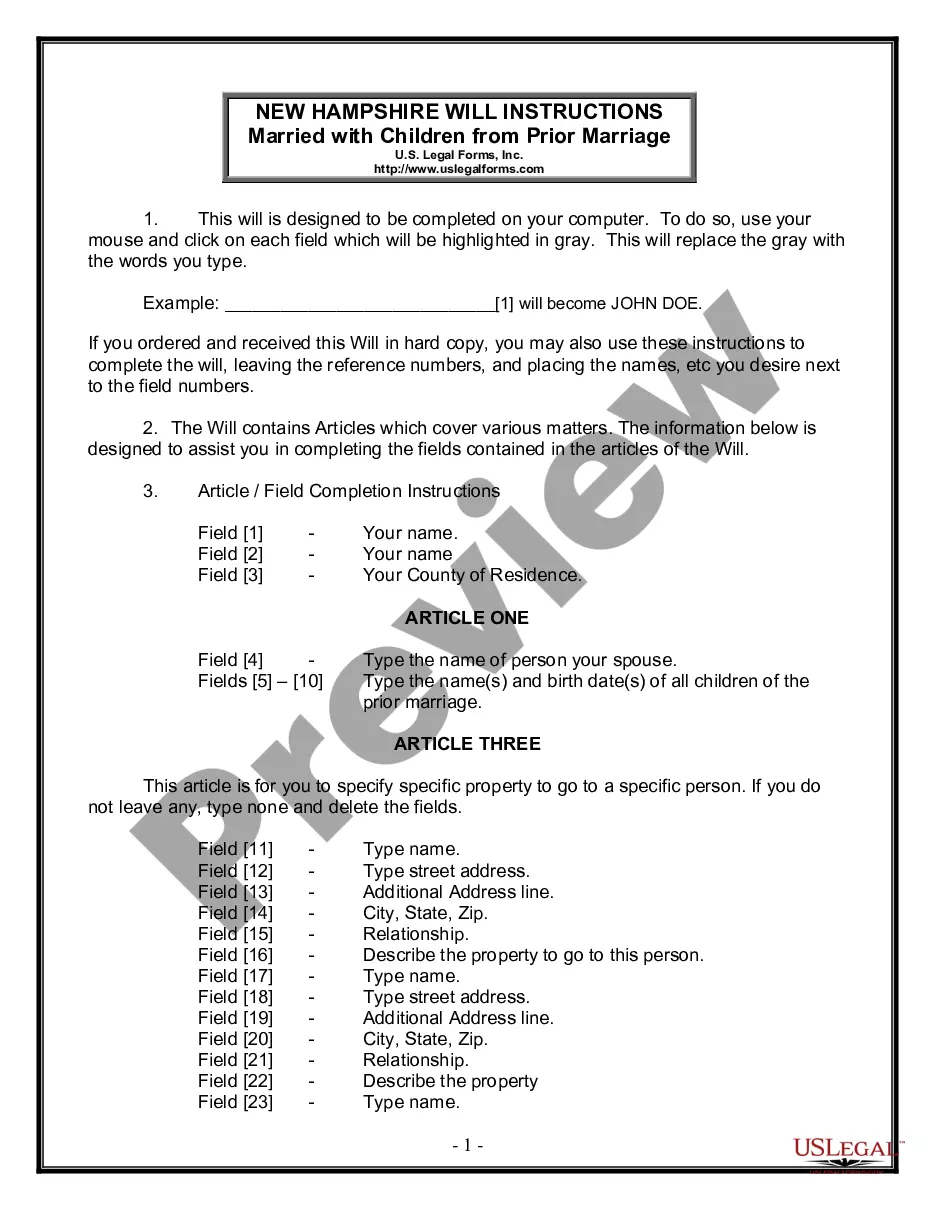
- Article One: Identifies the testator, spouse, and children from a prior marriage.
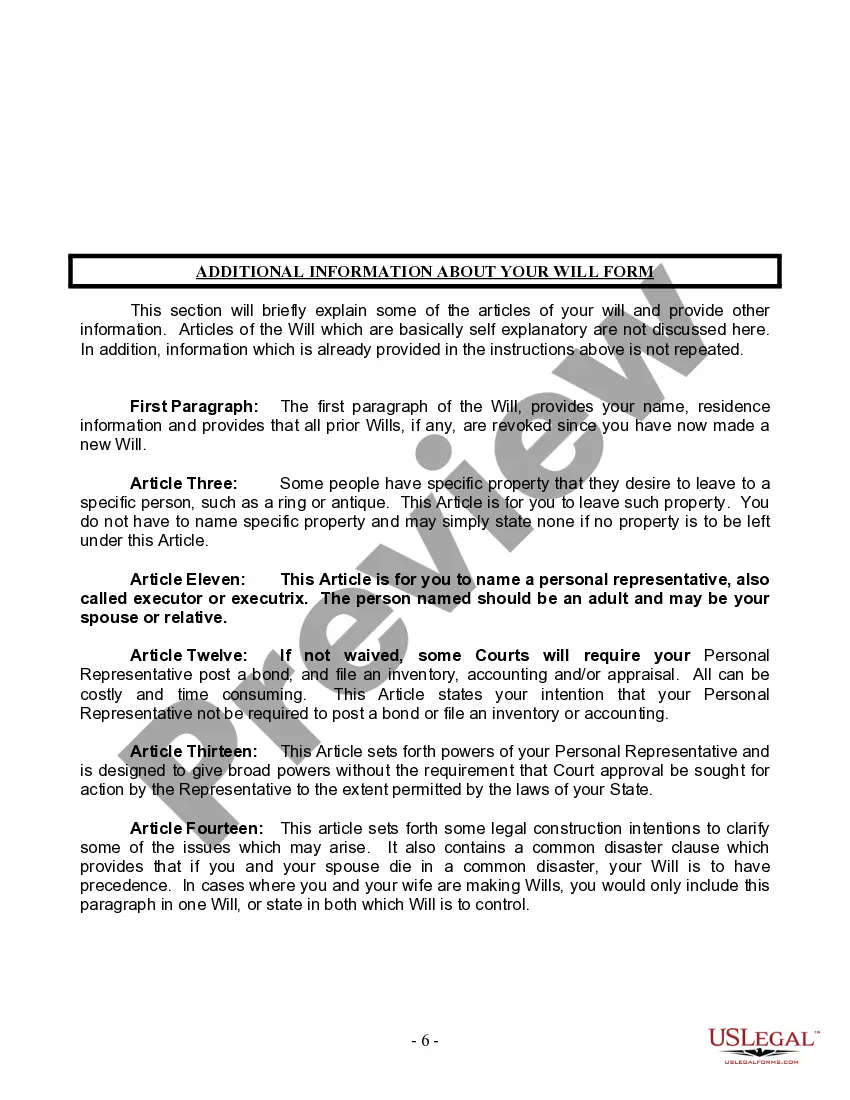
- Article Three: Designates specific property bequests to named individuals.
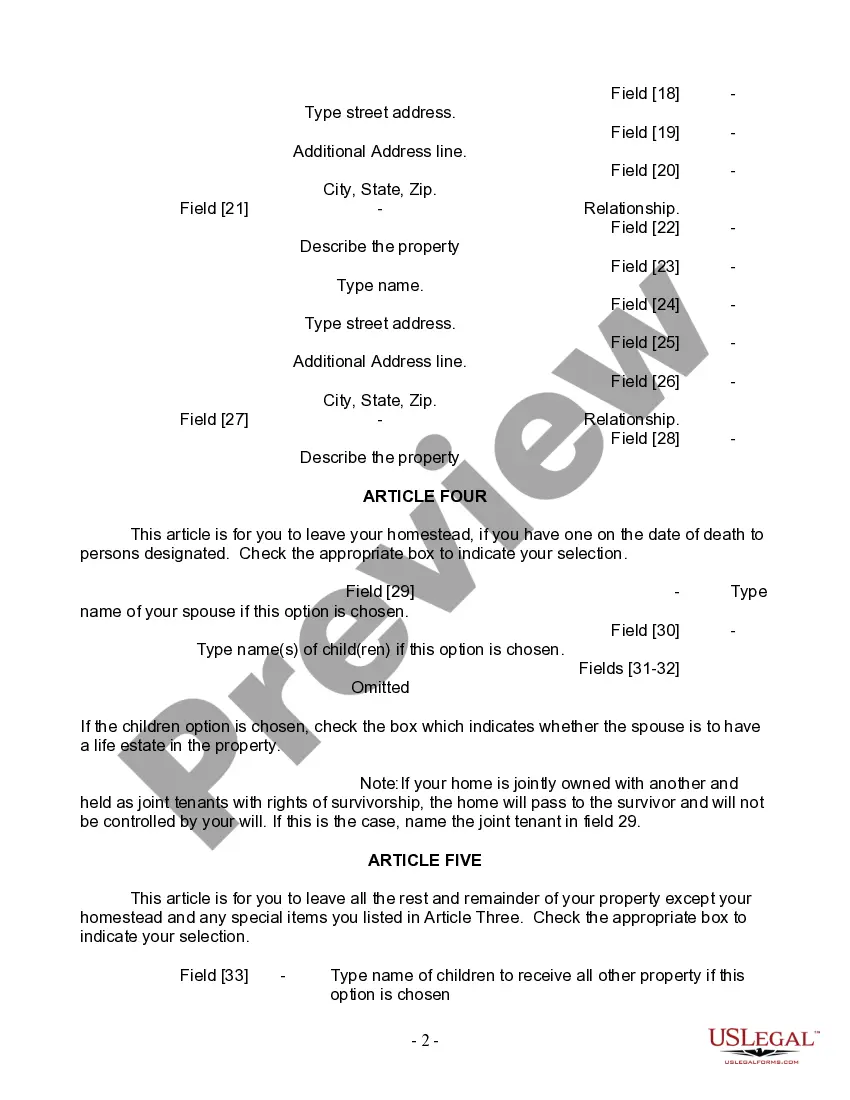
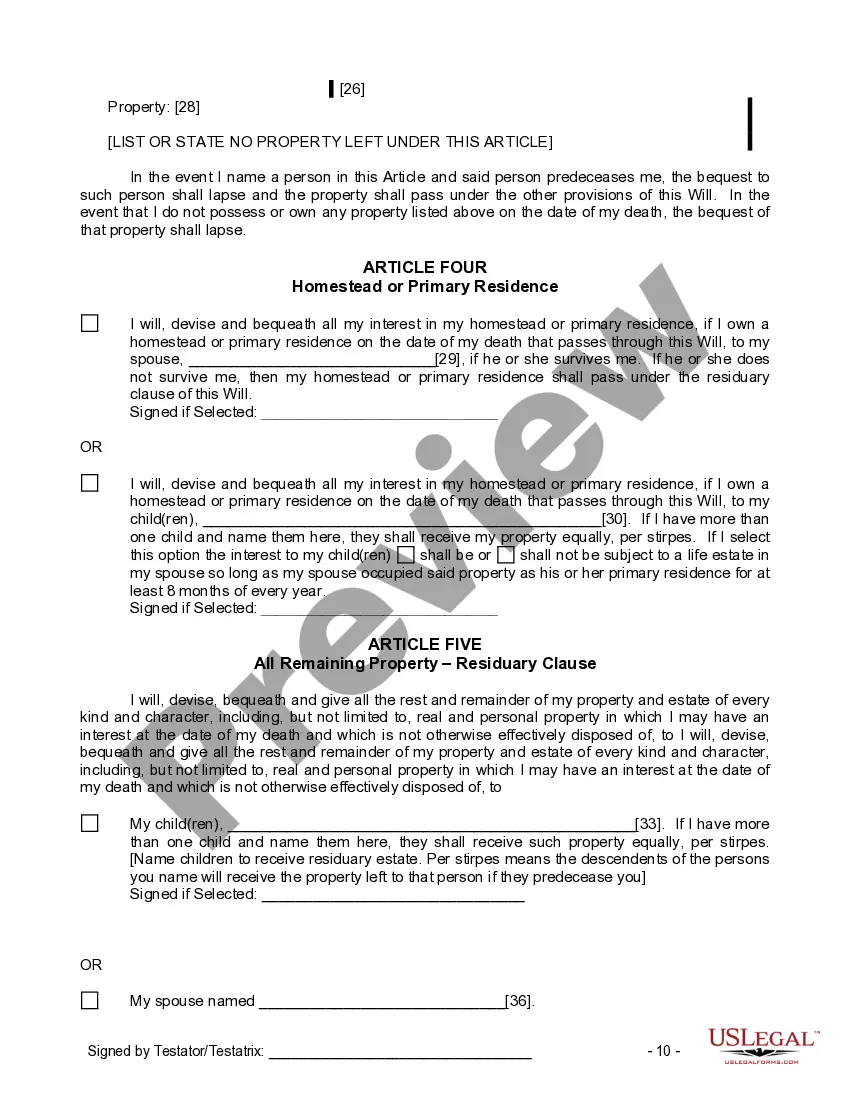
- Article Four: Addresses the distribution of the primary residence.
- Article Five: Outlines the distribution of remaining estate assets.
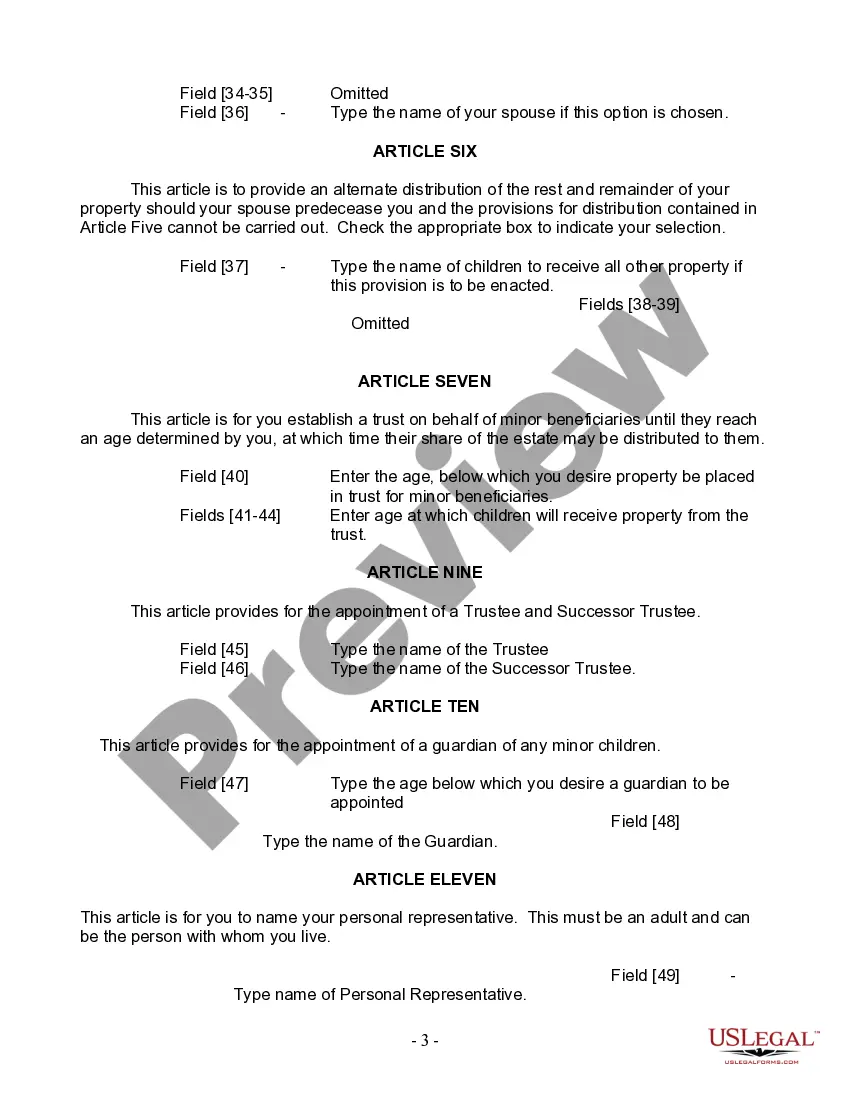
- Article Seven: Establishes a trust for minor children until a specified age.
- Article Ten: Appoints a guardian for minor children if needed.




Situations where this form applies
This form is essential for individuals who are married and have minor children from a prior marriage. It ensures that their estate is distributed according to their wishes, addresses the complex dynamics of blended families, and designates guardians and trustees necessary for the care of minor children. Use this will when you want to clearly specify how your assets should be managed and delivered to your beneficiaries after your death, particularly in cases involving children from previous relationships.
Who needs this form
- Married individuals with minor children from a previous marriage.
- Those seeking to specify how their assets will be divided after death.
- Individuals wanting to appoint guardians for their children if both parents are deceased.
- People looking to establish trusts to manage funds for minor beneficiaries.
Steps to complete this form
- Enter your full name, county, and marital status at the beginning of the document.
- Specify the name of your spouse and list all minor children from prior marriages along with their birthdates.
- Detail the specific assets you want to bequeath to individuals, including their names and addresses.
- Designate a trustee for your minor children's assets and specify conditions for trust management.
- Choose a personal representative to manage your estate and a guardian for any minor children.
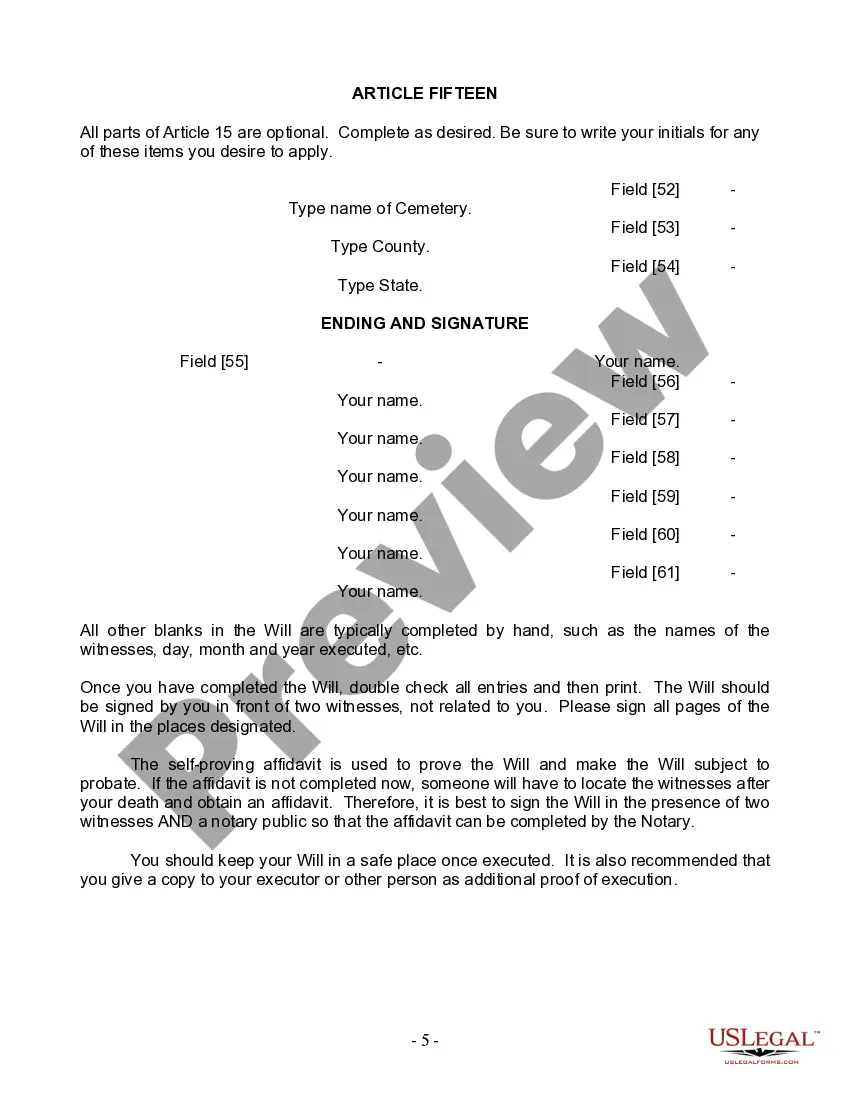
- Sign the will in the presence of two witnesses not related to you, ensuring compliance with local laws.
Does this document require notarization?
Yes, this form must be notarized to be legally valid. Signing in the presence of a notary public ensures that the will can be admitted to probate without additional evidence of execution. Using US Legal Forms, you can take advantage of our integrated online notarization services for a convenient and secure process.
Get your form ready online
Our built-in tools help you complete, sign, share, and store your documents in one place.
Make edits, fill in missing information, and update formatting in US Legal Forms—just like you would in MS Word.
Download a copy, print it, send it by email, or mail it via USPS—whatever works best for your next step.
Sign and collect signatures with our SignNow integration. Send to multiple recipients, set reminders, and more. Go Premium to unlock E-Sign.
If this form requires notarization, complete it online through a secure video call—no need to meet a notary in person or wait for an appointment.
We protect your documents and personal data by following strict security and privacy standards.

Make edits, fill in missing information, and update formatting in US Legal Forms—just like you would in MS Word.

Download a copy, print it, send it by email, or mail it via USPS—whatever works best for your next step.

Sign and collect signatures with our SignNow integration. Send to multiple recipients, set reminders, and more. Go Premium to unlock E-Sign.

If this form requires notarization, complete it online through a secure video call—no need to meet a notary in person or wait for an appointment.

We protect your documents and personal data by following strict security and privacy standards.
Avoid these common issues
- Failing to list all minor children or omitting necessary details about their guardianship.
- Not having enough witnesses present during the signing process.
- Neglecting to update the will after changes in family circumstances or asset ownership.
- Filling out the form without consulting legal requirements specific to their state.
Benefits of completing this form online
- Convenient access to customizable templates that can be completed quickly from home.
- Editability allows users to make necessary changes before finalizing the document.
- Reliability of professionally drafted legal forms designed by licensed attorneys.
- Immediate downloadable access to legal documents without waiting for physical copies.
- This will serves to clarify your intentions regarding asset distribution upon death.
- Wills executed in compliance with state laws are generally upheld by courts.
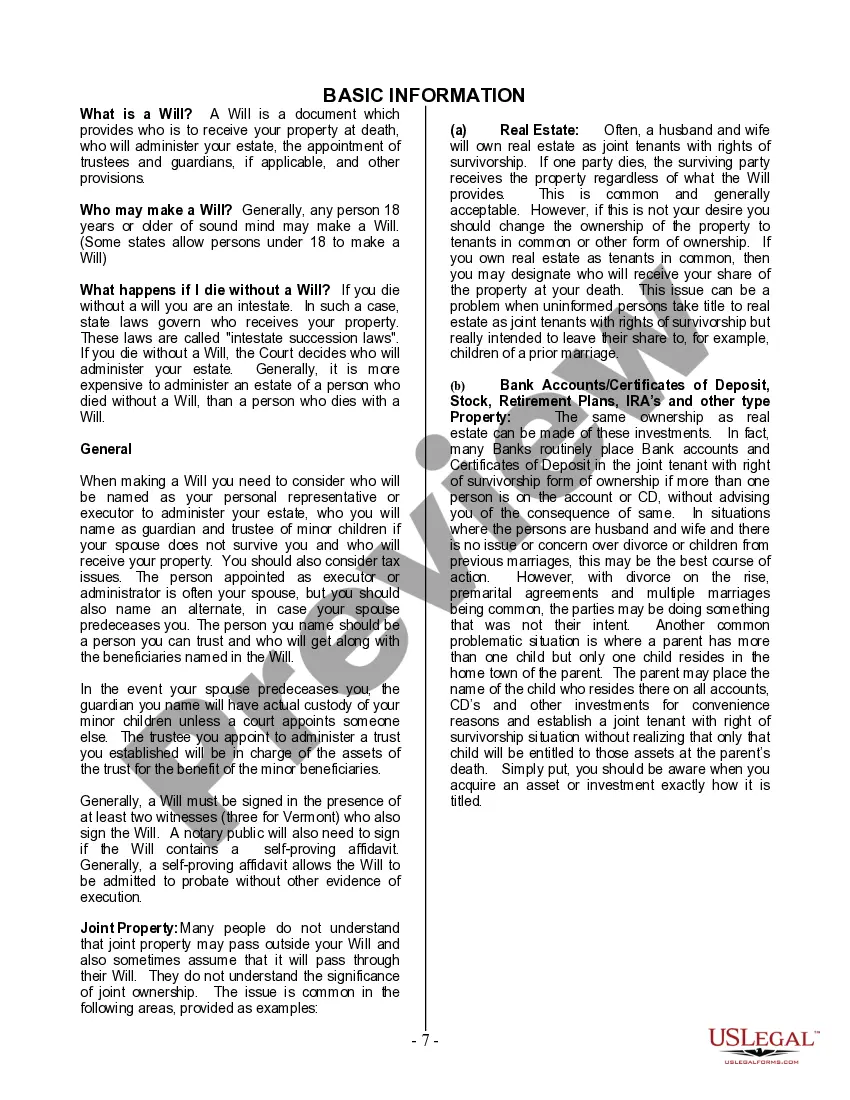
- Failing to have a properly executed will may result in a court determining asset distribution according to intestate succession laws.
Key takeaways
- A Last Will and Testament is essential for married individuals with children from previous marriages.
- This form ensures that your estate is managed according to your specific wishes.
- Proper execution, including witnessing and notarization, is critical for legal validity.
- It is advisable to review and update your will regularly to reflect any life changes.
Looking for another form?
Form popularity
FAQ
No, in New Hampshire, you do not need to notarize your will to make it legal.A self-proving will speeds up probate because the court can accept the will without contacting the witnesses who signed it.
In most situations, a will template is an easy and inexpensive way to make sure your wishes are known and carried out. Most people can get everything they need by using a will template, with little cost or hassle.
Yes, people can write their own wills in New Hampshire.For instance, the will must be in writing, signed by the person whose will it is, and signed by two or more credible witnesses who must swear that the person's signature is genuine. The court does not provide standard forms for writing a will.
A will doesn't have to be notarized to be valid. But in most states, you'll want to add a self-proving affidavit to your will, which must be signed by your witnesses and notarized.If you sign your will in a lawyer's office, the lawyer will provide a notary public.
In New Hampshire, you can make a living trust to avoid probate for virtually any asset you ownreal estate, bank accounts, vehicles, and so on. You need to create a trust document (it's similar to a will), naming someone to take over as trustee after your death (called a successor trustee).
Create the initial document. Start by titling the document Last Will and Testament" and including your full legal name and address. Designate an executor. Appoint a guardian. Name the beneficiaries. Designate the assets. Ask witnesses to sign your will. Store your will in a safe place.
A simple will costs between $200-$400 and a trust from $2,000 upwards, depending on how complex it is. High-profile family feuds over money are notorious and New Hampshire has been at the center of at least two of them.
Enter the full name of each beneficiary. Provide a Physical Address for each. Beneficiary's relationship to the testator. Provide the last four digits of each beneficiary's Social Security Number. Provide a list of any property being bequeathed to each selected beneficiary.