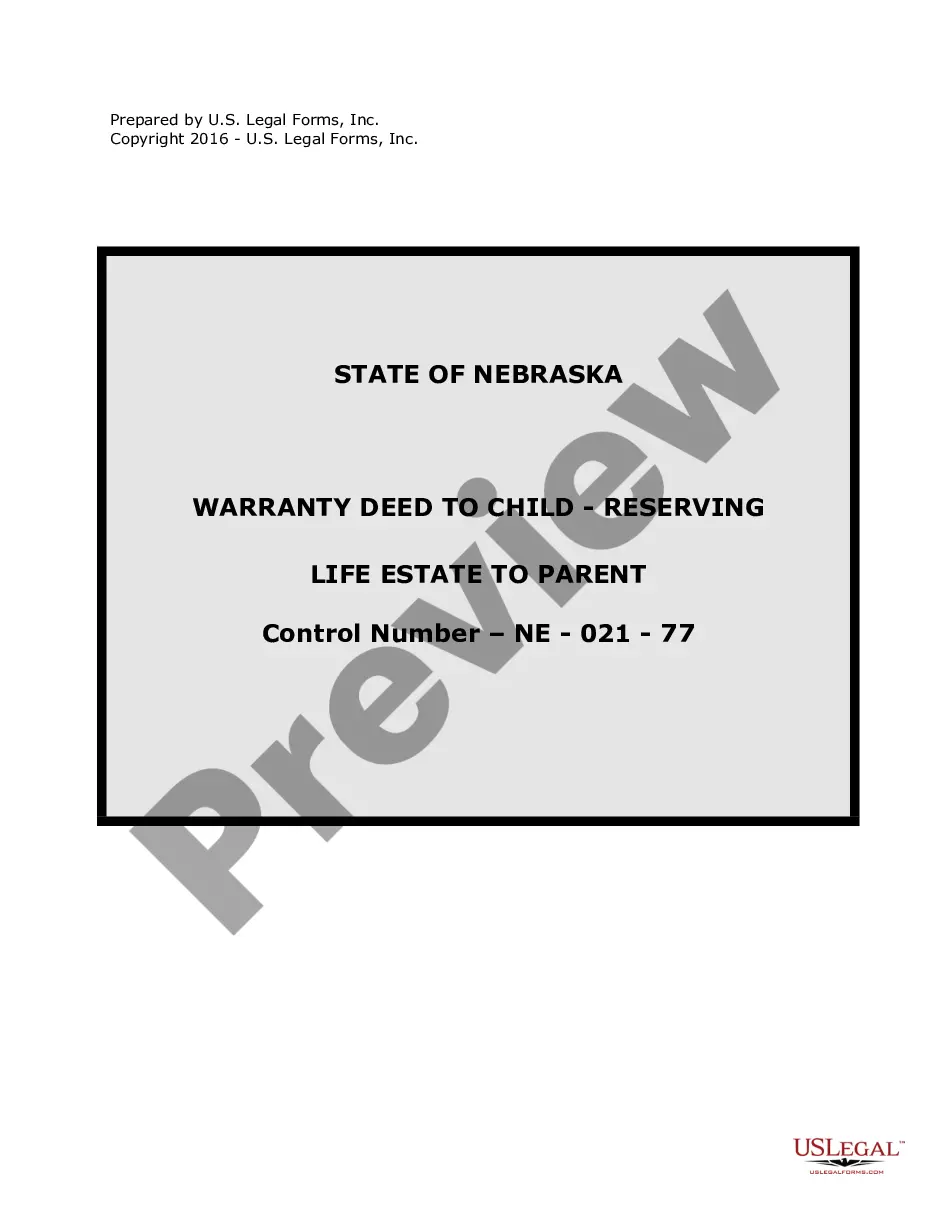
Nebraska Warranty Deed to Child Reserving a Life Estate in the Parents

What is this form?
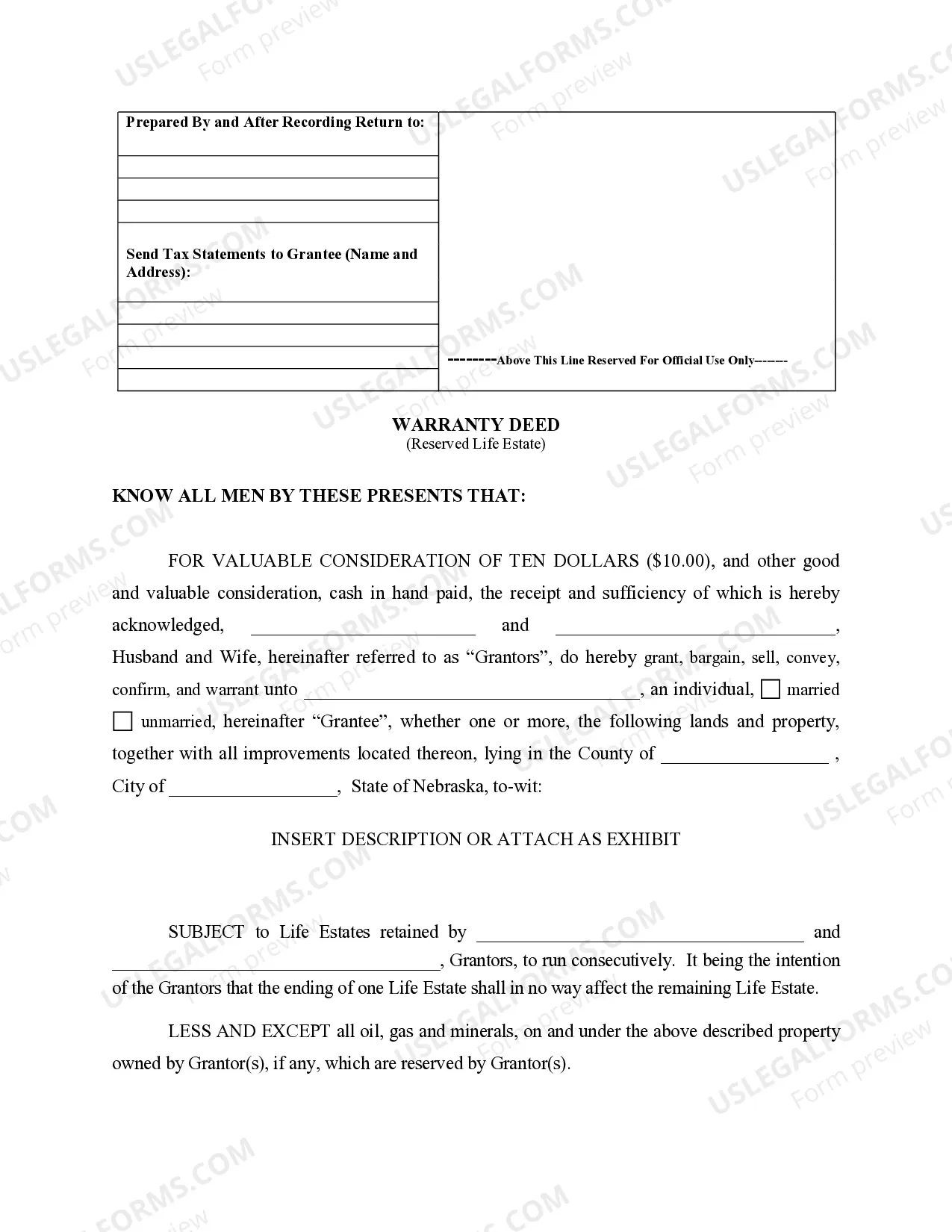
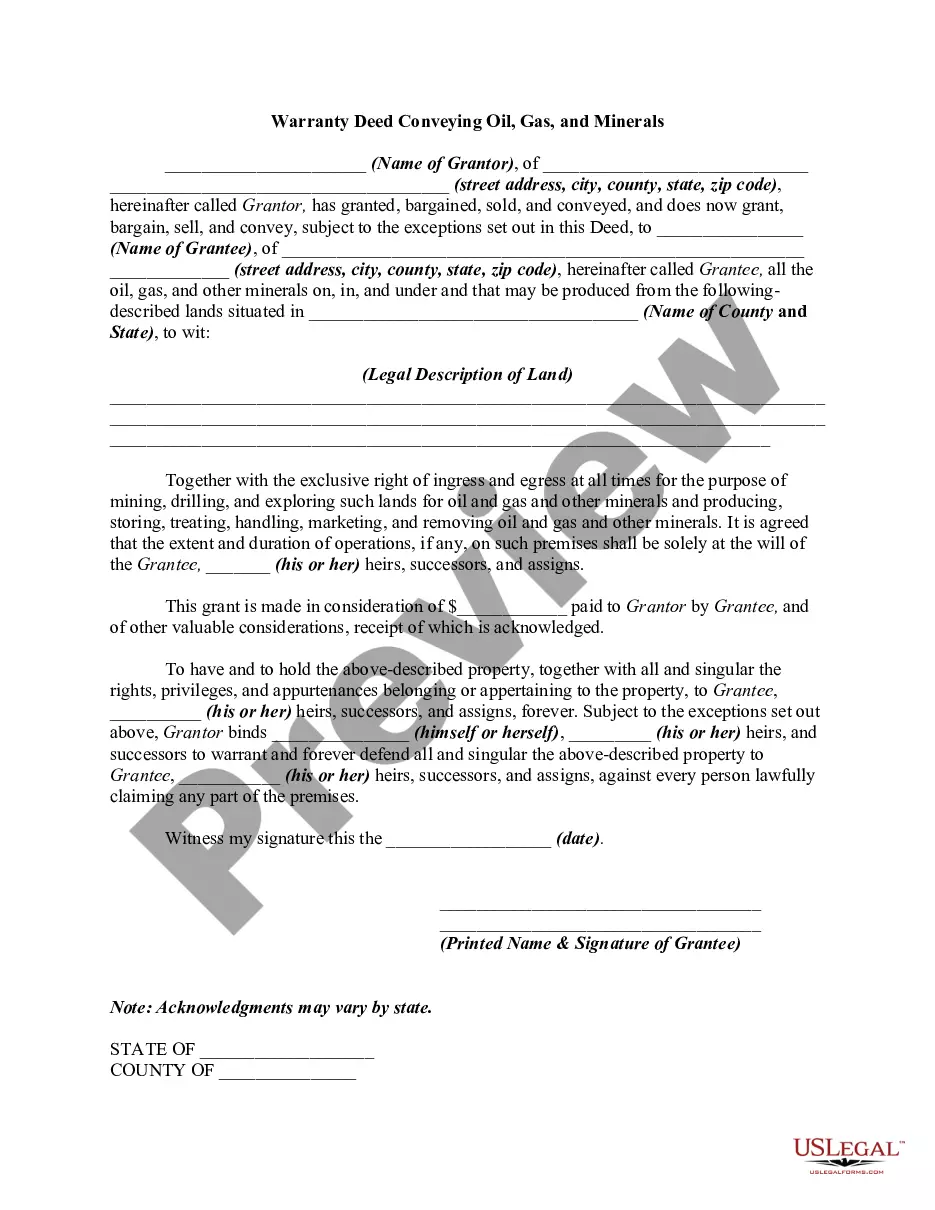
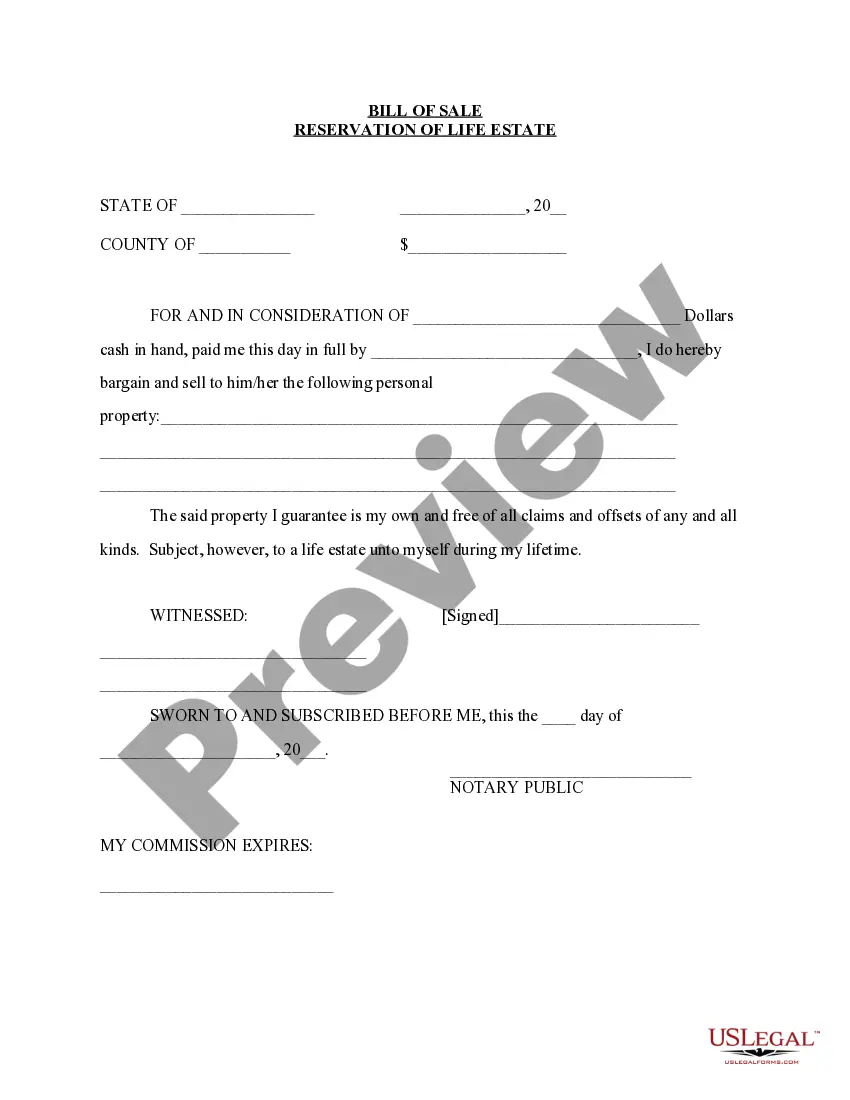
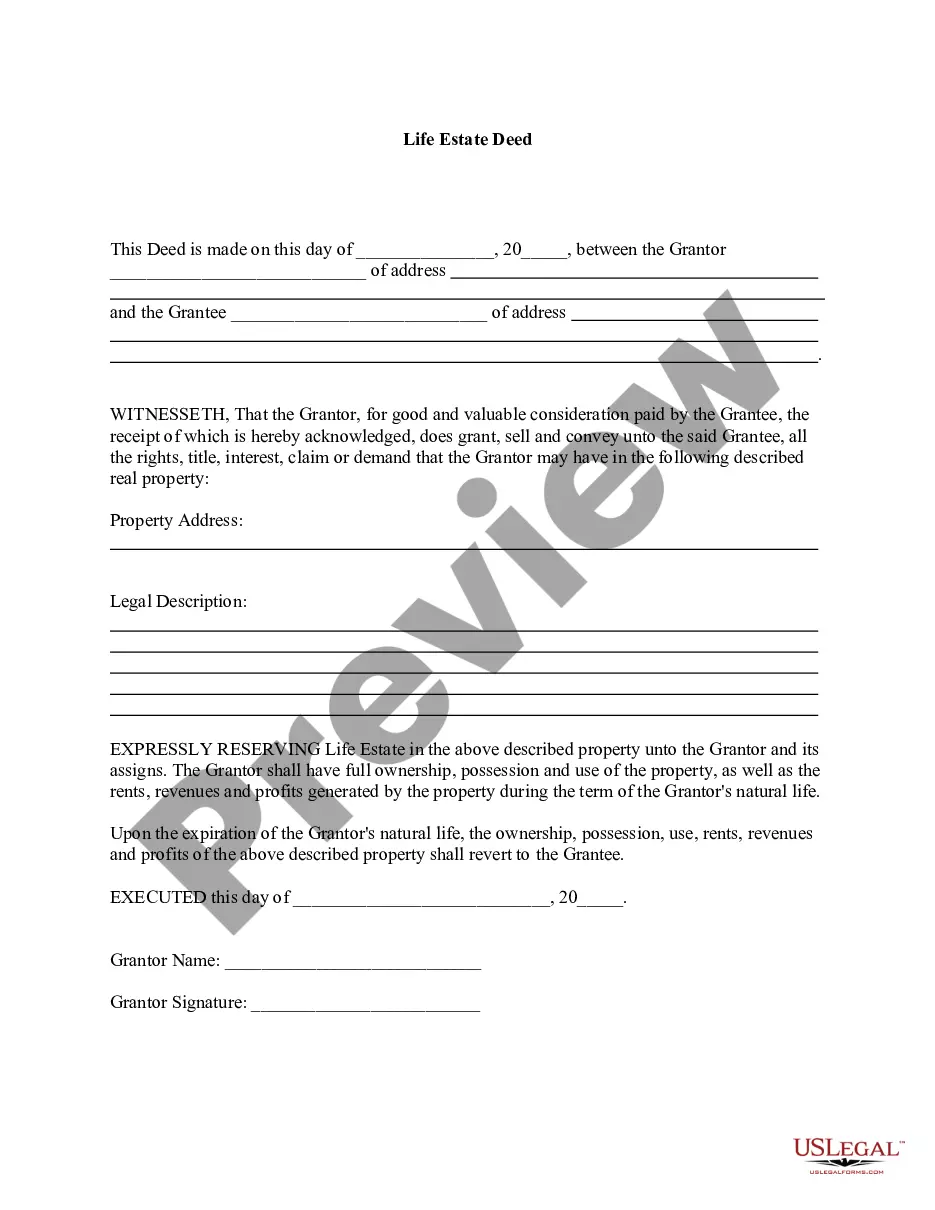
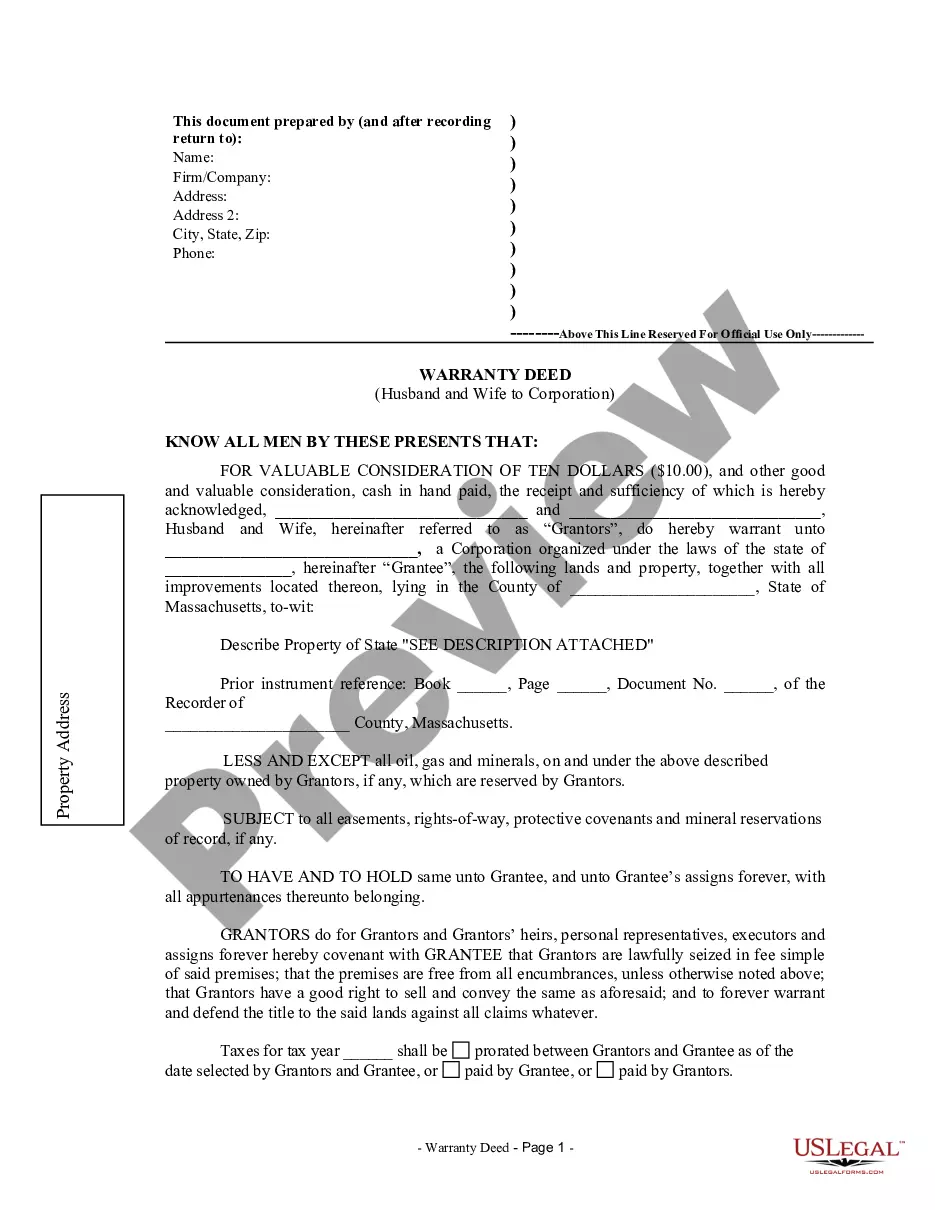
The Warranty Deed to Child Reserving a Life Estate in the Parents is a legal document that allows parents to transfer property ownership to their child while retaining a life estate. This means the parents can continue to use and benefit from the property during their lifetime, while the child becomes the legal owner. This form differs from other property transfer documents, like a simple quitclaim deed, as it specifically addresses the life estate component, ensuring that the parents maintain certain rights to the property after the transfer.
Main sections of this form
- Identification of the Grantors (parents) and Grantee (child).
- Legal description of the property being transferred.
- Specification of the life estate being reserved by the Grantors.
- Clear statement regarding any mineral rights or reservations.
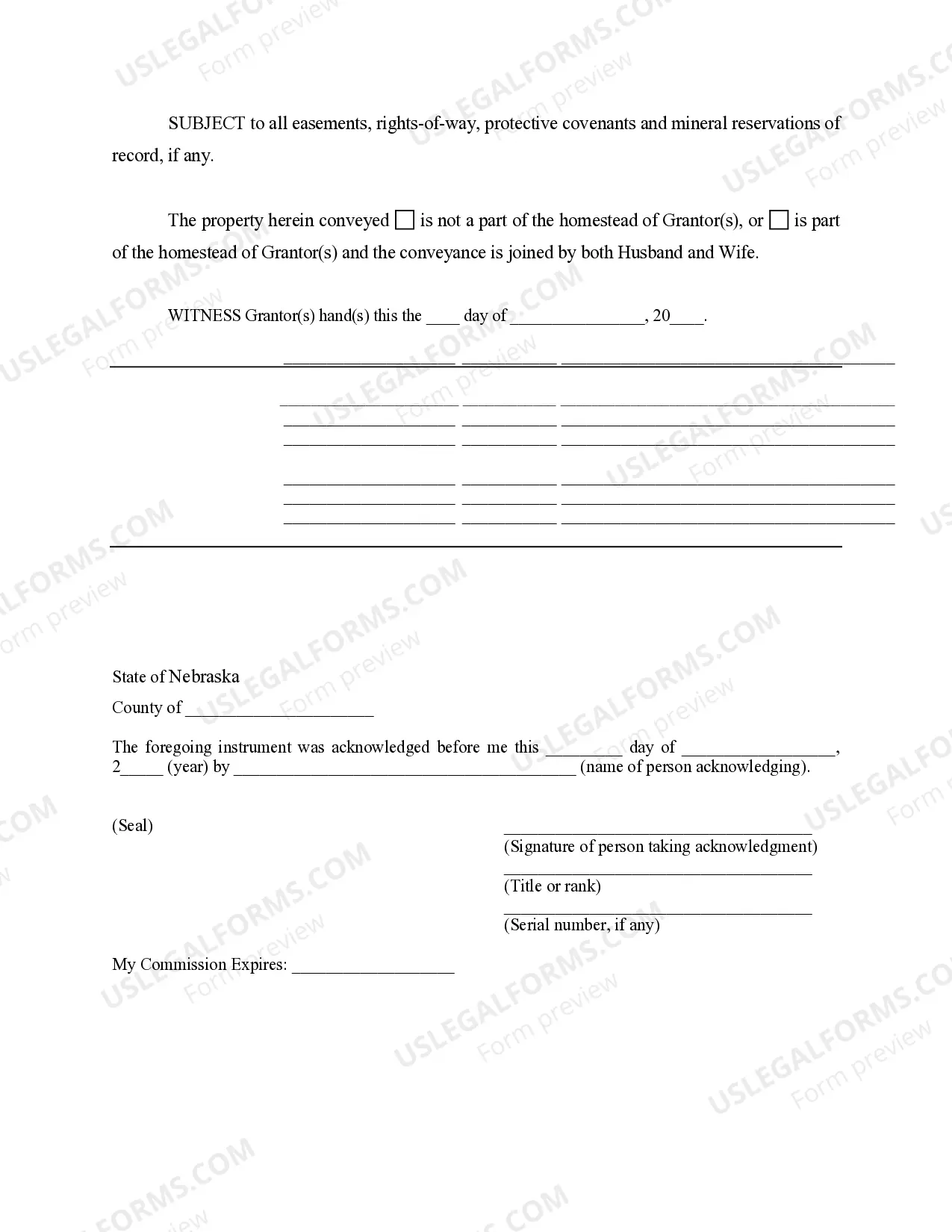
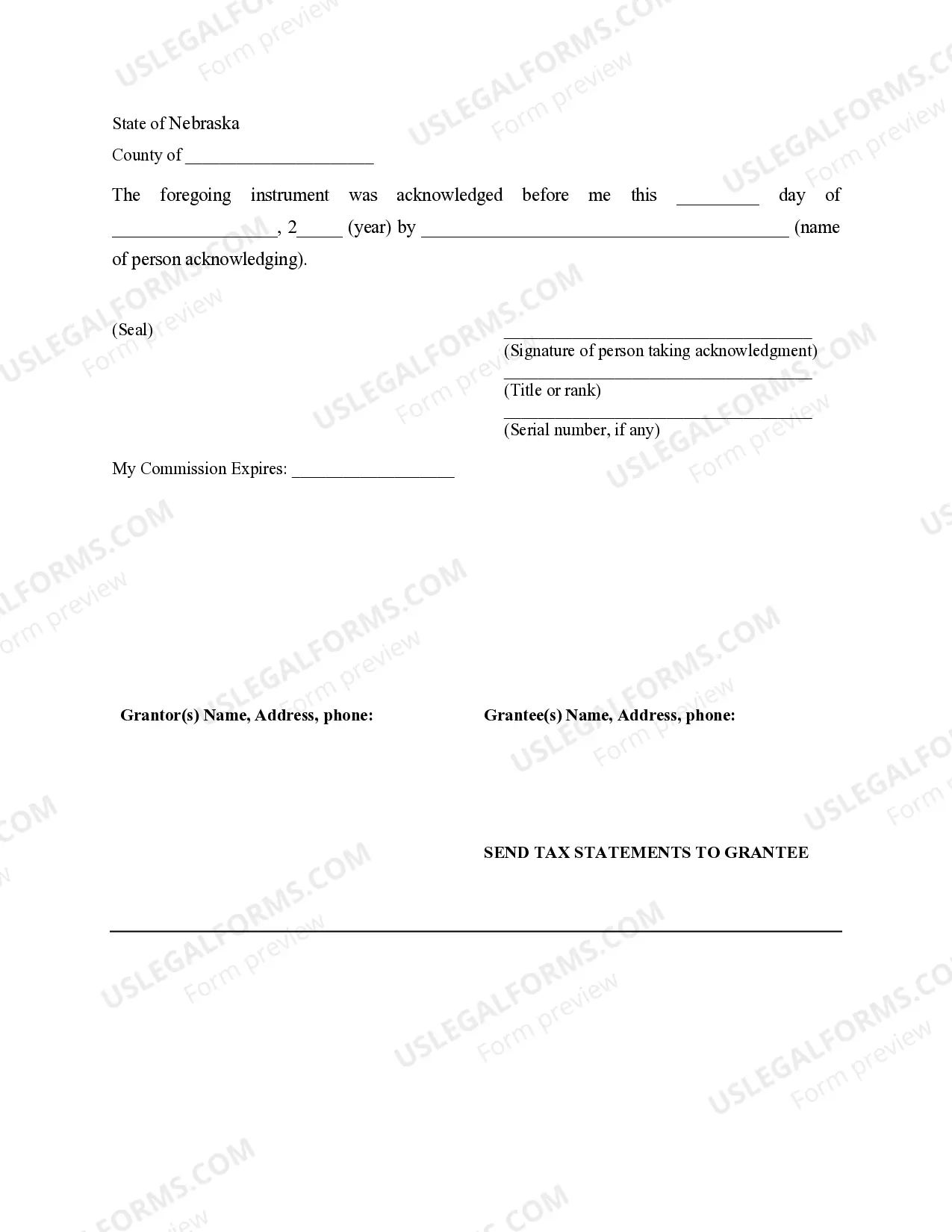
- Signatures and notarization requirements to validate the deed.

When to use this document
This form should be used when parents wish to transfer property to their child while retaining the right to live on or use the property for the remainder of their lives. This situation often arises during estate planning to ensure the property stays within the family while allowing parents to maintain control over it as they age. It is also beneficial for tax planning and asset protection purposes.
Intended users of this form
This form is intended for:
- Homeowners who wish to transfer their property to their child while reserving their rights.
- Parents considering estate planning options to ensure family asset continuity.
- Individuals who want to avoid probate complications by transferring property before death.
Steps to complete this form
- Identify the Grantors (parents) and the Grantee (child) by entering their full names.
- Provide the complete legal description of the property being transferred.
- Specify the details of the life estate being reserved for the parents.
- Enter the date of the transfer and provide signatures for both Grantors.
- Ensure the deed is notarized, confirming the identities of the Grantors and their consent.
Notarization guidance
Yes, this form must be notarized to be legally valid. Proper notarization ensures that the identities of the Grantors are verified, and their signatures are authentic. US Legal Forms offers integrated online notarization, providing a secure and convenient way to complete this process through video calls.
Get your form ready online
Our built-in tools help you complete, sign, share, and store your documents in one place.
Make edits, fill in missing information, and update formatting in US Legal Forms—just like you would in MS Word.
Download a copy, print it, send it by email, or mail it via USPS—whatever works best for your next step.
Sign and collect signatures with our SignNow integration. Send to multiple recipients, set reminders, and more. Go Premium to unlock E-Sign.
If this form requires notarization, complete it online through a secure video call—no need to meet a notary in person or wait for an appointment.
We protect your documents and personal data by following strict security and privacy standards.

Make edits, fill in missing information, and update formatting in US Legal Forms—just like you would in MS Word.

Download a copy, print it, send it by email, or mail it via USPS—whatever works best for your next step.

Sign and collect signatures with our SignNow integration. Send to multiple recipients, set reminders, and more. Go Premium to unlock E-Sign.

If this form requires notarization, complete it online through a secure video call—no need to meet a notary in person or wait for an appointment.

We protect your documents and personal data by following strict security and privacy standards.
Mistakes to watch out for
- Failing to accurately describe the property can lead to legal issues.
- Not specifying the terms of the life estate correctly.
- Neglecting to have the deed notarized, which is essential for its validity.
Benefits of using this form online
- Convenient access and the ability to complete the form anytime.
- Edit and customize the form to fit specific needs easily.
- Reliable templates created by licensed attorneys ensuring legal compliance.
Legal use & context
- This form effectively transfers property ownership while reserving a life estate for the grantors.
- It is legally enforceable in Nebraska as per state property laws.
- The life estate reserved creates a legally protected interest for the grantors until their death.
Key takeaways
- The Warranty Deed to Child Reserving a Life Estate allows parents to transfer property while retaining rights to its use.
- This form is tailored for estate planning and keeps property within the family.
- Accurate completion and notarization are crucial for the deed's legal effect.
Looking for another form?
Form popularity
FAQ
Owners of real estate sometimes transfer such property to their children while retaining the right to live in the property for the rest of their lives.
To accomplish this, you need to have the life estate deed that shows you have the right to own the property after the life estate holder dies. Using the information in this deed, along with the deceased's death certificate, you can prepare and record the required title transfer document to clear title.
Borrowing Against Life Estate If your property is owned by a life estate, you can still borrow against the property. However, you may face additional hurdles at the lender. First, bring in the appropriate documents establishing the life estate, such as your will or the deed to the property.
A person owns property in a life estate only throughout their lifetime. Beneficiaries cannot sell property in a life estate before the beneficiary's death. One benefit of a life estate is that property can pass when the life tenant dies without being part of the tenant's estate.
Can a life estate deed be contested? The answer is YES! The Life estate is an agreeable choice, particularly where there is an advantage in having the life estate revert back to its real owner (Grantor or Life Tenant).
A California Revocable Transfer-On-Death Deed does not take effect until the property owner dies.As long as the original owner is alive, he can revoke the transfer, sell the property, add or remove beneficiaries, and otherwise maintain complete control over the property.
A person owns property in a life estate only throughout their lifetime. Beneficiaries cannot sell property in a life estate before the beneficiary's death. One benefit of a life estate is that property can pass when the life tenant dies without being part of the tenant's estate.
Remainderman Rights and Life Estates Typically, the deed will state that the occupant of property is allowed to use it for the duration of their life. Almost all deeds creating a life estate will also name a remaindermanthe person or persons who get the property when the life tenant dies.
A remainderman may sell his interest in the property, but the buyer would take the property subject to the rights of life tenant.If the life tenant and the remainderman both agree and sign transfer documents, the property can be sold before the life tenant dies.