North Carolina Revocation of Statutory General Power of Attorney
Understanding this form
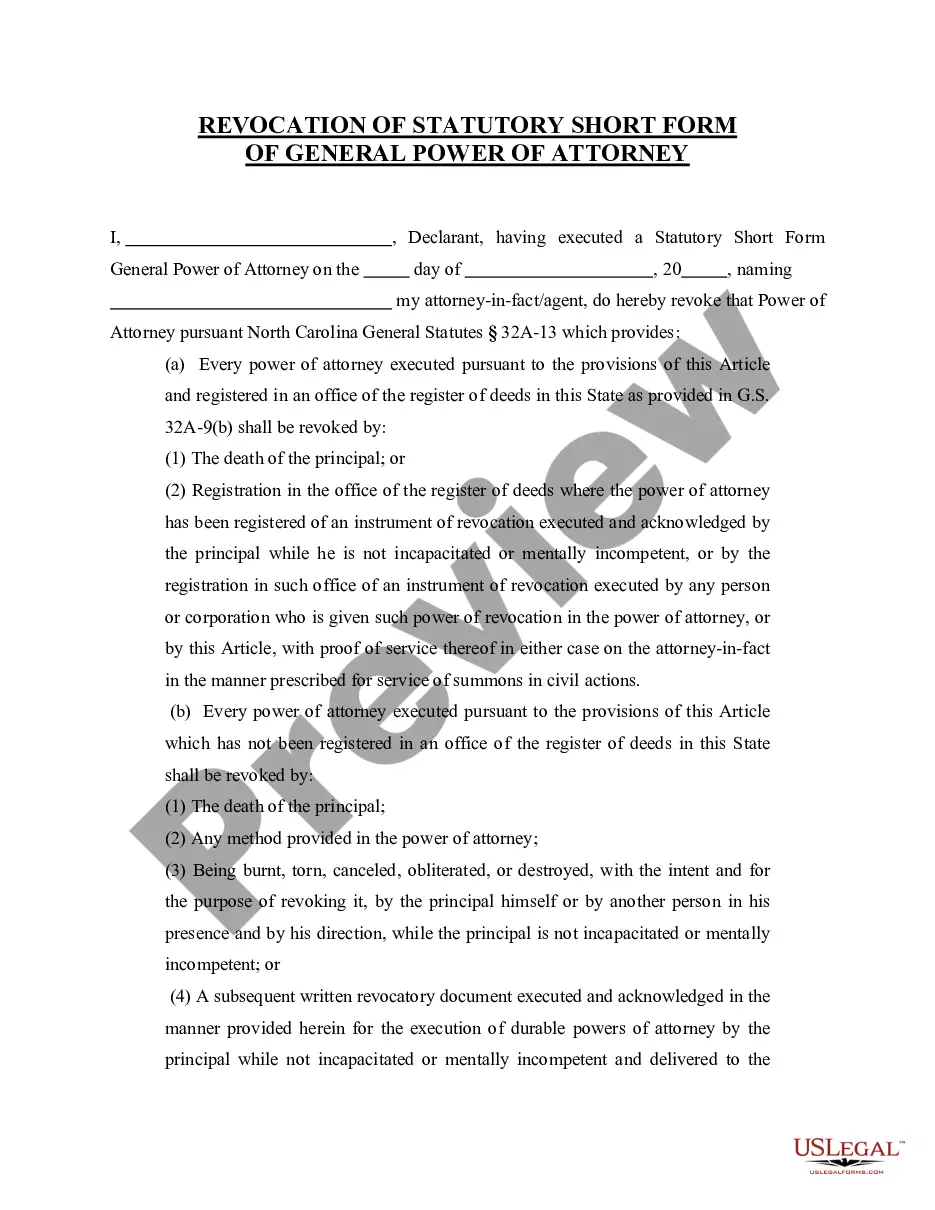
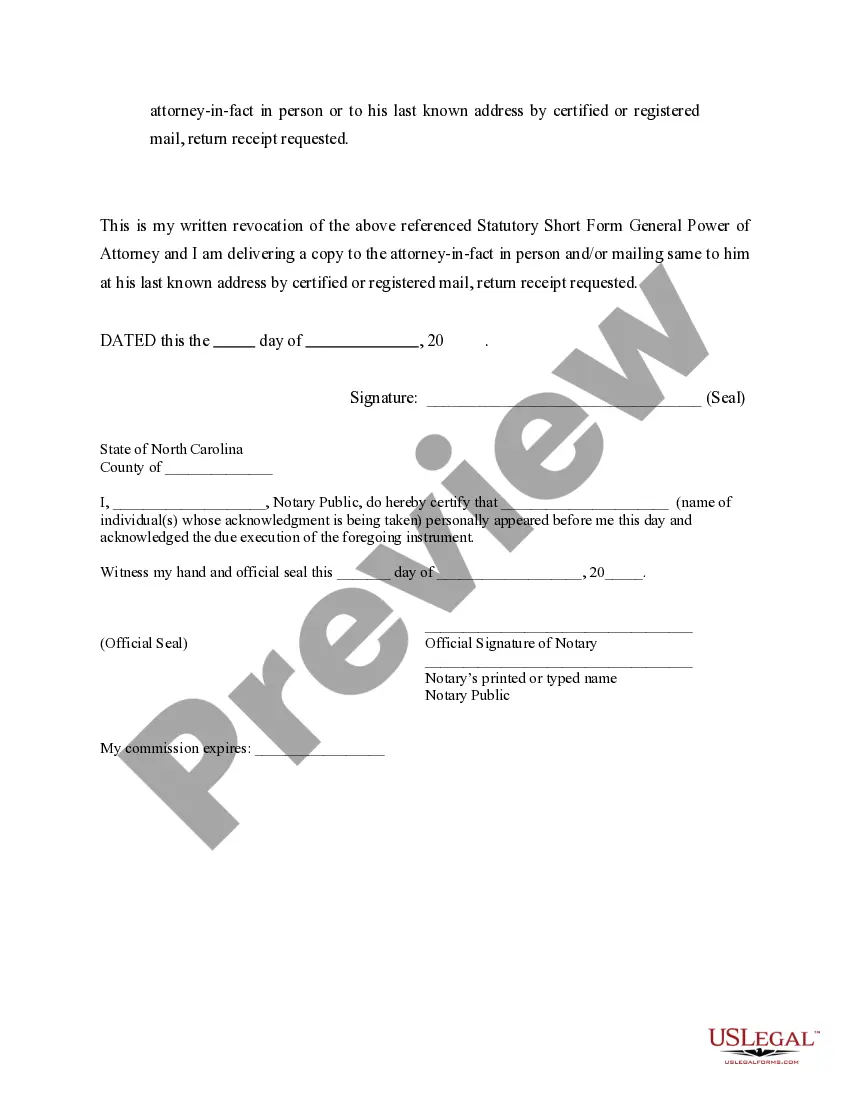
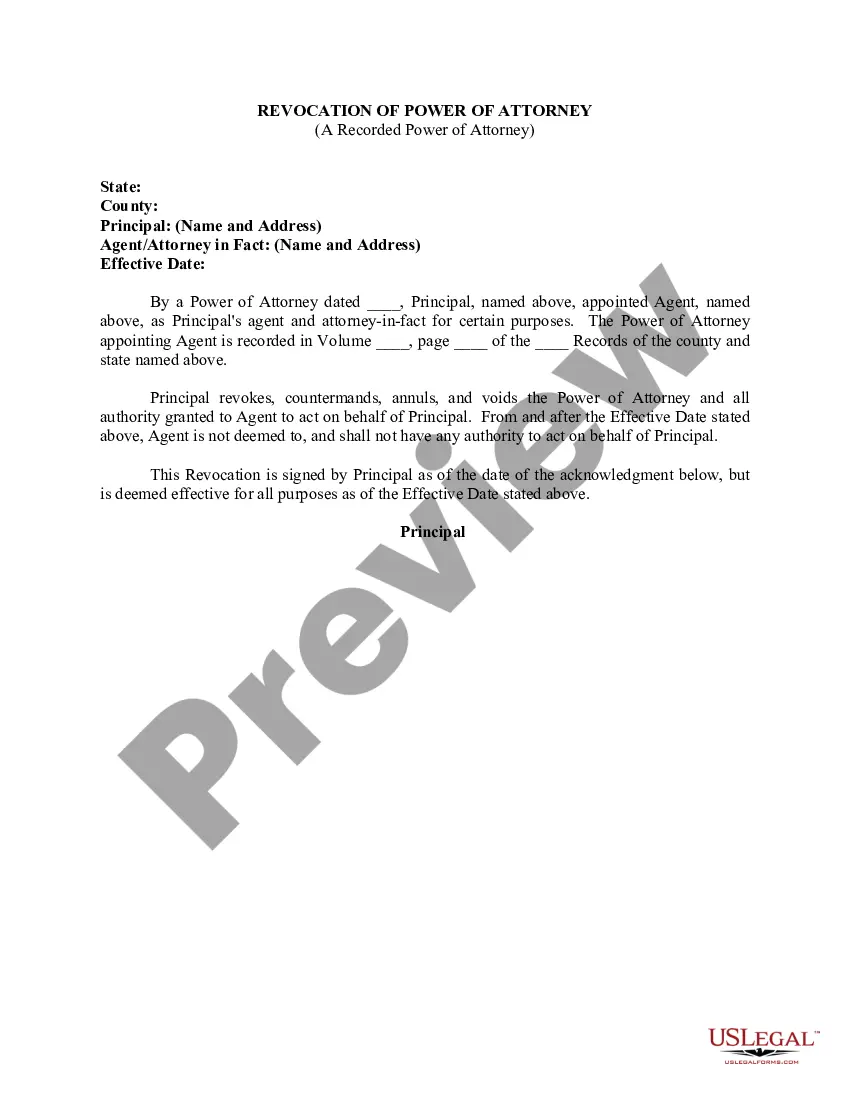
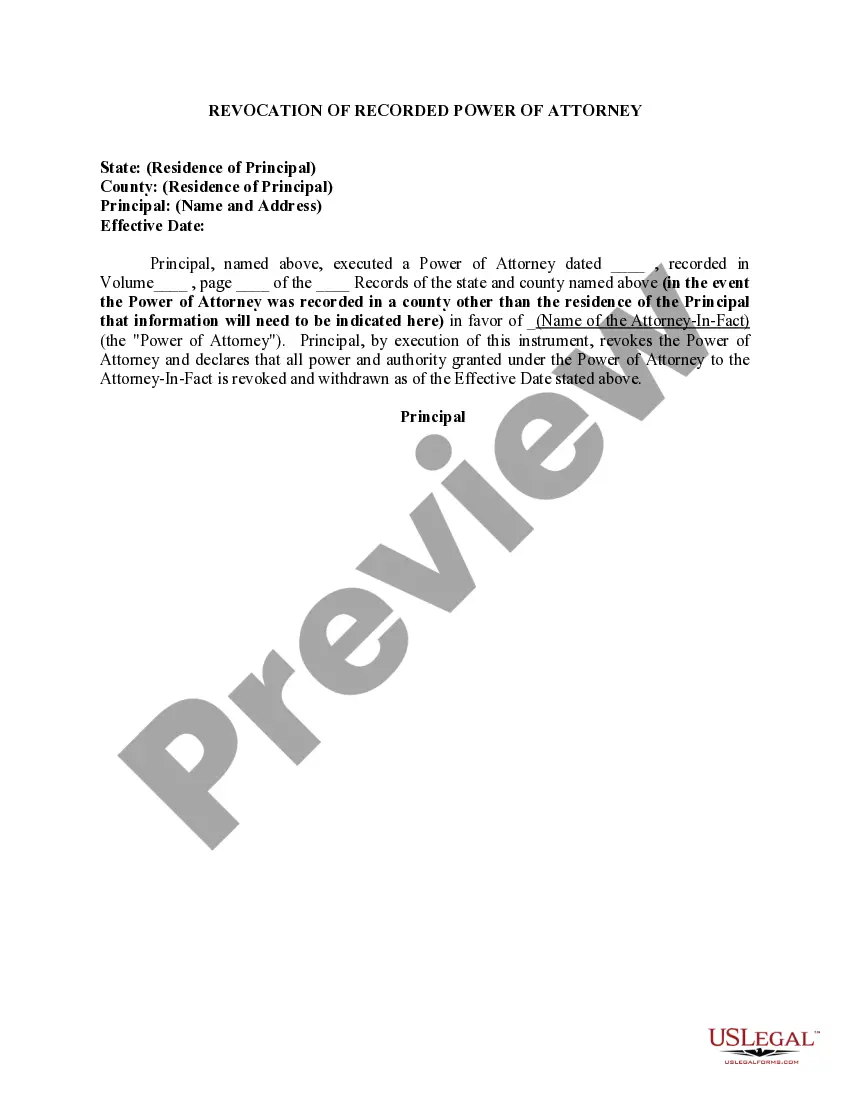
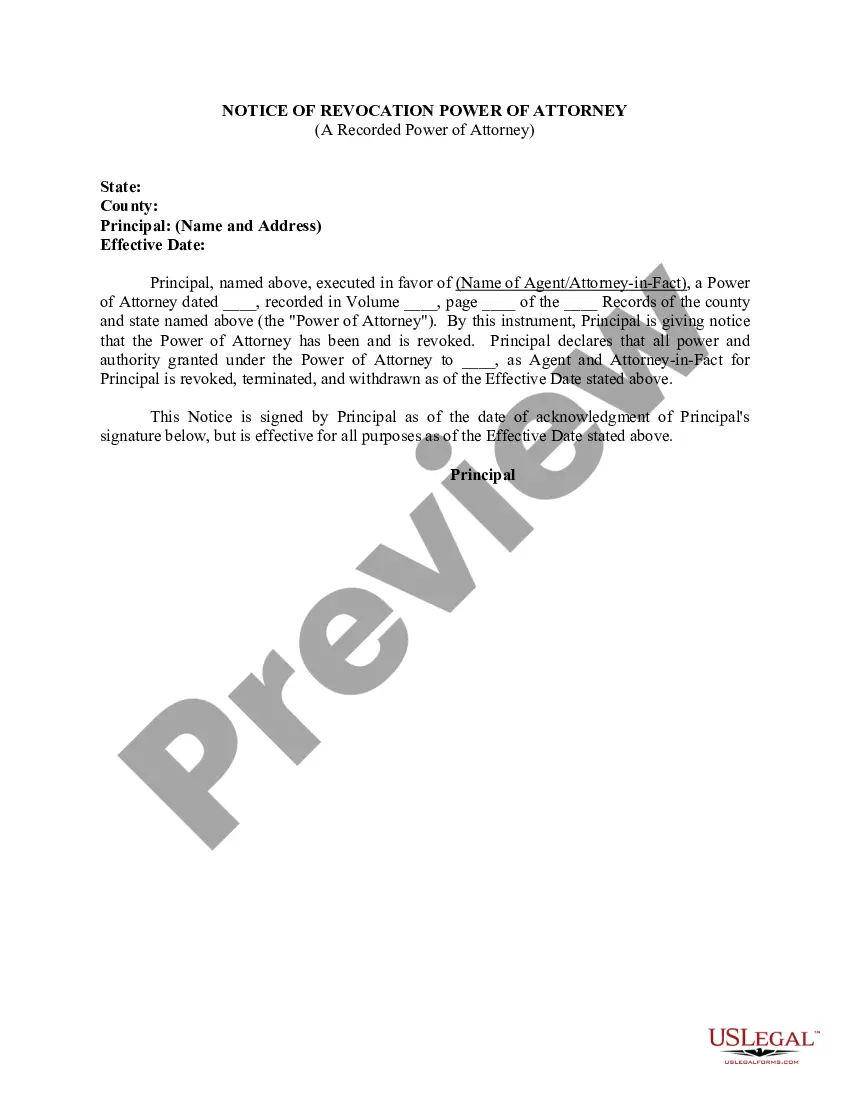
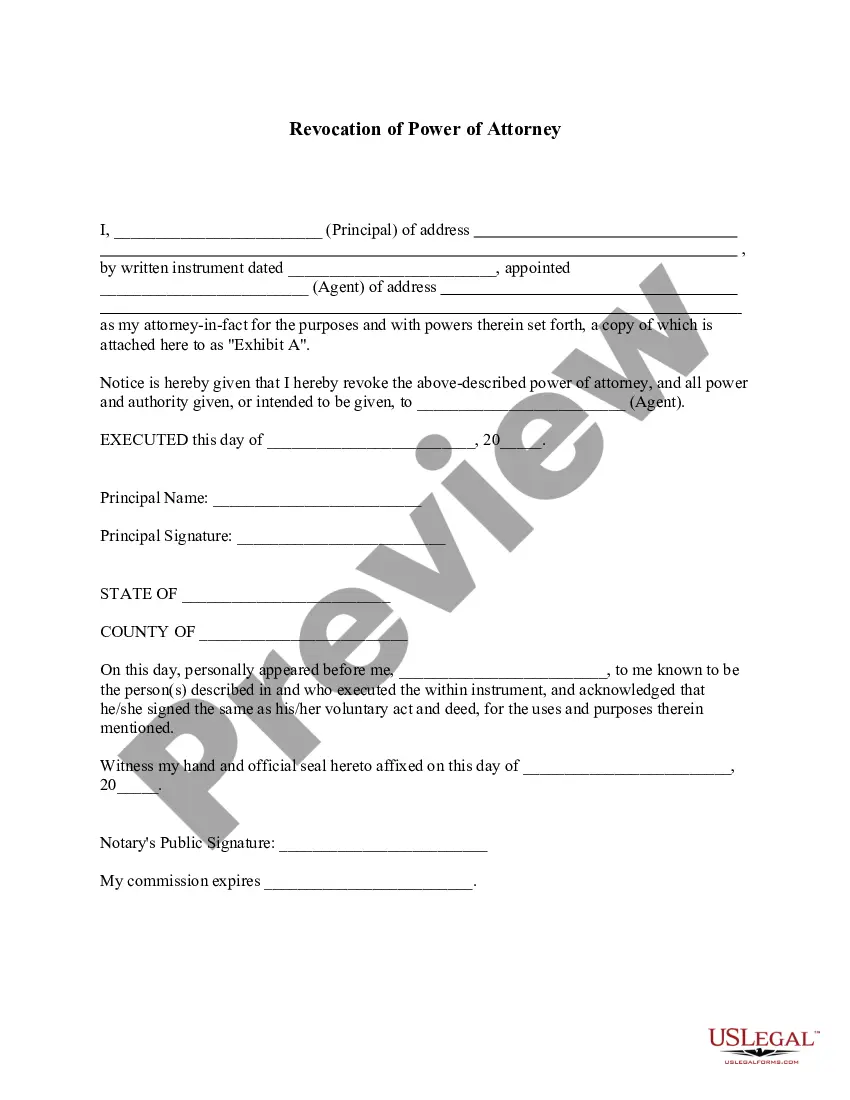
The Revocation of Statutory General Power of Attorney form is used to formally cancel a previously granted power of attorney. This document differs from similar forms in that it explicitly revokes the authority granted to your attorney-in-fact, ensuring that they can no longer make decisions on your behalf regarding property, finances, and business matters. It is crucial for individuals looking to take back control over their legal and financial matters.
Main sections of this form
- Identification of the principal who is revoking the power.
- Declaration that the previous power of attorney is revoked.
- Signature of the principal, which must be notarized.
- Instructions for delivering a copy of the revocation to the attorney-in-fact.
- Proof of service on the attorney-in-fact, as required by law.
Common use cases
This form should be used when you wish to cancel an existing power of attorney that you previously granted. Situations may include a change in relationships, loss of trust in the agent, or if you are regaining the capacity to manage your own affairs. Additionally, if your agent is no longer able to serve due to incapacitation or if you wish to appoint a new agent, this form is essential.
Who should use this form
- Individuals who have previously granted a statutory general power of attorney.
- Principals looking to change or revoke their current attorney-in-fact.
- Anyone wanting to ensure their financial and legal affairs are managed by someone new or directly by themselves.
Instructions for completing this form
- Identify yourself as the principal and provide your details.
- Clearly state that you are revoking the power of attorney.
- Sign the document in the presence of a notary public.
- Make copies for yourself and the attorney-in-fact.
- Notify the attorney-in-fact of the revocation either in person or by mail.
Notarization guidance
To make this form legally binding, it must be notarized. Our online notarization service, powered by Notarize, lets you verify and sign documents remotely through an encrypted video session.
Get your form ready online
Our built-in tools help you complete, sign, share, and store your documents in one place.
Make edits, fill in missing information, and update formatting in US Legal Forms—just like you would in MS Word.
Download a copy, print it, send it by email, or mail it via USPS—whatever works best for your next step.
Sign and collect signatures with our SignNow integration. Send to multiple recipients, set reminders, and more. Go Premium to unlock E-Sign.
If this form requires notarization, complete it online through a secure video call—no need to meet a notary in person or wait for an appointment.
We protect your documents and personal data by following strict security and privacy standards.

Make edits, fill in missing information, and update formatting in US Legal Forms—just like you would in MS Word.

Download a copy, print it, send it by email, or mail it via USPS—whatever works best for your next step.

Sign and collect signatures with our SignNow integration. Send to multiple recipients, set reminders, and more. Go Premium to unlock E-Sign.

If this form requires notarization, complete it online through a secure video call—no need to meet a notary in person or wait for an appointment.

We protect your documents and personal data by following strict security and privacy standards.
Avoid these common issues
- Failing to have the form notarized, which can render it invalid.
- Not keeping a copy of the revocation for personal records.
- Neglecting to notify the attorney-in-fact after completing the revocation.
- Using outdated forms that may not comply with current laws.
Benefits of completing this form online
- Convenient access to legal forms without the need for in-person appointments.
- Edit and customize the form to meet your specific needs.
- Reliable templates drafted by licensed attorneys, ensuring legal accuracy.
Quick recap
- The Revocation of Statutory General Power of Attorney cancels the authority of the agent.
- This form must be notarized to be legally binding.
- Delivery of the revocation to the attorney-in-fact is critical to ensure they are aware of the change.
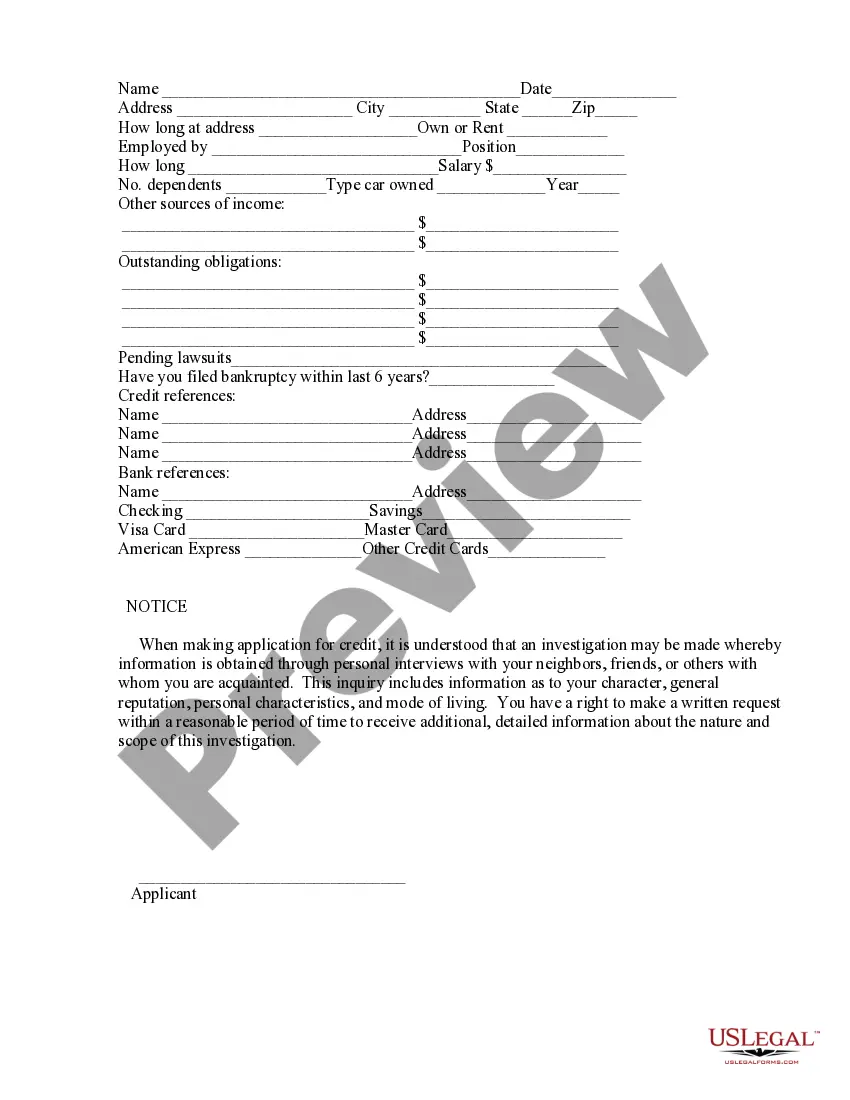
Looking for another form?
Form popularity
FAQ
The revocation should include your name, a statement that you are of sound mind, and your wish to revoke the power of attorney. You should also specify the date the original power of attorney was executed and the person selected as your agent.
This means that although a power of attorney can be revoked verbally, by the principal telling the attorney that their power has been revoked, it is important that the principal revokes a power of attorney in writing by completing a Revocation of Power of Attorney and providing it to the attorney so that there is a
Revoke Your Current Power of Attorney. To change or cancel your current power of attorney, you should complete a formal, written revocation. Notify Your Power of Attorney. Once you complete your revocation, notify your agent of the cancellation in writing. Notify Relevant Third Parties. Execute a New Power of Attorney.
A Power of Attorney shall not be deemed to be an irrevocable one merely because it states, in the clauses of the deed executed for grant of such Power of Attorney, of it being irrevocable. Such Power of Attorney may be revoked by the principal or the Power of Attorney holder by the procedure according to law.
Write "REVOKE" across the top of the form. If you do not have a copy of the power of attorney you want to revoke, submit a statement revoking the power of attorney. The statement must indicate that the authority of the power of attorney is revoked and must be signed by the taxpayer.
Using this Power of Attorney form template available for download below, you will be able to create a Power of Attorney document for yourself.In such cases, an agent is appointed to sign legal or financial documents on the principal's behalf.
A. A power of attorney must always be signed in front of a notary public. If you wish, it can be recorded at the county register of deeds office in North Carolina where it is to be used.As a general rule, however, a power of attorney does not need to be recorded in North Carolina in order to be effective.
You must be at least 18 years of age, mentally competent, and have capacity when the durable power of attorney is signed. North Carolina law states that a durable power of attorney must be registered at your local county office of the register of deeds to be effective after your incapacity.
Power of Attorney broadly refers to one's authority to act and make decisions on behalf of another person in all or specified financial or legal matters.Durable POA is a specific kind of power of attorney that remains in effect even after the represented party becomes mentally incapacitated.