North Carolina Child Support Guidelines
Description

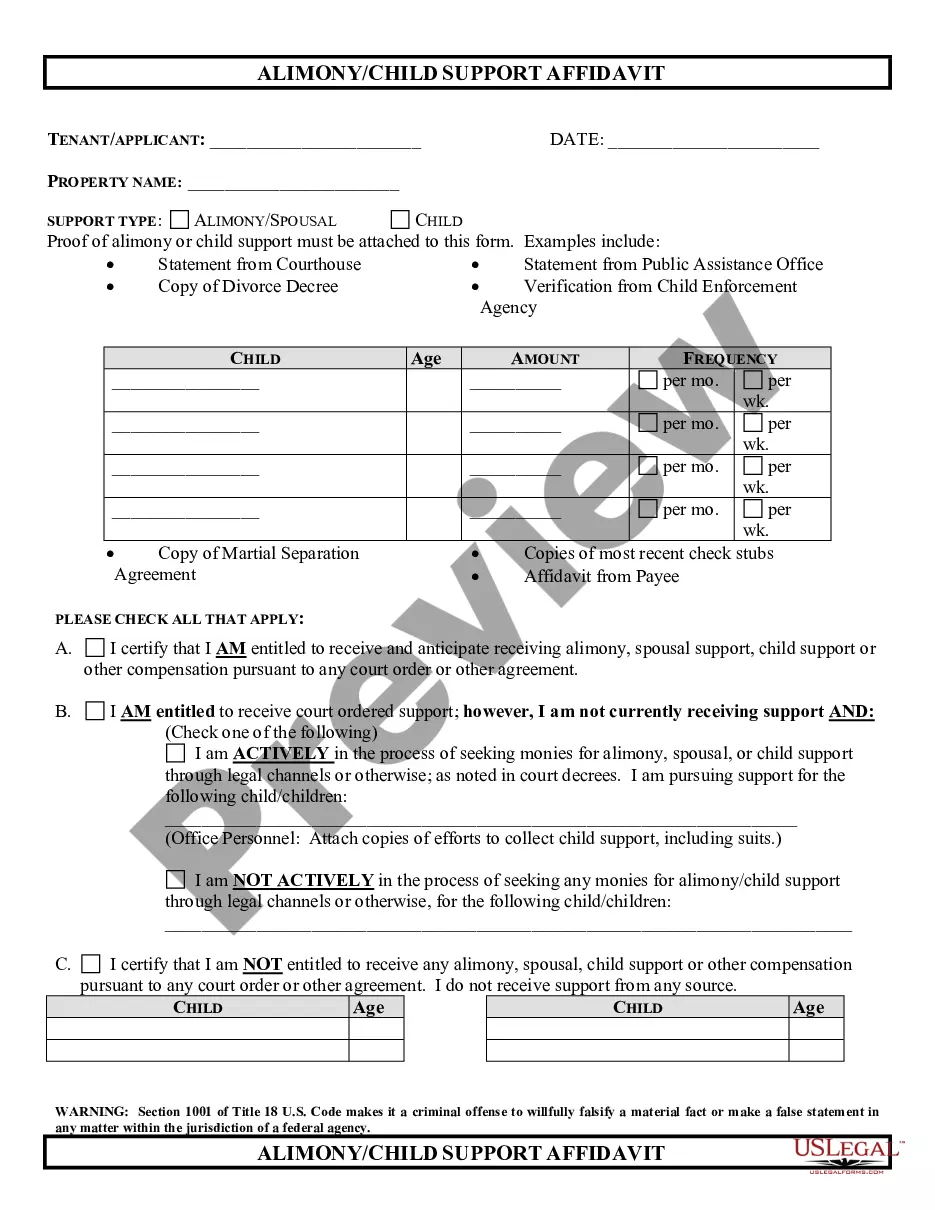
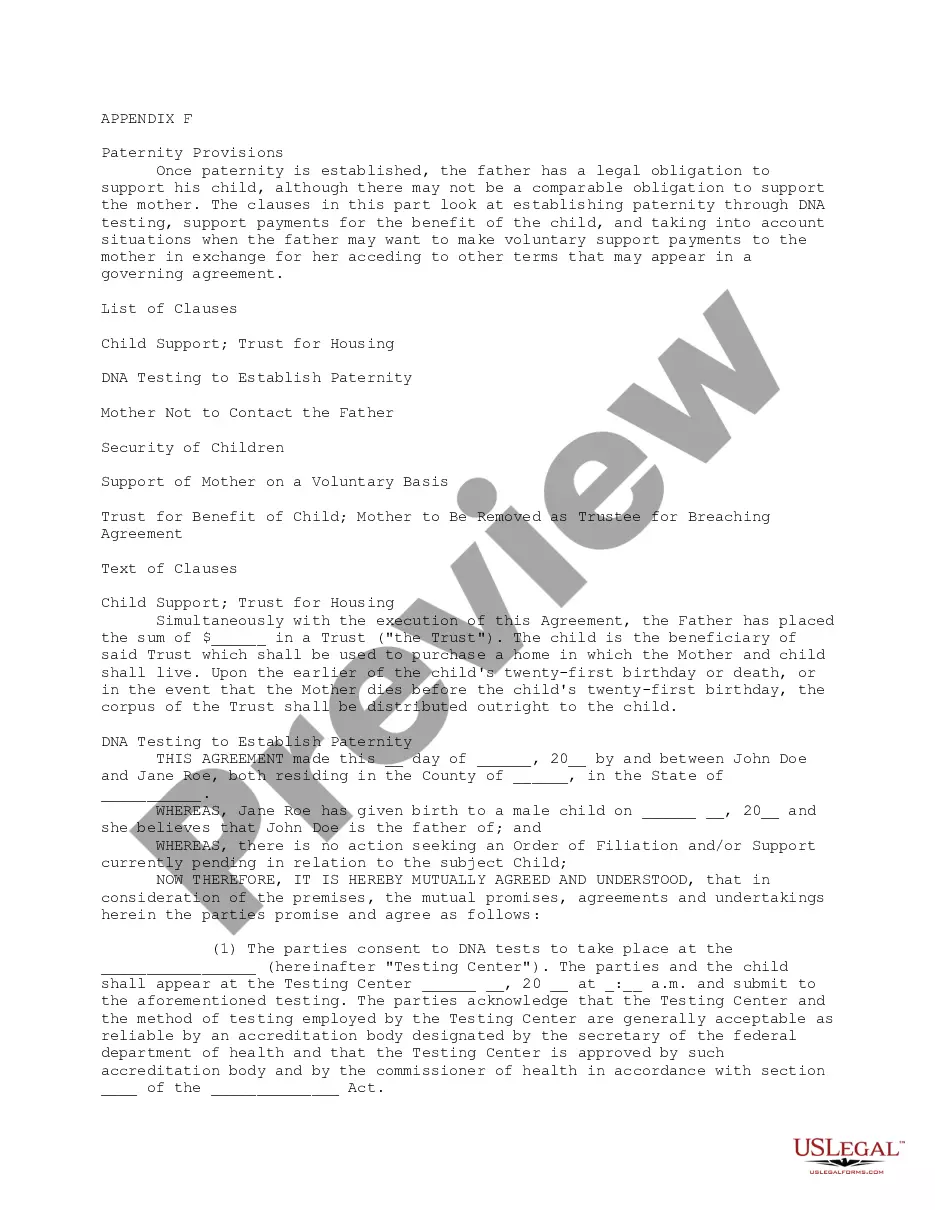
Get your form ready online
Our built-in tools help you complete, sign, share, and store your documents in one place.
Make edits, fill in missing information, and update formatting in US Legal Forms—just like you would in MS Word.
Download a copy, print it, send it by email, or mail it via USPS—whatever works best for your next step.
Sign and collect signatures with our SignNow integration. Send to multiple recipients, set reminders, and more. Go Premium to unlock E-Sign.
If this form requires notarization, complete it online through a secure video call—no need to meet a notary in person or wait for an appointment.
We protect your documents and personal data by following strict security and privacy standards.

Make edits, fill in missing information, and update formatting in US Legal Forms—just like you would in MS Word.

Download a copy, print it, send it by email, or mail it via USPS—whatever works best for your next step.

Sign and collect signatures with our SignNow integration. Send to multiple recipients, set reminders, and more. Go Premium to unlock E-Sign.

If this form requires notarization, complete it online through a secure video call—no need to meet a notary in person or wait for an appointment.

We protect your documents and personal data by following strict security and privacy standards.
Looking for another form?

Key Concepts & Definitions
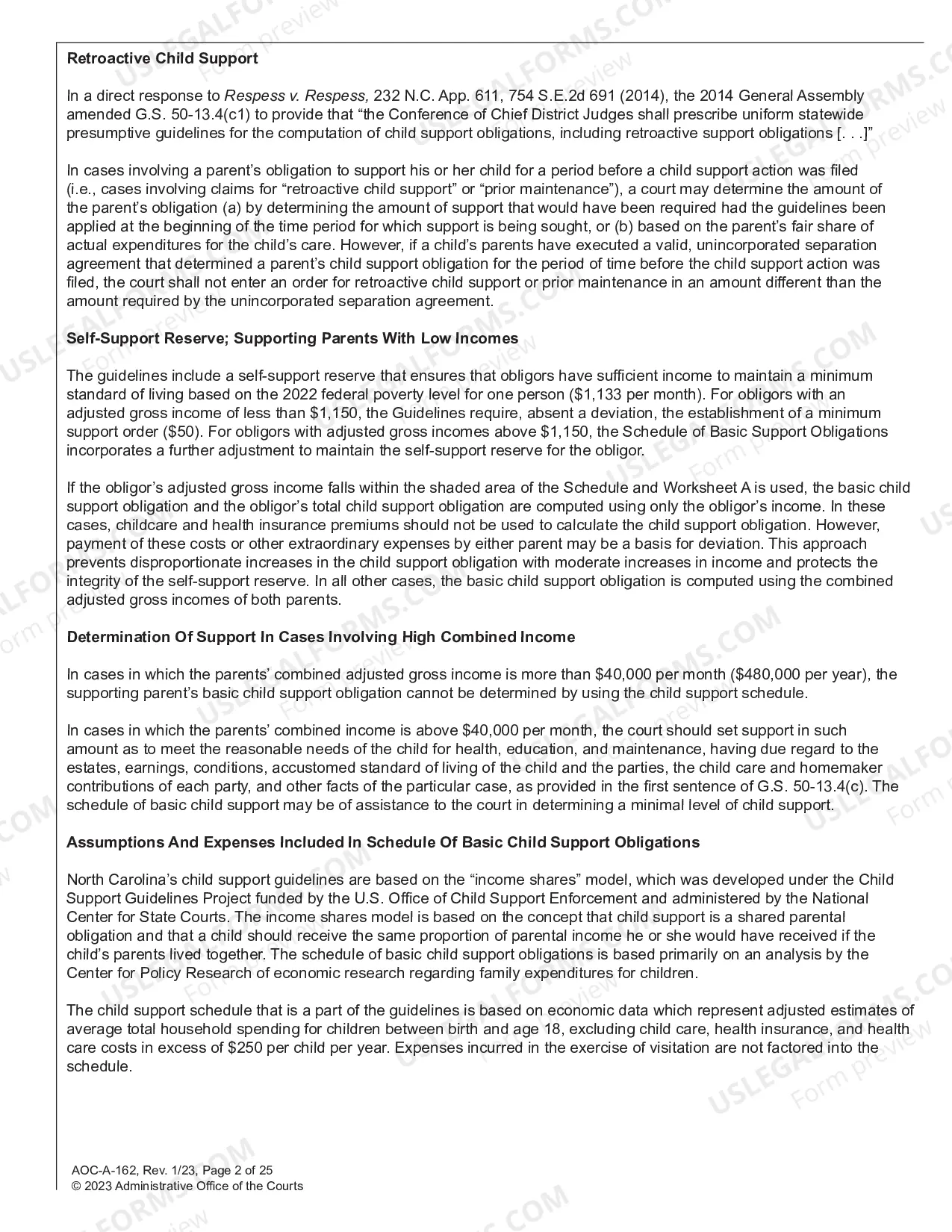
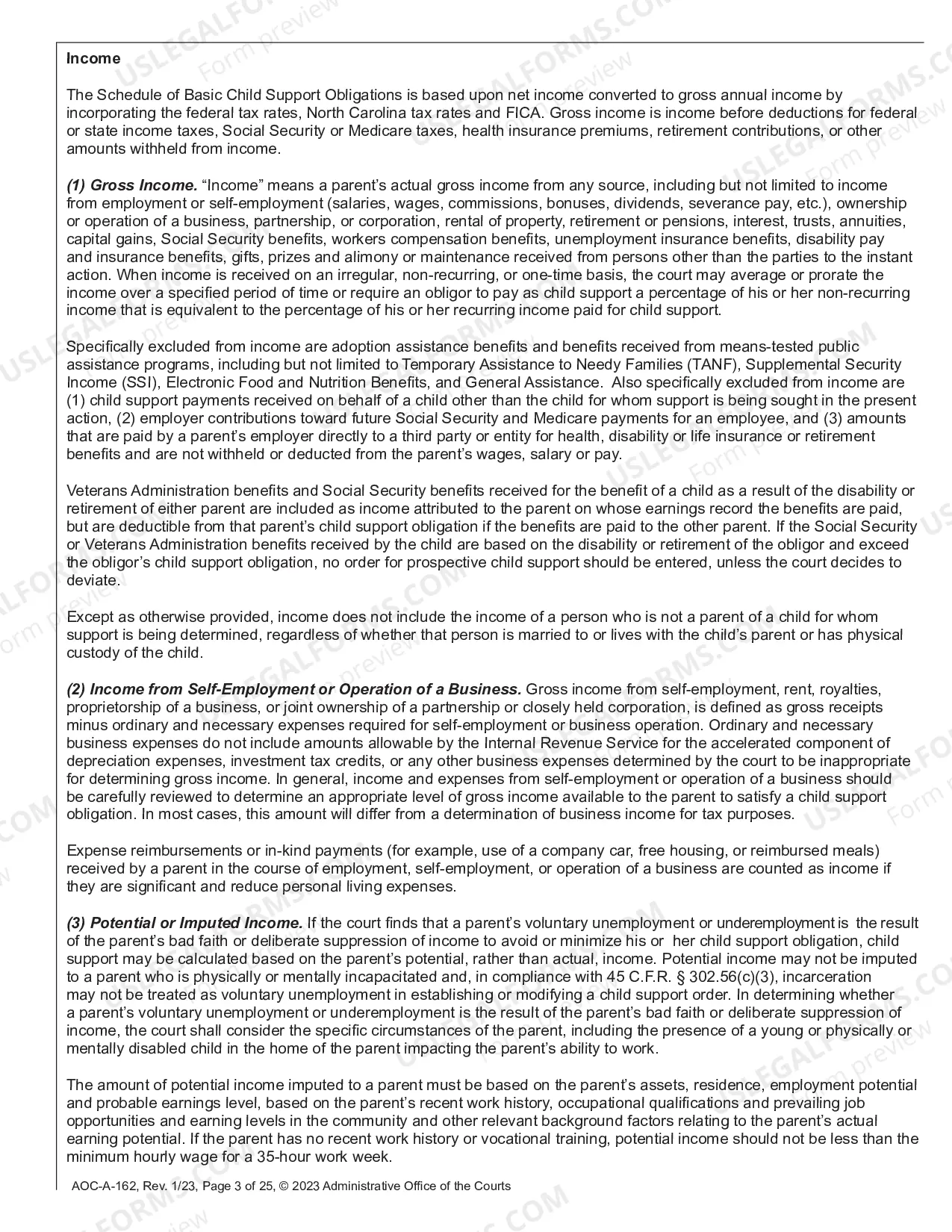
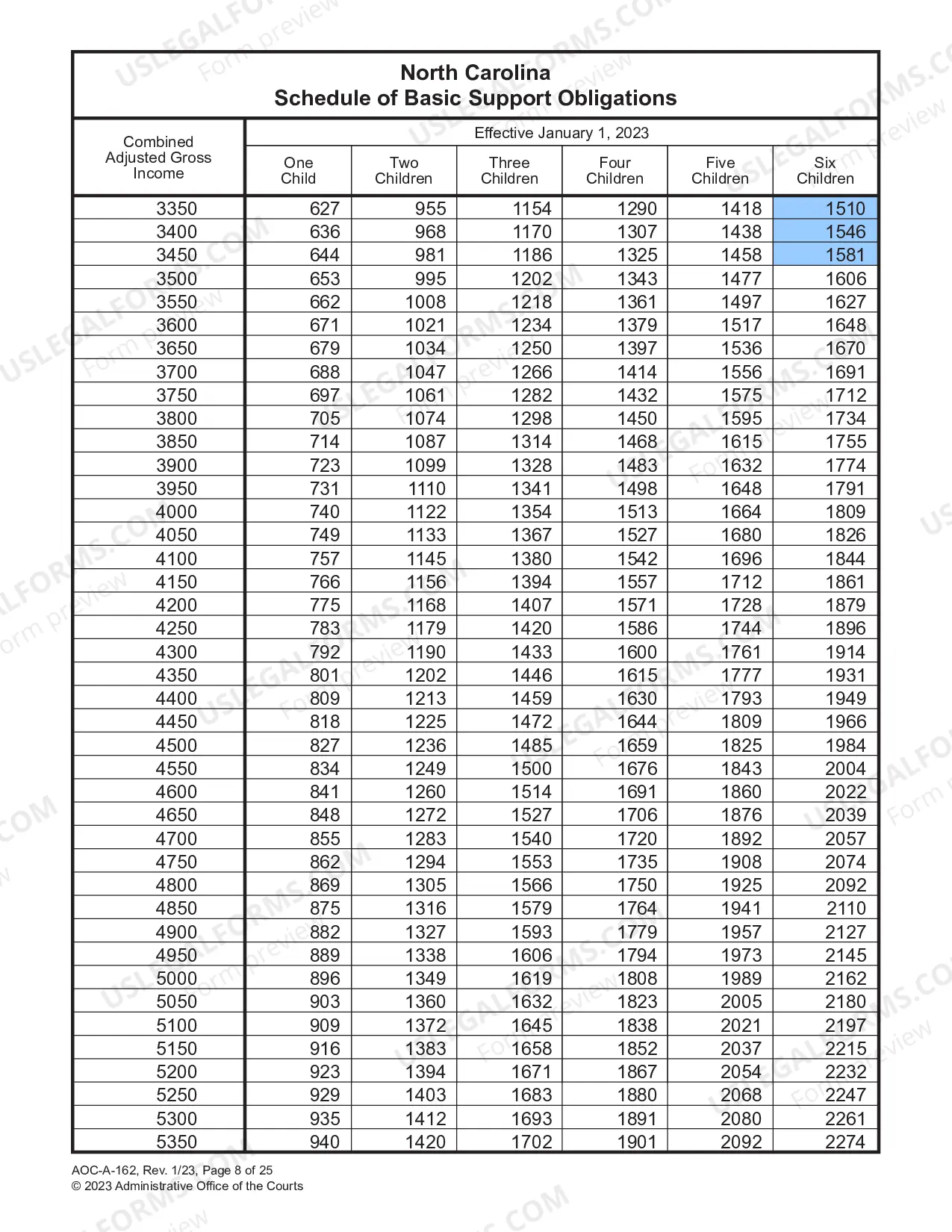
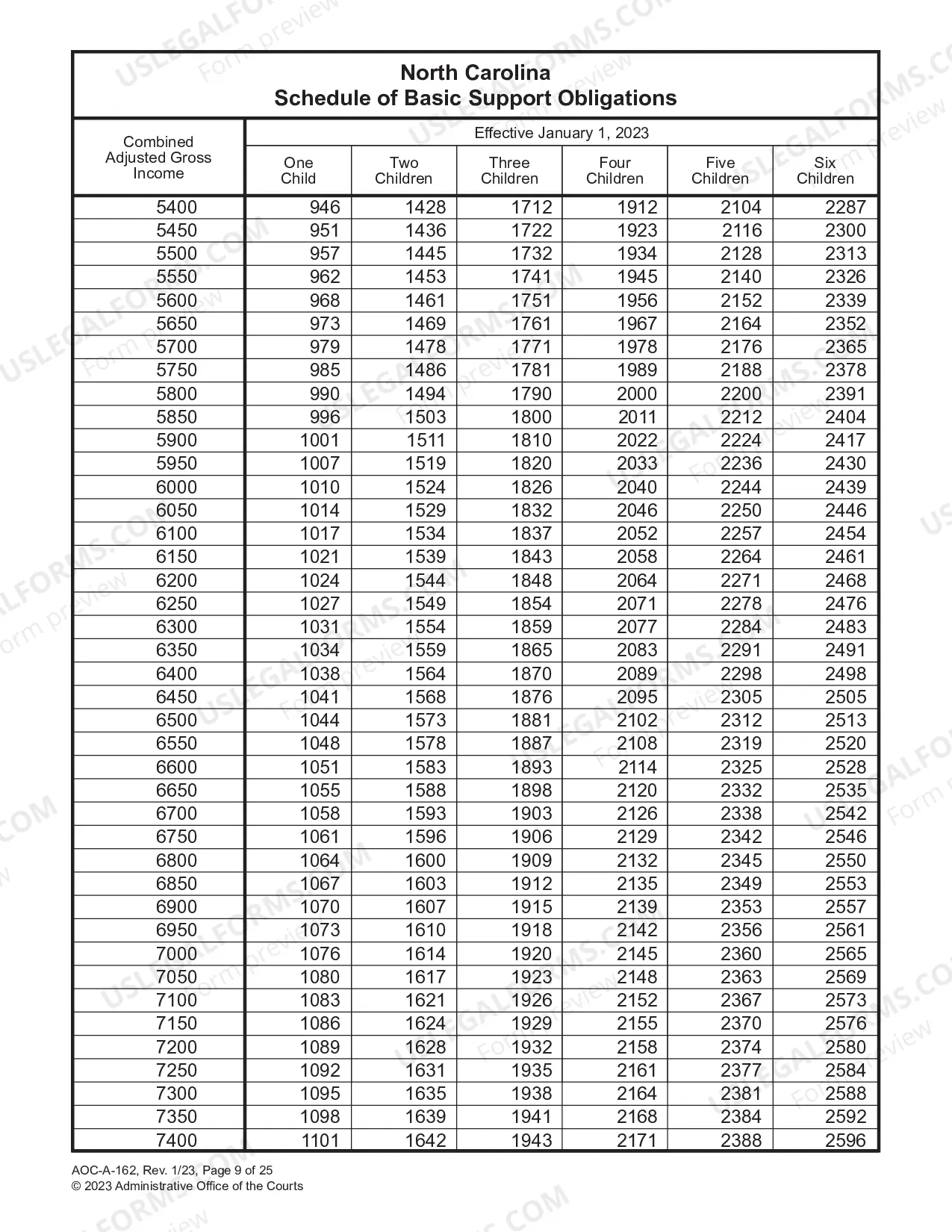
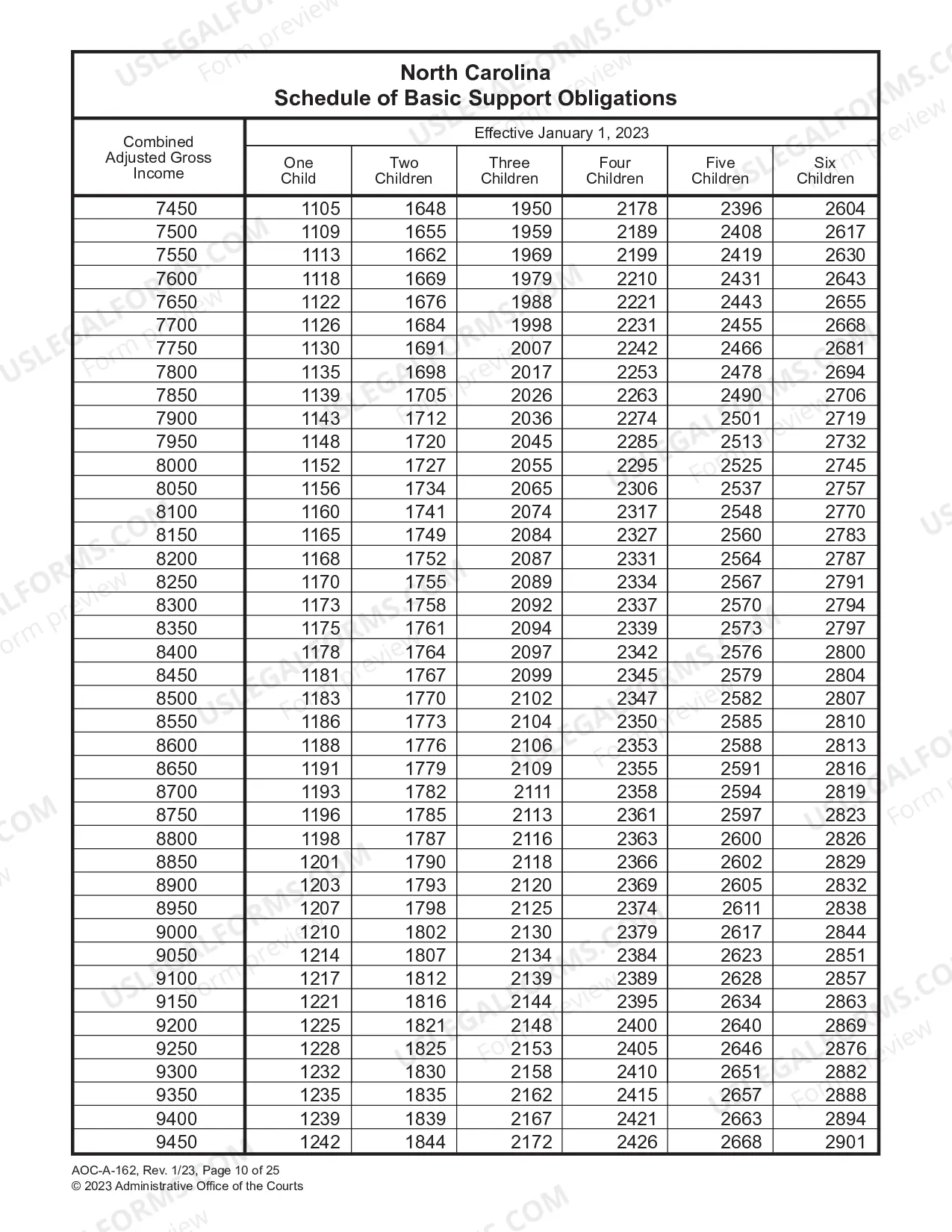
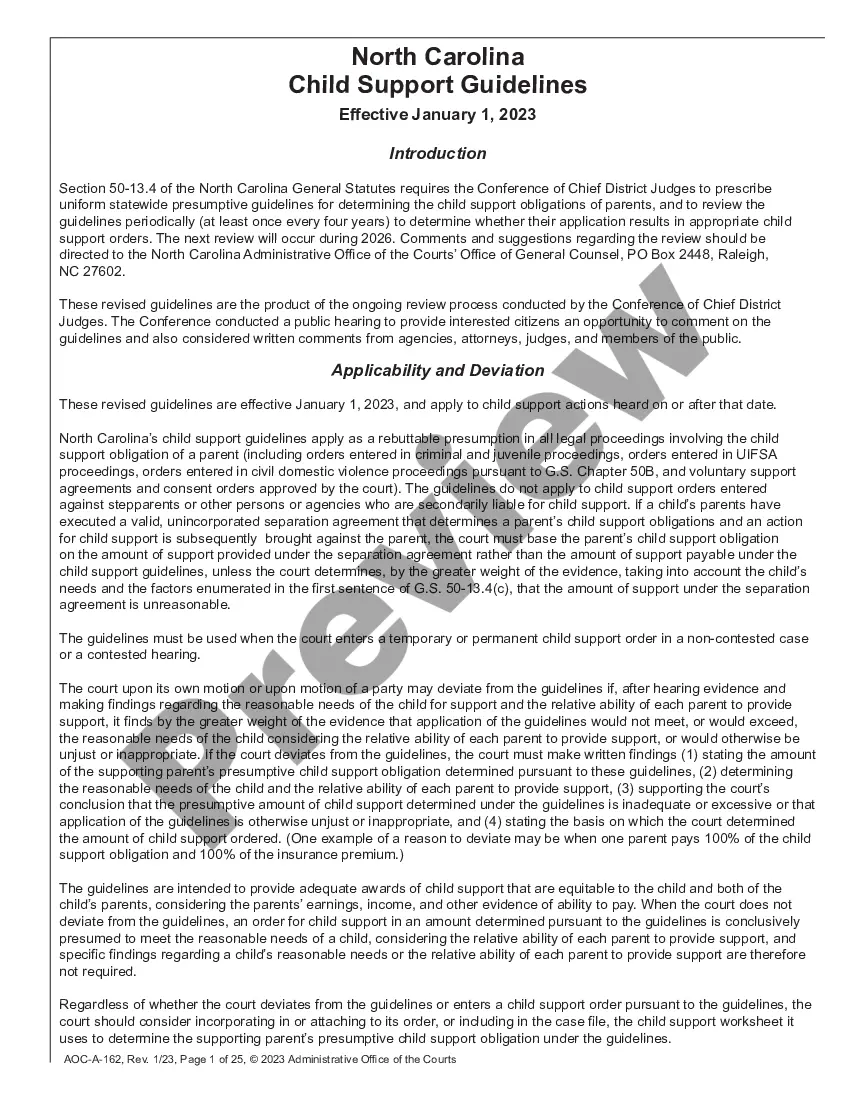
North Carolina Child Support Guidelines are legal parameters used to determine the financial responsibility of parents towards their children. These guidelines are formulated to ensure that child support orders are fair and appropriate, considering the needs of the children and the ability of parents to pay.
Step-by-Step Guide to Calculating Child Support in North Carolina
- Gather Financial Information: Collect all financial documents including income statements, tax returns, and expenses related to child care and education.
- Determine Custody Arrangement: Identify whether the custody arrangement is sole or joint as this affects the calculation.
- Input Information into the Child Support Calculator: Use the North Carolina Child Support Enforcement website's calculator by entering the financial details and custody information.
- Review the Estimate: Analyze the calculated support amount to ensure it meets the needs of the child within the state guidelines.
- File for Child Support: Submit the necessary documents and the support calculation to the court for approval.
Risk Analysis
- Underestimation of Expenses: Failing to accurately report all child-related expenses can lead to insufficient support payments.
- Overestimation of Income: Overstating the income can result in unfairly high support payments which might lead to financial strain.
- Non-Compliance Risks: Failure to comply with court-ordered support can result in legal consequences including fines and imprisonment.
Best Practices
- Accurate Documentation: Always keep accurate and up-to-date records of all financial documents and expenses related to child care.
- Consult Legal Experts: Seek advice from legal professionals experienced in family law to navigate the complexities of child support guidelines.
- Regular Updates: Regularly update the court on any significant changes in financial status or child care expenses.
Common Mistakes & How to Avoid Them
- Failing to Update Information: Always update the court with changes in your financial or personal circumstances to avoid issues with under or overpayments.
- Neglecting Legal Advice: Hiring a knowledgeable attorney can provide guidance and prevent legal mistakes.
- Ignores Custody Changes: Inform the court about any changes in custody arrangements as it impacts the child support calculations.
FAQ
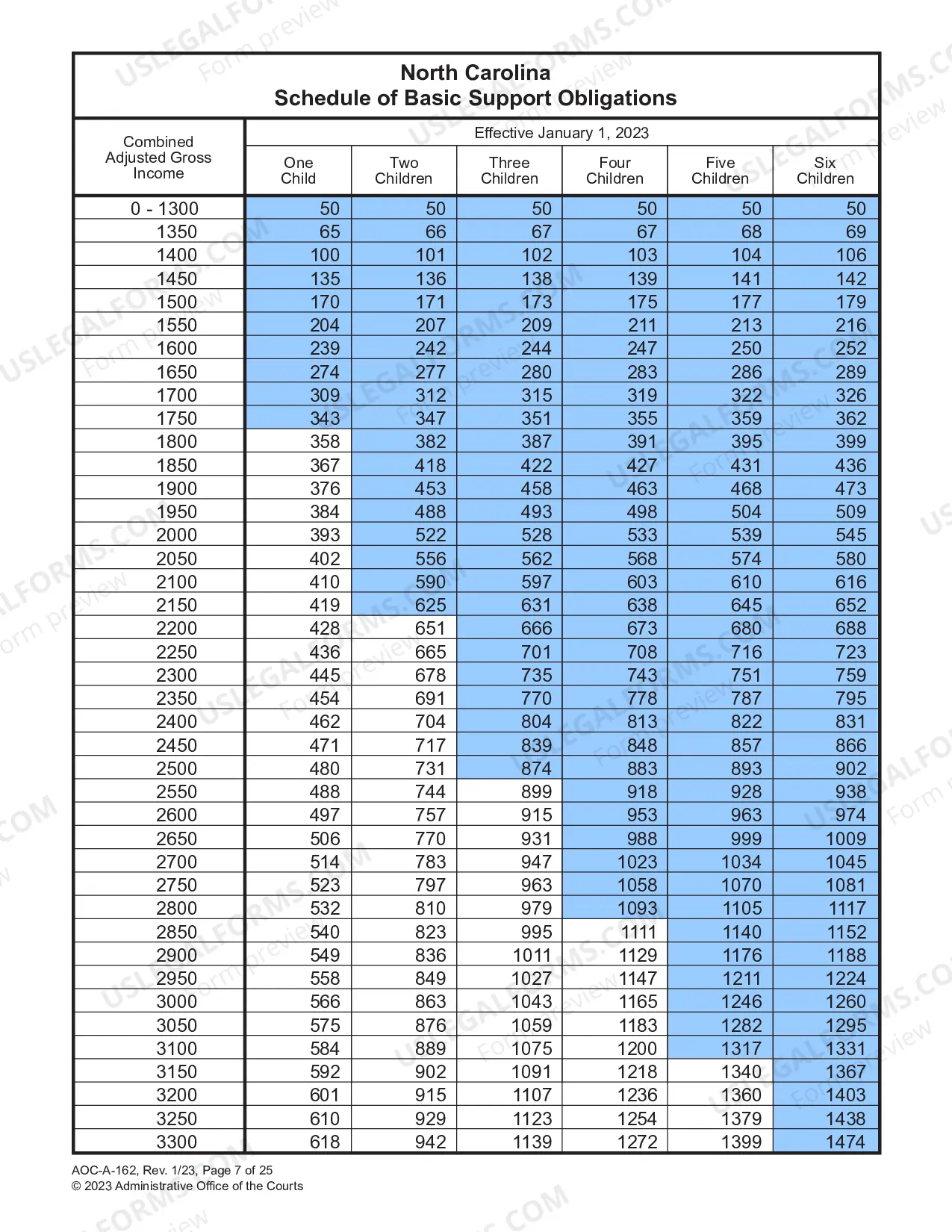
- How are child support amounts determined in North Carolina? Through a formula that considers the income of both parents, the number of children, and additional expenses such as health insurance and educational needs.
- What happens if a parent does not pay child support? They can face legal penalties including wage garnishment, seizure of property, or even incarceration.
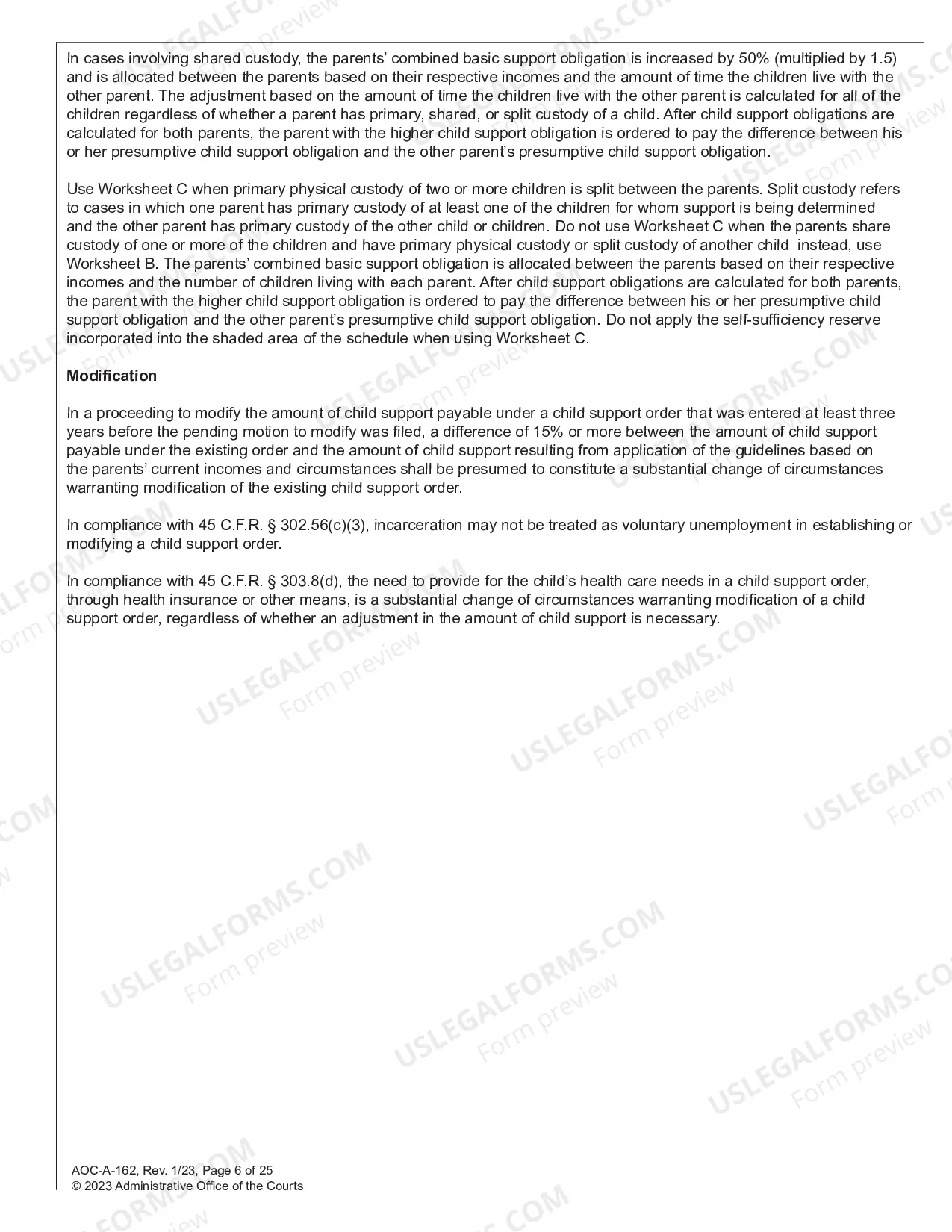
- Can child support arrangements be modified? Yes, either parent can request the court to review and modify the support agreement if there is a significant change in circumstances.
How to fill out North Carolina Child Support Guidelines?
Steer clear of costly attorneys and discover the North Carolina Child Support Guidelines you require at a fair price on the US Legal Forms website. Utilize our straightforward groups feature to search for and acquire legal and tax documents. Review their descriptions and preview them before downloading.
Moreover, US Legal Forms provides users with step-by-step instructions on how to download and fill out each template.
After downloading, you can complete the North Carolina Child Support Guidelines by hand or using an editing software program. Print it out and reuse the form multiple times. Achieve more for less with US Legal Forms!
- US Legal Forms subscribers simply need to Log In and download the specific document they require to their My documents section.
- Those who have not yet purchased a subscription should follow the instructions below.
- Ensure the North Carolina Child Support Guidelines is suitable for use in your state.
- If accessible, read the description and utilize the Preview feature before downloading the sample.
- If you are confident the document is correct for you, click Buy Now.
- If the form is incorrect, use the search bar to locate the appropriate one.
- Next, create your account and choose a subscription plan.
- Make payment via card or PayPal.
- Select to download the document in PDF or DOCX format.
- Click on Download and find your document in the My documents section. Feel free to save the template to your device or print it.
Form popularity
FAQ
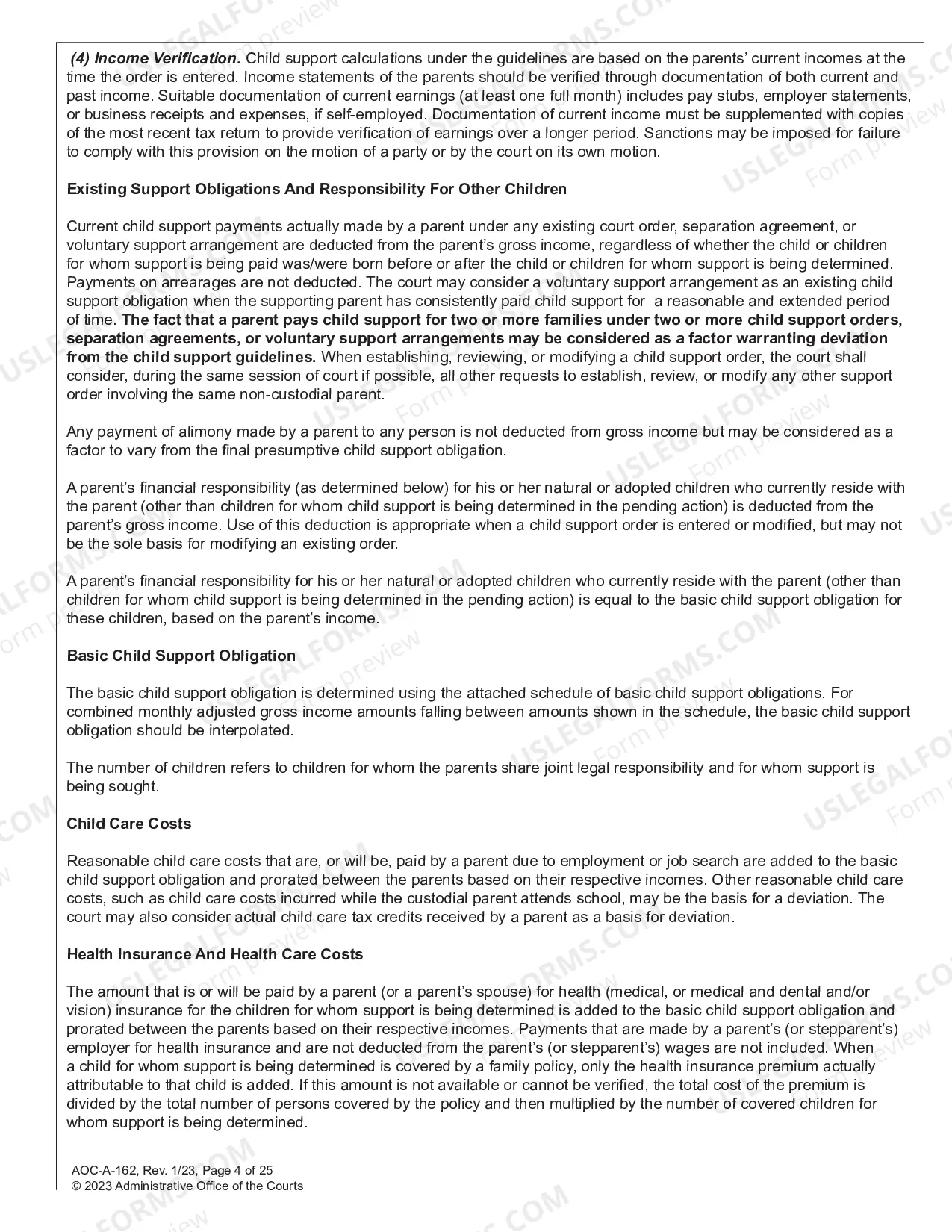
Child support is calculated based on the number of overnights the child or children spend with each parent. Worksheet A recognizes a situation in which one parent has primary custody (more than 243 days per year). Worksheet B is applicable to parents who share custody jointly.
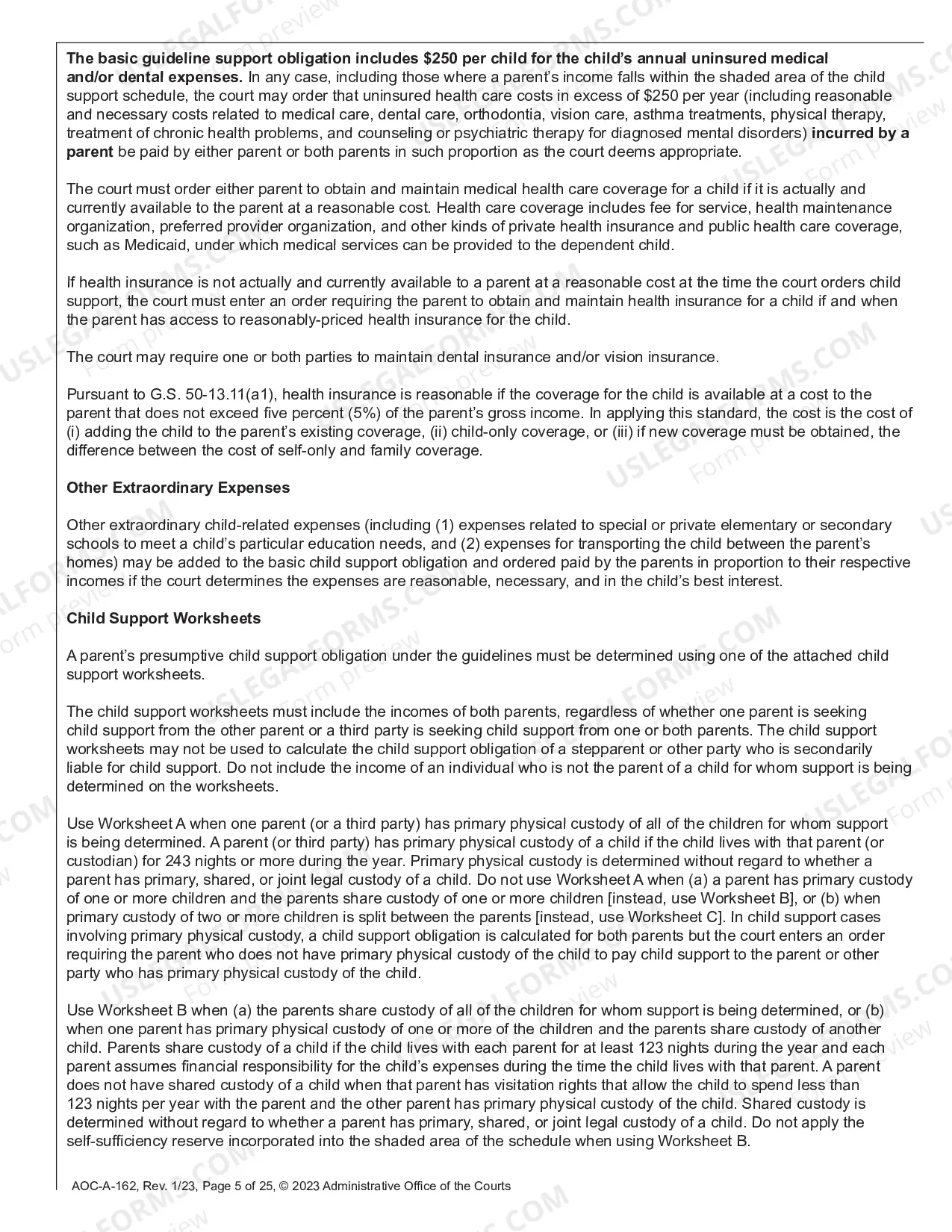
Any work-related daycare or childcare expenses paid by the parents. Health insurance premiums paid by either parent for the child. Extraordinary expenses paid on behalf of a child, which can include things like expenses for visitation-related travel or private school tuition.
Child support is calculated based on the number of overnights the child or children spend with each parent. Worksheet A recognizes a situation in which one parent has primary custody (more than 243 days per year). Worksheet B is applicable to parents who share custody jointly.
There is also generally a minimum support obligation for parents with low incomes. When a parent obliged to pay child support makes less than $1,108 per month (as of January 1, 2019), the guidelines require a minimum support order of $50 per month.
In North Carolina, there are two ways to begin a child support case: in civil court or through a criminal action. You can file for child support on your own, with a lawyer that you retain, or the Division of Social Services (DSS) can file the child support case for you.