North Carolina General Warranty Deed from Husband and Wife to a Trust
Understanding this form
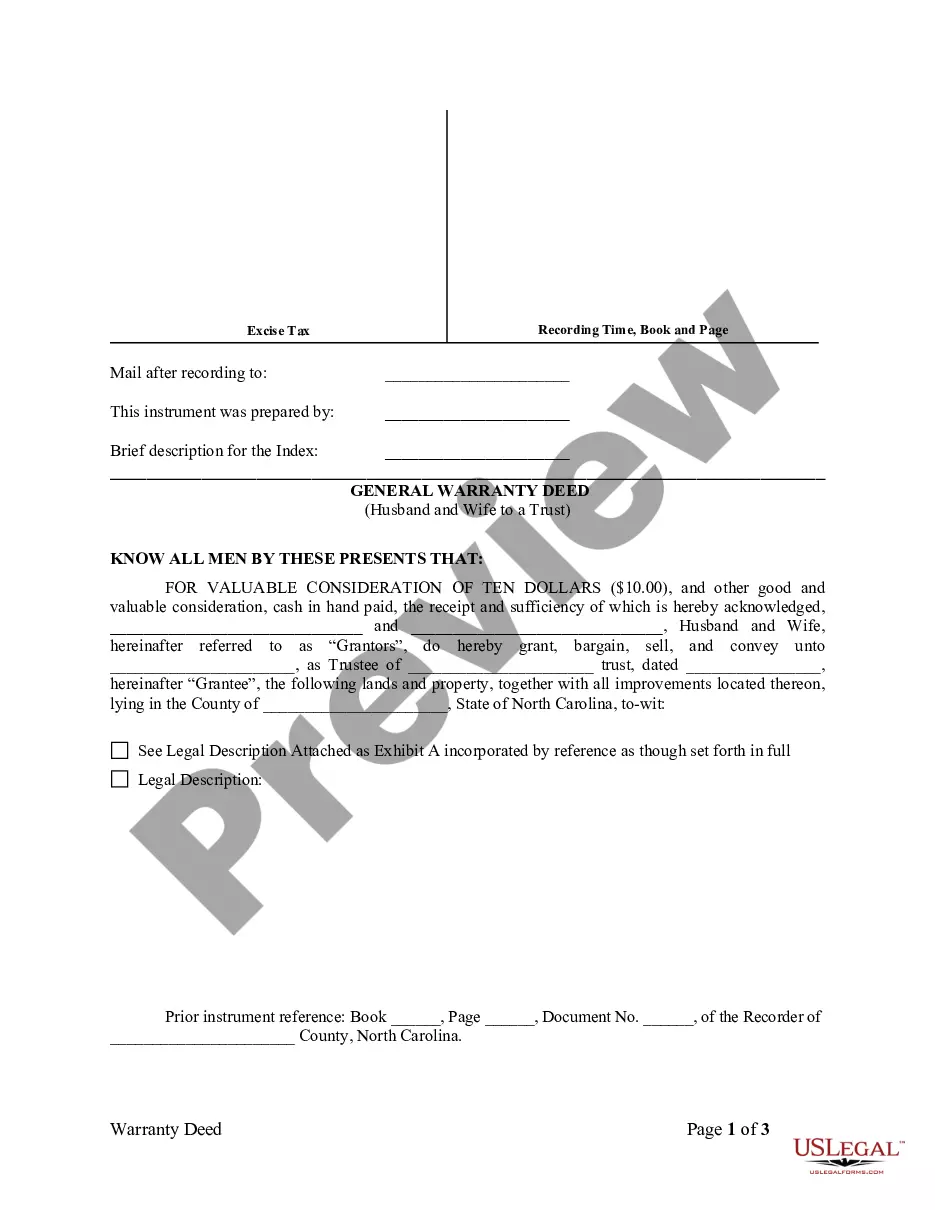
The General Warranty Deed from Husband and Wife to a Trust is a legal document used to transfer property ownership from a married couple (the grantors) to a trust (the grantee). This form specifically conveys the property while ensuring the grantors warrant that they hold clear title to the property, providing full assurance against claims. Unlike other types of deeds, this warranty deed offers a guarantee of clear title, making it a secure choice for transferring property into trust for estate planning or other purposes.
Key components of this form
- Grantors: The names of the husband and wife transferring the property.
- Grantee: The name of the trustee of the trust receiving the property.
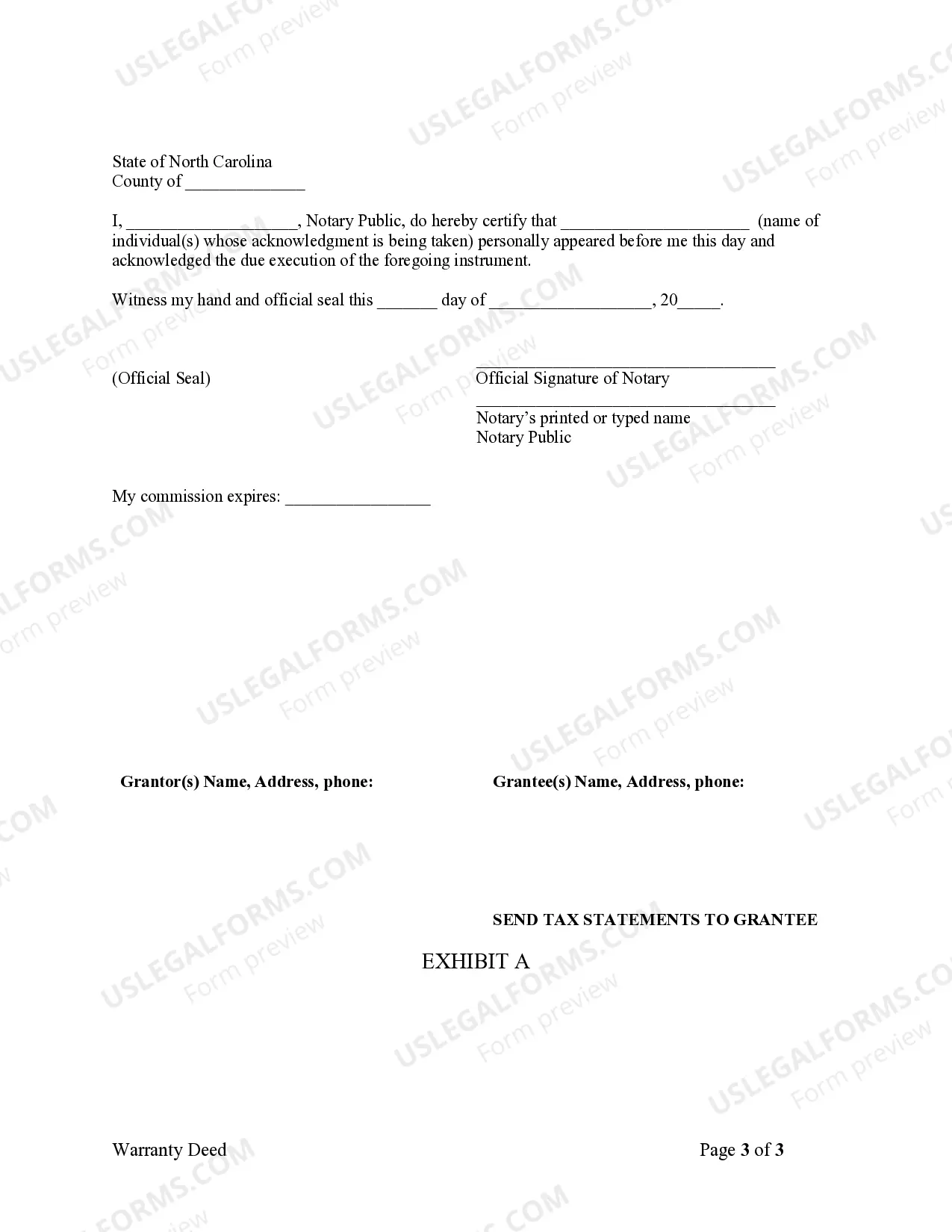
- Property description: A detailed description of the property being conveyed, typically included as an attachment.
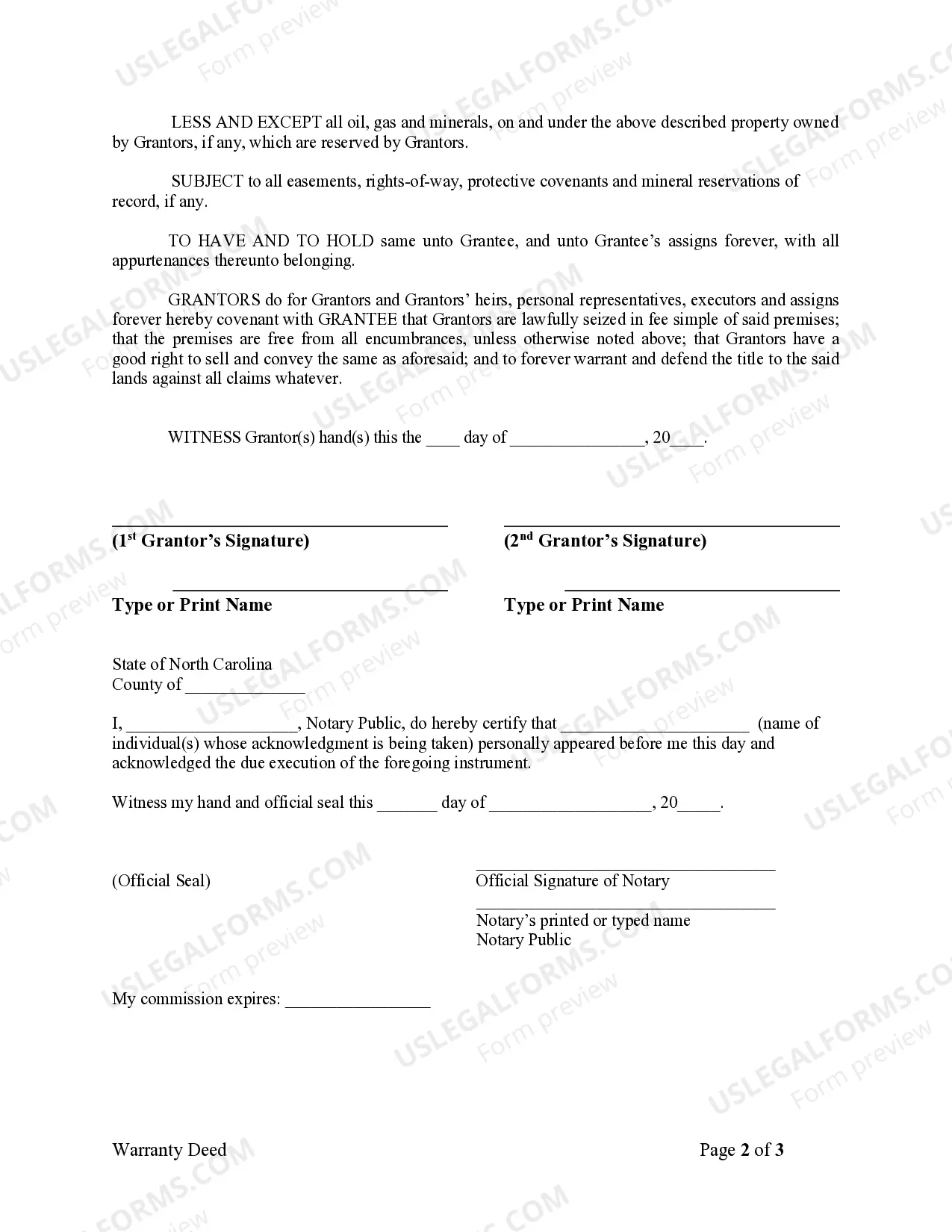
- Warranties: Assurances from the grantors about their rights to the property and its encumbrances.
- Signatures: Required signatures of the grantors and a notary public to validate the deed.





Situations where this form applies
This form is ideal when transferring property held jointly by a husband and wife into a trust for purposes such as estate planning, asset protection, or tax benefits. It may also be used when the couple wants to consolidate their assets within a trust to streamline inheritance processes and ensure that their wishes are honored after their passing.
Who should use this form
- Married couples seeking to transfer their property into a trust.
- Individuals involved in estate planning and management.
- Trustees needing legal documentation of property ownership for the trust.
- Homeowners looking to legally encode their property agreements.
Instructions for completing this form
- Identify the parties: Enter the names of the husband and wife as grantors.
- Specify the trust: Include the name of the trust and its trustee as the grantee.
- Provide property details: Attach and reference the legal description of the property.
- Enter consideration: State the amount of consideration for the property transfer.
- Sign and date: Ensure both grantors sign the document and provide the date of signing.
- Notarization: Arrange for a notary public to witness the signatures and provide certification.
Does this document require notarization?
Yes, this form must be notarized to be legally valid. Notarization ensures that the identities of the signers are verified and the document is executed properly. US Legal Forms offers integrated online notarization services that are available 24/7, allowing users to complete the notarization process via a secure video call without needing to travel.
Get your form ready online
Our built-in tools help you complete, sign, share, and store your documents in one place.
Make edits, fill in missing information, and update formatting in US Legal Forms—just like you would in MS Word.
Download a copy, print it, send it by email, or mail it via USPS—whatever works best for your next step.
Sign and collect signatures with our SignNow integration. Send to multiple recipients, set reminders, and more. Go Premium to unlock E-Sign.
If this form requires notarization, complete it online through a secure video call—no need to meet a notary in person or wait for an appointment.
We protect your documents and personal data by following strict security and privacy standards.

Make edits, fill in missing information, and update formatting in US Legal Forms—just like you would in MS Word.

Download a copy, print it, send it by email, or mail it via USPS—whatever works best for your next step.

Sign and collect signatures with our SignNow integration. Send to multiple recipients, set reminders, and more. Go Premium to unlock E-Sign.

If this form requires notarization, complete it online through a secure video call—no need to meet a notary in person or wait for an appointment.

We protect your documents and personal data by following strict security and privacy standards.
Common mistakes
- Failing to provide a complete legal description of the property.
- Omitting the notary public's signature or seal.
- Not clearly indicating any exceptions or reservations on mineral rights.
- Incorrectly identifying the trust or its trustee.
Why complete this form online
- Convenience: Easily access and complete the form from anywhere.
- Editability: Customize the document to meet specific needs.
- Reliability: Obtain a legally sound document prepared by licensed attorneys.
- Time-saving: Quickly download the form without the need for in-person visits or meetings.
Legal use & context
- This form is legally binding once signed and notarized, providing strong assurances regarding property title.
- Transfers involving trusts can often simplify estate management, while ensuring proper administration of asset distribution.
- Consulting with a legal professional may help to navigate any specific implications related to the trust and the properties involved.
What to keep in mind
- A General Warranty Deed from Husband and Wife to a Trust secures the transfer of property with guarantees of clear title.
- The form is essential for joint owners wanting to consolidate their property into a trust.
- Proper completion and notarization are necessary to ensure legal validity and enforceability.
Looking for another form?

Form popularity
FAQ
A Deed of Trust is a type of secured real-estate transaction that some states use instead of mortgages.A deed of trust involves three parties: a lender, a borrower, and a trustee. The lender gives the borrower money. In exchange, the borrower gives the lender one or more promissory notes.
In divorces, states have two options for dividing property: community property division (where marital property belongs to both spouses equally, regardless of who bought it) or equitable division (where the court divides marital property equitably (justly.) North Carolina is not a community property state.
The names on the mortgage show who's responsible for paying back the loan, while the title shows who owns the property. You can put your spouse on the title without putting them on the mortgage; this would mean that they share ownership of the home but aren't legally responsible for making mortgage payments.
California married couples generally have three options to take title to their community (vs separate) property real estate: community property, joint tenancy or Community Property with Right of Survivorship. The latter coming into play in California July of 2001.
In North Carolina, a deed of trust or mortgage acts as a conveyance of the real estate.Under a deed of trust, the borrower (called the "grantor") conveys legal title to the real estate to a third party (called the "trustee") to hold for the benefit of the lender (called the "beneficiary") until the loan is repaid.
It's often easier to qualify for a joint mortgage, because both spouses can contribute income and assets to the application. However, if one spouse can qualify for a mortgage based on his own income and credit, the mortgage does not need to be in both spouses' names unless you live in a community property state.
In cases where a couple shares a home but only one spouse's name is on it, the home will not automatically pass to the surviving pass, if his or her name is not on the title.
A married person buying property individually The owner needs to sign, but their spouse may not be required to sign documents at closing. North Carolina has a specific statute allowing a married buyer of real estate to sign their purchase-money Deed of Trust without requiring the signature of the buyer's spouse.
In California, all property bought during the marriage with income that was earned during the marriage is deemed "community property." The law implies that both spouses own this property equally, regardless of which name is on the title deed.